In short
BBC World Service documentary on responding to Ebola during the 2018 outbreak in eastern DRC, focusing on why case numbers may be underestimated and how fear, misinformation, and lack of a vaccine strain public-health measures.
Guests (backgrounds)
Dr Mananji Mangundu, Oxfam doctor recently returned from DRC; Bronwyn Nicol, senior public-health-in-emergencies officer for the International Federation of Red Cross and Red Crescent Societies; journalists Umaru Fofana (BBC) and Sherry Fink (New York Times) who covered 2014–16 West Africa outbreaks; Harriet, Ebola survivor from Liberia (2014-era); Maggie, community nurse in Freetown, Sierra Leone, who lost eight relatives.
Key claims
community fear drives resistance to safe burials, contact tracing, and treatment; slow lab testing and incomplete transmission-chain knowledge likely mean more deaths/cases than reported; messaging failures (e.g., “incurable” disease) and cultural burial practices can worsen spread.
Notable examples
relatives set fire to a DRC hospital after bodies weren’t released; Sierra Leone/Liberia ambulance and treatment-center attacks; reporter biohazard rules and a scare when his daughter developed fever; Harriet’s transport to Redemption Hospital and survivor aftereffects (vision, mood swings, menstrual problems).
Written by AI. May contain mistakes. Listen to the episode to check what was said.
Chapters
Tap a time to open that second in VOUnderstanding Ebola Outbreaks
1:23 to 1:51
Discussion on the Ebola virus, its transmission, and current outbreak statistics.
“Welcome to the documentary from the BBC World Service.”
Challenges in Containing Ebola
1:51 to 2:58
Exploration of the difficulties in managing the Ebola outbreak and community fears.
“Outbreaks between people start when somebody catches it from an infected animal.”
Fear and Resistance in Communities
2:58 to 4:08
Detailed accounts of community fears regarding Ebola and the implications for health interventions.
“And that's the piece that's really worrying right now.”
Cultural Practices and Ebola Response
4:08 to 5:32
Discussion on traditional burial practices and their conflict with Ebola response measures.
“If you look at the number of samples that have been collected and the number of suspected cases, there's quite a big difference.”
Personal Stories from the Outbreak
5:32 to 7:22
Personal accounts of health workers affected by the Ebola outbreak and community responses.
“And then maybe they may reduce stereotyping and fears and so forth.”
Building Trust in Health Interventions
7:22 to 9:12
Insights on the importance of trust and community involvement in health interventions during outbreaks.
“Other outbreaks like the one that happened last year in Kasai, you know, we had vaccines.”
Misinformation and Its Impact
9:12 to 11:22
Discussion on the impact of misinformation surrounding Ebola and community reactions to health measures.
“something that is imposed on them and that is much easier said than done if we could just do it at the snap of our fingers it would be much more easy to respond to Ebola and diseases like it.”
Reflections from Journalists
11:22 to 14:01
Reflections from journalists on reporting from Ebola-affected areas and the complexities encountered.
“You say, I want to take them to a hospital.”
Resistance and Cultural Beliefs during Ebola
14:01 to 16:45
Learn about the cultural beliefs in Sierra Leone that contributed to the spread of Ebola.
“If they have died, give me their body so I can lead them to rest.”
Resistance and Cultural Beliefs during Ebola
17:59 to 18:36
Learn about the cultural beliefs in Sierra Leone that contributed to the spread of Ebola.
“Ever Google a money question and end up 12 tabs deep with 12 different answers?”
Show all 11 chapters
Harriet and Maggie's Stories of Survival
18:36 to 26:57
Hear powerful personal accounts of survival from Ebola outbreak victims.
“She contracted Ebola during an outbreak in the country a decade ago.”
Transcript
Automatic transcript. May contain errors.0:00This BBC podcast is supported by ads outside the UK.
0:30Make your travel dollars work harder. Follow Smart Travel on your favourite podcast app. Ever wonder why we make the choices we do? And how to make smarter ones? Introducing Choiceology, an original podcast from Charles Schwab. Join Wharton Professor Katie Milkman, an award-winning behavioural scientist and author of the best-selling book, How to Change, as she shares true stories from Nobel laureates, authors, athletes and everyday people about why we do the things we do and how to make better choices to help avoid costly mistakes. Each episode covers the latest research in behavioral science and dives into themes like the power of self-control, shaping your mindset for success, navigating new beginnings, and why starting over can feel so hard.
1:20Listen to choiceology at schwab.com slash podcast or wherever you listen.
1:31Hello, I'm James Reynolds. Welcome to the documentary from the BBC World Service. In BBC Conversations, we bring people together to share their personal experiences of major news stories. This time, our guests share their experiences of Ebola. Ebola is a disease caused by a virus. Outbreaks between people start when somebody catches it from an infected animal. Ebola is rare, but the symptoms are severe. They often lead to death. As we record this program on Friday lunchtime, the outbreak in the east of the Democratic Republic of Congo is believed to have killed at least 220 people with more than 1 ,000 suspected cases.
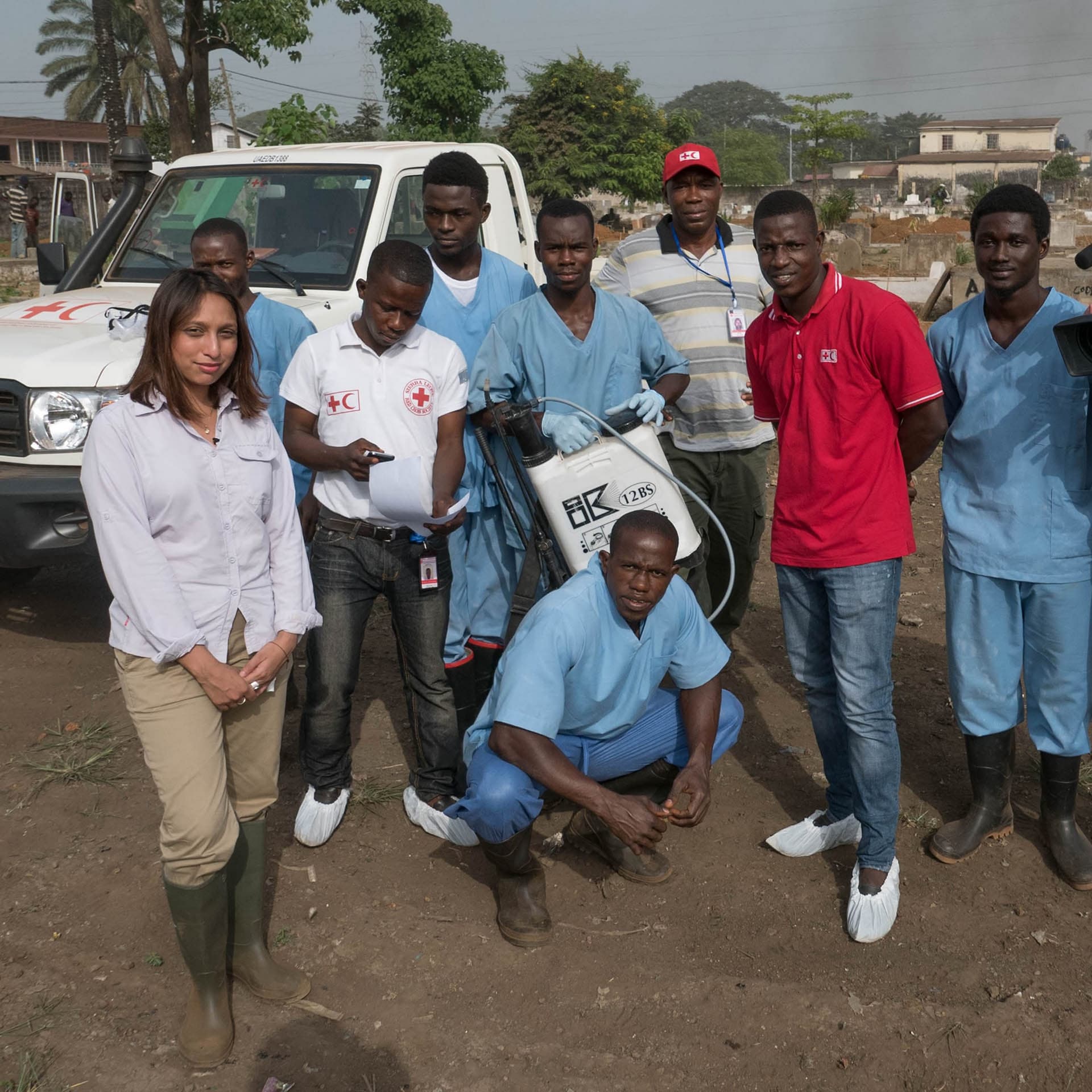
2:16but as we'll hear that is likely to be an underestimate. To make matters worse not only is this area of central Africa badly affected by conflict there also isn't currently a vaccine for this particular strain of the virus. Later we'll hear from someone who survived the disease. Firstly though to get a sense of the situation on the ground my colleague Rahul Tandon brought together Dr Mananji Mangundu from Oxfam. He's just returned from the DRC. And Bronwyn Nicol from the International Federation of Red Cross and Red Crescent Societies is a senior officer for public health in emergencies. I think the scale, we don't really have a very good picture of it.
2:57We know it's big, but we have a huge amount of suspect cases, way bigger than what we have in confirmed cases. And that's the piece that's really worrying right now. So how much do we not know about transmission chains. How many deaths have we missed? Contact tracing, I mean, at the beginning of every outbreak, contact tracing is always hard. It's a struggle right now as well. And that's a bit of a bright product of the fact that people are scared and that's normal, that's natural. And I think that's what's driving quite a bit of the community resistance to some of the standard response options that we have for Ebola, which includes safe burials, contact tracing, surveillance.
3:34But it is really that fear that is driving a lot of that reluctance and difficulty for those systems to be fully put in place. Yeah, I can't agree more or there. This is our worry. Because, you know, when you look at various sources, there are different numbers coming from different sources. With the way the community are so fearful and some of them try to avoid coming to the senders, treatment and send us, we might have even more cases. The other also worrying thing is the slow movement in terms of the samples going for laboratory tests, which kind of like we are catching up. If you look at the number of samples that have been collected and the number of suspected cases, there's quite a big difference.
4:18So, yeah, I totally agree with you that there might be a lot of more cases out there. Can you explain in a little bit more detail, Menenji, and Bronwyn, if you want to pick up that word fear, you can understand why people are fearful. This is a disease that kills many, many people. Give us some of the examples of the stories of fear that you're hearing, Menenji. You know, there was quite a lot of people dying. I think you look at the fatality rate is too high. This is where people are so worried. The other challenge is that, you know, they have their own tradition. They used to bury the dead bodies of their main family members, of which some of them, they still want to use that.
4:57And some are also afraid that, you know, it can continue to spread the infections. It's based on not understanding more about the disease and how it is spread and how it can be stopped from spreading and so forth. Our teams now are saying more community engagement efforts need to be done. While I think more focus has been on treatment centers and make sure that we have isolation managing and even the burials and so forth. But the bigger part of it is the community engagement and make sure people really get to know and understand about this disease. And then maybe they may reduce stereotyping and fears and so forth.
5:38No, and I mean, that's one of the big challenges we're seeing right now, particularly around safe and dignified burials, which is a different process we need to follow for deaths of people who have died of confirmed or suspected hemorrhagic fever. It's a shift. I mean, you can imagine if it was happening with your own family, if someone you love dies and then people show up to support you in that burial, but they are covered to toe in personal protective equipment. You can't do the usual things you do to say goodbye to your loved one. It makes it even more hard. It makes it even more scary. That was already mentioned as well as around this community engagement is making sure that communities are part of this process.
6:17How can we still do burials in a way that keeps everyone safe, but then can still respect tradition as much as we can? And that's not an easy balance to find. And that's something that will continue to evolve as this outbreak continues. This has been a very difficult time for you, hasn't it? Not just in terms of dealing with this. You've lost colleagues to Ebola. Yeah, we sadly did lose three volunteers from the DRC Red Cross. They passed away in May. They passed away before the outbreak was actually declared. They had been working in support of Ministry of Health and regular long-term programming that they support in Initori province, helping with burials for anything, any cause of death at the request of the government.
6:57So in those circumstances, they do wear personal protective equipment, but it's very minimal. It's just our standard precaution. It's not the full suite of protective equipment that we wear for Ebola. And so unfortunately, they weren't following Ebola protocols because there was no reason for them to be following it. and sadly they've passed away and it is suspected that it was due to Ebola. You know, about our staff, we are so worried because there's no vaccine. Other outbreaks like the one that happened last year in Kasai, you know, we had vaccines. So at least there was some sense of protection, though it's not 100%.
7:33But you see that fear to say there's no vaccine, I'm going to an area to do the interventions. Despite having protective clothing and so forth, and doing all those practices like hand washing, making sure that we don't get in contact with the fluids and so forth. But still the staff are fearing to say, if I get it, what's going to happen? So this is the biggest, biggest concern. If this is going to be a virus, yet vaccine, I think the fear would be less on our staff, even myself. I'm worried. Ebola is not new in these areas. and the way we normally respond to Ebola tends to have a lot of messaging and discussion around vaccination.
8:17And that's a piece that we're not talking about right now, as we're saying there is no vaccine. And that is where people are questioning what is happening in terms of saying we know what Ebola is. There is a vaccine. Why is the vaccine being hidden? Why is the vaccine not being shared with us? So going through the fact that there are different types of Ebola is not the easiest thing to get across. It's complicated for even those who spend a lot of time working on Ebola, for the teams from DRC Red Cross who respond to this often. It's almost like going back 10 years to before we had the vaccine, which changes how we do our staff health protocols and really, as was mentioned, affects the levels of fear that staff also have in the response.
8:57And people are scared, aren't they? And understandably scared of the virus, of contracting it. how do you balance that fear because it drives us to do things that we shouldn't? And I mean I think this comes back to the point around community engagement and making sure that community concerns are heard that they also are part of driving the response that it is not something that is imposed on them and that is much easier said than done if we could just do it at the snap of our fingers it would be much more easy to respond to Ebola and diseases like it. We need to be cognizant of the fact that it will take time to build trust with communities, to be able to pull in community-led solutions into the response as well.
9:37How do we make quarantine, if that is something that government would like to do, how do we make that work for communities? How do we make sure that mental health is also taken into account? How do we make sure that we're also thinking around protection and gender concerns that are also quite prevalent in Eastern DRC? and these aren't easy topics but it really is listening to communities making sure we're feeding back on why things are happening in a certain way and being clear on what can be modified but how can we still keep everyone safe and it's very easy for me to say that it's way way harder for teams to to get that in place.
10:12Bronwyn Nicol and Dr Mananjeet Mangundu. Let's pick up on that point about efforts to build trust with communities deeply impacted by Ebola. You might have seen that angry relatives recently set fire to a hospital in the DRC after health workers refused to release the body of a family member who had died from the disease. There are reasons for that. Ebola is spread through contact with bodily fluids, such as blood and vomit. The hospital simply wanted to avoid the risk of contamination. Dead bodies can be particularly infectious. We wanted then to discuss misinformation surrounding Ebola. So we brought together two journalists who covered outbreaks in 2014 and 2016.
10:54Sherry Fink worked in Liberia, Guinea and Sierra Leone, reporting for the New York Times. And Umaru Fofana in Sierra Leone reported for the BBC and other international media. Ambulances were attacked by people in Sierra Leone, as well as in Liberia. You know, treatment centres were also attacked. And I think it is very important for the people to be made to understand, you know, what this whole thing is about. And there is this thing that is difficult to understand by so many people that, look, if you say that this disease is incurable, which was the version that was given in Sierra Leone in Liberia and I think in Guinea at the initial stage of the outbreak, then why do you take my relative?
11:30You say, I want to take them to a hospital. They are meant to be healed. But you say it is not curable. So people found it very difficult in Sierra Leone to understand. But eventually the messaging changed and that made people to understand, you know, the way to deal with health workers as well as, I mean, as far as, you know, the educators were concerned. But yes, it is a familiar story. I agree with you, Maru. It is very familiar. But I think sometimes people who don't live in a country that's affected might sort of, that sounds so strange. It's such a deadly disease. Why aren't people cooperating?
12:03Why are they reacting this way? but that's sort of like exoticizing the matter because we saw the same thing or very parallel thing during COVID which I also reported on and literally while I was waiting for this interview to start I'm working on a book about COVID I was going over a section on Italy reading a report from the spring of 2020 in Corriere talking about a hospital at the epicenter of the new outbreak there where the management was prohibiting families from having contact with their loved one's bodies and the families protested to the local government and the hospital had to backtrack.
12:38So this is a human reaction to fear. We have to understand it and have compassion. I also remember in West Africa, the responders were really beating up on themselves because of those messages like you just heard from Umaru or the focus on bats and they kept changing their educational approach. But sometimes what they found was it wasn't until people started to die in a particular community that the community got it. And then their cooperation is so needed to really stem the deaths and get control of things. Well, it's interesting, Dr. Sharifi, you say that, because exactly when the whole outbreak was in West Africa, not least in Sierra Leone and Liberia, which are predominantly Muslim countries, the burial teams were much later established.
13:25and the idea that your relative has died, we're going to take the body, or you can't even see their body if they had died in a treatment center, you sort of like said, no, I need to give them a befitting burial. And then it took some time before the responders would sort of like organize what was known then as dignified burials. They would bring the body, the body would be put in a body bag and the burial teams would bring the body and they would allow just a small number of relatives to perform there, particularly for Muslims, funeral rites, and then they would take the bodies away. But on the whole, it was very difficult for them to understand that my family actually walked and went into the center.
14:01If they have died, give me their body so I can lead them to rest. There was a lot of resistance. In fact, in some parts of Sierra Leone in the south, something happened that was quite bizarre in the eyes of even the locals and some of the locals themselves. Somebody died who was an Islamic scholar. And they felt that if they washed the body and drank the water, not least the kids, if the kids drank the water, it would sort of like make them become, you know, well Islamically educated. And bodies were washed and the water drunk by the kids. And there was a snowball, naturally snowball effect. Then the Ebola virus just spiralled out of control.
14:35So a lot of educating is needed. Otherwise, there'll be this resistance, culture combined with paranoia, combined with everything else in between. It's going to make it really far worse than it is right now. Take us back to your experience being very close to the outbreak as a reporter. What was that like? BBC had a very strict regimental approach to reporting on Ebola. They wouldn't allow me to go to a treatment centre unless I had a biohazard advisor who would be sure that I didn't touch places I was supposed not to touch. I'd be in my protective gear where I had to be in my protective gear.
15:10And I would keep my distance between, for example, if a home was quarantined because there are some people there suspected to be carrying the virus, I would really keep my distance. And that sort of became a regimen that I had to be going through every now and again to the point that it became a part of my psyche. But at some point, my daughter, who was two years old at the time, had a very high fever, upward of about, you know, 38 degrees. You know, we thought really that she had been infected. And if she had been infected, I would have been the only conduit through which she would have had the infection because I kept going in and out.
15:43We were all scared. I quarantined myself within the compound. eventually turned out that in fact she didn't have the virus. But that was a very, very scary moment because it coincided with my interview with the country's only virologist, Dr. Sheikh Omar Khan, who eventually got infected just days after my interview with him, and then he died. So my conviction then was I had the virus. It turned out thankfully that I didn't. Journalists Umaru Fofana and Sherry Fink. I'm James Reynolds. You're listening to The Documentary from the BBC World Service.
16:46www.odoo.com dot com. That's O-D-O-O dot com. We all can agree that housing is expensive. Rent, mortgage, it doesn't matter which one you're paying, it stings every month. But Built can make you feel a little better. Let me explain. Built started out rewarding members on their rent. Now, as of 2026, Built members can also earn points on mortgage payments wherever they live. Every housing payment earns you points you can use toward flights with top travel partners like United and Hyatt, Lyft rides, Amazon.com purchases, and so much more. And here's what you might not expect. Build members can also get access to a neighborhood concierge.
17:27It can make restaurant reservations, book fitness classes, and find new local spots, all while being rewarded at more than 45 ,000 merchant partners. It's like having a personal assistant baked into where you live. It's simple. Being a renter and now owning a home is better with Bilt. Join the membership for where you live at jointbilt.com slash podcasts. That's J-O-I-N-B-I-L-T dot com slash podcasts. Make sure to use our URL so they know we sent you. Today's episode is sponsored by NerdWallet's Smart Money Podcast. Ever Google a money question and end up 12 tabs deep with 12 different answers?
18:04This podcast is your shortcut back to clarity. NerdWallet's Smart Money podcast breaks down financial decisions with a team of trusted journalists. They explain the why behind decisions like investing, home buying, and choosing credit cards with clear research-backed insights. No jargon, no misinformation. Make your next financial move with confidence. Follow NerdWallet's Smart Money podcast on your favourite podcast app.
18:35For our final conversation, we're going to hear from Harriet in the Liberian capital, Monrovia. She contracted Ebola during an outbreak in the country a decade ago. We brought her together with Maggie in Sierra Leone, a community nurse in Freetown. Maggie lost eight close relatives to Ebola and now works with patients to deal with the aftermath of the disease. Harriet explains that Ebola had a devastating impact on her family. After my siblings and her fiancé passed away, we were like feeling symptoms. So that's how I went to a nearby clinic to get treated or checked. I told a friend I was going there.
19:17So when I got there, I went along with my daughter, one of my daughters. So when we got there, my friend now went and called the community and told them that I had Ebola. You talked there about your siblings passing away. How many siblings did you have? How many died of Ebola? In total, I lost about 15%. Oh my God, I'm so sorry for your loss. Yes, I understand exactly what she's saying because I've worked with Ebola survivors since 2020. so I understand the emotional attachment to it, especially when they have certain difficulties, if they are talking about marginalisation within the communities that they are living.
20:01I understand and I understand the loss that you actually saw with your own eyes. My sympathy, sincerely my sympathy. Thank you. Can we go back to Harriet's story here? Are you going to be tested then? Where are you being taken? So they then took me to Redemption Hospital. The vehicle now that they placed me in from the clinic to Redemption, the vehicle left and went into other communities to collect other persons that were suspected. Some of them were already like almost dead. And they placed me into that same vehicle along with me. What are you thinking? You must be so scared that you may have Ebola and that you may be about to die.
20:44At that moment, I wasn't scared anymore. because I had a last word to give to my daughter. And I said to her, if I don't survive, please go and continue your life along with your siblings and family members and just be a good person. I have children. I can't imagine ever trying to have to make a call to my child thinking that I was about to die and telling them to get on with their life. I want to bring Maggie back into the conversation that we're going to go back to Harriet and look at what happened after that. But you must have seen and you must have heard many conversations like this, Maggie.
21:20Yes, yes. During that time when the epidemic was all over Freetown, I had my uncle that was seriously healed by then. We had a three days lockdown in Freetown that they asked everyone to be at home. So medical practitioners were going house by house, checking for those that are seriously healed so that they can actually test them to know if they are having Ebola. So when the medical practitioner came in and they asked, do you have anybody that's sick? Cousin was like, oh, yes, my dad is upstairs. He's not feeling well. So automatically in our house, all of us panicked because we understand what it meant during that time.
22:09They actually tested my uncle that was sick on that very day. But it was not Ebola. It was just typhoid malaria. It must have been a very scary experience. And when somebody is ill and Ebola is around, everybody presumes that it is the worst. Harriet, going back to you. So you're there. At this point, have they told you that you have Ebola?
22:59So I met this lady. She came in with her children, five children. She had lost her husband home, and then they brought her with the children. And then she lost the first two right before my eyes. And afterwards, she lost the other one. So she was left with two. So the following week, then the other one passed. She was behaving mentally ill. But at that time, I was like, I was already giving up in my mind and thinking that NAD at that time, my children were already dead. But I didn't know because there were no means of calling my husband or family members to ask what was happening because no one knew where I was, in fact, at that time.
23:41Yeah. All right, can I ask you a question? When working with survivors from all the streets within Sierra Leone, they have different complications. Can you please highlight some of the complications that you faced so I can actually compare if these are the same complications that survivors in Freetown are facing or in Sierra Leone are facing? When I first contacted the virus, I started to feel weak and I started to vomit. And then I started to bleed through my nose. These are common signs. And also, from my own experience, I noticed most of them were visually impaired. Some of them will have problems with their ears.
24:28So some of them will fatigue. And I noticed most of them have hot tempered. Some of them actually have mood swings. Yes, these are some of the after effects after being survived, after you survived the whole pandemic. These are some of the after effects. Yes, menstrual problems. These are all some of the challenges they are facing. What about you, Harriet, today? When you think about those experiences that you went through, is it still difficult? The life is OK. Harriet, I know this is really emotional for you to talk about and thank you for talking to us about it. We can hear the emotions. We can talk now.
25:15We can talk now. It is very much emotional for us all of the time. Especially for now that these days we've been hearing about this outbreak in Congo. So it then signaled another message to my entire body system that this is another repeat of us having to meet 2014. And then how do I face this just in case we have such an outbreak again in Liberia? But to be honest with you, what really kept me up is because before the incident, I studied psychosocial counseling. mentally at first in the hospital, I was mentally ill. And I kept struggling to even remember my children's name, my family's name, where I came from.
26:08And everything about myself was like completely blank. I couldn't remember anything. And so I used that courage to build myself over and over. And after I recovered, I then accepted going back to the ETU to be able to help others that were still there, giving them hope, helping them to eat, you know. So being there all of the time with the patients, it gave me a lot of hope. Harriet in Liberia, and you can hear there just how hard it was for her to get through that story. Our deep, deep thanks to her. She was joined in conversation by Maggie, a nurse in Sierra Leone. Our thanks to both of them and to all of our guests this week.
Read the full transcript
26:55I'm James Reynolds. You've been listening to the documentary from the BBC World Service.
From the publisher
With the Ebola outbreak in the Democratic Republic of Congo, the head of the World Health Organization warned this week that the country faces a “catastrophic collision” of disease and conflict. Ebola is a disease caused by a virus, and outbreaks between people start when somebody catches it from an infected animal. Ebola is rare but the symptoms are severe, often leading to death. To compound matters, not only is this area of central Africa badly affected by conflict, there is also not currently a vaccine for this strain of the virus. Two aid workers in the region share their experiences of containing the disease. We also hear from journalists tackling misinformation, and we meet Harriet in Liberia who contracted Ebola during a previous outbreak.