In short
Return to Khartoum one year after government forces recaptured the city in 2025, examining how the 2023 RSF–army war devastated civilians, infrastructure, and Sudan’s cultural heritage, and how people are rebuilding amid mines, looting, and ongoing displacement.
Guests (and backgrounds)
Dua, a Khartoum-based artist and pro-democracy activist who stayed in RSF-occupied neighborhoods, organized mutual aid “emergency response rooms,” and gave birth at home during the occupation. Juma’a Hamdan, a deminer with JASMAR, a Sudanese NGO funded by the EU and UK, clearing mines and unexploded ordnance near the Nile. Jamaluddin Zainal Abdin, works for Sudan’s Antiquities Authority; first to enter the smashed National Museum. Khattab Al-Lamin, owner of a corner shop/car-rental-related business, returned after fleeing to Egypt. Seif, a returnee whose business/property were destroyed. Abdu, a student who fled Al-Ubaid (Kurdufan) during a siege and starvation.
Key claims
The war began with a 2018 crackdown that brought the Rapid Support Forces (formerly Janjaweed) into Khartoum; RSF and the army later fought each other, causing hundreds of thousands of deaths and mass flight. RSF looted markets, cut electricity/water, and committed widespread sexual violence; civilians sustained each other through communal kitchens and care. Recovery is slowed by mines/unexploded ordnance and looting of artifacts; reconstruction for Khartoum is estimated over $100 billion.
Notable examples
White Nile/Blue Nile meeting and visible shelling downtown; RSF “technical” vehicles hidden in buildings; Meridian Hotel and Hilton Hotel ruins; National Museum looting (gold artifacts; thousands taken; ~500 recovered); deminers finding Russian/Israeli anti-personnel and Chinese anti-tank mines; a mortar found under rubbish; returnees reopening shops with solar power; resumed life at the Nile (tea, reopened schools, children swimming/playing).
Written by AI. May contain mistakes. Listen to the episode to check what was said.
Chapters
Tap a time to open that second in VOJourney to Khartoum: A City in Ruins
1:13 to 1:58
Explore the contrast between the historic city of Khartoum and its current state of destruction due to war.
“I'm Mohamed Hashim on assignment in Sudan.”
The Rise of Conflict in Sudan
1:58 to 3:43
Understand the historical context of the war in Sudan and the players involved.
“We're about to cross the White Nile bridge into Khartoum.”
The Personal Toll of War: Dua's Story
3:43 to 5:10
Hear the personal account of a woman who endured the horrors of war in Khartoum.
“The war is far from over, but in 2025, the army did finally retake Khartoum.”
Community Resilience Amidst Destruction
5:10 to 8:51
Discover how communities in Khartoum banded together during the war to support each other.
“not just because of the scale of the destruction, but also because of what people have endured.”
Challenges of Reconstruction in Khartoum
8:51 to 10:59
Learn about the efforts required to clear and rebuild Khartoum post-war.
“After two years, an end to the RSF occupation was in sight.”
The Risks of Returning: Mines and Unexploded Ordnance
10:59 to 14:03
Gain insight into the dangers facing returning residents due to unexploded ordnance.
“We stopped by the remains of the old Meridian Hotel in downtown Khartoum, a burnt, twisted shell of a building now open to the elements.”
The Aftermath of Conflict
14:03 to 16:57
Hear about the devastating impacts of conflict on Khartoum's infrastructure and cultural heritage.
“because there are some items, projectiles, mortars fall on the houses.”
Returning to Khartoum: Stories of Survival and Resilience
18:43 to 28:00
Listen to the personal stories of returnees as they grapple with loss and hope in a war-torn city.
“I am Mohamed Hashim on assignment in Khartoum.”
Hope Amidst Despair: Life in Khartoum
28:00 to 30:29
Learn about the struggles and small joys of life in war-torn Khartoum.
“We would bury four to five from our neighborhood each day.”
Civilians as Catalysts for Change
30:29 to 31:38
Discover how everyday Sudanese people are shaping the future of their country.
“It's the army and the RSF who will decide when the war is over, and much depends on their regional backers.”
Transcript
Automatic transcript. May contain errors.0:00This BBC podcast is supported by ads outside the UK.
0:30Make your travel dollars work harder. Follow Smart Travel on your favourite podcast app.
1:00Listen to Choiceology at schwab.com slash podcast or wherever you listen.
1:09Welcome to the documentary podcast from the BBC World Service. I'm Mohamed Hashim on assignment in Sudan. For many Sudanese, this is the rude home to Khartoum, the capital of Sudan and a fabled city battered by war. We've been driving across the desert for a thousand kilometers. We've come through a sandstorm, and now we're following the River Nile. Off to my left stand some of Sudan's own ancient pyramids. Ahead lies Khartoum. The city was once home to an estimated 8 million people. But in 2023, it became the epicenter of a brutal war, which engulfed much of the country. Millions fled the city as it was wrecked by fighting.
1:52Now, one year after it was recaptured by government forces, I'm on my way home. to Khartoum.
2:02We're about to cross the White Nile bridge into Khartoum.
2:09To our right here is the White Nile, and to our left, at that spot, is where the White Nile and the Blue Nile meet, and that's the Nile proper heading north. And the destruction is visible on the eastern bank in Khartoum. I dread how grim it will look.
2:35So how did this happen? This tragedy actually began with hope. In 2018, people took to the streets to try to end the decades-long rule of General Omar al-Bashir. Though backed by the army, Bashir was worried. So as an extra insurance, his regime took a fateful step. It called into Khartoum, a powerful paramilitary force that it had used to battle rebellion in Darfur in Western Sudan, a campaign that led to accusations of genocide. Once known as the Janjaweed, this militia had been renamed the Rapid Support Forces. The sudden arrival of the RSF in the capital did not bode well. Instead of saving Bashir, ultimately the leaders of the army and the RSF did a deal to seize power for themselves.
3:23Neither do liked sharing that power. In 2023, the RSF and the military went to war with each other, and everyone has paid the price. The RSF seized much of the capital. The conflict spread across the country, its estimated hundreds of thousands have been killed. Millions have fled their homes. The war is far from over, but in 2025, the army did finally retake Khartoum. There are still occasional drone strikes on the city, But here at least, people are coming back and starting to pick up the pieces. It's not a simple task.
4:01These are the major avenues and all the buildings we're looking at have shrapnel, have signs and marks of shelling, smashed windows, marks of fires. The scale of it. you wonder how many buildings will need to be completely brought down. I mean, everywhere in downtown, this is downtown Khartoum now. We're approaching the army headquarters, and you can see the buildings in the distance of the army headquarters all destroyed just as well as the buildings on this street. This would have been some of the oldest parts of Khartoum.
4:52And everywhere is destroyed.
5:00It doesn't sit well, knowing that this is where you grew up. Recovery will be a monumental challenge, not just because of the scale of the destruction, but also because of what people have endured.
5:21Dua is an artist and pro-democracy activist. While millions fled, she stayed in Khartoum under RSF occupation. She spoke to us in the presence of a military liaison officer who was required to accompany us throughout our time in Khartoum. Ever since I heard the first ratatatatatat in the morning, I was like, this is it. It started. Dua was alone at home, a few months pregnant when the war began. Yet, she decided to stay to help others in her community. At the beginning, she says, the RSF behaved well. But as the war went on, it started to change. They started entering into the neighborhood looking for resources, food.
6:01And then they just discovered that the supermarkets have a lot of money and the market has money. And then they started raiding and looting the market and supermarkets. By September 2023, the last supermarket was closed. And then around that time, they looted all the four-wheel drive cars. And then they started taking the small cars. And then they discovered tuk-tuks, which is the main transportation method. And that was the last time we saw the tuk-tuk. Electricity and power and running water, all this ended by February 2024. Over time, there were critical shortages of food, water, medical care.
6:40Schools too shut down. On top of the threats of shelling and drones came the danger of living in a city controlled by armed men. At what point did women start worrying for their safety here? Day one. Nobody moves along, especially for women. We were always in groups. Our survival depends on it. We were always trying to find safe routes. We were always on the move looking for different routes to get to where we go every day the same place. But there is a systematic attack to break the society. They started looting the houses, so they started beating the men in front of their women, like sisters, wives, mothers and stuff.
7:17And then cases of rape started coming out. And then after that, the community went absolutely crazy. And then everybody was trying to keep the women. I know women in this neighborhood that wasn't allowed to leave the house until the military took over. It was that bad? That bad, yeah. And even so, this woman wasn't protected because the RSF kept systematically going from a house to another, looking for women and looking for families. And even sometimes they accused younger girls of spying for the military to take them. Amit Stoldis, a few months into the occupation, Dua gave birth to her baby boy at home with just a friend for help.
7:58Even so, she decided not to leave because she was involved in organizing local mutual aid groups called emergency response rooms, where in the absence of government, Sudanese women and men took it upon themselves to help each other. They set up communal kitchens, basic health care, even home education, and provided counseling and comfort amid the brutality of the war. I always found it fascinating how communities are able to heal when they come together. The danger and the threats and the fear and everything gets distributed within the group. And the emergency response rooms were becoming bigger and bigger and we're seeing the effect of it.
8:39And we're seeing a lot of people joining and we're seeing a lot of people's lives being positively affected by it. And we're seeing the community resilience and healing and people trying to figure it out, believe in the community and coming together. After two years, an end to the RSF occupation was in sight. By early 2025, the army had retaken other parts of the capital and was preparing to fight its way across the rivers to Khartoum proper. But Dua says, in these final months, the RSF became even more of a threat to civilians. The closer the military was coming, the more paranoid the RSF get, the more dangerous and aggressive they get, the more scared and seized we feel.
9:21And then they started doing the looting, rapes, The number of rape cases that happened within the last two months were like more than the rape cases that happened in 2024. It was catastrophic. It was so big. It was everywhere. We were hearing the sounds. And then they started going to people's houses again and again and again. They were very paranoid. They were very aggressive. They were very unstable. And we were all targeted. We were all suspects that we are informants. Informants for the Army. Four months. And even our communal kitchens, we could not operate. That was your local community kitchen for the people who cannot afford food?
10:04For everyone. For everyone. Nobody afforded food for the past six months. Because it was dangerous to go to the market, even for one kilo of rice. You can be arrested, killed, raped, harassed, beaten, humiliated. So people would rather starve, not go out. What was the reaction when the army arrived here? Mixed? We were so happy, we were so excited. I mean, like, we know it was going to be over at some point, but we did not expect that we were going to live and see it. I did not sleep, I did not sleep for two years. So the first thing I did that I slept, the second day I was just sleeping the whole day.
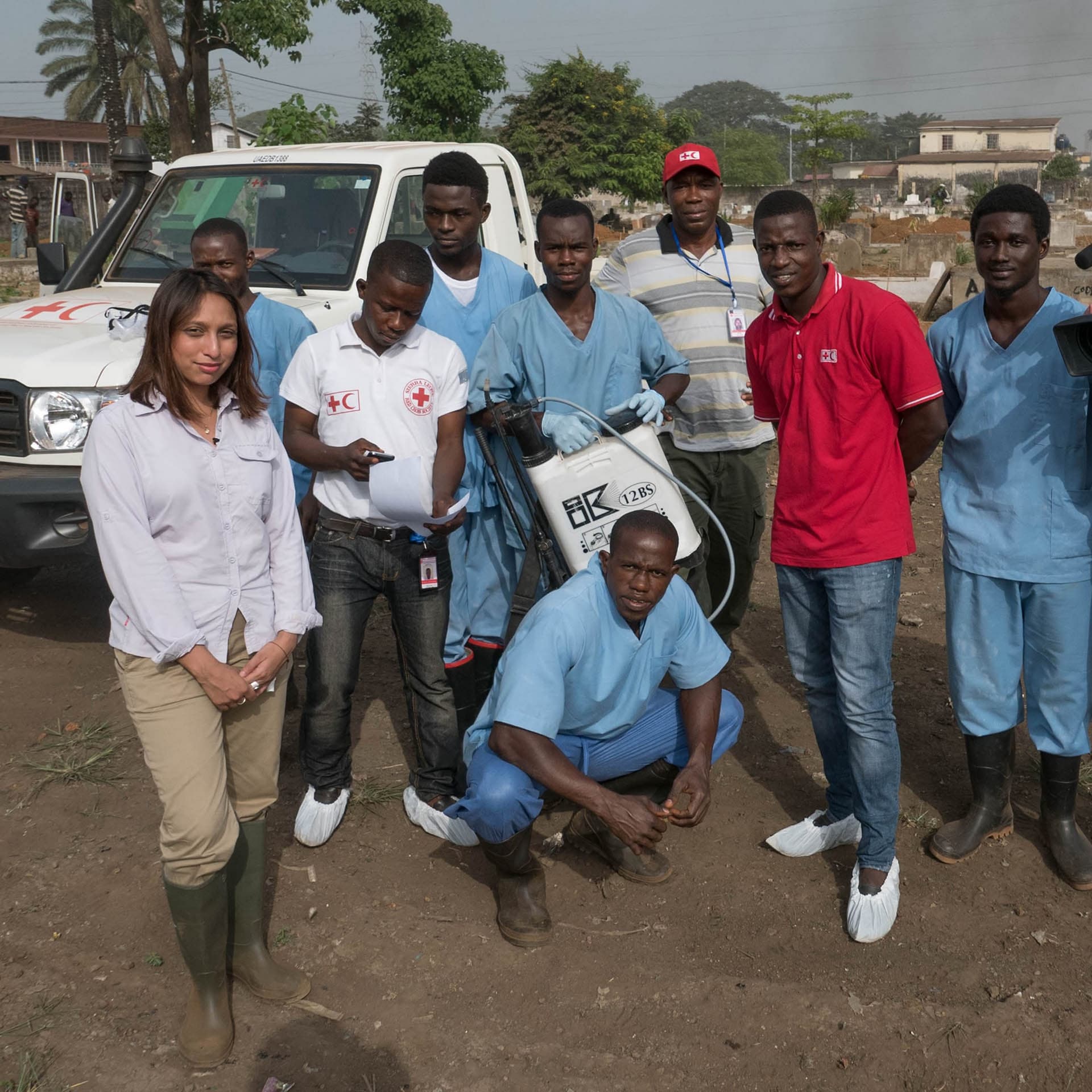
10:43From day one, and pretty much ever since, one of the main tasks has been to clear the remnants of war from this vast city, removing bodies, rubble, shattered glass, burnt-out vehicles. A lot has been done, but it's a huge task. We stopped by the remains of the old Meridian Hotel in downtown Khartoum, a burnt, twisted shell of a building now open to the elements. We would have come from school after school to come here, and at the back over there would have been the swimming pool. Inside the wrecked lobby, an unusual sight, there's two burnt-out vehicles. Those are the remains of a rapid support force's technical.
11:24And technical means basically it's a Toyota 4x4 pickup truck that had a mounted heavy machine gun on top of it. They drove cars inside buildings to hide them from drones, the army drones, or from artillery shelling. It's a done technique by fighters in this war to try to hide their equipment from the other side. Among the most dangerous painstaking jobs is to check every building, every part of the city, for mines, booby traps and unexploded ordnance. Just by the banks of the Nile, near the shattered remains of the old Hilton Hotel, we find a team of D miners at work.
12:10We cleared projectiles, mortars, rockets, hand grenades, uses small arm, ammunition, anti-personal, anti-tanks. Juma 'a Hamdan is a deminer with JASMAR, a Sudanese NGO funded by the EU and the UK. His team is clearing one block of land near the river. He says 80 % has been done. He points out the part that remains. So in front of me, what I can see is that there is a road with a smashed up digger to my right hand side and down the road I see whiteboards that are blocking the road. Yes, from that whiteboard you go down the west direction, that's the minefield. But is that in the bushes down there?
12:52Yes, by the right side. And when you have to clear areas with a lot of bushes, what do you do? Yes, we have tools, we use it, scissor, to cut the grasses down, down, down, down, down, and sweep with the detector. So after you cut the grass up to a certain level, you sweep with the detector, then you move on? Yes, and you move. That's very risky. So you have to be very careful. And also there are some snakes, some things around this area. Any crocodiles by the river? No. But here are only the snakes and scorpions. He shows me the type of mines they have found. Russian and Israeli anti-personnel mines, as well as Chinese anti-tank mines.
13:42But unexploded ordnance and ammunition are a problem too. As people return, they are trying to raise awareness of the risks. You know, the people, they're still out of Khartoum. And many, many, many, how this is empty, no people. But when people come, they should have awareness because there are some items, projectiles, mortars fall on the houses. So they need more awareness. Last night there was a large explosion that had people slightly concerned. Can you tell us what happened last night, what you found? Okay. The people, they... The dirt, there was a pile of dirt, rubbish. Rubbish. They put the fire.
14:31But they didn't know there is mortar under this rubbish. There was a mortar under the rubbish that hasn't exploded. Yes. The challenge is really big to clean up the whole city. Yes, yes. That will take maybe around three years or four years. In areas that have been cleared, people have been returning to assess and repair the damage. The government estimates that the cost of reconstruction for Khartoum alone is more than$100 billion. Some losses, though, are immeasurable. When we arrived, it was very dangerous. They were still fighting Khartoum, and the area was mined. It hadn't been cleared yet, so there was lots of unexploded ordnance, bullet casings and possible booby traps.
15:15And the entrance was blocked by overgrown plants. Jamaluddin Zainal Abdin works for Sudan's Antiquities Authority. He was the first to enter Sudan's National Museum, home to priceless collections, dating back thousands of years to the kingdoms of Kush and Karma and the time of the pharaohs. We went to the front of the museum. We found it was smashed. Inside, I saw ancient artifacts scattered everywhere, somewhere broken. And as I looked around, I could see that the main storeroom where we kept our collection was open. Officials say thousands of artefacts were either destroyed or shipped off to be sold while the RSF controlled Khartoum.
15:58Some of our most important and valuable artefacts were made of gold and the RSF. We're always looking for gold and money. They took their time and managed to get into our special secure storerooms where we kept them. They took all the gold pieces. They stole more than 2 ,000 artefacts from the safe rooms alone. In recent months, Sudanese police working with international authorities like UNESCO say they have recovered some 500 looted items. But Jamal says a lot has been lost.
16:35I've worked here for 37 years and I've never seen devastation like this. We've lost friends, relatives, even children in this war. My own brother was killed, so we've all been hurt. And now we've all lost our history too. Our elders used to tell us, those with no history have no roots. It's devastating. We've lost part of our identity, part of our civilization. You're listening to the documentary podcast from the BBC World Service.
17:09102 miles ago, the oil light came on. 100 miles ago, you noticed. Now, it's time to head to Take 5. This oil change, fall in love with your car all over again. In just 10 minutes, your dream technician will check your tire pressure, top off fluids, change your oil, and verify with Carfax exactly what your car really needs. All while keeping you in the driver's seat. Take 5, the stay-in-your-car 10-minute oil change. Find your nearest shop at take5.com. She was the sister who went unnoticed. A daffodil might look plain next to a lily, but on its own, there is much to be admired. Now, her greatest chapter is yet to come.
17:51The most important thing is to be yourself. From the world of Jane Austen's Pride and Prejudice comes a new Britbox original drama. Mary, you will flourish. Based on the best-selling novel, The Other Bennett Sister, now streaming only on Britbox. Watch for the free trial at Britbox.com. Today's episode is sponsored by NerdWallet's Smart Money Podcast. Personal finance can feel like a pop quiz you didn't study for. This podcast is your study guide. On NerdWallet's Smart Money Podcast, you'll hear from trusted journalists who explain the why behind major financial decisions. You'll get research-backed insights and clear pros and cons.
18:29whether you're planning a big purchase or just want to grow your wealth. Make your next financial move with confidence. Follow NerdWallet's Smart Money podcast on your favourite podcast app.
18:43I am Mohamed Hashim on assignment in Khartoum. It's not only the museums that were looted, for this was one of Africa's great capitals. And before the RSF left, they stripped much of the city bare. Anything deemed to be of value was taken. Not just furniture, appliances and belongings, but wall sockets, electrical wiring, even pipes, taps and sinks. The cost of repair and replacing is beyond most Sudanese. There's no insurance for this. And despite ongoing work, large parts of the city are still without running water or electricity. So, many once-thriving areas remain largely deserted, with creeper plants slowly enveloping abandoned homes.
19:26This is my old childhood neighborhood. The streets appear to be empty. All the cables have been pulled out of the ground. And house after house appear to be destroyed. And then there is this ubiquitous bushes that are everywhere.
19:48This would have been a very busy part of town. There's no one here. But despite all the destruction, coming home at a time of war, one never knows who you will find or meet. It's these moments of joy, of survival, that returnees look for.
20:22Hello, guys. You're welcome. You're welcome. You're welcome. You're welcome. You're welcome. You're welcome. You're welcome. This is Jum 'a. I haven't seen Jum 'a in about five years. But I've known Jum 'a for forever. And it's so good to see him. And he's telling me about the horrors that they had to endure during those first few days. He used to live south, in south of Khartoum. He said he was there. He had been beaten, abused, saw women being raped. They had to run. They had to run for their life. And he said that when they came back, he came back here in July last year. And when they came here, this place was littered with bodies, and they're still clearing and they're finding.
21:04And he says that I should go down the road to where that used to be the corner shop from where we'll buy our stuff as children. And he says there, they're still cleaning blood. There are leftovers of RSF uniforms and stuff.
21:26You can see the turban, the camouflage, the camouflage turban of the RSF, what is known as the Kadmul. Oh my lord, oh my lord, oh my lord, this is a jaw. These are bones of dead people. As you can see the remains of the skull. is what looks like part of a spinal spine. And you can see the remnants of the hairs. Probably stray dogs in the area would have devoured what was left of the body of this soldier. So this was his shop. Khattab Al-Lamin is the owner of that corner shop over there. It's the only shop that's open. He came five days after the army liberated this part of town. So there were a lot of RSF fighters, dead bodies scattered all around.
22:21This area was RSF area. They were all RSF and here. They had smashed one car passing down the road. They smashed into the shop and they took everything, looted everything that was in it.
22:43Just up the road I see a man up a ladder by an electricity pole. Another worker is fixing metal hinges. A proud businessman stands outside his shop, the only one whose front has been repaired. He tells me he had a car rental business. He had fled to Egypt but came back months ago. Within three to four days, all his staff should come back to start resuming work. Solar? He's put solar, so he's going off grid.
Read the full transcript
23:18So he has electricity, water, everything is running in his office. He takes me to see his old garage. For this car rental business, they had this garage where they had 120 cars. 118 they stole 118 cars they were taken from here this is the sample of the last two cars that you had there are no wheels on this car there is no engine there are no mirrors glasses, doors the back seats have been ripped out the front seats are taken everything there's nothing but the shell of a car Why did you want to come back?
24:10Our homes, our businesses, our houses, everything is here and there is no work for us in Egypt. It's the lack of electricity is a problem and not everyone can afford to have a generator.
24:26How much did it cost you to put in panels for electric power? $5 ,000, which is beyond the affordability of most families in Khartoum. I mean, you can see all the houses are ridden with bullet holes, shrapnel.
24:47Slowly, slowly, he says a lot of people are doing maintenance work, and hopefully people will eventually come back. Each day, more are returning. Some estimate maybe a million, maybe two, have come back to Khartoum in the past year. The city's airport has just recently reopened too. Among the arrivals was Seif, back for the first time since he fled in 2023. It was a tough experience to be a refugee. You know, I'd lost my business, my work, my property, all my belongings. and starting in Egypt with nothing was hard. How are you feeling now? It's been three years. Coming back, I'm overwhelmed with emotion.
25:33I'm excited. I've been longing for this moment for some time. I know my house has been destroyed, but it's a beautiful feeling to have arrived back.
25:45Ironically, the city where the war started is also now becoming a refuge for those displaced by fighting in other parts of Sudan. For while it's quiet now here, the war is still raging to the south and to the west. We didn't think we would survive. It was like a massacre. We were trapped there with no electricity, no water, no food. We survived a siege. I meet Abdu, a student. He's just returned from Al-Lubayyid, a city to the south in Kurdufan. He fled there at the start of the war, but soon it too became a battleground. It was completely surrounded by the RSF, cut off and starved, until the army managed to open a road to relieve the city.
26:34Most of Al-Ubaid has been destroyed. They have been using drones a lot, kamikaze drones. Now the army has opened up a road, but the RSF hit a lot of vehicles trying to get in or out. Like Dua, during the war he joined a group of volunteers to help the community survive. We would volunteer to work at the hospital to help bury bodies of those killed in the shelling and bombing. I also worked in the communal kitchens. I would help to clean up the neighbourhood. And we started installing pumps in wells dug in the old part of the town. It was a lifesaver for us because it was our only source of water.
27:16But food was scarce. During the siege, people were starving. A bag of lentils went from around 2 ,500 Sudanese pounds. That's roughly a dollar a kilo. It went up to$42 a kilo. People were dying because of the starvation. We would try to make sure children and old people managed to eat. So I wouldn't eat for days. I lost a lot of weight. I was down to 48 kilograms. But since they broke the siege, people are better now. though it's full of people who fled the Jandjawid attacks on nearby villages. So how did you feel during those days?
27:56We were living like we would not see tomorrow. I lost hope in everything. I would just try to survive the day. We would bury four to five from our neighborhood each day. Even then, at any moment, you could get caught in an exchange of fire. You could be the next to be killed. You just have to live moment to moment. Now back in Khartoum, he intends to return to the university to study art and paint murals, to bring colour and joy to this devastated city. But his family home is wrecked, so for now he's staying with friends. He dreams of a return to peace. I hope the war finishes and people come home.
28:37We must build a Sudan that is for all of us, irrespective of race or tribe, and where people do not fight for power. That's what any normal person would want.
28:52With this moment of peace here, there are glimpses of what Khartoum could become again. People are back at the banks of the Nile sipping cups of sweet tea and hibiscus. Schools have reopened. Kids play football again and swim in the Blue Nile. And one year on, Dua 'a too is reveling in a newfound sense of freedom, trying to shed the fear instilled by war. It feels like we are discovering the life again. It feels like we're learning how to walk because in two years we used to walk like a certain walk, not to be noticed, not to make sound, looking down, just trying to avoid the checkpoint. And then we had to like un-walk.
29:32The artist of walk. Yeah, the artist of walk. So I sometimes got myself walking like this again and then it's like, hey, it's over and I just walk normally. and learning to sleep and learning to go get bread as a simple act and learning how to just peacefully have tea or coffee with my women friends and we come together and laugh at things. And sometimes it gets very emotional. It was also my son was seeing the light for the first time. The light. Oh, wow. Yeah, he was brought up with no electricity, so it wasn't part of his life. So he was seeing the light, and I remember just running after him.
30:08he was running in Shara 'a Sisi, and he was like, this, da, da, da, da, da, da, da, and it's everywhere. He was like, I was crying. It felt like we're trying everything for the first time.
30:25So what of the future? The war still goes on. Millions remain displaced. Thousands are dying. It's the army and the RSF who will decide when the war is over, and much depends on their regional backers. It's widely documented that the RSF gets critical support from the United Arab Emirates, though it strongly denies this, while Egypt and Saudi Arabia are key backers of the military. If peace finally happens, the cost of recovery in every way will be overwhelming. Dua hopes people will take another lesson from this war, that in many ways it was the civilians who saved each other, and they will be the ones to rebuild Sudan.
31:06Yes, Sudan is very changed. You have the whole culture of mutual aid that emerged during all this. The Sudanese people coming together to help each other, to feed each other, and to teach their children to take care of each other. And you have the women healing the community, bringing this place to life. This is the Sudanese voices coming out now. People coming together just to build the Sudan from the neighborhood, from the houses, from the bottom up. Not with like policies and politics and negotiations and stuff. No, Sudan is happening now. We literally, Sudanese people held the country together.
31:38I think that's the future of Sudan.
31:45This episode of Assignment was presented by me, Mohamed Hashim, and the producer was Alex Lost. The sound mix was by Neil Churchill, the production coordinator was Katie Morrison, and the series editor is Penny Murphy. 102 miles ago, the oil light came on. 100 miles ago, you'd noticed. Now, it's time to head to Take 5. This oil change, fall in love with your car all over again. In just 10 minutes, your dream technician will check your tire pressure, top off fluids, change your oil, and verify with Carfax exactly what your car really needs. All while keeping you in the driver's seat. Take 5. The Stay in Your Car 10-Minute Oil Change.
32:29Find your nearest shop at Take5.com.
From the publisher
Since 2023, Sudan has been engulfed by a brutal civil war. More than 150,000 people have been killed and millions have been displaced. The war began as a power struggle between the Sudanese military and the powerful paramilitary group the Rapid Support Forces (RSF). The capital Khartoum was the epicentre of the conflict. Millions fled as fighting wrecked the city. In 2025, the Sudanese military finally retook the capital from the RSF. One year on, Mohanad Hashim returns home to Khartoum to see how life is slowly returning to the battered city.
This episode of The Documentary comes to you from Assignment, investigations and journeys into the heart of global events.