In short
The BBC documentary-style episode “Sheba: Just Like Us?” examines humans’ conflicted relationship with primates used in research, using chimpanzee Sheba’s life as the throughline. It contrasts invasive biomedical experimentation with sanctuary and behavioral/cognitive research, and debates whether animal models are scientifically valid or ethically acceptable.
Guests (backgrounds)
- Charlotte Ulenbrook (zoologist; studied chimps in the wild; hosts).
- Bob Ingersoll (primate researcher and activist; knew Sheba for her first 25 years; Oklahoma sign-language work).
- Amy Fultz (Chimp Haven founder; biomedical facility background; helps run sanctuary).
- Michelle Reininger (Chimp Haven colony director; PhD research on chimp pant hoots).
- Ayesha Akhtar (FDA medical officer; now president of Center for Contemporary Sciences).
- Lisa Jones-Engle (former LEMSIP biomedical researcher; later primate cognition work; worked with chimp infants).
- Doug Cohn (former LEMSIP researcher; veterinary-trained; worked on infectious disease vaccine research).
- Chris Petkoff (neuroscience professor; argues some primate research remains necessary).
- Elise Moore (Sheba’s early owner; involved with Institute for Primate Studies).
Key claims
- Chimpanzees were used because of genetic similarity, but differences in gene expression and disease manifestation make them poor models; animal testing has high failure rates and can mislead human trials.
- Sanctuary is needed because many chimps remain in labs despite bans on invasive biomedical work for chimps in the US.
- Alternatives (human-relevant methods) should replace animal testing, though some scientists argue certain neuroscience and vaccine work still requires primates.
Notable examples
- Sheba’s timeline: born to Lily and Nim; raised in a zoo; spent 24 years in labs; moved to Chimp Haven in Louisiana in 2006.
- Nim’s transfer to LEMSIP after IPS closure; his rescue via media attention.
- Aisha’s “piano keys” analogy and tamoxifen example (liver toxicity found in rats after human trials).
- Lisa’s account of LEMSIP HIV vaccine efforts where chimp disease didn’t replicate AIDS.
- Lisa’s macaque story: maternal devotion when an infant is separated during trapping.
- COVID-era claim: macaques helped accelerate vaccine development, though the episode argues this should shift toward non-animal methods.
Written by AI. May contain mistakes. Listen to the episode to check what was said.
Chapters
Tap a time to open that second in VOSheba's Story Begins
0:00 to 0:56
Discover Sheba's background and the ethical implications of her life.
“This BBC podcast is supported by ads outside the UK.”
Sheba's Story Begins
1:22 to 2:07
Discover Sheba's background and the ethical implications of her life.
“She was born in a cage, raised in a zoo, and then spent 24 years in a laboratory.”
Bob's Reunion with Sheba
2:07 to 3:21
Witness the emotional reunion between Bob and Sheba after many years.
“Primate researcher and activist Bob Ingersoll knew her for the first 25 years of her life.”
The Dark History of Chimp Research
3:21 to 4:38
Explore the controversial history of chimpanzee experimentation.
“Listening to Bob talk about Sheba and the memories it brings back of her mother Lily and her father Nim, it's almost impossible to imagine the dark history they all share.”
Sanctuary for Retired Chimps
4:38 to 6:39
Learn about Chimp Haven and the care provided for retired chimpanzees.
“Other primates, like monkeys, were not so lucky, and experimentation continues.”
Vocalizations and Communication
6:39 to 7:27
Understand how chimp vocalizations reflect their behaviors and emotions.
“I don't know how much you've seen of wild chimps, but do you think that you have a fairly comparable setup?”
Humor and Antics in Chimp Behavior
7:27 to 9:21
Enjoy amusing stories showcasing the playful nature of chimps at the sanctuary.
“I've got a little bit of chimp in me as well.”
The Future of Primate Research
9:21 to 10:20
Discuss the ethical implications and future of primate experimentation.
“With modern technology now able to imitate human biology, do we still need to experiment on non-human primates?”
Bob's Journey to Activism
10:20 to 14:01
Follow Bob's path from aspiring surgeon to primate activist.
“This young man, who was a graduate student in my zoology lab, walked in and he started talking about, there's these chimps in Oklahoma that are using American sign language to talk.”
The Awakening of an Activist
14:01 to 23:56
Learn about a defining moment that sparked an activist's journey in animal rights.
“And in no time, we were rough and tumble playing and doing the kind of things.”
Show all 24 chapters
Separation and Loss
23:56 to 24:34
Discover the tragic separation of Sheba from her mother and the impact of her environment.
“and events were about to take a drastic turn, as we'll discover in a few moments.”
The Complexity of Animal Research
24:55 to 28:00
Explore the ethical dilemmas and challenges of using primates in biomedical research.
“Ever since that vote in 2016, the country's been wracked with political instability.”
The Importance of Animal Testing in Drug Development
28:00 to 28:53
Learn about the critical role of animal testing in the development of effective treatments like tamoxifen.
“But they were never allowed to go on into human testing because of results in animals that were misleading.”
Sheba's Journey to Chimp Haven
28:53 to 29:55
Discover Sheba's story and her rescue from the Columbus Zoo to a primate cognitive project.
“Back in the 1980s and 90s, there were two kinds of life for a laboratory chimp.”
Sheba's Intelligence and Social Skills
29:55 to 31:39
Explore the intelligence and social behaviors exhibited by Sheba during her time in the lab.
“Shiba was about two years old when she came to the project.”
The Heartbreaking Loss of Sheba's Baby
31:39 to 33:40
Hear the emotional account of the loss of Sheba's infant and its impact on the researchers.
“but in a captive setting where we were trying to teach them explicit skills we needed them to be able to focus on the problem at hand.”
The Closure of the Lab and Its Aftermath
33:40 to 34:44
Uncover the challenges faced by Sheba and her cohorts after the lab's closure and their move to a sanctuary.
“A few years later, the group of chimps at Dr.”
Continuing Research and Legislative Changes
34:44 to 36:40
Learn how legislation around chimp research evolved and the ongoing use of primates in labs.
“Sheba, I think because she had good healthy rearing as an infant and I think a good life for many years with us until the lab was closed, was very resilient and she's done well.”
Ethical Dilemmas in Primate Research
36:40 to 40:41
Examine the ethical concerns surrounding primate research and the speaker's personal transformation.
“biomedical and behavioural research continued elsewhere.”
The Necessity of Animal Research in Medicine
40:41 to 42:00
Discuss the ongoing debate about the necessity of animal research for medical advancements.
“When I left, I knew that every day, every night when I go to sleep, another thousand macaques have died.”
Animal Testing and Its Ethical Dilemmas
42:00 to 45:20
Explore the challenges and ethical concerns surrounding animal testing in medical research.
“There are some studies that just cannot be done in people.”
The Impact of Monkeys on Vaccine Development
45:20 to 47:24
Discuss the crucial role monkeys played in developing vaccines during the COVID pandemic.
“a tiny, testable version of a working human organ.”
The Irony of Medical Research and Personal Experience
47:24 to 49:28
Hear about the personal experiences of a campaigner against animal testing who benefited from it.
“This is an enormous sacrifice that these monkeys gave us.”
Future of Research Without Animal Testing
49:28 to 51:24
Discuss the potential for advanced technologies to replace animal models in research.
“afflicted with hepatitis A, B and C and all the others, because it did help millions of people.”
Transcript
Automatic transcript. May contain errors.0:00This BBC podcast is supported by ads outside the UK.
0:30Make your travel dollars work harder. Follow Smart Travel on your favorite podcast app. Keep your wellness routine going strong all summer. Cachava's new travel packs help you stick to your daily ritual even when you're on the go. Just one packet of Cachava's all-in-one nutrition shake provides complete nutrition wherever you are. With 25 grams of protein, 6 grams of fiber, greens, adaptogens, and more. Simplify your daily ritual. Go to cachava.com and use code FITNESS for 15 % off. That's K-A-C-H-A-V-A dot com code FITNESS. I'm Charlotte Ulenbrook, a zoologist, and you're listening to Sheba, just like us, from the documentary on the BBC World Service.
1:21Sheba is a chimpanzee. She was born in a cage, raised in a zoo, and then spent 24 years in a laboratory. As I learnt more about her story, I kept hearing the phrase, we have the need, but do we have the right? Having studied chimps in the wild for years, I've always found it hard to accept experimentation on animals, especially ones that are so like us. The justifications and counter-arguments have raged for decades, and although attitudes have changed, the debate is still unresolved. In the next hour, I explore our conflicted relationship with the animals we use and the struggle to set them free.
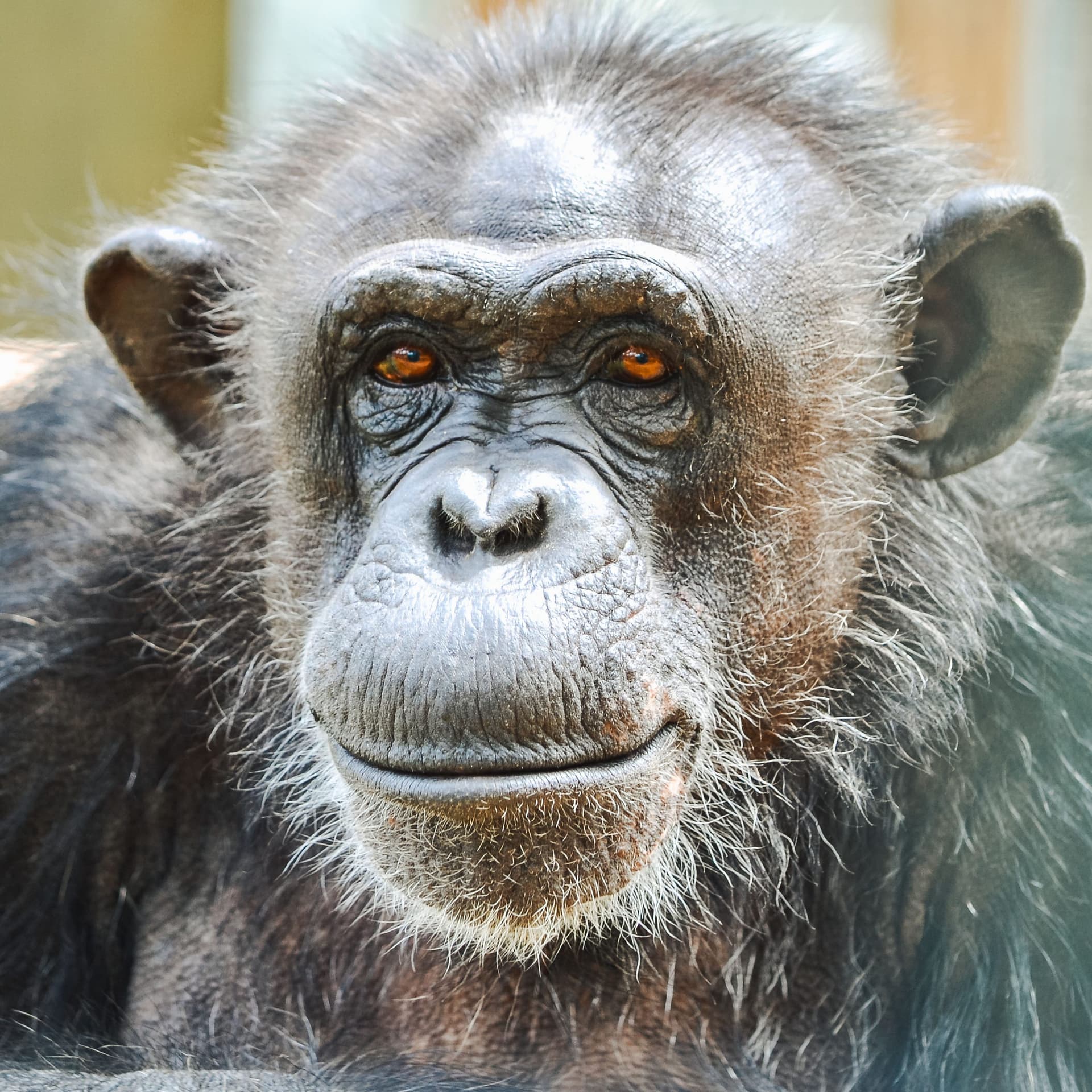
2:07But first, let's meet Sheba. Holy moly. Hi, Sheba. How you doing, girly? What you got around your neck? Sheba is 44 years old. Primate researcher and activist Bob Ingersoll knew her for the first 25 years of her life. But this is their first reunion since 2006, when she finally left a research laboratory and came here to Sanctuary at Chimp Haven in Louisiana. It's a moment of unmistakable joy. You are really beautiful. How old is she now? She's 44. Middle 40s, yeah. It was emotional and wonderful and joyous. Seeing Sheba just made all my memories of all the Oklahoma chimps rush into my heart. For many years, Sheba had to endure a lot of things that were not fair and were not right and needed to be changed.
3:09And Sheba was looking at us, you know, knowing, hey, everything's okay. Hey, that's been a crazy journey, huh? Coming a long way to come to the promised land. Listening to Bob talk about Sheba and the memories it brings back of her mother Lily and her father Nim, it's almost impossible to imagine the dark history they all share. What they knew and understand was I was causing them terror. I was a threat. I was hurting them. It started with a dream. Chimps and other primates are so close to us genetically, so sophisticated in their behaviour. Surely, under the right conditions, we could learn more about ourselves.
3:59There is something different about the look that comes back from a primate, a non-human primate. And they know that you know that they're just another version of us. And so we are just versions of each other. From the 1960s onwards, a series of medical, behavioral and social experiments took place chasing that dream. But for the animals involved, it turned into a nightmare. Whatever similarities, chimps aren't almost human. They're chimps. The scientific basis of this work was flawed and worse, often meaningless and cruel. By 2016 in the US, all invasive medical experimentation on chimps came to an end.
4:44Other primates, like monkeys, were not so lucky, and experimentation continues. But chimps live a long time, so the problem didn't simply evaporate. As funding dried up from 2011 onwards, thousands of chimps had nowhere to go.
5:06it's a thrill for me to be able to see them here and to know that they are here they're safe yeah so i mean it's just nice seeing them living like they're meant to interacting with other chimps this is chimp haven in louisiana and it was set up to provide sanctuary to laboratory chimps Amy Fultz is one of the founders. At the time I was actually working in a biomedical research facility with chimpanzees doing behavioral research. Back in the late 80s and early 90s, chimpanzees were mostly being used in HIV and AIDS research. And chimpanzees actually didn't turn out to be a great model for AIDS.
5:49And so the funding was sort of falling off for that type of research. Chimpanzees are a long-lived species. They live into their 60s sometimes, and they're very expensive to care for. And so myself and my co-founders wanted to provide a solution to this need for sanctuary for chimpanzees being retired from biomedical research. There are 300 chimps here, and it costs about$29 ,000 to keep just one for a year. That's nearly$9 million to provide food, medical care, enrichment and all their basic needs. The US government provides around 75 % of that, so Chimp Haven must raise the rest themselves. Michelle Reininger is the colony director.
6:42Of course, it is a huge responsibility. I don't know how much you've seen of wild chimps, but do you think that you have a fairly comparable setup? Yeah, I think with the chimps that we have here, their behaviors in many ways are like those in the wild. We see the different vocalizations that they use. And we've got the pant hoot where they display and then they make, everybody knows the pant hoot. And then it builds up to a big scream. I'm not going to do it because that gets very loud. My PhD research was on chimp pant hoots. So when you said you were about to do a pant hoot, I thought, yes, come on.
7:17So should we do one together? Sure, we can do it together. Okay.
7:28Sorry, sorry. I've got a little bit of chimp in me as well. I can't help, but anyone who's spent any time around chimps just can't help but want to vocalise a bit. We always joke when we're caregivers that when we talk to people, we talk chimp first half the time. Like we greet small babies, we're holding out our hands and... and it's just like we've got to we've got to get out more we've got to get with people more Hugo in this group he's kind of looking at us he is yeah yeah I see you I know I'm about to tell a naughty story of yours I know um there's a chimp in this group named Queenie B and she is this really long lengthy dramatic queen um and he loves to antagonize her he'll grab like a stick or even just with his finger, he'll just touch her on the back, very lightly actually, and she will start screaming like it's the worst day on earth.
8:22She'll kind of do a tantrum on the ground like a toddler would, and then you can literally see him giggling to himself, and then she'll run away from him, and he'll sneak up behind her while she's starting to calm down, and he'll do it all over again just to set her off. Today, there are 1 ,142 chimps in havens like this in the US. Yet 143 remain in labs, either waiting to be released or used for behavioural research. But there are still over 100 ,000 monkeys in biomedical research labs in the US, UK and the European Union. So the fight for people like Bob and Amy is far from over. That day I realised everything's not cool and everything is not good and something needed to be done and I was determined to do something about it.
9:21With modern technology now able to imitate human biology, do we still need to experiment on non-human primates? There are stark differences of opinion. Animals in laboratories never have a good day. They suffer day in and day out. But the good news is that we are on a brink of a major revolution in medical research, in which we are using methods that are based on human biology and that are so much more effective than animal experiments ever have been. There's been so many examples of how the animal research basis has just transformed lives. I'm not saying that that gives us the right to do the research, but I'm just saying that that research, with as few animals as possible, has been transformative on the way medical science has progressed.
10:18I heard about the chimps in 1974. This young man, who was a graduate student in my zoology lab, walked in and he started talking about, there's these chimps in Oklahoma that are using American sign language to talk. And I'm like, no way. And so I was intrigued. Bob Ingersoll was a student at Oklahoma University, studying to be an orthopedic surgeon. And he brought out a chimpanzee named Allie and a female named Vanessa. They came over to me and hugged. And as we're hugging, it was like a flash in my head. I don't want to be an orthopedic surgeon anymore. I want to do whatever this is. These are my people.
11:04and I'd never even heard the word primatology and I knew I wanted to be whatever that was. I think what we were trying to do was communicate with the chimps and let them learn something that we teach them so that we could have conversations and that sort of thing. You know, I just was looking to communicate with a chimp.
11:29This innovative project set out to see if human language could be learnt by chimps. Sheba's story also starts here in Oklahoma. Sheba's mother was a chimp called Lily. She arrived at the Institute for Primate Studies with her owner, Elise Moore. Elise drove up in her van, and she steps out of the van and goes around to the other side and opens the door, and Lily steps out, and Lily's a chimp, And she's about six, seven years old at the time. And she jumps up into Elise's arms and Elise carries her on, you know, on her hip and walks over. And we introduce ourselves. And Lily had been purchased by Elise when Elise was a teenager, I think 17 or 18 years old, out of the back of a magazine, which I thought was crazy.
12:22I mean, COD, let's just order us a chimp. And that's what she did. and that is how I met Elise and Lily. Lily and Elise settled in well at the Institute for Primate Studies. At first, you know, I was just a chairtaker. About two months after I was there, I was essentially running the place. Lily was with the other chimps. During this period, she had started to stay with the chimps more. Even at night, I thought it was really good for her. It was growing up, you know, she wasn't a kid anymore. She was going into adolescence. Life was good. Soon after, an infant chimp called Nim arrived. He had been part of a world-famous sign language experiment.
13:10His arrival was going to change Bob's life forever. ever. In September of 1977, Nim came from Columbia University with a group that was working with Nim in New York. Later on that day, we actually went on a walk before the New York people left, because it was going to be the last time they saw Nim. And that's when it clicked in my head, this guy's going to need a little friend and I'm going to be it. Yes, at four years old in the while, the chimp would still be constantly with their mother. So what kind of relationship did you form with Nim? I was kind of surprised that the New York people had so much trouble controlling Nim and he was biting everybody and that sort of thing.
14:01It didn't occur to me that I was going to have any trouble at all. And in no time, we were rough and tumble playing and doing the kind of things. You know, you have to be a chimp to be with a chimp. You can approximate the relationship that chimps have with one another if you're willing to roll around and tickle and play and that kind of stuff. So that's what I did. So can you tell me a defining moment in your life when something snapped and your life as an activist began? I can. That was a day that I'd spent out with the chimps all day and I'd taken four or five chimps out and came back and we had squared them away, got them back in their cages, and I had walked out to my car to drive away and come home.
14:43And as I was getting in my car about to close the door, I looked at the chimps all lined up in their cage, and they were looking at me behind the bars, and I was going home. Air conditioning, a TV, and that sort of thing, and a refrigerator with whatever I wanted in it. And they were in that cage at the mercy of whatever it was that we provided for them, and that's it. They couldn't get out. They couldn't go home. So all of those philosophical questions just rushed into my brain right at the same time. And from that point on, things changed for me. Because up to that point, I thought it was cool.
15:16And everything was cool. That day, I realized everything's not cool. And everything is not good. And I was determined to do something about it.
15:30Things were about to get much worse. The Institute closed. Bill Lemon was aging out. He was in his 60s and he also lost funding from the university. So he had 35 or 40 chimps to feed, didn't have the funds to be able to do that. And so he signed a contract to sell all of the IPS chimps to LEMSIP, the Laboratory for Experimental Medicine and Surgery in Primates. And even NIMH got sold. So LEMSIP, the facility where chimps were infected with human diseases. Can you describe to me how you think NIMH felt suddenly going to LEMSIP and his whole life being turned around? Yeah, he was lost. Like, my friends are gone.
16:19I am in a strange room It's like prison But worse Thrown in the back of a truck Driven to New York You wake up in that room The one thing that did happen to him He got a tattoo on his chest Number 37 But Nim wasn't there very long Because I raised a big stink And some friends of mine and I Contacted the New York Times And the Boston Globe And 60 Minutes and any other news outlet And Nim was famous. And so using Nim's fame got him out. I unfortunately was banished because I had stood up. And so I didn't even get to see Nim when he came back. And I was, yeah, I was a mess. I'll try to say it without getting mad.
17:06This is the hardest thing for me to do without anger. LIMSET was the medical facility that pulled all the jobs from small institutes like ours. They pulled our grants, they had a multi-billion dollar deal with the government, and acquired all our chimps. LEMSIP was known for invasive biomedical research on chimps and other non-human primates. Doug Cohn started working there in 1988, fresh out of veterinary school. And I was very fortunate to actually wind up doing something that I dreamed about doing when I was a 10-year-old. And tell me why you first joined LEMSIP. I wanted to get involved in a field called laboratory animal medicine, which is a specialty in veterinary medicine.
17:55And when a position came up at LEMSIP, I jumped at the opportunity to go there. And I was just astounded that I could actually work with monkeys and chimpanzees involved in infectious disease research. And I felt this was the place I needed to be. And I was there for nine years. And what was your main research there? When I came on board, this laboratory was celebrated because it was involved in the creation of the first hepatitis B vaccines that were used in human beings. And there was also a relatively new project to create the first AIDS vaccine for humans. And the HIV vaccine was able to live in human beings and chimpanzees.
18:43And those are the only two species. So there was a great deal of hope that the chimpanzee would be the breakthrough model to create the first HIV vaccine. And we actually infected the animals with HIV virus. So I was responsible for helping the teen insert the virus into these chimps, some of which had the vaccine and some of which did not. So this was kind of a scary endeavor. Yeah. So can you describe what it was like to learn that the tests on the chimps didn't actually work? Yeah. The reason why you do science is to test hypotheses. And there was every reason to believe that the chimps were going to be a breakthrough for HIV as it had been for hepatitis A, hepatitis C.
19:31So, in fact, the HIV virus did circulate in both humans and chimps. But the problem was that the AIDS disease itself didn't actually occur in the chimps. Can you explain the three R's principle to me? And is it something you subscribe to? This is a commandment, if you will, an unofficial commandment. It was actually developed by two scientists in Great Britain in 1959. Birch and Russell were interested in the ethics of animal research. So they came up with these principles of reduction, refinement and replacement. Can this research with animals have a reduction in the number of animals? Can it be refined to reduce or eliminate pain and distress?
20:19And finally, can it be replaced by non-animal methods? And do you think that animal rights campaigners have actually played a really positive role because by pushing for better animal welfare, there's much more rigorous oversight. And that's led in many cases to better science. No question about it. The animal activists of years past and in today have been instrumental in improving the life of research animals. The conditions that animals are in today are better. I mean, a number of amendments have been made to the Animal Welfare Act. And those, in part, were made because of influences of animal activists on the United States Senate.
21:09Dr. Lisa Jones-Engle, who would play a part in Sheba's life, also began her career in biomedical research at LEMSIP. I was going to be a scientist. And if you want to be a scientist and you're in the United States, well, there are no free-ranging primates in the U.S. And so that meant I went to a primate lab. It was in upstate New York called the Laboratory for Experimental Medicine and Surgery in Primates, a lab where we experimented on monkeys and apes. My responsibility was three young chimpanzees who had just been born a few months before I started, Regis, Kareem, and Digger. These boys, they'd all been taken from their moms.
21:51They were in the nursery. You know, they were a few pounds. They were balls of energy and curiosity and clinginess and neediness. But they were in a lab. They weren't in a chimp society. They had no chimp mother.
22:10In Oklahoma, another baby chimp was about to be born who would also be taken from its mother. Lily had become pregnant with Sheba, and Sheba's father was none other than Nim. Elise Moore remembers the day Sheba was born. September 7th, I get a call that Lily has a baby. I go down there. There Lily is. All the others are around her, but they're not touching the baby. She wouldn't let them touch her baby. So I took her into another room, and she held her baby up to me to show me. I said, no, that's your baby. I left for two weeks because I was having to find another place to live. I come back and Lemon has sold the baby to the Columbus Zoo.
22:59Just a few weeks after Sheba was born, she was separated from her mother and sold. The Oklahoma Institute was closing, so Elise had to find Lily a new home. I took her out to California and then one night, Lily had to be moved to the Wildlife Way Station, and a caretaker did not lock her up one night when it was freezing, and Lily froze to death. I was devastated. She's like my daughter and my lifetime work. I mean, my life centered around her. I just think of that baby in Lily's arms and said that Bob and I were not able to be a part of her life or grow up as Lily did or be with her parents. Sheba was now alone at Columbus Zoo and events were about to take a drastic turn, as we'll discover in a few moments.
24:32We'll be right back. change. Save up to 30 % in your next dollar change to take five. $15 value. Valid to participating locations. Terms and conditions apply. As yet another British Prime Minister steps down, is the country still feeling the effects of Brexit 10 years on? I'm Tristan Redmond, one of the hosts of the Global Story podcast from the BBC. Keir Starmer has become the sixth leader to resign since the Brexit referendum. Ever since that vote in 2016, the country's been wracked with political instability. When will it end? For more, listen to The Global Story on bbc.com or wherever you get your podcasts.
25:13Welcome back. I'm Charlotte Unenbrook, a zoologist, and you're listening to Sheba, just like us, on the BBC World Service. Sheba is a chimpanzee. Her story reflects our conflicted relationship with the animal world. At this point, she's two years old, having been sold as a baby to Columbus Zoo. Her mother Lily is dead, and her father Nim is in a biomedical research laboratory. But her life is about to change. During the 1980s and 90s, it was still thought that chimps were so like us they would make perfect models for experimentation. Thousands of chimps ended up in invasive biomedical research labs.
26:06Ayesha Akhtar was a medical officer for the US Food and Drug Administration. She's now president of the Center for Contemporary Sciences. She explains why she believes that primates don't make good research subjects for human diseases. You had a fantastic analogy, Aisha, about how despite a big genetic similarity between ourselves and, say, non-human primates, there's still huge amounts of differences in how that DNA is actually expressed. Sure. So it's like playing a piano. So all pianos have the same keys, such as like all humans and other animals share many of the same genes. But the difference in how you play the piano can lead to very different results.
26:59So you can play the keys in one way. You can get Chopin. You can play them in another way and you can get Jerry Lee Lewis. And it's the same as with genes. So although we share similar, in many cases, the same genes with other animals, how they are expressed, it differs. People say, oh, well, you know, we got this drug by using animals and so on and so on. Well, the problem is, is that by default, animals are required for testing. So by default, animals are always used in the development of drugs and vaccines. What if you use something else, something more human relevant? Would we have gotten that vaccine sooner and maybe even gotten a better vaccine, a safer vaccine?
27:47Can you tell me a bit about some of the missed opportunities for some human drugs? Tamoxifen, for example. From my understanding, if it had to be tested on animals, we might not have got such a useful drug. Well, one of the big concerns we have now is that there may have been hundreds, thousands of drugs that would have worked, maybe even been cures and would have been safe in humans. But they were never allowed to go on into human testing because of results in animals that were misleading. So you mentioned tamoxifen. Tamoxifen is one of the most effective treatments we have against breast cancer.
28:30And it did undergo animal tests, but we found severe liver disease in rats only after this drug had already moved on into human clinical trials. But if we had found it before, it likely would never have even moved on and been tested. So we likely would have missed out on the most significant and effective breast cancer treatment we have today. Back in the 1980s and 90s, there were two kinds of life for a laboratory chimp. Invasive work, like Aisha's been talking about, or cognitive and behavioural studies. Sheba was one of the lucky ones. Her journey to Chimp Haven began 42 years ago, when she was rescued from the Columbus Zoo by Dr Sally Boysen, who ran the Primate Cognition Project at Ohio State University.
29:23I had heard through the primate grapevine that the Columbus Zoo now had a PR chimpanzee, a baby chimp that the director of the zoo was taking around on his PR visits here and there around the city. The director was being bitten by Sheba. Then, of course, I got the telephone call, could she come and join our project, and she did. They are a fascinating species in their own right, and anything we learned about them could only, I hoped, would eventually benefit them in captivity. The idea being that if we showed how similar they were and how much they empathized, how much they could communicate, how intelligent they were, that we would begin to slowly change the consciousness of the country in terms of what we did with them in terms of biomedical research.
Read the full transcript
30:15Shiba was about two years old when she came to the project. But compared to other chimps that I've worked with, Sheba was above average intelligence, I think. And this is going to be very subjective. And I think every human mother probably goes through this as well. There's a point where your child sort of becomes an individual. And I got that sense from the chimps as well. They had their own ideas about things. They had their own opinions about things. And certainly Sheba showed that as well. We had a refrigerator that was inside the lab so I could keep treats and things in there. And the chimps were not supposed to go to that refrigerator or open it.
30:55And Sheba walked up to the refrigerator and she's looking at me the whole time, looking back at me, and taking very deliberate movements towards the handle like, I'm going to open this. What are you going to do about it? And it struck me, okay, she's a big chimp now. I said, it's fine. Go ahead and open the door. and she looked at me and paused for a minute, opened the door, reached in and took out a banana. And that was sort of our confrontation. That was it. And I realized I just had to start treating her differently now. Her superpower, like all of the chimps, was socialized attention. That is, she could focus on the problem at hand, ignore noise or anything else going on.
31:38Wild chimps pay attention to things that are important for being a wild chimp. but in a captive setting where we were trying to teach them explicit skills we needed them to be able to focus on the problem at hand. It was really the counting work that started us down one path. At the same time that Sheba was learning to add and subtract Lisa Jones-Engle, who was working with Jim Mahoney at LEMSIP, the biomedical research lab was about to get some big news that would affect all the chimps including her favourite, digger. Jim called me one day and said, Lisa, this was I think 1993, 94, maybe 95, and he said, Lisa, LEMSEP is closing.
32:23The Colston Foundation has made arrangements to acquire all the chimps here. The Colston Foundation was a notorious private biomedical research lab with a terrible record for animal welfare violations. Lisa worked frantically to save Digger from this fate. Jim managed to get Digger sent to Sally Boysen's facility at Ohio State University. It was only once he got to Sally Boysen's lab that I learned that he really understood how to be a chimp. He really liked Sheba. You know, Digger was the new boy on the block. Sheba thought Digger was pretty good-looking. Digger and Sheba were housed together.
33:06I don't know what Digger had been doing when he was in New York, but evidently he was quite the ladies' man, I suspect. And in fact, Sheba did, in fact, get pregnant. And unfortunately, her infant did not live. It died after nine days. That was a very sad day in the lab because we were all looking forward to it. When I saw that the baby's hands and arms were hanging away from her body, I went in and took the baby. and Sheba screamed literally for three hours after that. She was inconsolable. Sadly, Digger died not long after. A few years later, the group of chimps at Dr. Boyson's lab were about to be put through the terrifying ordeal of being moved again.
33:52Ohio University had decided to close the lab. Dr. Boyson was so devastated, she chained herself to the gates and called every news outlet in town to try and prevent the closure. Well, when the university decided to close the facility, literally there were black helicopters flying overhead, there were police everywhere. It was like a B-movie. It was ridiculous. The chimps were destined for a sanctuary, but unfortunately, one with a record of neglect. Two of the chimps died shortly after arrival. A legal battle ensued. Sheba and the surviving chimps were eventually moved to 236 acres of forested land at Chimp Haven.
34:44Sheba, I think because she had good healthy rearing as an infant and I think a good life for many years with us until the lab was closed, was very resilient and she's done well. I have seen Sheba since they have left. I went to Chimp Haven several times to visit, and it always was the same. I would hear Sheba start screaming and letting everybody else know that I was on my way across the parking lot. So lots of excitement, lots of course recognition. People often ask me, oh, would they recognize you? Of course they recognize me. I was their mother for 24 years. It has been a number of years now since I've been there.
35:25It got to the point where it was just so difficult to leave that I just couldn't put myself through that anymore. And I think it was hard on the chimps, too. I genuinely loved her and continue to love her as an individual. And all the chimps, but Sheba especially, just because we had a very special relationship. And I swore I wasn't going to cry. But that one made me cry. There's no question in my mind that we've lost out on a huge amount of important information about ourselves and about the species that's closest to us, the common chimpanzee, by not having this work continuing.
36:10Mostly what it does is makes me realize that the 50 years, I was tearing up talking about this, but the 50 years that I spent advocating for them seems now to be paying off. Nim's daughter right in front of me and her group, you know, I mean, it could have been a lot worse. And it's a testament to all the people that stood up and said, no, we can do better. Whilst Sheba settled into Chimp Haven, biomedical and behavioural research continued elsewhere. In the UK, licences for research using chimps and other apes stopped in 1997. In the US, it wasn't until 2015 that the Endangered Species Act classified all chimps, including captive ones, as endangered, thus making invasive biomedical research illegal.
37:07There's still no ban on privately funded behavioural research, and 142 chimps remain in those labs. But the laws on using great apes like orangutans and chimps for biomedical research didn't extend to other primates like monkeys. So for Lisa Jones-Engle, the work continued. So for 30 years, I am a scientist. I'm embedded in the system. And my job is to basically help the system make a better monkey model. And I was good at it. You know, I had a large team out in Southeast Asia. I would set up my big traps, and I would bait the traps, and I'd put my little string on the door, and I'd move 10 meters away, and I'd wait for the macaques.
37:53And I was generally very conscious about not trapping mothers with infants, because that really made the troop mad. I mean, we literally had to have people with sticks standing around us to try to drive the monkeys back, because that's how intent these animals were to get their friends back. But I was greedy. And a mom came in, and she had an infant, and five or six other animals came in. And I closed the door, and the usual happened. Everyone's screaming, they're pooping, they're peeing, they're shrieking. I'm anesthetizing them, and the animals go to sleep. And I go into the trap, and I grab the mom and infant, and I clean out her cheek pouches, and I bring her out.
38:30I take the infant and actually stick the infant into the scarf that I'm wearing. At some point, I hand him off to one of my assistants, and we finished getting everyone processed and collecting all of our biological samples. And I've got everyone else now back in the big recovery trap. And everyone's waking up and it's going well. You know, mom is awake now and, you know, she's eating, you know, a few things. And the infant is, you know, he's still vocalizing. He's just, he was just naughty. And I remember thinking, oh, this is going to be a good release. I look, everything's clear and I tilt the big trap back and boom, man, those animals take off like a shot.
39:05And then I hear squeak. And I look down, and that infant is still clinging to the net. That mom heard it the exact same moment that I did. And I literally, I saw her basically like checking. I mean, she's running her hands over her body, her chest and her back. Like, wait, where's my child? She heard her infant squeak. She spins around. She comes straight back into a trap. She knew what that trap meant. She knew what I meant. She came in. She grabbed that kid, stuck him on her chest, and turned around and spun around and went straight back out. That was the purest example of maternal devotion that I have ever witnessed.
39:50Nothing was going to stop her from reclaiming her child from me. What they knew and understand was I was causing them terror. I was a threat. I was hurting them. I could not deny it after that day. so at that point I had to decide what I was going to do and you know I think what finally changed for me was acknowledging that the macaques understood far more about what was happening to them than I had ever admitted and that's when I became the macaque-tivist I speak for the macaque and I do that because my debt to them is so profound I owe my scientific career to macaques I was no longer willing to be part of a system that refused to meet those two criteria, the best welfare and the best science.
40:44When I left, I knew that every day, every night when I go to sleep, another thousand macaques have died. Whether they've been intentionally killed at the end of an experiment or whether they died of a diarrheal disease in a laboratory in the U.S. or the U.K. or the EU, a thousand every night. And so it is my job to make sure that people know that. The numbers are hard to prove conclusively. But what we do know from the information released by the European Union, the Home Office in the UK, and the US Department of Agriculture, is that between 100 and 200 ,000 non-human primates are used in biomedical research worldwide every year.
41:34But is the use of monkeys in research still necessary to mitigate extreme forms of human suffering? Chris Petkoff, professor of neuroscience at Iowa University, believes it is. I think it's absolutely possible to state categorically that quite a number of results that we can experience as benefits within medical science are because of animal research and testing in animals first. There are some studies that just cannot be done in people. For example, patients that have Parkinson's disease, when the patients are struggling to generate movements that you and I would find something that we don't have to think about.
42:16The Parkinson's disease example and its connection to primate neuroscience is based on Henry Molison in the 50s and how that sort of transformed our thinking and was informed by the animal research routes, including primate neuroscience. So the primate neuroscience basis was being able to record from the different parts of the brain to understand their action, be able to stimulate. And so some of the neurosurgical treatment procedures would be where they would receive an electrode that is implanted to target a very small part of the brain that, when stimulated, could bring about movement that is difficult to initiate or control uncontrolled movement.
42:55So imagine having to do this with human neurosurgery patients. It would be like a fishing expedition that I don't think would be ethical, where you would have to go and try to stimulate a part of the brain, and maybe you do things that were completely unintended and cause all sorts of adverse effects or side effects. It would be inappropriate.
43:19Other scientists argue that since some diseases like Parkinson's don't naturally exist in monkeys, When it's created in them, the symptoms are only partially similar. And there are also problems using animals to test new drugs. Aisha Atkar spent 10 years working as a medical officer for the US Food and Drug Administration. Aisha, can you give me some examples of where, you know, you feel that these animal models have led us down the wrong path? Of course. So what we now know is that up to 95 % of all drugs and vaccines that are found safe and effective in animals are shown to be unsafe or ineffective in humans.
44:07It is such a drastic, dismal failure. But I will say that because the evidence has been so strong about the failure rate of animal testing, we had some major developments here in the U.S. just last year. In 2025, both the National Institutes of Health and the U.S. Food and Drug Administration finally acknowledged this high failure rate of animal testing. And as a result, the NIH has made an announcement that it was going to prioritize funding for human-based testing methods, methods based on human biology.
44:53In a recent update to that document, on the 20th of April 2026, the US Food and Drug Administration announced that it's leading, and I quote, a transformative shift in drug safety evaluation, reducing, replacing or refining animal testing with advanced human-relevant methods that better predict how medicines work in people. One of the great hopes for human-based research is a technology called an organ-on-a-chip, a tiny, testable version of a working human organ. But for Professor Chris Petkoff, this technology isn't nearly advanced enough. Yeah, on the question about whether organs-on-a-chip, for example, or even AI, can now start to replace animal experimentation, it's not possible to replace it.
45:50You know, we don't have a brain organ yet. Now, of course, folks may be familiar with artificial intelligence, but that's not a brain. The AI models arose from advances in neuroscience, what we call neural network models that are now AI models, and they keep depending on advances in neuroscience. But that doesn't mean that AI can replace animal experimentation or these organs on a chip can replace understanding the brain in its full working order in an individual that is interacting with their environment. That still depends on experiments with human participants and with animal research whenever necessary.
46:36Well, hi, Doug. Doug Cohn, who used to work at the Laboratory for Experimental Research and Surgery in Primates, LEMSIP, also doesn't believe an end to animal testing is near. So do you think that there'll be a time when we don't need to use animals in research? I don't know if animals will be eliminated entirely in the future. And, you know, I think back just a few years ago during the COVID worldwide epidemic, and we were witnessing, you know, millions of people dying from a disease that we had no preventative for. And it was monkeys, macaque monkeys, that played an enormous role in coming up with the vaccines that we have today.
47:24This is an enormous sacrifice that these monkeys gave us. And I dare say I don't think that if we were not able to have these monkeys as models to test the vaccines, that we would have been able to come up with a vaccine as quickly as we did and saved as many lives as we did if we were not able to use monkeys in research.
47:52The COVID pandemic accelerated the use of non-animal methods, including organ-on-a-chip technology. But testing on monkeys was considered essential to ensure human safety. I can't help but think about the long road it was to get to this point. people were like you want to do what you want to build a sanctuary for hundreds of chimps and treat them with respect and dignity and and try to give back so bob there's a great irony at the heart of your life can you tell us something about that you're right there is a great irony in in all of this and and me campaigning against medical research in chimpanzees and hoping to stop it because the reality is that about seven years ago I had a liver transplant and I wouldn't have had that liver transplant and I wouldn't be sitting here today if it weren't for the research that was conducted on chimpanzees when I was a teenager.
49:04So it is an irony, but you know that that's how life works. You know, things change. I don't want those things to happen anymore because we have other methods to develop vaccines and medical treatments. But back then we didn't. I think that I'm still doing what I was meant to do. But I do want to recognize the great contribution that those chimpanzees made to all beings that are afflicted with hepatitis A, B and C and all the others, because it did help millions of people. I can smell it. I can taste it. The error of the monkey, the error of the primate, chimpanzee, macaque, baboon, marmoset, owl monkey, that is coming to a very rapid close, and it cannot come soon enough.
49:53And it's because of the science. There's been so many examples of how the animal research basis has just transformed lives. I'm not saying that that gives us the right to do the research, but I'm just saying that that research, with as few animals as possible, has been transformative on the way medical science has progressed, the way neuroscience is informing medical science and vice versa. Hey, Sheba, what's up, girl? Yeah, it's super cool to see you. I know, I know. No, we can't go out on a walk, but it would be fun. Yeah, I know, I know She's just swinging over there looking at me like Like she knows more than I know, you know She's looking into my brain Huh, Sheba?
50:40Yeah, girl
50:45Sheba was one of the lucky ones But her life could have turned out differently Like it did for thousands of others We humans have the upper hand And which one of us wouldn't mitigate our own suffering or save the life of a loved one at almost any cost. But with advances in technology providing alternative research methods, I believe it's possible to see a future where we have better, human-relevant models and no longer need to rely on animal experimentation. And that surely will be a win for all. Shiba, Just Like Us, is an Aura Studios production produced by Will Aslett, edited by Ben Giles and presented by me, Charlotte Unabrook, for the BBC World Service.
From the publisher
The documentary tells the story of scientific hubris through the extraordinary life of one chimp, Sheba. Now 44, she lives in sanctuary at Chimp Haven in Louisiana. Born in a cage, raised in a zoo, she spent twenty-four years in a research laboratory. Her life mirrors our evolving relationship with the animal world.
Sheba is the daughter of Nim, a famous chimp who learned sign language. Like her father, she demonstrated remarkable intelligence, learning to add, subtract, and paint. Her story traces back to a bold 1970s idea: if chimps are so genetically and behaviourally close to humans, could they help us learn about ourselves? Many scientists, like Bob Ingersoll, pursued that question through a series of behavioural and social experiments. Others pursued it through invasive biomedical research.
But the deeper they went, the shakier the premise became. As Bob reflects, much of the research proved not only scientifically flawed, but ethically troubling, often meaningless and cruel. That realisation sparked a shift. By 2016, biomedical research on chimpanzees in the U.S. had come to an end. In the UK and European Union, biomedical research ended a few years earlier.
Through Sheba’s journey, we hear about that turning point.
Featuring interviews with those who knew and worked with her, the documentary also includes zoologist Charlotte Uhlenbroek, who, drawing on years of studying chimps in the wild, guides us inside the world of primate research. The documentary confronts a question that is still unresolved: we have the need to experiment, but do we have the right?