In short
The Documentary Podcast: Episode Summary
Episode Title
South Africa and the Fight Against TB
Episode Overview This episode examines the complex interplay between the high burden of tuberculosis (TB) in South Africa, the scientific innovations aimed at combating the disease, and the recent withdrawal of funding from American institutions that jeopardizes ongoing research and treatment efforts. The narrative is framed through the experiences of local community health workers, scientists, and patients, highlighting the human aspect of the ongoing TB crisis.
Key Points
Background on Tuberculosis (TB)
- TB is recognized as humanity's oldest contagious disease and remains the world's deadliest infectious disease, responsible for over 1.2 million deaths in 2024.
- South Africa has one of the highest TB burdens globally, compounded by high rates of HIV co-infection.
South Africa's Scientific Ecosystem
- Despite the burden, South Africa has developed a sophisticated scientific infrastructure for TB research, driven by the necessity of innovation in treatments, vaccines, and diagnostic tools.
- The country hosts numerous clinical trials, supported primarily by funding from American institutions.
Community Health Initiatives
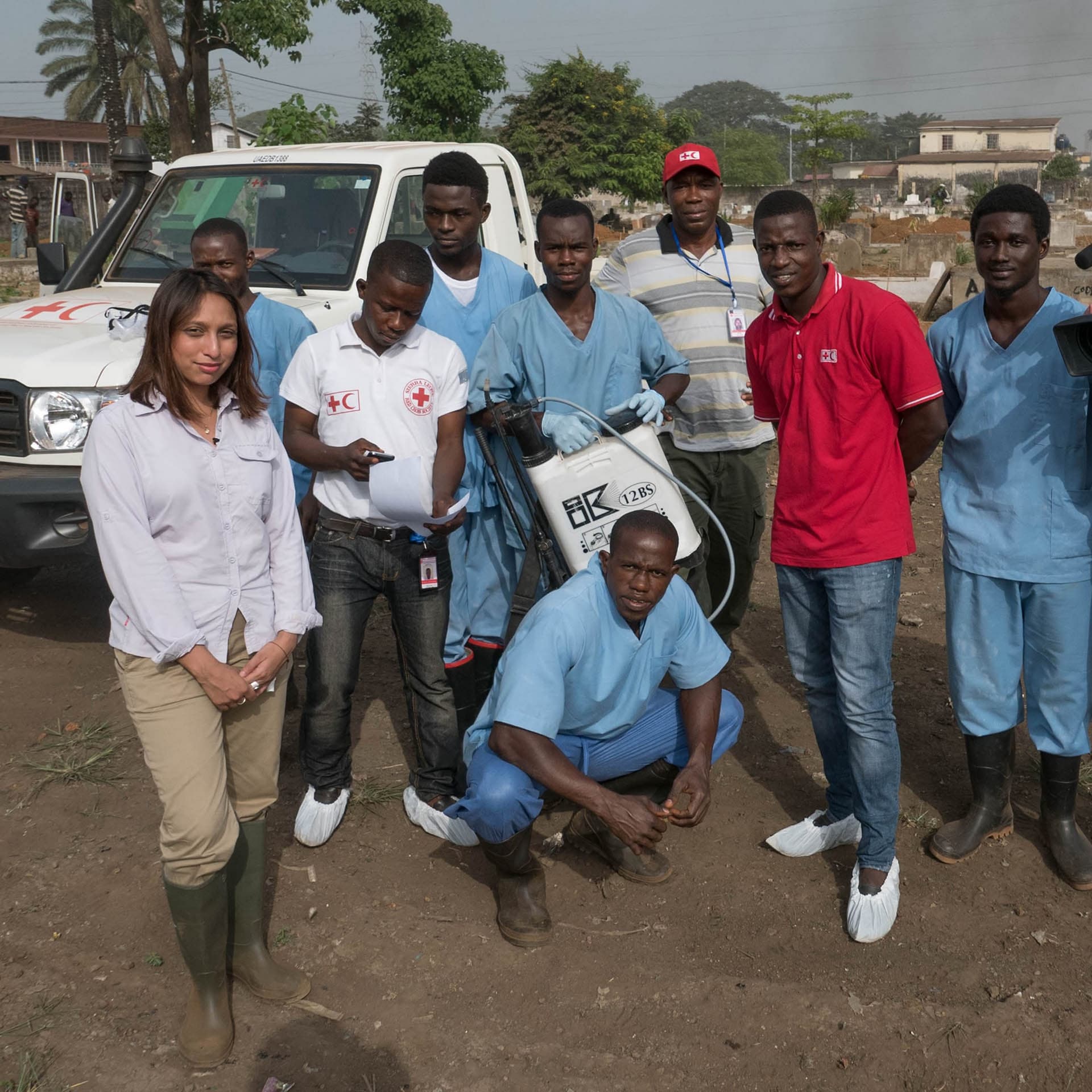
- Sandra Kanthal visits Cape Town to capture the dual landscapes of community struggles and scientific research.
- Local health workers like Dandelene Sylvester play a crucial role in both patient care and scientific advancement.
Funding Crisis
- In early 2025, the Trump administration began withdrawing funding for international health initiatives, significantly impacting South African TB research.
- NIH (National Institutes of Health) funding cuts have led to halted clinical trials and increased uncertainty among healthcare workers and researchers.
Personal Stories
- The episode shares stories from local patients like Loyolo, showcasing the human impact of TB and the importance of clinical trials.
- Community health workers face significant challenges in managing TB treatment and patient enrollment in trials due to the overarching poverty and stigma associated with the disease.
The Interconnectedness of Health and Research
- The dependency on American funding has revealed vulnerabilities in the South African healthcare system.
- The episode emphasizes the need for diversified funding sources to ensure the sustainability of TB research and treatment.
Innovations in TB Research
- Researchers are exploring new diagnostic tools that could enable faster and more effective TB screening, including alternatives to sputum tests.
- The episode highlights the efforts of scientists who are adapting to funding cuts, often relying on philanthropic support from organizations like the Gates Foundation.
Conclusion
- The narrative concludes with a recognition of the interconnected nature of global health research, emphasizing the importance of South Africa's contributions to combating TB.
- The personal testimonies underscore a glimmer of hope among patients and healthcare workers, resonating with the broader implications of TB research for global health.
Key Takeaways
- TB remains a critical global health issue, particularly in resource-poor settings like South Africa.
- The withdrawal of American funding poses significant risks to ongoing clinical trials and TB treatment efforts.
- Local scientists and community health workers are vital to advancing TB research, but they need stable funding and support.
- Addressing TB effectively requires a collaborative global approach, emphasizing that health issues transcend borders.
Written by AI. May contain mistakes. Listen to the episode to check what was said.
Chapters
Tap a time to open that second in VOInside the Garden Shed
1:15 to 2:14
Exploration of a unique clinical trial setup in a garden shed.
“This is part of the clinical trial you're running here.”
A Community Health Worker’s Role
2:14 to 4:24
Introduction to Dandelene Sylvester and her contributions to TB research.
“And in the courtyard of a busy health centre in a township outside of Cape Town, South Africa, this garden shed is serving a very specific purpose.”
The Burden of Tuberculosis
4:24 to 5:41
Overview of TB's impact and South Africa's medical advancements.
“South Africa is famous for some pioneering advances in medical innovation.”
Challenges in TB Research
5:41 to 8:00
Discussion of the poverty-stricken environment impacting TB treatment and research.
“Once known as consumption, the illness is now curable, but if left untreated, it can fatally destroy a person's lungs.”
Impact of US Foreign Aid Cuts
8:00 to 9:23
Explanation of how cuts to foreign aid are affecting TB research in South Africa.
“But airborne diseases thrive in areas of deprivation.”
Understanding Tuberculosis
9:23 to 14:00
Detailed discussion on what TB is, its treatment, and the stigma associated with it.
“It started last January, when President Trump signed an executive order pausing most foreign development assistance.”
Understanding TB Treatment Challenges
14:00 to 14:33
Learn about the struggles patients face during the initial weeks of TB treatment.
“because they're still infectious in the first two weeks and if they're not taking their treatment it's delayed even more so that means people at work are going to find out what's wrong with you.”
Halting the TB Clinical Trial
15:09 to 18:04
Explore the reasons behind the abrupt halt of an important TB clinical trial.
“The best conversations from across the BBC.”
Ethics and Participant Care in Research
18:04 to 19:56
Understand the ethical obligations researchers have towards trial participants.
“but the responsibility Atty Stadler and the Sidri Clinic has for its participants, the ones already enrolled on the trial, has not.”
Patient Experiences in TB Trials
19:56 to 23:10
Hear firsthand accounts from patients participating in TB treatment trials.
“Stadler had to tell two of his participants their time on the trial was coming to an abrupt end.”
Show all 18 chapters
Innovative Solutions for TB Diagnosis
23:10 to 26:33
Learn about new methods for TB detection that go beyond traditional tests.
“So this is what's called a Biosafety Level 2 laboratory, which has no infectious material that may contain TB worked on.”
Impact of Funding Cuts on TB Services
26:33 to 28:03
Discover how funding changes affect TB research and healthcare in South Africa.
“Which is how Dandelene, the community health worker we heard earlier, came to be recording coughs in a garden shed in a very crowded township clinic.”
Interconnected Systems of HIV and TB Testing
28:03 to 29:26
Explore how HIV testing is essential for TB testing and recruitment into trials.
“So at Interlink you can't not have counsellors on the site and that is where all our counsellors are gone.”
Research at Massey Puma Lely Site
29:26 to 30:28
Learn about the research initiatives at the Desmond Tutu Health Foundation's site.
“On another side of Cape Town, down a dirt road across from a local school, is the Desmond Tutu Health Foundation's Massey Puma Lely Research Site, Massey for short.”
Challenges of Funding and Research Dependency
30:28 to 33:02
Understand the challenges researchers face due to funding cuts and dependency on US aid.
“Situated in a township of tens of thousands of people, it's another example of South African science reaching into the communities it's trying to serve.”
The Future of TB Research in South Africa
33:02 to 34:21
Discuss the urgent need for diversified funding for TB research in South Africa.
“I think it also has sent a very strong message to our continent and to our countries that they also have to step up somehow.”
Global Implications of Local Research
34:21 to 35:18
Discover why local TB research in South Africa has global significance.
“I reached out to the NIH for a comment on these cuts.”
Impact of Clinical Trials on Hope and Community
35:18 to 35:53
Hear how participation in clinical trials gives hope to individuals and communities.
“This is a delicate scientific ecosystem, perhaps more than people realised.”
Transcript
Automatic transcript. May contain errors.0:00This BBC podcast is supported by ads outside the UK.
0:30Global Story on bbc.com or wherever you get your podcasts.
1:00World Service. Listen now wherever you get your BBC podcasts.
1:15This black box here is our coffee room. This is part of the clinical trial you're running here. Yes, yes. Let me show you how it looks. Looks like a garden shed. Yes, it is. At ease. It is a garden shed. Garden Shed play a unique role in science. The garden shed door has two panels of soundproofing on it and a chair in the middle and two plastic holes. You put your hand down there? Sometimes we use that for coughing and then we use it to take the patient's putum through there. The Wright brothers tinkered with airplane parts in a shed in North Carolina. The computing company Hewlett-Packard emerged from a shed in Silicon Valley.
1:55And Marie Curie conducted radiation experiments from a converted shed in Paris. And this is a mic. You put the phone in here, and then the patient coughs. And then it records, and then it gets sent to the people that do the things with the coughing, the engineers, the engineers. And in the courtyard of a busy health centre in a township outside of Cape Town, South Africa, this garden shed is serving a very specific purpose. So we're in the process of creating an app, to see our positive cough sound and our negative cough sound. What they're listening for are signs of tuberculosis, a contagious airborne disease which primarily attacks the lungs.
2:39It's a screening tool. So at the gate you would say, please cough, what is your symptoms, cough? And if they cough, the instrument will tell that the patient is eligible to go for TB testing or the patient should go for further, not TB, but maybe inside to the system for consultation. Dandelene Sylvester is a community health worker in the Scottsdean Clinic, but she's also part of a sophisticated scientific network in South Africa advancing the fight against tuberculosis. Patient 1410, today the 5th of November, time 1044. This patient, a young woman who's tested negative for TB, steps into the garden shed, which sits under the cover of a corrugated metal roof, surrounded by temporary containers which have morphed into semi-permanent clinic rooms.
3:38She stands in front of a microphone that's protected by blue disposable surgical shoes, which strikes me as both incongruous and ingenious. And she coughs ten times. finished patient 1410 she's the clinical trial's fourth recruit of the day what I was thinking here in a prefabricated garden shed in a township in South Africa world-class science is being done yes at ease at ease these recordings will be sent to the team she works with at Stellenbosch University Dandelin is a charming petite powerhouse who's as devoted to helping her patients as she is to advancing medical science. We'll hear more from her later.
4:27South Africa is famous for some pioneering advances in medical innovation. The first human-to-human heart transplant was completed in a hospital in Cape Town in 1967. But what's less well-known is how it's developed a very sophisticated scientific ecosystem for the study of tuberculosis. Clinical trials conducted here have been crucial to the innovation of TB treatments, vaccines, diagnostics and prevention. It's a testament to the quality of its scientists, but also a by-product of the burden of having one of the highest TB infection rates in the world. Not least because the country also has extremely high rates of HIV infection.
5:10The two diseases form a deadly double act in the human immune system. I'm Sandra Canthal, and this edition of the documentary is the story of two intertwined landscapes. The people in the communities I visited struggling with the burden of tuberculosis, and the scientific institutions embedded in them trying to tackle the disease, and why at the moment both are struggling.
5:40According to the Guinness Book of World Records, TB is humanity's oldest contagious disease. Once known as consumption, the illness is now curable, but if left untreated, it can fatally destroy a person's lungs. TB has become something of an afterthought in rich nations, but it remains the world's most deadly infectious disease. In 2024, it killed more than 1.2 million people.
6:13So we're going to Kailitsha now and we usually put all most things in the woods. So your backpack would be prepared in the woods. Cape Town is a city with extremely high numbers of tuberculosis infections. One scientist described it to me as living in a sea of TB. So we just must be mindful that when we get into Kailicha that we put the microphone away, because I think that would kind of flag us a little bit. Renee Goliath trained as a paediatric nurse and is now the Senior Research Manager at the Centre for Infectious Disease Research in Africa, or SIDRI, based at the University of Cape Town.
6:56So I receive a proposal or a protocol and then I evaluate the need to activate that particular clinical trial. She's taking me to visit a clinical research site run by Sidri, in conjunction with a community health centre in the township of Kailicha, about a half an hour's drive from the University of Cape Town's campus. When I say South Africa and tuberculosis, what comes to mind? Poverty. So I truly believe that TB is a disease of poverty. We put lots of money into doing research in TB, but as you'll notice when we drive into Kailicha now, the level of poverty is extremely high. René is quite a calm and composed person and very mindful of everything around us on our trip to Kailicha.
7:46For good reason. We are going into one of the biggest townships in South Africa. And we are very aware of our safety at all times. It is a high-risk space. The South African government has been very proactive in its efforts to combat TB. But airborne diseases thrive in areas of deprivation. In the extremely poor spaces, by the time we see the patients, they have lost weight. They live in overcrowded spaces. They don't come in when they have a cough, because as they will tell us, we always have a cough. They sit around fires all the time to keep them warm, so there's always a cough and an irritation.
8:28We thought it was an allergy, and by the time they've lost 10 kilos, they really struggle and are really ill when they get to the clinic. There are several reasons South Africa is a powerhouse of TB research. It's got a critical mass of scientists spread through the country's well-respected universities, supported by a strong medical regulator and the South African Medical Research Council. And because of the high rate of infection, it's faster and less expensive to enroll clinical trial participants. So we've looked at TB shortening treatments. We're busy with TB vaccines and we're also doing non-infectious diseases and how they are linked to TB and preventing people with chronic illnesses from developing TB.
9:16Much of this research has long relied on funding from American institutions. But since the beginning of 2025, that support suddenly began to vanish.
9:31It started last January, when President Trump signed an executive order pausing most foreign development assistance. Soon after, another executive order specifically prohibited aid to South Africa, prompted by a variety of political grievances, which are still ongoing. Then the world's largest aid agency, USAID, was gutted, severely affecting the crucial anti-AIDS program known as PEPFAR. And last spring, America's National Institutes of Health, the world's largest biomedical research organization, started to freeze or cancel grants and renewals for overseas institutions, which came as quite a shock in South Africa.
10:15The country had been the largest recipient of NIH funding outside of the United States. And there's a fateful overlap between the termination of foreign aid and the impact on scientific research. We work very closely with the TB clinics who refer patients to us. And now that they had an added load, they're saying, oh, we still don't have time to refer people to research. and then personally in our own space, two of our studies couldn't continue. It causes lots of anxiety amongst staff because are we going to lose our jobs? Because they've heard about so many healthcare workers working in research that have lost their jobs.
10:58We're coming to the off-ramp now, so I think we will have to stop. We can now go into Kailetja. I did as Renée suggested and swiftly put away my recording gear so you can't hear the sounds of the township. When we drove off the highway, shacks erected from corrugated metal took up every space by the side of the road. There were people selling food being cooked on barbecues. There was also traffic, a lot of traffic. And the main rule of the road, as much as I could see there was one, was to try and keep moving, which wasn't always easy. When we arrived at the clinic parking lot, Security guards inspected the boot of René's car before we could enter, and they would do the same again as we left.
11:45So this is the main clinic, which we call Ikayavac. The staff named it Ikayavac, the first vaccine study we did. So Ikayavac means the home of the vaccine. The clinic has a staff of about 25 people and is part of a network currently running trials for two new TB vaccines and a large TB preventative study. This is the headquarters. We're walking through a small lobby with about six patients in it, all masked up. And into this courtyard, well, going down a step with two large picnic tables in the middle. We've got three consulting rooms in this space and we have our clinical manager's office. And crucially, a corrugated steel roof to shelter people from the sun.
12:30So when it's... Because it's cooler in here. When it rains, it's going to become an oven as the summer approaches us. But each room has air-conditioned, so at least they can go in there for some respite. When it rains, we can't be in this space because the sound is so bad. Because, you know, it's a tin roof, so it makes lots of noise. The courtyard is the centre of a hub, which includes a pharmacy, a blood-testing facility, consultation spaces, and a large room just to keep all the data collected for their studies. I can ask you one very basic question. What is tuberculosis and what does it do to a human being?
13:07So tuberculosis is caused by the bacteria, tuberculosis, which is inhaled and primarily affects the lungs. It could affect any part of the body and it slowly creates a hole in their lung. It's a devastating disease. How do you treat it? So we're still treating TB with multiple drugs for long periods of time. So six months is the basic treatment, and we always educate people you need to eat before you take your drugs. You need to make sure that you have... We're asking sometimes people the ridiculous. I don't have food, what am I supposed to eat? And that this is an age-old problem that comes up all the time.
13:53But sometimes there's a lot of stigma still unfortunately attached to TB so you don't want everybody to know that you have TB and people then can't go back to work right away because they're still infectious in the first two weeks and if they're not taking their treatment it's delayed even more so that means people at work are going to find out what's wrong with you. So there's a lot of pressure actually to take your medications but you feel the medications making you feel terrible. So people struggle especially within the first month of taking their TB treatment. What happens if they stop taking the treatment?
14:23Lots of people stop, relapse and get very sick. I think that's how we've also developed much of the resistance that we now have. This is the documentary from the BBC World Service. Is the US conceding the green energy race to China? When the Trump administration said it was pulling out of the Paris Agreement for a second time, It seemed like a wholesale withdrawal from the climate change question. All the while, China's becoming a global powerhouse of green technology. What could happen in the long run if the US continues to cede the floor to China on clean energy? Listen to The Global Story on bbc.com or wherever you get your podcasts.
15:09The Interview. The best conversations from across the BBC. Today we are spending trillions on war and peanuts on peace. with the people shaping our world. You're making decisions that will have long-term consequences for the levels of greenhouse gases in the atmosphere. Wind power in the United States has been subsidised for 33 years. Solar for 25 years. That's enough! The interview from the BBC World Service. Listen now wherever you get your BBC podcasts. America is changing. And so is the world. But what's happening in America isn't just a cause of global upheaval. It's also a symptom of disruption that's happening everywhere.
15:51I'm Asma Khalid in Washington, D.C. I'm Tristan Redman in London, and this is The Global Story. Every weekday, we'll bring you a story from this intersection, where the world and America meet. Listen on BBC.com or wherever you get your podcasts.
16:17So is this your normal consulting room? Yes, so we try and keep the TB patients separate from other study patients and this is one of the rooms that's separate from the other. Among the studies underway at the Sidri Clinic is a trial designed to evaluate shortening the duration of TB therapy. It's called the PRESCIENT trial and it's comparing a three-month treatment regime with the current six-month protocol. So we've at this site enrolled 52 participants. Total for the trial between the two sites here in Haiti, 94 participants that we've enrolled to date. Dr Atty Stadler is a research medical officer with the University of Cape Town and the clinical trial's principal investigator at the Kailitsha clinic.
17:06Our goal was to enrol 156 people, but we'll get to that now, I guess. The trial has been stopped early, so we haven't been able to complete the enrolment into the trial at the moment. Why was the trial paused? Essentially, we just didn't get the usual annual notice of award. The funder is the National Institute of Health. They are actually co-leading the trial. They give input into the trial. they're not just the funder and they just said they can't give us confirmation whether we will get funding. NIH grants are exceedingly competitive and once awarded rigorously monitored. Until recently they've also been considered the gold standard of biomedical research funding.
17:51This money isn't supposed to just vanish. And because of all the uncertainty we said right let's just pause and see where things are going and since then it was confirmed that we will not get funding to complete the trial. The money to complete the study may have disappeared, but the responsibility Atty Stadler and the Sidri Clinic has for its participants, the ones already enrolled on the trial, has not. You still have people actively in the trial, people on experimental treatments. And when you have a study protocol, you're ethically bound to actually do things exactly according to those protocols.
18:25You're not allowed to deviate. All of that costs money. You need staff for that, you need laboratory investigations for that, you need data support, you need money to reimburse the participants when they come for study visits. So all of those things had to continue. The South African government has stepped in to fill some of the funding gaps to protect patients, jobs and the research of early career scientists who are particularly at risk from these cuts. The head of the South African Medical Research Council, Professor Antbeka Antusi was in Johannesburg when I was in Cape Town. But I spoke with him later and he told me of his personal appeals to the head of the NIH to get as many grants reinstated as possible by stressing South Africa's importance as a partner in this global research.
19:14And there has been progress on that front. Some grant money is finding its way back to places like Kaya Lecha. We've recently received confirmation from National Institute of Health that they're not going to fund the completion of the trial in South Africa, but they actually provided additional funding just to complete the follow-up because we've essentially been spending money that we don't have because you cannot actually just withdraw care for the people in the trial. And it sounds like we will at least get that funding that we've spent out of our own pockets back. But it's been a very stressful and uncertain period where you cannot plan anything in advance.
19:51You're not even sure what you should be telling the participants and whatnot. Hello, how are you? Hi, my name's Sandy. My name is Loyolo. Hi, how do you say that? Loyolo. Very nice to meet you. The day I was at the clinic, Dr. Stadler had to tell two of his participants their time on the trial was coming to an abrupt end. I could see the toll this was taking on the doctor. His patients were taking it more in their stride. He is quite a skinny guy, but how much weight have you picked up since you started on the study? I've picked up a lot, I think like 15, 15, yeah. You've got to be at least 6 '2", 6 '3".
20:33Yeah, I'm 6 '2". So you can imagine how skinny he was when he came here. Loyolo is a very tall, charming young man with a disarming smile and sporting a well-worn Cleveland Cavaliers jersey. Do you play a lot of basketball? Yeah, I play basketball, but not that much. It's kind of like a hobby for me. What's your favourite team? My favourite team is the Lakers. But you're wearing a Cavs shirt. It's because of LeBron James. These are all American NBA references, if you don't know. But it's hard to play basketball when you're sick with TB. It started with my chest. I kind of felt like something was pressure on my lungs, and it kind of felt like burning my liver.
21:17And what was the treatment they gave you? How many pills did you have to take? I think I had to take three from the other packet, four from the other, two, and one from the other. So it was like three, four, two, one. For three months? Yeah. That's quite a lot. So I cannot say it's a lot. For me, I can say it was enough. So you're feeling a lot better now? A lot more better than I ever did. It is the challenge with TB. Still, you need a combination of medicines. You can't just treat TB with one medicine. So you typically need at least three to four medications in combination. The potential that is there to treat people shorter is definitely clear.
22:05Whether this trial will in the end show that it is as effective as the six-month, that's not something we know for sure yet. but definitely when you see individuals like him, you can see there's potential for that happening. And so did you just find out that the trial's been halted? I think Mr... I forgot his last name, but I think he had mentioned it to me. And how do you feel about that? For me, I feel like for other people who was depending on the study because it has its own benefits. So a lot of people would feel like now there's something that's been taken away from them. For me too, because I love being here, being around them.
22:53It makes me feel good because I've never been to a clinic where people greet you with a warm, full-faced smile. That's rare. But over here, you get that every day, every time.
23:09Now we walk in across Fuga Open Office Space into the laboratory space. So this is what's called a Biosafety Level 2 laboratory, which has no infectious material that may contain TB worked on. The Biomedical Research Institute is housed in a new state-of-the-art building designed to carry out world-class infectious disease research on Stellenbosch University's Tigerburg campus in the Cape Town suburbs. My name is Grant Aron. I'm a professor at Selenbosch University, and we do all things tuberculosis-related. So we just look for translatable ways of trying to help with the TB burden in South Africa and globally.
23:51The development of the TB screening app, you heard at the beginning of the program, is one of Grant's projects. So yeah, we have a sample collection pack. It looks like a huge bag of just sort of vacuum tubes. Well, it basically is. This is sputum induction equipment. Millions of people around the world harbour TB, often without realising it. But if the disease becomes active, they can unknowingly spread it to others. Grant Theron's team is evaluating innovative ways to speed up TB detection, which could then be used in healthcare facilities all over the world. So many patients who are at risk of TB and have a need to be tested for TB cannot easily make a sputum, which is the fluid that we cough up from the lungs.
24:38And traditionally those people are excluded completely from TB diagnostic investigations. So we are looking at alternatives to sputum to diagnose TB using blood or using urine. His lab is part of the R2-D2 network, which has nothing to do with the famous droid in Star Wars. It stands for Rapid Research in Diagnostic Development. But R2-D2 does sound cooler. The R2-D2 network was this flagship NIH-funded network, and we were part of the consortium that applied for another five years of funding from R2-D2. But the consortium was told by the NIH that the award will only go ahead if South Africa was excluded and was not able to receive US federal funding.
25:33When was this? This is all earlier this year. So subsequently what we've managed to do with the assistance of the Gates Foundation is they have fortunately stepped up and agreed to continue to fund the South African partners within the R2D2 project. Philanthropic groups like the Gates Foundation and the Wellcome Trust have been making big efforts to try and fill the gap left by America's sudden shift in foreign funding priorities. Part of the RTD2 initiative was really in response to developers not having adequate financial incentives or having too many financial barriers to wanting to get involved in what is essentially perceived as a poor man's disease.
26:19That is one of the ironies of this unfortunate situation that we find because many of the technologies that were going to be evaluated in RTD2 were developed by American companies. But what we are seeing, which is very encouraging, is that there are increasingly new technologies coming from the global south that are being developed and are homegrown. Which is how Dandelene, the community health worker we heard earlier, came to be recording coughs in a garden shed in a very crowded township clinic. We've gone into the waiting room of this clinic and it's absolutely packed. benches and benches all filled with people waiting to be seen it looks like at least 65, 75 people and this is just the morning crowd it's quarter to 11 in the morning it's in places like this you see why research to treat and prevent the spread of TB is so vital and how decisions made in far away places such as Washington affect the people sitting on benches here in Scotstein This is where the counsellor used to serve, but you see the seats are empty.
Read the full transcript
27:32This is the only empty space in the clinic? Because there's no counsellor. So there's a counting service door on the back and it's just slammed shut? Yeah, no one in it anymore. Every person I spoke to on my trip had a story of health care workers or services that had been cut. They didn't always know how or why the money disappeared, just that they had to find a way to serve their communities with less of it. There is a difference between humanitarian aid and medical research funding but the two systems are intertwined. What maybe other people don't understand here is a lot of counsellors out of the facility that did the HIV testing but the HIV testing is just as well important for the TB testing because you can't get a TB test if you don't know your status and you can't start on your ARVs if you didn't have a TB test.
28:23So at Interlink you can't not have counsellors on the site and that is where all our counsellors are gone. So when a programme like PEPFAR, the successful USAID initiative to fight HIV-AIDS is disrupted, TB research, like the clinical trials Dandelene works on, get caught in the crossfire. Like for instance if a study, if a trial say they want 500, patients in this target time. That is what we must do. That's quite a lot of people. It is a lot, especially if the clinic don't test. We can only get if the clinic tests. So if the recruitment of the clinic is less, then it's not working for us. So it's a system.
29:09So people come to the clinic, they get tested, then they get recruited, then they become part of the clinical trial. It's a circle. We all need each other's help as much as we don't want to admit it, but we do need, it's a hand-in-hand job.
29:26On another side of Cape Town, down a dirt road across from a local school, is the Desmond Tutu Health Foundation's Massey Puma Lely Research Site, Massey for short. I have to say, this is a beautiful spot. I mean, I'm just looking at the most... It's just around here, so I drive along the coast, one of the most beautiful drives that you could have in the world, and I decided that I needed somewhere pleasant to read, scientific papers, etc., so I decided to put a garden and make it a nice place for people to work in. Professor Robin Wood is a pioneer in the field of HIV and TB research and now concentrates his work on the study of TB transmission, a problem that he can measure on his doorstep.
30:10So the kids that are five years old next door, 25 % of them are already infected with TB. And in the secondary school, by the time they finish secondary school, the majority of them are infected by TB. And that's what I do, is to try and find out why and how. And in order to do that, he built the Aerobiology TB Research Centre on this campus. Situated in a township of tens of thousands of people, it's another example of South African science reaching into the communities it's trying to serve. That's why on this site there are some extremely sophisticated laboratories, along with a gym, a youth clinic, and the research teams and facilities necessary to run clinical trials for conditions like TB and HIV.
30:59There's also a kitchen to provide freshly cooked food for participants. Pancakes the morning I was there. And how's your year been? Traumatic. We had a significant amount of funding from the USA and that all stopped without any real warning. So that was quite traumatic because everybody's salary is dependent on getting the grants. So I have become grey-haired because I've had to approach that problem and to do that we have to think of innovative ideas that we can get funded fairly rapidly by other people. The reference to his hair colour was meant in jest, but the underlying issue of how to keep his research funded was not.
31:46What a beautiful outfit you wear. However, at this centre, intersections of science and scientists overlap in other, more personal ways. My boss you've already spoken to. But she's not your boss, she's your wife. That's right. That's what I meant. His boss and wife is Professor Linda Gail Becker. She's the CEO of the Desmond Tutu Health Foundation. Because South Africa has such an enormous burden of both TB and HIV, it is an absolutely critical country for contributing to that research. We have big questions to answer, not only for South Africa, but for the world. Professor Becker moves seamlessly between the labs of South Africa and the corridors of power which fund them.
32:35On the day we spoke, she had just come back from meetings in the United States and was immediately summoned to the G20 summit going on at the time in South Africa. Which led me to a fundamental question. Is it wise to be so dependent on America for so much aid and research funding? Or, in the case of the National Institutes of Health, is it so huge that replacing it isn't even possible? I think the last year has taught us that we are absolutely going to have to diversify our funding. I think it also has sent a very strong message to our continent and to our countries that they also have to step up somehow.
33:16But having said that, the quality and the intensity of the research that we have been doing for and in conjunction with the National Institutes of Health is just sort of sums of money more than, you know, what I think we would get ordinarily from, for example, the research councils that exist in our own countries. Hopefully that will improve and grow, and I think it has been improving over time. But, you know, we've really gone off a cliff in terms of the kinds of research funding we've been receiving from the National Institutes of Health, if that goes away, we are absolutely going to see a hiatus in clinical research in infectious diseases, because I think South Africa and this region has been so critical.
34:10And so, you know, I think we have to diversify, but it's going to take a while for us to build up to those kinds of levels, if at all. I reached out to the NIH for a comment on these cuts. In response, they said, NIH supports international scientific collaboration when it is conducted in a secure, well-justified and responsible way. NIH maintains strict stewardship of federal funds and gives national security concerns close attention. The agency must have clear visibility into when US taxpayer resources support foreign institutions or personnel.
34:54Tuberculosis is caused by a bacteria, which doesn't respect borders. If lessons from the COVID pandemic have taught us anything, it's that the world is smaller than we imagine. If we want to strive to end the burden of this disease, the work being done in the clinics around South Africa is crucial to future vaccines, treatments and diagnostics. This is a delicate scientific ecosystem, perhaps more than people realised. Protecting it is in everyone's interest. A case made very clearly by Loyolo, the basketball fan from Kailitsha. And do you feel like being part of a clinical trial where the information can leave South Africa and impact patients all over the world?
35:40How does that make you feel? I can say it makes me feel as the chosen one because I get to give people my testimony, you see. So I can give a lot more people hope that you can go through this and get through it.
36:01The documentary was produced and presented by me, Sandra Canthal. The producer in South Africa was Issa Lee Jacobson. It was mixed by James Beard and the editor was Penny Murphy. Is the US conceding the green energy race to China? When the Trump administration said it was pulling out of the Paris Agreement for a second time, it seemed like a wholesale withdrawal from the climate change question. All the while, China's becoming a global powerhouse of green technology. What could happen in the long run if the US continues to cede the floor to China on clean energy? Listen to The Global Story on bbc.com or wherever you get your podcasts.
From the publisher
According to the Guinness Book of World Records, TB is humanity’s oldest contagious disease. It has become something of an afterthought in rich nations, but remains the world’s most deadly infectious disease. In 2024 it killed more than 1.2 million people.
South Africa has one of the highest TB burdens in the world, but it has also developed one of the most sophisticated scientific ecosystems for the study of the disease. Clinical trials conducted in the country have been crucial to the innovation of TB treatments, vaccines, diagnostics and prevention strategies.
Much of the funding for this research comes from American institutions. But since early 2025, streams of that money have been withdrawn due to a series of decisions by the Trump administration.
Sandra Kanthal visits Cape Town and discovers the story of two intertwined landscapes: the people in local communities struggling with the burden of tuberculosis, and the scientific institutions embedded in them trying to tackle the disease - and why at the moment both are struggling.
This episode of The Documentary comes to you from Assignment, investigations and journeys into the heart of global events.