In short
The BBC World Service documentary “South Africa’s migrant deadline” examines protests and pressure on undocumented migrants in South Africa, including a widely discussed 30 June deadline (not an official government deadline). It features undocumented migrants and South Africans arguing over legality, jobs, crime, and xenophobia.
Guests
Princess (Ghanaian, Durban; lived in South Africa 18 years; says documentation renewal was a “nightmare,” later faced xenophobic attacks, job loss, and sleeping outside Home Affairs with hundreds of others). Ali (Malawian, Johannesburg; lived in South Africa 18 years; married to a South African woman with three children; says he must leave for safety, leaving his family temporarily). Sikwelo (South African author/entrepreneur; says infrastructure decline and widening rich-poor gaps harm poorer communities). Olivia (Pretoria business owner; says migrants fill domestic/garden work, often illegally, undercutting South Africans; condemns violence). Also: Grace (Ghanaian; says she received refugee status briefly, later permits, then was arrested at a roadblock in 2023; claims she was jailed and her child was taken). Rudolph (returned to Ghana; describes kidnapping/assault and extortion). Mike (Nigerian; returned after attacks/kidnapping; says speaking English marked him as a migrant). Key claims/examples: peaceful protests sometimes turn violent; migrants face beatings, workplace removals, and homelessness; employers face increased penalties; repatriation efforts begin across Nigeria, Ghana, Malawi, and Mozambique.
Written by AI. May contain mistakes. Listen to the episode to check what was said.
Chapters
Tap a time to open that second in VOContext of South Africa's Migration
1:42 to 2:58
Overview of the current situation regarding undocumented migrants in South Africa.
“we head to South Africa, where undocumented migrants are being told or even warned to leave.”
Personal Stories of Migrants
2:58 to 4:25
Accounts from two migrants detailing their experiences living in South Africa.
“I come from a very poor country, South Africa being one of a better country in Africa.”
Struggles Faced by Migrants
4:25 to 5:34
Discussion on the difficulties undocumented migrants face, including job loss and safety concerns.
“At the end of the day, you start now taking this area and this place as your home.”
Emotional Impact of Migration
5:34 to 9:08
Ali's heartfelt reflections on family separation and the desire to return home.
“So apparently we're all on the streets, including pregnant women and small kids sleeping outside on the streets.”
Response from March & March
9:08 to 9:35
Exploration of the protest group's stance on migration and violence.
“I've got a 13-year-old, I've got a nine-year-old, and I've got a nine-month-old.”
Introducing the Next Guests
9:35 to 10:01
Introduction to Sikwelo and Olivia, who will discuss migration's impact.
“However, as the BBC has been reporting, claims of violence against migrants have been widespread.”
Personal Experiences with Migration
10:01 to 13:20
Sikwelo and Olivia share their perspectives on how migration has affected their lives.
“And at that age, my parents had to think about new ways of making a living.”
Economic Consequences of Migration
13:20 to 14:00
Discussion on how illegal immigration affects the South African job market.
“living condition, they would much rather not do that.”
Understanding Migrant Challenges in South Africa
14:00 to 19:13
Explore the economic and social challenges faced by South African natives due to illegal immigration.
“that money is then funneled back into their own countries.”
Understanding Migrant Challenges in South Africa
19:18 to 19:53
Explore the economic and social challenges faced by South African natives due to illegal immigration.
“This podcast is your shortcut back to clarity.”
Show all 11 chapters
Personal Stories of Repatriation
19:53 to 26:40
Hear personal accounts from migrants returning to their home countries amid challenges.
“It's worth saying that that is not an official government deadline.”
Transcript
Automatic transcript. May contain errors.0:00This BBC podcast is supported by ads outside the UK.
0:30Make your travel dollars work harder. Follow Smart Travel on your favourite podcast app. Decisions made in Washington can affect your portfolio every day. But what policy changes should investors be watching? Listen to Washington Wise, an original podcast for investors from Charles Schwab, to hear the stories making news in Washington right now. Host Mike Townsend, Charles Schwab's Managing Director for Legislative and Regulatory Affairs, takes a non-partisan look at the stories that matter most to investors, including policy initiatives for retirement savings, taxes and trade, inflation concerns, the Federal Reserve, and how regulatory developments can affect companies, sectors, and even the entire market.
1:13Mike and his guests offer their perspective on how policy changes could affect what you do with your portfolio. Download the latest episode and follow at schwab.com slash Washington Wise or wherever you listen.
1:31Hello, I'm James Reynolds. Welcome to the documentary from the BBC World Service. In BBC Conversations, we bring people together to share their experiences. This time, we head to South Africa, where undocumented migrants are being told or even warned to leave. South Africa is the continent's most developed economy, attracting citizens from poorer countries seeking work. But the country also has a high rate of unemployment. Almost one in three is without a job. Although, according to official figures, foreigners make up just 6 % of the population, many more migrants are believed to be in the country without papers.
2:14The protest group March & March, among others, says that they want these people to go by the end of the month. They must go back to their countries. And the thing that makes it like this, for them to keep playing the victim card, is because everyone wants to treat them like victims. The minute they come in here, they come with babies on their backs, and then everyone forgets that South Africa has its own babies that it needs to take care of. These current protests have mostly been peaceful, but as we'll hear in our conversations, That's not always the case. I was joined firstly by two foreign nationals working in South Africa.
2:49Princess from Ghana is in Durban and Ali from Malawi is in Johannesburg. He first came to the country as a student in 2008. As soon as I finished studying, that is when I decided to stay in South Africa. I come from a very poor country, South Africa being one of a better country in Africa. So I saw a possibility to say I could stay. And at that particular time, it was just when democracy came through and it was a striving country that we were all looking at one thing, which is growing the African continent. How easy or difficult is it to make sure that you have the legal papers that you need in South Africa to work legally?
3:32To process any kind of documentation for you to say legally, it is a nightmare. So it has been a very tough road for me. I've been in the country for 18 years. It's been a mission. Did you get the papers that you needed? At first, yes. I got my study visa because at that particular time I applied while I was still at home. But when I got here, after the expiration of my study visa, I got the first work payment. now to get to renew and all those kind of stuff. That is where it all became a problem. The other means that we saw was, okay, not a problem, I'm working. I've now got a girlfriend. All right, now there's a kid.
4:12All right, now what do I do? I cannot leave a woman with a child. You know, those are the kind of strives and things that we see. The money that I'm earning is better. Let me send this money home. Years are passing. At the end of the day, we get to be part of the community. At the end of the day, you start now taking this area and this place as your home. The whole thing to say, look, why are you applying? Look, I've been here in the country. Here's my passport. This is when I entered the country. I don't have a criminal record. Here is me. Allow me to work. Here's a company that has employed me.
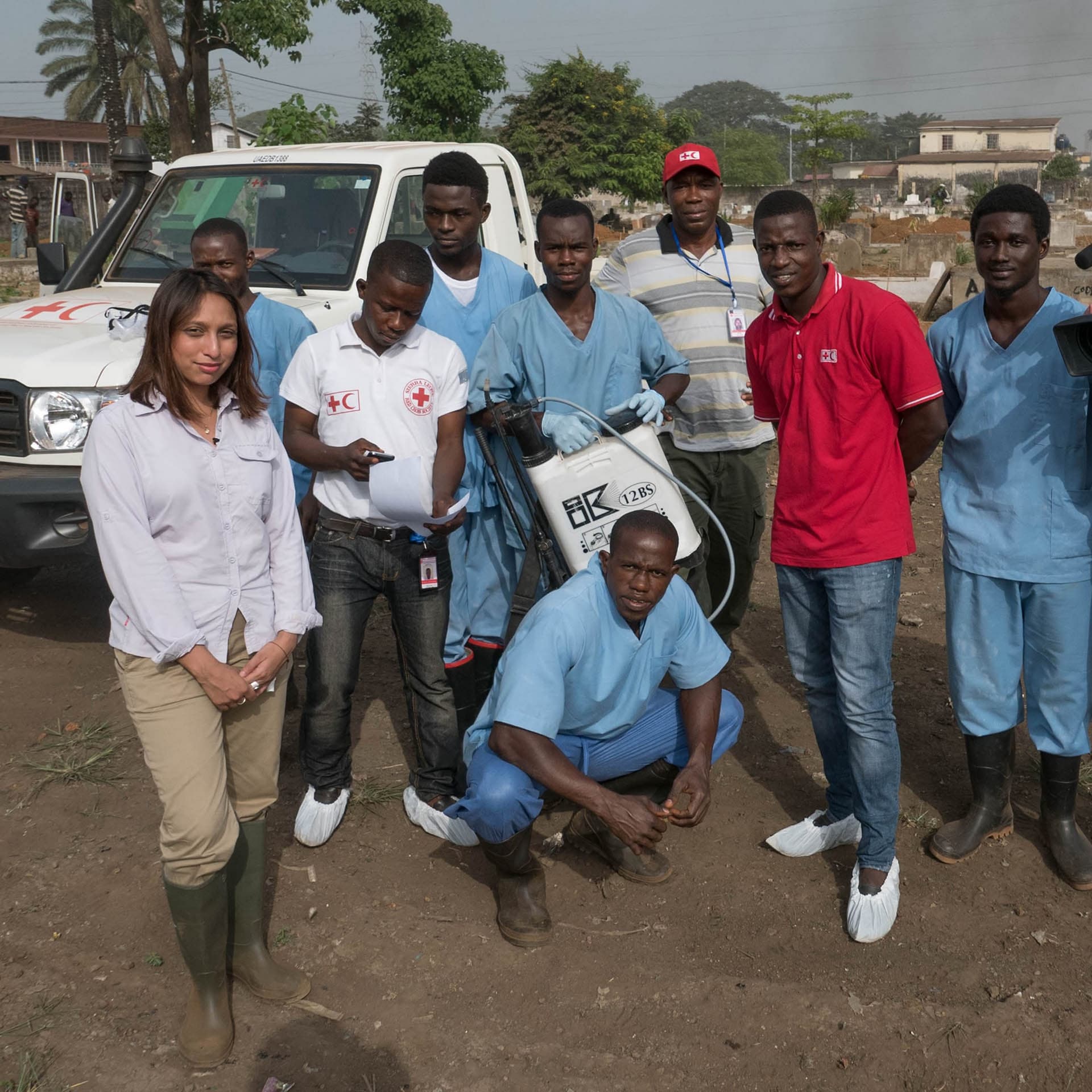
4:45But they also need this kind of documentation. And it becomes a problem. South Africa has been okay over the years until the xenophobic attack started, which they're saying that whether you're documented or you're undocumented, you need to leave South Africa immediately. We are on the streets. We're sleeping outside, outside the home affairs, because people are not safe. They're much and much when they come, they go to our flats where we reside. They chase you out of the flats. Time I've been beaten up at workplaces. Also, they're taking all of us out of our workplaces. And they're saying even if the business is yours, you will have to go out for a South African to take over.
5:24So almost all of us, we're not working, including me, as I'm also a victim because of much, much. And things are really hectic. We can't pay our bills. We can't do anything because we're not working. So apparently we're all on the streets, including pregnant women and small kids sleeping outside on the streets. Given that you've lost your job at the moment, what are your thoughts about where you will be in the long term? Exactly. That is the point here, because I can't say I'm going back to Ghana because I grew up in Ghana. and I do not know, I'm just frustrated as now to what to do. Even if I get to Ghana, I do not have anything to start with.
6:02And my whole life since it's been here in South Africa. For now, we're still on the streets. We're just pleading if they could give us a shelter, a place to stay and some food as well. Most of the time we sleep hungry. Most of the time we just drink water. And if there's a volunteer somewhere from anywhere that cooks something small and brings it to us, We all share it. But there's a number of people that we are. We're almost 200 and something, almost 300 people. So sometimes when the food is not enough, you just sleep like that. Ali, you've heard what Princess has had to say and you've told me your story.
6:38Ali, where is home for you? Home is Malawi and I'll never refuse Malawi being my home. As I speak to you right now, Malawi is a very peaceful country. It is a country that is very small. The only issue has been the economical situation. There is no employment. That has been the whole issue that has been out there. But at the particular moment, because of peace and love that my country has, I want to go home as in yesterday. To be clear, when you say you want to go to your home, to Malawi, would that mean taking your family, which has been with you in South Africa, with you? unfortunately that's the most you know crazy situation or i should say that's the most thing the thing that is is really killing me to say i have been in south africa for 18 years and i am married to a south african i stay with a south african woman who at the end of the day have given me three kids and we have three kids together her family has been my family we have been assisting people at home and they know that I am their source of income this side.
7:46Now at this particular moment to tell her that I'm going with her to a place where I've been sending the little amount that I was getting, it doesn't make sense. That means I'm taking her to poverty. I've told her how much poverty is back at home and that's why I came here to seek green pastures. So it's a matter of maybe let me go back home, try create whatever that we can create and we'll take it from there. But for now, for safety reasons, she also has agreed. I have agreed and told myself, accepted myself. I have accepted, which is a very difficult thing for me to do, was to accept. So I first had to accept to say I'm leaving and I asked her to understand, to say, look, I will be absent for a certain period.
8:33I don't know how long, but once I get something, I will send you financial assistance. We'll take it from there. one day maybe she shall come to Malaw. I'm not taking very well. I'm very emotional right now. Yeah, but I think it's God's timing and I leave everything in God's hands and I know my government is going to try, my people are going to try to make sure that we all go home. You've spoken with emotion about your family and I know you have kids as well. What is it like speaking about this issue with them? It's not easy, James. It's not easy at all because imagine I've got three kids. I've got a 13-year-old, I've got a nine-year-old, and I've got a nine-month-old.
9:17How is it going to be to stay away from your nine-month-old child for the longest time, even if it means forever? I can be working, I can be a millionaire in another country. That's not love. Father's love. Ali and Princess sharing their experiences. March and March organisers deny that their actions are xenophobic or that their protests are violent. However, as the BBC has been reporting, claims of violence against migrants have been widespread. We're going to discuss some of the arguments against undocumented migration in our next conversation. We brought together author and entrepreneur Sikwelo in Ekululeni and business owner Olivia in Pretoria.
10:00I began by asking them how they'd been affected by migration themselves. You'll hear firstly from Sikweno.
10:30And we could not go on any longer. And at that age, my parents had to think about new ways of making a living. And that obviously affected their ability to take us to school any further. So I do have a personal story around it, though I must say my decision to participate in this conversation now is mainly because I feel it sounds as if the people on the street are people who are less educated with not so influential voice the voices in my view that should help shape that emotion are not participating because their bottom line is not immediately affected but i do believe everyone's affected Very many have not realized yet.
11:26For me, it's also a very similar story. I grew up in a middle-class household and still have sort of a middle-class life. But the big thing that I've noticed is that the country's changed a lot. Things have seemed to gone backwards. There's been quite a bad spiral of deterioration of our infrastructure. And you can tell that, let's say, people that you deal with or that work for you or with you, that are on a lower income scale are really struggling. And the gap between rich and poor is becoming bigger and bigger. And how that lets affect me personally is crime is quite bad. It's not so bad in Pretoria where I live, but in general we live in quite a dangerous country.
12:13But I see poor people suffering a lot more. The dream that we had in 1994 of the Mandela Rainbow Nation is really being shattered in ways that I think most of us didn't think would be possible. The same as Cicelo, I've just gotten to a point to say, let me get involved, let my voice be heard, because those who need the subject discussed don't have a voice. Olivia, do you know many migrants? I do. In fact, we know quite a few migrants, yes. In white communities, it's quite common for people to employ migrants working in the gardens and as domestic workers. I made the decision not to do that a few years back because they tend to charge less, but I just made the decision that it's not the right thing.
13:05But in the suburb where I live, which is quite an established old suburb, most of the domestic and garden staff are all migrants, of which most of them are illegal. So what they essentially will do is instead of, you know, hiring South Africans who have rights, who would require a number of things, a written contract, a minimum basic wage that can afford one a living condition, they would much rather not do that. and they would be happy to go get someone directly from Zimbabwe who arrived there yesterday who cannot say a word of English except yes, boss, and tell them to do 10 times more than South Africa would do because they would understand where their rights are and pay them but a pittance, which pittance will never see the coffers of this country because it's given cash, so it cannot be taxed, it cannot be traced.
14:03that money is then funneled back into their own countries. So that's a problem. You have a 60 % youth unemployment in South Africa. The kind of jobs that are being held by very illegal immigrants are the kinds of jobs that should be performed by students, new graduates, people who are still finishing their honours, their masters, but they need something to pay for rent and this, and they should take a job to deliver food. That benefit does not trickle down to the South African natives because they are taken by persons who in the first place should not be here. Most of these migrants are black.
14:42The majority are from Zimbabwe, then Nigeria. So to, let's say, you and me, we would look at a person and think, oh, it's just another black South African, when in fact it's a migrant. The frustration and the anger is justified for the reason that these people, when they come here illegally, They get free health care, free education. They use fraudulent paperwork to access our SASA, which is similar to your doll. And then both government and elites protect them. And the frustration of our locals had gotten to this point. That, however, does, of course, not justify any form of violence. I condemn violence with the strongest contempt.
15:29We do not support it. we do not condone it we know it will take place because all you need to do is to allow a problem to fester for many years. There are definitely migrants and yes there are refugees who are vulnerable. What I find ironic with what's spread in the media is a lot of drama surrounding for, I'm going to use as an example, your Ghanaians and Malawians who are probably of the most peace-loving African countries. But the True, let's say, groups that have criminal intent are not being spoken about. What I think is most frustrating for black South Africans is that they are accused of committing all crime.
16:15And there seems to be what somebody says is suicidal empathy, pretending that all the migrants in this country are innocent. Many are. Many are very far from. But we have a problem. And the government seems to either be complicit or is just paying lip service. And when we say illegal immigrants, we are talking about those who don't have papers to be in South Africa. We are talking about those whose papers long expired. We are talking about those who hold papers to be in South Africa, but same papers were obtained rather fraudulently because we have that corruption problem being quite huge. We are talking about those whose papers suggest one thing whereas they are here for another.
17:02I mean, what 65-year-old Pakistani man comes to South Africa with a study visa and opens a string of shops? So we are saying illegal immigration should not take place any further. the very problems that they ran away from their countries they are causing for the native in South Africa. It's not that we just hate all the people, but for us to fix this country of ours, we have to secure our borders. Having people here illegally, either they are criminal or they are suffering in the process, or they're just getting a whole bunch of stuff for free and not contributing. I know it's very simplified, but it's basically one of those three things.
17:48Olivia Ansikwelo. The South African government has condemned any attacks on foreigners and says it's taking steps such as increasing penalties for employers who hire undocumented workers. I'm James Reynolds. You're listening to the documentary from the BBC World Service.
18:18We live in a pretty safe place, but you just heard about a break in four miles away, which isn't close, but it isn't far either, you know. Art Palpitations is on the scene. I sure am, Tammy, and I don't even know why I drove out here because, as you know, you got customized renter's insurance through GEICO, so your stuff is covered. Oh, well, that's great. Any sign of crime there, Art? Just some light littering, Tammy, but like they say, a little litter can lead to a lot. Wise words. It feels good to worry less. It feels good to GEICO. From GEICO Subconscious News, I'm Tammy Racing Thoughts, broadcasting from your brain.
18:48Tonight's top worry. If something happens to your apartment and you need to, like, stay in a hotel and pay for it, that would be crazy, right? Art Palpitations has more. That would be crazy, Tammy, but you got surprisingly affordable renter's insurance through GEICO, so it could be covered, giving you peace of mind. Aw, I love a story that ends well. Next up, love stories. Are they all they're cracked up to be? It feels good to worry less. It feels good to Geico. Today's episode is sponsored by NerdWallet's Smart Money Podcast. Ever Google a money question and end up 12 tabs deep with 12 different answers?
19:23This podcast is your shortcut back to clarity. NerdWallet's Smart Money Podcast breaks down financial decisions with a team of trusted journalists. They explain the why behind decisions like investing, home buying, and choosing credit cards with clear research-backed insights. No jargon, no misinformation. Make your next financial move with confidence. Follow NerdWallet's Smart Money podcast on your favourite podcast app.
19:53We mentioned earlier the deadline of 30 June for irregular migrants to leave South Africa. It's worth saying that that is not an official government deadline. It's not clear then what will happen after that date. But Nigeria, Ghana, Malawi and Mozambique have all already begun efforts to bring hundreds of their own nationals home. We'll hear from three of them now. I spoke to Grace and Rudolph, who've both returned to Ghana. And firstly, Mike from Nigeria. Everything changed so drastically. It just didn't feel safe for me anymore. The place I got home just suddenly. The last Saturday I spent in South Africa, there's this football.
20:34Paige will play every Saturday. I will play there. We have played there for years. And this last Saturday, I was coming into the field of play. I noticed that the whole cars were parked outside the premises. That's awkward. Then I asked my friend, what's going on? Like we have been asked to park outside. Then while we were playing, we were told to stop playing and asked to submit a proposal if we were to continue playing here again. and that hasn't happened before. And this two, one of the men started saying this has nothing to do with this xenophobic attack that he's been to Nigeria. You know, he felt the need to explain himself even when he's not accused of anything.
21:18So I was like, man, I was like, oh boy, this is really, really, this is real. You know, it was, I could sense the change in the air. So that made me join the repatriation process. I'm like, man, it's best I just return back. to Nigeria. This xenophobic incidence, you know, it started a long time ago. These people, they don't like us. This is the year that we can feel that they are very aggressive and they are very desperate to chase us. Yeah, so that's how it is because initially it wasn't like this. For my personal experience, it was in personal attack and also a kidnap. That's what I experienced.
21:58And was that because you were a migrant? Yeah, you know, what makes them to differentiate a migrant and a citizen is our speech. The moment you start to speak English, then they notify that you are not from here, and they start to maltreat you. Tell us when this kidnapping took place. It was about a year ago. I went from Whitbank to Jobeck to Hanusbeck. I met a lady along the road. So he was hiking or looking for a transport to his destination. So I decided, oh, let me just help. So I just stopped. By the time I know, a taxi driver also sat in the car. And then he said that I'm arrested because I'm not supposed to help people.
22:41I said, OK, no problem. So they took me to their office. They demanded money, like 2 ,500 rand. So I said, I don't have. And they said, oh, if you don't have them, you have to call your family and friends to send them on. So I tried to call and no one was willing to help me. So they took me in their car to drive about two hours and they were slapping, beating me. I managed to call one of my friends and then he helped me with 500. And the other one helped me with another 500, making it 1 ,000. Then they said, no, it's not end up. So they took my phone. They gave my key to me. And then by the time I go, all my face was swollen.
23:20It beat me. It really beat me. Rudolph, we do appreciate you speaking to us about what happened to you. And we'd like to bring in our third guest, Grace. And Grace, you spent some time in South Africa. What were those years like? Actually, when I went to South Africa in 2008, I first went to the Home Affairs. They gave me a refugee purpose, which lasted for six months. So I went to renew it. So by getting there, they told me that the story that I give them, the reason I left my country, they don't buy that story. So that is a family issue. I should go and resolve it with my family. By that time, I couldn't go home.
24:07I don't have the means to go. So I tried to get a straight working permit, which lasted for three years. After that, I got married to a South African guy. They helped me to get a permit from the Home Affairs. 2023, I got arrested. I was on the taxi going to buy some foodstuff. So there was a roadblock. They got me out of the car. All of us, they asked for passports, which I didn't have. So they took me in their car. So the immigration officer, I begged him that, No, I have a child. I just took my child to the school and I'm going to buy some food stuff for him. So please, they should just bear with me.
24:54I will provide the temporary permit that they gave me from Home Affairs. He said to me, you people want to take our law for granted. So I'm taking you to the station. I'll teach you a lesson that you never forget. I thought it's like a joke. They took me there. I was remained for two to three months. Now they jailed me. They put me in prison. I was in the accosted study for eight months, two weeks before they released me. And they took my baby. They took my child. The social workers took my child. So after they released me, that is where they bring back my child. So that is what happened to me in South Africa.
25:35Grace, when you left the country to return to Ghana with your six-year-old, What was on your mind as you took off? Oh, actually, I say bye-bye. Bye-bye to stress, bye-bye to age. A whole lot, a whole lot happened in South Africa. Yeah, I'm not saying entire South Africa is not good, but some of the people, they treated us bad. Mike, you obviously had to leave your six-year-old son behind in South Africa. As your flight took off from South Africa towards Nigeria, what were you thinking? You know, I had a lot of things going on in my head. You know, I love him so much. I was there when he was born.
26:18And I nurtured him until he became six. That's the fact that I and his mum were not living together, but I was very much involved in his life. So that bond is always there. Mike, Grace and Rudolph now back in their home countries. Our thanks to them and to all of our guests this week for sharing their thoughts and experiences. I'm James Reynolds. You've been listening to the documentary from the BBC World Service.
27:09your tire pressure, top off fluids, change your oil, and verify with Carfax exactly what your car really needs, all while keeping you in the driver's seat. Take five to stay in your car 10-minute oil change. Save up to 30 % on your next oil change to take five. $15 value. Valid to participating locations. Terms and conditions apply.
From the publisher
For many undocumented migrants in South Africa, the past few weeks have brought uncertainty and fear about what lies ahead.
South Africa is the continent’s most developed economy, attracting citizens from poorer countries seeking work. But it also has a high rate of unemployment – almost one in three are without jobs. Although (officially) foreigners make up some 6% of the population, many more migrants are believed to be in the country without papers.
Protestors have told them they have until the end of June to leave, and some nations have already been repatriating their citizens.
In our conversations, we bring together migrants to share their experiences of rising tensions. We also hear from people who have decided to return and South Africans who want an end to illegal migration.
“For us to fix this country of ours, we have to secure our borders,” Olivier tells host James Reynolds. “People here illegally either they are criminals, or they are suffering in the process or they’re just getting a whole bunch of stuff for free and not contributing.”