
In short
The Documentary Podcast - Episode Summary: Tackling Loneliness in India
Podcast Overview Podcast Title: The Documentary Podcast Description: A platform for exploring global stories through documentary storytelling, featuring voices from around the world discussing hidden truths and significant events.
---
Episode Details Episode Title: Tackling Loneliness in India Episode Description: This episode examines the rising issue of loneliness in modern India amidst traditional familial structures. Reporter Sumedha Pal explores the innovative ways people are attempting to forge connections in urban areas. Additional segments discuss the success of the animated film 'K-pop Demon Hunters' and the unique architectural designs of mosques in Kashmir.
Host
- Faranak Amidi
---
Key Themes and Discussions
- Loneliness in Modern India
- Statistics & Context:
- The World Health Organization estimates that 1 in 6 people globally experience loneliness, with significant health impacts (approx. 100 deaths per hour linked to loneliness).
- India, known for its tight-knit communities, faces increasing loneliness due to urban migration and modern work practices.
- Reporter Insights:
- Sumedha Pal reports from Delhi, highlighting how young Indians are adapting to urban life far from their traditional family structures.
- The shift to larger cities for employment has resulted in feelings of disconnection.
- Cultural Shift:
- Despite the proliferation of social media and urban cafes, young people crave more authentic connections.
- Creative Solutions to Loneliness
- Community Initiatives:
- Tejas and Sukanya: A couple hosting classical music concerts in their living room to foster community connections.
- Event called "Upstairs With Us" where strangers come together to experience music and community.
- Attendees report finding it difficult to make friends in their 30s and the concerts serve as a platform for meaningful socialization.
- Food-Based Connections:
- Archit and Natasha: A couple hosting “Lost Table” events, where strangers enjoy meals together.
- Participants express preference for engaging in unique experiences instead of traditional family gatherings.
- Safe Spaces for Women:
- Meghna: A single woman in Bangalore offers a free communal space called "No Agenda" for women to relax and connect without societal pressures.
- Psychological Insights
- Expert Opinion:
- Itisha Nagar, a psychologist, discusses the impact of the COVID-19 pandemic on social connections, with an increasing desire for genuine relationships post-pandemic.
- She notes a growing trend of individuals seeking authenticity amid a digital landscape that often leads to isolation.
- K-pop Demon Hunters
- A segment discussing the animated film's popularity, showcasing how it connects with cultural references and resonates with the South Korean audience.
- The film features themes of good vs. evil within the framework of K-pop culture, drawing on traditional Korean mythology.
- Architecture of Kashmiri Mosques
- Aliya Nazki's Discussion:
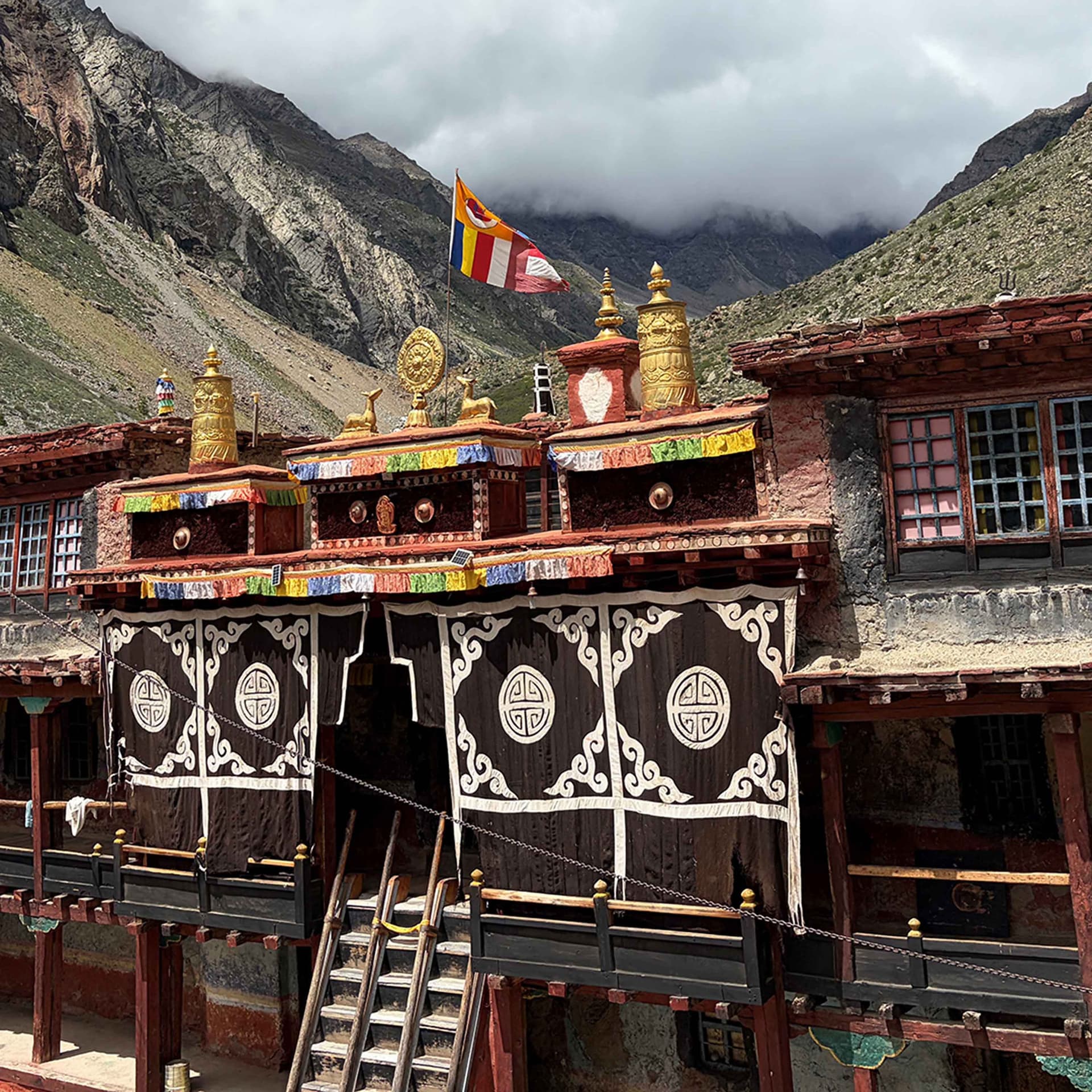
- Exploration of why Kashmiri mosques differ architecturally from those in other regions of South Asia.
- Historical context of syncretism between Hindu and Buddhist architectural influences in Kashmir.
- Use of local materials (wood and mud) leading to earthquake-resistant designs.
---
Key Takeaways
- Loneliness is a pressing concern in rapidly urbanizing India, prompting creative solutions that blend cultural heritage and personal passion.
- Community-driven initiatives play a crucial role in addressing feelings of isolation, highlighting the effectiveness of shared experiences.
- The popularity of cultural products like K-pop Demon Hunters showcases the blending of modern narratives with traditional elements.
- The distinct architectural styles of Kashmiri mosques reflect a rich history of cultural and religious interactions.
Conclusion This episode of The Documentary Podcast sheds light on the complexities of loneliness in contemporary India, while also celebrating the innovative approaches individuals are taking to foster community connections. It further illustrates the interplay of culture, art, and architecture in shaping identity and belonging.
Written by AI. May contain mistakes. Listen to the episode to check what was said.
Transcript
Automatic transcript. May contain errors.0:00This BBC podcast is supported by ads outside the UK.
0:30BBC Podcasts.
1:00all the bizarre ways people are using the internet. Listen on BBC.com or wherever you get your podcasts. Welcome to the documentary from the BBC World Service.
1:30This is The Fifth Floor, at the heart of global storytelling with BBC journalists from all around the world. I'm your host, Farhanak Amidi.
1:46We live in an ultra-connected world, but does that mean we are less lonely? According to the World Health Organization, one in six people around the world are affected by loneliness. no matter their age or social status. Also, loneliness is linked to approximately 100 deaths per hour. Today, we'll hear from people in India who are trying to find creative solutions to connect with others. Reporter Sumitha Pal has been working on this story and she joins me from Delhi. Sumitha, it's great to have you on the fifth floor. Thank you, thank you. Sumitha, we often associate India and Indian culture with large families and tight-knit communities.
2:29So how big is this problem of loneliness at the moment in the country and what is causing it? So in India, of course, there is a great emphasis on community, on families, and on specifically spaces where individuals and groups could have come together. They could have shared a sense of community and a sense of belonging. However, as we've seen with young people moving out of their cities in search of employment, in search of better job opportunities, they have moved away from their traditional families from the cities where they had belonged to, to bigger cities. And this is quite an urban phenomena that we are looking at, wherein young individuals are feeling increasingly disconnected.
3:17While we are in an age of social media and a lot of events, cafes and multiple options around us, there is a desire that young Indians are feeling to have more meaningful and authentic connections. And you met some of these young people. They are trying to come up with solutions to tackle this loneliness that they are experiencing. Can you tell me more about them? Who are they? So we met three different people. Two of them were couples. And these are young people who've had community experiences. Some of them have not. And some of them have also combined their passion and also come up with creative solutions to the problem of urban loneliness.
3:59Or as they say, that they are trying to create third spaces, a space between people's workplaces and their homes. A third space where they can truly feel safe and can feel a sense of belonging without being judged. I met a couple named Tejas and Sukanya. They are a young couple in their 30s who were doing corporate jobs in consulting and in fitness. And they increasingly felt a need to do something different. They were always passionate about classical Indian music and they wanted it to be shared by more and more people. They told me that when they got married, there was not much that they had in terms of resources or property.
4:50And the only thing that came to their mind was to open up their living room and host live classical music concerts. And their idea was to call strangers into their homes, because in that way, they'd be able to share the love for classical music with different people. and at the same time give people a space where they could truly recall what it was like growing up in India in the 90s or in the early 2000s where people's lives really revolved around their living rooms wherein their families or extended friends, neighbours and sometimes even strangers could come and talk and share their lives with each other.
5:30So I found it very fascinating. I attended one such concert in their living room and it's called Upstairs With Us. It's on the third floor of an apartment complex in Delhi and there were about 20-25 strangers who had walked in. Come, please come. Hi, lovely to meet you. There was a lot of nervousness, there was awkwardness but as the evening commenced, people really opened up. They were really enjoying themselves with the music, but also feeling that they're all sharing something very intimate together and experiencing something authentic together. I spoke to a few people who had visited the concert and they were attending it.
6:18Some of them had come for the first time, while some were coming time and again. We've just come to age, in our 30s. It's very difficult to make new friends. I met a young girl who had migrated from a small town in India to this large city where she was trying to make her career. And she told me that friendships in her 30s are extremely hard. And finding people who have the same interests, who share the same values and share that need of belongingness, it's very hard to find authentic connections. And so she had come there to enjoy the concert and enjoy the music. And she also brought her mother along to celebrate her mom's birthday.
7:00So how do they hear about these initiatives? Do people simply walk by and hear music and see the door is open and they just walk in and say hi? Or is there a community online or a platform that they can advertise these kinds of events? I think a lot of the people that I found while I was researching for the story, I found them on social media. how a lot of these communities and these spaces operate is that they have a vibrant Instagram community where they announce when they're hosting such an event. There are people who then sign up and then they turn up to the venue. And from my conversations, I've realized that there was this apprehension with all of these individuals who are doing these things, creating these different spaces.
7:45They had an apprehension initially, if people will be into it, if they will like this concept, if they will actually turn up to a stranger's home. But a lot of them realized that there was this growing appetite of experiences like this and of meeting new people like this. As you mentioned, this couple, they bring people together through music, but I bet there are also events that bring people together through food. I mean, I would love that. I mean, food and I'll be there. Yeah, we absolutely met this young couple again. They were in their 30s. They were also doing full-time jobs, but they loved to cook and they loved to share recipes on social media.
8:25I'm making content from last eight years. My content is largely recipe content, lots of food. One thing that they realized in a year of doing this was that they felt that they were not able to share their food with more and more people. The people who were watching their recipes were not actually able to taste the food that they were cooking. so they did something small every month on a couple of weekends whenever it's possible for them they host something called the lost table people can sign up and six strangers dine together and they have a beautiful three-course meal together okay this is something that you consume it is something like what we're drinking right now and it was very fascinating for me to be there and to observe them.
9:15There was a lot of hesitation, there was a lot of awkwardness. And people across ages were present, which was very surprising to me, because traditionally, a lot of these people would spend their weekends with their families, probably doing big lunches or just spending time together. But a lot of these people had actually said that they wanted to not do that and probably do something different and have a three course meal with strangers. And do they bring their own food? So Archit and Natasha, the couple who hosts Lost Table, they make the meal and everybody else is just supposed to come and enjoy it and they all eat together.
9:55But a lot of these initiatives are also not fully free. There are initiatives or spaces where people don't have to spend any money at all and they can just enjoy that space. But with Archita Natasha and Tejas and Sukanya, they do take some money to cover the food expenses because both of the experiences, they do involve a certain logistics, which is also very fascinating because in my conversations, I realized that both of these couples shared the sentiment that there is an increasing demand for experiences like that. And some of them are also considering doing this full time professionally. And when you spoke to these people who attend these events, what did they tell you?
10:39How does it feel to go to a stranger's place and socialize with people that you have absolutely no idea who they are and have never met before? I met different people with varying sort of professions and ages. One of them told me that because they were an introvert, it was very hard for them to socialize in environments which are more formal, like going to more formal events or restaurants or cafes or parties. So she said that she wanted to push herself to do something different and probably in the process meet new people because a lot of her friends were not in the city or they were staying too far away from each other and she wanted to find a community that was close by and experience something new.
11:25To open up our house to strangers is different, it's challenging. And what about the people who are opening their homes to these strangers? Does it feel comfortable for them? So one of the women that we met through the process was Meghna. Meghna is a single woman in Bangalore in the southern part of India. And she has opened up her home to primarily women. And this is a free initiative. It is not a commercial initiative at all. She has opened up her living room and a bedroom and her kitchen to women who want to come and either lounge, read or paint. They can do whatever they feel comfortable doing.
12:08And the space is called No Agenda. This is my No Agenda space. This is in Bangalore. And she created this space where women could just come and not feel the need to perform or not feel the need to be constantly vigilant. Because in India, with a lot of safety concerns around public spaces, she felt that it would be nice to give women a space indoors as well where they could sleep for a long time or could just read in peace or paint in peace or maybe not do anything at all. Safety is definitely a concern, which is why Meghna opened it up specifically only for women at this point. So yes, opening up your home to strangers has also been challenging with these people.
12:55But more or less, I think everybody said that people are not all bad and people are wanting to seek connection, which was quite fascinating. And you also spoke to a psychologist. What's her take on this whole situation? Yes, I spoke to a professor and a psychologist, Itisha Nagar. I was very curious to know what was causing so many people in India to hop on the trend. Is it just a trend? Or is it something much, much deeper? So she pointed out that ever since the coronavirus pandemic, there has been a desire of people to experience real connections. There was a promise that came with digitization.
13:38And that promise was of finding communities or finding like minded people. But she mentioned that in an increasingly polarized media environment and digital media landscapes, people are finding themselves more and more isolated and are just becoming passive consumers of content instead of actually engaging meaningfully with online communities as well, which is why people like Tejas or Sukanya or Meghna or Archit and Natasha, there are different people who are coming up with creative solutions in order to solve this challenge of need of authenticity and connection. Sumedha Paul reporting for BBC India.
14:25You're listening to the documentary from the BBC World Service.
14:34Hi, this is Oliver Conway from the Global News Podcast. Big news from Washington. The US Supreme Court has ruled that President Trump exceeded his authority when he imposed sweeping tariffs on America's trading partners. The 6-3 ruling is a major blow against his economic policy. We have the details. Search for Global News Podcast wherever you get your BBC podcasts.
15:02If there was a big red button that would just demolish the internet, I would smash that button with my forehead. From the BBC, this is The Interface, the show that explores how tech is rewiring your week and your world. This isn't about quarterly earnings or about tech reviews. It's about what technology is actually doing to your work, your politics, your everyday life. And all the bizarre ways people are using the internet. Listen on bbc.com or wherever you get your podcasts.
15:37This is The Fifth Floor, and I'm Farina Kami-D. And now to South Korea, where our colleague Eunaku has taken a break from covering hard news and geopolitics to a more heartwarming story. K-pop Demon Hunters is an animated film pitting good against evil in the form of a K-pop band battle. The film has topped streaming and music charts around the world. and although the film is in English, Koreans have taken the film and its characters to their hearts. Over to Yuna. K-pop Demon Hunters has topped streaming and musical charts around the world. According to Netflix, it's their most watched film ever.
16:20It's not a Korean film, but what's impressed many South Korean audiences are the instantly recognizable references to Korean culture and mythology. If you've not come across it, here's a recap. The film's heroes are a sassy Korean pop or K-pop girl group called Huntrix. They use their music to create a magical barrier called a honmun around their fans to keep them safe from demons trying to steal their souls and drag them down into the underworld. For decades, they've been winning, but now the demons are striking back. They've formed their own K-pop boy group called the Saja Boys, who plan to steal the girl band's fans and their souls with even better songs and dance moves and their perfect good looks.
17:07Naturally, it all boils down to a band battle with lots of action and surprising twists and turns and on the face of it is a straightforward good versus evil plotline. But what's made it so popular in South Korea? How accurate all the modern-day and historical cultural references are. The girl group Huntrix is modeled on the Korean spiritual tradition of mudang, or female shamans. Shamans are believed to be supernatural figures able to mediate between the human and spirit world. They perform rituals known as good to drive away evil spirits and bless communities, and they remain part of everyday Korean life.
17:48Still, many people consult shamans to test their lucks and make important decisions. So the girl group dances and demon-killing weapons are instantly recognizable part of that cultural history. On the other side, you have Saja boys, who are inspired by the Korean version of the Green Reaper. Their looks reflect the typical image of Reaper that's familiar to South Koreans. Pale-faced, slender figures, dressed in a long black coat and a wide-brimed hat known as God. In Korean folklore, Green Reapers were believed to guide the souls to the underworld, which is precisely what the Saja Boys aim to do through their performance.
18:31I'll continue with a major spoiler alert. Even though the Saja Boys are the main villains, they managed to gather quite a fan base. So when they vanished at the end of the movie, some worried fans who hold this kind of Buddhist belief began asking, will they really be able to reincarnate after all their wrongdoings? And if not, how could they possibly appear in the sequels? That's when a real Buddhist monk came up with an idea of live-streaming a Buddhist ritual for the Saja boys. The ceremony he performed is called Cheondoja, a traditional Korean ritual to help souls find peace and renewal. He set up a virtual altar during the stream, complete with illustrations of the sajaboys and offerings of food to comfort their souls.
19:22The ritual lasted two hours, which included actual readings from Buddhist scriptures and other religious rites. What's amazing is that over 4 ,000 people tuned in to watch this, a number the monk bitterly admitted was far greater than the usual offline congregations. This Buddhist monk's ritual for the Saja boys was actually part of a bigger push to connect with younger people who are generally drifting away from organized religion. In South Korea, Buddhism has been pretty creative at reaching the MZ generation by throwing DJ parties, selling funny t-shirts with Buddhist slogans, and even setting up believers on blind dates at a temple.
20:06So this live stream ceremony, blending pop culture with tradition, was like the next step in those efforts. Koreans are really loving the success of K-pop demon hunters, and it's giving them a fresh chance to reconnect with their culture and traditions. One thing that caught many people's attention is the tiger and magpie characters in the movie. Many Korean kids, including myself, grew up learning and drawing these old folk paintings called jakhodo, which basically refers to a drawing with a tiger and a magpie. These two animals were popular subjects because they were believed to protect people from disaster and illness.
20:44These tiger and magpie images have long been a staple of traditional Korean art and gifts, but since K-pop Demon Hunters was released, related souvenirs have been practically flying off the shelves. With crowds queuing outside the National Museum, it's clear the film hasn't just sparked international interest in Korean culture. It has also ignited a sense of pride and curiosity among South Koreans themselves as well. All this excitement around K-pop Demon Hunters has built up great demand for its cinema release in South Korea. Fans say it would be amazing to see a story that blends K-pop and mythology on the big screen here, even though they understand it might be challenging due to the complicated relationship between cinemas and major streaming platforms like Netflix.
21:33Still, there's always hope for sequels. That unforgettable virtual Buddhist ceremony for the Saja boys is just one of the examples of how much fans want to see The Boys and Huntrix return in another chapter. Always great to hear from Yuna Koo. She was speaking to us from our Seoul Bureau in South Korea. Journalists are curious people, and sometimes we work on a story because we have a burning question we need an answer for. And that's how my colleague Alia Nasky from BBC Urdu found herself working on a piece about Kashmiri architecture. So tell me, what was the question you needed an answer for?
22:13I'm actually from the Indian-administered part of Kashmir, and I grew up in Srinagar, which is the main city there. And as I was growing up there, you know how mosques look, like across South Asia? If you go to India or Pakistan, they're very similar to the mosques that you see. For example, in Iran, you've got the domes and the menards, and they have a very distinct sort of Persian architecture look. Tiles. Exactly. Mosaics and tiles, and the materials used are usually stone. If you come to Kashmir and you look at our mosques, you'll do a double take because our mosques look nothing like that.
22:46The first thing that will come to your mind when you see a Kashmiri mosque built in the traditional Kashmiri style is something like a Buddhist pagoda. It's got those conical shapes at the top and then it's got like these little things hanging off of them. I was always fascinated by this. Of course, when you grow up with things, you think of them as normal. it's only when I travel to India and other parts of the subcontinent that I realized that mosques don't actually look like this. Mosques actually look like something completely different in the rest of the region. So I was always really intrigued by why.
23:18I was just googling some of the famous mosques. And if I was visiting Kashmir, I would never think these are mosques. Exactly. And you know, our main mosque, the Jama Masjid, which is the biggest mosque in Sireenagar, that is actually inspired by Iranian mosques. So when you go inside the courtyard and everything is laid out like a Persian garden and it actually looks like a Persian mosque. But if you look at the rooftops, they're again the same pagoda structure. Like structure is not the right way to describe it, but it's just got those little conical sort of tops. Kashmir, as you know, is a predominantly Muslim majority area.
23:53And we have a small Hindu minority. Kashmir has also been conflict ridden for the last 30 odd years. And I think in the early 90s, there was a period when most of the Hindu minority left. But we've had a long history of Hindus living in Kashmir. And I think there was a time when the Shavite Hindu and Buddhist traditions existed side by side. So I always thought maybe this got something to do with the Buddhist influence that we have, right? That our mosques, they look a little bit like Buddhist pagodas. So I found this fantastic expert. He's an architectural historian based in Srinagar. He's written multiple books about especially religious architecture in Kashmir.
24:28His name is Samir Hakim Hamadani. And the answer was something that points to Kashmir's long history of syncretic coexistence between religions and traditions and cultures. Do you want me to tell you? Yes, that's now my burning question. So basically, at some point, so, you know, Islam came to Kashmir through merchants on the Silk Route, because Kashmir was one of the main stops on the Silk Route from Central Asia going into China. There was a tipping point. There are different theories about why this happened and how it happened. But there was what seems like a mass conversion, like most people in the valley converted to Islam.
25:06I think there are conflicting opinions about this. So if you speak with some people, they will say that there was force that was used in these mass conversions. So the idea there is that before Kashmiris became Muslim, they were Hindu and they had temples. And they were building their temples in a certain way. They were using local materials because a temple is a smaller place of worship because it only needs to house the deity. The worshippers stand outside of the main enclosure of where the deity is housed. It's not like a mosque where you go for prayers. Exactly. You do go for prayers, but you're standing, it's usually in a line, it's one by one.
25:37It's not like a mass worship, which is what the prayer or the salah in Islam is. So they were building their temples in a certain way with like a square room and then a roof on top, which also took into consideration the climate of Kashmir, where it snows really heavily in the winters, it gets really cold. So, you know, all of those things were taken into account. And then when basically Kashmiris became Muslim and they now needed these larger places of worship, all they did was they just expanded that same design. They just made it bigger. And by making it bigger, that just naturally created that pagoda-like structure on top.
Read the full transcript
26:15It isn't even an innovation. It isn't anything that's just come from outside. It's actually a very Kashmiri response to a new religious worship. And it's heavily woodwork. It's all wood. Again, that has got to do with it being cheaper. Because I think the conversation I had with Samir Hakim Hamadani also pointed that this was a time when there was economically maybe there was upheaval going on. And, you know, people were probably not as well off as they had been. So stone is a harder material to work with. Wood is plentiful or at least was plentiful in Kashmir and easier to work with. And we also then went on to develop really advanced techniques of working with wood, like lattice work and carvings and all the rest of it.
26:59So you see all of that quite prominently in our mosques and our shrines as well. Also, one of the arts that came to us from Persia, along with carpet weaving and some of the other stuff, was papier-mâché. So if you look at some of our shrines, the insides are just covered in this exquisite paper mache work. And it's just stunning. Also, you mentioned that the climate and the nature of Kashmir play the role in basically the architecture of these mosques. They're very earthquake proof as well. Friendly. Yeah, earthquake friendly, definitely. And you have to remember that Kashmir is a very earthquake prone zone.
27:36This is where the Himalayas were thrown up, obviously, by the clashing of two tectonic plates. And we've had some really terrible earthquakes in the not too distant past. So traditionally, the materials that were used in Kashmir for construction, not just for temples, even for houses, were wood and mud. So even if they fell on your head, you had a very good chance of survival. What has happened, unfortunately, over the last 40, 50 odd years is that people have moved to more modern constructions where they're using stone and marble and cement. And what we saw in the earthquake, for example, in 2005 was that those houses and schools and buildings just turned into, you know, graves of people who were then buried under them.
28:14So you're right. The traditional architecture of Kashmir and not just religious architecture, but like generally the houses were built of wood, mud, even when they were multi-storied. They were made of materials that were friendly, sustainable. And, you know, you had a better chance of surviving an earthquake. Thank you so much, Alia. Alian Naski from BBC Urdu.
28:40You've been listening to the documentary from the BBC World Service.
28:49Hi, this is Oliver Conway from the Global News Podcast. Big news from Washington. The US Supreme Court has ruled that President Trump exceeded his authority when he imposed sweeping tariffs on America's trading partners. The 6-3 ruling is a major blow against his economic policy. We have the details. Search for Global News Podcast wherever you get your BBC podcasts.
From the publisher
India is known for its close knit families and communities, but modern work practices mean more and more people are living far from home, and suffering from loneliness. Reporter Sumedha Pal in Dehli shares the stories of some of the people in India who are trying to find creative solutions to connect with others. Animated film 'K-pop Demon Hunters' has topped streaming and music charts globally, pitting a demon hunter girl-group Huntrx against a would be soul-stealing boy band, Saja Boys. It's an English language film, but Koreans have taken the protagonists to heart, as BBC Korean Yuna Ku reports. Plus, why do mosques in Kashmir have such a distinctive look? We discuss with Aliya Nazki from BBC Urdu.
This episode of The Documentary comes to you from The Fifth Floor, the show at the heart of global storytelling, with BBC journalists from all around the world.
Presented by Faranak Amidi
This is an EcoAudio certified production.