In short
BBC Eye investigation into Bangladesh’s July student protests, police killings, and the search for accountability, including a leaked phone call allegedly authorizing lethal force and the case of Imam Hassan Taim.
Guests/backgrounds
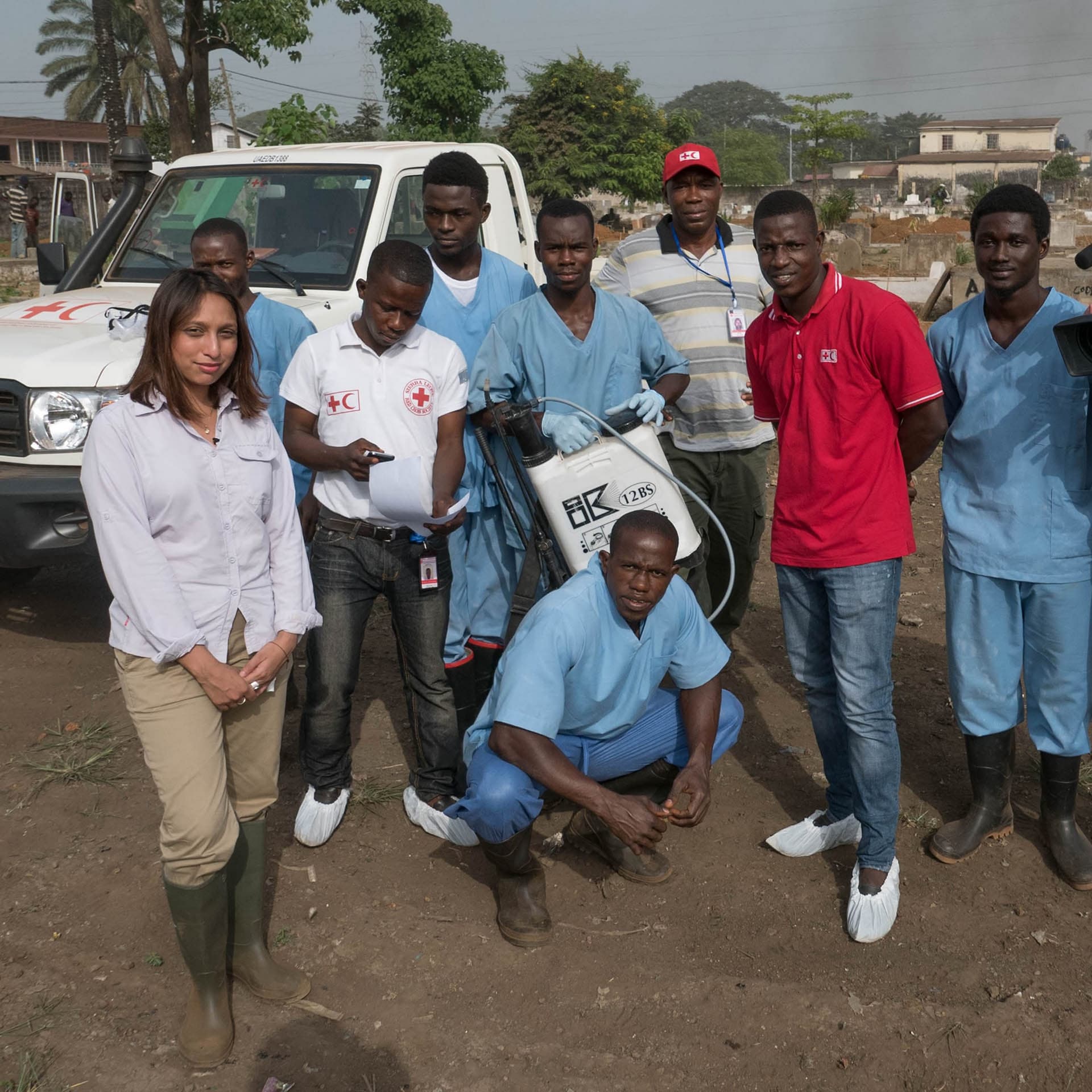
Ridi Jha (BBC investigator). Rabiel (brother of Taim; 19-year-old killed after anti-government protests). Kaniz Zabin (student protester; describes repression and trauma). Christopher Giles (BBC Open Source verification). Gaji M. H. Tamim (prosecutor/advocate at Bangladesh International Crimes Tribunal).
Key claims
Taim was shot multiple times after police dragged him from hiding; video identifies police officer Jaqir Hussain, who remains free. A verified leaked call allegedly from Sheikh Hasina authorized security forces to shoot protesters. Court documents show police fired thousands of live rounds, including assault rifles.
Notable examples
Jatabari “battlefield” district; Taim’s shooting captured on mobile video; tribunal warrants for 160 accused (60 arrested, later 73).
Written by AI. May contain mistakes. Listen to the episode to check what was said.
Chapters
Tap a time to open that second in VORobyall's Quest for Justice
0:58 to 4:49
The story of Robyall seeking justice for his brother's murder during protests.
“In his early 20s, a student with an intense gaze, he races through the streets of Dhaka, from police station to courthouse to government offices, hardly stopping to eat because Robyall is on a mission.”
Political Turmoil and Accountability
4:49 to 7:36
Exploration of the political changes and quest for accountability in Bangladesh.
“A lot has changed in Bangladesh in the years since time died, along with an estimated 1 ,400 people in the student-led protests.”
The Leaked Call and Its Implications
7:36 to 14:01
Discussion on the leaked recording of Sheikh Hasina and its significance.
“Like the country's former leader, Sheikh Hussain and many of her officials, Jukir Hussain is still free.”
Reactions to the Leaked Call
14:01 to 15:04
The Awami League responds to the authenticity of a leaked recording.
“Shekha Sina herself hasn't, but her Awami League party did provide us with a statement.”
Reactions to the Leaked Call
15:11 to 15:49
The Awami League responds to the authenticity of a leaked recording.
“The standard turbocharged engine or available hybrid powertrain.”
Witnessing Chaos: Personal Accounts
15:49 to 16:50
Eyewitness accounts of violence and unrest in Bangladesh.
“This was a very traumatic experience, I would say.”
Taim's Tragic Fate
16:50 to 19:41
The harrowing story of Taim's last moments and the aftermath.
“Robil remembers begging his younger brother, Tayeem, not to go out He was worried, he says.”
Evidence of Police Violence
19:41 to 22:31
Investigating police response and the use of lethal force.
“More than 200 When I heard that, in that moment, the whole sky felt heavy BBC Eye has tried to piece together what happened in Jatabari on the day Taim was killed.”
Search for Justice
22:31 to 23:58
The ongoing pursuit of justice for Taim's family and others.
“The video of Time Getting Shot was one of the first videos that I saw.”
Government's Denial and Responsibility
23:58 to 28:00
The Awami League's response to accusations of violence against civilians.
“Tamim, the advocate of the Supreme Court of Bangladesh.”
Show all 11 chapters
Government Decisions and Loss of Life
28:00 to 28:10
Explore the rationale behind government decisions regarding loss of life.
Transcript
Automatic transcript. May contain errors.0:00This BBC podcast is supported by ads outside the UK.
0:30How to Change, as she shares true stories from Nobel laureates, authors, athletes and everyday people about why we make the choices we do and how to make better ones to help avoid costly mistakes. Listen to choiceology at schwab.com slash podcast or wherever you listen.
0:58Robyall is always on the move. In his early 20s, a student with an intense gaze, he races through the streets of Dhaka, from police station to courthouse to government offices, hardly stopping to eat because Robyall is on a mission.
1:20Today, I have come to the commissioner's office. I have come to demand justice for the murder of my brother, Imam Hassan Taim, and all the others killed. We have been fighting for justice for months. We have been knocking on every door. Rabiel's 19-year-old brother, Taim, was one of over 1 ,000 young people the UN says was shot dead by police. during last year's huge anti-government protests.
1:52But a year on, no one has been prosecuted for his killing. My brother was like my twin, always close to me. He shared all his feelings with me. He couldn't bear to see others in pain. And I'm not saying this just because he has passed away. he truly was an incredibly kind person. He always followed his heart. Robial wasn't with his brother when he died but he knows in vivid detail what happened because a journalist captured much of it on his mobile phone.
2:35The police were firing tear gas shells and stun grenades and blank shots to try to disperse the crowd. The students scattered in different directions. Taim and three of his friends ran and were hiding inside a tea stall nearby. The police arrived and they pulled up the shutter. They dragged out his friend Rahat first and started beating him. Then the police grabbed Taim by his hair and pulled him out too, while another standing outside started hitting him on his spine with all his force.
3:15Then one of the policemen orders Taim to run As soon as he tried to run, they shot him in the leg He collapses And then he tries to run again And they shoot him again And this time the bullet goes right through his body And exits from the front
3:40We've been told Taim was later taken to the police station. There, a witness told the BBC he saw police officers kicking Taim's badly injured body. It was Rabiel's father who, hours later, finally found Taim's dead body. He's a police officer, but that day he wasn't on duty. When my father saw Taim, when he saw how they had fired so many bullets at him, he broke down. A father's heaviest burden is the dead body of his child. My father called his superior and asked, Sir, how many bullets does it take to kill a man? That question still rings in my ears. It's a question that will go viral. You're listening to The Battle for Bangladesh, a BBC Eye investigation on the documentary for the BBC World Service.
4:43I'm Ridi Jha and I've been investigating what happened during the July Revolution and the search for those responsible.
5:01A lot has changed in Bangladesh in the years since time died, along with an estimated 1 ,400 people in the student-led protests. There's a new interim government. There's a promise of new elections. And the country's former leader of 15 years, Sheikh Hasina, is under investigation for committing crimes against humanity. Something that a year ago would have been unthinkable. Sheikh Hasina isn't in Bangladesh. She's in India, where she fled during the protests. But that hasn't stopped the country's international criminal tribunal from indicting her. Yet, a year on, Time's brother Rabiel and his family are still waiting for justice Every government department he goes to, every lawyer's office Rabiel takes with him a small plastic bag filled with papers about his brother's case At every office, he repeats the details of how his brother died and at every meeting he's told, not now, we can't help, come back later.
6:26Afterwards, he calls his mother and father.
6:33It's another dead end. When I realised it was the police who had killed Taim, I thought at least now there's a chance of justice because there's a video. There's evidence that my brother was murdered.
6:52In the video, you can see the faces of the policemen who attacked Taim. You see one police officer in particular stepping forward and firing at him.
7:08That officer's name is Jaqir Hussain. Rabiel knows because a relative in the police recognised him He's been named in the Bangladeshi press Millions of people know who he is So far, the Bangladeshi authorities say 60 police officers have been arrested for their role in the violence last July But Jhakaer Hussain is not one of them Like the country's former leader, Sheikh Hussain and many of her officials, Jukir Hussain is still free.
7:52It was in mid-July last year that what had been peaceful student protests against new quotas on civil service jobs descended into violence.
8:06At least nine people have been killed in Bangladesh There's clashes have erupted between police and anti-government protesters. Dozens have been injured. The protesters wanted an end to what was seen as a discriminatory system under which a third of sought-after government jobs were reserved for families of those who'd fought in Bangladesh's War of Independence. Tens of thousands of protesters are on the street demanding to resign the government. Kandis Zabin is one of the students who'd go out onto the streets of Dhaka in the days that followed. Authorities, they were very corrupted and used this quota and make a business out of it.
8:45They took money from people and they gave them jobs. So people who actually deserve this, their qualifications, their education, they were not properly valued. The students were angry too at the widespread corruption, the lack of opportunities for young people. at Sheikh Hasina's growing authoritarianism. These weren't the first protests against her government. But what was different last summer was the government response.
9:15The police brutally attacked the students. They threw tear shells, they threw rubber bullets, they were beaten. And in the night, they actually attacked the students. They entered the halls and they stabbed them, they beat them. and the whole Haka University area was kind of sealed after this 15th July. So we were seeing the updates on social media and this is really enraging us that our brothers and sisters are getting attacked like this. They're risking their lives actually. The next day, more students from more universities went out onto the streets. Kaniz was one of them.
9:57People were very engaged, very energetic. And when I chanted, Hasina is a dictator and she should live, step down Hasina. This was very liberating for me. Actually, we didn't have any freedom of speech. If we write something about that government and against Bangladesh Aomilig or against Hasina, we would face trials and we would be picked up from our house by police without any warrants and so on. So chanting out these slogans in broad daylight, it was a very emotional and very liberating moment for me. But the euphoria is short-lived. That same day, several are killed. Police try to disperse the protesters by firing tear gas.
10:40The government wants an end to all this. Some of the deaths, like Taim's, captured on social media. They will turn the protests into a revolution. Student protest leaders have declared a campaign of civil disobedience. What happens next will be crucial. The following day, Sheikh Hasina goes on national television. The government's been patient, she says, but she's worried about the safety of what she calls the tender-hearted students who are protesting.
11:23Yet it later emerges. The very next day, after giving that address, Sheikh Hasina makes a phone call that goes against everything she just said. A recording of it is later leaked.
11:39And in the call, we hear the Prime Minister saying she's authorised security forces to use lethal force.
11:55This leaked call will be critical to the prosecution case against her, which is why it's been so important to verify the audio. Christopher Giles is part of our BBC open source investigations team who use verification techniques to check what's true. And he's been examining this recording. So, Chris, in the recording, we hear a woman's voice saying she has authorised her security forces to use lethal weapons. And then the voice says wherever they find them, they will shoot. She means the protesters and they meaning the police. Tell me what we know about the recording. We know that this recording is going to be used as critical evidence in the upcoming trial of Sheikh Hasina at the International Criminal Tribunal in Dhaka.
12:47And how do we know this recording hasn't been faked and that it really is Sheikh Hasina talking? So we shared this recording with audio forensic experts, Earshot. They found that the speech in the recording was not manipulated and hadn't been edited. And they said it was highly unlikely to have been synthetically generated. They did several analyses of the frequencies in the recording to get to these conclusions. We also know that the Criminal Investigation Department in the Bangladesh Police performed their own tests on the audio and found that Hasina's voice matched with other recordings of the former Prime Minister.
13:29Do we know where the recording came from and do we know who leaked it? So the recording was leaked in March and we don't know who leaked it to the public. However, we do know the recording was made by a government body that's responsible for monitoring communications across Bangladesh. And that body is called the National Telecommunications Monitoring Centre. So that's where the recording was made. Has Sheikh Hasina herself commented on this leaked recording? Shekha Sina herself hasn't, but her Awami League party did provide us with a statement. They said we cannot confirm whether the tape recording referenced by the BBC is authentic.
14:13And they denied the tape showed any unlawful intention of disproportionate response. What has the reaction been in Bangladesh? Many in Bangladesh were really outraged when they heard the contents of the leaked call. But also many people questioned the veracity of the recording that was leaked in March. And that's why it was so critical for us to do our own independent verification and prove its authenticity. You're listening to The Battle for Bangladesh on the documentary for the BBC World Service. with the new schwab teen investor account teens can gain hands-on investing experience and build positive money habits it's an account co-owned by you and your teen so you can monitor and engage with the account while your teen learns how to invest and manage money learn more at schwab.com ready set summer with the honda summer event make every mile count in an accord or cord hybrid with The standard turbocharged engine or available hybrid powertrain.
15:20Honda has all you need to get summer ready for the most fuel efficient full line automaker in America. For a limited time, well qualified buyers can get a 3.99 % APR on a 2026 Accord hybrid. For more details, visit your Chicagoland Northwest Indiana Honda dealer today. See dealer for financing details. Based on EPA estimate of 2024 large full line automaker fleet wide fuel economy. EPA automotive trends report 2025.
15:48Student Kaniz Zabin was out on the streets again on the day that Sheikh Hasina made that call.
15:57This was a very traumatic experience, I would say. I never saw someone getting shot in front of my eyes in my whole life. I experienced so much things that I never thought I would experience. Because people were dying, people were getting injured, people lose their eyes, legs and hands. A photographer from the Associated Press documenting events is beaten as tensions grow. Armed men also attacked a convoy of cars carrying the US envoy to Bangladesh on Saturday night. She and her team were able to get away unharmed. By now, the government has shut down most of the country's internet and phone services.
16:34Troops on the streets, a strict curfew, a mere blackout of communication. Bangladesh is using all its might to control public anger
16:48Clashes between police and protesters continue into the night
17:00Robil remembers begging his younger brother, Tayeem, not to go out He was worried, he says. Taim could be a target. He stood out in a crowd. He had grown like a banana tree. He was over six feet tall. This made my father worry even more. As his elder brother, I tried to stop him. I said, don't go out tomorrow. But he always used to say he would never bow down like a coward.
17:39He had grown up seeing the oppression and persecution and the suppression by this government. He used to say, if I had a magic wand, I would change this whole society.
17:59Robbiel's family live in a district called Jatabari in southern Dhaka. It's a key gateway into the city. Through the centre of it runs a highway linking Dhaka with the port city of Chathogram. It was a highway the authorities were desperate to keep control of. And by mid-July, Jatabari had become one of the hotspots of the anti-government protests.
18:31Jatrabari was like a battlefield. From our balcony, we could see everything. The chaos, the bullets landing on the rooftops. It was like rain falling from the sky.
18:45To try to restore order, the government imposes a national curfew. People can only go out for a few hours a day. It's during a break in the curfew that Rabil's brother, Taim, tells his parents he wants to go out to see what's happening. It's two days after that leaked phone call in which Shea Casina is heard saying she's given police permission to shoot. Mother told him not to go. She warned him. It's bad outside. But he reassured her. He said, there's no curfew between 12 and 2. Don't worry, I'll just go and have some tea with my friends I'll be right back But we know, Tayin never comes home
19:37In the post-mortem report, they recorded over 200 bullet wounds More than 200 When I heard that, in that moment, the whole sky felt heavy BBC Eye has tried to piece together what happened in Jatabari on the day Taim was killed. With the help of a local journalist, we've been given access to court documents that revealed the extent of police violence that day. Chris, you've seen these documents. Can you tell me what they show? So these documents provide an incredibly detailed picture of the police response in Jatrabari on the 20th of July. These documents show that police officers fired over 2 ,400 live rounds in Jatrabari.
20:29And within this document, it shows the type of weapons they were using. One of those is a deadly assault rifle, not typically used for crowd control or responding to protests. And on the 20th of July, the documents detailed that almost 700 live rounds were fired from these deadly assault rifles. We also have documents from the days beforehand, from the 17th of July. That's before Sheikh Hasina made that call saying she had authorised the use of lethal weapons. And what's very revealing is that in the days after that, we see that the police are using much more deadly weapons to respond to the protests.
21:17The violence culminates on August 5th in what the protesters call a march for Dhaka. Thousands descend on the Prime Minister's residence, demanding her resignation.
21:35Hundreds have been injured. Three of my friends are dead. See, there are bloodstains on my hand. Bangladesh's government has denied that it used violence against unarmed students. It alleges the protests are politically motivated.
Read the full transcript
21:54And then the news comes through that many had been hoping for. where after weeks of protests and violent clashes, the Prime Minister, Sheikh Hasina, has resigned and fled the country. The Honourable Prime Minister has resigned from her post and we will form an interim government to run the country. More than 300 people have been killed since a student protest over civil service job... The protests have lasted 36 days. When the internet blackout is lifted, student Keneez's phone is flooded with images. One video in particular stands out. The video of Time Getting Shot was one of the first videos that I saw.
22:38When I saw it, I was trembling. I was actually trembling because how can someone be so ruthless against a child? And later we got to know that he was actually covered with bullets. And of course, his father's statement makes sense because this much bullet is not needed to kill one people, to kill a kid actually.
23:03We asked the Bangladesh police for their response. They acknowledged there had been what they called regrettable incidents in which some then members of the police had used excessive force against protesters. They said they'd launched thorough and impartial investigations and were dealing with cases relating to the protests with the utmost seriousness.
23:30A year on, Taim's family's search for justice continues, as it does for hundreds of other families across Bangladesh. To find out more about Taim's case and the case against the country's former leaders, we've come to the office of the country's International Criminal Court. is tasked with investigating whether crimes against humanity were committed during the bloody events of last July. I am Gaji M. H. Tamim, the advocate of the Supreme Court of Bangladesh. Now I am conducting the prosecutor of the International Crimes Tribunal, Bangladesh. The prosecution has already received the investigation report which proves that the crimes against humanity have been committed all around the country of Bangladesh over the civilian population.
24:27We asked Gaji Tamim specifically about that phone call from Sheikh Hasina authorising the use of lethal force, which the BBC has verified. He confirms it will be crucial evidence. It is preliminary proof that the offence of crimes against humanity have been committed by the instruction of the then Prime Minister Sheikh Hasina and her cabinet members, as well as the officers of her law enforcing agencies. Gaji Tamim acknowledges progress overall has been slow. The International Crimes Tribunal has already issued warrant of arrest against 160 accused persons. Out of them, 60 accused persons have been arrested and the rest of them are yet to be arrested.
25:22Since we spoke to Gaji Tamim, the number of arrests has risen to 73. But the challenge remains. Many of the accused were police officers and have gone into hiding.
25:58by the police officers. We asked Gaji Tamim about the one case that matters to Rabiel and his family, and specifically about Jaqir Hussain, the man in charge of the police station in Jatabari that day, who we see firing at Taim. The investigation agency found a good number of video clips where we found that a police officer named Jaqir, Inspector Jakir who shot to death time from very close distance. International Crime Tribunal issued warrant of arrest against this accused Jakir but he is yet to be arrested. But some other police officer those were facilitated to kill him those are already been arrested.
26:50But some of the officers are escaped already.
26:58Until those officers are caught, Robiel has pledged he won't give up. Until all those responsible for what happened in July 2024 are held to account. What would he say to I'd ask him, what crime did my brother commit? He was an unarmed student. He was just a civilian. He was so terrified that he ran into a shop to hide. But you dragged him out. You beat him. You killed him. Will justice ever be served?
27:43Sheik Asina declined our request for an interview, but in a statement her party, the Awami League, said The Awami League categorically rejects claims that some of its senior leaders, including the Prime Minister were responsible for or directed the use of lethal force against crowds or were involved in or had knowledge of mistreatment of detainees All deaths are regrettable but the decisions made by senior government officials were proportionate in nature, made in good faith and intended to minimise the loss of life
From the publisher
In July 2024 Bangladesh was rocked by protests. They were sparked by anger at widespread corruption, and the reinstatement of a quota system that reserved 30% of civil service jobs for families of war veterans. An estimated 1400 people were killed in the protests which led to Bangladesh’s leader of 15 years, Sheikh Hasina, fleeing the country. After months of painstaking investigation, BBC Eye can now reveal how the police response to the protest unfolded and has verified a leaked audio recording in which Sheikh Hasina is heard authorising her security services to use lethal weapons against the protesters. We follow the story of one young man in particular, struggling to find justice for his 19-year-old brother who was among those killed.