In short
The BBC World Service documentary “The Dictator’s Survival Guide” examines China’s pattern of elite purges, focusing on Xi Jinping’s January purge of top military chief Zhang Yuxia, and what it reveals about how dictators maintain power and manage risk.
Guest backgrounds
Joseph Terrigian is an author researching the Xi family and Chinese elite history; Drew Thompson is a senior fellow at Nanyang Technological University and previously worked for the U.S. Department of Defense; Victor Shi directs UC San Diego’s 21st Century China Center; Ed Goldring is at the University of Melbourne; Jun Sudduth is a researcher studying purge timing in authoritarian regimes; Olivia Chung is at King’s College London studying Xi’s governance.
Key claims
Purges are systematic, performative, and timed when leaders feel temporarily strong and coups are unlikely; modern purges often use imprisonment (e.g., Qincheng) rather than execution/exile; Xi’s expanded definition of “corruption” includes loyalty and keeping Xi informed.
Notable examples
Saddam Hussein’s 1979 performative purge with forced confessions; Bolshevik-era exile; Gorbachev learning the “party center” lacks normal emotion; leaked claims that military modernization contracts involved missiles filled with water; reports that Zhang was sent to Qincheng.
Written by AI. May contain mistakes. Listen to the episode to check what was said.
Chapters
Tap a time to open that second in VOThe Purge Pattern in China
0:51 to 1:29
Exploration of the patterns of disappearances among Chinese officials.
“Imagine buying a toy for your kid, but it doesn't come with batteries.”
The Purge Pattern in China
1:47 to 2:50
Exploration of the patterns of disappearances among Chinese officials.
“In China, top officials go missing fairly often.”
Xi Jinping's Power Dynamics
2:50 to 4:38
Discussion on Xi Jinping's purging of top officials and its implications.
“I'm Celia Hatton, and this is The Dictator's Survival Guide.”
Historical Context of Purges
4:38 to 6:15
Linking current purges to the history of communist China and key figures.
“And that's not just to keep the foreigners guessing.”
Zhang Yuxia: A Complex Character
6:15 to 8:20
Profile of Zhang Yuxia and his relationship with Xi Jinping.
“Many prominent families in mainland China get bragging rights by dating their histories to 1949, when the communists seized power.”
Secrecy and Paranoia in Leadership
8:20 to 10:10
Insights into how secrecy affects political interactions in China.
“Roger Rottenham School of International Studies at Nanyang Technological University in Singapore.”
The Nature of Dictatorship
10:10 to 12:00
Understanding the emotional landscape of dictatorship as illustrated by Gorbachev's experiences.
“It's right beside Tiananmen Square, where most of China's political events happen, like the 1989 pro-democracy protests.”
The Study of Dictators
12:00 to 13:29
Discussion on the growing field of studying dictators and their operations.
“to figure out what a career in the party center is like, asked his old mentor, Andropov, to go to a picnic.”
The Study of Dictators
13:37 to 14:03
Discussion on the growing field of studying dictators and their operations.
“fed up with losing out to hidden fees when you send money abroad with your everyday bank choose the smart way wise you can count on the exchange rate you'd usually find on google No unwelcome surprises.”
Seeking Insight from Madam X
14:16 to 14:54
The narrator contacts an elusive figure, Madam X, for insights on the purge.
“She's the person I know with by far the closest ties to the top tiers of the party.”
Show all 19 chapters
Understanding Dictatorial Purges
14:57 to 16:08
Exploration of systematic behaviors and patterns in dictatorships.
“The study of dictators and how they operate is a growing field with books, courses, journal articles and conferences.”
Saddam Hussein's Performative Purge
16:09 to 17:50
An analysis of Saddam Hussein's dramatic purge method and its implications.
“When purges happen, those people are often replaced by yes-men.”
Modern Purge Strategies
17:51 to 19:15
Discussion of modern methods dictators use for purging officials.
“Dictators rule number two, choose your purge method well.”
Data on Purges and Timing
19:16 to 20:48
Research findings on when and how purges are strategically executed.
“We have collected data on purges that cover most of the authoritarian leaders or leaders in authoritarian regimes between 1918 to 2000.”
Corruption in the Chinese Military
20:49 to 22:44
Examining allegations of military corruption linked to Zhang Yuxia.
“I keep checking my messages for an answer from Madame X.”
Xi Jinping's Anti-Corruption Drive
22:45 to 24:16
Understanding Xi Jinping's broader definition of corruption and its implications.
“That is going to create a lot of opportunities for corruption.”
Power Struggles and Political Timing
24:17 to 25:56
Delving into the power dynamics and timing surrounding Zhang Yuxia's downfall.
“It's wonderful to be close to the top leader.”
The Fate of Zhang Yuxia and Implications
25:57 to 28:03
Final insights on the implications of Zhang's purge and Xi's leadership.
“admirals argued China would be powerful enough to invade Taiwan.”
Madame X on Corruption in China
28:03 to 29:10
Learn about the insights shared by Madame X regarding Xi Jinping's rule and perceptions of corruption.
“if she thought she was genuinely trying to eradicate corruption from China to make the country better as a whole.”
Transcript
Automatic transcript. May contain errors.0:00This BBC podcast is supported by ads outside the UK.
0:30we do the things we do, and how to make better choices to help avoid costly mistakes. Each episode covers the latest research in behavioral science and dives into themes like the power of self-control, shaping your mindset for success, navigating new beginnings, and why starting over can feel so hard. Listen to choiceology at schwab.com slash podcast, or wherever you listen. Imagine buying a toy for your kid, but it doesn't come with batteries. That sucks. But honestly, it's even worse when you buy business software. You end up with fragmented, disconnected systems that cost a fortune and don't talk to each other.
1:12Odoo completely changes that. Odoo comes fully complete, with all your business apps perfectly integrated and working together seamlessly. It's everything your business needs in one place, saving you time, headaches and serious money. Stop paying for missing pieces. Go to odoo.com. That's O-D-O-O dot com to learn more.
1:37The Documentary, home of the best documentaries from the BBC World Service.
1:47In China, top officials go missing fairly often. And when you've watched them for a while, you'll see these vanishings follow a pattern.
1:59A senior Communist Party member or a high-ranking general fails to turn up at a state event. Then they miss an important meeting or a military ceremony. They simply evaporate from public view. Weeks later, there's a terse formal announcement on China's state media. So-and-so is under investigation, usually for corruption or abuse of power. A few months after that, another announcement.
2:34They've been found guilty in a secret trial. The official in question is never seen in public again. They've been purged.
2:46You're listening to the documentary from the BBC World Service. I'm Celia Hatton, and this is The Dictator's Survival Guide. I've been both fascinated and horrified by this aspect of autocratic regimes since I first began working as a journalist inside China in the early 2000s. China's leader Xi Jinping has been purging the top echelons of the Chinese Communist Party since he came to power over a decade ago. But with strongman politics on the march, It feels as if there's never been a better time to try to understand the behavior of dictators and why we should pay attention to how they treat the people closest to them.
3:28In January this year, Xi Jinping carried out a purge that stood out from the rest.
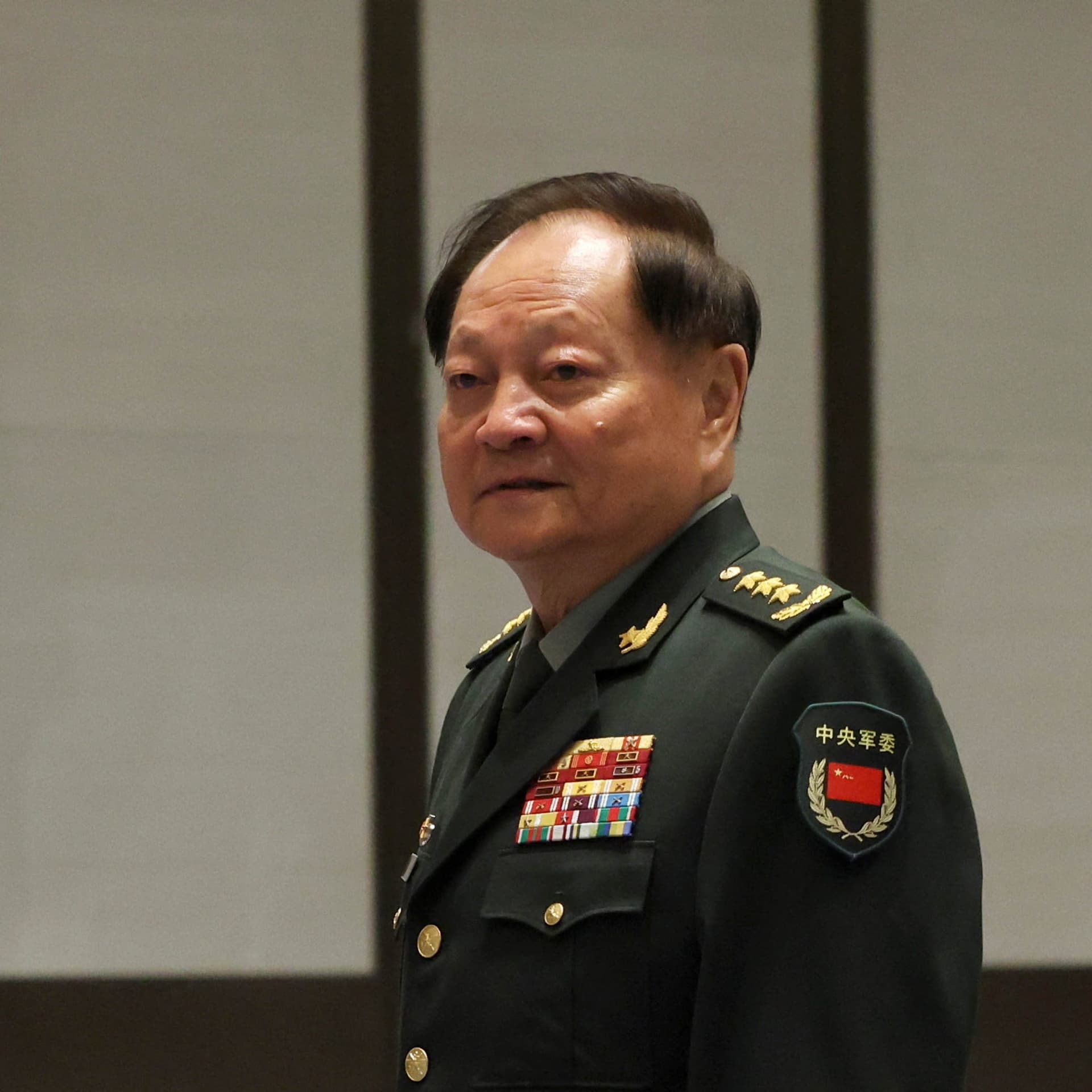
3:37Because the latest top official to vanish is China's military chief, Zhang Yuxian. Tonight, the stunning fall of China's most powerful general. China has purged the very top man within its military, with the exception of Xi Jinping himself. Even the most ardent China watchers were stunned. I had no idea this purge was coming. Zhang Youxia getting purged would be the last thing I expect, frankly. Zhang Youxia was Xi's right-hand man. They'd known each other since childhood. Some joked the two were besties. For years, Zhang was the man just behind Xi at every military ceremony. He'd been promoted under Xi and kept his post long after the party's normally strict rules would have forced him to retire.
4:23He was seen as untouchable. Every morning, right after news of Zhang's detention surfaced, I'd check my phone, my email, and social media, and there was almost no concrete information to explain why, Just more informed guesses from people whose analysis I trust. Beijing is a black box. And that's not just to keep the foreigners guessing. It's to keep the rest of the political system in line. Exactly what Zhang Yuxia has done that is so unforgivable is a mystery. It's also possible that Zhang Yuxia simply outlived his usefulness. Theories as to why Xi had turned on his friend are unleashed. He was planning a coup, leaking nuclear secrets to the U.S.
5:07that he'd just got too big for his boots. The timing was also odd. Zhang was in charge of one of the world's biggest militaries, which many believed could be preparing to invade neighboring Taiwan. Why would he be purged now? So here's our mystery. Xi Jinping is arguably one of the most powerful men on the planet. And he stayed at the top with a loyal wingman at his side, Zhang Yuxia, until now. What's changed?
5:40After 25 years of reporting on China, I've learned one thing. Patience is important. Details often emerge slowly. I start to scroll through my contacts. And first, I turn to people who go in and out of China frequently, but are based outside the country. so are free to talk. Commentators are saying Zhang Yuxia's detention is the most dramatic purge since the days of Mao Zedong, China's revolutionary leader. And that's where the story takes us next. Back to the birth of communist China.
6:17Many prominent families in mainland China get bragging rights by dating their histories to 1949, when the communists seized power. And that includes Xi Jinping and the now ousted general Zhang Yuxia. They're known as princelings, the sons of China's communist revolutionaries. Their fathers were literally comrades in arms. Xi Zhongshun, the father of Xi Jinping, and Zhang Zhongshun, the father of Zhang Yuxia. They were fighting directly under Mao, fighting together to defeat the nationalists all across this giant swath of the country's northwest. Joseph Terrigian is the author of a book on the Xi family.
6:59Through his research, he's also learned about the Zhangs because the two families' histories are so intertwined. Zhang Yuxiao was born in 1950, Xi in 1953. Xi made an early move into politics. he applied and was rejected from the Communist Party 10 times before he was accepted, and then he shot up through the ranks. At the same time, Zhang was building a reputation for himself within China's military. Zhang Yousha became a war hero in 1984 during a battle against the Vietnamese, and his name was all over the country. He was portrayed as someone who was risking his life and suffering and even killing for the regime, an impeccable member of his generation because he was so dedicated to the party.
7:49But he had broader interests, too. This is somebody who liked to engage in arm wrestling contests as a young person, who during the Cultural Revolution was seen to dribble around a basketball and ask anybody around him whether they would dare to challenge him. And in the 1980s, when he was fighting against the Vietnamese, after fighting a battle, would invite a bunch of journalists to meet with him. And he would talk to them about Mozart. He would talk to them about literature. Not an average run-of-the-mill communist then. I wanted to know more. I am Drew Thompson. I am a senior fellow at the S.
8:29Roger Rottenham School of International Studies at Nanyang Technological University in Singapore. Drew is one of the few outside China who's spent any significant time with Jiang. He was working for the U.S. Department of Defense in 2012 when Jiang and several other Chinese generals visited the U.S. as part of a week-long tour. He was supremely confident. He was curious. He was asking questions. But really, he was, you know, taking the measure of the Americans. He had a spring in his step and he was clearly enjoying himself. So I kind of attached myself to him. Whatever Drew saw in Zhang might have appealed to Xi Jinping, too.
9:08Xi promoted him from his earliest days in office, and Zhang became central to Xi's efforts to completely modernize China's outdated military so it could, as Xi put it, fight and win wars by 2027. When he became military chief, Zhang was always front and center at big state occasions.
9:32like this one just last september russia's vladimir putin and north korea's kim jong-un looked on as china showed off its military prowess then in december xi and chang yuxia stood side by side at another military ceremony shortly after jang was gone there's a well-trodden path for journalists investigating stories like this usually someone leaks information. But China doesn't work like that, because most secrets lie behind the walls of one huge complex in the heart of Beijing. Zhongnanhai is the traditional housing compound where China's top leaders live. It's right beside Tiananmen Square, where most of China's political events happen, like the 1989 pro-democracy protests.
10:21I biked past Zhongnanhai regularly when I was a correspondent. But like almost every other ordinary person, I've never seen the mansions, the lakes, or the manicured gardens beyond its high walls. Here, the rules of the game are different. Occasionally, heads of state get a peek, like Donald Trump recently. These are the most beautiful roses anyone's ever seen, I ask the president. But it's a world where secrecy and paranoia reign. It is a rather lonely existence at the highest level. Victor Shi is one of the most connected China experts out there. He's the director of the 21st Century China Center at the University of California, San Diego.
11:04He and his team study how the top ranks of party officials interact with one another or not. For one member, for example, to meet with another member, it would have to be during official meetings or they would have to seek approval from Xi Jinping himself. Because, of course, for the top leaders of China, especially Xi himself, he wants to keep track of all the social interactions between top leaders on the civilian side and especially top generals. I would guess that even all the electronic communication of these generals are recorded and watched very carefully by Xi himself. The result of all this suspicion, Joseph Terigian says, is that even the people at the top of the party have little idea what's going on.
11:55But he says this isn't that unusual in dictatorships. When Mikhail Gorbachev was brought to Moscow by his patron Yuri Andropov, Gorbachev, trying to figure out what a career in the party center is like, asked his old mentor, Andropov, to go to a picnic. And Andropov said, what do you mean? What are you talking about? And Gorbachev said, you know, just to hang out, have a conversation. And Andropov said, if we did something like that, by the end of the day, there would be a report on General Secretary Brezhnev's desk and there would be many questions. You just don't understand what it's like yet to be here in Moscow.
12:38And Gorbachev wrote in his memoirs that this was the moment when he realized that the party center was a place without normal human emotion. No normal human emotion. What a thought. But Zhang and Xi were believed to be the exception to this rule. They had the closest relationship allowed within the system, said one Chinese commentator. But we now know that didn't save Zhang. Self-directed investing, trading, full-service wealth management, automated investing, financial planning, thematic investing, retirement planning. Phew! And to think, that's just a small taste of what Schwab offers. Because Schwab knows that when it comes to your finances, choice matters no matter your goals investing style life stage or experience schwab has everything you need all in one place so you can invest your way visit schwab.com to learn more support comes from wise the smart way to manage the currencies you need around the globe fed up with losing out to hidden fees when you send money abroad with your everyday bank choose the smart way wise you can count on the exchange rate you'd usually find on google No unwelcome surprises.
13:54Plus, ditch that where's my money feeling. Most transfers arrive in under 20 seconds. Join millions saving billions on hidden fees. Be smart. Get wise. Download the wise app today. T's and C's apply.
14:16I reach out to someone I only make contact with rarely. Let's call her Madam X. She's the person I know with by far the closest ties to the top tiers of the party. She's elusive, but I really wanted to know what she thought about this purge. I send her a message and I wait.
14:38There are definitely more questions than answers at this stage. It would help to look elsewhere, to other countries, maybe other periods. Would that, I wonder, shed any light on Xi's thoughts or how dictators think or uncover the logic behind these purges? The study of dictators and how they operate is a growing field with books, courses, journal articles and conferences. like this one at Queen Mary University here in East London. It's a two-day conference and I have the agenda in my hand. It's got talks on everything from Russian transnational authoritarianism to post-protest propaganda. The academics here study how dictatorships work.
15:24I think some of the stereotypes we have about autocracies are that they're led by individuals who behave irrationally or act like madmen. Ed Goldring is with the University of Melbourne. But if we strip away some of these idiosyncrasies, then there are actually systematic behaviours and patterns that we can observe in dictatorships across the world. Ed and others believe we need to pay attention when dictators are booting people from their inner circles, because these purges are key to understanding the balance of power in potentially dangerous autocracies. The argument goes that the people who are removed are often those who have softened a leader's power-hungry ideas, like invading other countries and starting wars.
16:11When purges happen, those people are often replaced by yes-men. And that's when the danger increases for us all. Ed and his fellow academics believe there's almost a dictator's handbook. Those kinds of leaders use similar logic. And rule number one, there's no point in allowing officials to resign gracefully. Purges need to be seen to have an effect. The best known example of that is, of course, Saddam Hussein in 1979. In the weeks before Saddam became Iraq's new president, members of his own Ba 'ath party had opposed his rise to power. And six days after Saddam takes office, he, of course, has not forgotten this.
16:55And so he implements this very performative purge of elites. He gathers party members together. Then one official who has been tortured before the meeting gets up on the stage. He's forced to confess he'd plotted against Saddam. Saddam sits there very coolly and there are these famous images of him lighting a Cuban cigar as this performance is taking place. Saddam then has the names of other officials read out. Each one must stand, recite the party's slogan and leave the room. So 68 officials were taken out of the room, 21 of them were executed, and Saddam enlisted other party officials to conduct the executions themselves, thereby making them complicit in this very performative purge.
17:47It's the ultimate high-stakes political theatre. Yeah, absolutely. Dictators rule number two, choose your purge method well. Executions are risky. Those left behind in the inner circle might be so scared they'll be up next that they decide to pull off a coup. So death sentences could threaten the leader's survival. What other options are there? Long ago, exile was a possibility. No longer, Ed says. The Bolsheviks were quite a fan of that one in the 1920s. But given the advancement of modern communication technologies, Exiling someone might now mean that they could still be problematic just from another location.
18:29Exile is off the table. Execution is too. And so leaders these days go for the Goldilocks outcome, sending officials to prison. It's widely believed Zhang Yuxia has been sent to Qincheng in Beijing's suburbs, a famous luxury prison, along with other top officials. When I was reporting from inside China, I discovered that VIP Communist Party prisoners get unusual perks like an extra apple and a glass of milk at breakfast. Carpets in their cells that are more like apartments with televisions. So that's what happens to the officials who've been purged. Japanese-born researcher Jun Suduth is a leading authority on when purges are most likely to happen.
19:16We have collected data on purges that cover most of the authoritarian leaders or leaders in authoritarian regimes between 1918 to 2000. June's research has debunked the assumption that dictators choose to weed officials out of their inner circles when they're feeling weak. Instead, the data she's collected shows that purges happen in the quiet moments, when they feel they have enough leverage over their rivals to pounce. By looking at these global data, there are definitely certain patterns in terms of when they do purges. And I find that leaders can only purge when the purges are unlikely to lead to successful coups.
20:05OK, so to put it in simple terms, you found that the purges actually occur when a leader is feeling temporarily strong in comparison to the people around them? Exactly. So the window of opportunity to purge without causing backlash, that is the key idea. So, the rules of the dictator's handbook reveal that purges must have an element of theater, whether it's a sudden disappearance or a Saddam-style confession. They tend to lean towards imprisonment, and they happen before a storm is brewing, when the leader feels the risks of eliminating others at the top are low. We'll take this and see how it applies to Zhang's purge.
20:52I keep checking my messages for an answer from Madame X. After a few days, she tells me she'll share what she knows about Zhang Yuxia, but she's also consulting with a close friend. Someone, she says mysteriously, who is very well connected and lives near Zhongnanhai. I can only wait. A few weeks after Zhang's purge and its Chinese New Year, The Year of the Horse is rung in with the annual state TV's Festival Gala. One theory about Zhang's downfall is galloping across social media. Corruption.
21:32Zhang, the rumors say, has been linked to a lingering scandal. Remember Xi Jinping's pledge to transform the military by next year so it can win wars? Chinese generals were given vast amounts of money to make that happen. Instead, there are accusations that they've been siphoning huge piles for themselves. Leaked U.S. intelligence says the modern missiles they were supposed to have purchased were reportedly found to be filled with water, not fuel. There were other equipment failings, too. If true, it's not only a spectacular defense failure. It's also bad news for Xi's anti-corruption drive.
22:16When Xi Jinping delivers his New Year's speech to the nation, he talks about how the army has undergone revolutionary toughening in the fight against corruption. It's a rare reference by Xi to the military's problems, and by extension, his friend's recent downfall. Victor Xi thinks, given the money being thrown at the military modernization, drive, it's inevitable that some officials would break the rules. All the additional aircraft carriers, the 10 destroyers, or whatever the number that China builds every year, and thousands upon thousands of missiles that are being built, as well as a lot of electronic equipment, of course, is hundreds of billions of U.S.
23:01dollars in military contracts a year. That is going to create a lot of opportunities for corruption. Corruption is baked into the Communist Party system. But under Xi, the drive to weed out corrupt officials has never been greater. The Chinese Communist Party and the Chinese government that is in charge of discipline have punished more than 7 million people since Xi Jinping first launched the anti-corruption campaign in late 2012. Olivia Chung is at King's College London. She's been studying how Xi operates for years. And she says under him, the entire concept of corruption has expanded. Anti-corruption is not only a matter of avoiding bribery or not saying bad things about Xi Jinping.
23:49It is about loyalty to Xi Jinping, loyally implementing his policy line, and also making sure that Xi Jinping is informed at the right time, at the right frequency. And because of this much widened definition, this requires a lot of political judgment that isn't black and white. It's not obvious. So could even the longtime communist comrade Zhang Yuxia have put a foot wrong in this complicated party system? I don't think we can rule it out.
24:24march arrives and in the great hall of the people it's the start of china's annual parliament session by then the murmurs around zhang yoxia's demise have shifted to another explanation there's talk of a power struggle joseph terigian says zhang's big personality might have landed him in trouble. It's wonderful to be close to the top leader. It's also extremely dangerous. Now, when you are a powerful person and you believe that you have the trust of the top leader, it's easy for you to become overconfident. If you're seen to be taking advantage of that kind of relationship, then you can really get in trouble.
25:06But is this explanation really enough for Xi to purge the man he's known since childhood?
Read the full transcript
25:15For a long time, these competing theories, corruption or a personality clash, are all we have to go on. So the conversation shifts from what Zhang might have done wrong to the strange timing of it all. Xi has a big political date on the calendar. In the autumn of 2027, he's expected to enter an unprecedented fourth term. He's a leader for life, most say, and he hasn't indicated any successors. And so the circle around him is shrinking. Nobody is safe. And this is happening at a key strategic moment, too. 2027 is also the year that U.S. admirals argued China would be powerful enough to invade Taiwan.
26:03Some even argued that Zhang had either pushed for or tried to hold Xi back from military action. Though the chances of an immediate invasion are dimming. Victor Shi. Right now it doesn't look very likely because there are no commanders at the highest level. It is astonishing what's happening. China's Central Military Commission has been hollowed out from seven to just two members, Xi Jinping and one other general. Have you ever seen that happen in Chinese politics before? We've never seen the CMC with just two people in it. That's very, very unusual. Even if there's no immediate Taiwan invasion, the Chinese military is becoming much more assertive, from the Arctic down to the South China Sea.
26:51And ultimately, that's why these purges and the expulsion of Zhang Yuxia matters to all of us far beyond Zhongnanhai. As we heard earlier from the people whose study purges, when a dictator begins to isolate himself, filling his inner circle with yes-men, that's when the danger of global military aggression increases. Even the most experienced China watchers have different views on what led to Zhang Yuxia's downfall. And then, word from the top, or near the top, I should say, Madam X reaches out. She's spoken to her friend, the one who lives near the communist leader's official compound, Zhongnanhai.
27:36We're not using her real voice. My friend knows what happened to Zhang, another general who had been detained in a purge last year, Miao Hui, had been caught up in a huge corruption scandal surrounding weapons that was worth billions. And Miao had handed evidence that Zhang was actively involved too. So that same scandal I mentioned before, the one with missiles filled with water. I asked Madame X if she thought she was genuinely trying to eradicate corruption from China to make the country better as a whole. Her answer was blunt. No, that's not the way she thinks. He thinks he's the emperor of China.
28:19He thinks the whole country belongs to him and his family. If someone does anything bad or steals money from the government, Xi feels they are stealing money from him. He is the emperor and this is his empire. Whether Madame X has the whole story or not, it's clear that Xi's empire might not be shaping up the way he intended. As some have joked, there are now more senior military officials inside the luxury Qincheng prison than serving at the top of the Chinese military. Xi seems to be following the patterns, the survival guide of strongman leaders before him, using the same logic with the same brutal outcomes.
29:10You've been listening to the documentary from the BBC World Service. The Dictator Survival Guide was presented by me, Celia Hatton. The producer was Adele Armstrong, and the editor was Penny Murphy.
From the publisher
Xi Jinping is known to be a ruthless leader. In the last five years alone, China’s richest man, Jack Ma, China’s defence minister and the country’s foreign minister have all abruptly disappeared - some never to be seen in public again. Millions of Communist officials have been purged since Xi came to power. But one man was thought to be untouchable: the head of China’s military forces, Zhang Youxia. A childhood friend of Xi’s, Zhang was allowed to stay in his post, even as other military officials were disappearing. That is, until he, too, was suddenly gone. Celia Hatton investigates why Zhang was purged and looks inside and outside China for answers. She discovers there's a kind of pattern that dictators and autocratic rulers use to hold on to power. And this, she argues, can be a useful tool in predicting global military aggression.