In short
Search-and-rescue specialist Hillik Magnus (“the extractor”) and his life rescuing people worldwide, from desert and river operations to major terror and disaster responses, guided by a philosophy of purpose (shlichut) and responsibility (arvut).
Guests
Hillik Magnus, an Israeli search-and-rescue expert who rarely speaks publicly; his family includes sons Yoav and Kundo who help run the Tel Aviv-based company.
Key claims
He says he takes risks for the living families, not for the dead; he frames rescue as serving something greater; he believes life is “more holy” than religious rules, even though he’s not religious.
Notable examples
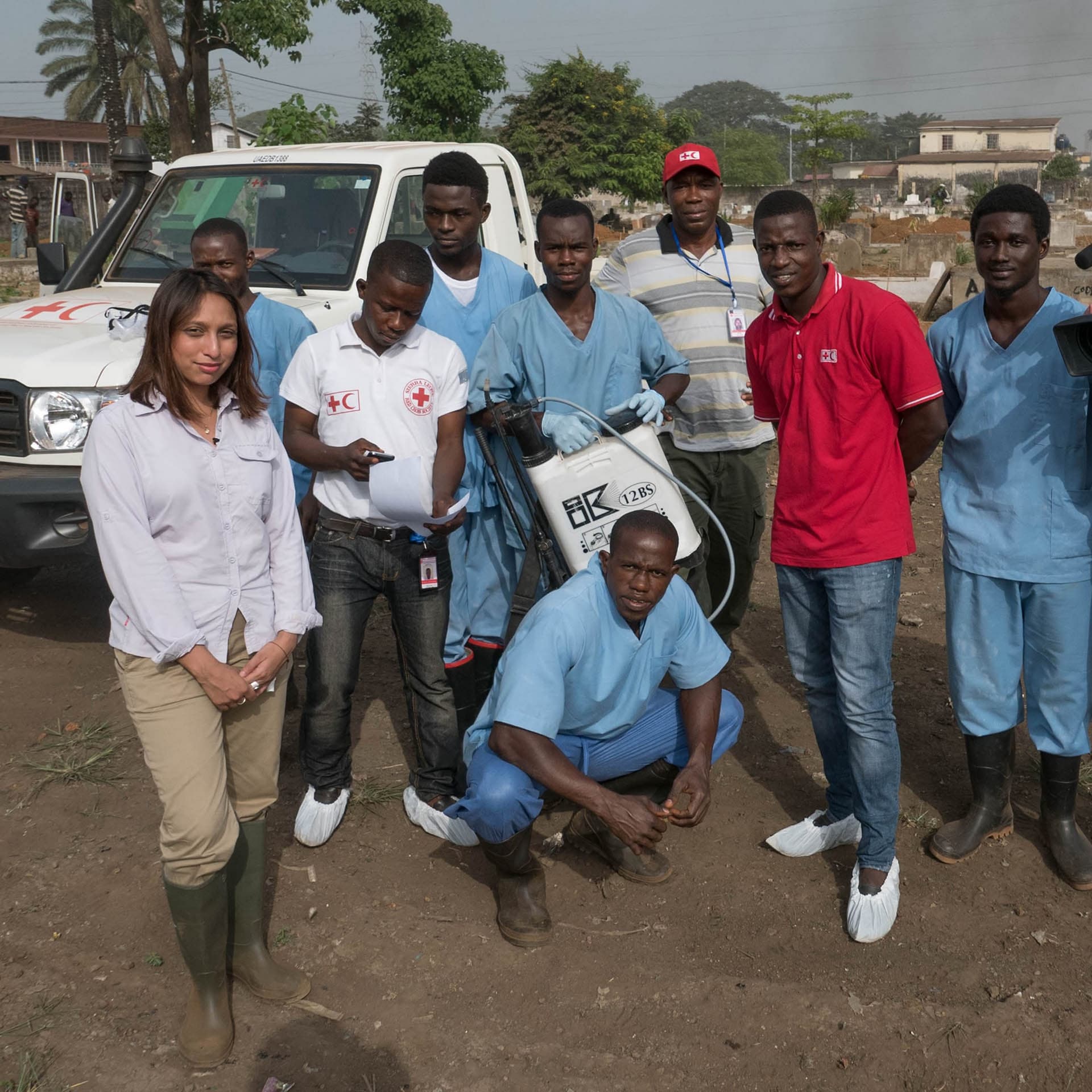
Goa incident rescuing a drug-crazed woman; 2008 Mumbai Chabad House hostage response; 2004 tsunami evacuation of 188 Israelis from Sri Lanka; Himalaya river search where a mysterious black dog allegedly led to two girls’ bodies.
Written by AI. May contain mistakes. Listen to the episode to check what was said.
Chapters
Tap a time to open that second in VOMeet Hillik Magnus: The Extractor
0:45 to 2:41
Introduction to Hillik Magnus and his search and rescue work
“This is the documentary from the BBC World Service.”
Hillik's Early Days and Influences
2:41 to 6:08
Exploration of Hillik's background and the beginning of his career
“It is the area surrounding the Gaza Strip.”
The Search and Rescue Journey
6:08 to 7:41
Details of the transition to creating a search and rescue company
“It is a beautiful sea, enormous coral reef, very deep water, beautiful mountains.”
A Notable Rescue Operation
7:41 to 10:47
A detailed account of a rescue operation in Goa
“Within a matter of weeks, he was called up to fight in the Galilee War of June 1982.”
Hillik's Legacy and Family Business
10:47 to 13:13
Discussion about Hillik's legacy and the family aspect of his company
“we saved not only her life, we saved the life of all the family.”
The Mumbai Terror Attacks
15:15 to 18:32
Explore the tragic events of the Mumbai terror attacks and Magnus's involvement.
“South Mumbai in particular, top tourist places, top hotels are under a terror attack.”
The Reality of Crisis Response
18:32 to 21:30
Understand the emotional and physical toll of responding to crises and helping others.
“On the outside, like people, the image they have in their heads is him dropping down a rope from a helicopter and walking around with the James Bond theme in the background.”
Concept of Shlichut
21:30 to 23:02
Learn about the Hebrew concept of 'shlichut' and its significance in Magnus's life.
“but it's very deep within the roots of the Israeli people.”
A Mysterious Dog and a Rescue
23:02 to 24:45
Hear the intriguing story of a dog that guided Magnus to a rescue site.
“We were looking for two girls missing in a river in the Himalaya, the road between Manali and Le.”
The Challenge of Retirement
24:45 to 28:01
Delve into Magnus's thoughts on aging, continuing his work, and life challenges.
“Fifteen years later, Hillig is back in the same river valley on another mission.”
Show all 11 chapters
Reflections on Retirement and Purpose
28:01 to 28:53
Listeners will gain insights into the challenges of retirement and the importance of staying active and engaged.
“If switching off is something of a struggle, then retiring is a real challenge.”
Transcript
Automatic transcript. May contain errors.0:00This BBC podcast is supported by ads outside the UK.
0:30travel dollars work harder. Follow Smart Travel on your favorite podcast app.
1:07This is the documentary from the BBC World Service. My name's Jeremy Newmark-Jones and, unusually, this programme is about just one man and his extraordinary work. This episode of the documentary contains some descriptions you may find upsetting. The Negev Desert in southern Israel. It's dusk. A thin figure approaches, wiry, wearing outdoor gear. A bald head and a grey beard that reaches below the neckline. A bulldog bounds up. Here he is coming, you see. He's playing with the microphone. He was born on the day of the birth of Jesus Christ, so he's a holy dog. This man is a search and rescue specialist from Israel.
1:58It's best your path never crosses with his, but if you find yourself in a moment of crisis and your life is threatened, you want him alongside you. We conducted some of the most extreme operations all over the world. We did search and rescue in jungles, rivers, sea, and we did a lot of operations in the most extreme situation in the world, in the Mekong River several times, in the Kali Kandaki in Nepal. in the Amazonas, in the Tuichi. Just call it and we have been there. He's a man who rarely talks to the media. He shuns the spotlight and yet, over the years, he's been at the centre of numerous world events.
2:44Kidnappings, natural disasters. His job is simple. He gets people out of danger. He is Hillik Magnus, the extractor. I live in Dekel. It is the area surrounding the Gaza Strip. The other side are sand dunes, the open area. I go up out every Friday to the sand dunes. I like to watch the gazelles. We got a lot of gazelles here. They are beautiful.
3:22I've been intrigued by this man for many years. I'd heard about his reputation amongst young Israelis, and yet so little seems to be known about him, about what he's done, what drives him. A giant abandoned train carriage looms in the dusk. Hillik opens the door. A cast-iron stove is riveted to the wall. Inside, there are bookcases, chairs, desks, a bed, an interior that could almost pass for a New York bedsit. We started in this office with a lobby trailer. I had to pay those days to cut off the wheels, the iron huge wheels. And I located it on a platform on which it is standing till today. Nobody can move it.
4:11It weighed 11 and a half tonnes. It was my home.
4:19How you become a search and rescue guy. the search and rescue guy who gets calls from world leaders desperate for help, is somewhat murky. It's not what you'd call a straightforward career route. You should remember we started 30 years ago. The communication was not looking like today. Through the night I used to sleep with three telephones and they were calling up and down and I got used to sleep at once and to awake at once. And it was a mission to get connected somewhere. It took maybe half a day or even a day to get connected. Dotted around the inside of the train carriage are letters, photos, flags and curiosities gathered on his travels.
5:01A map on the wall has pins jammed into it. Every pin, or needle, represents the location of a rescue, an extraction. Ah, this is a nice story. When we started, my wife bought a box with colorful needles, and each operation she sticked in the map a needle. So you can see what happened in the first year. I can see here that there are in Australia, New Zealand, Fiji, India, Indonesia, Japan, Turkey, South Africa, Namibia, and many more places in Europe, in the US, in South America. But when the box got empty, I stopped to do it. It is only done for the first year. Since then, past 29 other years.
5:58I was living in South Sinai. I was the manager of the Nature Reserve Authority in Southern Sinai. I lived in Sharma Shek, and I was busy traveling in the desert, diving in the sea. It is the best place in the world. It is a beautiful sea, enormous coral reef, very deep water, beautiful mountains. It was a mixture of all kinds of people. Money was useless there. In the community, you got your place concerning your ability to contribute. It was really an unusual place for unusual people. It was like being in heaven, in heaven. From there I was sent out by the peace agreement. Good evening. The Smitty Summit at Camp David is over, and Israel and Egypt have agreed to two documents taking a giant step toward achieving peace in their troubled corner of the world.
7:01Witness tonight a significant achievement in the cause of peace, an achievement none thought possible a year ago. The Camp David Accords of 1979 included Israel's agreement to withdraw from the Sinai Peninsula. Hillik was among the last Israelis to leave in April 1982. Here they say to give them back. But can I give you back my car? I can give you my car, but not give you back. And when it was finished, we have to leave our houses, our work, our life, and to find ourselves in a new place. I went to Dekel with two friends from Sinai who worked together with me in Sinai.
7:45Within a matter of weeks, he was called up to fight in the Galilee War of June 1982. You can hear the Israeli attack going on. It's been coming right over the top of us. We are in the phase of the mopping up operation that will be continued until we'll clean this area.
8:11My wife, during the months I was in the war, she finished the house and she planted our plantation and so on. When I came back from the war, I found the house here. And a friend also came to me and offered me an idea. Let's build up a search and rescue company so we will be in an endless trek around the world. And I like the idea. It was a romantic, almost childlike notion. International rescue, saving those in peril. No job too extreme. In the mid-'80s, it became popular for young Israelis to travel to the beaches of Goa in southern India. It was a party place with liberal attitudes and a plentiful supply of mind-altering psychedelic drugs.
9:02The air of hedonism had a particular appeal for young Israelis, men and women, fresh out of military service. The first one I remember mostly. We got called by a mother. She asked us if we were ready to bring her waterbed from Goa, from home beach, because she became crazy. Her uncle went over to Goa to bring her home. He came to Vasco da Gama airport in Goa. She undressed herself, running in the terminal. Nobody could get close to her. She was completely out of mind. And the mother called us, so we went. Locate, secure, extract. First light in the morning, we are above the beach, Sunday road.
9:48Everybody is still asleep. The sun is not yet up. And we are looking for the guy who sent the alarm. And we awaked him. And he told us, listen, she was sleeping somewhere near the water. We went, we awaked her, she jumped up and shouted crazy. She was dirty and wounded. So we undressed her, we washed her with seawater, we dressed her, and we took her over our back because she couldn't walk. The feet were wounded so severe that she couldn't stand. So we drove her to Vasco da Gama. We flew her to Mumbai, where we got support from the Israeli consul wife that washed her and cleaned her hair. And after three days of election, we took her to the airport and we flew her back.
10:46She is today an advocate with the office, and she is a mother, and everything is okay. we saved not only her life, we saved the life of all the family. Hillik's reputation grew. There was a popular T-shirt sold on the beachfront stalls of Goa. Hillik, you won't catch me. I got a big pipe collection. Hillik Magnus has a way of flipping the conversation from the serious to the incidental. From a story about rescuing a family in despair to showing you some of his collectibles. I smoke now, let's say, once or twice per month. But then you're suddenly back to his philosophy. Listen, I never take risk for the dead man.
11:32I take risk for his alive family, to close the story. Because if I will not found the body, they will have a dead relative every morning. You understand? They will never, never give up. And always they will decide to look and they will keep the hope that he is alive. which will stop their regular life and prevent them from continuing.
12:01The company that Magnus founded is now based in Tel Aviv. The office covers 300 square metres, employs 40 people and has a global network of assets and experts. They deal with around 2 ,000 cases a year, around 500 of which are classified as immediate threats to life. Hillik's youngest son, Yoav, runs the show these days. His older brother is Kundo. My father is quite famous in Israel. So this is the experience. The experience is like this umbrella effect. It's a family company, and that comes with its own complication. These days, my younger brother is managing the company. Back then, my older brother managed the company, and my father and mother was in it.
12:46So this brings about some complexities. The fact that I'm able to speak with you for an hour, that's a mellow day. That's a very easy day. I admire my father more than any other person on the planet. I'm the number one fan. And obviously, probably 90 % of the cases are not known to the public. He's not doing that for the recognition. It's the vice versa. He's looking for recognition only in order to be able to assist more people.
13:44up. Neighbors texting you the score before your TV catches up. Get a load of this guy. Catch up on a dog. Yeah, we've got thoughts. Because nothing here gets built without conversation. Nothing moves without connection. So, if you think you know AT &T, it might be time to rethink that. Because their network has improved, like, a lot. Which means Chicagoans can keep speaking their mind with the top-rated fiber internet in the city. Chicago won't stop talking. Our improved network backs it up. AT &T. Connecting changes everything. AT &T Fiber limited availability in select areas. Top rated and fastest internet.
14:18AT &T Fiber based on analysis by Ooclops. Speechless intelligence data 2H 2025.
14:44like investing, home buying and choosing credit cards with clear research-backed insights. No jargon, no misinformation. Make your next financial move with confidence. Follow NerdWallet's Smart Money podcast on your favourite podcast app.
15:03You're listening to the documentary from the BBC World Service. We're speaking to search and rescue expert Hillik Magnus, the man they call the extractor. It's been a dramatic evening in Mumbai. South Mumbai in particular, top tourist places, top hotels are under a terror attack. In November 2008, over three days, the city of Mumbai experienced a series of horrific attacks across multiple locations. A number of places terrorists have opened indiscriminate firing with automatic weapons. 75 people died, including nine of the attackers, with more than 300 injured. Our people have completely surrounded the place and kind of encounter is still going on there.
15:47It was the work of the Pakistani Islamist militant group Lashkar Etoiba.
15:56Among the victims was Rabbi Gavi Holtzberg and his wife Rivki. They ran the Jewish hostel or Khabad House. They were held hostage and along with four of their guests were brutally murdered. Hillik was there within a few hours. He clicks through the graphic images of that attack on his computer. So when I landed, Chabad House was already occupied by terrorists from Pakistan. Not only Chabad House, a huge terror event developed. So I went to the embassy, I came together with the security people of the embassy to the Chabad House and we were standing there outside watching what happened three days and three nights.
16:42The family of the Chabad, both of them were murdered, but their kid was saved by the nurse. She took them out and talked to the terrorists and they let her pass. The terrorists were shooting out of the window with their Klachnikov rifles. And the Hindu forces were shooting back. Nothing was happened. After three days, the Hindu army brought a special unit and they shoot with anti-tank missiles into the Chabad house. They killed the terrorist. He clicks his mouse to show an image of the blown-out concrete shell of a building. I asked the commander of the army if I may go in, check the situation, to see if somebody is alive inside.
17:29I saw the terrorist who was hit in his chest, laying on his back. and near his hand was a hand grenade without the safety. So I went immediately down before it exploded and I told the commander, listen, there is a hand grenade near his hand without the safety. If you move, the hand grenade will go. So he sent a police officer up, he took the hand grenade in his hands and went down. Another click. Bodies, cable tied. Hands. Blood. And I found two young boys who were assistants of Gabi and Rivki laying in the kitchen, dead. I went up, I found two ladies tied by their hands with plastic bands. I went up the steps, I found Rivki laying dead.
18:27So that was an awful event of terror. The only thing that I prevented is to put my name over those pictures. I didn't want to be connected. On the outside, like people, the image they have in their heads is him dropping down a rope from a helicopter and walking around with the James Bond theme in the background. But the actual reality of it is you deal with crisis. is a very, very, very hard work.
19:07It's the 26th of December, 2004. A tsunami has hit the shores of Southeast Asia and Sri Lanka, scattering debris and bodies along thousands of miles of coastline. The world didn't know it yet, but it was the single deadliest natural disaster of the 21st century. An estimated 227 ,000 people across 14 countries lost their lives. In Israel, the news broke at 6am. I went out of my farm to drive to Tel Aviv. I opened the radio and I heard that a tsunami hit the shores. I turned back my car and I went to my office. I called immediately my team and I told them, listen, get ready, we are going out. We evacuated 188 Israelis from Sri Lanka and we did a huge job in Kopipi, a huge job.
20:01The Thai army noticed it immediately. The Thai army took my team and they put them above 600 soldiers and my team organized the evacuation of all the bodies from Kopipi. Every day, 200, 300, 400 bodies per day. It was an awful job. What we are doing is giving a hand to people in need. It is a shlichut, a real shlichut.
20:35Hilik's eyes light up with that word, shlichut. Calling, we might say, or purpose, perhaps. And if you want to spend your life helping others, you need to feel it. It's one of a number of his guiding principles. Hilik's son, Joav. You cannot hold this line of job without it. You can do it for a month because it sounds cool and it's very interesting. Oh, I'm working in a search and rescue, I'm saving people's lives. Great, it sounds good when you say it. But when you need to do it for a year, it's exhausting. 24-7, 365, you cannot get away from it. It's a different set of mind. being sent on a mission by a higher purpose.
21:22There's a word for that in Hebrew, it's shlichut, right? Serving something greater to you than yourself. It's not an Israeli concept, but it's very deep within the roots of the Israeli people. Arvut, arvut adadit. I am responsible for your life. I am responsible for you, and you are responsible for me. If you get into any trouble, I will do everything to take you out of the situation. Or tzaddikim. Immediate translation is righteous, right? But in Hebrew we say tzaddik. It's someone whole, someone that's giving out of himself without self-interest. He's doing something higher than himself. There are like 35 holiest people that say he's considered to be part of them.
22:14But he would laugh at it. For him, it's like a joke. I'm not a religious Jew, but if your soul is in danger, you should operate, not concern any holy day or any holy rules. There is nothing more holy than your life. You should understand, even if you are not a Jew, it's not a matter of Jews. If you are a British, Catholic, or any other religion, the rule is holding over you as well. I am a Jew, but I am not religious. I am absolutely not religious. Even if he is not religious, there are some encounters which have Hillik questioning fate and destiny.
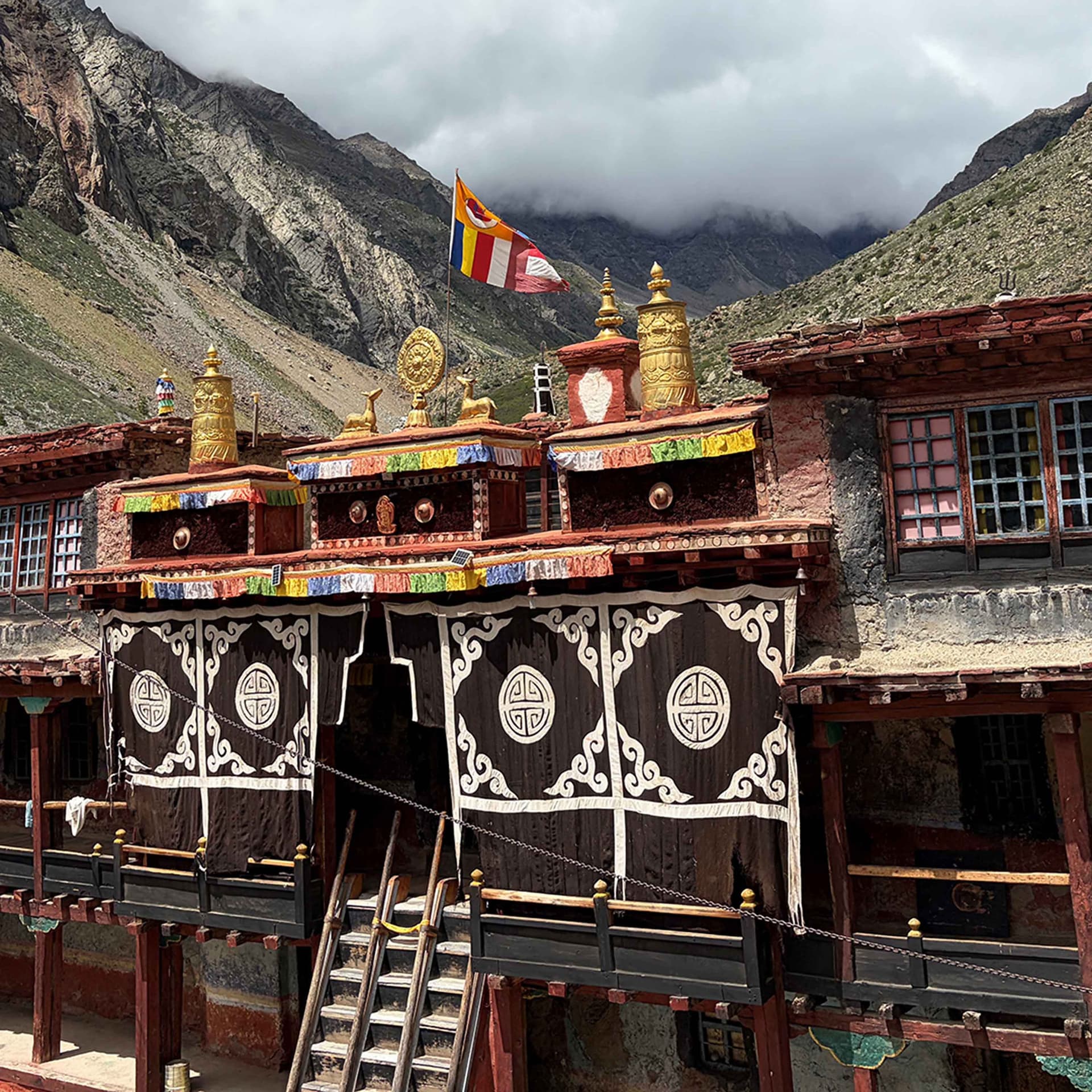
23:02We were looking for two girls missing in a river in the Himalaya, the road between Manali and Le. They dropped with a car 80 meters into a river in an altitude of 4 ,200 meters. And I and Ron were looking near the place where the car turned down. And we were looking, it was afternoon, late afternoon, almost evening coming. The light was already soft. And suddenly was a dog standing in front of me, a black dog. I like very much dogs. So I called him, Bobby, come here. He came, he jumped into my arms, lacking me. He was very happy to meet me. Where he came from, I don't know. When I told Bobby, let's go and find the girls.
23:56And he was running along the river with me. And he was jumping over stones and rocks, coming back. And suddenly he stood on a rock like he is performing in an exhibition. Bobby, the mysterious dog who'd arrived seemingly from nowhere, had guided them to the bodies of the two girls trapped below a rock in a frozen river. We find both of them under the same rock, which is impossible. About the dog, after he found the girls, I asked Ron, take a picture of me and the dog. He took a picture. I got a picture standing on the rock with the dog. After he found the girls, he vanished. He vanished, he didn't come with me.
24:45Fifteen years later, Hillig is back in the same river valley on another mission. He's with a local guide. And I told him, let's go, and I told him the story, and I told him, let's go and have a look about the rock where I had the story with the dog. We are going down to the rock, and you won't believe a black dog is coming. and I ran to the car to pull out my camera. I asked him, did you see the dog? They said, yes, of course, it was a dog. He stood, he looked at me like he's telling me, you don't need me, and he vanished. He went away. Can you explain it? I can't, but it happened.
25:32most of the tones that are surrounding you you cannot hear most of their energies passing by you cannot feel and you decide that with this poor input your logic is perfect that's amazing you're in this position where you're deep deep deep within crisis and it's constant because because the moment after they walk out the door, the phone rings again, and it's another family, and the whole thing starts over and over. Hillek Magnus has spent most of his life on the edge, pulling people back from it. And that endless selflessness, the quest to save everyone in need, takes its toll. The shifting between 100 % operation to zero is very difficult.
26:20When I don't have work, I'm getting so tired that I cannot lift my hand. And we shift a lot from a huge operation to nothing. Two days with nothing, I almost cannot push the light button. So in this operational room, we have intelligence and operating. Ever since we moved from the trailer, the old train trailer in the Moschau, the company moved to the city. And up till now it's been probably like 15, 20 years. I don't think there was a single month that I didn't hear my father that he hates the city. Concerning what we did, it is nothing. But I cannot continue speaking, I'm finished.
27:16It's clear that recalling the missions that he's worked on is exhausting. Revisiting past memories means stirring up the emotions. He's drained. For a moment of respite, he shows me some more of his treasures. Just a moment, I put light on my house. Salvage lamps. Ah, here, here, look at this. Antique carpets. This one is from Azerbaijan. Books lining every wall. Unbelievable. Beautiful oil paintings of birds that I think I recognise. Those are originals. Adoban, the very famous American painter who painted. It's amazing.
27:57Locate, secure, extract. If switching off is something of a struggle, then retiring is a real challenge. Hillek isn't ready for that one yet. Listen, this is a very simple answer. everybody will sometimes stop. And listen, I'm 76 years old. Thanks God I'm very healthy and very strong and in very good shape. Thanks God everything is going well. The engine is since 1949 working, but I'm 76, so every day something happens. When I hear a mother on the telephone, I cannot refuse. and if I know that I can solve the problem, I can be helpful, I will never stop. I will do it. I will carry on as long as I'm walking.
Read the full transcript
28:59You've been listening to the documentary from the BBC World Service, presented and produced by me, Jeremy Newmark-Jones, with additional production from Robert Newmark-Jones. It was a Whistledown production for the BBC World Service.
From the publisher
***Contains descriptions of scenes which some may find upsetting*** Hilik Magnus is Israel’s foremost search and rescue specialist. He has performed missions, public and private, for over 30 years across six continents. He has worked under the radar during disasters such as 2004’s tsunami and 2008’s Mumbai attacks. He has worked with everyone, from grieving families to cartels and the Taliban, all for the simple purpose of returning people to where they belong. The start, in the 1990s, was simple. His operating base was an abandoned train carriage in the southern desert of Israel with three telephones and a dial-up connection. Hilik did not know what awaited him. All he knew was that he felt a ‘shlichut’ – ‘higher purpose’ in Hebrew – to help save lives, to return the unburied to their grieving families. Now, he opens up about this secretive world, and talks frankly about his origins and values.