
In short
A BBC World Service documentary following whether a failing, owner-run family restaurant can be saved through viral social media and restaurant “turnaround” fundamentals (digitisation, pricing, menu costing, inventory, and guest experience).
Guests and backgrounds
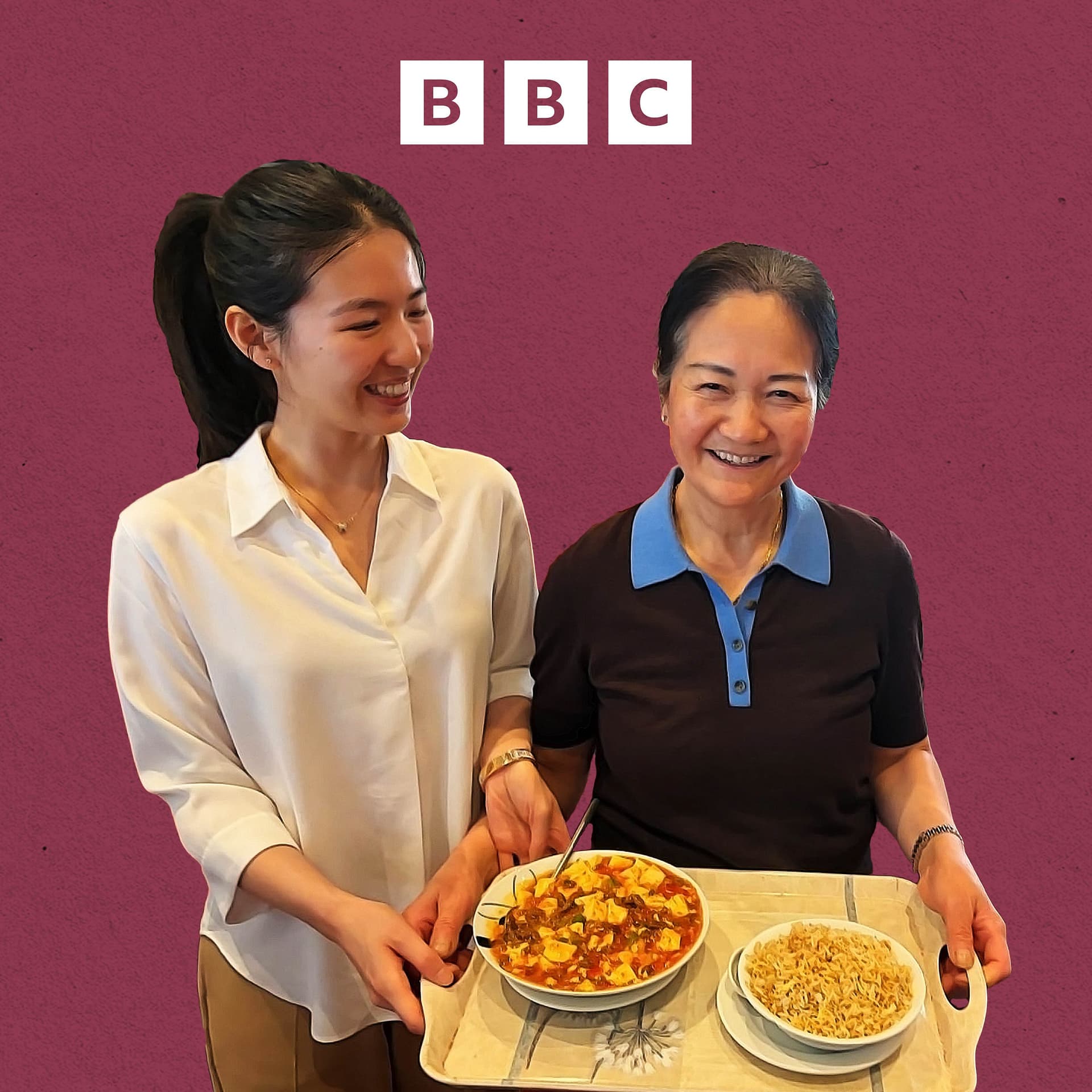
- Lisa He (Edinburgh, Scotland): actor who paused her London career to help her 70-year-old mother Sophie Lee run The China Star, a 30-year-old Chinese restaurant.
- Sophie Lee: owner/operator, works long hours; not digitally connected (e.g., Google reviews).
- Baljinder “Bal” Mahn (Sydney, Australia): restaurant owner; business nearly collapsed after COVID, illness, and rising costs.
- Bav Mahn: son; a business graduate with a full-time job who stepped in, used social media, and later optimized Google reviews and menu.
- David Hopkins: Canada-based restaurant turnaround expert, president of The 15 Group.
- Carly Bond: former vegan fast-food owner in northwest England who closed after profitability failed.
Key claims
- Viral videos can drive short-term customer surges, but sustainability requires systems (POS, inventory control, menu engineering, fiscal responsibility).
- Handwritten ordering and paper processes cause errors (orders stuck/lost).
- Over-portioning by ~10% can cost ~3–4% profit; menu items must be costed.
- POS systems are “imperative” to track sales, table orders, and payments.
- Digitisation gaps (no Google review strategy, no online ordering support) worsen customer acquisition and operations.
Notable examples
- Lisa’s viral video (15+ million views) led to the restaurant becoming “almost full” within days, forcing extra staffing.
- Bav’s viral video triggered community support and improved sales; then he focused on Google reviews, menu fixes, and weekly recipe improvements.
- David’s pricing tweak suggestion: change £10.80/£11.20-style prices to end in 95p to increase revenue without noticeable customer impact.
- Carly Bond’s closure story: despite being “mega busy,” bills left nothing for herself; she couldn’t pay herself and worked ~50 hours during a staffing gap.
Written by AI. May contain mistakes. Listen to the episode to check what was said.
Chapters
Tap a time to open that second in VOThe Struggles of The China Star
0:30 to 0:48
Lisa discusses the challenges her mum's restaurant faces.
“And to think, that's just a small taste of what Schwab offers.”
The Struggles of The China Star
1:18 to 2:00
Lisa discusses the challenges her mum's restaurant faces.
“Lisa's put her acting career on hold to try and rescue her mum's 30-year-old restaurant in Edinburgh.”
Lisa's Commitment to Help
2:00 to 3:08
Lisa shares her decision to help save her mum's struggling restaurant.
“And we'll find out what makes owner-operated restaurants such difficult businesses to run.”
Digital Challenges and Restaurant Operations
3:08 to 5:38
Discussion about the outdated operations and need for digitization.
“Yeah, and I think she only saw the video this morning, which I'm quite surprised about, so I didn't realise the video was still reaching new people.”
Social Media Impact on Business
5:38 to 7:19
Lisa explains how a viral video changed their restaurant's fortunes.
“where's Table 9's order, where's it gone?”
The Mahn Family's Restaurant Struggles
7:19 to 8:00
Transition to the Mahn family's experience with their own restaurant challenges.
“We're still sort of going through the financials to see if this is going to be sustainable long term.”
Bav's Journey to Save the Family Business
8:00 to 11:50
Bav shares his efforts and strategies to revitalize his parents' restaurant.
“This is episode one of Saving My Parents' Business.”
Advice for Struggling Restaurants
11:50 to 13:26
Bav offers insights on strategies for other struggling restaurants.
“We had to like start asking customers to leave us reviews.”
Challenges of Running a Restaurant
14:14 to 17:42
David Hopkins discusses the complexities and challenges restaurants face today.
“So we've linked her up on a video call with restaurant turnaround expert David Hopkins, president of the 15 Group in Canada.”
Key Insights on Improving Restaurant Profitability
17:42 to 22:18
David offers vital advice on guest experience and financial responsibility.
“Yes, everything David says has sounded so relatable.”
Show all 12 chapters
Carly's Experience Closing a Restaurant
22:18 to 24:52
Carly Bond shares her journey of closing her successful vegan restaurant.
“I'm going to keep following and see how you're progressing.”
Lisa's Future Plans and Family Dynamics
24:52 to 27:22
Lisa discusses her plans for the restaurant and her relationship with her mother.
“Any advice for Lisa and her mum's restaurant?”
Transcript
Automatic transcript. May contain errors.0:00This BBC podcast is supported by ads outside the UK.
0:30And to think, that's just a small taste of what Schwab offers. Because Schwab knows that when it comes to your finances, choice matters. No matter your goals, investing style, life stage or experience, Schwab has everything you need, all in one place, so you can invest your way. Visit schwab.com to learn more. Hello and welcome to the documentary from the BBC World Service. Take one failing family restaurant and one very determined daughter. My mum's Chinese restaurant is dying and I have three months to save it. I'm Ramela Dasgupta and you're listening to The Food Chain from the BBC World Service.
1:17Today we're following the story of Lisa and her mum Sophie. Lisa's put her acting career on hold to try and rescue her mum's 30-year-old restaurant in Edinburgh. A video Lisa posted about her attempts to turn the business around has been viewed more than 15 million times. But can she turn clicks into paying customers? We have no customers coming in and our menu is outdated with over 200 dishes. We'll also hear from a father and son team in Australia who know exactly what Lisa and Sophie are going through. So they had a lot of debts that they were slowly building up, but they weren't making enough money to get approved for a loan.
2:00It felt like we were at rock bottom. And we'll find out what makes owner-operated restaurants such difficult businesses to run. Hi, are you ready to order? I'm here in the Scottish city of Edinburgh on a sunny day at Sophie Lee's restaurant, The China Star, where a happy customer has just finished lunch. this morning I woke up and I was just going through my phone and just brought her come help my mom's restaurant from not closing down so I called my friend I said can we go try there because I just saw the video it was so kind of catchy I was just looking no who is saying this I just have to be here and I didn't regret it it was nice, it wasn't a waste of time The video she's referring to was posted by actor Lisa He six weeks ago.
2:56In it, she explained her decision to put her life and career in London on hold and make the 650-kilometre trip back to Edinburgh to help with her mother Sophie's struggling restaurant. Happy customers, right? Yeah, and I think she only saw the video this morning, which I'm quite surprised about, so I didn't realise the video was still reaching new people. Yeah, that was really interesting. I think I came back out of desperation and frustration. After I moved away, mum was kind of left by herself. And, you know, for the first two years, it was sort of OK. And then as time went on, it just got harder and harder on her physically.
3:37I recently installed CCTVs in the restaurant. So when I'm in London, I would watch her working. And she was basically just sitting down the whole day because she's so exhausted, even though there weren't any customers. The long hours meant that she was physically exhausted, being at the age of 70. How hard was it before Lisa came to help? Every day, I was only sleeping four to six hours each day, working seven days a week. No time for eating, no time for sleeping, just working, just working, no hope. So the business was good initially, and then it's gone downhill in the recent years. Why do you think?
4:24I personally think it's because we've not really kept up with times in terms of digitalising. And also, I think the cost of living has risen so much. There's a lack of labour, which means labour is expensive, stock is expensive. And my mum not being on the internet, she doesn't know about Google reviews, or she doesn't know what to do when a delivery tablet breaks down. If a customer complains and doesn't want to pay the bill, she wouldn't really know what to do. Yeah, so a lot of tiny, tiny issues, which I think would have been OK 30 years ago. But in today's day and age, it's really not OK. Lisa is keen to digitise the restaurant.
5:05At the moment, everything from orders to stock management is done on paper. So we still manually take the orders with a pen and paper. and then once we've taken the order we rip it off and fold the little paper here and then we put it through this metal tube and then throw this thing down the tube to the kitchen. It was quite fun to see that actually. The little piece of paper that you rolled up into a little metal ring that then goes down a chute straight to the kitchen. The tube thing is fine but sometimes the orders do get stuck as well so we're left waiting half an hour later saying where's Table 9's order, where's it gone?
5:42And that's when you have to stick a stick down the chute. Yes, exactly, exactly. And also sometimes the order got lost a month ago and then suddenly today the order comes down. So suddenly so much food has come up and no one's ordered it. Where did the idea come from to go on social media to promote this restaurant? So I kind of planned to maybe document the journey for one to three months and eventually maybe some local people will see the video and some people will come in. But what actually happened is just that first video took off completely which was really unexpected. So I posted the video on a Sunday evening and Mondays were closed.
6:19So when we opened on Tuesday morning it was still kind of normal. It was just one customer and one influencer. We were like, okay. And then after half an hour, one hour a few more came in and then by the time it got to peak period maybe one o 'clock or 1.30 it was kind of almost full. But by Wednesday it was completely packed and we didn't have enough space for people coming in. I felt like I was on Red Bull 24-7 for that whole week. We were all working off adrenaline and we didn't have enough staff. So actually my mum had to then go into the kitchen to help. So I called my best friend in to help me in front of staff.
6:57People are still coming in, which I thought was because they saw it ages ago, but it seems like the video's still making new reach. The more important thing is it's helping with the accounts, right? So it's giving the business a boost. It's definitely giving the business a boost. However, we have had to hire more staff, so it does get a bit difficult to balance the balance sheets at the end of the day. We're still sort of going through the financials to see if this is going to be sustainable long term. Because we're really busy and we're really tired, but it seems like, to be honest, we're not sure where the money's going.
7:34Sophie Lee and her daughter Lisa, and we'll be back with them later in the programme. One family who knows exactly what they're going through is the Mahns from Sydney. Last year, Baljin the Mahns restaurant was on the brink of collapse until his son Bav stepped in to help. It all began, you've guessed it, with a viral video. Can a bot business graduate with a full-time job and no restaurant experience help save my parents' shop? Let's find out. This is episode one of Saving My Parents' Business. Okay, so in terms of the memories of the restaurant, I feel like there's so many because my parents have owned the restaurant pretty much my whole life.
8:10I would say it's a mixed bag. It's a good positive memory because we used to get a lot of food from the restaurant, but it was a huge toll on my parents. Like my mom was always at the restaurant. My dad was always at the restaurant as well. And they were working so hard. It's kind of been like their whole life. It's been everything, especially to my dad. I feel like it's his sense of purpose comes from the restaurant. But business was going really well until essentially COVID. Well, Jinderji, what happened? Tell me about how the business started suffering. Business start going down and down. This got bad worth.
8:40And then two years ago, then I got sick. I got stoked. I went to hospital. And then the business got almost dead. Nothing was coming. It was terrible because they were making a loss on the restaurant. At the same time, interest rates skyrocketed. Inflation skyrocketed. So all their expenses had jumped up significantly. So they had a lot of debts that they were slowly building up. But they weren't making enough money to get approved for a loan. So it felt like we were at rock bottom. So it was actually my mum that went up to me saying, like, I don't even know what to do anymore. It feels like we're just being tested in every front.
9:17I think that's when I was like, I need to do whatever it takes to kind of help them in that situation. Wow. So you actually were about to sell the business. What happened? I put business for sale, I think, for six or seven months. Couldn't sell it. Nobody wanted. at that point my dad was back to working seven seven days a week already and then we we just had a chat and then we were just like if we have to keep the restaurant then we're going to make the restaurant busy and so I went onto my laptop I started typing up a full plan of what we're going to do my dad seemed very confused by it but my mom was like yes let's try do everything I initially went straight to social media because I'd seen so many other businesses and as someone part of like that TikTok generation like whenever I want to go somewhere I kind of look on social media to find food that's interesting yeah that's where the idea sparked I was just like all it takes is one video that has to perform well and it could change my parents business forever but how did you find the whole idea of being on video that millions of people could see first when he asked me I refused I said I don't want to go to social media because I'm very shy person I said you can make the video for your mom and I don't want to get involved with this one I don't want make video.
10:32He said, no, you're the main chef. Mum doesn't do cooking. You're the one. You have to do it. But I don't know nothing about social media. So that's the main reason, because I didn't know that social media can do these things. Now I realise. My mum felt like more of a natural. My dad is just super uncomfortable. And even to this day, I don't think he's watched 95 % of the videos that I posted because he doesn't even know how to. So when you first posted that first video, What was the response? The response was kind of insane because there were so many people who just wanted to support my parents' restaurant.
11:07They were sending pictures being like, oh, I'm going to go there right now. There was just so much community support. It was shocking. I was so surprised by the response that we got. I think it's been about 10 months now since I posted that first video. And it's changed the fortunes of the restaurant completely. Yes, 100%. We are making money. We got only 35 seats. We are making money like 150 seats in a restaurant that sometimes we fill up twice, even three times in a restaurant. Bhav, can I ask you, so this was great that you use social media, you've turned it around, but that's not going to be enough to sustain it, right?
11:43There has to be more than just being on social media. Exactly, which is why as part of the strategy for the restaurant, not just relying on social media, it meant that we had to like optimize our Google reviews. We had to like start asking customers to leave us reviews. We had to fix up our menu. And that's why every week I'm coming to the restaurant and we're essentially just trying to improve our current recipes. And then after I'm happy with how all our current food tastes, the plan is then to start working on new dishes that we can start introducing and new specials and keep expanding. I'm still working full time as well.
12:16So I'm doing all of this just after work and then coming to the restaurant every week even because it's 40 minutes away, but it's still time consuming to come and help them. Are you tempted to give up your job and take this on full time? No, no way. Yeah, I don't know if I could work with my dad full time, but there is an opportunity there that I've thought about in terms of just spending more time at the restaurant and like building it out a lot more. But yeah, it's definitely an interesting question because I have considered it. And Bav, so we went to a restaurant in Edinburgh yesterday. day where they've been struggling and they've done something similar to what you've done.
12:55What sort of advice could you give them since you've made your dad's business so successful? Yeah, so I've actually seen their story as well. It's amazing what they've been able to achieve. I think the main thing is just keep trying. Like eventually something will work. If it's a new dish, if it's about sending flyers, if it's about doing something, like just constantly think that you're going to try something different and eventually something will stick. Just really try to think outside the box as much as you can. Bhav Mand and his dad, Baljinder. You're listening to The Food Chain from the BBC World Service.
13:31How did the United States build the largest soft power empire in the world with the help of some tiny metal objects? I'm Tristan Redmond, one of the hosts of the Global Story podcast from the BBC. To mark 250 years of the United States, we speak to Roman Mars of 99 % invisible. This soft power, this influence, was an incredible invention. For more, listen to The Global Story on bbc.com or wherever you get your podcasts.
14:04I'm Ramela Dasgupta. This week, we're following the story of Lisa He and her mother Sophie in Scotland as they try to save the family restaurant. With an outdated menu and a serious lack of customers, Lisa has big plans to modernise. But she doesn't know where to start. So we've linked her up on a video call with restaurant turnaround expert David Hopkins, president of the 15 Group in Canada. Right, David, meet Lisa. Lisa, meet David. He's going to give Lisa and Sophie some advice. But first, he's telling us how uniquely difficult it is to run a restaurant. I always say it's pretty much the hardest business to run, at least the hardest small business.
14:51It depends on how the economy is doing, what consumer confidence is like, what your competition's like. So many factors. But it also depends too on what you're doing internally in a restaurant and how you can build revenue yourself. On top of that, I mean, there are such complicated businesses to run from a profitability point. There are so many variables that are unknown in a restaurant. Many businesses, like even my consulting company, I know exactly what my expenses are going to be next month. Whereas in a restaurant, you don't know what about 80 % of your expenses are going to be. Everything is variable.
15:30staff get paid hourly and your utility costs, your paper supplies, your kitchen expense, your repairs and maintenance, it's all variable costs, which makes it a really tough business to manage even when you have the revenue. You're in Canada today. What is the situation in Canada for restaurants at the moment? If you interviewed me 10 years ago and said, how's the industry? I'd say it's tough. It's not great. It's tougher now because so many restaurants to survive COVID took on a bunch of debt. We've got the economy at play. We've got what's going on in the world. The whole Middle East thing is in play.
16:09And we've also got a decline in people eating caused by the Ozempex of the world. You know, I would say there's a worse market condition than we've seen in a long time. So David, what sort of things do you think restaurants often slip up on? And what kind of mistakes do you see over and over again? I mean, there are two fundamentals to restaurants, and they sound simple, but they're hard to deliver on. To drive revenue, it's that exceptional guest experience. But that's easier said than done. To have great guest experience, the menu's got to be engineered properly, the price point's got to be right, the food quality's got to be great, The service has to be exceptional.
16:52We often see those things falling by the wayside. The biggest thing we see on the side after revenue is just fiscal responsibility. And that's a huge thing in restaurants because of that variable aspect of all your expenses. Often we see menus aren't fully costed. We often see inventory control processes aren't in place, which is a massive problem because it is so easy to waste a lot of product. And studies have been done that show 70 percent of staff will steal product and take it home if they have the opportunity. That's the biggest thing we see missing is that fiscal responsibility piece and delivering the 10 out of 10 guest experience.
17:39So Lisa, is this all making sense to you? Yes, everything David says has sounded so relatable. It's all things that we don't have a system in place because it was kind of just my mum rock and rolling by herself the whole time. The stealing stock is something that has happened for the last 30 years from alcohol to just food stock. And because we don't have an inventory, because we don't have any online systems at all, so it's impossible to keep track. So the first question would be, do you think a POS system is absolutely necessary in any restaurant setting? A hundred percent. So a POS system, it stands for point of sale, and it's basically the cash register system.
18:25They take care of ordering, they track what you've sold, they do the payments, they'll manage who's ordering what on what table numbers. So, Lisa, you're still like, are you handwritten paper chits? And yes, so 100 percent point of sale system is imperative. And I'm going to assume that you don't have your entire menu costed. I was actually looking at your menu earlier. But for example, the beef with mushrooms and oyster sauce, I'm guessing you can't tell me exactly how much that dish cost to prepare. Not at all. I think my mum has a better idea, but yeah, we don't know exactly. So understanding the product cost of dishes is so critical to maximising the profitability of a menu.
19:14And there are tools to do it. I can recommend some. And you can probably add about 4 % of revenue to your profit just by costing it properly and engineering it properly. I have a question, Lisa, because we tried your mum's very lovely tofu and beef dish. It was delicious, but I thought the portion was quite large for one person. Easily, I think you could have had two or even three people eat that dish. So do you think portions also matter, the size of the portions, David? I mean, it all goes hand in hand, which is why it's such a complicated business to run. So if a restaurant over portions everything by just 10%, then you're losing out on about three to four percent of profit.
20:02So generous is nice, but not advisable. It's a tough one for now because I've just risen the menu prices as well. So, yeah, it's sometimes the portion size is also eaten to the customer service aspect. so um it's a bit of a tough one to know how much like 10 cent more or 10 cent less is i think this is why one of the most important things is to cost your menu yeah it's so critical because that empowers you to make great decisions i feel like you know when you put your menu prices up or you tell the kitchen to do more we need better value you know you're throwing darts at a wall with a blindfold on.
20:44And if you have the information, you can even make decisions like, oh my gosh, we shouldn't have that on the menu. It's just not, it's not profitable and people aren't buying it. And we just, we should take that off the menu because if we take that item off the menu, all of those people will now order something else that makes us a lot more money. But you need that information, right? So Lisa, digitization, customer experience, portion sizes, costing your menu. What else do you need to know from David? Can I give you a quick, easy tweak and a win for your restaurant? Yeah, absolutely. I looked at your pricing online and I would say I do not like the pricing approach you've taken.
21:30So when I look at your menu, I see a lot of£11.20,£10.80. there's some 50s in there I would make all of those 95 cents and you'll be shocked how much money just doing that will make you and the guests will not see a difference between 10.80 and 10.95 true there you are that's a good tip Lisa yeah definitely a quick fix I love that to start with so Lisa what do you think now having spoken to David um a few things really surprised me in terms of how over portioning 10 % can result in such a major loss for an entire year because when you think of 10 % it seems like nothing it's like yeah just give a 10 % extra meat vegetable it's not gonna hurt so that's that's information that definitely surprised me and in terms of the pricing thing is a is another thing that's made me realize maybe sometimes I should listen to my mum a bit more because that was our original pricing and then I raised it And I have recently received an advice from another fellow restaurant owner who says, remember to listen to your mum.
22:42Thank you, Lisa. Very nice to meet you. I'm going to keep following and see how you're progressing. David Hopkins of Canada-based restaurant consultancy, The 15 Group. Long hours, constant stress, tight margins. Everyone we've heard from today has told us how hard it is to run a restaurant. So is there a moment when maybe the best option is just to walk away? So I spent five years working evenings and weekends, never really had much time for family or socialising. It's really not a good quality of life. This is Carly Bond, who recently made the tough decision to close her vegan fast food business in the north-west of England.
23:24We asked her to send the food chain a voice note to explain what that experience was like. I absolutely loved what I was doing and I loved feeding people. It became difficult. People assume that when you close down in hospitality that it's because you haven't got enough sales. But we were mega busy and the reality is that at the end of the month, once all the bills had been paid, there was nothing left for me. It never got to a stage where I was able to pay myself. I knew for a long time that it wasn't working. I felt like I couldn't stop. I was always thinking about it. Even if I had a day off, it was always still on my mind.
24:12And it just sucks the life out of you. All of my money just went on other people's wages, taxes, paying suppliers. I decided to close because a chef that was working for me went on holiday. So, of course, I had to pay a holiday pay. But then I also had to go into work and do the shifts that she would usually do to cover her. So that week, I think I worked 50 hours and I still didn't have any money to pay myself. And it was a moment where I just thought, I literally can't do this anymore. I decided to just pull the trigger. I've really spent the last six months trying to get myself fit and well to recover emotionally and physically from that.
24:58if you can imagine you just become really unhealthy that's what happened to me um I wasn't eating properly you know I wasn't drinking enough water I wasn't taking enough breaks I was on my feet for hours and hours on end and I just became really depressed and sad so since I've been off work I've just been trying to focus on fixing myself basically I've been going to gym a lot I've loved having time to cook for my husband and sit and eat together, which has been such a novelty. My life is so much better without it. Any advice for Lisa and her mum's restaurant? Go and look at other modern Chinese restaurants and go and see what the experience is like and take some inspiration from that.
25:55And also the costing of the menu is so important. It's something that I got wrong initially and learned how to do kind of once I was already in the thick of it. But yeah, so important to make sure that you are taking a profit or there's no business basically, is there? Carly Bond there with her advice to Lisa. Back at the China Star, the lunch service is over. Lisa and Sophie are finally able to sit down and take a breath. What do you think, Mum? You're 70. We'll keep it till you're 90? 100? Yeah, definitely. I'm very healthy, yes. The other day you were complaining you don't want to do this anymore.
26:39That's OK. I can't do it. I like working. So you've given yourself, what do you think, six months' time? Well, I said three months initially, but I think I was very naive when I said that. I do think it will take me a minimum of six months. Although I'm not sure how I feel about that because I really miss my life in London too. I do hope to get my mum retired even though she wants to keep working. I want to bring her to London, show her how other restaurants are doing now, the more modern fusion concepts, maybe take her to a fine dining meal which she's never been to. Yeah, I'd love to just get her to enjoy life outside the restaurant once in a while.
27:19You've got a good kid there, Mum. Yes, yes, I've got a good doctor.
27:29Thanks to Sophie Lee and her daughter, Lisa He, for inviting us to their small family restaurant and to everyone in today's programme. Do you run a restaurant? If so, do tell us about it. Our email address is thefoodchain at bbc.co.uk. From me, Ramella Dasgupta, producers Lexi O 'Connor and Beatrice Pickup and the editor, Sarah Waitson. Thanks for listening.
From the publisher
Running a restaurant is hard. Long hours, tight margins and constant stress. In this episode of the Food Chain, Rumella Dasgupta travels to Edinburgh, Scotland, to meet Lisa He and her mum Sophie. Lisa has just put her life and acting career on hold, to try and help her mum save the family's restaurant, the China Star. A video she made documenting her attempt has gone viral, with more than fifteen million views. But is a viral video going to be enough to turn a failing business into a success? Lisa's got to fix the sprawling menu, digitise the paper ordering system and cut costs. Lisa and Rumella meet restaurant turnaround expert David Hopkins from the Fifteen Group in Canada, who's on hand to give advice and to explain why restaurants are such difficult businesses to run. Meanwhile the Mand family in Sydney Australia know only too well what Lisa and Sophie are going through. Last year, son Bhav documented his fight to save his dad's failing restaurant. So how's it doing now? And, in such a difficult industry, when is the right time to walk away? Rumella hears from Carleigh Bond, who made the tough decision to close her vegan fast-food restaurant Forked Up in October 2025.
The Food Chain examines the business, science and cultural significance of food, and what it takes to put food on your plate. To hear more, search The Food Chain wherever you get your BBC podcasts.