In short
A BBC Assignment investigation into a Nairobi court case brought by Kenyan lawyer Kelvin Kubai against the Kenyan government and multinational chemical companies over alleged health harms from pesticides and herbicides used in Kenyan farming, including flower farms and smallholder plots.
Guest backgrounds
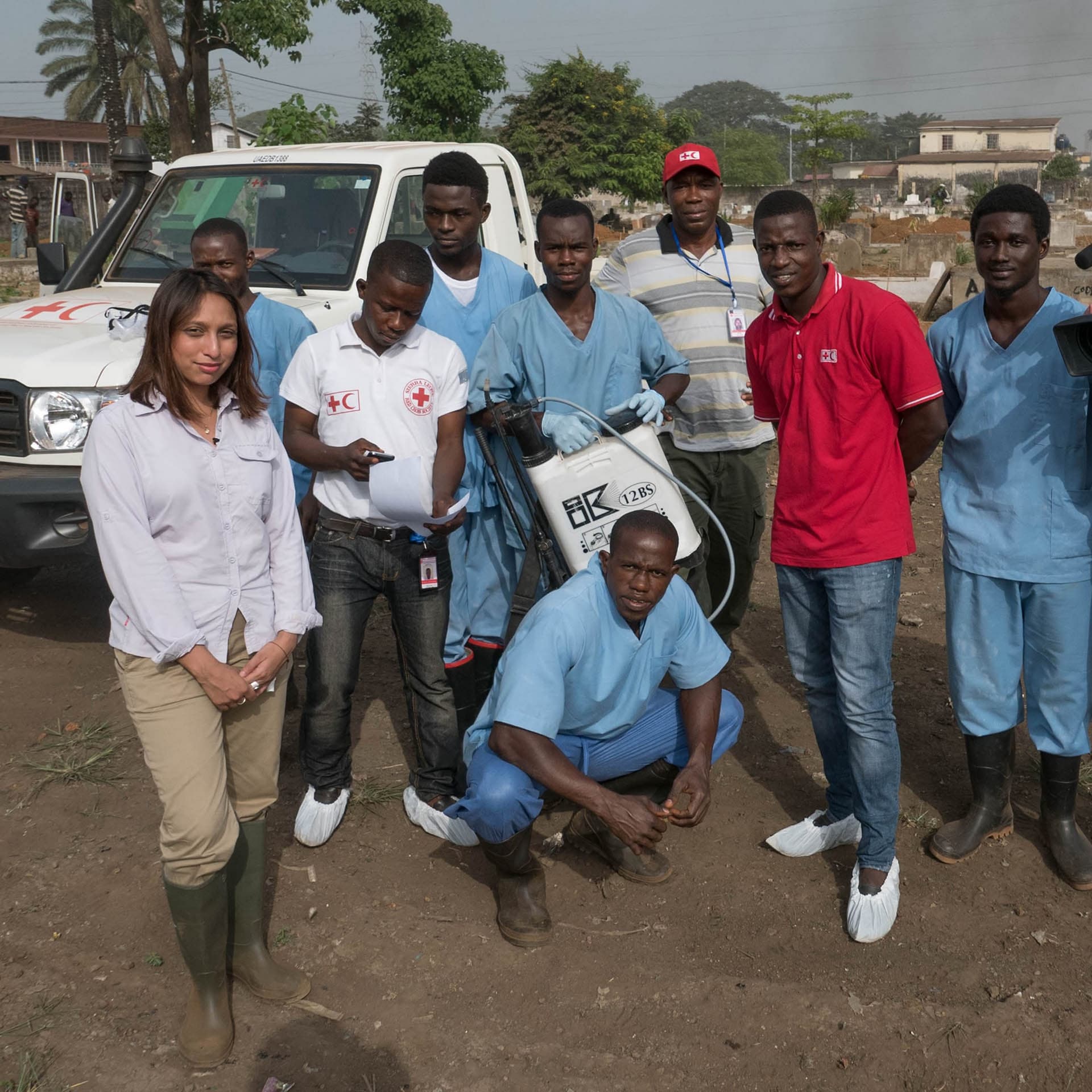
Josephine Cassidy is the BBC reporter following the case. Kelvin Kubai is a young Kenyan lawyer who grew up near Timao’s farms and helped his mother measure pesticides. Prisca is a nurse and community organizer who accompanied farm workers to court. Scientists Professor Thaimuta (forensic/toxicology) and Dr. Minor (toxicology) test exposure and assess patients. Dr. Bundy is the area’s neurologist treating Parkinson’s patients.
Key claims
Many workers lack PPE; some chemicals are linked elsewhere to cancer, Parkinson’s, and infertility; 44% of Kenya-used pesticides were banned in the EU (2020). Paraquat is central: urine tests found it in every sample; a Parkinson’s patient (diagnosed at 44) had no PPE exposure. The regulator says evidence is not peer-reviewed; Syngenta denies causation and says products are safe per label.
Notable examples
A Parkinson’s patient and his wife spraying without PPE; a community urine-sampling event (87 assessed; 14 Parkinson’s diagnoses; all with paraquat detected); regulator testimony about paraquat not being banned in Kenya.
Written by AI. May contain mistakes. Listen to the episode to check what was said.
Chapters
Tap a time to open that second in VOActivists Gather for the Court Case
2:27 to 4:21
A detailed description of the courtroom scene with activists and farmers.
“It's November 2025, when I'm in Nairobi for the latest in a series of court dates.”
The Impact of Agrochemicals
4:21 to 5:26
Discussion on the health issues linked to pesticides in Kenya.
“It's a victory for Prisca and the lawyers.”
Journey to the Food Basket of Kenya
5:26 to 7:16
Travel to a key agricultural region and observe the landscape and farming.
“The next day, I go with Prisca to the part of the country where she grew up.”
Prisca's Reflections on Change
7:16 to 8:21
Prisca reflects on her childhood and the changes in farming practices.
“We would climb the hills, we would run after the small rabbits and the like.”
Kelvin's Journey to Justice
8:21 to 10:24
Introduction to Kelvin's background and motivation for the legal case.
“And she started reading about the potential impacts of pesticides.”
Health Clinic Insights
10:24 to 11:47
Visit to a health clinic revealing the community's knowledge of pesticides.
“I go with Nurse Prisker to her health clinic in the village.”
Health Clinic Insights
11:50 to 12:21
Visit to a health clinic revealing the community's knowledge of pesticides.
“the smart way to manage the currencies you need around the globe.”
Kelvin's Village Visit
12:21 to 14:01
Kelvin visits his childhood village, reflecting on its beauty and changes.
“Kelvin, the lawyer, pulls up outside the clinic.”
Health Risks of Pesticides
14:01 to 14:25
Learn about the improper use of pesticides and its health implications.
“I hear stories of them being stored on top of the wardrobe in the bedroom and of someone mixing them with his bare hands.”
Kelvin's Village and Personal Memories
14:25 to 16:20
Explore Kelvin's nostalgic reflections on his village and past experiences.
“I think it's the most beautiful village in the world, honestly.”
Show all 19 chapters
The Impact of Pesticides on Farmers
16:20 to 17:36
Understand the long-term health effects faced by farmers due to pesticide exposure.
“Then along the way, because of a financial issue, he could not be able to sustain the treatment.”
Paraquat: A Controversial Herbicide
17:36 to 19:25
Delve into the issues surrounding the herbicide Paraquat and its legal implications.
“Exposure to Paraquat has been linked to Parkinson's disease in several epidemiological studies.”
Syngenta's Response and Regulatory Challenges
19:25 to 20:29
Examine Syngenta's position on Paraquat and the regulatory landscape in Kenya.
“But lawyer Kelvin Kabai claims that in the time that it's been on sale in Kenya, it's damaged the health of people in farming communities, contributing to neurological conditions.”
Pesticide Use and Community Health
20:29 to 21:29
Investigate community practices around pesticide use and associated health risks.
“it is best to insert precautionary measures to avoid affecting even more of a vast majority of people.”
Urine Sample Results and Health Findings
21:29 to 23:25
Learn about the findings from urine samples tested for pesticide exposure.
“I'm in a room out the back of a restaurant by the side of the road in flower farming region, Timao.”
Shortage of Neurologists and Healthcare Accessibility
23:25 to 24:13
Discover the challenges of accessing neurological care in rural Kenya.
“14 have a diagnosis of Parkinson's disease.”
Regulatory Perspectives on Paraquat
24:13 to 25:59
Explore the regulatory stance on Paraquat and its implications for farmers.
“And how many people are there in this area that you cover?”
Legal Challenges and the Path Forward
25:59 to 28:05
Understand the ongoing legal battles surrounding pesticide use and public health.
“Similarly, here in Kenya, we have our own regulations that guide the evaluation process.”
Building a Legal Case Against Chemical Companies
28:05 to 28:46
Learn about the challenges faced by lawyers in proving chemical impact on health.
Transcript
Automatic transcript. May contain errors.0:00This BBC podcast is supported by ads outside the UK.
0:30No bouncing between tabs. And best of all, no spreadsheets. Stop managing software and start managing your business with one unified system. Try for free today at odoo.com. That's O-D-O-O.com. Decisions made in Washington can affect your portfolio every day. But what policy changes should investors be watching? Washington Wise is an original podcast from Charles Schwab that unpacks the stories making news in Washington right now and how they may affect your finances and portfolio. Listen at schwab.com slash Washington Wise. That's schwab.com slash Washington Wise. Welcome to the documentary podcast from the BBC World Service.
1:16The question is, do Africans, do Kenyans deserve a clean and healthy environment and clean food as Europeans do, as Americans do. That is a question that we have posed. And our answer is to the affirmative yes. Outside the law courts in Nairobi, TV cameras are huddled around an activist and a lawyer. Thousands of Kenyans have been affected by the use of these pesticides. And what we see is really shocking. It's a striking scene. They're both dressed in suits and they're passionately addressing the cameras. And behind them is a group of farmers, men and women. And there's about 20 now, I would say, farm workers and their families all gathered around.
2:00Some of them, I have to say, don't look very well. I know there's a lot of cancer patients here, and I know they've travelled a really long way to be here today. They're here because today this court in Kenya's capital, Nairobi, is hearing a case about the use of chemicals in farming. It's brought by a young lawyer against the Kenyan government and several multinational chemical companies. This is Assignment on the BBC World Service. I'm Josephine Cassidy, and in this edition, I'll be following this unprecedented case. It's November 2025, when I'm in Nairobi for the latest in a series of court dates.
2:39When I arrive at the courthouse, Kelvin Kubai, the young Kenyan lawyer who's the architect of this case, is running late. So we're just rushing through security, and Kelvin is trying to get his tie on. and so hopefully we're not running too late. I take a seat on the front row of the court. It's a large echoey room that feels kind of like a school assembly hall. The front two rows are full of activists, lawyers and media. Then behind us are several rows of plastic chairs where the farm workers who file in quietly take a seat. At the front of the room is a wooden table where Kelvin sat with his laptop in front of him.
3:21It's connecting him by video call to the judge and the lawyers for the defendants.
3:30Today they're discussing whether Kelvin and his team can go out into communities to find people who they believe have been affected by agrochemicals.
3:45And for them to potentially join this case, making it akin to a class action. Outside, I meet Priska. She's a nurse who's been at the heart of this case. She's in her mid-50s and has a shaved head and is wearing a bright pink blazer and large gold earrings. It's her who's accompanied many of these farm workers to the court. Did it feel like a success in there today? Oh, yes. It's not going back. So now they can be officially processed. Yes, now they can officially be processed and they will be enjoying the case. It's a victory for Prisca and the lawyers. But this is only the start. The farm workers at the court today have a whole host of health issues.
4:30And we don't know if they're actually linked to agrochemicals.
4:38Lawyer Kelvin and his team are arguing that hazardous chemicals, such as pesticides and herbicides, are used in large volumes in Kenyan farming. These products kill insects and weeds, and they make farming, which is one of Kenya's key industries, more productive. But those bringing the case say that they're having a catastrophic effect on the health of many in this region. Some of the chemicals used here have been linked to cancer, Parkinson's disease and infertility, though the evidence is often disputed. According to data from 2020, 44 % of pesticides used in Kenya are banned in the EU. The quest to find proof of the impact of these chemicals is going to be far from straightforward.
5:26And this mission starts immediately. The next day, I go with Prisca to the part of the country where she grew up. We drive three hours north of Nairobi to a region that's called the Food Basket of Kenya. because it's the country's agricultural engine. Produce grown here not only feeds Kenya, but is exported to Europe, the Middle East, and elsewhere in Africa. You can see the agricultural potatoes. Oh, yeah. With the little white flowers on them. Yes. In each village we pass through, vegetable stores line the road, hosting neatly arranged pyramids of potatoes, tomatoes, and maize. From here, now we will start with the flower plants.
6:07Okay. Then, suddenly, we reach the town of Timao, and the landscape is transformed. So you see how extensive the farms are? There's so many. Long white tubes traverse the countryside, swallowing up the farmland and extending to the horizon. This is Kenya's flower farming region. The blooms are exported from here to the UK, the EU and elsewhere. If we flow under our windows, you'd feel also the smell of the pesticides. Really? OK, let's not do that. Really? Let's not do it. And inside those blisteringly hot greenhouses are sprayers, people whose job it is to spray fertilisers, pesticides and herbicides.
6:50I don't know, I think I can smell it. So maybe when there is some, that is seeping through. As we drive towards Prisca's village, the landscape changes again to small-scale farms. Yeah, it's a real patchwork of this very luscious green farmland. Most people here are farmers, and many work for the large-scale farms while tending their own plots of land. We go to the farm where Prisca grew up. We would climb the hills, we would run after the small rabbits and the like. Life was really colourful. I would say our landscape is quite well-sculpted by God, because it's attractive. Yeah, I like well-sculpted by God.
7:34It is. It's beautiful. It's really beautiful. It's like these hills that seem to come out of nowhere. Yes. And the crops are all stepped up the hill. When Prisca was a child, her mum would give her the job of weeding this field. She'd kneel down and push her fingers through the soil. But right now they no longer do that. They purely do the chemicals, the pesticides and the herbicides. In fact, when I'm here, I feel like I'm in a new place. It's not the place where I grew up because many things have changed. And then we used to have a lot of insects around. Currently I don't see any butterflies.
8:12And people have also become unhealthy. Now we get the cancers, we get the neurological conditions, we are getting infertility. A few years ago Priska became really preoccupied with the changing health of her community. And she started reading about the potential impacts of pesticides. Much of the evidence in this area is contested and far from conclusive. But for Prisca, it pointed to a possible explanation of what she was seeing. Then one evening she came across a video online of a young lawyer. And I was like, huh, this guy is doing something similar to what I'm doing. Yeah, I wrote to him an email, I introduced myself.
8:53She told him about the issues in her community and asked, could they work together? The lawyer was Kelvin Kubai.
9:04Right from a very young age. I remember many times I would actually be sent to their private to buy some of these pesticides. Kelvin grew up in the hills of Timao, not far from Prisca, and his mother farmed vegetables on their land. So many times my mum would ask me to read for other instructions on the pesticides. She couldn't read well, so Kelvin helped her with measuring out the pesticides. Then she would do what everyone else does around here, pour them into a special rucksack or knapsack that's designed for this purpose and has a short hose attached to it. Just like Prisca, as Kelvin grew older, he eventually discovered the possible health impacts of these pesticides.
9:48And the more he learned, the more concerned he became. And then at university, he started training to be a lawyer. I saw that now these manufacturers were taking advantage of the vulnerability of these people. You know, you are harming people who have no ability to fight back. When he was in his third year of university, he started drafting a petition, a legal document mounting the case against the Kenyan government and the chemical companies. Seven years and many, many drafts later, that document forms the basis of this case, which is now in court.
10:24I go with Nurse Prisker to her health clinic in the village. On the wall, you've got a lot of information about, you've got the effect of smoking on one, but mainly it's about the effect of pesticides. This is the only clinic in the area, and as soon as Prisker arrives, people start queuing up outside. And I was just chatting to people, and I mean, everybody's a farmer, and I was asking people what kind of pesticides have they used and it's really just a complete cocktail of things. One guy was like, we don't even know what we're using most of the time. We just go to the shop, ask for something that kills insects, kills weeds and then we take what they give us.
10:59We don't know what it's called, we don't always know what's in it. We certainly don't know the health effects of it. Literacy levels here are very low and people don't know what products they're using. This is going to make building evidence to present in court a challenge. You're listening to the documentary. Self-directed investing, trading, full-service wealth management, automated investing, financial planning, thematic investing, retirement planning. Phew. And to think, that's just a small taste of what Schwab offers. Because Schwab knows that when it comes to your finances, choice matters.
11:37No matter your goals, investing style, life stage or experience, Schwab has everything you need, all in one place. so you can invest your way. Visit schwab.com to learn more. Support comes from Wise, the smart way to manage the currencies you need around the globe. Fed up with losing out to hidden fees when you send money abroad with your everyday bank? Choose the smart way. Wise. You can count on the exchange rate you'd usually find on Google. No unwelcome surprises. Plus, ditch that where's my money feeling. Most transfers arrive in under 20 seconds. Join millions saving billions on hidden fees.
12:16Be smart. Get wise. Download the Wise app today. T's and C's apply.
12:25This is Assignment. Kelvin, the lawyer, pulls up outside the clinic. It's only a couple of days after the court case, and he's accompanied by two scientists, Professor Thaimuta and Dr. Minor. They're experts in forensic science and toxicology, and they've been brought on board by Kelvin to assess how these chemicals might be affecting people's health here. Once they've seen a few patients, we hit the road. The plan is to visit the homes of farm workers in the surrounding area. So we've just pulled over by the side of the road in Kirua, just around the corner from Prisca's village and the scene that I can see right now just exemplifies how much these pesticides are used because just in my line of sight, I can see two people spraying the field next to me.
13:12I can also see two young boys, probably about 13, carrying rucksacks, the pesticide rucksacks with the sprayers. And I can also see a guy just on this corner who's filling up rucksacks, obviously ready to use. And what's most striking is that none of them are wearing any sort of PPE. No gloves, no goggles, nothing. Many sprayers I see are wearing a t-shirt or a skirt, their arms and legs bare. If you look at the labels on a lot of these pesticides and herbicides, they often advise with accompanying diagrams that gloves, goggles and coveralls must be worn when using the products because they can be absorbed through the skin.
13:55But I speak to around a dozen farmers here and I observe many more and not one of them uses the correct equipment. I hear stories of them being stored on top of the wardrobe in the bedroom and of someone mixing them with his bare hands. Much of the research on the health effects of pesticides is based on farmers in the US, where the vast majority use some kind of PPE. Our next stop is the village where Kelvin grew up. This is your village, Kelvin. It is my village. I think it's the most beautiful village in the world, honestly. It gives me a lot of memories growing up. I swam in the rivers just downstream.
14:38Would you swim in the river now? Oh, no.
14:45We go to a small wooden house perched on the side of the hill and surrounded by farmland. Inside is a sofa and an armchair, and a curtain divides off the bedroom. we're greeted by a woman in her 50s, her hair's tied up in a wrap, and she seems a bit suspicious of us. But then, after Kelvin explains to her what we're doing, she helps her husband out from the bedroom, behind the curtain, and over to the sofa. And he needs her help. It's painful to watch. He's lost control of his legs, and as he sits on the sofa, his body convulses. He gives us permission to record his consultation with toxicologist Dr.
15:26Minor. We have a structured form for examination, so we have to form. The man is in his 50s and used to be a sprayer on one of the flower farms, and he and his wife farm a small plot of land around their house. They go through his medical history and his exposure to chemicals. Outside, I catch up with Dr. Minor. During the time that he was working, he was working as a sprayer and a gardener, and they were not using any method of the protection, they were not using the PPEs. In 2016, when he was in his 40s, he says his health deteriorated to the point that he had to stop work. Coordination of the speech, coordination of the movement, coordination of the muscle, you can see he's having the tremors.
16:14Then 10 years ago, he was diagnosed with Parkinson's disease. So he was diagnosed when he was only 44. 44. So young. So young. He started the medication in 2016. Then along the way, because of a financial issue, he could not be able to sustain the treatment. He has a severe case of Parkinson's, a degenerative neurological condition which causes loss of control of the limbs. He says to Dr. Minor, who is tall and broad in his 40s, I used to be just like you. It's chilling and hard to even imagine. There are studies from the US showing that agricultural workers are more likely to develop Parkinson's disease.
16:55And there's research that indicates this could be because of exposure to pesticides. But like many who work on the industrial scale farms, this man never knew what products he was spraying. But because of his condition, Dr. Minor fears he may have been exposed to one herbicide in particular, which we know is widely used in this region. Paraquat. It's a powerful weed killer that's been at the centre of thousands of lawsuits in the US from farmers claiming that they've developed Parkinson's disease as a result of their contact with Paraquat. Agrochemical companies have paid out hundreds of millions of dollars in out-of-court settlements.
17:42Exposure to Paraquat has been linked to Parkinson's disease in several epidemiological studies. But there's no proof that exposure causes Parkinson's. And the evidence in this area is hotly contested, including by the agrochemical companies who sell the product. And there's one company which is closely associated with Paraquat, Syngenta. It's a huge agrochemicals company headquartered in Switzerland. and its weed killer Gramoxone is one of the most well-known and contentious Paraquat products globally. Now, back in 2007, Paraquat was banned in the EU and the UK. That wasn't because of its links to Parkinson's disease, but because if it's ingested, it can be deadly.
18:30But the product continued to be sold in markets where it was permitted. We approached Syngenta and they told us that they reject the claim of a causal link between Paraquat and Parkinson's disease because it's not supported by scientific evidence and that Paraquat is safe when used according to its registered label guidelines. They told us that Syngenta's products have an important role in safeguarding crops from pests, which in Kenya can threaten entire harvests and pose catastrophic losses for both the farmer and the wider economy. They added all products sold in Kenya are safety assessed and duly registered, packaged and labelled as required by Kenyan laws.
19:15In March this year, Syngenta stopped manufacturing Gramoxone altogether and they halted sales in Kenya back in 2021. This was for commercial reasons, because cheaper competitors are on the market. But lawyer Kelvin Kabai claims that in the time that it's been on sale in Kenya, it's damaged the health of people in farming communities, contributing to neurological conditions. And Syngenta is one of several companies he's now taking legal action against. What now is the remedy for the persons who've been using it for the last 15 years when we've across the world better advanced scientific and regulatory authorities banning it?
19:58Why did you continue allowing it usage? So what is the remedy for the people who are affected within that duration? We still don't know, do we, with a lot of these pesticides? So, for example, with paraquat, it's been linked to Parkinson's, but we don't know that it causes Parkinson's. The science is uncertain and inconclusive, but the fundamental principles of environmental law, the recognised international principles of environmental law, is one of them being the precautionary principle, that in the absence of conclusive scientific evidence, it is best to insert precautionary measures to avoid affecting even more of a vast majority of people.
20:39Paraquat remains on sale in many brands in Kenya. It's an effective weed killer, so it's widely used. And what chemicals are they? OK, they're treadmill. And even his wife is spraying now. As we leave the house of the Parkinson's patient, we see his wife put on a backpack, we don't know what it contains, and start spraying their farm. Yes, you can see even the wipe is playing. Maybe we should move away a little bit. Yes, you can even see an example. There's no use of the PPEs. She's also not wearing any masks. She's just wearing her skirt and her top. Because Paraquat's banned in the EU and the UK, produce that has residues of Paraquat shouldn't be imported into those markets.
21:23So it remains in Kenya and is consumed by people here instead. I'm in a room out the back of a restaurant by the side of the road in flower farming region, Timao. In fact, I think it's usually a bar. So it's been used for a slightly different purpose today. One of the doctors is set up on a table here with a big file. Giving them the result. How many people are there? There's a lot of people. So there are ideally close to 50 people today. The two scientists took urine samples from people in the community here to test it for Paraquat. And today, they're giving them the results. I catch up with Professor Thaymuta.
22:05Here, it seems like the herbicides' use are very, very concentrated with paraquat. People are consuming more. They found paraquat in every urine sample they've tested here. There's no definitive research on what level of paraquat in the urine is potentially harmful. But what these results do indicate is that many in this community are being exposed to Paraquat. When these results were presented to the court, a representative of the Kenyan regulator, the Pest Control Board, questioned various aspects of the scientist's methodology and stated that unless all the documentation and samples are externally audited, they can't be verified.
22:48Like a tingling feeling, as she said. Yeah, a tingling on the feet and the hands. Professor Thaymuta says he's seeing people here with the beginning of neurological conditions that could degenerate. I've also seen more desperate cases. And also most of them seem to have lost their sensation because of the nerves breaking down. So they've lost sensation in their legs or hands? Yes, hands and their limbs. So how many people have you seen with that? I've seen five. Wow, OK. Yes. Overall, the scientists assess 87 people. 14 have a diagnosis of Parkinson's disease. And of these, all have paraquat found in their urine.
23:32This only indicates relatively recent exposure. It doesn't prove that this is the cause of their condition. The scientists also say that they've spoken to more people that they believe are displaying symptoms but who are not diagnosed. I want to speak to a neurologist who treats people with Parkinson's. to find out if there's a way to quantify the number of people here who have the condition. We stop by a couple of government hospitals and call private clinics, but I keep being told that the neurologist isn't here today. Then I call another private clinic and get an appointment with Dr Bundy. No, I'm the one.
24:10I'm the neurologist in the hospital now. You're the only neurologist in this area? Yeah, the only one. Actually, the Mount Kenya region, yeah. And how many people are there in this area that you cover? If you add all those people, we are talking of not less than 7 million people. 7 million people. So you're the one neurologist for about 7 million people. Yes. For context, in the UK, there's also a shortage of neurologists. Here, there's one for every 90 ,000 people. I want to know if there's any estimate of the number of Parkinson's cases in Kenya. In Kenya, no. We don't have a national registry.
Read the full transcript
24:44We only have individual registries. That's neurologists keeping their own records. Even no study on the prevalence. Without a national registry, there's no way of knowing how many people have Parkinson's or if it's affecting any groups in particular, such as farm workers. Last year, the Kenyan pesticide regulator banned 77 substances. But Paraquat was not on the list. Back in London, I speak to Frederick Machiri, the CEO of the Kenyan regulator, the Pest Control Products Board, over the phone. I want to know why Paraquat was not included. When we reviewed the Paraquat as an institution, we did not find any direct link between the purported Parkinson's disease to Paraquat.
25:35This is an allegation which must be proven by peer-reviewed scientific evidence to support the cause. In the UK and the EU, paraquat is banned. In Australia, it's highly restricted to trained operators. In the US, it has to be administered from a tractor. Whereas in Kenya, you know, anybody can go into a shop and buy paraquat. There's no restrictions around it. Similarly, here in Kenya, we have our own regulations that guide the evaluation process. In Australia, they have not taken a similar decision to the US. They do according to the country needs. The people who are bringing these cases, lawyers, health workers, claim that there is widespread effect on people's health in these communities.
26:25Yes, there is a lot of pesticide activism here in Kenya, and anybody can say anything. And we have had people who do what we call targeted research with a predetermined outcome so that people can report what they want them to report. So here in Kenya, we have a regulatory mechanism in place which ensures that the pesticides we have allowed for use by our Kenyan stakeholders are safe both to humans and also the environment if used according to labor instructions. We've seen in our reporting that very few people or maybe even no people use, for example, the correct PPE on a regular basis. So given that lack of precautions that people seem to be taking, isn't it quite dangerous, quite a dangerous environment to be selling these sorts of hazardous chemicals into?
27:34Like you have made observation, we've done a survey, a quite a population, maybe like 50 % of them could not be using the right PPEs, but they use some form of protective clothing. So while it is true that they don't use the appropriate protective clothing, the exposure to the same pesticides might not be as alarming as reported by pesticide activists here in this country. the case is still ongoing in the court in nairobi kelvin and the other lawyers are now applying for some of the farm workers including the man that we met with parkinson's disease to formally join the case as claimants the challenge ahead of kelvin and his team is to prove the impact of these chemicals in a context which in many ways is a vacuum of information where people are unsure what pesticides they've used, where many health conditions go undiagnosed, where there's no record of the number of Parkinson's cases, and where there's limited uptake of PPE.
28:45Amid all these unknowns, will they be able to build a case that will convince the court? This edition of Assignment was produced and presented by me, Josephine Cassidy. Thank you for downloading this edition of the documentary podcast. It was presented by me, Josephine Cassidy. It was produced by myself and Eugene Kiger. The editor is Penny Murphy. Our production coordinator is Gemma Ashman. And the programme was mixed by Sue Mayo.
From the publisher
In Kenya, a young lawyer is bringing a legal case against the Kenyan government, regulator, and several multinational agrochemical companies. He’s working alongside activists and health practitioners, and they claim that hazardous pesticides and herbicides, designed to make farming for efficient, are damaging the health of farmers in Kenya. They are demanding changes to regulation, as well as increased education and compensation for people who they claim, have had their health severely affected by high exposure to these products. For Assignment, Josephine Casserly travels to Kenya to follow lawyers, health practitioners and scientists as they face the challenges of gathering evidence to support their case.