
In short
The episode is about the “tula boy” mystery: a Korean child allegedly smuggled into Colombia during the Korean War, and how his identity and family history were rediscovered decades later. It follows Aureliano Gayón, a penniless Colombian soldier from Antioquia (nicknamed “el loco galleon”), who found seven starving children near the battalion garbage and bonded with one burned, scarred boy. Gayón claims he taught him Spanish and hid him in a soldier’s tula (duffel bag) for 28 days at sea to Colombia. The boy became Carlos Arturo Gallón, lived in Colombia, later gained brief fame as “el coreanito,” and carried unanswered questions. In 1999, his son Jung helped bring him to South Korea; a live TV call led to a reunion with a woman claiming to be his sister, confirming his mother hadn’t abandoned him.
Guests
José Carlos Cueto (BBC Mundo journalist in Colombia) and writer Andrés Anin (researcher who interviewed veterans and wrote about the case).
Written by AI. May contain mistakes. Listen to the episode to check what was said.
Chapters
Tap a time to open that second in VOIntroducing Lives Less Ordinary
0:00 to 0:37
Discover a series about extraordinary love stories.
“This BBC podcast is supported by ads outside the UK.”
Introducing Lives Less Ordinary
0:39 to 1:09
Discover a series about extraordinary love stories.
“Lives Less Ordinary is bringing you a special series of extraordinary love stories.”
The Mystery of the Tula Boy
1:51 to 2:59
The story begins with a soldier, a boy, and a journey.
“and of questions that remained unanswered for over half a century.”
The Korean War Context
2:59 to 4:19
Understanding the backdrop of the Korean War and its implications.
“To find out, we need to go back in time to the 1950s in what is now South Korea.”
Aureliano Gayón's Background
4:19 to 5:37
Learn about Aureliano Gayón and his journey to Korea.
“Colombia was the only Latin American country that sent men to fight in that war under the name of the Colombia Battalion, or as they call it here in Colombia, Batallón Colombia.”
Encounter with the Korean Boy
5:37 to 7:59
Aureliano finds a boy in need during the war.
“found a group of children rummaging through the battalion's garbage.”
The Smuggling Decision
7:59 to 9:10
Aureliano decides to smuggle the boy to Colombia.
“I knew that asking for an official authorization to bring him back to my homeland was useless.”
Settling in Colombia
9:10 to 10:15
The boy's new life in Colombia with his adoptive father.
“You are listening to the documentary from the BBC World Service.”
Carlos Arturo's Early Life
10:15 to 11:21
Carlos Arturo's struggles growing up in a conflict zone.
“the penniless Colombian soldier who had gone to fight in the Korean War, ended up going back home with an adopted son.”
The Fame of the Tula Boy
11:21 to 12:37
Carlos Arturo becomes a local curiosity in Colombia.
“and it's clear that Carlos Arturo joined his father across the country during the conflict.”
Show all 12 chapters
Carlos Arturo's Adult Life
12:37 to 14:00
Exploring the challenges Carlos Arturo faced as an adult.
“Carlos Arturo experienced a kind of fame in Colombia because journalists and people were curious about it.”
The Journey of Carlos Arturo
14:00 to 18:14
Explore the emotional journey of Carlos Arturo as he reconnects with his roots in South Korea.
“whose life was marked by neglect somehow, because first the one of his mother in Korea, and later his wife.”
Transcript
Automatic transcript. May contain errors.0:00José Carlos Cueto:This BBC podcast is supported by ads outside the UK. Imagine buying a toy for your kid, but it doesn't come with batteries. That sucks. But honestly, it's even worse when you buy business software. You end up with fragmented, disconnected systems that cost a fortune and don't talk to each other. Odoo completely changes that. Odoo comes fully complete, with all your business apps perfectly integrated and working together seamlessly. It's everything your business needs in one place, saving you time, headaches, and serious money. Stop paying for missing pieces. Go to odoo.com. That's O-D-O-O dot com to learn more.
0:42Lives Less Ordinary is bringing you a special series of extraordinary love stories. Roshan Sethi was an uptight Canadian doctor who couldn't come out to his Indian family. Karansani was an actor from India who felt he had to keep his sexuality a secret to make it in Hollywood. But they met, fell in love, and things began to change. They decided to make a romantic comedy based on their relationship. Lives Less Ordinary Love Stories from the BBC World Service. Listen now wherever you get your BBC podcasts. Welcome to the documentary from the BBC World Service.
1:22José Carlos Cueto:Estás escuchando The Fifth Flow.
1:34This is The Fifth Floor, at the heart of global storytelling with BBC journalists from all around the world. I'm your host, Farnak Amidi.
1:50This is the story of family ties lost and found and of questions that remained unanswered for over half a century. It all started with a boy, a soldier and a duffel bag.
2:06José Carlos Cueto:The soldier hid the boy in a tula, as they say in Colombia, which is a type of big bag that soldiers used to put their belongings in. So he took the boy on the ship heading back to Colombia and kept him fed and watered for 28 days at sea and would play cards with him to entertain him. This is José Carlos Cueto from BBC Mundo. He's a journalist based in Colombia and he's recently been working on the extraordinary story of the Tudor boy, a mystery that gripped and moved Colombia for decades. What is the story of a Korean child? He was smuggled into Colombia and then the child grew up to be a man in Colombia, became famous somehow and lived haunted by his past.
2:53So who was this Korean boy and what happened to him? To find out, we need to go back in time to the 1950s in what is now South Korea.
3:07José Carlos Cueto:American and Korean troops advanced through the city of Incheon, heading east towards Seoul amidst negligible resistance. Well, the Korean War was the first military conflict of the Cold War, in which the United States and the USSR, which were the great powers of the time, competed for ideological, economic and military hegemony. A few years earlier, in 1945, Japan had been defeated in World War II, ending decades of Japanese domination in Korea. The USSR occupied the northern half of the Korean peninsula and the US the southern half, resulting in the creation of two separate states. The Korean War broke out in 1950.
3:49José Carlos Cueto:And that was the beginning of a brutal three-year conflict that divided Korea in two and left between four and six million people dead, thousands displaced and hundreds of families separated. The Americans and Soviets were not the only foreign forces present in Korea. Some UN countries, including Colombia, sent their troops too. So in 1951, the then president of Colombia, Laureano Gomez, sent around 5 ,000 soldiers to fight alongside the United States and present South Korea against troops from what is now North Korea. Colombia was the only Latin American country that sent men to fight in that war under the name of the Colombia Battalion, or as they call it here in Colombia, Batallón Colombia.
4:36Among these soldiers was a somewhat mysterious man. His name was Aureliano Gayón. We don't know much about him.
4:45José Carlos Cueto:What we know is that he was from Antioquia. It's a very mountainous region in the center of Colombia. and that he was around 18 or 20 years old when he went to the war. He was a man without a comfortable financial situation, who went to Korea partly in search of adventure and financial compensation. And it's also known that he had a reputation for being crazy. They even call him the crazy galleon, el loco galleon. And that this became his nickname, although there aren't many anecdotes to illustrate why. We also know that Aureliano was often on duty at the army base kitchen, and that led him to an encounter that would change his life.
5:33José Carlos Cueto:One day during the war, Gallon, who was working in the kitchen, found a group of children rummaging through the battalion's garbage. This is Aureliano's own account of what happened, voiced by an actor. During my daily walks, I used to pass by a skip where people dumped garbage and junk. One day I noticed footprints in the snow and that caught my attention. And there I saw seven children all huddled together. They were looking in the pile of garbage for food and clothes. He then looked for an interpreter to speak with these abandoned and hungry children. And he grew fond of one in particular. This boy was around six or seven years old.
6:17He was tiny and had a scar on his chest from when he was burned in an accident with boiling water. Aureliano said this boy... Had a bubbly personality and was very friendly. And particularly clever. So they became friends.
6:33José Carlos Cueto:I spoke to this Colombian journalist and writer, Andres Anin, who has been following the story for quite a few years now. He's been researching it and, you know, writing a book. He also featured in a documentary for the Colombian television. And according to the writer, the version of Gallon, of how he found this child, is the only official version of how the Colombian battalion soldiers found little Jun Mucho, which is meant to be the most accurate name that has been found, because the name has been written many different ways. And in his research and interviews with other veterans, He says that veteran Ramon Rojas, who was Gallon's comrade and the one he spoke with the most, he says that there were many orphans in the world who had to make a living.
7:24José Carlos Cueto:The mother of the child had left and leaving the little boy and his siblings behind, and an older sister was taking care of the younger ones. And of all the soldiers, the boy became most attached to Aureliano Gallon, and probably because he was in charge of the kitchen and was spending more time with him. Let's hear Aureliano's version of what happened next, again voiced by an actor. I began teaching him Spanish. He quickly learned lots of words. And one day he surprised me by saying, Papa-san, I want to go to Colombia. It was difficult. I knew that asking for an official authorization to bring him back to my homeland was useless.
8:06So I made a decision.
8:08José Carlos Cueto:I would smuggle him to Colombia. Gallón probably thought that if he would have requested the permission to bring this child with him, his superiors wouldn't have allowed it. And apparently he was really fond of this child. And not only because of the bond they created, but probably he also thought that he was rescuing him and saving him somehow from hunger, famine, and, you know, all the process of rebuilding Korea after the war. So Gae-yong put a child in his tula, which is a kind of a bag that soldiers used to put their belongings in, like kind of a canvas rucksack or a large travel bag. And with the help of other soldiers, housed the child for 28 days on the return ship, and they fed him and played cards with him in the spare time.
8:58And that is how, in 1953, the boy arrived in Colombia, ready to start a new life, thousands of kilometers away from his family.
9:09José Carlos Cueto:And the little boy did not set food in Korea again until almost half a century later. You are listening to the documentary from the BBC World Service.
9:55I'm Farunak Amitya, and in this episode of The Fifth Floor, I'm trying to find out what happened to the Tula boy, a South Korean child who was smuggled into Colombia in the mid-1950s. My colleague, Jose Carlos Cueto, has been working on this story for BBC Mundo. So we got to the point where Aureliano Gayon, the penniless Colombian soldier who had gone to fight in the Korean War, ended up going back home with an adopted son.
10:26José Carlos Cueto:He was firstly given a Colombian name, Carlos Arturo, and he took his adoptive father's last name. So his name until he died was Carlos Arturo Gallon. Aureliano Gallon became the boy's adoptive father and they first lived in Antogia where the soldier was from. Carlos Arturo didn't find it easy to adapt to his new life. Apparently he had a stepmother with whom he didn't seem to get along. and he was a rebellious child who ran away from home frequently. And Carlos Arturo almost jumped from one war to another because when Aureliano Gallon, like the other soldiers, came back to Colombia, they found themselves in the middle of the Colombian conflict between the National Army and the leftist guerrilla that were appearing in the country back then.
11:16José Carlos Cueto:There are several pictures of the boy on patrol with other soldiers, including Aureliano Gallon, and it's clear that Carlos Arturo joined his father across the country during the conflict. I've seen these pictures. They are quite moving, really. Carlos Arturo is wearing a military uniform, a bullet belt on his right shoulder, and what looks like a gun strapped around his tiny waist. He has a shy smile on his chubby face. Why wasn't anyone questioning this?
12:16José Carlos Cueto:kept the secret for Aureliano for a few years, but 11 years later, he revealed the story to El Espectador, and it's one of the most important newspapers in Colombia. And apparently he revealed the story because the web already leaks about the mystery of this Korean child among Colombian soldiers. Once the story came to light in 1964, Carlos Arturo experienced a kind of fame in Colombia because journalists and people were curious about it. He was known as the little Korean, el coreanito, as they would say here. And it's worth noting that unlike Argentina, Peru or Mexico, Colombia has not historically been known for receiving much foreign migration.
13:01José Carlos Cueto:So the mere fact that a Korean child was living among Colombians was news in itself. And curious journalists followed the life of the little Korean and even reported on events such as his wedding, which was covered by El Tiempo, which is one of the other most important newspapers in Colombia. So how did Carlos Arturo's life unfold? Like his adoptive father, he also had a military career, although not in an operational capacity, but rather working for the Ministry of Defense in the archive section. he married a Colombian woman with whom he had two children. But throughout his life, Carlos Arturo had questions that nobody could provide answers for.
13:45José Carlos Cueto:He did have questions about the circumstances under which he left. For example, why his mother had abandoned him and whether he left against his will or by choice. The writer I spoke to, Andres Anin, describes Carlos Arturo as a reclusive man whose life was marked by neglect somehow, because first the one of his mother in Korea, and later his wife. Carlos Arturo's relationship with his wife broke down, and she left him for another man. When they divorced, the children went to live with her. Later on, one of them, Jung, decided to get back in touch with his father. And it was Jung who years later would play a crucial role and helping his father find his roots.
14:34José Carlos Cueto:In 1999, a group of South Korean journalists came looking for him at his home in Bogota to make a documentary, you know, bringing him back to South Korea and getting to know, you know, the country that he had left almost half a century ago. And then Carlos Arturo didn't seem very interested in traveling or digging up the past. But his son, Jung, insisted, And almost to please him, Carlos Arturo agreed to make this trip. Carlos Arturo was about 70 years old when he embarked on the journey that would take him back to South Korea, hoping to find the answers to the questions that had been haunting him all his life.
15:16José Carlos Cueto:And according to Jung, his father barely spoke during the trip and the first few hours in Korea, and they were both amazed by Seoul's, the capital, futuristic aesthetics. they struggled to imagine how they had been able to recover like that from the devastation of the war less than 50 years earlier. Carlos Arturo was followed everywhere by journalists and the day he was interviewed on a television show he had to lock himself in the bathroom for several minutes due to the nerves and the anxiety. Then, during a live TV interview, while Carlos Arturo was telling his story, something unexpected happened.
15:54José Carlos Cueto:Essentially the phone rang live and a woman was hurt speaking. She claimed to be Carlos Arturo's sister. Could that be true? Could this woman be the sister who was looking after him all those years ago during the war? The journalists from KBS, the Korean Broadcasting System, decided to organize a reunion and get it on camera. But Carlos Arturo didn't know. They just told him that they were going to get him on a trip to the outskirts of Seoul under the pretext of seeing the South Korean countryside. And then they arrived at this house and Carlos Arturo seemed very bewildered. And then a woman approached him, pulled at his shirt and tried to see his chest.
16:42You may remember Carlos Arturo had a scar on his chest from a childhood accident with boiling water. That's what this woman, who claimed to be his long-lost sister, was looking for.
16:55José Carlos Cueto:And then the woman sobs and lunges at him while Carlos Arturo still couldn't believe what he was seeing. And essentially, almost 50 years later, he was hugging his sister again. The following hours and days were very revealing for Carlos Arturo. Not only did he relieve his childhood, taste Korean flavors, and share stories with his family, But he also realized that his mother had never abandoned him, but had gone out to provide for her family. And that since her son's departure, she had mourned and remembered him until she died. So Carlos Arturo wasn't an orphan after all. His mother left him with his older siblings while she was looking for work.
17:40He also got reassurance that he had not been forced to move to Colombia.
17:46José Carlos Cueto:Carlos Arturo also cleared up the question of whether he left against his will, because according to his sister, before leaving, he asked for her blessing. Let's say that Carlos Arturo somehow healed his torments from the past.
18:02After a few weeks, Carlos Arturo and his son, Young, went back to Colombia. For the second time in his life, he left South Korea behind, this time never to return.
18:14José Carlos Cueto:Carlos Arturo died in Colombia in 2013. And his life is remembered today essentially thanks to his son, Junk, who, in alliance with writers like Andres Anin, continues to search for answers. For example, Anin still wants to know more about the circumstances under which Carlos Arturo's mother left and then returned, because for him that remains as a mystery, no? And then Jung, in a very moving interview, told Sanin in Los Informantes, which is this TV show that features a lot of documentaries like this in Colombia, that his father told him the value of honor, respect for children and a total rejection of war.
19:00There was one more thing that Carlos Arturo asked his son Yung to do, to bring his ashes back to South Korea to rest with his family forever.
19:12José Carlos Cueto:He now lives a very modest life in Bogota, and it's difficult for him to raise the funds that are necessary for his father's final act of honor. So we can say in a way that the Tula boy last journey is still pending.
19:30Jose Carlos Cueto from BBC Mundo. You can find pictures of Carlos Arturo on the BBC Mundo's Instagram page. I'm Farinaik Amidi. The Fifth Floor team this week was... Alicia Gioia. Caroline Ferguson. And... Hannah Dean. Thanks for listening.
19:54You've been listening to the documentary from the BBC World Service. Lives Less Ordinary is bringing you a special series of extraordinary love stories. Roshan Sethi was an uptight Canadian doctor who couldn't come out to his Indian family. Karansani was an actor from India who felt he had to keep his sexuality a secret to make it in Hollywood. But they met, fell in love, and things began to change. They decided to make a romantic comedy based on their relationship. Lives Less Ordinary love stories from the BBC World Service. Listen now wherever you get your BBC podcasts.
From the publisher
In 1953, a South Korean child was smuggled into Colombia in a duffle bag, or ‘tula’ in Spanish. He was adopted and re-named Carlos Arturo Gallón, but he had questions about his identity that remained unanswered for over half a century. José Carlos Cueto from BBC Mundo reports.
This episode of The Documentary comes to you from The Fifth Floor, the show at the heart of global storytelling, with BBC journalists from all around the world.
Presented by Faranak Amidi. Produced by Alice Gioia, Caroline Ferguson and Hannah Dean.
This is an EcoAudio certified production.
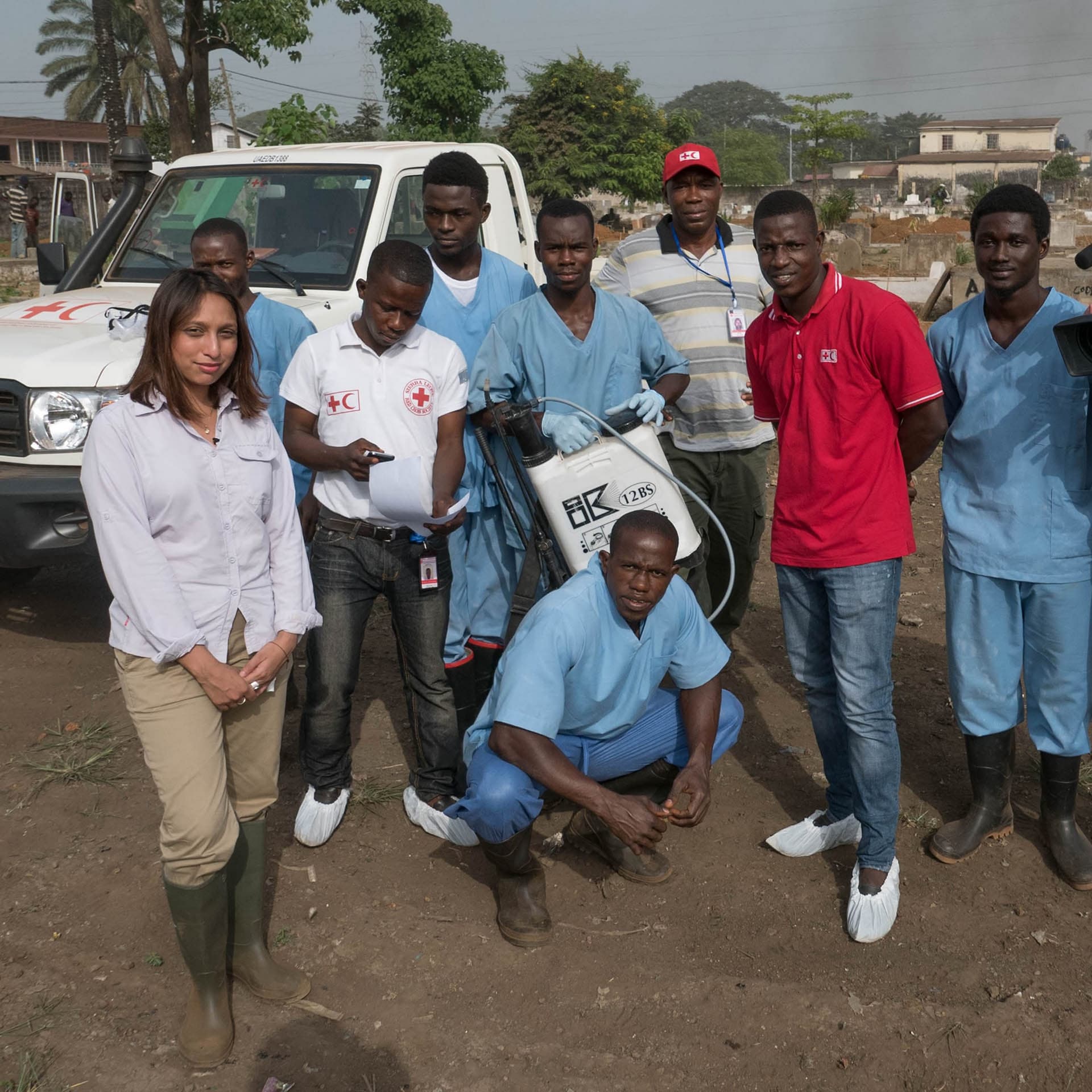
(Photo: Faranak Amidi. Credit: Tricia Yourkevich.)