In short
Romanians leaving hot city apartments for countryside “choosing life in the hills,” driven by pandemic lifestyle changes and desire for space, safety, lower consumption, and sustainability; plus two additional BBC Fifth Floor segments: sprouted potato safety and why flower bouquets are smaller/more expensive.
Guests (and backgrounds)
Anka Barea, Romanian journalist at BBC Monitoring, covering Eastern/Central Europe and sustainability stories. Andy Hertz, former London expat who returned to rural Romania (Apusen Mountains) and founded the online community “Mutat Latzar Vyatza for a Chas.” Nazani Motamedi, BBC Persian health journalist (37 Degrees). Helio da Silva, 73-year-old retired sugar-cane worker in São Paulo who planted trees in Chiquatira Linear Park. Regina Maura de Miranda, University of São Paulo professor on green spaces/thermal comfort. Anne Okumu, BBC Africa colleague who reported on Kenya’s flower industry.
Key claims + examples
Cities’ communist blocks become unbearable in hotter summers; countryside offers gardens, vegetables, animals, and community support (e.g., advice after a rooster dispute). Remote living lacks paved roads/fiber; communities push improvements (fiber, paved roads, minibus, helicopter emergency service). Sustainability includes restoring traditional homes and adding solar panels. Sprouted/green potatoes contain glycoalkaloids/solanin—cut sprouts/green parts; discard if long sprouts (>2.5 cm) or if pregnant/breastfeeding/immunocompromised. Kenya flower prices rise as production, fertilizer, transport fuel, import taxes, labor, and climate-change reduce yields, so vendors shrink bouquets.
Written by AI. May contain mistakes. Listen to the episode to check what was said.
Chapters
Tap a time to open that second in VOUrban to Rural Migration in Romania
1:20 to 2:14
Exploring the trend of Romanians leaving cities for countryside living.
“But it seems that a growing number of Romanians are leaving the city to build their dream homes in the lush hills of the countryside.”
Who is Moving and Why?
2:14 to 3:17
Understanding the demographics and motivations behind the move to countryside.
“And who are the people moving out of the cities?”
Popular Areas for Relocation
3:17 to 4:34
Identifying the most sought-after locations for countryside living in Romania.
“So I think it's really about wanting a more intentional lifestyle with lower consumption and with a smaller environmental impact.”
Challenges of Countryside Living
4:34 to 5:51
Discussing the obstacles faced by those moving to rural Romania.
“While others choose to go to the hills or the mountains just because they want to escape maybe the summer heat.”
Employment and New Lifestyles
5:51 to 7:39
Exploring job opportunities and lifestyle changes in rural areas.
“There's a lot of unspoiled nature as well.”
Building Sustainable Communities
7:39 to 10:04
How communities are focusing on sustainability and traditional living.
“So Anka, tell me more about this community that Andy has started.”
Impact of Migration on Local Communities
10:04 to 11:11
Examining the changes in local communities due to new arrivals.
“I was mentioning earlier the fact that probably everyone who lives in the countryside has a garden and they grow their old vegetables rather than going and buying them from the supermarket.”
The Host's Personal Connection
11:11 to 12:43
The host reflects on her personal ties to the countryside.
“to improve things to move things forward for example in case of an emergency now they have a helicopter service who serves the rural area.”
Transformation of Chiquachira Park
14:00 to 19:00
Learn about the efforts to transform a degraded area into a vibrant park.
“da Silva, the area was becoming more degraded each day.”
The Rising Cost of Flower Bouquets
19:40 to 28:00
Explore the reasons behind the increasing costs of flower bouquets globally.
“Lives Less Ordinary is bringing you a special series of extraordinary love stories from all around the world.”
Transcript
Automatic transcript. May contain errors.0:00Anca Badea:This BBC podcast is supported by ads outside the UK.
0:05André Biernath:Decisions made in Washington can affect your portfolio every day. But what policy changes should investors be watching? Washington Wise is an original podcast from Charles Schwab that unpacks the stories making news in Washington right now
0:21Anca Badea:and how they may affect your finances and portfolio. Listen at schwab.com slash Washington Wise.
0:29André Biernath:That's schwab.com slash Washington Wise. If you are currently overpaying on software to run your business, remember this number, 10 ,000. That's the number of new businesses that join Odoo per month. Join Odoo today at odoo.com. That's O-D-O-O dot com.
0:50Dacian Cioloș:Welcome to the documentary from the BBC World Service.
1:11Dacian Cioloș:This is The Fifth Floor, at the heart of global storytelling, with BBC journalists from all around the world. I'm your host, Farnak Amidi.
1:27Dacian Cioloș:I don't know if it's an age thing or something else, but these days I hear it a lot from some of the people around me that they've had enough of the London big city life and want to move to the peace and quiet of the countryside. Not me, though. I'm a big city girl. But it seems that a growing number of Romanians are leaving the city to build their dream homes in the lush hills of the countryside. Celebrities are also following this trend, even the country's former prime minister. But this seemingly idyllic lifestyle is not without challenges. So what's driving this trend? And what are the main obstacles people face?
2:09Dacian Cioloș:Romanian journalist Anka Barea has been looking into this story. Anka, welcome to the fifth floor. Great to have you. Thank you so much. Lovely to be here. So tell me about this trend. When did it all start? And who are the people moving out of the cities?
2:25Nazanin Motamedi:So the trend started a few years back with the pandemic acting as a catalyst for change. Many people changed their lifestyle. And while in some other places, people moved back to the city after the pandemic. In Romania, the shift to the countryside is still going strong. We're talking about normal people, people who maybe are from the countryside originally, who moved to the city to pursue education or for better jobs, and now want to go back. There are also people from all kinds of backgrounds, entrepreneurs, digital nomads, retirees, young people with families searching for more space, freedom, perhaps more safety to raise their children.
3:06Nazanin Motamedi:And there are also people who have moved abroad 10, 20, 30 years back, and now they made the money. And now they are moving back because they can afford bigger houses, a garden. And apart from Romanians, there are also foreigners who come to Romania and decide to settle in the countryside. So I think it's really about wanting a more intentional lifestyle with lower consumption and with a smaller environmental impact.
3:33Dacian Cioloș:And Anka, it's not just your ordinary Romanians doing it. It's celebrities, even the former prime minister. Tell me about that.
3:42Nazanin Motamedi:Well, yes. Owning a house in the countryside in Romania seems to be the new status symbol. Actors, musicians, TV personalities, even our former prime minister, Dacian Coloz, who is trained in agriculture, live or have weekend homes in the countryside. and they post on their social media pictures of themselves and their families having coffee in the morning with their feet in the grass.
4:06Dacian Cioloș:So where do they usually move? Is it like a specific area that is super popular?
4:11Nazanin Motamedi:Well, Romania has a varied landscape. The Carpathian Mountains from the north to the west surrounding the beautiful Transylvanian Plateau. And in the south, the Danube River forms a natural border with Bulgaria before flowing into the Black Sea in the southeast. So when it comes to where to settle in Romania, people have quite a variety of options. So some people return to their home villages to fix up family homes, their parents' houses or grandparents' houses. Nostalgia, I guess. While others choose to go to the hills or the mountains just because they want to escape maybe the summer heat. In the recent years, Romanian cities have become very, very hot due to climate change.
4:55Nazanin Motamedi:Also, many settle near big cities because they want easier access to schools, to hospitals, to the jobs. So they go to the suburbs. Or just to the closest village or closest small city. Some just go deep into remote areas seeking freedom and wilderness.
5:12Dacian Cioloș:From what I understand, many of the people who live in the cities live in these communist era blocks. And with the summers getting hotter, these buildings are also becoming hotter. And people find it unbearable.
5:28Nazanin Motamedi:Yes, they are small as well in size because they were trying to fit in as many people as possible in the blocks. And when you have the choice between living in a small communist built apartment versus just commuting 50 kilometers away and you get the house, you get the garden, you can have a dog, you can grow your own vegetables. And it's quite lush, isn't it? It's green and lush. It is green and lush. There's a lot of unspoiled nature as well. If you want true wilderness, you can find it in Romania. Obviously, living in remote areas comes with challenges as well. You may not have paved roads, you may not have broadband or access to electricity, water.
6:11Nazanin Motamedi:Surprisingly, some people have to still get water from a well. Obviously, people with children are further away from schools because many villages might not have their own school, hospitals as well. So it can be a challenge as well.
6:25Dacian Cioloș:And how do people make a living there? Because as you said, some of these places are really remote. So what kind of jobs do they do?
6:33Nazanin Motamedi:I recently spoke to Andy Hertz, who is a former expat in London. And he has decided to return to Romania a few years back, has created a community. And what is it called? It's called Mutat Latzar Vyatza for a Chas. It means move to the countryside, life without a clock. And Andy, apart from organizing events for the community, he is also an author. He writes books. Some other people are digital nomads. Some people have managed to get jobs in the local communities, maybe as teachers, as car mechanics, or anything that is available or needed in the community as well. Farming? Farming, yes. Yes, you'd be surprised how many people have actually left their jobs in the city, their corporate jobs, and now have started farming in the countryside.
7:28Nazanin Motamedi:They keep animals, even bees make their own honey. Almost everyone has a garden. They plant their own vegetables. They have trees. They have orchards. They own fruits, make jams. People have also invested in the areas where they live using personal resources or even accessing European funds.
7:47Dacian Cioloș:So Anka, tell me more about this community that Andy has started.
7:51Nazanin Motamedi:Andy does not come from a farming family. So when he decided to go back to Romania and buy a house, he lives quite remotely in the Apusen Mountains. This is in the northwest part of Romania. He needed help. He started asking around for advice. And this is how he came up with the idea of setting up an online community where he could connect with other like-minded people, share stories. He invited initially his 10 friends. And now it's a thriving community of over 360 ,000 people and keeps growing.
8:29Dacian Cioloș:I was watching some of the videos and it's like, it's really beautiful. You can see these sheep grazing the fields. It's like very idyllic, very peaceful. Is that what resonates with people? Is that what people are actually looking for in their lives today?
8:45Nazanin Motamedi:I believe so, especially people who have lived for many, many years in busy, crowded, polluted, noisy cities. Andy told me a story that someone shared on his Facebook page. A fight over a rooster with one of his neighbors.
9:03Dacian Cioloș:You will never have a fight like that in the city.
9:06Nazanin Motamedi:Possibly not. So this member asked the community how would they deal with this issue. And interestingly enough, they managed to give him advice, positive advice, on how to peacefully resolve the problem. Andy and his team also organized festivals. This year they are organizing a festival in July and one in August with traditional food, with artists performing artisanal products for sale, such as homemade shoes, jewelry, delicacies.
9:39Dacian Cioloș:So there is a big focus for a lot of these communities on sustainability. What are they doing to have a more sustainable life?
9:48Nazanin Motamedi:One example that comes to mind is housing. some people buy old homes, traditional homes, and they are restoring them in a traditional way, sometimes adding maybe modern touches such as solar panels just to make them more sustainable. I was mentioning earlier the fact that probably everyone who lives in the countryside has a garden and they grow their old vegetables rather than going and buying them from the supermarket. and this idea of consuming what you produce, focusing on organic agriculture as well.
10:24Dacian Cioloș:You know, usually people move to the countryside exactly because of the things that you say. Even sometimes the remoteness of the place is what attracts people. But obviously when these communities move, they start changing the environment as well. What kind of changes are we witnessing in these communities at the moment?
10:43Nazanin Motamedi:So Andy mentioned that when he first moved to the village where he currently lives, the roads were not paved and there was no fiber optic cable because the community over there was pretty elderly and they didn't even know what an email was. and since then now they have fiber optic and the roads are paved schools and hospitals still are lacking in some places people who move to the countryside are working with the local authorities to improve things to move things forward for example in case of an emergency now they have a helicopter service who serves the rural area. Small kids who have to commute to a school in the city have a minibus picking them up.
11:34Dacian Cioloș:And Anka, you work for BBC Monitoring. So mostly you're looking into stories of current affairs and what is developing in the region. How did you come across the story?
11:45Nazanin Motamedi:I cover international politics with a focus mostly on Eastern Europe and Central Europe. I also have an interest in sustainability and I've recently collaborated with BBC News Sustainability. That's how I started thinking more about sustainability stories from around the world, stories that our audience would find inspiring and interesting. And are you going to be ditching your city life anytime soon? Not sure if it's going to be anytime soon, but I feel very tempted. Us as Romanians, we have the countryside in our DNA. I'm a countryside girl. I was raised in the countryside until I moved to Bucharest for university studies.
12:28Nazanin Motamedi:So every time when I go to the countryside and I see the green green fields and children playing... Yeah, the itch to move back. Exactly. Children running around freely in wildflower fields. I really feel like that's where I belong.
12:43Dacian Cioloș:And Cavadea from BBC Monitoring. Our next story is about a Brazilian man who loves trees and being in nature. He spent the past 20 years turning an abandoned wasteland into a park. Andrei Bernat from BBC Brazil went to meet him.
13:01Anca Badea:Helio da Silva is a retired man. He is 73 years old, lives in São Paulo, which is the biggest city of Brazil. And he had a very successful career in the sugar cane industry. but he truly describes himself as a tree planter.
13:21Anca Badea:This is because he's been doing this job of planting trees for almost 22 years now in a very specific place of São Paulo called Chica Chira Linear Park. And just to explain, a linear park is a type of park that's long and narrow. In this space he planted more than 40 ,000 trees.
13:45Anca Badea:Well, the Chiquatira Park is located between Penha and Cangaíba, two neighborhoods of São Paulo that are very populated. And around 20 years ago, the land had only small trees. And according to Mr. da Silva, the area was becoming more degraded each day. Some people started to throw garbage there, and some areas started to become like mini drug dance. In one of my walks here, I noticed that this region was getting every day better. Mr. Da Silva told me that he used to walk on Ticoatira every day before going to work. He decided to start this project to transform the area and start planting trees and creating a park there.
14:32Anca Badea:He started planting only 200 trees, but after some weeks, all the trees were destroyed. Friends and family thought that he should give up and stop the project. And they would ask me, what are you going to do now?
14:46Dacian Cioloș:I said, now it's simple, I'm going to plant 400.
Read the full transcript
14:49Anca Badea:But instead, he decided to plant 400 trees this time. And after a month or so, all 400 trees were destroyed again. And when people asked what he was going to do, Mr. da Silva replied that he was going to plant 5 ,000 trees. He also describes himself as a stubborn man, and his stubbornness eventually was stronger than the other interests that surrounded this area.
15:18Mr.
15:19Anca Badea:da Silva told me that he chooses plants and trees that are from the Atlantic Forest. The Atlantic Forest is not very well known outside Brazil, but is the place where the biggest cities of Brazil are and developed during the last centuries. This region harbors 72 % of the Brazilian population. Unfortunately, this forest, the Atlantic forest, is considered the most destroyed biome of Brazil. There's only 24 % of this type of forest nowadays, and only 12 % are considered very well-preserved areas.
16:00Mr.
16:01Anca Badea:da Silva works alone. He has the help of some other volunteers, but he buys the trees and soil and other material necessary with his own money. Nowadays, the park has jogging and walking tracks, places for skateboarding, kiosks, restrooms, fitness equipment, playground, a football pitch and even an open air theater. And some people that we interviewed in the park said they feel safe and happy when visiting Chiquachira.
16:35André Biernath:A woman told us that Chiquachira represents everything she loves.
16:47Anca Badea:And people also highlight the biodiversity of the park, because nowadays you can find lots of birds and insects that you couldn't see anymore in this region some decades ago.
16:59Nazanin Motamedi:A gente percebe que vindo já pra cá pro parque a gente já sente mais um frescor.
17:03Anca Badea:Some people also mentioned to us that they go to the park to deal with heat waves that unfortunately is becoming more frequent in São Paulo and this makes lots of sense according to physicists. I spoke to Regina Maura de Miranda who is a professor in the University of São Paulo. And she told me that green spaces like Chicoatira are vital to give this thermal comfort and help to ease the warmth of very hot days. And this particular region of São Paulo doesn't have many parks, squares, green spaces. So having one area like that is very important for the community and the people that visit this park.
17:50Anca Badea:Oh, I have a personal and particular connection with this story because I was born and lived in this area of Chiquachiro for almost 30 years. So I saw the transformation of the region and how it became full of trees and biodiversity. And also during the interview, I had the opportunity to plant a jekitiba, a tree that can endure for 3 ,000 years and is a native tree from Atlantic Forest. It was really curious to understand if Mr. da Silva has an objective or like a milestone, for example, planting 50 ,000 trees. And he said, no, he's going to continue planting while he can. And the 50 ,000 tree will have the same meaning and importance as the first one.
18:43Anca Badea:He truly believes that the trees can hear what we speak, and he usually chats with them. And he also told me that when he dies, he will become a tree. And if anyone wants to speak with him, just need to visit Chicoatira one day.
19:00Dacian Cioloș:Andrei Biernath from BBC Brazil. You're listening to the documentary from the BBC World Service.
19:12André Biernath:That sound could mean a lot of things. And when something's going wrong at home, the hardest part can be figuring out what the problem actually is. At Thumbtack, you can upload a voice message or a photo, and our AI-powered search will help diagnose your project. Plus, the pros we know have over 14 million five-star reviews, so you can hire with confidence. Thumbtack. We know homes. Hire the right pro today. Lives Less Ordinary is bringing you a special series of extraordinary love stories from all around the world.
19:46Anca Badea:In India, love at first sight feels more psychotic than arranged marriage.
19:50André Biernath:Love stories that break all the rules. We came into our relationship with a lot of complicated pieces. Stories that show that sometimes love is all you need. Lives Less Ordinary love stories from the BBC World Service. Listen now. Search for Lives Less Ordinary wherever you get your BBC podcasts.
20:12Dacian Cioloș:I'm Farina Khamidi, and in this episode of The Fifth Floor, we've decided to stay with the grow your own theme. So next up is a story about one of the world's most versatile vegetables. You can roast them, boil them, smash them, use them in stews or curries. Yes, I'm talking about the humble potato, a staple food in many cultures. But the thing is, are potatoes safe to eat when they are sprouting? Nazani Motamedi from 37 Degrees, which is the BBC Persians health program, has been looking into it. And she joins me right now in the studio. Nazani John, welcome to the fifth floor. Thank you so much.
20:56Dacian Cioloș:So let's start by you telling me what is your favorite potato-based dish?
21:04André Biernath:My favorite potato-based dish has to be my mom's homemade potato salad, as we call it in Persian, Salat Olvyeh. It's my ultimate comfort food, but I haven't had it for years because I haven't seen my mom. So I tried my best to copy her recipes, but I failed drastically. It was crime against cuisine.
21:25Dacian Cioloș:All right. So why did you decide to look into this story and find out whether it is safe to eat potatoes when they're sprouting?
21:33André Biernath:Actually, the question came from a member of audience. So a gentleman in Caspian Sea area inside Iran asked whether it's safe to eat a sprouted potato. The question was intriguing to eat or not to eat. Exactly.
21:45Dacian Cioloș:How long does it take for a potato to sprout and what happens to it when it does?
21:53André Biernath:Time-wise, it depends on the harvest situation or storing situation. When a potato sprouts, it starts to grow into a new plant. So it's a totally natural sign. What happens in the process is that the plants produce a natural toxin called glycoalkaloid and a compound called solanin. The purpose of it is for the plant to defend itself against fungi and insects. But that compound is harmful for animals and humans. This compound is high in concentration in sprouts. That's why we say if a potato has a sprout, you should cut off the sprouts. And if in doubt, cut off the area in the potato that the sprout is rooted in.
22:33André Biernath:Any green tint on the potato is a sign of the solanin gathered there. So green tint on the skin, it should be peeled off. Also, the UK Food Standard Agency believes that if the sprouts are small, that's okay you can do the same but if they're longer than one inch for 2.5 centimeters you should throw away the whole potato if you're pregnant if you're breastfeeding if your immune system is compromised it's best to bin it all together i'm just trying to review how many potatoes i've eaten if you're healthy and you have healthy immune system it doesn't do much It's really unlikely to see any ill effects from eating a small amount, but in larger quantities, it can be toxic.
23:22André Biernath:The symptoms of mild solanin poisoning includes diarrhea, vomiting, severe abdominal pain, and in more severe cases, it can cause drowsiness, confusion, weakness, vision disturbance.
23:34Dacian Cioloș:But there are some experts that you spoke to who are a bit more cautious about it.
23:38André Biernath:Tell me why. Yes, some experts urge more caution on this, like Professor Cathy Martin, who is a professor of plant sciences at the University of East Anglia. She believes, first of all, you should not eat any green sprouting potatoes. And also she believes we should never, ever eat raw potatoes due to the danger of solanin. Okay. And what about garlics and onions? Do they follow the same rule? No, they're totally different story. So that's because the sprouts in onions and garlic, they're rooted in the nutrient part of the bulb. So there's no poison inside them. Although they may taste a little bit bitter or they feel soft, they don't cause any kind of harm.
24:21André Biernath:But if you see any decay, any mold, just spin them.
24:24Dacian Cioloș:Okay. So Nazani, now give us some tips on how to store are potatoes, onions and garlics.
24:32André Biernath:Okay, keep them in dark place, cool place like cupboard or pantry. Keep your potatoes and onions separately. Don't store them together in one basket because they both produce moisture and gases that speed up the sprouting process. Also, do not keep your onions and garlic in a sealed plastic bag. Keep it in open containers just for air to circulate. Okay, thank you very much, Nazani.
24:57Dacian Cioloș:That was fascinating. That was Nazani Motamedi from BBC Persian. And finally, has the cost of flower bouquets gone up where you live? Well, if it has, don't be surprised. It's a trend happening in many countries around the world. And I found out about it because I saw a video made by my colleague, Anne Okumu from BBC Africa.
25:20André Biernath:Why has your boyfriend given you a small batch of flowers? It's not because he doesn't love you. It's because flowers are now expensive. Let me explain. The idea of doing a story about flowers, the cost of flowers going up and the sizes of the bouquet being tiny and tiny every time came up when we were discussing different ideas. And I was like, I received a bouquet and that size of flower is too tiny compared to the ones I've been receiving over the years. I was so sad when I saw that bouquet. And I was wondering, is this something about stinginess or meanness? I was like, oh no, it's not stinginess.
25:53André Biernath:It's something to do with production. It happens at the flower shops. Someone should look into why the sizes of flowers keep going down and the prices keep going up. Kenya is one of the biggest exporters of flowers, I think, globally. Flowers are grown in Kenya in different parts of the country, especially in the mountainous region, because of their favourable climate. If you're in Europe, I think one of the main flowers you'll see from Kenya are roses. We have lots of roses. You go to flower shops everywhere. You just see everything red with very tall stems. The other one that I have seen are the lilies.
26:33André Biernath:I think people maybe like them because they have very wonderful scents. I would say flowers contribute so much to the economy of Kenya because flowers are one of our major exports. We export tea, coffee, and flower is one of the main horticultures we export. And I think aside from the revenue that it brings, there's also this employment that it comes for the people who are planting flowers, people who are vending in flowers, people who are exporting, people in the transport industry, people who are packaging, people in the freight, in the airline workers. So while we're looking into that story to try to figure out why the costs have gone up, I spoke to one of the flower vendors and he said, yes, they have decided to reduce the sizes of flowers because the cost of production is high in terms of the farming of the flowers, the fertilizer, there's the cost of transportation, the cost of fuel, the cost of import taxes.
27:24André Biernath:also there is the cost of labor as the years go by the cost of labor keeps going up the other major issue which is climate change which is affecting also in terms of productivity so when the costs go high it now causes the farmer or the importers or the flower vendors to reduce the size of the bouquets or flowers and also increase the price a little bit so after i talked to the flower vendor and understood the metrics and the mathematics behind the size of my bouquet being smaller, I moved on. And that's why we produced that video to tell people if you see your bouquet is a little bit tiny, don't be angry, don't be sad and don't think that your boyfriend does not love you too much.
28:04André Biernath:It's the economy.
28:06Dacian Cioloș:Anne Okumu from BBC Africa. I'm Farinaik Hamidi.
28:10André Biernath:The Fifth Floor team this week was Alita Doya, Caroline Ferguson and Hannah Dean.
28:16Dacian Cioloș:Thanks for listening.
28:23Dacian Cioloș:you've been listening to the documentary from the bbc world service
28:29André Biernath:lives less ordinary is bringing you a special series of extraordinary love stories from all
28:35Anca Badea:around the world in india love at first sight feels more psychotic than arranged marriage
28:39André Biernath:love stories that break all the rules we came into our relationship with a lot of complicated to pieces. Stories that show that sometimes love is all you need. Lives Less Ordinary love stories from the BBC World Service. Listen now, search for Lives Less Ordinary wherever you get your BBC podcasts.
From the publisher
A growing number of Romanians, including some celebrities and the country’s former prime minister Dacian Cioloș, are moving to the countryside. They say they're looking for a slower and more sustainable life in the hills. But this seemingly idyllic lifestyle is not without challenges. What's driving this trend? Romanian journalist Anca Badea has looked into this. Plus, the man who spent the past 20 years turning a wasteland into a park; is it safe to eat sprouted potatoes? And why is the Kenyan flower industry struggling? Featuring André Biernath from BBC Brasil, Nazanin Motamedi from BBC Persian and Anne Okumu from BBC Africa.
This episode of The Documentary comes to you from The Fifth Floor, the show at the heart of global storytelling, with BBC journalists from all around the world.
Presented by Faranak Amidi Produced by Alice Gioia, Caroline Ferguson and Hannah Dean This is an EcoAudio certified production.
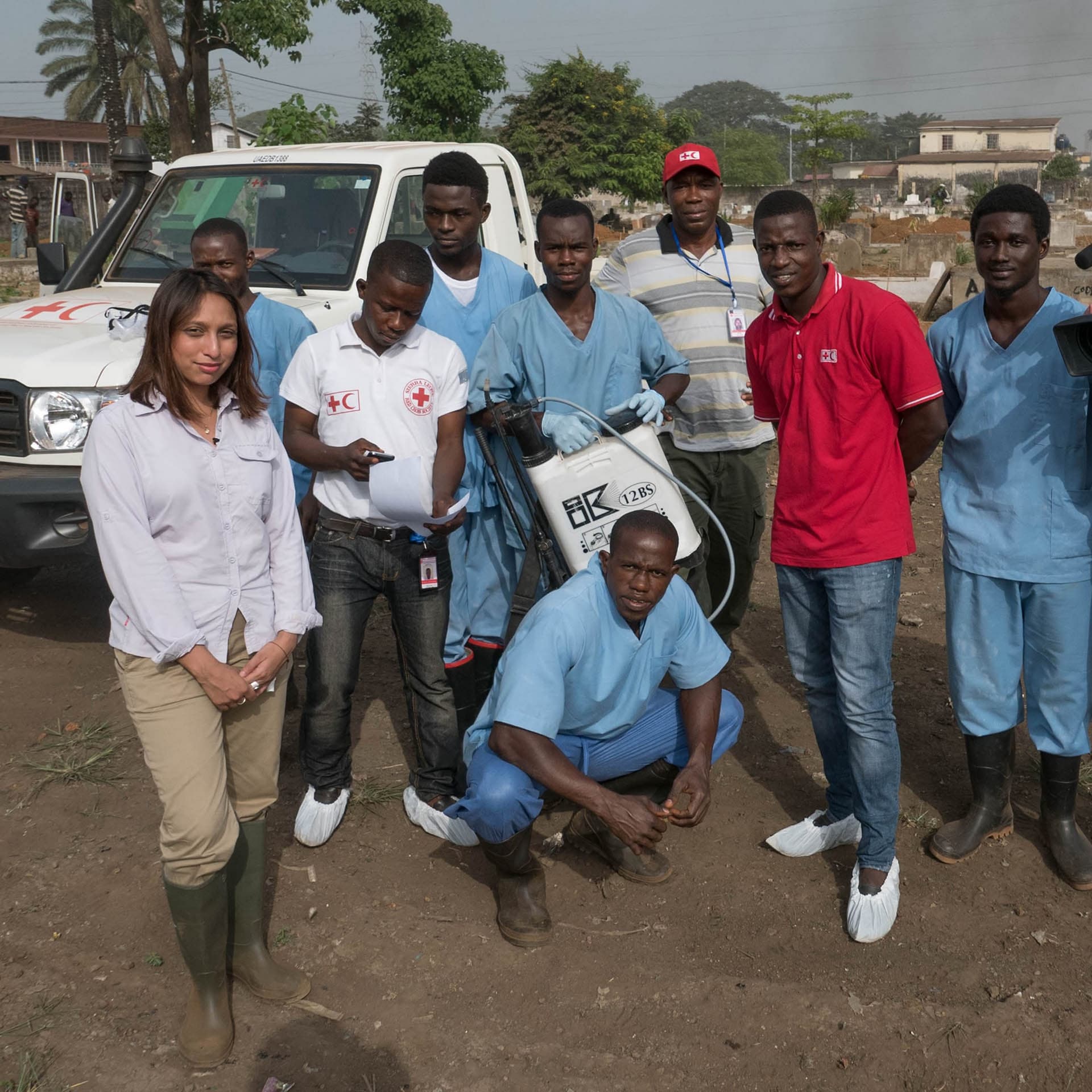
(Photo: Faranak Amidi. Credit: Tricia Yourkevich.)