In short
The episode “The Russian Dream” follows Westerners who moved to Russia after Vladimir Putin introduced the “Russian Shared Values Visa” (Sept 2024), nicknamed the “Anti-Woke Visa.” It explains how the visa offers up to three years’ temporary residency for citizens of 47 “unfriendly” countries who sign they share Russia’s “traditional” (largely Orthodox Christian) values and pass medical/criminal checks, without speaking Russian or taking history/law tests. Guests include: Dan Hardoon (BBC World Service reporter); Kerry (Ontario precious-metals investor, moved days earlier, says Moscow feels safe and friendly); Ilya Belobraghin (Move to Russia relocation managing partner, says people feel their communities and social security are breaking down); Jacob Pinnecker (Germany-to-Russia businessman, runs relocation agency in Nizhny Novgorod); Philip Hutchinson (UK businessman, moved to Moscow on the visa, cites UK “wokeness” and freedom-of-speech concerns); Chantelle and Leo Hare (Texas family, moved via asylum before the visa; say they were defrauded of 5 million rubles and later faced censorship/economic strain); Ben (UK YouTuber in Kursk, not on the visa; says Russia isn’t a conservative paradise and discusses wage/renting issues).
Key claims
online influencers promote rosy narratives; some migrants face scams, censorship, and economic pressure; visa ideology is central to motivations, but outcomes vary widely.
Notable examples
the Hares’ state-broadcast asylum ceremony; Kerry’s early impressions of safety; a decree potentially requiring some foreign men to sign military/emergency contracts.
Written by AI. May contain mistakes. Listen to the episode to check what was said.
Chapters
Tap a time to open that second in VOIntroduction to the Russian Dream
1:29 to 3:00
Explore the concept of the Russian Shared Values Visa and its appeal.
“A country just waiting to roll out the red carpet to Westerners, frustrated with high income taxes, dysfunctional politics and creaking healthcare systems.”
Kerry's Journey to Russia
3:00 to 4:50
Listen to Kerry's experience moving to Russia and her initial impressions.
“Kerry is a middle-aged woman from Ontario in Canada where she made her money investing in precious metals.”
Motivations Behind Relocation
4:50 to 6:43
Understand the motivations driving Westerners to apply for the Shared Values Visa.
“Ilya Belobraghin is the managing partner of Move to Russia, which helps people relocate under the Shared Values Visa.”
Influencer Impact on Migration
6:43 to 8:00
Discover how online influencers are shaping perceptions of life in Russia.
“We do speak to every single person who is sending us an application.”
Philip's Perspective on Living in Russia
8:00 to 12:42
Hear Philip's thoughts on the realities of life in Russia and the political implications.
“saying they don't trust the BBC to represent their views fairly.”
Philip's Perspective on Living in Russia
12:45 to 13:51
Hear Philip's thoughts on the realities of life in Russia and the political implications.
“KiwiCo, seriously fun, hands-on learning.”
Continuing the Russian Dream Discussion
14:01 to 14:37
Delve into more stories of Westerners moving to Russia amid political tensions.
“Ever Google a money question and end up 12 tabs deep with 12 different answers?”
Chantel Hare's Journey to Russia
14:42 to 16:46
The story of Chantel Hare and her family's motivations for moving to Russia.
“the Westerners moving to Putin's Russia on the so-called anti-woke visa.”
Initial Impressions of Russia
16:46 to 17:28
Chantel shares her family's first experiences and feelings about living in Russia.
“and you're going around sampling Russian food and dumplings, milking goats.”
Asylum and Acceptance in Russia
17:28 to 18:28
Chantel's family navigates the asylum process and their feelings of acceptance in Russia.
“When Chantel and her family first came to Russia, the shared values visa didn't exist.”
Show all 15 chapters
The Russian Dream Turns Sour
18:28 to 20:03
The Hares face significant challenges after moving to Russia, including financial issues.
“Well, that was a very special day for me because as much as I want to promote the well-being of my family, I also want to promote the well-being of other people's families.”
Reflections on Life in Russia
20:03 to 23:06
Leo reflects on the complexity of life in Russia and his thoughts on returning to America.
“But the Hare's Russian dream did not turn out as they expected.”
Ben's Perspective on Moving to Russia
23:06 to 26:54
Ben shares his story of relocating to Kursk, Russia, and the reactions of his family and friends.
“All I have to do is buy a ticket, take my passport, I'm gone.”
The Reality of Living in Russia
26:54 to 28:00
Ben discusses the pros and cons of life in Russia, including language and safety.
“Does it make you want to stop doing the online vlogging?”
Exploring the Russian Dream Experience
28:00 to 31:10
Listeners will learn about the experiences of Westerners in Russia and the narratives surrounding them.
“one that also places a high value on individual freedom and political choice.”
Transcript
Automatic transcript. May contain errors.0:00This BBC podcast is supported by ads outside the UK.
0:30travel dollars work harder. Follow Smart Travel on your favourite podcast app. Decisions made in Washington can affect your portfolio every day, but what policy changes should investors be watching? Listen to Washington Wise, an original podcast for investors from Charles Schwab to hear the stories making news in Washington right now. Host Mike Townsend, Charles Schwab's Managing Director for Legislative and Regulatory Affairs, takes a non-partisan look at the stories that matter most to investors. including policy initiatives for retirement savings, taxes and trade, inflation concerns, the Federal Reserve, and how regulatory developments can affect companies, sectors, and even the entire market.
1:12Mike and his guests offer their perspective on how policy changes could affect what you do with your portfolio. Download the latest episode and follow at schwab.com slash Washington Wise or wherever you listen.
1:28What if I told you there was a promised land of incredible landscapes, rich history and untapped opportunity? A country just waiting to roll out the red carpet to Westerners, frustrated with high income taxes, dysfunctional politics and creaking healthcare systems. And what if I told you that country is Russia? In September 2024, President Vladimir Putin introduced the Russian Shared Values Visa for citizens of 47 countries it considers unfriendly. It's aimed at people who say they align with Russia's traditional, spiritual and moral values, and it's become known as the Anti-Woke Visa. Successful applicants are eligible for up to three years of temporary residency without needing to speak Russian or pass a Russian history or law test, as long as they reject what the visa calls the destructive neoliberal ideology of their own country.
2:28I'm Dan Hardoon, and for the documentary from the BBC World Service, I've been following the journeys of Westerners uprooting their lives to move to Russia. I'm wedded to these people. I love this country. Russia feels very hopeful. Oh my gosh, as I said, that the sun came out. I've been finding out what life is really like once they arrive and whether it lives up to the Russian dream being promoted on social media. My journey did not turn out how I expected. If you move into another country for political reasons, maybe just fix your own country first. Russia isn't some utopia.
3:05Kerry is a middle-aged woman from Ontario in Canada where she made her money investing in precious metals. She's always been fascinated by Russia and remembers when she first heard about the shared values visa on X, formerly Twitter. I have not been excited about the direction of Canada for quite some time. Where the money is spent, the priorities, it makes no sense to me. So when Russia, out of nowhere, announced this all-new shared values visa, how did I feel? Oh my gosh, I freaked right out. Are you kidding? Yes, please. when Kerry sends me a voice note she's just about to begin her new life in Russia and she's only been there for a few days I'm here in Moscow and there is a calmness here that I just love I'm guessing that the lack of homeless and the lack of drugs is a big part of it you don't have to keep looking over your shoulder you can just let your guard down a bit it's very safe here but by and far the best part about this place is the people Russians are so friendly.
4:08Kerry's experience is different from the Russia many people have in mind, a country that invaded Ukraine and now faces international sanctions and growing labour shortages. But although she's only just arrived, you can really feel her optimism. Russia feels very hopeful. No matter what I dream up, if I'm willing to put in the hard work, the infrastructure and opportunities exist, that I can pull it off. Kerry is one of a small but significant number of Westerners who've applied for the Shared Values Visa. Russia's Interior Ministry says nearly 3 ,400 applications have been received as of spring 2026, though the figures are difficult to independently verify.
4:50So what's motivating people to move? Ilya Belobraghin is the managing partner of Move to Russia, which helps people relocate under the Shared Values Visa. A lot of comment that we get from our clients is that I don't recognize the community around me anymore. It's potentially flooded with migrants from country that don't share my values. And I don't feel that the government is anyway interested in my well-being, the well-being of my children. I feel that the social security is breaking down. The whole place is slowly falling apart. So I'm looking to relocate to somewhere what is going to be better.
5:31And Russia is one of those choices. So the visa is based on Russian traditional values. How would you define them? It's Christian values because Russia is Orthodox Christianity. I think the people that look back to how, for example, Britain was, let's say, in the 1950s, 1940s, or how the United States was, people were hopeful for the future. There was high growth. It was opportunity to maintain a so-called traditional family where you had maybe the main breadwinners such as a man and then the women could of course work if they wanted to. Of course, many people in Western countries still live in the way Ilya describes.
6:13But a small minority feels so disillusioned with life at home, they're willing to gamble everything on a move to Russia. The shared values visa has made it easier to do that. Previously, migrants from the West faced strict quotas and had to qualify through work, family or investment. But how does an applicant prove they're aligned with traditional Russian values? Well, there's no official interview, but applicants need to sign a document saying that they share these values and fulfil other medical and criminal record checks. We do speak to every single person who is sending us an application. Jacob Pinnecker is a businessman who moved from Germany to Russia almost a decade ago and now runs an agency helping foreigners relocate to the city of Nizhny Novgorod in Western Russia.
6:57We make sure that the person is really serious on moving to Russia. And very often during this conversation you understand that the person is not prepared for moving at all because they don't have much information about Russia. they read Telegram, YouTube, or they are following influencers, etc. Online influencers are playing an important part in promoting the shared values visa. On social media, you can find dozens of accounts of Westerners who've moved there talking about how brilliant their lives are. Russia is the bomb. Like, when I say the bomb, I mean it's like, pow, wow. This is, by far, the safest city I've ever been in.
7:41what many people in the United States wish for their country to be, Russia already is. Make Russia great again because it's a beautiful country. But when I contact more than 50 Westerners who'd moved to Russia, asking if they want to talk about their experiences, the vast majority refused to engage with me, saying they don't trust the BBC to represent their views fairly. Someone else who does agree to speak is Philip Hutchinson. Philip is in his mid-30s and originally from Essex in the UK. He arrived in Moscow a year ago on the Shared Values Visa. When I speak to him over a video call, his virtual background is a giant image of Moscow's Red Square, the towers of the Kremlin rising over his left shoulder.
8:28It's not this scary place that, you know, how much is portrayed in a lot of Western media outlets. That's, you know, life does go on. Yes, it's, you know, apparent that there are wars and special military operations going on. But it's not such a bad place to live, you know. The streets are clean, everything works. Amazing cuisine and such a vast and diverse country to explore. Philip's wife is Russian and he took advantage of the shared values visa to be with her when she was refused permission by the UK's Home Office to settle there. So how much of a factor is being anti-woke for him? The whole kind of like woke thing, it wasn't a core decision with me personally, but ultimately the UK is going completely mad with all of this kind of wokeness.
9:19You know, we're about to have a child, you know, we're thinking, you know, do we want our child brought up in a world where they're going to school, being taught, there's 200 different genders to choose from. Philip is referring to debates in the UK over gender identity a person's sense of their own gender and how these topics are discussed in schools. He also argues that freedom of speech in the UK is under threat, pointing to controversial cases in which people have been arrested over social media posts. It's part of an ongoing discussion over where the line should be drawn between free expression and threatening speech online.
9:53People are being locked up for the wrong crimes in the UK. Well, you've got violent criminals on the streets that aren't getting any jail time, terrorists, grooming gangs, all of this stuff that we need to take care of, yet they're worried about what people are writing on Facebook. And, you know, I don't think that sort of thing is right. Today, Philip runs a business helping other Westerners relocate to Russia. But before moving to Moscow, he stood as a candidate to be a member of Parliament for the British Conservative Party, which strongly supported Ukraine after Russia's full-scale invasion in 2022.
10:26I ask if this gave him pause for thought when deciding whether to move I was coming here since 2019 I think I was actually on Russian soil when it all kicked off and when the Russian troops went onto the Ukrainian side What are my thoughts on it? Look, I don't really get involved in that I mean, I'm not here as a politician I'm here to live a nice, quiet life with my family I run a business You've said you don't want to get involved in politics but by moving to Russia during the war and having a business which promotes it as a destination for people to move to based on political values, isn't that an inherently political position?
11:05Well, no, really, because we're not promoting it based on those values. A lot of people we guide towards a shared values visa because it's the easiest way to become a full resident here right now because you bypass things like the language test. But it's not political helping people to move to Russia. Despite Philip's claim that moving to Russia isn't political, it can come with strings attached. A recent temporary decree means some foreign men, including Westerners aged between 18 and 65, who want to stay in Russia permanently, may need to sign a military or emergency services contract, although there are exemptions and apparent loopholes.
11:44There have even been cases of Westerners voluntarily signing up to fight for Russia. You're listening to the documentary from the BBC World Service.
12:19Look what I made. Each KiwiCo crate comes ready to go with all the materials and instructions included. No planning, no supply run, no, wait, do we have glue? Just open the box and let curiosity take over. Whether your kid loves science, art, engineering, or making something from scratch, KiwiCo makes learning feel like play. Visit KiwiCo.com to learn more. KiwiCo, seriously fun, hands-on learning. Everyone's heard about Built as the loyalty program that lets you earn points on rent wherever you live. And they just leveled up even more. As of 2026, homeowners can now earn up to 1.25x points on their mortgage payments.
13:01This is thanks to Built's three new credit cards, the Palladium Card, Obsidian Card, and Blue Card. All three turn your housing payments, rent or mortgage, into flexible rewards. So you can choose the card that fits your lifestyle without missing out on points and exclusive benefits. Build points can be redeemed at top airlines and hotels, Amazon.com purchases, future rent payments, and more. Build points have also been ranked by top publications as the industry's most valuable point currency. Your housing payment is already your biggest expense. Make it your most rewarding. Find the car that fits your lifestyle and apply today at joinbuilt.com slash podcasts.
13:41That's J-O-I-N-B-I-L-T dot com slash podcasts. Make sure to use our URL so they know we sent you. Turns and limitations apply. Subject to approval and eligibility. Built cars are issued by Column N.A., member FDIC, pursuant to license from Mastercar International Incorporated. Today's episode is sponsored by NerdWallet's Smart Money Podcast. Ever Google a money question and end up 12 tabs deep with 12 different answers? This podcast is your shortcut back to clarity. NerdWallet's Smart Money podcast breaks down financial decisions with a team of trusted journalists. They explain the why behind decisions like investing, home buying and choosing credit cards with clear research-backed insights.
14:24No jargon, no misinformation. Make your next financial move with confidence. Follow NerdWallet's Smart Money podcast on your favourite podcast app.
14:37This is the documentary from the BBC World Service with me, Dan Hardoon. I'm following the Westerners moving to Putin's Russia on the so-called anti-woke visa. And while some say the decision isn't political, ideology is often at the heart of why they're leaving the West behind. Chantelle Hare moved to Russia from Texas in December 2023 with her husband Leo and their three sons. Back in America, they ran a carpet cleaning and mobile snack business. The hares are devout Christians who've become increasingly disillusioned with everything from political division in the US to genetically modified food and what they see as the rise of the LGBTQ movement.
15:19Chantel remembers clearly when the idea of moving to Russia first occurred to them in late 2022. My husband is very much into following the political scene, and he had been listening to speeches of President Putin for some time. And we had sat around the kitchen and we were listening to one of his speeches, and we really appreciated what he was saying, even to the American people. Russia is not your enemy and has never had any evil intentions regarding the European countries and the United States. And we know that we have many friends there. My husband made some comment like, gosh, I wish we had a president like President Putin.
16:04Putin for president. And then our younger son, he made a comment. Well, dad, why don't we just move to Russia? And that was the seed that was planted. and it grew from there. And what made you think Russia would be a better place for your family? Because of the things that President Putin was saying, he seems to be a very conservative man, he has family values, he's against the LGBTQ movement and the gay agenda. He also has outlawed witchcraft and fortune telling. Chantel is referring to recent moves by Russian politicians to ban the advertising of fortune-telling and other so-called mystical services.
16:45And I was watching a video that was filmed during your first year in Russia and you're going around sampling Russian food and dumplings, milking goats. Fresh out of the goat. Can't get any better than that. We're bringing our children and we're saying we want a future for them and that's good for Russia. I mean, it did look like you were having a really good time. How were you feeling towards Russia at that point? Yeah, actually, I felt really comfortable here, believe it or not. People aren't running around with guns shooting each other. It just felt safe to be on the streets. I didn't feel like I had to be watching over my shoulder all the time.
17:22Like, it's much cleaner. There's not a bunch of homeless people on the street. When Chantel and her family first came to Russia, the shared values visa didn't exist. So they applied for political asylum, allowing temporary residency in Russia for three years. They asked us several questions. Why? And we said because of the LGBTQ movement, the insanity of the West, political reasons. We don't trust our government anymore. The idea of asylum is interesting because it implies you felt some kind of danger. Did you feel in danger in America? I do believe that, strangely enough, that there is a slight threat of people who are more on the conservative side for religious purposes as Christianity, they will be targeted at some point.
18:10It's not so popular yet, but it's on the rise, I believe. The Hares became the poster family for unhappy Westerners moving to Russia. Their asylum ceremony was even broadcast on Russian state media, with Leo Hare thanking President Putin personally. I feel like I've been put on an arc of safety for my family and it's very important. Thank you so much. Here's how Leo remembers it. Well, that was a very special day for me because as much as I want to promote the well-being of my family, I also want to promote the well-being of other people's families. I saw myself as kind of on a cutting edge of an unprecedented piece of immigration legislation.
18:56Come to our country and bring your family and we're here to support your values. This is crazy. And this is the kind of stuff that used to happen in America back in the end of the 1800s and early 1900s. The, you know, bring your poor, bring your oppressed. You know, Russia was having almost that same idea. And from a personal perspective, did it feel like you were part of that history? Absolutely. Even before I came to Russia, I felt a keen sense of destiny that somehow our family would be used to promote this type of immigration. You talk about your family being used. Was any part of you concerned that you were just going to be used for Russian propaganda?
19:37No, because I believed in the propaganda. It's like I believe it. No one paid me to do this. You know, I believe in it. In fact, I was the guy who I would have written the script. Did you write the script? No, no, no. It's just what happened. I mean, it was part of the situation. I'm saying I was completely in agreement with using our image to promote an alternative for those who feel stuck in the West. But the Hare's Russian dream did not turn out as they expected. Within weeks of arriving, they say they were defrauded of 5 million rubles, about$50 ,000, by a contact they trusted, leaving them homeless.
20:16When I spoke to them earlier this year, Leo and Chantel were living separately in Ivanova, a city northeast of Moscow. They'd found work as English tutors, but their older children had returned to the United States. When I ask Leo if Russia has lived up to his expectations, he pauses for a moment before describing the last two years as the best and worst of his life. I would say I have learned what the Russian expectations are, and they're pretty low. Even the city of Ivanova here is largely a run-down city, and there's dirt everywhere. There's so many things that are kind of like, I would say, more third-world status, if you will.
20:53But on the other hand, the actual true people that I have found who are my friends, the ones that actually help us survive, there are such beautiful, wonderful Russians. That is the really, I consider the redeeming foundational power of Russia is the decency of just normal people. Given that you've gone through this process, would you encourage other Westerners to move to Russia? I'd say a year ago I would, despite the problems I was having. But right now, there have been some very serious changes in the economics. As of spring 2026, Russia's wartime economy is under significant strain, with high inflation and continuing pressure from Western sanctions.
21:37The government has responded with tax rises, including an increase in VAT, something Leo says is making life harder for small businesses, before he moves on to more political concerns. I'm also concerned that the censorship systems are rising up. Russia blocks Western sources. they have these different laws. Like in some cases, they say it's illegal to like surf the Internet for what's termed subversive material. I mean, what's that? Whatever they want it to be that day. The freedom of information, the freedom of speech, basic human freedoms are being manipulated and channelized into what I would call a digital gulag.
22:17And this is what Russians tell me. This is just not me criticizing Russia. We're obviously having this conversation while you're in Russia. and you are freely telling me your opinions. I mean, do you feel able to freely express what you think there? Or is part of you worried about repercussions, especially because you were originally held up as this model family? You know, here's a reason I don't fear repercussions, not because they couldn't come, but because I value truth more than I value my life. I've always been an open book. I've always been straightforward. I've never received a penny or a dime, not from a Western news source like yourself or from the Kremlin.
22:56In fact, I know officials. I have a regular relationship with them. And they're probably like watching over me or something. I don't really care. Given how things have turned out, I asked Leo if he'd consider going back to America. I could go back at any time. All I have to do is buy a ticket, take my passport, I'm gone. That's not a problem. But I don't really believe that's my divine calling, if you will. I think I'm supposed to stay here and remain with the people I've chosen to remain with. Does part of you miss America? Yeah, I do actually miss America. I miss the freedoms that have shaped the American personality.
23:38Russia, you don't have these human rights values. It's more of a, I would say, just a feudalistic culture that's been kind of modernized. They're very heavily dependent on leaders to kind of define what they should and shouldn't think. Do you think you'll still be in Russia in a year's time? I believe I will. That's just my gut instinct. Leo's directness about the pros and cons of life in Russia is highly unusual coming from a self-described moral migrant. Many of the people promoting Russia online as a destination for disgruntled Westerners give an entirely rosy picture. But someone else trying to present a more balanced perspective is Ben, from Derby in the United Kingdom.
24:23He relocated to Kursk in Western Russia, close to the Ukraine border, in 2023. Welcome to Russia, specifically the city of Kursk, my home city. He made a YouTube video with what he admits is the slightly click-baity title The Truth About Living in Russia. Ben isn't on the shared values visa. His reason for moving was more personal. So I met my now wife on a language exchange website and fell in love with her, ended up marrying her and moved to Russia. How did your friends and family react when you said you're going to Russia? At first they thought I was mad. It happened around the time that things started with Ukraine and so they thought I was a bit insane for going there and that it's dangerous.
25:08Did that bother you, going to a country that was now at war with its neighbour? When I first went, there was some fighting in the Kursk region and so you did get quite regular strikes on the city. You get the sirens going off occasionally and rocket alerts. At that point, did you think, well, actually, am I really making the right decision here? Well, I wanted to be with my wife, so I can put it with that. Ben tells me there are pros and cons of living in Russia. On the positive side, he says Russians are very friendly, especially if you speak their language, and he feels safer day to day, something I'd heard from several expats.
25:50The downsides include lower wages and the difficulty of renting a property if you're not Russian. Ben says he started his YouTube channel to give a sense of what life is really like for a Westerner in Russia. Do you feel able to speak very freely or do you feel that there's things you'd think twice about saying on that channel? I think I can speak openly about the challenges of life. Obviously, I don't want to touch politics with a six-foot barge ball. But in general, I think the biggest issues with it will be when you actually post it and you have people online debating it rather than the authorities themselves.
26:27There's been some rather mean comments about me. From people living where? Living in the West. People who don't particularly like Russia's politics and so they take it out on me for moving. A lot of comments about wishing to see me turn into Red Mist or wanting to see me in the newest drone footage from the front. There's comments about my wife as well, but I won't discuss them and they're quite difficult to read, yeah. Does it make you want to stop doing the online vlogging? Yeah, I'll be honest, yeah, it does. Last year, Ben made a YouTube video specifically about the shared values visa, which is how I came across him.
Read the full transcript
27:07Now, many people believe that Russia is some kind of conservative paradise and it's the last bastion of moral, religious values in Europe. I would personally say that it's not entirely the truth. He says he wanted to correct the misconception that Russia is some kind of conservative paradise. It's not really. For example, there's a prevalence of single-parent households and abortion being very widely accepted and divorce rates in many regions being extremely high. Ben is right about these contradictions. So is Russia really a conservative utopia? Well, it depends a bit on what you mean by conservative.
27:52Russian society is certainly more traditional than much of the West, with a strong emphasis on family, religion and national identity. But that's not quite the same as the conservatism many Westerners might think of, one that also places a high value on individual freedom and political choice. Do you think anyone who comes on this visa ends up being surprised that it's not this very conservative society? actually. I've come across people who have been surprised. They're not normally the ones making videos. Ben's video soon caught the attention of other online influencers. Some pro-Ukraine accounts said Ben's video was proof that life for Westerners in Russia is a nightmare.
28:35Those supporting Russia said that wasn't what Ben was saying at all. What was the experience like for you seeing people taking your video and spinning their own narratives out of it? At times I didn't like it because obviously no one likes words being put in their mouth but in general i mean it got it got me 3 000 subscribers that's a plus i guess 3 000 is very respectable but there are obviously now people westerners in russia some of them have very big followings and i just wondered what you make of the wider youtube community these russia content creators it is hit or miss obviously like any community but I do think there are some people with some kind of agenda that they want to push I don't personally like that I think there's some wrong incentives in there with some people.
29:22I asked Ben what he means by this he doesn't want to name names but feels that some youtubers might be incentivized he doesn't say by whom to promote a certain image of Russia. I have been talking to some other of these YouTubers of people that live in Russia and they have been approached and they've been quite open telling me about that to get the travel paid for to these places and showing off something that they want them to show off but it's not even exactly you film this and we'll pay you money for it it's more a roundabout way until you kind of get into that ecosystem and then eventually it ends up where you might be told exactly what they want you to film And if someone came to you and said, Ben, there's a lot of money sitting on the table here, can you make a video, but we want to shape the narrative a bit, what would you say?
30:11I don't know if we can say this on the air, but I'd tell them to bog off. It's been almost two years since Russia's shared values visa was introduced, so has it been a success? It's certainly made it easier for some Westerners to build new lives in the country, whether for love, faith or a change of direction. But a bigger wave of anti-woke immigration has not materialised, and those seeking some kind of conservative utopia in Russia may find that the reality is quite different from the dream. You've been listening to the documentary with me, Dan Hardoon. The Russian Dream is a Story Squared production for the BBC World Service.
30:58Get that Amex Gold card ready. I'm too tired to cook. We feeling five guys or the Cheesecake Factory? Both. Earn up to$120 a year in statement credits at participating partners. Up to$10 each month when you pay with the Amex Gold card. Learn more at AmericanExpress.com slash Explore-Gold. Enrollment required. Terms apply.
From the publisher
It is an unlikely migration trend: Westerners swapping their lives in Texas or London for Moscow or Nizhny Novgorod. In 2024, President Vladimir Putin introduced the Russian Shared Values visa, sometimes called the 'anti-woke' visa, offering up to three years of residency to citizens of 47 so-called ‘unfriendly’ countries who say they align with Russia’s traditional spiritual and moral values. Applicants do not need to speak Russian or pass a history test to qualify. Instead, they must reject the social and cultural direction of their home country. We hear the stories of people making this move. What motivates them, and how do their expectations compare with the reality of life in Russia?
Presenter/producer: Dan Hardoon Editor: Mike Wendling Sound engineer: Richard Courtice A Story² Production for BBC World Service
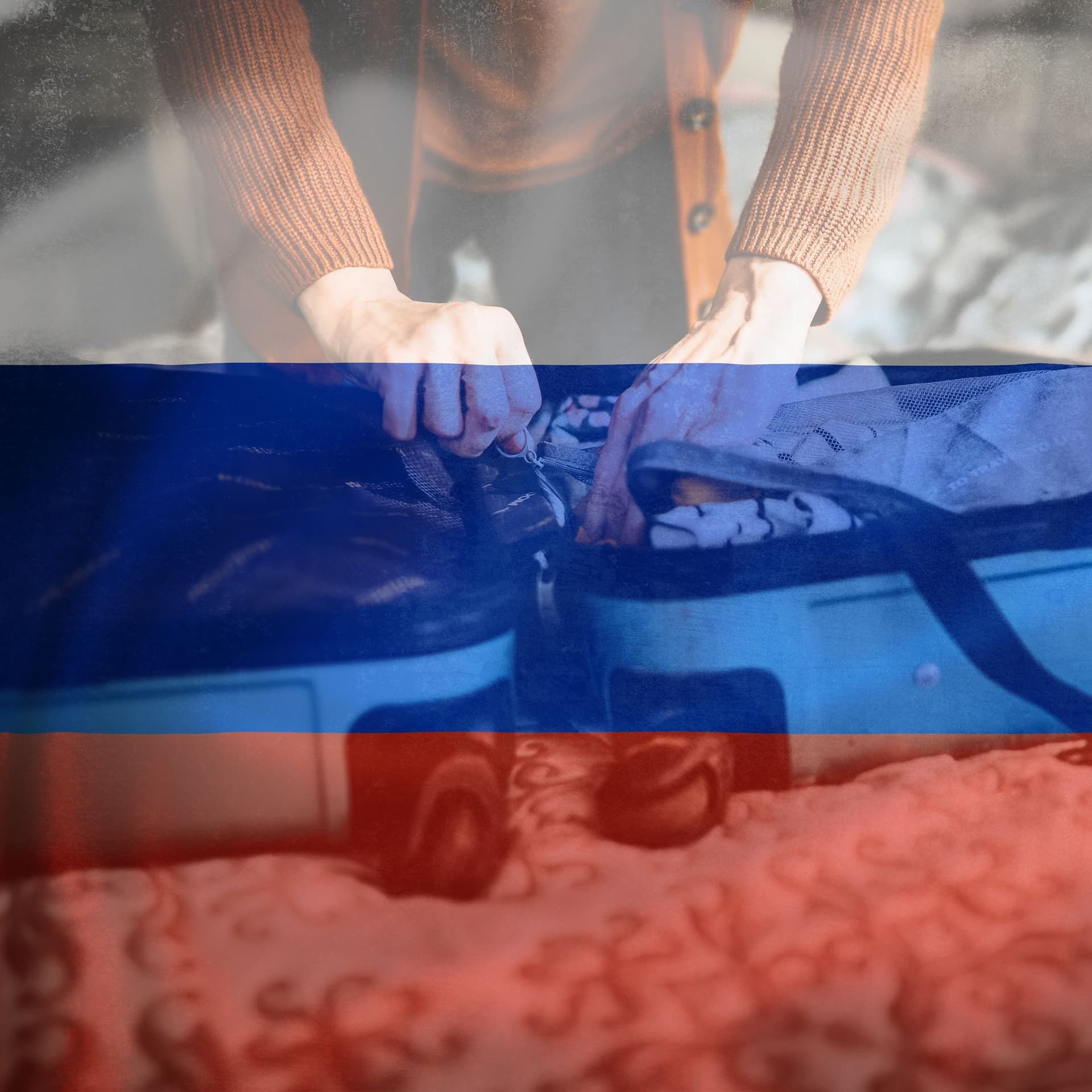
(Photo: A composite image showing a woman packing a suitcase, alongside Russian passports and a stylised Russian flag, illustrating Westerners preparing to relocate to Russia. Credit: Getty Images)