
In short
Salt production in India’s Run of Kutch and how climate change and land-rights battles threaten traditional Agariya salt farmers.
Guests (people featured)
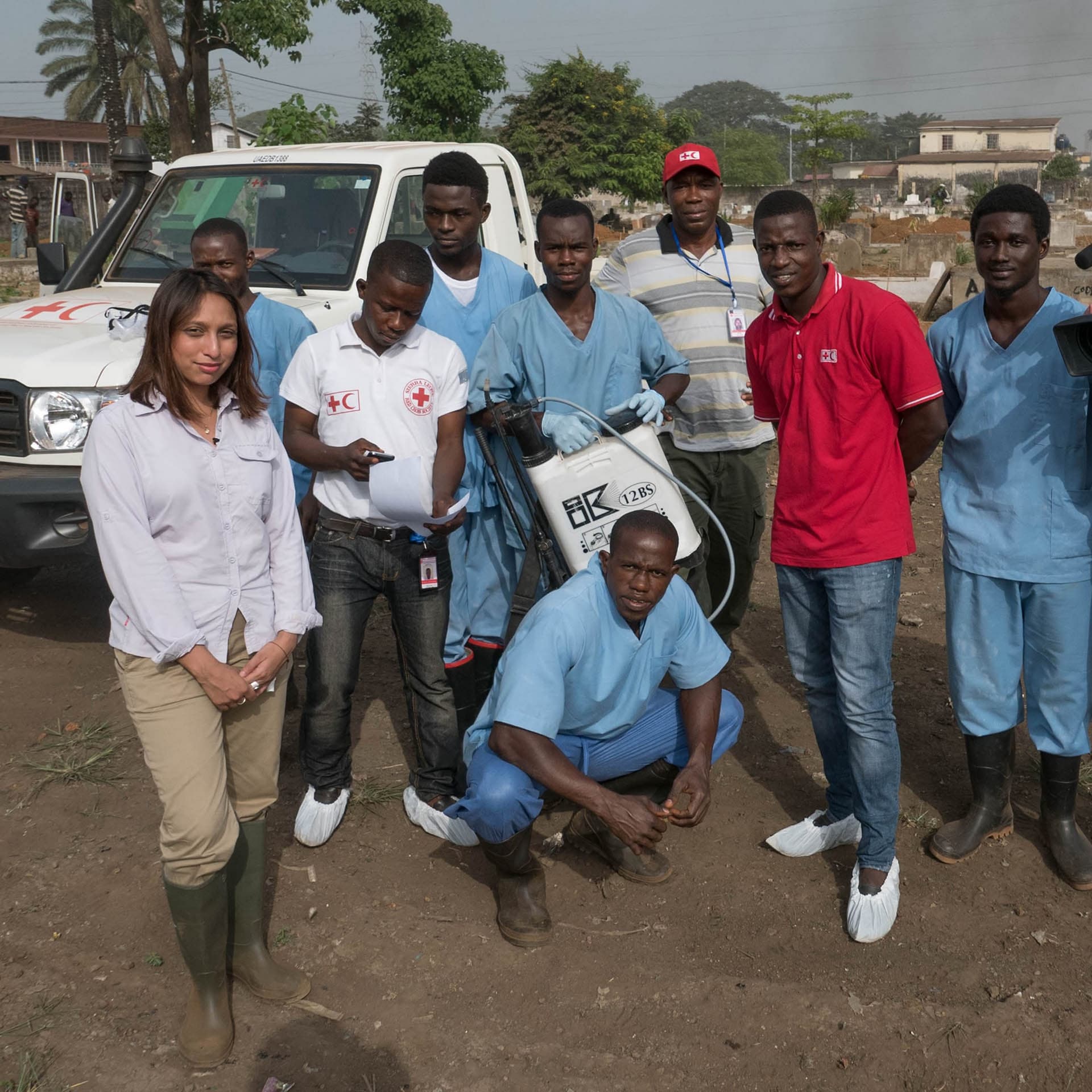
- Chavi Satchdev (BBC World Service host/narrator).
- Jagdish (30, Agariya salt farmer; family salt pans; uses solar panels).
- Babu Bhai (salt farmer; manual raking with a dhantara).
- Dr. Bhumi Andharia (Central Salt and Marine Chemical Research Institute; studies rain patterns and salt-pan tech).
- Pankti Jog (Committee for Agarya Rights Protection; land-rights documentation, advocacy, schools, health support).
- Dale (contractor; appears in sponsor segment).
- Kalubhai Surela (solar-panel user; brine pumping).
- Jalpa (Jagdish’s wife; health access issues).
- Leela Bain/Kanchan/Savitaben (Agariya women; share songs).
- Hingor Rabari (4th-gen iodized salt merchant; association president; argues Agariyas can’t compete).
Key claims
Rising heat, unseasonal rain, and harder brine groundwater reduce yields; sanctuary rules and eviction notices threaten Agariyas; studies suggest very low earnings (~3% of salt value). Examples: cyclone and late rains destroying salt; green concrete pan lining reducing seepage from ~20% to ~2%; bittern sales (70 tankers) improving profits; drones used to map/count farmers for deeds; solar panels saving ~20,000 rupees/month.
Written by AI. May contain mistakes. Listen to the episode to check what was said.
Chapters
Tap a time to open that second in VOExploring India's Salt Marshes
1:11 to 4:19
Dive into the unique ecosystem of the Run of Kutch, known for salt production.
“Visit investpr.org forward slash business.”
Life of the Agariyas
4:19 to 11:39
Meet the Agariyas, traditional salt farmers facing climate challenges.
“The water you can hear is the sound of a pipe that's pulling up water from 12 feet below the ground.”
Challenges and Innovations
12:46 to 14:00
Understand the difficulties faced by Agariyas and innovations for sustainability.
“Make your next financial move with confidence.”
Impact of Climate Change on Salt Farming
14:00 to 14:59
Learn how unpredictable weather affects salt production in India.
“is a solar pump drawing up brine using sunlight instead of fuel.”
Innovative Solutions for Better Yields
15:00 to 16:39
Discover new methods helping salt farmers improve their yield and quality.
“The agariyas are having very bad time due to climate change.”
Economic Opportunities Beyond Salt
16:40 to 18:33
Understand how agariyas are leveraging by-products for profit.
“And back in the run of Kutch, salt farmer Babu Bhai is doing exactly this.”
Advocacy for Land Rights and Education
18:34 to 21:10
Learn about the efforts to secure land rights and improve education for agariyas.
“Many Agariyas work barefoot in hot, salty water under a blazing sun.”
Challenges in Documenting Agariya Rights
21:11 to 23:04
Explore the difficulties of documenting land rights for nomadic salt farmers.
“In 2017, they managed to get a grant to start a school here in a disused bus.”
Women's Health and Community Support
23:05 to 24:34
Understand the health challenges faced by women salt farmers and community initiatives.
“And without the right paperwork, their presence on designated sanctuary land is challenged.”
The Future of Salt Farming in India
24:35 to 27:35
Examine differing perspectives on the future of agariyas and their industry.
“Pankti pointed out that most of the men here have motorcycles.”
Show all 12 chapters
Cultural Traditions and Resilience
27:36 to 28:00
Learn how agariyas hold on to their traditions while facing modern challenges.
“For a lot of Agariyas, their future seems out of their hands.”
A Prayer for Prosperity
28:00 to 28:31
Discover the personal prayers of a saltmaker and their significance in tradition.
“In the courtyard of this temple, I met Kanha Bhai.”
Transcript
Automatic transcript. May contain errors.0:00This BBC podcast is supported by ads outside the UK.
0:30Make your travel dollars work harder. Follow Smart Travel on your favorite podcast app. Momentum doesn't appear overnight. It's built, refined, repeated. Puerto Rico has been building it for decades as a U.S. jurisdiction operating under U.S. federal law, regulatory standards, and market protections. Here, global companies manufacture life-saving medicines, advanced technologies, and critical products at scale. And with competitive tax incentives designed to support investment and expansion, companies don't just start here, they grow here. Not culture or business, culture and business. Puerto Rico.
1:08It's not what's next, it's where. Visit investpr.org forward slash business.
1:21Hello from the run of Kach, a vast desert in India's Gujarat. This region of saline soil is responsible for 75 % of India's salt production. The Run of Kutch isn't a sandy dry desert, it's a salt marsh desert. It's hot and quite humid. Summer temperatures can reach 50 degrees Celsius. The Run of Kutch is special because it's a remnant of the Arabian Sea. When it rains during the monsoon, water collects and turns it into a seasonal wetland. When the water recedes or evaporates, the salt deposits remain. Now we are entering into the little run of Kaj. It is the start of the run area. I'm driving into the run with a guide from the Committee for Agaria Rights Protection.
2:10We are off to meet Jagdish. He's an agaria, a traditional salt farmer. These families have been harvesting salt here since the 16th century. My name is Jagdish. I'm 30 years old. We are Agariyas. I live here with my wife, my father and mother, my uncle and my daughter. We are all Agariyas. Jagdish is one of 4 ,300 Agariyas here in the desert. Agariyas are a small population of nomadic tribal families who migrate to these salt flats for eight months of the year to farm salt on small holdings. We're chatting by Jagdish's salt pans and we've taken shelter from the heat in the only shade around here for miles.
2:53under his solar panels. For good salt, the land needs to have saline deposits, steady heat and unbroken sunshine for 180 days straight. The run of Kutch has met these requirements perfectly for over 600 years, until now. Rising temperatures and unseasonable rain, dwindling resources, mounting debt and battles over who has the right to this land are now threatening the existence of the traditional salt farmers.
3:27We need sunshine for the full season. The season is eight months. It takes two months to create and repair the pans and start the process. Then six months for the salt to cook and grow and harvest. It mustn't rain. If it rains, it will damage the salt. If it rains a lot, it will destroy everything.
3:49You're listening to the documentary from the BBC World Service with me, Chavi Satchdev. In this program, we're in India to explore salt, one of the most essential but often overlooked commodities. And India is one of the biggest salt manufacturers globally, with the majority of that coming from right here in the run of Kutch, the largest salt desert in the world, where I visited in January.
4:19I'm standing at the edge of a diamond-shaped salt pan. The water you can hear is the sound of a pipe that's pulling up water from 12 feet below the ground. It looks like ordinary water, but this is brine and it's the raw material for India's salt. Over the next few weeks, the sun and the wind will strip away the water and leave behind a thin layer of crystals, if the weather holds, and if the rains don't come early.
4:54Jagdish and his family live in a small shack, essentially bamboo poles, covered with green and beige burlap sackcloth. The clay floor has been layered with the dung from wild ashes to keep it cool and smooth. The structure is divided into three rooms with a small shed outside serving as a kitchen. Inside, all their belongings are tied to the rafters with ropes. Clothes are on hooks. There is one rope bed inside. Outside, another rope bed and a bench swing, a motorcycle, a water pump and his solar panels. The rest of his 10 acres is shimmering salt pans. We come in September and it takes us two months to set up.
5:34We make a homestead, create the salt pans and repair last year's embankment. Then we have to dig for water and set up our pumps. After that, we can start the process of making salt. The water and the ground table here is too saline for anything but salt production. For cooking and washing, water must come from tankers brought in from the villages. The salt season runs from September to April. By April, each agarya harvests about 2 ,000 tonnes of salt, which is then collected by large salt traders. The salt harvest must finish before the monsoon rains arrive in May. When the rains come, they flatten everything and the ground becomes so wet and soft not even a tractor can get across it.
6:19After the water dries in September, all the Agarriyas head back into the run of Kach and rebuild their camps. The families dig deep pipes to pump briny water to the surface. Pools of saline solution are then collected in vast pans and slowly evaporate, forming beautiful crystals. Jagdish shows me one of his 30 pans. It's about the size of a tennis court. Wow. Can I come inside? You can put it in the water. Yeah, yeah. All right, I'm actually going to do it. I'm going to take off my shoes, roll up my trousers, and wade into the salt pan, keep my equipment firmly on the ground and not let it get wet.
7:07Oh, wow. They're gleaming. They're so, so large, these very beautifully regular chunks of crystal.
7:22He's got two palms full.
7:28All right, he's saying don't drink too much. Just put my finger in and taste it. Holy cow. It's very salty. It's really salty. Oh, whoa. Oh, my God. It's the aftertaste. It's horrible. I can still taste it.
7:56To stop the salt from clumping together, the Agaryas have to rake their salt pans. Larger salt works have mechanized this process, but here in this part of the run of Kutch, it's all manual. Salt farmer Babu Bhai is using a dhantara, a giant 10-toothed comb, to rake his pans. It's long, hard work. I started at 4. 4 in the morning? Yes. What time do you get up? 3am. It's almost 10 o 'clock. It's been 6 hours. Yes, 6 hours. As the season progresses, Babu Bhai will have to wake up even earlier to do this because as the salt crystals get larger, they also get heavier and harder to rake. To my eye, they look perfect, like a rough Rubik's cube made of shiny white crystals about half an inch in size.
8:51But Babu Bhai says they are much smaller than they should be by now. It should be bigger. It should be an inch cube. Babu Bhai had just built his pans when they were washed away by a cyclone in October, setting him back by a month. Then in December, more unexpected rains derailed the process again. He says he's noticed the entire weather cycle shift completely in recent years. Even five years ago, the seasons were regular and dependable. In the winter it was cold, and in the summer it was hot. And then it changed. It's hotter than it ever was and it rains out of season. The monsoons last longer and this year there was a delay in starting because it rained late.
9:37Last season, 250 tons of my salt, about 12 % of my yield, was destroyed because of early rain. It was harvested and loaded in trucks, ready to be taken out for processing. When it rained so hard, the salt was ruined. The run got flooded and the tracks and roads got washed away. We couldn't get it out of here in time. Despite all this extra unseasonal rain, I'm told that the briny groundwater, vital to salt production, is becoming harder and harder to tap. Up to three years ago, wherever you dig, you'd find water. Now it can take up to five attempts just to find enough groundwater to pump out and collect for evaporating into salt.
10:28The little run of Kutch is a saltwater marsh. And this area is also a designated sanctuary for the endangered wild ass. And as I'm looking at the salt pans, I can see two wild asses humble by. endangered, living cheek to cheek with the Agarrias. Another problem, and if the weather and the climate were not enough of a challenge, the Agarrias are being told that they have to move away from this land unless they can prove ancestral rights and salt legacies here because the sanctuary does not allow for human beings to be here.
11:18The Forest Department has served eviction notices to many Agarria families, despite a national tribunal noting that wild-ass numbers have increased here. Despite providing an essential commodity, the Agarrias live terribly precarious and difficult lives, often with no savings and huge debts. As yields drop because of unpredictable water issues and costs for diesel and electricity rise, they are further squeezed by market fluctuations. Studies suggest that they earn as little as 3 % of the final value of their salt. These traditional salt farmers have worked this land since the 16th century. But in the face of the climate crisis, is 600 years of history now about to be washed away completely?
12:07You're listening to the documentary from the BBC World Service with me, Chavi Sajdev.
12:16I'm here on the job site with Dale, who's a framing contractor. Hey, good morning. Dale traded up to Geico Commercial Auto Insurance for all his business vehicles. We're here where he needs us most. Yep, they sure are. We make it easy for him to save on all his insurance needs, all in one place, with coverage that fits his business and bottom line. Oh, I shouldn't have looked down. It's all right. We're so far up here. Look at me. Take a deep breath. No, I'm good. So good. Get a commercial auto insurance quote today at Geico.com and see how much you could save. It feels good to Geico.
13:11Clear, research-backed insights. No jargon, no misinformation. Make your next financial move with confidence. Follow NerdWallet's Smart Money podcast on your favourite podcast app.
13:26As the Agarrias battle the impact of climate change, the situation seems grim. Diminishing yields mean these salt farmers struggle to stay afloat. But help is coming. Scientists are showing the Agarrias how to climate-proof their livelihoods as much as possible, and activists are also supporting them in continuing their traditional work with funds and green technology.
13:52If you listen closely, what you don't hear is the chug of a diesel engine. That soft hum behind me is a solar pump drawing up brine using sunlight instead of fuel. It cuts costs and fumes for the farmer, but it doesn't stop the late rains or the rising heat that are making each salt season more of a gamble. Climate is changing in such a manner that you cannot predict. Dr. Bhumi Andharia is a scientist at the Central Salt and Marine Chemical Research Institute in Gujarat. I wanted to speak with her to help me understand what's happening to the rain patterns in this part of India. The monsoon season was fixed.
14:34June to October is monsoon season. But now what happens? Rain you cannot predict. Cyclones are also frequent. And even when it's possible to predict rain, the agariyas are helpless to avert the damage it causes. Rainfall dilutes the brine, which sets salt crystallization back months. It also mixes in silt, affecting the purity of the salt and the price they can command for it. Nobody will eat that type of dusty salt. The agariyas are having very bad time due to climate change. I visited Dr. Andharia at her institute's experimental salt farm, and I saw some of their innovations to help agariyas deal with rain and the flooding of their salt pans.
15:17We generally provide training to them how to produce salt in pans in such a manner that they will get more evaporation rate. One way they have devised of getting a better yield is by using a new material called green concrete to line the salt pans. However much the agariyas flatten and compact the clay before they start, their traditional pans are still fairly porous. This new green concrete lining helps keep more salt water in the pans and it also helps keep the salt crystals whiter and cleaner. We have recorded the percolation rate in the traditional soil compacted bed and this type of green concrete bed.
15:58And we have found very encouraging results. The traditional type of salt pan or bed would allow around 20 % of the salt water to seep away and be lost. But these new green concrete beds reduced this to just 2%. The Institute are also trying to persuade the Agarrias to develop salt-adjacent industries. We are trying hard to change their mindset that they should also go with the bittern processing. Bittern is the residue left when crystallized salt is extracted from brine. This solution is very high in potassium, magnesium, sulfates and bromide, which can then be recovered and used in health and beauty products.
16:38There's been some success in getting agariyas to adopt this practice. And back in the run of Kutch, salt farmer Babu Bhai is doing exactly this. When the season ends and the salt is taken away, there is a lot of brine solution left. What do you do with it? Do you just drain it away? No, we sell it. We get it out from the pans with a pump and we get it into tankers and sell it. How much do you get for it? 2 ,500 rupees per tanker. 2 ,500 rupees? Wow. Can you fill one tanker? We can fill 70 tankers. 70. Selling 70 tankers of the bittern at about$25 each makes Babu Bhai one of the few Agariyas turning a decent profit, even if his salt harvest got spoiled last year.
17:27While green innovations are improving salt yield and profit, people like Pankti Jog of the Committee for Agarya Rights Protection are also helping things on the ground. When we came in 2001, we felt as if we were 100 years back. Most of the Agariyas were not even having bicycles of their own and that's where we thought we should work with them. We should help them raising their own voice and first let them dream about their future. They are not alone and when they come together, they are in thousands and slowly the elected representatives and the government started taking them seriously. One of the campaigns Pankti has been involved in is helping the Agarrias document and prove their rights to the land that they have been farming for centuries.
18:15I have been associated with the struggle for land rights for the last 20 years and I am helping them to document, legally represent the issue before the government and the court. That's not all you do. You also work on several other problem areas for the Agarrias. Yeah, we as an organization and me myself, we try to advocate for water, better education, health facilities to be started in the Rana areas. Many Agariyas work barefoot in hot, salty water under a blazing sun. Spending so much time in the salt pans can cause vision problems, heat stroke and even bone calcification. It's been documented that when agariyas are cremated after death, often their bones won't burn because so much calcium has leached into them.
19:08Pankti and the committee have helped to provide vital safety gear like goggles and gumboots, as well as organizing solar panels, the biggest game-changer, for farmers like Jagdish, Babu and Kalubhai Surela.
19:24I've had these solar panels for seven years. Seven years? And has it made a difference? Yes, it has. How much have you saved? About 20 ,000 rupees a month.
19:40The diesel for pumping up the briny groundwater used to cost Kalubhai 20 ,000 rupees or$200 a month. That's roughly two-thirds of his profit. Solar panels mean he can save this money. And while the panels can't power much more than the water pump and a mobile phone charger, their presence in the desert has connected the agariyas to the outside world and to each other. They've come a long way. Pankti's colleague Bharat tells me when the committee started, the agariyas even had to buy drinking water when free water is a fundamental right in India. When we started working here, each agariya had to purchase filtered water.
20:22It was more expensive than in the town because the supplier could demand a premium. We helped form a committee and approached the government. Now the government provides tankers and for free. The other thing we found is that 90 % of the Agariyas are illiterate. We were keen that at least their children should study. Education up to the age of 14 is also a fundamental right in India. Since the children of Agarya's couldn't travel to the towns for study, the Committee for Agarya Rights have helped to set up free schools here in the desert. It's their right. So why shouldn't they have access? We started with schools under tents.
21:06We arranged for teachers and study materials. I went from farm to farm persuading parents and even picking up kids to attend. In 2017, they managed to get a grant to start a school here in a disused bus. When the government was assured our model works, they adopted it. And now there are 35 schools, 20 of them in buses, spread throughout the desert. These buses are all well-stocked schoolrooms with around 30 children from the age of 3 up to the age of 14. The kids travel on foot or bicycle for up to five kilometers to get here. Their teachers come by car or motorbike, often commuting three hours a day from their towns.
21:52The children get an education, free milk and a snack every day. Some of the kids here say they won't be agariyas when they grow up. They want to be doctors, teachers or work in the police.
22:15For most of the children, resources are limited. Many feel they have no choice but to follow in their ancestors' footsteps. At Babu Bhai's farm, his 14-year-old son Vishal has dropped out of school.
22:32I'll do what my dad and his father and his forefathers have done. and in the off-season, I will hire myself out as manual labour. I don't really have a choice. We don't own any land where we can grow anything else. There's no other work.
22:54Still, it's not so easy to just become an agarya these days. Proving you have a right to be on this land is a problem. The agaryas are nomadic and hard to reach in the desert and as such they are not counted in the official census of India. And without the right paperwork, their presence on designated sanctuary land is challenged. To help them stake a claim, Pankti, Bharat and their colleagues at the Committee for Agarria Rights Protection are using drones to map and count the salt farmers for a proper, if unofficial, census. And they're now using this data to get deeds, titles and papers to the right people.
Read the full transcript
23:32Jagdish is one farmer who is struggling to get his own name and that of his wife and child added to their land deed. I spoke with his wife Jalpa as she washed dishes. My name is Jalpa. I'm 26. I've been here two years. My baby is due next month. I do help out with the salt pans. This year I couldn't because of my state. It's very difficult work. Life is difficult here. A health van is supposed to stop by every month for basic check-ups, though it hadn't come in a few weeks. For everything else, the hospital is 100 kilometres away.
24:18Driving back from the run, Pankti told me that women's health, physical and mental, is something the committee desperately want to address. Here in the desert of Kach, the women salt farmers are living in a secluded or loneliness. They are under tremendous stress. Pankti pointed out that most of the men here have motorcycles. They can get around easily, go to town and meet up with one another. For women, it's a very different matter. Women are mostly confined to her salt pan work and then the cooking and raising her kids. and for eight months of the year she is away from her own family and village.
24:58We are really concerned about these issues and we have primary health centres and community health centres nearby but we do not have a mental health expert over there. Bangti is keen to get a women's group started for the Agarrias. When they do get together, it can be heartwarming. At Babu Bhai's farm, I also met his wife, Leela Bain, their daughter-in-law Kanchan and neighbour Savitaben. They were cooking together and talking. And after a little cajoling, they shared some of their traditional songs.
25:39Pankti translated from the local language, Kachi. So it is the dialogue between the husband and the wife, where wife is asking her husband to come home, but not as you're working in the salt farm but you take bath, you comb the hair and you come home nicely and I'm waiting for you. So it's a very romantic song between the husband and wife and in between they also talk that we are fortunate to have our salt farm in the run areas and we are fortunate that we are cultivating salt for society.
26:16At the edge of the desert in the town of Patadi, Hingor Rabari doesn't think salt farmers are so fortunate. Rabari is the president of the Karagoda Iodized Salt Manufacturers Association. He's a fourth-generation salt merchant. Merchants like him purchase, process and trade the salt. They also decide the prices. In his opinion, the agariyas won't last more than a few more years. There are many big producers today. 5 ,000, 10 ,000, even 20 ,000 acres. Now, there are only three or four small areas with agariyas and their small land holdings. How are these smaller salt farmers going to survive? They're going to have to shut down.
27:04I can't see a future for them at all. and because of climate change, agariyas will suffer losses. If there's too much rain or too little groundwater or encroachment from a river, it's too bad. I say that they have a five-year future. After five years, all of them will have to stop.
27:27Pankti Chog is more optimistic for the salt farmer's future. Since they are united, they are aware, they have to fight back but I'm sure that they'll be able to protect their soil farms. For a lot of Agariyas, their future seems out of their hands. At Babu Bhai's farm, his son Vishal told me that when the season started, every time they dug wells, they were dry. What worked is prayer. I walked 16 kilometres to the temple each way to propitiate our deity, Vacharaj Dada.
28:04In the courtyard of this temple, I met Kanha Bhai. I asked what he prays for. I'm praying for my child's marriage and big profits, more profits from my salt. I give my salt as an offering to Dada, and I believe that whatever I ask for will be fulfilled. And so, with these prayers, the Agariyas and their ancient traditions continue for now into the 21st century. they are facing up to a very uncertain future. You've been listening to the documentary from the BBC World Service. It was presented and produced by me, Chavisachdev, with additional editing from Tom Wolfenden. And it was a Just Radio production.
From the publisher
In India's Gujarat state lies the Little Rann of Kutch, a sprawling salt marsh desert where temperatures soar to 50 degrees Celsius. This harsh landscape is home to the Agariyas, nomadic tribal families who have harvested salt here since the 16th Century. For eight months of every year, they migrate to this harsh environment, living in temporary shacks and pumping briny groundwater into vast pans where it evaporates into gleaming, sturdy crystals. This traditional practice, responsible for 75% of India's salt production, is now under a grave existential threat. Seasonal cycles, predictable for centuries, have become erratic. Unexpected rains and sudden cyclones frequently wash away months of intensive labour, leaving families in mounting debt. Despite providing an essential global commodity, these workers earn three percent of the salt's final value, living without running water or basic sanitation.
Hope emerges through innovation and activism. Scientists at the Central Salt and Marine Chemical Research Institute are introducing new types of pan linings and solar-powered pumps to reduce costs and increase yields. Activists like Pankti Jog fight for land rights, healthcare and education, establishing mobile schools in old buses for the next generation. Yet, the future remains a gamble. While some children dream of becoming teachers or police officers, many feel tethered to the salt by heritage and lack of choice.