
In short
The Documentary Podcast - Episode Summary: "The Spy Who Loved to Dance"
Podcast Overview Title: The Documentary Podcast Description: The Documentary Podcast provides insights into global stories, exploring hidden truths and the impact of news on personal lives through documentary storytelling from the BBC World Service.
---
Episode Information Episode Title: The Spy Who Loved to Dance Air Date: April 2022 Description: This episode explores the case of Victor Muller Ferreira, a man who was exposed as Russian intelligence officer Sergey Vladimirovich Cherkasov. It delves into his elaborate cover story, the history of Russian deep-cover spies, and the implications of their operations.
---
Key Figures
- Victor Muller Ferreira / Sergey Vladimirovich Cherkasov: Russian intelligence officer arrested in Brazil for identity fraud.
- Leandro Prazeres: BBC News Brazil journalist covering Cherkasov's story.
- Olga Ivshina: BBC Russian journalist discussing the history of Russian illegals.
---
Synopsis of Events
- In April 2022, Cherkasov attempted to enter the Netherlands with a Brazilian passport but was sent back to Brazil where he was identified as a Russian national.
- He had lived undercover in Brazil since 2010, constructing an intricate personal legend that included a passion for Forró, a Brazilian partner dance.
- Currently serving a five-year prison sentence in Brazil for identity fraud, Russia is seeking his extradition.
---
Key Concepts and Discussions
- The Role of "Illegals" in Russian Intelligence
- Definition: "Illegals" are deep-cover spies with no official cover, meant to blend into foreign societies while gathering intelligence.
- Historical Context: This practice dates back to 1922 and has evolved over decades, particularly during the Cold War.
- Modern Tactics: Russian operatives often adopt identities from countries where identity verification is less stringent, such as Brazil.
- Cherkasov's Cover Story
- Details of His Legend:
- Claimed to be a Brazilian citizen with Portuguese heritage.
- Justified his accent through a fabricated history of living in Argentina.
- Engaged in local culture by taking dance classes, specifically in Forró.
- Duration of Undercover Work: Successfully maintained his cover for nearly ten years.
- The Effectiveness of Russian Spy Programs
- Cost vs. Benefit: Experts debate the practicality of investing significant resources into such operations, especially with modern advances in identity verification.
- Long-term Strategy: Russian authorities continue this practice in hopes of eventually achieving significant breakthroughs, despite the low success rate.
- Reactions and Implications
- Brazil's Response: The story garnered significant media attention in Brazil, raising questions about the ease of obtaining identities and the implications for national security.
- International Impact: The case highlights the ongoing espionage tensions between Russia and Western countries, particularly in the aftermath of the Ukraine invasion.
- Personal Impacts on Journalists
- Leandro Prazeres reflects on how this case changed his perception of the intelligence world and made him more suspicious of individuals in social situations, especially in dance communities.
---
Conclusion The episode "The Spy Who Loved to Dance" reveals not only a captivating narrative about espionage but also sheds light on the complexities of identity and the lengths to which intelligence agencies will go to navigate the modern world. It highlights the evolving tactics of Russian operatives and poses critical questions about the effectiveness of such spy networks in today's society.
Written by AI. May contain mistakes. Listen to the episode to check what was said.
Chapters
Tap a time to open that second in VOOverview of Victor Müller-Ferhera
1:11 to 1:54
Discussing the case of Victor Müller-Ferhera and his identification as a Russian spy.
“In April 2022, two months after Russia invaded Ukraine, a man in his 30s called Victor Müller-Ferhera flew into Amsterdam airport using a Brazilian passport.”
Understanding the 'Illegal' Spy
1:54 to 3:22
Explaining the concept of 'illegal' spies and their operations.
“He is currently serving a five-year prison sentence in Brazil for identity fraud.”
The Evolution of Russian Spy Programs
3:22 to 5:50
Discussion on the history and evolution of Russian sleeper agents.
“Olga, sleeper agents, illegals, the networks of such agents were the stuff of legend during Cold War era, right?”
Crafting a Cover Story
5:50 to 6:59
Exploring how spies create convincing identities and cover stories.
“Leandro, let me bring you in here, because the legend that Viktor Müller-Ferhera had was quite persuasive.”
Why Brazil as a Base for Espionage?
6:59 to 10:41
Analyzing why Brazil is an attractive location for Russian spies.
“Couldn't Brazilians detect that he was not exactly Brazil-worn?”
Target Countries for Espionage
10:41 to 13:24
Identifying target countries for Russian undercover operations and the implications.
“And the third reason is the fact that Brazil, it's kind of neutral when it comes to worldwide conflict.”
Consequences of Espionage Arrests
13:24 to 14:01
Discussing the aftermath and implications of the arrest of Victor Müller-Ferhera.
“operation, but Soviets first and then Russians keep doing it again and again and again.”
The Return to Brazil and Arrest
14:01 to 14:37
Learn about the circumstances leading to the arrest of a Russian operative in Brazil.
“And all the bizarre ways people are using the internet.”
Charges and Legal Proceedings
14:37 to 15:38
Explore the charges faced by the Russian operative and the legal implications.
“And what was interesting was the posting he was due to assume.”
The Role of the International Criminal Court
15:38 to 17:35
Discuss the significance of the International Criminal Court in the context of espionage.
“But according to the FBI, he was an intelligence operative who worked in the U.S.”
Show all 16 chapters
Evolving Espionage Tactics
17:35 to 20:32
Examine changes in espionage tactics due to increased global scrutiny and transparency.
“Many Russian spies with legal cover who pretended to be diplomats, etc., they were expelled from the Western countries.”
Brazil's Media Coverage and Public Perception
20:32 to 21:54
Investigate how the Brazilian media covered the espionage story and its public reception.
“And because their activity is mostly in the shadows, it also causes a lot of suspicions and lack of trust in societies where they are inserted, probably.”
Extradition Process and Political Implications
21:54 to 23:22
Understand the extradition process for the operative and its political ramifications.
“Will President Lula allow him to be repatriated back to Russia soon?”
Motivations of Espionage Agents
23:22 to 25:14
Delve into the motivations and backgrounds of those who become spies for Russia.
“because they just love the very idea that, you know, the West will still be thinking, OK, there must still be those Russians there pretending to be someone else.”
Personal Reflections on Espionage
25:14 to 26:31
Hear personal reflections on how espionage influences perceptions and daily life.
“And Leandro, finally, the story that you worked on and still are working on, how did it affect you personally?”
Market Insights and Listener Engagement
28:00 to 28:14
Gain insights into market strategies and how to engage with the podcast.
“where I have in-depth conversations with fund managers, strategists, and experts about how markets really work.”
Transcript
Automatic transcript. May contain errors.0:00This BBC podcast is supported by ads outside the UK. If there was a big red button that would just demolish the internet, I would smash that button with my forehead. From the BBC, this is The Interface, the show that explores how tech is rewiring your week and your world. This isn't about quarterly earnings or about tech reviews. It's about what technology is actually doing to your work, your politics, your everyday life. And all the bizarre ways people are using the internet. Listen on bbc.com or wherever you get your podcasts. You're listening to the documentary from the BBC World Service.
1:10This is The Fifth Floor, at the heart of global storytelling with BBC journalists from all around the world. I'm your host, Irena Taranyuk.
1:29In April 2022, two months after Russia invaded Ukraine, a man in his 30s called Victor Müller-Ferhera flew into Amsterdam airport using a Brazilian passport. He was identified by the Dutch authorities as Russian national Sergei Vladimirovich Cherkasov and immediately sent back to Brazil, where investigations by both the FBI and the Brazilian police identified him as a Russian intelligence officer. He is currently serving a five-year prison sentence in Brazil for identity fraud. With me on the line from Brasilia is Leandro Praseres, who has been covering the story for BBC News Brazil, and from London, Olga Ivshina of BBC Russian.
2:12I began by asking Leandro to set out what is known about Sergei Cherkasov. What we know is what the Brazilian authorities and also the U.S. authorities have been saying is that Cherkasov, it's a special type of spy called illegal. These guys, they are sent overseas to blend in and build a completely fake identity and personality for many years until they are activated with a task, which most of the times involves getting access to influential people and getting information that is valuable to Russia. So since he arrived here in Brazil in 2010, as I said, he lived in the U.S. He studied politics at Johns Hopkins University in the U.S.
2:59And he also went to Trinity College in Ireland. So basically what he was doing here in Brazil, according to an investigation, is that he was trying to build this identity that would make it easy for him to spy on other countries. He denies spying allegations and Russia wants him extradited as a kind of drugs trafficker, right? Can I bring in Olga here? Olga, sleeper agents, illegals, the networks of such agents were the stuff of legend during Cold War era, right? at the height of Cold War, Soviet Union and the United States during this confrontation of two superpowers. It would appear that the programs haven't been curtailed.
3:44What do we know about such programs nowadays in modern-day Russia? Well, yes, I mean, this practice actually goes back to the previous century and Russia claims that this project, this program, is running for more than 100 years now. It started in 1922, allegedly, when Soviet Union, you know, was still not recognized officially by many countries, and that's why Russian Soviets made a stake not on usual spies, but on so-called illegals. So illegals are Russian intelligence officers who live and operate abroad. But all intelligence officers are divided into two broad categories. Those who have official cover, legальные разведчики in Russian, and those who don't have official cover, and they are called illegals because their activity doesn't have any legal cover.
4:36The one big difference is that if those illegal spies are caught, they don't get expelled like embassy-based officers. They would be prosecuted as ordinary citizens, as ordinary criminals, because they have no diplomatic immunity. And this, of course, makes a big difference on a personal level. But also what is specific about this Russian version of this program is that they assume or fabricate an identity of someone else, so they pretend to be someone else completely, not a Russian citizen. So American, Canadian, and increasingly in the last few years, they pretend to be Latin Americans. Allegedly, experts say this is connected to the fact that it has become really, really hard in the West with the development of all the latest technologies to fabricate an identity, and it's still a bit easier in Latin American countries.
5:25That's why they use it sort of as a base to develop those identities, to convert those first clumsy or maybe not perfect documents to 100 % real documents. And then with the cover of those documents, with the legend, with a well-developed story, then they move back to the West to fulfill the tasks given to them by Moscow. Leandro, let me bring you in here, because the legend that Viktor Müller-Ferhera had was quite persuasive. For 10 years, he was undetected as a false Brazilian, wasn't he? Can you tell us more about how well written, how good his cover story was? Yes. Well, actually, one of the things that caught my attention the most was the fact that he apparently was really dedicated to this task.
6:18One of the things that he tried and also was kind of peculiar, was the fact that he enrolled in dance classes. There is a very famous Brazilian dance, partner dance, which I love, which is called Forho, and he took several classes, and he was basically going to ballrooms and parties with people that I actually know, because this is a very, it's a very interesting community. So this is one of the things that caught my attention. He was really, really dedicated to blend in and sound as Brazilian as anyone here in the country. And he managed to fool a lot of people with his assumed identity. What about accent?
7:00Couldn't Brazilians detect that he was not exactly Brazil-worn? Yes. I've spoke with some Brazilian investigators and people who met him. And what they told us was that because of the story that he told people to justify his Brazilian identity, it wasn't really difficult for him to blend in. When he arrived in Brazil, he said that he was the son of a Brazilian woman and a Portuguese man, but he had lived in Argentina for some time. So because of this alleged time that he spent in Argentina, he was able to justify his accent. Yeah, may I jump in here? it's actually very, very classical. You know, as I said, the Soviets started developing this program a hundred years ago.
7:48And the first generation of these so-called illegals, they were actually like real people from the West, actually British or German guys, et cetera, who just believed into the communist cause and joined Soviet intelligence and fulfilled the task. So they were actually people they pretended to be. But then the trouble was that during the Stalin purges, Soviet Union killed some of its best spies. And also, many people became disillusioned about the communism. So they had the trouble with getting new edges, but they wanted to continue. So what they started to do, they invented this illegals program saying, okay, now we'll prepare our own Soviet guys, pretending they are Westerners.
8:33But of course, it never really worked, because you can't learn a language to the level of native speaker. In order to exactly as as Leandro said, in order to explain why your Brazilian doesn't sound that well or why your English doesn't sound like an English of a native English speaker. They would prepare those legends like, oh, yes, I'm a son or a daughter of a Brazilian or of an English speaker, but we grew up here and there, and then we moved to the third country. So they would always operate in the third country. So if Sergei Chorkasov pretended to be a Brazilian, his main tasks, his main goals would never be in Brazil.
9:12It would be somewhere else, so preferably in the States, in the Western Europe, because there no one would really question why when he speaks Brazilian or Portuguese, it's not native. It's very cleverly prepared, and they have an answer to almost anything, more than that. So they would send that person to the place where they pretend they were born, and they will learn certain things like on which street was your school, where was your kindergarten, what songs did your mom sing to you. So they would go into really detail to keep the story, to keep the legend going. Leandro, you mentioned other cases of people with assumed Brazilian identity.
9:54Why do they like Brazil so much? Well, I think it has to do with something that Olga just described to us, is the fact that in Brazil, until very recently, it was kind of easy to produce fake identities. And this is one of the aspects, at least that's what investigators have been telling me. The other aspect that might be attracting Russian spies to the country is the fact that Brazil, it's a really diverse country. We were colonized by Europeans. We, of course, received millions of people from Africa, and also we have indigenous people here. So basically, everyone could look like a Brazilian and a Brazilian could like people from everywhere.
10:39So this is one of the reasons why people would choose Brazil. And the third reason is the fact that Brazil, it's kind of neutral when it comes to worldwide conflict. Brazil has been neutral since the end of the Second World War is a very low profile country when it comes to conflict. So this is one of the reasons why people would pick Brazil. And with a Brazilian passport, they could go to Europe, they could go to the States and pretend to be genuinely researching something. Olga, you mentioned the fact that Russian illegals or deep cover agents, sleeper agents, never do their spying in the country whose citizenship they assume.
11:22Can you tell us which countries are targeted by this kind of undercover work? Well, first of all, we don't have all the answers, right? Because we only know about the stories when these people get caught. And I guess those who are more successful, they never get caught, so we don't really know. So most of the time, of course, it's Western countries. I mean, the United States, of course, because Soviet Union and Russia, they see it as their main enemy, main competitor. Countries of the Western Europe. Also, just to remind you another recent story, in 2024, I think, there was a couple, they pretended to be Argentinians, but they lived and operated in Slovenia.
12:02And they were exchanged. And I think for the first time in a while, they were welcomed personally by Mr. Putin with a red carpet, with a guard of honor in Moscow airport. and he was greeting them personally. And just to show you the extent of it, you know, that couple, they have kids and those kids didn't speak Russian. They had no idea. So Putin greeted them in Spanish, actually saying something like Buenos Noches. And the shocked kids were like, who is this old man? I remember that case very well. And the children were so confused. So confused. Russians really go to like really extreme extent to keep this program running, even though many experts in the West sort of cast a shade of doubt on how effective it actually is, because it requires a lot of time and money and preparation.
12:49Just think about it. To prepare this guy, you have to sort of educate him in Russia privately for a number of years to get the language training. I mean, that's what we know from the defectors. I actually know one of the illegals who defected to the West, Sergei Zhirnov, and he said, yeah, it took them years and years of personal classes with the language tutors and then they do test runs to the Western countries. Then they do their first run. They get extra money for things they'll have to buy for those trails. So it's an incredibly expensive operation, but Soviets first and then Russians keep doing it again and again and again.
13:40If there was a big red button that would just demolish the internet, I would smash that button with my forehead. From the BBC, this is The Interface, the show that explores how tech is rewiring your week and your world. This isn't about quarterly earnings or about tech reviews. It's about what technology is actually doing to your work, your politics, your everyday life. And all the bizarre ways people are using the internet. Listen on BBC.com or wherever you get your podcasts.
14:37and sent back to Brazil in 2022. And what was interesting was the posting he was due to assume. He was due to be a researcher at an international organization which is now crucial for Ukraine and Russia. Yes. So actually he was arrested in Brazil in April 2022 just after being returned by the Dutch authorities. He was trying to enter the territory of the Netherlands to start the position of an intern at the International Criminal Court. But then he was stopped at the airport and he was sent back to Brazil. In Brazil, the Brazilian federal police found out that he was a Russian citizen and not a Brazilian citizen.
15:22And because of that, because of the use of fake IDs, he was prosecuted and he was sentenced to, at the beginning, 15 years in prison. And after that, his conviction was reduced to five years in jail. So far, there's no indication, according to the Brazilian authorities, that he was spying on Brazil. But according to the FBI, he was an intelligence operative who worked in the U.S. while he was living there. And because of that, the American authorities tried to extradite him from Brazil to the U.S. And then in Brazil, he was arrested because in Brazil, he had committed crimes. The organization you mentioned was the International Criminal Court.
16:07We now know that Vladimir Putin has been accused of war crimes. So it would be certainly a very strategic spot for him to be. May I jump in here? Because actually, you know, this development that he was trying to get a position in international criminal court, that is really important. And that is really new. And that's what stands this story apart compared to all those decades of illegals program run by the Soviet Union. Because back then, and actually up to the start of the invasion, one of the rules for those illegals, it was never come really close to anything really serious. So they would never try to get a position in any state organization, in any serious international organization, because Soviet Russians, Moscow, always assumed that their documents won't pass any real serious check.
16:58That's why they would always be hiding and doing some jobs which are not that visible, you know, estate agents, some consultancy work, but never try to go into really sort of into really serious positions. Into positions that would entice scrutiny, right? Exactly, exactly. Into the positions which would require background checks. So we don't know, you know, what was the thought behind this development. There are only two options. Either Russians became too confident that he would pass the test, or they became too desperate because of the, you know, 2022 invasion. Many Russian spies with legal cover who pretended to be diplomats, etc., they were expelled from the Western countries.
17:41So the Russians lost so many opportunities, so many positions from which they were doing their espionage activities. So now it seems Moscow really had to raise the stakes, including that move by Sergei Cherkasov, which basically costed him a career, costed him, blew up his cover. His cover is blown. Russia demands his extradition to Russia, where he is ostensibly to stand some criminal charges. Brazil provisionally allows for such extradition, but the final decision hasn't been taken. Olga, going back to what you already touched upon, how much time and how many resources are invested into preparing such people, what is their use for Russia?
18:26I mean, he didn't manage to achieve anything tangible, even at ICC in the Netherlands, did he? Is there any debate about usefulness and cost effectiveness of such programs for Russia? The experts, especially the experts in the West, are really skeptical towards this program. in the current circumstances, because, you know, now the world has become way more transparent. It's way, way, way easier to make certain checks. Even if like maybe 20 years ago, if you present a certificate from some tiny church in some tiny place in Peru, let's say, no one would be able to check, right? And officials would just believe, oh, yeah, yeah, probably he or she was baptized in this and that church.
19:06Let's accept this certificate of birth. But now you can easily just call the priest, right? Or check the... It was actually how one of the covers was blown a few years ago. They just checked, I think, the account of the church or something, or they WhatsApp the priest. And he said, wait, the church was open nine years later than the paper says. But you have to remember that Mr. Putin is a former spy himself, and he seems to be really in love with those Soviet legends. He's really, really adoring this illegals program. He spoke about it himself a few times in the interviews he gave to Russian outlets.
19:46And probably this is one of the reasons it's still running. I mean, on the one hand, it's really expensive and the outcome is not always clear. And yeah, they spend years trying to cultivate those spies to prepare the legend, etc. On the other hand, as some experts say, those illegals, they're always like half step away from a big breakthrough. Because it just takes one good acquaintance, right? One good opportunity for them to get access to something really important. It seems in most of the cases, in 90 or maybe even 99 % of the cases, it doesn't happen. But what if it happens? I guess that's one of the Russian agendas.
20:24They are ready to play this game in the long run, just hoping that one of the hundred would give them access to something incredible. And because their activity is mostly in the shadows, it also causes a lot of suspicions and lack of trust in societies where they are inserted, probably. Leandro, and how was the story covered in Brazil? Will they follow with some attempts to impose stricter checks or do something about the fact that so many potential spies are using Brazilian citizenship as a deep cover? Back in the time, it was very widely covered. Most of the Brazilian outlets covered the story.
21:04TV programs were made. There was also some discussion over how easy it is for foreigners to have access to Brazilian fake IDs. But apart from that, it was just a funny story, an interesting story about how Brazil has been, had been, or is been, we never know, used as a nursery for spies. Especially, as I said, because of the international profile of Brazil, we are now used to spionage. Actually, Brazilian intelligence agencies, they are now allowed to spy abroad by law. So it's not something that Brazilians are used to. But when it comes to this case, it was a very interesting case. And for some time it was covered, but now it's not something that is making headlines.
21:53And do you know what will happen to this Viktor Fehera or Sergei Cherkasov? Will President Lula allow him to be repatriated back to Russia soon? Well, in Brazil, the extradition process has two phases. The first one is an extra-adjusted request has to be authorized by Brazil's Supreme Court, which happened a few years ago. But the final decision is up to the Brazilian executive branch, which is led by President Luiz Anasulo da Silva. Lula has very good ties with Vladimir Putin. We still don't know when the Brazilian government will decide to accept the request from Russia. But as there is no indication whatsoever that he was spying on Brazil, there will be no legal justification to keep him in Brazil.
22:45Olga, and if history teaches us anything, it's that in Russia, he will be greeted, if not by President Putin himself, but definitely by the red carpet. Well, definitely with honour. Definitely he will be met with big honour. And actually, I guess this is the right answer to your question, you know, why Moscow still goes for this expensive program, which doesn't bring you any quick results or maybe no results at all in the end. But the thing is, I think they just love to cultivate this myth because they believe it's a hallmark of, as Putin says, a great nation. also to keep the Western intelligence services under pressure because they just love the very idea that, you know, the West will still be thinking, OK, there must still be those Russians there pretending to be someone else.
23:30And that's exactly what Putin loves, right? Just to bring chaos, to bring instability, to keep the Western world tense. And that's the very reason Cherkasa would be greeted with such onus when he comes back home, because Putin needs new guys to sign up. Let's talk about mentality of these people, what it takes, what motivates them to sacrifice their own lives in order to live pretty much a lie, right? What motivates such people? What sort of people are they? How are they becoming those spies? Do we know? Well, we don't really know that much about it because, you know, still the program remains secret.
24:09We know something mostly from defectors. And Sergei Zhirnov, who I spoke to, he says, yeah, first he really believed the story. The communist myth, communist propaganda, young Sergei Zhirnov, he believed he was doing something great for his mother country. And the Russians, you know, the Soviets made a few films about it. Now Russians actually, recently, a few years ago, they also did a few series about it, trying to inspire young generation to sign up. I mean, to be honest, one of the factors in the West actually was that those people from the Soviet Union who have never been abroad, for them it was an amazing choice, actually, because they were stationed in the West.
24:51They could live this life with access to consumer goods, without authoritarian regime. And actually, many of them were shocked when they came back to Moscow and lived there. Maybe now some of the younger generation guys again can be suspected by the opportunity to live in the West, right? because now Russia is heavily sanctioned and the wife there is a bit different from here in the West. Thank you, Olga. And Leandro, finally, the story that you worked on and still are working on, how did it affect you personally? Did it change anything for you? Well, yes. The first thing was that it made me pay a bit more attention to this intelligence world, which is something that, as I said, as a Brazilian, it's something that we don't usually look at because of the background of Brazil.
25:39On a personal level, what I can tell you is it's a funny story. After that, whenever I went to a fo-hole place to dance and I saw someone dancing not as much as a Brazilian person, I start like getting a bit suspicious, you know. And it's interesting because I know for a fact, because I went to Russia in 2022, a few weeks before the invasion, I went to Russia and I danced pahol with Russian people. Actually, it's a sort of well-known dance. So right now, whenever I go to a pahol place and I see someone starting to learn how to dance, I start thinking that it might be a Russian spy trying to blend in.
26:24So Sergei Cherkasov poisoned your hobby for you. A little bit, a little bit. Thank you to my guests this week, Leandro Praseres and Olga Ivshina. That's all we've got time for today. Next week, as Ukraine marks four years since the full-scale Russian invasion, we visit the old capital close to Russia and discover its deep Ukrainian cultural identities. And now this young girl, 17 to 20 years old, they're dancing. They are learning Ukrainian literature. They are coming to museums. Every art exhibition, they're coming. They're trying to discover what is ours, right? And I try to do the same, and I think a lot of Harkivians do the same.
27:12And why are Harkivites so in love with their bins and their benches? But before we go, we love hearing from you. If you have questions for us or our correspondents, or you want to tell us what you thought of the program, you can email us at the5thfloor at bbc.co.uk. Don't be a stranger. Until next time.
27:41You're listening to the documentary from the BBC World Service. I've spent the last three decades trying to better understand money across the boardroom, the newsroom and the trading floor. That's longer than most podcast hosts have been alive. But even though I've got questions, join me, Merrin's Upset Web, every week for my show, Merrin Talks Money, from Bloomberg Podcasts, where I have in-depth conversations with fund managers, strategists, and experts about how markets really work. And join me for a separate episode where I answer listener questions on how to make those markets work for you.
28:13Follow Merrin Talks Money on Apple Podcasts, Spotify, or wherever you listen.
From the publisher
In April 2022, two months after Russia invaded Ukraine, a man in his thirties called Victor Muller Ferreira flew into Amsterdam airport using a Brazilian passport. He was identified by the Dutch authorities as Russian national Sergey Vladimirovich Cherkasov and immediately sent back to Brazil, where investigations by both the FBI and the Brazilian police identified him as a Russian intelligence officer. He had been living in Brazil, undercover, for years, with a well-developed personal 'legend', or cover story, that included a passion for Forró, a popular Brazilian partner-dance. Cherkasov is currently serving a five year prison sentence in Brazil for identity fraud, and Russia demands his extradition.
Leandro Prazeres of BBC News Brazil - who happens to be a big fan of Forró himself - and BBC Russian's Olga Ivshina unpack the story of this 'fake Brazilian' and explore the history and motivations of Russia's network of so-called 'illegals', or deep cover spies.
This episode of The Documentary comes to you from The Fifth Floor, the show at the heart of global storytelling, with BBC journalists from all around the world.
Produced by Laura Thomas, Caroline Ferguson and Hannah Dean.
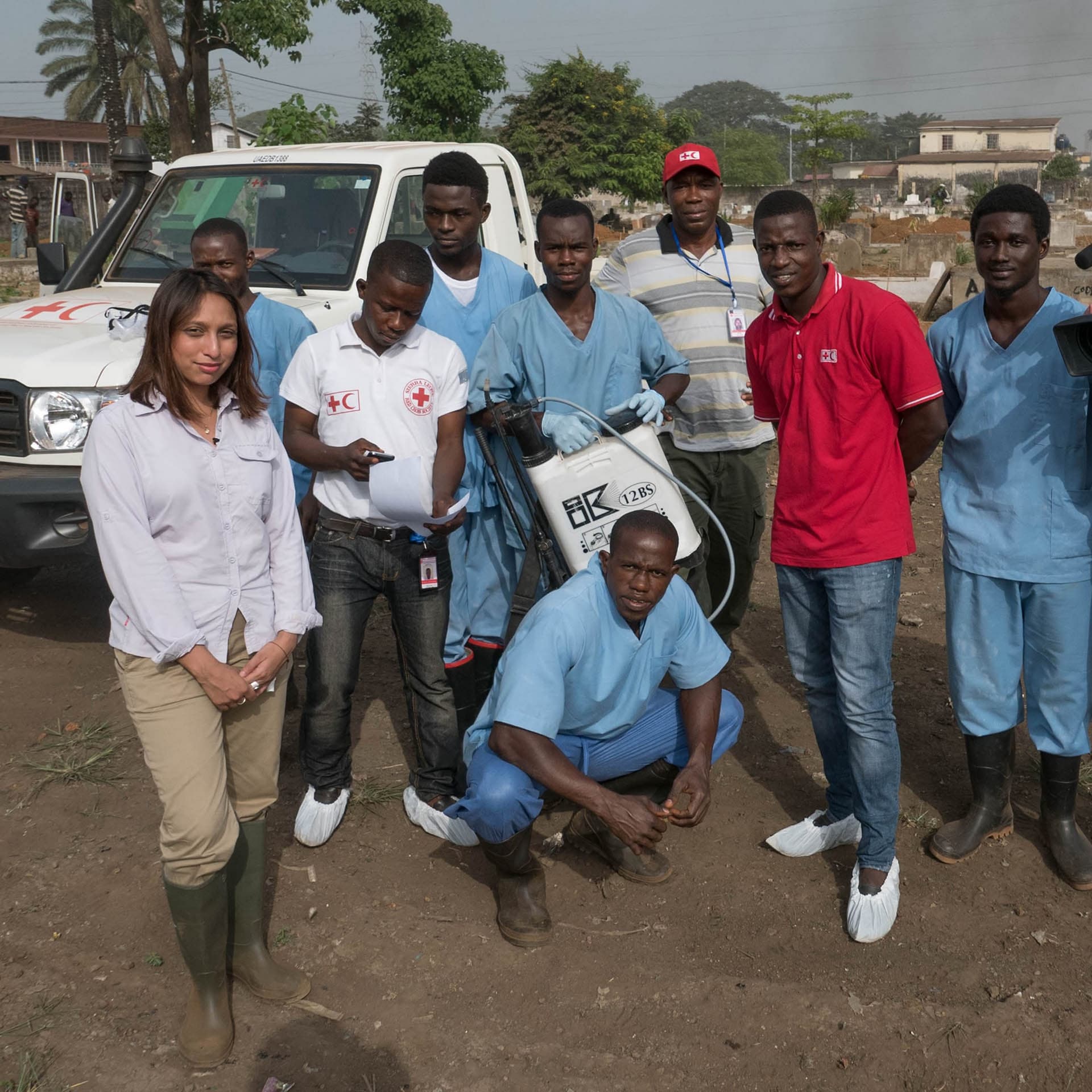
(Photo: Irena Taranyuk.)