In short
The Documentary Podcast: The Struggle of Israel's Peace Movement
Episode Overview In this episode of *The Documentary Podcast*, host Emily Wither delves into the challenges faced by a coalition of Jewish and Palestinian peace activists known as *Standing Together*. This group emerged during the recent escalation of conflict following Hamas attacks on October 7, 2023, and advocates for coexistence amidst deep societal divisions in Israel. The episode explores the evolution of their message and the shifting dynamics of activism in the region.
Key Themes and Discussions
- Background of the Conflict
- Hamas Attacks: The October 7 attacks resulted in significant casualties, prompting a massive Israeli military response in Gaza.
- Activism During Conflict: Standing Together was one of the few groups calling for a ceasefire amidst widespread violence.
- Standing Together Movement
- Composition: The group consists of both Jewish Israelis and Palestinian citizens of Israel, making it unique in its advocacy for mutual peace and coexistence.
- Symbolism: Identified by their matching purple t-shirts, they represent a grassroots effort to unite both communities against the ongoing violence.
- Reactions: The group has faced backlash from both sides—Israelis labeling them as traitors and some Palestinian factions promoting boycotts against them.
- Current Activism Focus
- Olive Harvesting: Volunteers from Standing Together assist Palestinian farmers in the West Bank, signaling a commitment to support during periods of rising settler violence.
- Documentation of Violence: Amid increasing attacks on Palestinian olive harvesters, activists aim to provide a sense of security through their presence.
- Activist Experiences
- Personal Testimonies: Activists Rula Daud and Alon Lee Green share their experiences of fear, isolation, and threats faced for their beliefs.
- Societal Backlash: Activists describe a shift in public sentiment that has made their work increasingly dangerous, including threats of violence and societal ostracization.
- Societal Division and Mental Health
- Fear and Isolation: Both Palestinian and Israeli communities have grown more insular, exacerbated by government policies and societal pressures.
- Psychological Impact: The trauma from ongoing violence affects both communities, complicating the discourse on peace.
- Future Prospects for Peace
- Hope Amidst Conflict: Despite the challenges, activists express a belief in the necessity of working together for a peaceful future.
- Building Bridges: Activists argue for the importance of dialogue and collaboration to create a shared vision for peace, addressing fears and misconceptions within both communities.
- The Role of Leadership
- Accountability: Activists emphasize the need for Israeli leaders to take responsibility for the societal shift towards extremism and fear.
- Vision for Peace: The discourse revolves around the crucial need for a new narrative of peace that includes both communities and addresses their grievances.
Conclusion The episode highlights the ongoing struggle of peace activists in Israel and their commitment to coexistence despite facing significant societal and political hurdles. The movement’s narrative is not just about immediate peace but also about healing the deep-rooted trauma and divisions that continue to impact both Israelis and Palestinians.
Key Takeaways
- Unity in Diversity: Standing Together represents a rare coalition striving for peace in a divided society.
- Impact of Violence on Activism: The escalation of conflict has profound effects on individuals’ safety and mental health, influencing their ability to advocate for change.
- Hope and Resilience: Activists remain hopeful, believing that through collaboration, a new path towards peace can emerge, even amid ongoing tensions.
This episode serves as a poignant reminder of the human stories at the heart of political conflicts and the enduring power of collective action for peace.
Written by AI. May contain mistakes. Listen to the episode to check what was said.
Transcript
Automatic transcript. May contain errors.0:00This BBC podcast is supported by ads outside the UK. America is changing. And so is the world. But what's happening in America isn't just a cause of global upheaval. It's also a symptom of disruption that's happening everywhere. I'm Asma Khalid in Washington, D.C. I'm Tristan Redman in London. And this is The Global Story. Every weekday, we'll bring you a story from this intersection, where the world and America meet. Listen on BBC.com or wherever you get your podcasts. I am Nina Khrushcheva, the great-granddaughter of Nikita Khrushchev, the leader of the Soviet Union in 1962. And I'm Max Kennedy, the nephew of U.S.
0:45President John F. Kennedy. We explore what was a terrifying moment in history. The story of the Cuban Missile Crisis. How close the world came to nuclear war. And what they had to do to pull it back from the brink. The bomb, Kennedy and Khrushchev. All episodes available now, wherever you get your BBC podcasts.
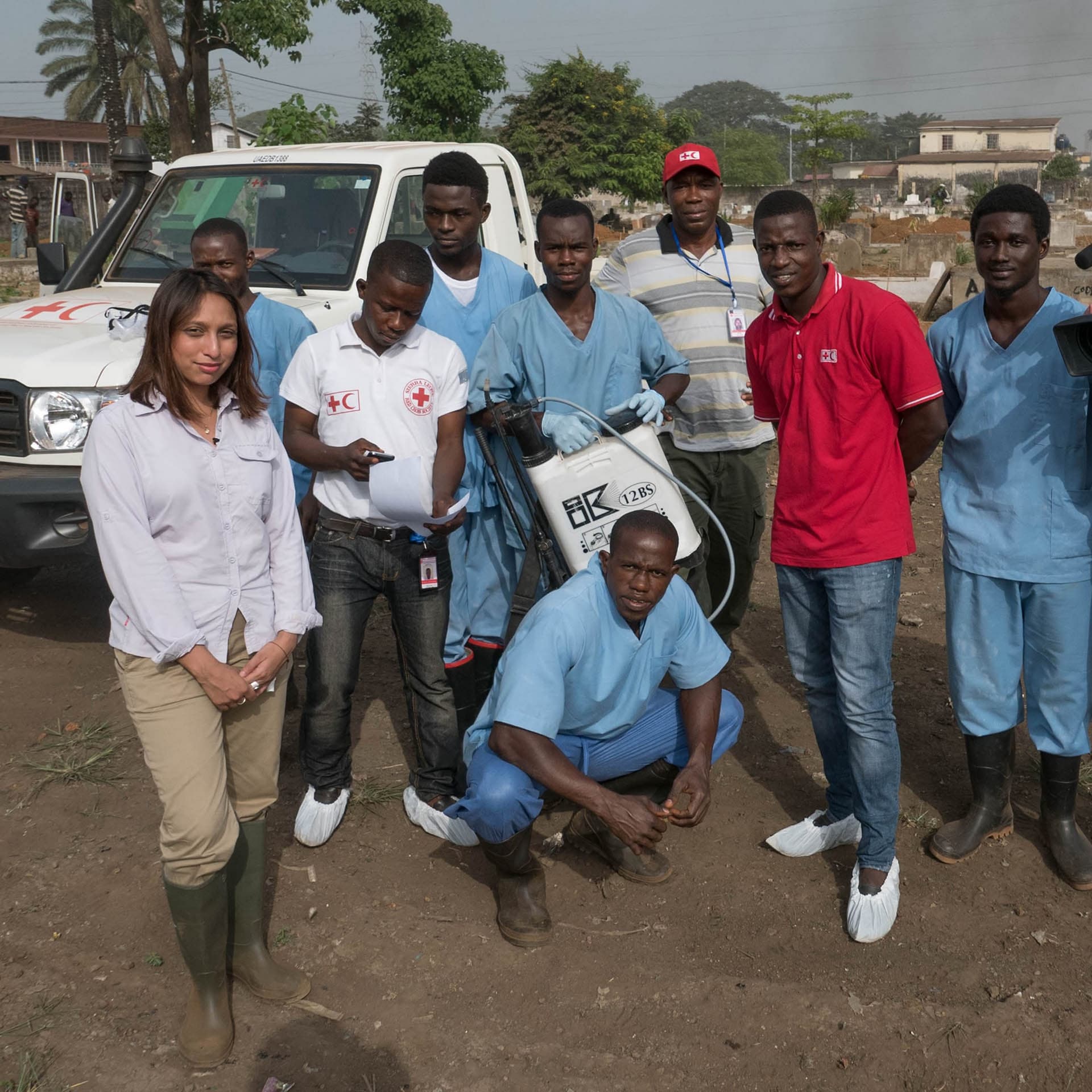
1:31communities are more divided than ever. We're deep in a valley now. We've descended from the hilltops. The ground is very stony. You have to watch your step. And we're just about to enter into the olive grove. We're kind of climbing over a collapsed wall, it looks like. And there's a long line of volunteers snaking across the fields. It's 8am near Bethlehem in the occupied West Bank and we're joining a group of around 20 Israeli activists, rabbis and international volunteers. They're here to help Palestinians harvest their olives in response to rising settler violence. They feel if Israelis are present, Palestinians are less likely to be attacked by settlers.
2:18She says that this is the settlement, right? You understand the situation. This valley, it's the farmlands of the Palestinian village. From the left you can see the outskirts of the village, the houses. But here on the right you can see the red roofs. This is the settlement, the Israeli-Jewish settlement, sitting on the land of the Palestinian villages. And Ibtisan here, she's from the village, and she says they're too scared to, or prevented a lot of times by the army, to actually pick up the olives or the grapes. Yeah. Alon Lee Green is a Jewish Israeli and the national co-director of Standing Together, a mixed grassroots peace movement of both Israelis and Palestinians.
3:02They've spent the last two years campaigning for a ceasefire in Gaza. Now they're shifting their focus to rising violence in the West Bank. The UN says there's been more than 150 documented attacks by settlers on the olive harvest this year. The Israeli military rejects accusations that it supports or enables violence by Israeli civilians and says it's there to keep everyone safe. Two weeks ago, it was a Saturday and settlers came to this place where we are right now with the army and sent some people to the hospital with violence. Jewish settlers have built around 160 of these settlements since Israel occupied the West Bank and East Jerusalem in the 1967 Middle East War.
3:50This is land the Palestinians want, along with Gaza, for a hoped-for future state. It's now home to 700 ,000 Jews, who live alongside an estimated 3.3 million Palestinians. Most of the world considers Israeli settlements as illegal under international law. Israel disagrees, and far-right settlers now sit in the heart of the Israeli government. They say the land was promised to them by God, and the finance minister, Bezalel Smotrich, says building settlements will bury the idea of a Palestinian state. If you're up in that settlement at the top of the hill, you really have a direct view down into the orchard.
4:30Exactly, yeah. It's very vulnerable. There's always a strategic reason for the location they're building their settlements. It's always to connect one piece of land that is already annexed or part of the big chunk of settlements to another Palestinian land and another Palestinian land. And it's always biting more and more chunks. So we're just about to dip under a really low-hanging olive tree here. Look at the olives. Yeah, the olives are ready to be picked. They are very ready to be picked. How important is your presence here? It's very important. Literally helping on the ground the ability of people to survive, to live, to do their work of providing for their families.
5:14And of course, to show that Jews and Palestinians, Israelis can work together, can do the very profound work of surviving together and working together.
5:29I first met Alon Lee and three other members of the group standing together in the aftermath of the Hamas attacks on Israel on October 7th, 2023. That day, 1 ,200 Israelis were killed and 251 were taken hostage by Hamas, which is designated as a terrorist group by many countries, including the UK. In response, Israel launched an offensive on Gaza, and in those painful early days, Alon Lee and his colleagues stood almost alone in calling for a ceasefire. They argued revenge wasn't the answer. Many Israelis called them traitors. Since then, Gaza has been reduced to rubble, and according to the Hamas-run Health Ministry, 70 ,000 Palestinians have been killed.
6:16A UN commission of inquiry concluded Israel committed genocide against Palestinians in Gaza. Israel's government vehemently rejected the report, denouncing it as distorted and false. Now with the tentative ceasefire in place, I've returned for assignment to hear how the lives of two Jewish Israelis and two Palestinian citizens of Israel have changed during the war. And if they feel, there's a chance for a different future.
6:56How has life changed in the last two years for Palestinians living in Israel, for Israeli Arabs? The main thing that has changed is you have more fear. There was a huge wave of arresting people, anybody who would say anything about Gaza, especially the first year. This government didn't allow people to criticise what it was doing inside of Gaza. A lot of people were afraid to speak and they're still afraid until this moment because whenever they want they can arrest you, they can beat you. Rula Daud is a Palestinian citizen of Israel and a national co-director of Standing Together with Elan Lee.
7:35She's at her laptop behind a large table where groups of activists discuss the week's events at their headquarters in Tel Aviv. Standing Together is the largest grassroots movement of Jewish Israelis and Palestinian citizens of Israel, or as the state calls them, Israeli Arabs. At just over 20 % of the population, they're Israel's largest minority, and it's unusual to find a mixed group working together for a shared political cause. They say they're campaigning against the occupation and for peace, equality and justice in Israel-Palestine. In the wake of October 7th, the head of the Israeli police said there would be a zero-tolerance policy towards anyone identifying with Gaza.
8:19Rula, a Palestinian Christian, said this was especially tough for Israeli Arabs like herself. She lives in a mixed suburb of Tel Aviv. If you go to Yaffa, 80 % of the Arabs who live in Yaffa have families inside of Gaza. And these people are not allowed to speak about the pain that they had for their own family members being killed in Gaza. It makes you reduce yourself, like to shrink your space, your identity, who you are, and even not to be honest about telling what is really the problem, and which leads to not having a real conversation at the end of the day. I decide to speak about politics each and every day, but most Palestinians inside of Israel, they don't.
9:00It's very different. How has that impacted your life day to day? Look, the first month after October the 7th, I didn't write anything. Nothing. I really, I was so afraid. I didn't like anything. I didn't tweet. But then, you know, I am a political figure. I am part of a grassroots movement. And the first time I spoke, when I wrote something, many people attacked me. Lefties and right-wing, many. And then we started getting a lot of threats. We know where you live, we know where your office is. And actually, a whole year I didn't speak Arabic in public places. And I don't today if I see soldiers in the train or in the bus because, you know, Israel is a very military society.
9:47So most of the soldiers you see went to Gaza. So I am very much afraid that if they will hear me speak in Arabic, it will trigger something. Even in mixed neighbourhoods, Jews and Palestinians often just coexist. A gap, the group says, has only widened in the last two years, as both communities retreated into their own news programmes, anger and grief. Palestinian citizens of Israel have far greater freedoms than those living in the West Bank or Gaza, but they say they're treated like second-class citizens and face daily discrimination. After October 7th, Jewish Israelis were encouraged by the police to arm themselves for protection.
10:27And suddenly, you could see more civilians carrying large firearms like assault rifles, just running errands in their neighbourhoods. Rulab says this only adds to the tension. So my neighbourhood was in Yaffa and there was a playground. We were there with our kids and there was a man, you know, civilian, but he had a gun. So he felt that he needs to come to the playground with his kids, with other people's kids, wearing a gun in Yaffa. And, you know, people don't feel secure, especially Arabs, when they see guns. Because, unfortunately, I can be shot and it will not make any difference. This government will not care.
11:08The judicial system will not care. Probably nobody will be jailed. This is how we see it as, you know, Arabs. So he went to the playground with the gun. and an argument started between him and another parent. What did the parent say? He told him, why are you here with a gun? Like, why? You see our kids. My son is afraid, okay? And he told him, but I am here to protect them. He told him, but my son doesn't see this as a protection because he sees what's happening, what you are doing inside of Gaza. And when he said he sees what you're doing inside of Gaza, it exploded. And people kind of got in the middle.
11:43Just both of you leave. And this is just a playground for kids. And a whole month, nobody played in that playground because of the argument that there was between two parents. This is kind of, you know, the reality that we live in, an unsafe reality.
12:03You told me two weeks after October 7th that you were feeling quite lonely and quite isolated for speaking up. and I just wondered how that feeling might have changed. Has it changed over the last two years? For so many months and maybe even in the first full year after October 7th, we felt that we're standing together but actually standing quite alone. When we used the term ceasefire deal or hostage deal, it was almost a taboo. It was almost as if we said something that is not allowed to be said on our society. It was a constant struggle to just be on social media, to just be with your message in the public space.
12:51We were arrested. We didn't get one permit from the police to go out and demonstrate in the street. Alonni says the space for them to campaign opened up when the families of the Israeli hostages began pushing for a ceasefire deal too to bring their loved ones home. Standing Together grew on social media, drew in new supporters, and became known in their trademark purple t-shirts. But there's still a small minority voice in Israel, and organisers admit they've attracted more attention abroad than they have domestically. We started building our momentum and having thousands of people going to our rallies and demonstrations in the streets.
13:30We grew geographically. We have many more Palestinians and Jewish members that have joined the movement since October 7th. We started collecting food for Gaza, more than 400 trucks from Israeli citizens, and we started getting beaten, arrested. People came to our offices. The government started persecuting us, and we were accused that we were damaging the war effort of the Israeli state. Just a few weeks ago, we had to hold the doors from people trying to storm inside, people chanting death to all Arabs. Police never helped. That was also a very frightening part of it. We call the police and they don't show up.
14:14At the mass demonstrations in Israel, for many, saving the hostages was the focus, not the suffering of Palestinians. Speaking up for the other came at a personal cost too. Alon Limp says he's aged a lot, lost friendships and is constantly looking over his shoulder. His brother's bookshop has been attacked several times. They're identical twins and often mixed up. I personally came to the police 17 times since October 7th with death threats that I received, sometimes a bunch of 200 in the same week, telling them, look, they say that before the week will end they will come and slaughter me, as they say, or they will target my home and they know my home address.
14:55Has Israeli society changed over the last two years? I think the Israeli society changed dramatically. We lost a lot of barriers and we crossed a lot of lines and we lost a lot of our humanity and we lost a lot of our compassion. And we did things that we shouldn't have done and then justified it to ourselves in many different ways. And it scares me. There's still strong public backing for the Israeli military. one opinion poll suggested that a large majority of Jewish Israelis believed Israel made real efforts to avoid harming civilians in Gaza, and they weren't troubled by reports of Palestinian famine or suffering.
15:47We've come up the coast to Haifa, Israel's third largest city, and its biggest mixed one. It's often held up as a model of Jewish-Arab coexistence. But even here, there's resistance to Standing Together's message. The group have hung up large banners in their purple branding. They say, yes, peace in Arabic and Hebrew. And they've hung them up on a busy intersection on these old stone buildings with arched windows. Right, so our community organizer here in Haifa came to hang them up and he was like, can you just make sure that no one took them down? You know, fully expecting, unfortunately, that they will be taken down.
16:34Is that because you're not very popular here? I just think that the message for some people is naive or even provocative. Sally Abed is a Palestinian citizen of Israel, a local councillor and another member of Standing Together. Since I last saw her, she's had a baby daughter named Shams. I love the name. Son, right? Yeah. Beautiful. Thank you. Shams al-Hurriya in Arabic is like the son of freedom. Sounds like you chose that name quite purposely. Yeah, it just has a lot of light, which we all need at these times. What was it like becoming a mother during this time when rockets were flying around the country and you were having to go into bomb shelters?
17:16Yeah, horrible. It was horrible. I was here literally alone, just having to wake up my newborn to go into a shelter. It was horrible. But the guilt, that was one of the main things that I really had to deal with. Yes, we had bombings. Yes, we had sirens. Comparatively, it was nothing to really imagine the experience of Palestinian mothers in Gaza. Whenever she got sick, I would just cry so hard because I knew that she had everything she needed. I couldn't fathom not having that. Did you ever bring your daughter to a protest? Yes. Unfortunately. Twice. She loved it. She had a blast. You know, you had the drums of the protest.
18:15She would dance. She's adorable. There was one instance where it was very difficult because I was holding a sign that said a child is a child, both in Hebrew and Arabic, and I held my child. And a woman, nice woman, like liberal, you know, going out shouting for hostage deal. Probably the age of my mom, probably a grandma, came and like shouted at me. It's not the same. It's not the same. And they are future terrorists. it's difficult to to accept that while also understanding that she is also part of the people that we do want to mobilize when we met two years ago you told me that your dad had said to you that if the situation gets worse get the hell out of here what do you think about that now oh they still say that to me i think like even now that shams is getting the bigger she's getting and just fear for me to imagine.
19:12Just the simplest thing, the hardships of her growing up here. We are definitely not paying the price that Palestinians with the West Bank and definitely not in Gaza are paying. But people in Israel are paying a price. Everything is just so expensive. Our health care is deteriorating. Education is deteriorating. So much is going into war and security and military. And we are feeling that. Getting out of here becomes less of a fantasy and more of an urgency at some point. But not yet. I mean, I still have hope. I give it five years. I mean, we're not going to achieve just peace in five years, but have a major shift in the direction in which we're going, hopefully.
20:02You're listening to the documentary podcast from the BBC World Service. America is changing. And so is the world. But what's happening in America isn't just a cause of global upheaval. It's also a symptom of disruption that's happening everywhere. I'm Asma Khalid in Washington, D.C. I'm Tristan Redman in London. And this is The Global Story. Every weekday, we'll bring you a story from this intersection, where the world and America meet. Listen on BBC.com or wherever you get your podcasts.
21:04All episodes available now, wherever you get your BBC podcasts.
21:33You turned pain into purpose. Therapy for me is being in the boxing ring. It's just good for your soul, good for your body. This is season four of Legacy. Defiant. Search Defiant Legacy wherever you get your podcasts.
21:53I'm Emily Wither on assignment in Israel. With the hostages now returned, large public protests around the Gaza war have ended. Now the group are trying to rally more people behind a wider piece. Back at the olive harvest in the occupied West Bank, Alonle says in small ways the group is making a difference. So we can just see a group of Palestinian women now who are running down the hill with ladders and bags because they can see that the group are here and they're taking this opportunity to come and pick some of the olives because they feel safer. Yes, so they have not accessed their land in the valley here in the last two years because it's too close to the settlement.
22:40So I am happy to see that it gives some courage to the local people to just reach their own land. The pitter-patter you can hear is the group stripping olives from the trees, which fall onto large plastic sheets laid underneath. One of the Palestinian women tells the group her son was beaten by Israeli soldiers when he last tried to work their land. Is the group's focus now on protecting Palestinians in the West Bank? After Gaza, which is not over yet, this is a very worrying, developing front, yes. In the West Bank, things are becoming tougher and tougher. And the presence of Israelis doesn't always stop the violence.
23:30Just the day before, a Jewish-Israeli activist, Itamar Avneri, from Standing Together, was picking in another olive grove. We first met two years ago. He grew up on a kibbutz in northern Israel. At that harvest, settlers flew a drone into one of the volunteers. They then threatened the group, firing M16 assault rifles just above their heads.
23:59I think I'm still shaking a little bit by the fact that he shot at us. I mean, live ammunition. Itamar posted a video of the encounter, and the responses show the challenges they face. And many people, of course, denounced it and said, this is terrible, this is horrible. But then a lot of people, young people, responded to my video on TikTok or Instagram and said, I wish they were firing at you and not above your head. Why are you going to help Palestinians? Why are you helping terrorists? All Palestinians are terrorists. You should stand with the settlers. I'm very used to it. Do you always do that?
24:42Do you always read the comments? Yeah, I don't know why, but I do. It's horrible, it's terrible. It's something from inside. I have to see it, I have to understand. And I was thinking to myself, so many young people are talking with such conviction and saying such horrible things. And it was so hurtful because just a few weeks ago, I went to the kibbutz and I found something I drew when I was a child in the 90s. and it's funny today the drawing is a drawing of two leaders shaking their hands with the flags of Palestine and Israel behind them I drew as a child peace ceremonies and they are advocating for killing and expelling all Palestinians.
25:33And I thought, my God, my society is really on such a dangerous place right now. Are you, your family and your friends still affected by what happened on October 7th? Yes, of course, and I think in different ways. First of all, we are all traumatised. We are all still inside the trauma. when we're still processing the trauma of October 7th. We all knew people that were murdered or kidnapped on October 7th. My sister's family, I mean, her husband's aunt and uncle were murdered. So, of course, people are affected. Given what happened on October 7th, is that one of the reasons why many Israelis don't think that now is the right time to talk about peace with the Palestinians?
26:22Of course, it can explain at least some of it. but for me it's not an excuse and I will say why. For 25 years now, all Israelis are hearing from our leaders, from our politicians, is that peace is impossible. There is no partner. There is a lack of vision and a lack of belief in our society and I blame the leaders of our society who never tried to do that. And Israeli media is not talking about what's going on in Gaza. And it's also people choosing not to know because people are afraid to see it, people don't want to see it because they don't want to believe it, they don't want to face it. For Israelis, or Jewish Israelis, October 7 is proof that Palestinians don't want peace.
27:06For Palestinians, the war on Gaza is the proof that Israelis don't want peace. Standing Together has faced criticism from both sides of the conflict and some major Palestinian groups have called for an outright boycott of the movement for not taking a tougher line on Israel. They accuse the group of normalising Israel's occupation of Palestinian territory and whitewashing Israel's crimes against Palestinians. Rula, a Palestinian, rejects this. She says working with Israelis is the only way to achieve peace. If I want to change my reality, I want all people in here on board with me. And there is an Israeli society in this land, whether they want it or not.
27:50it is. These are my neighbors, my people, the people I work with, and I am also part of this society, okay? It is an unjust, unfair country to live in, of course, but at the end of the day, if I want to make change, if I want the occupation to end, I need to convince people that it must end for them to fight next to me, and I don't need to, you know, push away everybody who does not agree with me. This is not how you build a majority. There's a huge difference between protesting and calling for freedom for people than from having illusions of one people will be staying here and the other won't.
Read the full transcript
28:30Because at the end of the day, it means that both of you are extremists. Nobody is leaving. I'm not packing up and going anywhere. And my Jewish friends are not packing and going anywhere. This is home. We've heard how Israel's peace movement has often felt pushed underground. And given the deep divisions, for some the hatred, the huge loss of life and the unresolved trauma, to many it might seem like an impossible task. But standing together believe they can still influence society to imagine a different future. People, they are affected by what they see, what they hear from the Israeli government.
29:10from the Israeli media, from a lot of people around them. What we need to do is to acknowledge their fears. And then, you know, step by step, try to reach them and try to speak with them. And also try to show them that they were taught to hate and that there is another way. How much will it take? Years. This is 70-something years. It's a trauma. Again and again and again and again. So we have never healed, okay? And this is why we, you know, we want the smallest things, okay? No more wars. Let's just start with no more wars, no more killing. And from that on, let's solve other things. Here is the hopeful part.
29:52Are you ready? I'm ready. The Israeli public perceives peace and Palestinian statehood as a threat. The question is, how do you change that? And to do that, you need to build a movement that talks out of the Israeli interest, out of the Israeli public interest, almost from a patriotic place, from a place where because we want safety and security and prosperity as people who live in Israel, we also need to achieve peace. And I think you could see that, you could see the shift. I will ask Israelis that are feeling that it's not the time to speak about peace, so what do you suggest? If you suggest that we can control millions of people with our army, without them being the citizens of our country and it will not explode in our faces, I will advise you that it's not a good idea because it will explode eventually and we will all suffer from that.
30:46And I know there are a lot of emotions. A lot of my friends hosted Palestinians from Gaza, were involved in peace initiatives. They were driving Palestinians to hospitals in Israel. And then October 7th happened and some of even the same Palestinians that have been in their homes betrayed them. and murdered them, I know this, and I feel the pain, and I feel the anger, and I feel the disappointment, and I am part of this trauma myself. But even after that, I do not believe we have a different option but going to peace with enemies, with people that maybe hate us. And they also need to do peace with their enemies, with maybe an enemy that holds them under military control for decades, an enemy that brought the death of 20 ,000 children.
31:33And it's a tough choice for them, but it's also a tough choice for us.
32:07America is changing. And so is the world. But what's happening in America isn't just a cause of global upheaval. It's also a symptom of disruption that's happening everywhere. I'm Asma Khalid in Washington, D.C. I'm Tristan Redman in London. And this is The Global Story. Every weekday, we'll bring you a story from this intersection, where the world and America meet. Listen on BBC.com or wherever you get your podcasts.
From the publisher
Two years ago a group of Jewish and Palestinian peace activists stood almost alone in Israel in calling for a ceasefire, as Israel launched a massive offensive on Gaza in response to the Hamas attacks of 7th October 2023. Emily Wither returns to hear how the lives of these activists have changed. She explores whether their message of peace and coexistence is breaking through at a time when societal divisions are deeper than ever.
The group Standing Together, known for their matching purple t-shirts, is a group of Jewish Israelis and Palestinian citizens of Israel (referred to by the state as Israeli Arabs, the country’s largest minority making up over 20% of the population).
It is unusual in either Israel or Palestine to find a mixed group working together for a shared cause and advocating for coexistence. Standing Together has received criticism from both sides of the conflict; with many Israelis calling them traitors and some Palestinian groups calling for a boycott of the movement. Despite all this the group say the only way to achieve a lasting peace is for the communities to work together.
This episode of The Documentary comes to you from Assignment, investigations and journeys into the heart of global events.