
In short
BBC Monitoring documentary on civilian evacuations from Ukraine’s front line, where the “grey zone/kill zone” has expanded and evacuators are targeted by drones and artillery. It explains why some civilians stay (can’t leave pets/livestock; identity/home ties; returning after finding life “missing”), how evacuations are organized (hotlines, police/military/volunteers, stages from armored pickup to refugee centers), and the changing tactics as FPV drones and “mesh”/mothership attacks increase. It also covers legal frameworks (voluntary/compulsory/forced, including laws to remove children from danger) and the toll on rescuers (“hell jumpers”).
Guests/backgrounds
Vitaly Shevchenko (BBC Monitoring chief analyst; Ukrainian; recently returned from Ukraine and spoke with evacuators). Christy (interviewer). Named evacuators: Bahadan Zoyakov (volunteer, wounded, returned); Denis Christov (Ukrainian TV personality turned evacuator); Vlad Makhovsky (Zaporizhia businessman/pastor); Roddychenko (Donetsk police); Pavlov Yechenko (Donetsk police).
Key claims
Evacuation vehicles and marked convoys are still hit; FPV drone strikes are “almost always intentional” (citing MSF). Local knowledge and anti-drone equipment are essential; evacuations have become more coordinated but deadlier.
Notable examples
“11 goats” story from Sumy region; a woman returning to open a kebab shop; Denis Christov persuading a man by offering to save his dog; police using 30–40 second family-recorded videos; “White Angels” police unit; drone-detector/net-throwing van; Christmas Day death of civilian evacuator Vyacheslav Ilchenko.
Written by AI. May contain mistakes. Listen to the episode to check what was said.
Chapters
Tap a time to open that second in VOCivilians in the War Zone
0:57 to 1:28
Exploring why some civilians choose to stay in dangerous areas.
“But honestly, it's even worse when you buy business software.”
Civilians in the War Zone
2:14 to 3:18
Exploring why some civilians choose to stay in dangerous areas.
“And there are others who risk their lives to rescue the last civilians living near the front line.”
The Current Situation
3:18 to 4:38
Discussion on the ongoing evacuations and the challenges faced.
“Welcome to the documentary from the BBC World Service.”
Reasons for Staying
4:38 to 5:51
Understanding the motivations behind civilians' decisions to stay.
“Donetsk police say thousands of civilians are still there in Donetsk region alone, and a massive effort is still underway to get them out of the danger zone.”
Evacuator Stories
5:51 to 9:27
Personal accounts from evacuators and the people they rescue.
“So for a lot of these people, this means that they've made a decision to stay.”
The Evacuation Process
9:31 to 14:00
Details on evacuators' roles and the complexities of their work.
“Hi, I'm Angie Hicks, co-founder of Angie.”
Understanding Drone Warfare
14:00 to 16:42
Learn about the different types of drones used in warfare and their implications.
“You need to know how these drones operate.”
The Danger of FPV Drones
16:42 to 18:42
Explore the lethal impact of FPV drones in combat and their targeted attacks.
“This is to protect the vehicle from drones.”
Challenges of Evacuating Civilians
18:42 to 21:56
Understand the complexities and dangers involved in evacuating civilians from war zones.
“And people like Denis Christov, who is really good as a communicator, being a media personality, the main thrust of his communication with somebody who's not prepared to leave is, well, look, there's a way.”
Stories of Reluctant Evacuees
21:56 to 24:59
Hear personal stories of individuals faced with life-and-death choices during evacuations.
“Can you take us through how the evacuation unfolds?”
Show all 14 chapters
The Role of Humanitarian Law
24:59 to 27:23
Learn about the international humanitarian laws that govern evacuations in conflict zones.
“And just like everybody else, they get wounded and killed.”
Types of Evacuations in Ukraine
27:23 to 28:00
Discover the different legal frameworks for voluntary and forced evacuations in Ukraine.
“The rules are that civilians must be allowed to leave a besieged area to ensure their survival.”
The Complexity of Forced Evacuations
28:00 to 31:43
Explore the legal and moral dilemmas surrounding the forced evacuation of children in Ukraine.
“So the third and final, the top level of evacuations is forced where you have no option.”
Reflections on War and Humanity
31:43 to 32:26
Understand the deeper lessons learned from those affected by the war and their resilience.
“So both people living on the front line still and volunteers and police officers risking their lives to save them.”
Transcript
Automatic transcript. May contain errors.0:00This BBC podcast is supported by ads outside the UK.
0:30most to investors, including policy initiatives for retirement savings, taxes and trade, inflation concerns, the Federal Reserve, and how regulatory developments can affect companies, sectors, and even the entire market. Mike and his guests offer their perspective on how policy changes could affect what you do with your portfolio. Download the latest episode and follow at schwab.com slash Washington Wise or wherever you listen. Imagine buying a toy for your kid, but it doesn't come with batteries. That sucks. But honestly, it's even worse when you buy business software. You end up with fragmented, disconnected systems that cost a fortune and don't talk to each other.
1:12Odoo completely changes that. Odoo comes fully complete, with all your business apps perfectly integrated and working together seamlessly. It's everything your business needs in one place, saving you time, headaches and serious money. Stop paying for missing pieces. Go to odoo.com. That's O-D-O-O dot com to learn more.
1:36The Documentary, home of the best documentaries from the BBC World Service.
1:48Since the start of Russia's full-scale invasion of Ukraine, millions of civilians have been forced out of their homes by the war. but some have chosen to stay. Civilians are still there, literally with bombs flying over their heads, hitting their homes, drones buzzing overhead.
2:13These are people who have had four and a half years to make a decision to stay or go. Some can't leave, some won't leave. And there are others who risk their lives to rescue the last civilians living near the front line. I was struck by something said by a volunteer called Bahadan Zoyakov. After being wounded on one of the evacuation missions, he said, OK, I'm going to recover and go back. These men and women have been described as hell jumpers. The so-called grey zone, or the kill zone, has expanded. So many videos show vehicles being targeted, volunteers being targeted. Since the start of the war, the job of evacuating people has evolved alongside an increasingly hostile and unpredictable battlefield.
3:13We ask who are the evacuators and why do they risk their lives? to save others.
3:23Welcome to the documentary from the BBC World Service. I'm Krasi Ivanova-Twig, and this is the global jigsaw from BBC Monitoring, where we look at the world through the lens of its media, exploring the narratives, the propaganda, and the disinformation. Radio Tehran. We didn't get on the territory of Ukraine. Western countries are not the international community. That era has finished.
3:56Let's go back to the 24th of February 2022, when Russian tanks rolled across the border into Ukraine, heading for Kiev.
4:09Not long afterwards, we began hearing about daring attempts to get people to safety from the villages and towns near the front line.
4:22Four and a half years later, evacuations are still happening, but getting less media attention. Civilians are still trapped between life and death along the 1 ,000-kilometre-long front line. BBC Monitoring's chief analyst Vitaly Shevchenko, who is himself Ukrainian, recently returned from the country. He was in touch with evacuators there. Donetsk police say thousands of civilians are still there in Donetsk region alone, and a massive effort is still underway to get them out of the danger zone. This year alone, More than 3 ,000 civilians have been evacuated from Donetsk region, more than 1 ,000 of them children.
5:16So that, Christ, it gives us an idea of the scale of the challenge. Why are they still living there? Is it inability to move? Is it unwillingness? What's behind this resistance to leave their homes? Some can't leave, some won't leave. And it's important to remember that a huge number of those thousands of civilians trapped in their basements and cellars, they've had a lot of time to have a think about what's going on. So for a lot of these people, this means that they've made a decision to stay.
6:02After talking to people involved in these evacuations, it seems as though most of the people who are there on the front line, they are sort of advanced in their years, which means they're rooted, they are wedded to their homes.
6:28One thing I've heard a lot is, well, I've got my chickens and cats and dogs and goats. How am I supposed to leave them all behind? To which evacuators say, we can take them with you. So we'll be able to evacuate? We'll be. We'll be. There's one notable instance of a police unit in Ukraine's northeastern Sumy region. They had been approaching one particular gentleman there in a village saying, look, you've got to go. It's getting really dangerous. You will die probably if you don't leave. And he said, I've got 11 goats. How do you want me to abandon them? So what the police did, they turned up in a massive white van.
7:17So they put in that van, not just the gentleman, but all of his 11 goats.
7:27I mean, this kind of attachment to your home is something we can all understand. But what I find extraordinary is that it's not just the people who are determined to stay, but we hear about people who have returned. There was one case of a woman who returned and opened a kebab shop, which is an extraordinary act of defiance. Why do people go back? If you are more able-bodied, you can come and go if you want. A lot of people I've been following came to a conclusion that there's more to life than just physical safety. Some people, after going to safer places within Ukraine or abroad, they reach the conclusion that, you know, I'm fed and watered, I'm safe, but a huge chunk of my life is missing.
8:22I don't feel at home here. I feel out of place here. I'm losing my identity. I'm going back, whatever happens. Don't you wish everything was more rewarding? With Rakuten, almost everything is. You can earn cash back on those new shoes you've been wanting. You can save on the next trip you book. You can cash in on groceries. Just join. Shop your favorite brands and save. Target, Instacart, Expedia, Macy's, Sephora, CBS. The list is long. Save online, in-store, and at over 22 ,000 restaurants. And when it's time to redeem those rewards, get your money exactly how you want it. Choose PayPal, check, bill points, or cash out with gift cards.
9:11Eligible American Express card members can choose to earn membership rewards points instead of cash back. Terms and conditions apply. So go ahead, take a trip, fill a cart, order dessert. Rakuten is a world of rewards. Join today for free. Go to Rakuten.com or get the app. That's R-A-K-U-T-E-N. Hi, I'm Angie Hicks, co-founder of Angie. And one thing I've learned is that you buy a house, but you make it a home. Because with every fix, update, and renovation, it becomes a little more your own. So you need all your jobs done well. For nearly 30 years, Angie has helped millions of homeowners hire skilled pros for the projects that matter.
9:51From plumbing to electrical, roof prepare to deck upgrades. So leave it to the pros who will get your jobs done well. Angie, the one you trust to find the ones you trust. Find a pro for your project at Angie.com. Lives Less Ordinary is bringing you a special series of extraordinary love stories. Roshan Sethi was an uptight Canadian doctor who couldn't come out to his Indian family. Karansani was an actor from India who felt he had to keep his sexuality a secret to make it in Hollywood. But they met, fell in love, and things began to change. They decided to make a romantic comedy based on their relationship.
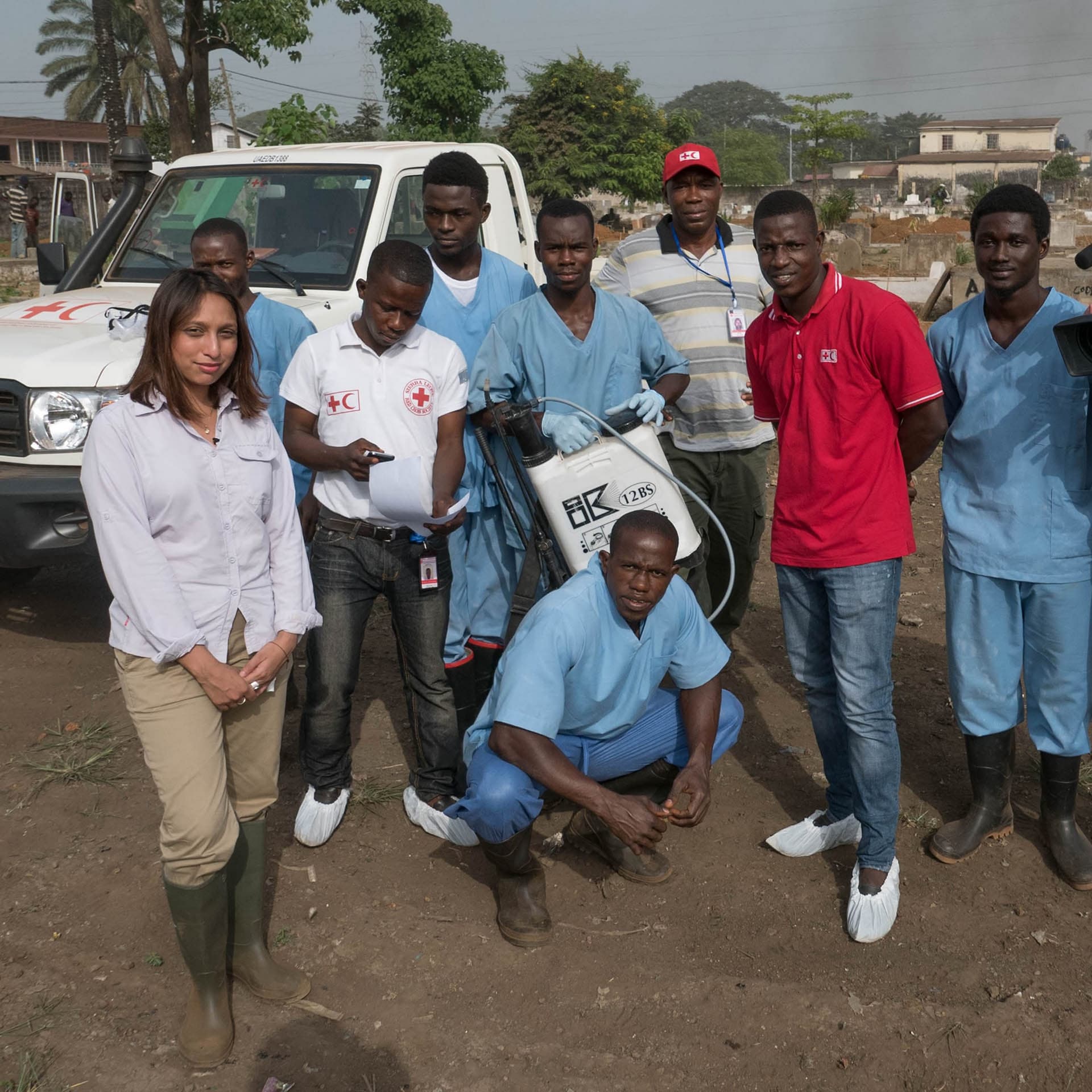
10:26Lives Less Ordinary Love Stories from the BBC World Service. Listen now wherever you get your BBC podcasts. You're listening to the documentary from the BBC World Service. Now let's turn to the people who are doing the evacuations. Who are the evacuators? What kind of people take up this job? All sorts of people, Christy. There's an official police unit called White Angels. There are numerous volunteers. The military are involved in it. When they are going into a town or a village and passing through it and they see a civilian, they tend to offer them to leave. It's kind of unusual and notable that the military, the police and civilian volunteers, they work really, really closely together.
11:16And I spoke to somebody from the police in Donetsk region. I asked him, do these civilian volunteers, do they not get in your way?
11:29Said that, well, they have expertise, they know what they're doing. Some of them have really important local knowledge. So they go on missions together. In terms of who these people are specifically, I've been following one Ukrainian TV personality, TV DJ, TV presenter, Denis Christov, who dropped all that and became an evacuator. Many people doing that, completely switching their lines of activity. Another person I've been in touch with is called Vlad Makhovsky. He's a businessman from Zaporizhia, and he's also a religious man. He's a pastor. I am a believer. I'm a church pastor, and my calling is saving people, so that's my role.
12:22Our country is going through such times when you can't stand aside. You have got to do all you can for victory so that the enemy doesn't move even further into our land. I was struck by something said by a volunteer called Bahadan Zoyakov. After being wounded on one of the evacuation missions, he said, OK, I'm wounded now, I'm going to recover and go back. It's a calling and a mission. What does it take, though, to become an evacuator? Because presumably a desire to help and a kind heart is not enough. Oh, it's absolutely not enough, Christy. You've really got to know what you're doing. Otherwise, the best case scenario, you become a liability.
13:12The worst case scenario, you're going to die painfully. But Roddychenko from Donetsk Police, he said that when they train police evacuators, they prefer local people. We had nothing in writing telling us what to do and how. We had to learn on the go, whenever we evacuated people or delivered humanitarian aid. All these details to do with tactics, time of day, logistics, routes and roads. That's why back then, and to this day, we make sure that all police officers are locals who understand the logistics and the location. Because they know the routes, they know the little nukes and little footpaths that help evacuate when things go south quickly with all these drones buzzing around with endless Russian attacks.
14:05You need to know how these drones operate. You need to know how to use anti-drone technology. Vlad Makhowski from Zeparysia, he showed me what he had. This piece of kit, a drone detector, a drone analyzer, then a net throw a pistol for drones, this rifle too. This is what we need to defend ourselves and other people against FPV drones. FPV drones carrying shaped charged explosives burn through the armor. You have got to be very careful. It was a pretty big drone detector, which sort of beeps when there's a drone about. Then Vlad had a pistol that shoots nets out to capture the drones. Not bullets, but nets.
14:59And also a big, good, old-fashioned rifle that shoots down drones. To survive, you need to know that. Are drones the biggest danger that they have to navigate? So-called FPV drones, yes, first-person view drones, which are smaller than the ubiquitous Shahid drones, for example, but they are very lethal. In a previous episode of The Global Jigsaw, we looked into how drones transformed this war. We explored Ukraine's and Russia's drone building capacity. The Iranian Shahid drones are mass-produced in Russia under the name of geran. Yes, that means geranium, the flower. As for FPV drones, Russian officials told Bloomberg that the country produces more than 15 ,000 per day, orders of magnitude more than at the start of the war.
15:54Russia has found a way of getting them across longer distances. What they do, basically two things. One is using motherships, a bigger drone that can travel longer distances with lots of FPV drones on it. So they scatter and kill. The second way of doing it is using what they call a mesh network topology, where these smaller FPV drones relay radio signals from each other and then onto the operator. This allows them to travel for longer distances. So it's a cat and mouse game. It endlessly changes and to survive you've got to stay one step ahead of your enemy. Which is why the vans that they use are equipped with this grill on top, right?
16:44This is to protect the vehicle from drones. Yeah, they call them barbecue grills. Vlad is using one of them. It's a big van and there's a grill on top. The idea is that if the drone hits the vehicle, it explodes a certain distance away from the actual body of the vehicle and the hope is that it will reduce the impact of the explosion.
17:13And these drones, do they target these vehicles deliberately? It would appear that some do. I've heard several accounts of vehicles with red crosses on them being targeted. The evacuations don't simply ensure civilians are moved to areas of safety. They give a chance of survival to those who are critically ill and injured. In a recent report, the medical charity MSF, Doctors Without Borders, said that the frequency of Russia's attacks on healthcare suggests that they are a sustained feature of the war. And as they told the BBC, first-person view drone strikes are almost always intentional. They are too consistent, too frequent and too precise to be incidental.
18:03Vehicles with inscriptions saying evacuating civilians, they've been targeted as well. So it's no guarantee. Putting a cross on it or just saying don't hit us, we're evacuating civilians, that's not always going to help. So the evacuators are facing lethal danger just to reach their destination, just to go to these people. But then they'll have the task of persuading them. How do they do that?
18:35It's not easy to convince somebody to leave, leave everything behind and just go places. And people like Denis Christov, who is really good as a communicator, being a media personality, the main thrust of his communication with somebody who's not prepared to leave is, well, look, there's a way.
19:01do not feel stuck do not feel like you're making a choice that is too costly for you as a person your dog your goats your chickens they'll come with you we'll find a place for you to stay
19:21sometimes it works sometimes it doesn't there's one particular video shot by Denis Christov. On the surface of it, it sounds and looks very slow-paced, almost routine, and yet what's unfolding is terrifyingly life-altering.
19:47It's all about life and death choices. So he finds a man in a village, almost completely destroyed, with explosions in the background, a man with a dog, and he tells him, well, look, you've got a dog. If you don't want to save yourself, save your dog. It will come with you. And the man says, you know what? This is what I've lived in my life. I'm going to stay put. And at the background, you hear the rumble of explosions. Around them, you see very obvious, undeniable signs of death and destruction that can catch up with you, that can kill you.
20:35Pavlov Yechenko from Donetsk Region Police, he said they appealed to their relatives to record a short, I don't know, 30-second video which they can show to the person they're trying to evacuate. Here's something we've been doing If people tell us about someone who might be in two minds about evacuating we ask them to record a short video and relatives get emotional when they record them There are tears There are children and grandchildren It's not blackmail They show how things really are So when you turn up and show this short clip 30-40 seconds long it can work It works well But not always, unfortunately And even when they agree to go, the price is yet more heartbreak as they leave everything behind.
21:30You are listening to The Global Jigsaw from BBC Monitoring. So this is a very complex logistical operation. and not only they have to know the terrain and evade drones and other whole mix of lethal dangers, they have to persuade reluctant residents to get onto the vans and leave. So it's quite a difficult task. Can you take us through how the evacuation unfolds? You know, what are the different stages? The beginning of this journey, in most cases, starts with a request for help or a signal, a message that there's somebody there who may need to be evacuated. There's a hotline set up by the government jointly with volunteers, evacuators and police.
22:24They can be told of somebody needing evacuation. What happens then needs to happen really quickly because the so-called grey zone or the kill zone has expanded greatly. Most of the videos filmed by evacuators, they are really, really fast-paced. You need to get into the vehicle quickly and go.
22:54So many videos show vehicles being targeted, volunteers being targeted.
23:05Some of these initial stages, they involve armoured vehicles used by the military, by the police. Their job is to get you to the safest location possible. Then the next leg is getting to a place of even more safety, a properly organised refugee centre.
23:34And then the local authorities and or civilian evacuators, they decide where to put you next. So anything goes. You find a flat, you move into a flat. You find somebody willing to accept refugees into a flat. That's what happens. We came across an extraordinary recording where an army evacuator offers his own house to the people he's trying to move to safer ground.
Read the full transcript
24:05Which begs the question, how much does the state do? And how much is left to volunteers? Ukrainians know that there's a limit to what the state can do. That's why volunteers get involved. But there are state programs, there is a state effort.
24:28The very existence of a special police unit called White Angels means that the state is very acutely aware of these people, thousands of them in desperate need of evacuation. And the state at least tries to provide them with everything they can provide them with from the very first stage of receiving calls on the hotline. You say the evacuators are targeted while they're doing this job. What's the toll on them? One description I've read about them is hell jumpers. It is hell. And just like everybody else, they get wounded and killed. One example is Vyacheslav Ilchenko, a civilian evacuator who got killed on Christmas Day last year on the way to evacuate a wounded elderly gentleman from Kostyantinivka in Donetsk region.
25:28There were two other volunteers with him. He died. They were injured. They recovered. They went back. How is the Ukrainian media portraying the evacuations? Is there a lot of attention to what they're doing?
25:45They let actions do the talking. There was one report by InterTV where they embedded with a police unit evacuating someone. and they got hit. So they showed this incredibly dramatic report of people being targeted, literally evacuating someone who was in a makeshift stretcher, like a cart with wheels, because that person wasn't mobile.
26:19And they were targeted by Russia. So they just showed it without much comment. And I think it's probably the most effective and impressive and most genuine way of showing it. Attacks on Ukraine's responders was recently discussed at the UN Security Council, where a UN official described the patterns they observed. Humanitarian workers in Ukraine are taking immense risks to save lives. Humanitarian workers and assets must be respected. This entails taking active steps to spare them, Attacking them directly is strictly prohibited and can amount to war crimes. When clearly marked humanitarian convoys and first responders rushing to help are killed and injured again and again, this shows a pattern that defies international humanitarian law.
27:14Wars have rules. They are unequivocal. Wars are indeed regulated by international humanitarian law based on the Geneva Conventions. The rules are that civilians must be allowed to leave a besieged area to ensure their survival. They contain provisions for the evacuation of vulnerable people. So is there a legal framework that regulates volunteer evacuations in Ukraine? There are three types of evacuation. One is voluntary, you're offered a chance. The second level is compulsory, where police will knock at your door and say, you've got to leave. However, you can still refuse. You can sign a form saying, I've been informed of the danger.
28:03I'm refusing to go. So the third and final, the top level of evacuations is forced where you have no option. And it's a relatively recent thing. And the law regulating it was passed to guarantee the rights of children.
28:27Because there are some parents who have made the choice to risk their lives and stay put on the front line, live where they are. But Ukrainian legislators and Ukrainian states, what they argue is that parents do not own children. They have no right to expose them to danger. There are instances of military patrols or police patrols just driving through a village and children would run out of basements like, take me away, I can't live here. That's why they passed this law allowing police to forcefully take those children away, regardless of whether their parents want it or not. You said earlier that the evacuators have to be extremely nimble in order to respond to changing circumstances.
29:26How has this process, the job of evacuating civilians, how has it changed over the course of the war? At the start of the war, when drones were not so widespread, not so lethal in terms of ever present lethal danger.
29:52the police would go into a town or a village gather the locals or use megaphones or whatever and tell them look we've got a bus here we think you've got to go and then it would be up to the locals to decide whether they wanted to go that has changed one of the more effective ways in which this is happening now one of the ways in which evacuations have become more streamlined There's more coordination between the police, the states, administrations and charities. But the danger is much bigger now because of the drones. They're getting more lethal. They're getting smarter. A lot of them use AI. If they hear a buzzing noise, they know they've got to run for cover.
30:40For example, Vlad Makhowski from Zeparysia, he says that he knows when glide bombs are about to be launched.
30:52So they find a reasonably safe spot and just wait for the danger to pass and then go and evacuate people. With FPV drones, you just have to accept that they can appear out of nowhere. where if it's raining, it helps against FPV drones. So when it's raining heavily, that's when volunteers know they've got a better chance of surviving. What has this story taught you, whether it's about the state of affairs, nature of war or human nature? When you are faced with the need to make life and death decisions, you start thinking about who you are, what you live for and how you want to live your life. So both people living on the front line still and volunteers and police officers risking their lives to save them.
31:53A lot of them, they decided that life is not just about comfort, food, drink, money. what makes us humans is to a huge extent helping others helping others survive
32:13this is the documentary from the bbc world service thank you to vitaly shevchenko and to the evacuators who shared their stories and thank you for listening this program was produced by Krista Shattori and me, Krasi Ivanova-Tweak. The sound engineer is Donald McDonald. And if you want to find out more about BBC Monitoring, you can do so by visiting our website, monitoring.bbc.co.uk.
32:50Lives Less Ordinary is bringing you a special series of extraordinary love stories. Roshan Sethi was an uptight Canadian doctor who couldn't come out to his Indian family. Karansani was an actor from India who felt he had to keep his sexuality a secret to make it in Hollywood. But they met, fell in love, and things began to change. They decided to make a romantic comedy based on their relationship. Lives Less Ordinary Love Stories from the BBC World Service. Listen now wherever you get your BBC podcasts.
From the publisher
The rescuers who dodge drones and bombs to evacuate from frontline areas in Ukraine, known as the “kill zone”. More than four years after Russia’s full-scale invasion, thousands of civilians still live dangerously close to active combat zones. Getting them to safety requires powers of persuasion, knowledge of warfare, and nerves of steel. The Global Jigsaw explores how volunteer evacuation efforts of civilians in eastern Ukraine have evolved throughout the war, and how rescuers continue to adapt to an increasingly hostile and unpredictable battlefield.
Find out more about BBC Monitoring on our website: https://monitoring.bbc.co.uk
Contributors: Vitaly Shevchenko Producer: Kriszta Satori, Tim Bowler Presenter: Krassi Ivanova Twigg Music: Pete Cunningham