In short
Ukrainians describe day-to-day life during Russia’s war on Ukraine and their hopes and fears for peace, amid US/Russia diplomacy and debates over territorial swaps.
Guests/backgrounds
Victoria and Miroslava (civilians in Kyiv and Lviv); Sevgil (journalist from Crimea) plus Sasha and Anastasia (communications; displaced from occupied areas after 2014); soldiers Oleg, Alexei, and Viktor (front-line drone pilots and a former communications/journalist turned “returned colonel”); Alyona (moved from Kyiv to the UK), Jana (fled Dnipro to Portugal), Victoria (fled to Sweden).
Key claims
peace talks without guarantees risk permanent loss of territory; territorial swaps would be humiliation/crime; Russia has broken treaties; civilians face constant missile/drone attacks; refugees live with “double life” and guilt.
Notable examples
sleeping on floors due to lack of shelter; Crimea described as “peninsula of fear”; a pregnant woman killed in a Kyiv bombing; soldiers’ drone missions to locate and kill Russian troops; refugees checking air-raid alerts daily.
Written by AI. May contain mistakes. Listen to the episode to check what was said.
Chapters
Tap a time to open that second in VOUkraine's Current Situation
0:43 to 2:05
An overview of recent events affecting Ukraine amidst the ongoing conflict.
“Welcome to the documentary from the BBC World Service.”
Voices from Ukraine
2:05 to 3:40
Messages from Ukrainians detailing their experiences during the war.
“In our conversations, we'll hear from soldiers, Ukrainians living abroad, and in a moment, three women in the country.”
Impact of War on Lives
3:40 to 6:02
Discussion on how the war has altered the lives and perspectives of Ukrainians.
“caught up with some people we've heard from before on the programme.”
Hope and Future Perspectives
6:02 to 9:11
Ukrainians share their hopes and dreams amidst the ongoing conflict.
“to remain in Kyiv throughout the war where you live.”
Soldiers' Insights on Peace
9:11 to 13:59
Ukrainian soldiers discuss the complexities of peace and territorial integrity.
“We do believe that in the end of the story Ukraine will prevail and the democratic world will prevail.”
Experiences of Ukrainian Soldiers
14:00 to 16:46
Learn about the emotional and practical challenges faced by Ukrainian soldiers in the war.
“We have the same functions, same drones, and same commander.”
Life Changes Due to War
16:46 to 18:04
Discover how the war has drastically altered the lives of Ukrainians.
“The only choice is to learn something new to change our lives, just to save our particular lives.”
The Double Load of Ukrainian Women
18:04 to 18:55
Understand the unique struggles of Ukrainian women balancing work and emotional burdens.
“It's like I have two lives as we often talk here with my Ukrainian compatriots that one, you wake up, you start your day from the news and then it can be devastating news.”
Guilt and Resilience Among Refugees
18:55 to 22:20
Examine the feelings of guilt and resilience experienced by Ukrainian refugees.
“Like, we can't complain about our lives here because it's totally different to our dear people, our Ukrainians that are still there.”
Future Uncertainty and Integration
22:20 to 24:40
Explore the uncertainty of the future and integration of Ukrainians abroad.
“It sounds like all of you have made your new homes permanently in the places you've gone to since the war started.”
Transcript
Automatic transcript. May contain errors.0:00This BBC podcast is supported by ads outside the UK. Before Achilles found glory and Odysseus eventually found his way home, someone had to compose the Iliad and Odyssey. But was their credited author, Homer, even real? Hi, I'm Greg Jenner, host of You're Dead to Me, the comedy show that takes history seriously, and we are travelling back to 8th century BCE to trace the origins of the Iliad and Odyssey, epic poems that became backbones of Western literature. Join me and my fantastic guests as we unpack the stories of ancient Greek culture, war and triumph and have a laugh while we do it. Listen on BBC.com or wherever you get your podcasts.
0:41Thank you. Bye.
0:53Hello, this is Andrew Peach. Welcome to the documentary from the BBC World Service. This time in BBC OS Conversations, we hear from Ukrainians sharing their experiences of war and hopes for peace.
1:08Over the past week or so, events that could shape the future of Ukraine and potentially end the fighting have been taking place a long way from the front line. The summit between US President Donald Trump and Russian President Vladimir Putin in Alaska was billed as a vital step towards peace. But despite warm words, no ceasefire was agreed. A few days later, President Trump welcomed Ukrainian President Volodymyr Zelensky to Washington alongside European leaders. That was followed by a NATO meeting on Wednesday, and as we record this programme on Friday lunchtime in London, suggestions of a summit between the Ukrainian leader and the Russian president.
1:49Meanwhile in Ukraine, Russian drones and missiles continue to kill and injure civilians. Russian invaders control around a fifth of the country, and many Ukrainians fear that any peace agreement could result in a permanent loss of territory. Away from the international diplomacy, we wanted to give you a sense of how life has changed in Ukraine over the past three and a half years. In our conversations, we'll hear from soldiers, Ukrainians living abroad, and in a moment, three women in the country. Let's start, though, with these messages from Miroslava in Lviv in the west of Ukraine, and first Victoria in the capital, Kiev.
2:27Almost every day I live under the chaline, almost every day there's missiles and there is no shelter in my residential building. So me and my boyfriend, we just, almost every night we sleep on the ground floor because it's too scary to sleep in the basement because if missiles hit the building, it's just going to crash. I suffer from depression and panic attacks sometimes. I'm trying to deal with it because I have to work and to live somehow. But yes, it's been quite complicated. Well, we don't hear sirens so often as people in Kiev, but still not so many people. People are not in the streets, I mean, not so many tourists as we used to have.
3:12Not so many happy people, very few men in the street. and those are men who are either very young, so under 25, or who are more than 60 years old. It has changed, but still we believe that we can support our army, our people, our soldiers, and those people who live in Kiev and who work and who support our country. Thanks to Victoria and Miroslava for sending us those messages. For our first conversation, my colleague Luke Jones caught up with some people we've heard from before on the programme. Sevgil is a journalist originally from Crimea and Sasha and Anastasia work in communications. Anastasia is from the south of the country, but all three are now in Kyiv.
3:56I lost my house, the house of my parents. Now Militopol is occupied. I haven't been there since the summer of 2021, if I'm not mistaken. Fortunately, we could immediately evacuate our mum here to Kyiv. but I have not been to the graves of my dad and my granny for approximately four years and I'm afraid I won't be able to come to their graves at all. Life has changed dramatically after 2014 actually after the occupation of Crimea because I grew up in Crimea and my family was still there and actually since 2014 I'm not able to visit Crimea and also the part of my family is still there. nephews some cousins some other relatives and unfortunately some of them already died and i also didn't have a chance even to go to the funeral but you have family still there i mean what do they tell you about what life is like for them it's very risky even to have a conversation with me to talk with to me that's why actually my parents speak to them usually what they tell Unfortunately, Crimea became the peninsula of fear.
5:09You have a lot of restrictions. You have to be very careful what you write in your social media. You even can be accused of terrorism. I'm so sorry for the speakers, for Anastasia and Sevgil. Fortunately for me, I haven't lost a home or a place of my birth because I'm in Kiev. But I've lost a lot of friends. Some of them died on the front line. Some of them were killed as civilians in the east and south of Ukraine. Some of them left the country. I think the life of the whole Ukraine changed in a bigger or smaller way. Everybody has lost someone, something. Is it a home or a friend or someone from their closest family?
6:01And I take your point that you have been able to remain in Kyiv throughout the war where you live. But still, your day-to-day life, the kind of conversations you have with friends and family around you, I mean, that must have dramatically altered. Yeah, of course. Like, I have a lot of military friends right now. I know so much about different military equipment, the knowledge I didn't want to have as a totally civilian person, starting with the difference between tanks and goes up to the different sound, different rockets or shahads made so we distinguish them all and can say if they're flying high or low is it a ballistic missile or something else that's the the most obvious answer to your question i wonder if it's changed how all of you view your future i thought about it many times what about my future and my perspectives for my son as i have 18 years old son and you know that it is forbidden for boys more than 18 years old to leave Ukraine.
7:07And he made a decision this year to stay here in Ukraine. And he entered the Kyiv Mahila Academy. It is a prominent Ukrainian university. He decided to be a lawyer. And he said that I just want to stay here when everybody leaves this country. Who will stay, ma 'am? Sasha, how about you? It's a very interesting question because it's one of the most popular thoughts and popular idea we are discussing here with my friends and relatives all the time. When you're a self-conscious person, you have to think about the future. But it's a very strange idea when you can die every second. You don't plan anything for more than a week, for the end of the week, for example.
7:58I don't plan anything for the next week. And on the other hand, we are buying tickets to the theater for like maybe December or something like this. So we are doing very strange and bizarre forward planning in some different ways. But if you're talking about buying some big things or planning your future for a job, for example, it's very difficult to think about it. Not to do it, but to think about it. Because if you start thinking about it, you can come to a conclusion that there is no future. We had a friend of our family. She was six months pregnant and she died during the last bombing of Kiev.
8:44So we try not to think about it. It's very difficult when you start doing it. Awful. I'm sorry to hear that. Sevgal, how about you? The biggest dream of my life is returning to Crimea to see my relatives, my native place, my native city. And unfortunately, the latest developments, I have a feeling that probably it will not happen soon. But who knows? Who knows? Still, we have a lot of hopes. We still believe that something will change, that the price that Ukraine already paid for the right to be independent, for the right to be democratic and for the right to be free is very high and something will change maybe.
9:29We do believe that in the end of the story Ukraine will prevail and the democratic world will prevail. You think? Yeah, of course. I do believe. I do believe. Sevgil, Sasha and Anastasia sharing their experiences of the war in Ukraine. This is Andrew Peach and you're listening to BBC OS Conversations from the BBC World Service.
10:01Hello, Greg Jenner here. I'm the host of You're Dead to Me, the BBC comedy show that takes history seriously. Every episode, I pair up a top historian with a fantastic comedian, and we have a lovely, funny, fascinating chat about a different subject from world history. And in this new series, we're beginning with an epic voyage through the story of Homer, the Iliad and the Odyssey. And that's with Kyle Smith-Bino joining us. And then we'll be learning about Francis Galton and the racist, discredited pseudoscience of eugenics with Desiree Birch. We'll meet many medieval saints in their bone boxes with Rachel Parrott.
10:34So if that sounds like your sort of thing, listen to You're Dead to Me wherever you get your podcasts. Thank you. Bye.
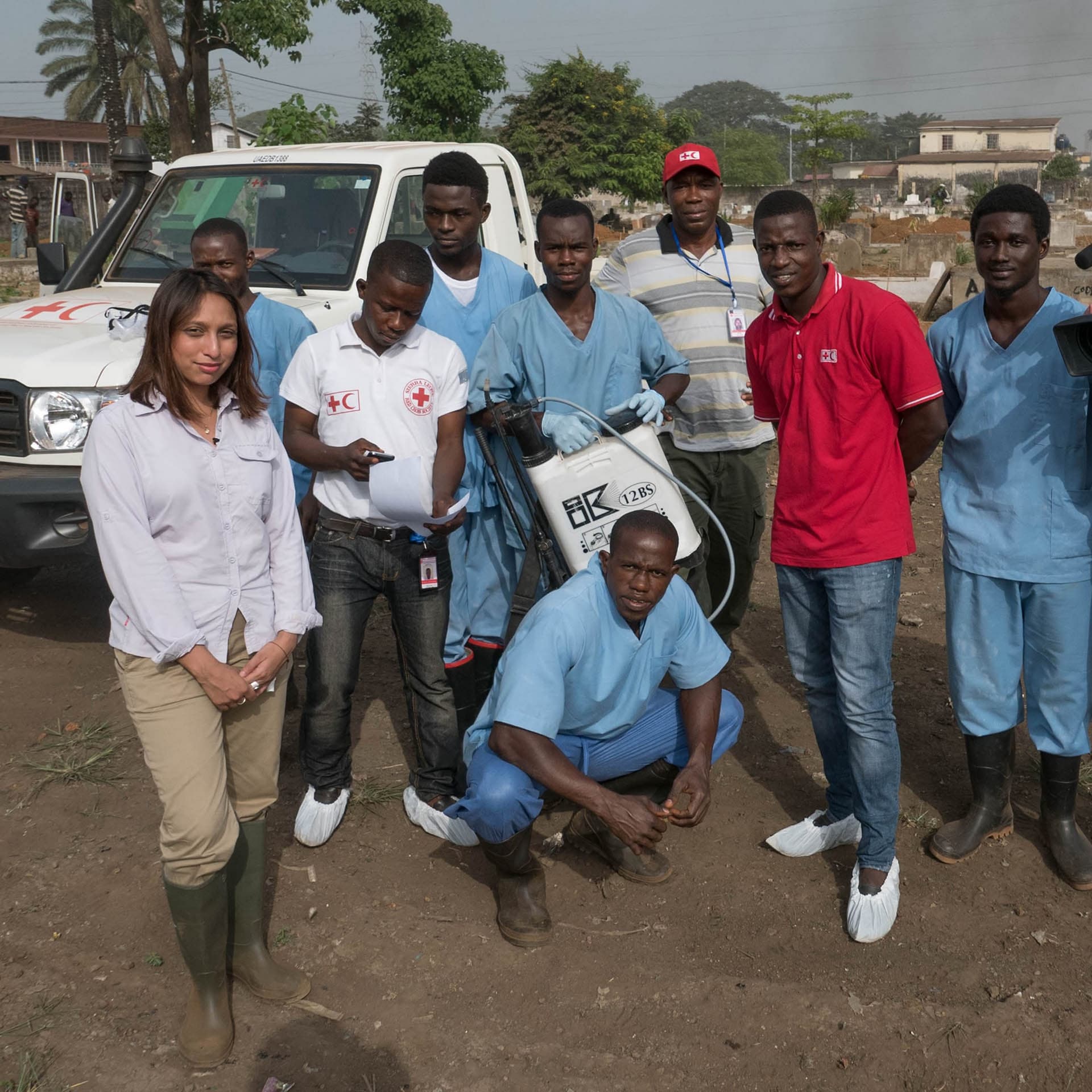
10:44As Sevgil was saying, Russia has occupied parts of Ukraine since 2014. Today, Russia controls a swathe of the country across the east and south. President Zelensky says he wants an unconditional ceasefire and the return of all Ukrainian territory. In the run-up to the Alaska summit, President Trump talked instead about territorial swaps. It's clear that Russia wants to expand its control over the entirety of the eastern regions of Luhansk and Donetsk, where Russian forces are still advancing, albeit slowly. The regions, known together as Donbass, are rich in minerals and industry. To get their views on any possible peace deal, we brought together three Ukrainian soldiers on the front line of the fighting.
11:29Oleg, Alexei and Viktor. Any idea of giving Ukrainian soul is a humiliation. Second of all, it's a crime. It's a direct crime against all the Ukrainian people who are still there. And if we talk about Slavyansk and Kramatorsk, it's a direct crime because we practically sold those people to Russians in exchange for peace. First of all, we have no such option in our constitution. But, OK, let's imagine that I'm OK with that. How can we be sure that Putin will be stopped? What is the guarantee that after Donbass region, he won't attack Kharkiv region, Sumer region, Zaporizhia, so on, so on, so on.
12:09He's some kind of treaty, but he broke all the treaties we had before. Some kind of his war, but his war is nothing. So that's practically, we want to trade our land, our people, our dignity, our history for nothing. For me, if we are talking of the finish of war, for me it's like in a very big cloud because I can't imagine what should be done to stop this war. Maybe Putin died. Maybe. Maybe some protesters in Russia inside will make Putin to pay attention inside his country. And you're a drone pilot, is that right? Yeah. I just came in the start of the war and wanted to bring some technology in the battlefield.
13:01So I started to learn the drones, to feel it and to see how it's going for the war. My task is to find Russian soldiers, to find Russian trenches, to find their cars, their armor and so on, and try to make them dead Russians. Your life must have changed so much since the full-scale invasion. Do you ever look back at what your life was?
13:49with the force, with occupying territory, with a lot of kills. So I was a child. Oleg, you are a drone pilot as well. Yeah, we work with Alexei together. All of our... We have the same functions, same drones, and same commander. I do the same as I like Alexei. And we fly, find the Russians, and try to kill them. It's, I think, emotionally difficult, because you have a lack of sleep, lack of normal food, a lot of stress, and this is hard. But I don't have any emotional or moral problem with what I do. Not because I love blood, because I see in this job, I see the future when I come back home and don't go to Donbass anymore.
14:44I think it's a help stop the war. What did you do before the full-scale invasion? I work in IT in the motion design, in the design sphere. And it's been so long time ago, I don't remember what I was before war. It's many changes in my head, in my body, and in my surroundings. I remember I work, I think, an interesting job. I make different cute animations video, music video or film. It was interesting. But I don't understand how I come back to this after war. Future in the fog, in the mist. Sometimes I try to think about this and how I, in what way I move in the future. But I don't have answer because I'm still the unit of our government and I don't own myself by me.
15:43Soldiers like function. We protect our land and for now it's not all I need, but all I have. Victor, tell us about you. How much has your life changed? Most of my life I was a communication specialist, a journalist, sometimes political activist and so on. So I'm like a communications guy for a long time. And for me, that was a really specific change because I never actually thought I'll be a military man at all. And here I am. I'm a returned colonel now. So, yeah, that's pretty much of a change. But what can we do? That's not something you choose. That was actually the choice that Russia imposed on us.
16:31We cannot even capitulate, you know, because for us, capitulation is not a viable option. There is a really big chance we won't survive after the capitulation. For us, the only choice was to become a military man. The only choice is to fight. The only choice is to learn something new to change our lives, just to save our particular lives. And how much longer do you think this can go on if there's not some kind of negotiated diplomatic end to all of this? Also the thing we cannot actually predict or also the thing we cannot actually choose for ourselves. If you fall from the bridge in the river, you cannot choose not to swim.
17:16You can either choose to swim or to die. As long as dying is not an option, you must swim. For us, we must win, we must continue fighting. Ukrainian soldiers Viktor, Oleg and Alexei. Since the full-scale war began in February 2022, millions of Ukrainians have been forced to leave their homes. Today, more than 5.5 million Ukrainian refugees live outside the country, mostly in neighbouring European nations such as Poland, but some have moved much further afield. With the war grinding on, they've had to build new lives. Alyona moved from Kiev to the UK. Jana fled Dnipro and now lives in Portugal with her five-year-old daughter.
17:59And Victoria fled Ukraine with her son when the war broke out and now lives in Sweden. It's like I have two lives as we often talk here with my Ukrainian compatriots that one, you wake up, you start your day from the news and then it can be devastating news. So you have tears in your eyes on the way to job. Then you're at the meeting with your colleagues who are all, for example, like my K-suites, and they have no idea what's going on in my heart. But I'm sitting on that meeting and tears in my eyes and I'm totally distracted. On the same hand, I have to work, I have to study, learn language, take care of my son, of everything.
18:43And so it's like a double load on a person, on a woman, and I assume millions or hundreds of thousands of women like that, Ukrainian women. That's not easy, I can tell you. That's not easy. Definitely, I agree. Like, we can't complain about our lives here because it's totally different to our dear people, our Ukrainians that are still there. especially those that are frontline you know especially like those comments what the jd vance made on the suit of zelinski you know it's like you know for them it seems like a joke but for us it's our lives i mean it's good that we're here in europe and we are safe and our children are safe and we don't go through every day what people are going there like especially like in places that close to the frontline or in kiev you know all the drones that the russians are sending and their rockets so yeah i've heard people in the past ukrainians away from ukraine talk about feeling of guilt indeed it's like really heavy of course like you would think like on one hand of course i have to be there you know like to support my nation to support my people like why am i living the best life that i can but like on another hand like i really feel sorry i do feel guilt but like i i had a two years old child and i'm a single mom and i really want you know the best for her And she's as well part of this big nation.
20:04And I really want all of our great and big nation to be healthy, to have future, to our children come back and rebuild. Like, let's say, wherever they have an education right now around Europe or stays anywhere in the world. I wish them all to come back and bring all this knowledge that they've gained and invest, obviously, in Ukraine, in the future of our country. But that's the situation. This is how it is. This is the world we're living in. And like, yeah, we don't need to forget about ourselves and like the impact that we can make in the long term, you know. I think I'm the same as Victoria.
20:38Every morning starts with checking all the messengers, all the news agencies, everything, what happened over the night. Funny enough, I still have all these air raid sirens in my phone. So whenever the next air raid siren in Kiev or, for example, in Dnipro, I know because my family lives there and I just can't ignore this fact. I'm really worried about them, so I have to make sure that they're okay. And I think I felt myself really guilty in the first half a year after I left Ukraine. It was really difficult for me. I had the same mixed feeling, like everyone is in struggle there in Ukraine, and why I'm here, why I have a peaceful life.
21:22It was really, really difficult. but with the time going, I understand that I didn't have a real choice at that moment when I was taking a decision. I made it for the best. I do not regret. I'm in such love with the UK. I think this is an amazing country. I was so welcomed here and I feel that I'm really, really grateful for this moment in my life. I found a lot of friends. I joined the Ukrainian community here. And I do think that I do a lot of work when I speak with British people, I explain them what is going on. I perform a lot for Ukrainian community. And I think I support all our people and help them to hope for the best.
22:11So right now, I will be extremely fair, I do not feel guilty for not being physically in Ukraine, because mentally, I'm with Ukraine every single minute of my life. It sounds like all of you have made your new homes permanently in the places you've gone to since the war started. Is that right? Or are you looking at these peace negotiations with a view to hopefully returning? I mean, maybe not, because in my situation, my daughter, she's half Portuguese. So it seems like, yeah, I found my second home at the moment, but it doesn't cancel anything back in Ukraine. So obviously, once the war is over, I really want, like, my parents, they're currently living in the UK as well.
22:56And I assume they will definitely go back to Ukraine. So, you know, she will be visiting her family, grannies and grandpa in Ukraine. Yeah, it's complicated because so many years and we already have something here. Like we started our lives with kind of some balance and stability. We have our jobs and, you know, homes. So if it's my case, I think I found my second home and I assume I'll be living here in the nearest future. I would say that what the war experience taught me, I do not plan long term anymore. I like living in Sweden. I consider me and my son, we almost integrated, but I do not cancel all thoughts about Ukraine.
23:44and I believe I would be there. But I have no proper planning when, how and when we're back. On the 23rd of February 2022, I had, I think, a clear plan of how I'm going to spend my life, what I'm going to do. And on the 24th, all these plans, they just collapsed. So I can say that in the nearest future, in the nearest 12 or 18 months, I'm definitely staying in the UK because we have our visas and there are talks that they will be prolonged as well for the next 18 months. But I cannot do any plans because I never know how the situation is going to change. I understand that after the war finished, Ukraine unfortunately will be facing extremely massive economic crisis.
24:39And God knows how the life will be there after the war finished. Aliona, Jana and Victoria, Ukrainians living abroad. Thanks to them and to all our guests on the programme this week. I'm Andrew Peach and you've been listening to the documentary from the BBC World Service.
25:24The End
25:29joining us. And then we'll be learning about Francis Galton and the racist, discredited pseudoscience of eugenics with Desiree Birch. We'll meet many medieval saints in their bone boxes with Rachel Parrott. So if that sounds like your sort of thing, listen to You're Dead to Me wherever you get your podcasts. Thank you. Bye.
From the publisher
While US President Donald Trump spearheads efforts to halt the conflict in Ukraine, Russian drones and missiles continue to kill and injure civilians, invaders control around a fifth of the country, and many Ukrainians fear that any peace agreement could result in a permanent loss of territory. Away from the international diplomacy, we wanted to give a sense of how life has changed in Ukraine over the past three and a half years of war. We bring together three soldiers who share their experiences of the frontline. We also hear from Ukrainians forced to leave the country and bring together three women dealing with the trauma of the conflict. Sasha tells us. “Everybody has lost someone or something – be it a home, friend or someone from their closest family.” This episode of The Documentary, comes to you from BBC OS Conversations, bringing together people from around the world to discuss how major news stories are affecting their lives.