In short
BBC Conversations documentary celebrating Dolly Parton’s life and legacy, featuring how her authenticity, songwriting, and philanthropy influenced artists and communities.
Guests (backgrounds)
Tatiana Marie (Miami-based country singer-songwriter); Karin Erikson (part of country act Tyra and Magnolia Road, based in Sweden); Rissi Palmer (North Carolina country singer; debut “Country Girl” was the first African-American country hit since the 1980s); Amanda Ma (Sevierville Chamber of Commerce marketing director); Brent Cundall (music teacher/producer in Sevierville); Rhonda Vincent (Nashville-based singer; recorded/sang with Dolly for years).
Key claims
Dolly stayed “real,” used a smile while standing her ground, reinvested money into communities, and helped bridge political divides. Examples: “Code of Many Colors”; Dollywood’s transformation into a major Sevier County employer; Imagination Library free books; scholarships via Dollywood Foundation; Rhonda’s 1992 call to sing on “Slow Dancing with the Moon” and Dolly visiting her during a life-threatening illness.
Written by AI. May contain mistakes. Listen to the episode to check what was said.
Chapters
Tap a time to open that second in VOCelebrating Dolly Parton
0:30 to 2:14
Discussion on Dolly Parton's life, achievements, and impact on country music.
“How to Change, as she shares true stories from Nobel laureates, authors, athletes and everyday people about why we make the choices we do and how to make better ones to help avoid costly mistakes.”
Rissi Palmer's Admiration for Dolly
2:14 to 4:48
Rissi Palmer shares her perspective on Dolly's influence on her career and authenticity.
“I got to sing it on tour last year on a tour honouring Dolly and it just reminds me of home.”
Heritage and Authenticity in Dolly's Work
4:48 to 7:46
Discussion on the importance of heritage and authenticity in Dolly Parton's songwriting.
“I think she's, like you said, very proud of her heritage.”
Dolly's Empowerment of Women
7:46 to 10:33
Exploration of how Dolly Parton empowered women in music and beyond.
“And quickly, we or myself was made aware of how unique she was not only as an artist and a performer, but also as a person.”
Lessons from Dolly Parton's Legacy
10:33 to 14:00
Reflections on the lessons learned from Dolly’s life, including reinvestment in community and authenticity.
“And yeah, she wasn't a feminist, but she was for sure paving the way and, you know, expressing things for women who were sometimes those women couldn't express them themselves.”
Authenticity and Connection
14:00 to 15:11
Explore the importance of authenticity and connections with others through Dolly Parton's example.
“And I also think the other really important thing is the authenticity.”
Authenticity and Connection
15:54 to 16:22
Explore the importance of authenticity and connections with others through Dolly Parton's example.
“Fed up with losing out to hidden fees when you send money abroad with your everyday bank?”
Dolly's Universal Appeal
16:30 to 20:42
Hear tributes to Dolly Parton highlighting her impact across political and social divides.
“But they have also crossed the political divide.”
Personal Stories with Dolly
20:44 to 23:06
Listen to personal anecdotes from those who worked closely with Dolly Parton.
“What is it about how she always remembered the place she is from and wanted to pay back to it that has shaped her legacy now, do you think?”
Dolly's Legacy and Philanthropy
23:08 to 24:06
Discuss the lasting impact of Dolly Parton's philanthropy and her connection to her roots.
“My brother and I got to sing on about 75 demos.”
Transcript
Automatic transcript. May contain errors.0:00Rhonda Vincent:This BBC podcast is supported by ads outside the UK.
0:30Rhonda Vincent:How to Change, as she shares true stories from Nobel laureates, authors, athletes and everyday people about why we make the choices we do and how to make better ones to help avoid costly mistakes. Listen to choiceology at schwab.com slash podcast or wherever you listen.
0:57Rissi Palmer:Hello, I'm Priya Rai. Welcome to the documentary from the BBC World Service. This time in BBC Conversations, we're bringing people together to celebrate the life and legacy of Dolly Parton. Flags are at half-mast across the United States following the death of Dolly Parton at the age of 80 Born in poverty in a log cabin in rural Tennessee she went on to sell more than 100 million records and became one of the most influential figures in country music But Dolly Parton was also a highly successful entrepreneur and philanthropist, giving away millions to fund child literacy, conservation and health care.
1:46Rissi Palmer:For our first conversation, we brought together Tatiana Marie, who's a country singer-songwriter based in Miami, Karin Erikson, who is part of Tyra and Magnolia Road, which is a country music act and she's in Sweden, and from North Carolina, Rissi Palmer. Now, Rissi's debut single, Country Girl made her the first African-American woman to have a country music hit since the 80s. So I asked Rissi first to tell us which Dolly Parton song she liked the best.
2:19Rhonda Vincent:Code of Many Colors. It's my favourite Dolly Parton song. I got to sing it on tour last year on a tour honouring Dolly and it just reminds me of home. It reminds me of my family and I think it's exemplary of the kind of work that she did. She took the mundane and made it magical. I think Code of Many Colors tells the story of just who Dolly Parton is at her core. She's a singer-songwriter, but above all that, she's a human being. She's a philanthropist. She's an inspiration to so many female country artists just like me, just country artists in general. The music industry will never, ever be the same after Dolly's mark that she's left on it.
2:58Rissi Palmer:What is it about how she brought herself into her music that really has got you to be inspired by her?
3:06Rhonda Vincent:Dolly was never afraid to be herself and that's something that I look up to so, so much. In the music industry, you know, some songwriters think you have to put up a front and that you can't be yourself and that you have to do what the audience wants you to do and what the managers and whoever it is wants you to do. And Dolly never lost sense of who she was from the moment she was born up till yesterday. She has left an incredible mark of exactly who she is at her heart, the love she had for everybody. And I think that now as I'm growing into my career as a country artist, I look up to her so, so much in so many ways, you know.
3:43Rhonda Vincent:I feel inspired on so many levels. Not only her music, her as a songwriter and a storyteller, but as a woman. and in the beginning a young woman coming into the music scene and really standing her ground and staying true to her message and her vision and always being kind. I've never met Dolly myself, but I have many friends who have worked very closely with her and I've never heard anybody say anything bad about her and that's kind of unusual in our business. her generosity and those are the things that I really really want to remember you know and bring with me in the rest of my career and the things that I do that there is room for everybody and if we lift each other up and bring each other forward we can do that together it's not an either
4:46Rissi Palmer:or you know. Dolly Parton is somebody who has never shined away from the environment in which she grew up it was one of not very much money in a small house with 11 siblings and she's always sort of tried to pay back to her home in many ways whether it's her theme park whether it's promoting reading and imagination and all of these types of things has the way she wrote songs inspired your song writing as well as the places you look for a musical inspiration Yeah, definitely.
5:22Rhonda Vincent:I think she's, like you said, very proud of her heritage. And I saw an interview not long ago where someone almost insulted her heritage and where she's from. And she turned that around in such a cool way. And it just made me so inspired that no matter where we come from, we should be proud of who we are. And that's also where our stories come from. The stories we tell as songwriters come from our heritage and where we started. I think that Dolly Parton had the authenticity factor that is so sorely missing in this age of social media and filters and perfection. Everybody recognizes like, you know, a slang term is real, recognizes real.
6:14Rhonda Vincent:and I think that Dolly never tried to change who she was. She never tried to dim who she was. I think people can recognize a genuine spirit when they see it. You don't have to say it. You just have to be it and she was that. And not only that, in this moment where people like to quote the Bible and like to use their religious beliefs against others, I think that she was exemplary of the scripture of judge a tree by the fruit. And all you have to do is look at the fruit that she produced in her life. She was a philanthropist that helped every community. She touched every community. She didn't just limit it to one.
6:59Rhonda Vincent:She helped all children with her books. She helped black communities in Nashville with her money. She, you know, gave scholarships. She gave jobs. she put her money where her mouth is and a lot of things she didn't even talk about publicly you know one thing that was really important to me was that she spoke out about black lives matters when she didn't have to do that she didn't have to say anything she could have completely dismissed the question and she didn't and i respect that because there's so many artists that would not do that especially now so yeah i think that what people recognize and what people love is authenticity.
7:36Rhonda Vincent:Yeah, I think growing up here, we didn't get a lot of country music. So Dolly really was one of the ones that we had to listen to. And quickly, we or myself was made aware of how unique she was not only as an artist and a performer, but also as a person. And after spending almost 15 years in Nashville, where she is such an installation in the whole community. I really feel like she's had a huge impact on the way that I approach my writing and my own expression and very inspired. Like it was said before, so authentic and inspiring me to try to be authentic too even and be brave be brave and not um shy away from the difficult parts i think she just hit on a really great word and that's bravery she was writing songs for herself controversial songs too um for herself at a time when women were being handed sheet music and told to just stand still sing and look pretty and she made it possible for women to be seen as not only great writers, not only great singers, but also great musicians.
8:58Rhonda Vincent:Well, I think that Dolly, the interesting, cool thing about Dolly was that she was like this ultra feminized image, right? Like, you know, the, her stature, that's the word I'm going to use her stature and, um, her, her body and type and all of that, the big hair and the exaggerated, uh, wigs and all that kind of stuff but she was very like it was feminine but it was also like she was just very strong like she's very strong opinions she wrote from a very definitive point of view and it was almost like there was there was a joke but dolly was not only in on it but she also made the joke and so she never allowed herself to be the butt of the joke she never allowed herself to be the victim at none at all.
9:52Rhonda Vincent:Like she was always at every point in control. And I think there's a lesson in that. Like she, everything that she did, she did it with a smile, but she was wise and she knew what she was doing. And so to me, I think that that's in my own career, I've used a lot of that. Like sometimes you have to use a smile. Sometimes you have to say it But I'm saying and I mean what I'm saying and I know what I'm saying. And so, yeah, I think she was a master at that. She used her femininity to empower others and to make things possible that were not possible before. Yeah, definitely. Very inspirational. And yeah, she wasn't a feminist, but she was for sure paving the way and, you know, expressing things for women who were sometimes those women couldn't express them themselves.
10:52Rhonda Vincent:She was like paving that way for all of us. And I think that's also part of what makes her so important. And she did all of that with grace. And she was always delivering her truth with a smile. Yeah, I'm so I'm just, you know, I'm smiling as I'm talking and I'm thinking at the same time. But it's just such an inspiration. And we need that. And we need inspiration to look different through different times. But she has been consistent and always shown up for us. Yeah. I mean, as somebody who is currently entering this industry, I can say it is quite the daunting thing. However, people like Dolly Parton are just so impactful on the way that us new artists, I guess, brain chemistry functions as we're making our mark and leaving our legacy.
11:52Rhonda Vincent:And the way that, like both of you were saying, she is so uniquely herself and she wasn't afraid to speak her mind with a smile. I think that that is such an inspiring message because, you know, sometimes you do have to put your foot down and you have to stand up for yourself to keep your uniqueness. in your artistry. I mean, music at the end of the day, it is a form of art and it connects with all kinds of people all over the world. And I think Dolly did that with such grace, but such strength. And I think that that is something that us female country artists and country artists in general, music industry workers and anybody in any industry can really look up to.
12:29Rhonda Vincent:I think that she left her mark on so many different industries and so many dreamers and people who just want to be as impactful as she was. although that's a hard shoe to fit. Yeah, I think that she's incredible. And I think there is something for us who have been in the business or industry longer and that we can really learn from Dolly. She was so welcoming of young artists. I mean, she's basically endorsed a lot of artists that were up and coming. And I think there is something there that we can really honor her memory by keeping that going. There is room for young artists to develop into this world of music and express themselves, and we can be there and help them on that journey.
13:21Rhonda Vincent:That's what I've been learning in Nashville, but especially as she's been really generous in that way, I'm inspired by that. I mean, there's so many things, but there's two in particular that I think are really important, especially right now. Dolly was intentionally not a billionaire. Now, mind you, I don't feel like I'm in danger of becoming a billionaire, but I think that the lesson in that is that she reinvested her money back into the community instead of hoarding it. And I think that's really, really important, is the reinvestment into the people that invest in you. And I also think the other really important thing is the authenticity.
14:04Rhonda Vincent:Once again, there is nothing but reward and gain in just being yourself, just being honest about who you are, where you come from, being real about it, celebrating it, embracing it, because that's how you were made. That's who you are. and I think those two important lessons because she did she reinvested in people and that is why people love her back so much because she loved first and so I think loving those that love you treating those around you well and also just being yourself and like and and those that don't like it can can scroll past they can scroll to the left and those that do can stay and and will and so So, yeah, I mean, to me, those are my two biggest takeaways.
14:50Rhonda Vincent:And that's what I tried to implement in my own life.
14:54Rissi Palmer:Country singers Rissi Parma, Tatiana Marie and Karin Erickson. Sadly, for rights reasons, we can't include any of Dolly Parton's music in this podcast. So do look up those wonderful pieces of music that our guests mentioned there. I'm Priya Rai and you're listening to the documentary from the BBC World Service.
15:22Rhonda Vincent:Investing with Schwab is like spending a Saturday at a great farmer's market. You can fill your reusable tote with a bit of everything. Maybe you go for some free-range self-directed investing. Or perhaps you pick up a few farm-fresh trades while you peruse. You can even get help from a dedicated advisor. That's full-service wealth management. Mix, match and change your mind whenever you want. Because at Schwab, you can invest your way. No matter your goals or appetite for investing, Schwab has everything you need all in one place. Visit schwab.com to learn more. Support comes from Wise, the smart way to manage the currencies you need around the globe.
15:58Rhonda Vincent:Fed up with losing out to hidden fees when you send money abroad with your everyday bank? Choose the smart way. Wise. You can count on the exchange rate you'd usually find on Google. No unwelcome surprises. Plus, ditch that where's my money feeling. Most transfers arrive in under 20 seconds. Join millions saving billions on hidden fees. Be smart. Get wise. Download the Wise app today. T's and C's apply.
16:29Rissi Palmer:Tributes to Dolly Parton have included messages from Miley Cyrus, Taylor Swift, Beyonce, Paul McCartney and even Eminem. But they have also crossed the political divide. President Trump wrote on social media that there has never been anyone like her and never will. In her social media post, Hillary Clinton wrote that Dolly Parton was the best of America. And we received this voice note. Hi, this is Sharon Illinois. Dolly was a wonderful human being. The thing that I love most about her was our country is so divided right now.
17:07Rhonda Vincent:I live in the US and nobody can agree on everything and everybody treats each other terribly. But Dolly Parton was the one thing that people could agree on.
17:19Rissi Palmer:You could get the strictest conservative Christian in Alabama and a lesbian woman living in New York City and they would both agree that Dolly was wonderful and now she's gone and it's so sad. For our second conversation, we wanted to hear from people who've met and worked with Dolly Parton. In a moment, you'll hear from country singer Rhonda Vincent. First, Amanda Ma, director of marketing at the Chamber of Commerce in Dolly Parton's hometown of Sevierville. And Brent Cundall, a music teacher and producer.
17:53Rhonda Vincent:She has quite a presence about her. And I had been playing in a show with her brother, Randy, for several months. And she came by the show just to talk to the musicians and talk to the people in the cast. And it was a really gracious thing to do. And I just remember, first of all, being struck by how short she was, which is kind of she didn't have her big heels on when we had a chance to talk to her. So it was a bit of a surprise. But when you talk to her, you really felt like she cared about you as a person. You really felt the engagement. Certainly sometimes with other celebrities, you don't always get that kind of one on one feeling.
18:27Rhonda Vincent:but anytime you interacted with Dolly you were the center of attention and she really cared to talk to you the person whether you were a bass player at Dollywood or you know somebody rich and famous or whatever she always you know really treated you like a real person. Brent I agree completely every time we had the opportunity to work with her she was so kind and so wonderful you'd have a set amount of time we would shoot commercials and video with her for promotion of Sevierville and we would have a set time maybe 30 minutes or so to get all of the footage that we needed and everything and then she would stay and do photos with the people who were there and it was really such an honor to get to meet her and just learn how she was really real you know she always said I'm real where it counts and she she truly was an incredible lady.
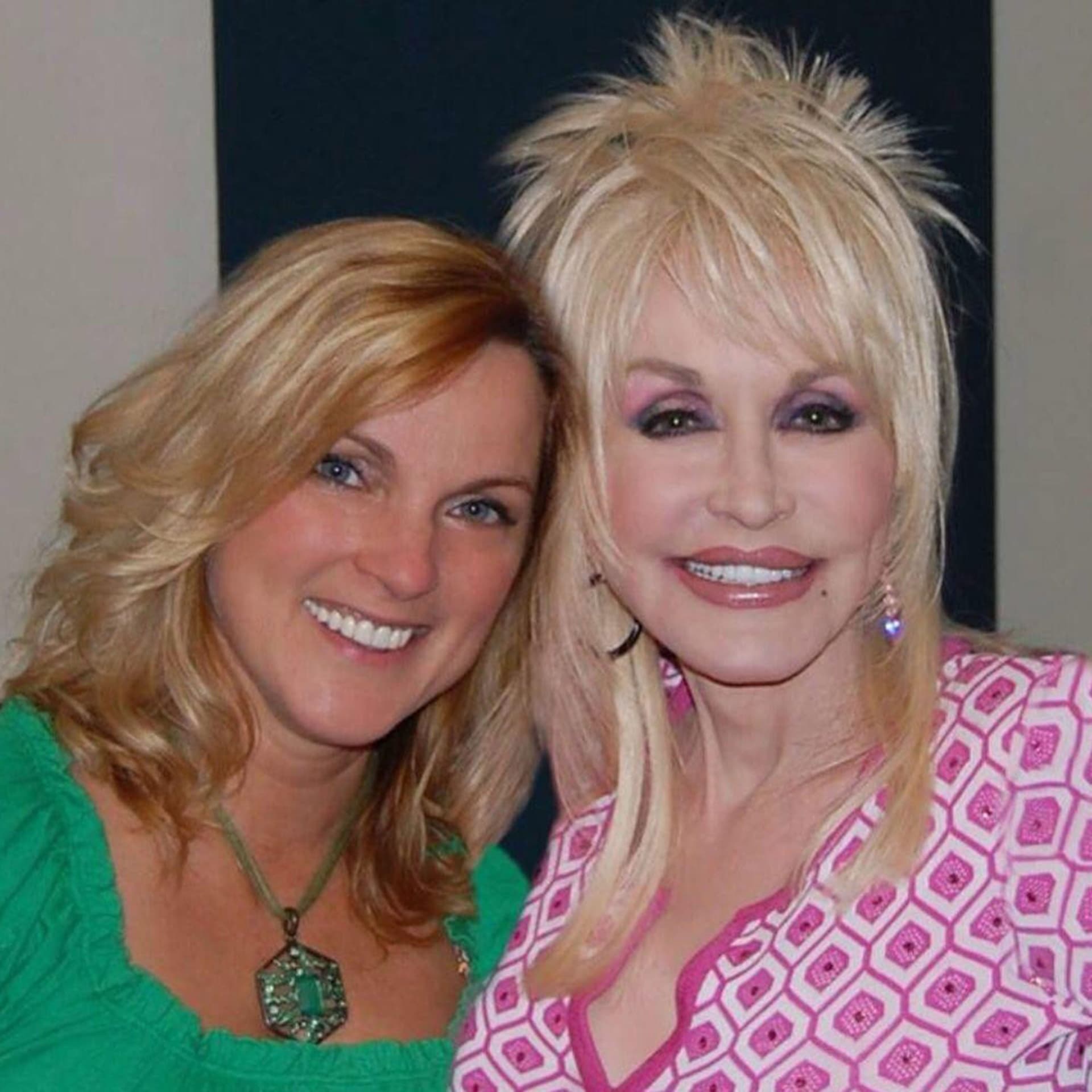
19:18Rissi Palmer:Let's introduce somebody else into our conversation who knew Dolly very well Rhonda Vincent recorded and sang with Dolly Parton for years. She's joining us from Nashville. Rhonda, talk to us about making music with Dolly Parton. Hi there. Oh, I love singing with Dolly. I never thought I would ever dream, you know, getting to meet her. But it was 1992 and she was recording the album Slow Dancing with the Moon and she recorded with Carl Jackson and she said, who should we get to sing on this song with us? Carl said, you should call Rhonda. Well, I live 550 miles away in Green Top, Missouri. And anyway, I came home and there was a Kodafone.
19:58Rissi Palmer:The red light was blinking. I pushed the button and it said, hi, this is Dolly Parton. And I want you to come to Nashville and sing with me. And I found myself in the studio the very next day. I drove overnight to be there at 10 a.m. That was my first meeting with Dolly. And I'm so blessed to get to record with her on many of her albums. And she recorded with mine. And I guess a pivotal moment was 2005. I had a life-threatening illness and didn't expect to be talking to you right now. And when I got out of the hospital, Dolly was standing in my living room in Greentop, Missouri. And she said, I had to come make sure you were okay myself.
20:32Rissi Palmer:And, you know, she's so generous. And she did so many things like this that we don't even know about. Unless you had a personal experience with her, you know, you might not even have known about it. And then there's all the other wonderful things that she did do publicly that, you know, like they said, a philanthropist and always helping out, helping others. there's the worldwide scale that she was known on as an icon and the things that she did but there was so many very personal things that probably people don't even know she was so very special and when we look at the ways in which she's had an impact and an influence beyond music i mean dollywood itself brent as somebody who worked there for a couple of years that in itself embodies is a very particular sense of place and location that never really left Dolly or her music.
21:20Rissi Palmer:What is it about how she always remembered the place she is from and wanted to pay back to it that has shaped her legacy now, do you think?
21:29Rhonda Vincent:I think pointing out Dollywood like you did is really important because it's easy to kind of look at Dollywood, if you don't understand, as maybe kind of a vanity project for a celebrity. But what she did was so brilliant because she took an old theme park that had existed there and was kind of run down and was part of that county. And then she bought it, revamped it, and ended up turning it into a multimillion-dollar tourist attraction, which then brought in millions of dollars to Sevier County. And then it ends up being the number one employer of not only musicians in East Tennessee, but also just the biggest employer in Sevier County alone.
22:03Rhonda Vincent:So that one thing that she did has changed the lives of thousands of people and changed that whole community forever. As Brent mentioned, you know, Dollywood has been a great economic driver for our community. It's provided jobs. It's provided livelihood. It's provided another reason for people who want to come and visit us here in Spiribrily's Smoky Mount. But she also has given back so much through her philanthropic organizations. Her Imagination Library program has reached around the world, delivering free books to children. The Dollywood Foundation here helps with scholarships for local high school students that are going to go on to college.
22:41Rhonda Vincent:I mean, you've just got so many ways. She matches donations to our United Way organization every year. She just finds so many ways to give back, whether it's education, health care, just a general well-being community. She truly is.
22:58Rissi Palmer:She was realistically was a normal person, but she was thrust into this, you know, to being a world icon. I think it was ever more present. My brother and I got to sing on about 75 demos. She was writing these songs and we were traveling back and forth to Nashville to sing on these songs. And I learned so much from her during that time. But the most something that carries with me yet today, I looked over. she had this beautiful bag and she pulls out a Ziploc bag that has her makeup in it. I'm like, oh my goodness, Dolly Parton carries her makeup in a Ziploc bag. She goes, I have closets full of beautiful bags.
23:35Rissi Palmer:She says, I can't find anything in these. So she said, she put her makeup in a Ziploc bag. And I do that this very day because of Dolly. And she also, she had this wad of money and she said she was walking out of the house and she picked up a chip clip and she put it around the money and that's why it was laying there her money with a chip clip around it and I think she was so very talented but yet she really appreciated the roots of just being a normal person. Rhonda, Brent and Amanda who all knew Dolly Parton. Thank you so much to them and to all of our guests for sharing their experiences of the lasting influence Dolly Parton has had on their lives.
24:16Rissi Palmer:I'm Priya Rai and you've been listening to the documentary from the BBC World Service.
From the publisher
Flags are at half-mast across the United States following the death of Dolly Parton at the age of 80. Born in poverty in a log cabin in rural Tennessee, she went on to sell more than 100 million records and became one of the most influential figures in country music. Dolly Parton was also a highly successful entrepreneur and philanthropist and gave away millions to fund child literacy, conservation and healthcare. In our conversations, we bring together female country musicians – including Rhonda Vincent and Rissi Palmer - to share their memories of Dolly Parton and discuss her achievements. We also bring together people who worked with Dolly Parton to share their stories.