In short
The BBC World Service documentary explores how language—poetry, chants, and football commentary—captures the World Cup’s “grandeur,” and how writers and commentators translate match action into rhythm, imagery, and emotion.
Guests and backgrounds
Mark Wilberforce, a writer and lifelong Arsenal fan, discusses divided loyalties (Ghana and England) and the World Cup’s US/Canada/Mexico hosting. Ian McMillan, a Yorkshire-based poet and Barnsley FC’s poet-in-residence for 30 years, writes a World Cup poem for radio. Lee Herrick, California Poet Laureate (second term; first Asian American in the role), born in South Korea and adopted to the US, links soccer to identity and immigrant longing. Joyce Anoyabua (“fear empress”), Ghanaian football commentator and deputy general manager for Juventus Academy Ghana, explains commentary craft in Ghanaian languages (Twi).
Key claims
Poetry and football share rules that create freedom; chants are “oral poetry”; commentary unites fans beyond politics; rhyme/rhythm matter for radio; soccer is a “language” connecting culture.
Notable examples
McMillan’s poem “The World Cup is a shining poem” (e.g., “penalty spot is a white full stop”); Herrick’s 1994 World Cup memory (Russia vs Cameroon; Oleg Salenko five goals); Anoyabua’s praise of legendary commentator Kobina Yeboah and phrases like “shot entered the pole.”
Written by AI. May contain mistakes. Listen to the episode to check what was said.
Chapters
Tap a time to open that second in VOThe Poet's Journey with Football
1:55 to 3:17
Mark Wilberforce discusses his passion for poetry and football, particularly in relation to Barnsley FC.
“my loyalties are divided between Ghana and England.”
The World Cup's Global Impact
3:18 to 4:23
Discussion on the significance of the World Cup and international football's impact on culture.
“And that hope that you speak of is also the hope that so many nations heading to America are holding on to for dear life in terms of how they will fend at the tournament.”
Soccer as a Connection to Heritage
4:24 to 5:46
Lee Herrick shares his experiences of soccer connecting him to his Korean heritage.
“I've been writing poetry for most of my life.”
Memorable World Cup Experiences
5:47 to 7:20
Lee Herrick recounts his memorable experience at the 1994 World Cup and ticket prices for upcoming matches.
“You know, I don't speak the language fluently, but soccer is its own language and way to connect to the culture.”
The Creative Process of Writing Poetry
7:21 to 9:29
Ian McMillan discusses his creative process for writing a poem about the World Cup.
“I feel like I really need to experience one World Cup game while it's here.”
Walking and Creative Thinking
9:30 to 10:46
Discussion on how walking influences creativity and the writing process.
“So it was a really interesting process for me that to start with, I was stuck and then somehow I became unstuck.”
The Art of Football Commentary
10:47 to 12:53
Joyce Anoyabua shares insights on the craft of football commentary in Ghana.
“the rhythm of your feet, the sun going around the sky, the weather changing, you know, all that rhythm, although it's not linguistic, it can help you to find the words, I think.”
Unity Through Football in Ghana
12:54 to 14:01
Discussion on the unifying power of football in Ghana, transcending politics and cultural divides.
“Football commentator and also the deputy general manager for Juventus Academy Ghana.”
The Art of Commentary in Football
14:01 to 17:18
Learn how football commentary captures the excitement of the game with unique expressions.
“that English would struggle to do for you?”
The Art of Commentary in Football
17:23 to 17:57
Learn how football commentary captures the excitement of the game with unique expressions.
“Ever Google a money question and end up 12 tabs deep with 12 different answers?”
Show all 17 chapters
Cultural Differences in Football Terminology
18:10 to 19:12
Understand how American soccer terms differ from those used in other regions.
“I always think of the 18 or the penalty box as pretty common terms in American soccer, upper 90.”
The Similarities Between Poetry and Football
19:12 to 20:27
Explore how both poetry and football have rules that allow for creative expression.
“And do the rules somehow create freedom?”
The Power of Rhyme in Poetry
20:27 to 22:56
Learn about the role of rhyme in poetry and its impact on the writing process.
“Looking at poetry a little bit more closer, I mean, it is steeped in rhythmic rules, but does it necessarily have to rhyme?”
Writing Poetry Inspired by Football
22:56 to 25:08
Discover the challenges and inspirations behind writing football-themed poetry.
“See, I've always been a fellow who likes to perform.”
Football Fans as Poets
25:08 to 26:34
Discuss how football supporters express themselves through chants and songs, showcasing their poetic side.
“Like, you know, I'm thinking of the goalkeeper as both beginning and end.”
Ian's Poem for the World Cup
26:34 to 28:05
Listen to Ian's poem that encapsulates the spirit and emotions of the World Cup.
“but Ian hasn't left his verse to chance.”
World Cup Poem Performance
28:05 to 29:05
Listen to a creative poem about the World Cup, blending personal memories with humor.
“So we're at the World Cup final and it's all happening.”
Transcript
Automatic transcript. May contain errors.0:00Ian McMillan:This BBC podcast is supported by ads outside the UK.
0:30Ian McMillan:Make your travel dollars work harder. Follow Smart Travel on your favourite podcast app. Decisions made in Washington can affect your portfolio every day. But what policy changes should investors be watching? Washington Wise is an original podcast from Charles Schwab that unpacks the stories making news in Washington right now and how they may affect your finances and portfolio. Listen at schwab.com slash Washington Wise. That's schwab.com slash Washington Wise.
1:06Ian McMillan:I think it's hard to capture the grandeur of the game and the World Cup in a poem, but that's kind of what poetry is about. The difficulty and complexity and exhilaration of those moments of joy that can occur. The people of Ghana love football. Commentaries are not just talking about this player ponds the ball to that player. You are trying to picture what is happening in the stadium for your listeners, and you want them to fall in love with the game.
1:35Lee Herrick:Somebody will say a line of a chant and you pick it up straight away. Somebody could say a line of a poem, and the same thing can happen. It's about being in a room or in a stadium or on a street everybody's feeling celebratory.
1:49Ian McMillan:I'm Mark Wilberforce. I'm a writer and a lifelong Arsenal fan. But in this summer's FIFA World Cup, my loyalties are divided between Ghana and England. The tournament is hosted by the United States, Canada and Mexico. It's the first time the competition has been held across three nations. For the documentary In the Studio from the BBC World Service, we wanted to explore the connections between language and the beautiful game. But with millions of words to choose from, would this task be even trickier than picking a World Cup squad from your country's best players? And who should write it? Would a Brazilian poet be tempted to look back at the great Pele or a Norwegian get overexcited by Erlen Haaland?
2:31Ian McMillan:In the end, we went for someone whose team isn't quite in the Premier League.
2:35Lee Herrick:What I like about Barnsley FC is that I can get on the bus and go to the match and it's kind of a bit unfashionable. and over the years it's had a good kicking and every now and then it surprises you.
2:48Ian McMillan:Ian McMillan is a poet who lives in Yorkshire in the north of England, close to Barnsley Football Club, which chose him as their poet-in-residence 30 years ago.
2:58Lee Herrick:I can be surrounded by these people I've sat with for decades and I've seen their hair turn white like mine. And in the end, what are you supporting? The players change, the managers change, the ground changes, but somehow some kind of hope and expectation is there in that phrase Barnsley FC. So somehow you're drawn back to it because you think this will be the game that people will talk about in 90 years.
3:24Ian McMillan:Absolutely. And that hope that you speak of is also the hope that so many nations heading to America are holding on to for dear life in terms of how they will fend at the tournament. What do you think it's different between World Cup football, international football and domestic football that really captivates the hearts of the people?
3:45Lee Herrick:Well, I've always been a fan of the world, you know, so I like reading novels and poetry that are written in different languages and translated. And I like listening to music from all over the world.
4:00Lee Herrick:So football is like that. You'll play teams from countries that you may never visit. They have different styles to the style that we play in England. You'll have teams that will surprise you with their amazing football and teams that actually won't be that good. And there they are all together. The world gathers to play this game. That's what excites me.
4:25Ian McMillan:I've been writing poetry for most of my life. And then in late 2022, I was appointed by California's governor to serve as California Poet Laureate. Lee Herrick is now serving a second term. He was the first Asian American to be given the role. I always felt like a little bit of an outsider having these two loves, poetry and soccer here in the US. In my mind, they've always merged. With me, language, the imagination, creativity, joy. Those are things that I think of with poetry as much as soccer and football that can result in a poem or a goal. So to me, there are all kinds of parallels. The World Cup often becomes a celebration of heritage as much as football.
5:14Ian McMillan:How much can sport help people to reconnect with family history and culture and identity? You know, I was born in South Korea, and I was adopted to the United States when I was less than one year old. So I didn't spend much time in the country. But I think that one thing that soccer or football can do is whether a person was born there and left after a week or a month, or they live there into their 20s or 30s, or they've got family in those countries. For me, there's always been a sense of longing and missing the country from sort of a distant vantage point. You know, I don't speak the language fluently, but soccer is its own language and way to connect to the culture.
6:02Ian McMillan:Of the roughly 40 million people here in California, about one out of every four people were born outside of the United States. And so we're an incredibly diverse state full of immigrants and refugees and adoptees. I love watching people in their country's jerseys or rooting for their teams. It's really exciting to see that happen.
6:31Ian McMillan:Have you actually ever been to a World Cup match before, Lee? I've been to one. In 1994, it was a match between Russia and Cameroon. I'll never forget it. The Russian player, Olag Salenko, scored five goals. I believe it's still the record for most goals in one match by any player. I've thought about trying to go to another match, but they're so expensive. There are 16 different cities, 11 of them in the US. Right now, I'm on the fence. I'm thinking of going to a game that's a little bit more affordable. There's a match between Jordan and Algeria, but the opening match between US and Paraguay, as far as I can tell, one ticket is over$1 ,000, which is a lot of money.
7:20Ian McMillan:So I hope to go. I feel like I really need to experience one World Cup game while it's here. So Ian, with regards to in the studio, we asked you to come up with a poem for the World Cup. Where did you initially begin? How did you start?
7:33Lee Herrick:To be honest, I found it hard. I like being given commissions, if you like, where people ask me to write something very specific, and this was. But I found that I was getting stuck, partly because the subject is so vast. And then you have to trust your mind, you have to trust your brain. And then I thought, well, because it's for the radio, this is before I start writing it, because it's for the radio, I want it to rhyme, because rhyme is great on radio, and rhyme, somebody might be doing something else and they hear the rhyme. I think it has to have rhythm because for me, football is all about rhythm and poetry is about rhythm.
8:07Lee Herrick:And so then I just thought of the first couple of lines, the whistle blows and the game begins and the words begin and the song. And those four lines just popped in to my head. So I wrote them down and do a thing that I always do, which is I write them down in my notebook and then I put them away and I forget them and I sleep on it. And somehow this kind of magic alchemy happens where the poem doesn't write itself because you were writing it, but the poem is forming itself in your mind, often in places that haven't got language in, in kind of impressions and images. and then I got up the next morning and began to write it down.
8:51Lee Herrick:That was the first draft, but then I wanted within it a quieter voice that was maybe whispering in my ear at the same time that the more strident rhythmic and rhyming voice was perhaps performing the poem, then some things whispering in me a gentler voice. I wrote it in the poem in italics and then again left it, then went back to it. And when you go back to it, the next time you go, who wrote this? What amateur? What person who's never written a poem before in their life wrote this? But I know, like a football match, it can be improved and things can happen within it if you're leaving for long enough.
9:30Lee Herrick:So it was a really interesting process for me that to start with, I was stuck and then somehow I became unstuck.
9:38Ian McMillan:In terms of that being stuck process, I mean, we can relate this to football as well. if a team doesn't have a particular desired performance and then they go through their half-time talk. What's your half-time talk like, so to speak?
9:53Lee Herrick:That's a great image. I hadn't thought of that before. The half-time talk, it is that because, as you say, a team can be terrible in the first half and then come out in the second half and they're better. So my half-time talk is, come on, Macmillan, come on. You've done this before. Then I'll put my shoes on and I'll go for a walk because the act of walking for me helps me to think that's around the village that I've always lived in. So I see these familiar landmarks. And in a sense, I'm not seeing them, but the poem is rumbling away in my head. I might text myself a word or two and it will start to get better.
10:28Lee Herrick:I mean, the deadline helps, you know, knowing that you have to write a poem for a certain time really does help. It puts the mind really at its mettle and it kind of heats up your thinking. I would always recommend to any creative person, go for a stroll. because, you know, writing is about rhythm and walking's about rhythm, the rhythm of the breathing, the rhythm of your feet, the sun going around the sky, the weather changing, you know, all that rhythm, although it's not linguistic, it can help you to find the words, I think.
10:59Ian McMillan:And when you mention going out for a walk, what comes to my mind first is someone like the legend that is Bob Marley, who when he had writer's block, he would go down to Battersea Park and South London and play football. Do you see any forms of similarity between poets and great musicians?
11:18Lee Herrick:Well, definitely. I listen to music all the time. When I'm on my stroll, I listen to a lot of jazz, avant-garde music. And I think that somehow what the musician can do that I'm always jealous of is particularly in instrumental music, they can write something that has no language in it. So what I mean is, I'm going to start writing a poem about football. so I'll use words like football, I'll use goal, I'll use net and each of those words has got so many things hanging on it but if I hear a piece of instrumental jazz it doesn't refer to anything and it gives me a kind of freedom
12:04Ian McMillan:I've often been a fan of Ghanaian commentary they incorporate the tree language, which is the most popular language spoken in Ghana. Even if you're not familiar with the language, they're just so passionate with the words that they paint.
12:28Lee Herrick:I'm always astonished at the speed of thought of any commentator who can, you know, have a go at doing it. I've been to one of the football museums where you can have a go at being a commentator. You think, all right, I'm a wordsmith, I can make things up as I go along, but you find that you can't. So I'm always in awe of the commentators on the radio in particular who can just tell you what's happening and use wonderful poetic phrases. I am Joyce Anoyabua, popularly known as a fear empress.
12:58Ian McMillan:Just a minute to go.
13:02Ian McMillan:Football commentator and also the deputy general manager for Juventus Academy Ghana. People often think that commentary is simply describing what's happening on the pitch. But how would you describe the craft of football commentary, especially as a Ghanaian? It's not just talking about this player pass the ball to that player from this side and then there's a goal now. However, talking about the statistics and everything that a football-loving fan is supposed to know, that would make him or her fall in love with the game. Football is very big. In Ghana, I know the politics is the NPP and the NDC where people don't really understand each other.
13:41Ian McMillan:But when it comes to football, we are united. I absolutely agree with that sentiment. Football having the power to bring opposing, not only parties, but tribes and everyone together. You worked in both English and TRI. Do you have some examples of words or phrases in TRI which help you to capture a particular feeling that English would struggle to do for you? In Ghana, we have this legend. I'm sure you know him, Kobina Yeboa, Mr. Kobina Yeboa. Every single Ghanaian commentator listened to that particular man. He had this whenever there is a goal or something. You just mentioned the Oluwa and everybody is excited.
14:25Ian McMillan:I didn't really have a particular phrase. However, I believe there were some things that you say in the game that people love to listen. For instance, in English, when they talk about someone put a strike and then it's quite closer, they just say it. The person misses the goal by inches. But in Chi, you've got to say something like, and this is a popular phrase it just gives them some sort of picture that you know it was very very close and they love it and also when somebody scores a screamer then maybe you will say just to stress on what just happened and yes I am very much familiar with Kwabana Yeboa the legendary commentator and stuff so that last phrase that you just news.
15:19Ian McMillan:Can you just repeat it? Yeah. Right. So that basically translates to the shot hit the post. No. The shot entered the pole. Like, it's the goal. There is so much power. Did you see what I've done, Effia? I just embarrassed myself on the World Service thinking that I understand tree fully. But it's all good. Thank you so much for clarifying that. Now, a poet might spend days searching for the right word, but a commentator has only seconds. So how much do you have to practice or do your homework on players and statistics to get up to speed? In our area, we are fortunate to have the social media, the internet, to do our research before a game to prepare for the statistics and any other vital information for me to put out there for my listeners.
16:13Ian McMillan:But once the whistle blows, trust me, I just flew.
16:46Ian McMillan:Change to take five. $15 value. Valid to participating locations. Terms and conditions apply. Leaders aren't born. They're made. And they're made like everything else. Through hard work. Well, a Chevy Silverado was made for hard work and designed to handle the big jobs. With over 13 ,000 pounds of towing capacity and trailering sway control, Chevy Silverado can haul the biggest loads on the roughest roads. It's a true workhorse. Right now, get 0 % APR financing on a Silverado 1500 pickup. It doesn't get any lower than zero. See your Chicago land at Northwest Indiana Chevy dealers for details. Chevy Drive Chicago.
17:18Ian McMillan:Today's episode is sponsored by NerdWallet's Smart Money Podcast.
17:23Lee Herrick:Ever Google a money question and end up 12 tabs deep with 12 different answers?
17:28Ian McMillan:This podcast is your shortcut back to clarity. NerdWallet's Smart Money Podcast breaks down financial decisions with a team of trusted journalists. They explain the why behind decisions like investing, home buying and choosing credit cards with clear research-backed insights. No jargon, no misinformation. Make your next financial move with confidence. Follow NerdWallet's Smart Money podcast on your favourite podcast app. Naturally. You're listening to the documentary In the Studio from the BBC World Service. I'm Mark Wilberforce, and today we're exploring football and language. I know there are some differences in the terms.
18:13Ian McMillan:I always think of the 18 or the penalty box as pretty common terms in American soccer, upper 90. And the upper 90 that you just referred to means the corner of the goal where it meets the crossbar just for our audience that are not aware. Because the U.S. is much newer to soccer or football, and that being the biggest difference, I think, just what we call it, and we're, in my opinion, of course, very much a developing team, I noticed that some of the commentators try to adapt European language to show that we know more of the game. You know, we might have a British commentator on an American broadcast to help lend some credibility to it.
18:56Ian McMillan:So it seems like we might be divided by a common language across the Atlantic after all. Back in Barnsley, we left Ian to ponder his poem. Football has rules and it has boundaries, yet every match is unpredictable because people are unpredictable. So is poetry similar? And do the rules somehow create freedom?
Read the full transcript
19:17Lee Herrick:I think so. I think poetry and football are so similar because they have rules that you can break. They have a shape. The football match has got 90 minutes with a break in the middle and a bit of extra time. And the poem has a shape. And, you know, I like I like poems with shapes. I like sonnets. I like haiku. I like villanelles. But then I also like the freedom of free verse. But the idea that actually it's not that free because you end the line at the end of the line. And there's this white space at the edge. You can sometimes write it for your voice. So that is a kind of form. And also, I like a poem that surprises me.
19:52Lee Herrick:Suddenly, perhaps towards the end, there's an amazing line. You think, gosh, I wasn't expecting that. And it's just like that with football. You know, you'll play a team that you should beat and they thrash your 5-0. And on the pitch, you see artistry, farce, you see tragedy, you see some people working hard, you see some people not working hard. Some people are obviously comedians in the dressing room. And it's the same with poetry. Some words are proper team players, some words are, they'll just stand out there and maybe not do enough work and have to be thrown out. There are endless links between poetry and football.
20:27Ian McMillan:Looking at poetry a little bit more closer, I mean, it is steeped in rhythmic rules, but does it necessarily have to rhyme?
20:34Lee Herrick:No, I don't think it does. I think I've changed my mind over the years. You know, when I was a young man, people would turn up to my workshop that I was running and they had poems that rhymed. and to my eternal shame, I would say, look, go away and make it not rhyme. And then as I've got older, I've realised the absolute power of rhyme. And now if those people had come back again, I'd celebrate their rhyming. And what I do is I try and make people rhyme in a different way. You've got a 10-line poem, rhyme the first line with the last line, the second line with the ninth line and so on. So the middle two lines rhyme and it's like a pebble being thrown into a pond and you get a ripple effect.
21:12Lee Herrick:and the way that rhyme can actually help you to write the poem so that a rhyme in a line will suggest the next line that you would actually have thought of. So poems don't have to rhyme and I love non-rhyming poems but I do love rhyming poems as well.
21:28Ian McMillan:When you mention those rhyming structures, what comes to mind is the poem that you did for former Barnsley striker Kayode Odeji. Do you recall those factors that you just mentioned in relation to the poem that you wrote for him?
21:44Lee Herrick:Well, at Hope Coyote, he scored against Chelsea. And really, he wasn't a wonderful player. He was a striker who often missed the net. But then, on that one night, he was absolutely magical. You know, and he scored this goal. And then the week after, we were in the semi-final of the FA Cup and he missed a sitter. And I remember that I think the poem was written either for the radio or for a newspaper, so it had to fit a certain shape. since then I don't know where he is now he was briefly for about 25 seconds a great player
22:17Ian McMillan:Reading some of your other poems the rhythm structure really does remind me of hip hop cadences and even the great sporting poet Muhammad Ali in terms of flow and even your rhyming structure to me it's more or less about performance and painting a picture with words what's your take on that?
22:36Lee Herrick:Well for me it's always been about performance. I'm a show-off, you know, I like to show off and perform. And many, many years ago, I was in a band called Circus of Poets. We would perform poetry that actually doesn't look that great written down. When you perform it, it transforms the words. I remember we used to do one about ordering a burger, when you give it breath, when you give it your voice. See, I've always been a fellow who likes to perform. And also I I like to get other people to perform. Last night I spent ages just writing things down in my notebook. Just words, ideas, World Cup and poem kept recurring.
23:17I kept thinking of how the rhyme and the rhythm
23:20Lee Herrick:are going to drive this poem to make it celebratory and also because it's going to be heard on the radio so a lot of people will only hear it once and they haven't got the time or the luxury of reading it on the page. Because I've been doing this a long time, I have the confidence to know that if I just leave it for a while to marinate, something will emerge. So we'll have a go and see what happens in the morning. I'm going to sleep on it.
23:54Ian McMillan:For me, soccer has always been a very difficult thing to write about. Just in the last few months, I've tried to get some poems going. And I'm working on one right now that I'm tentatively calling the goalkeeper in sunlight. Just thinking about the different moods and moments of exhilaration and sadness and heartbreak that a soccer game or a match can include. It's a very much of the drafting stage. The goalkeeper in sunlight reminded me of a conversation that I had with Ian McMillan when he's working on a poem which is called The World Cup is a Shining Poem. It's interesting how the two of you are looking at this tournament as some form of beacon of light that will just illuminate not only the stadium that the game is played in, but more or less illuminating people's imaginations with the skills, the colours and the noises and the chance that we're expecting to hear at the World Cup.
24:53Ian McMillan:I love that. And I love that he's writing about the light aspect of the game. My thinking with this poem is that it's almost like a goalkeeper is trying to catch rays of starlight or rays of sunlight. Like, you know, I'm thinking of the goalkeeper as both beginning and end. How the goalkeeper is sometimes the centerpiece of a breakthrough or heartbreak. And just how massive the game is in people's hearts. It seems like a fitting analogy to use the sun and how much we rely on that for so many different parts of our life. Many football fans might say they don't read poetry, but they create chants, songs and stories.
25:41Ian McMillan:Are football supporters already poets without even realising it?
25:45Lee Herrick:Football supporters are definitely poets. They sing, they chant. I'm always overjoyed by the fact that it's a place where you can get a group of men singing. We would never normally sing. You know, the women sing as well, but you get a group of working class men singing. Our song at Barnsley is just like watching Brazil. which it wasn't really but we sang it to the tune of Blue Moon we go Brazil it's just like watching Brazil it's just like watching Brazil and then you know the way that people will come up with shouts and individual lines that are like a line of poetry and what I also like is like all oral poetry it doesn't belong to anybody it belongs to everybody and somehow you'll have seen this their best chance seem to just appear from nowhere.
26:30Ian McMillan:Poetry does appear spontaneously on the football terraces, but Ian hasn't left his verse to chance. He's worked hard over his poem for In the Studio, and the latest version is in.
26:42Lee Herrick:Here's the second draft of the poem. The World Cup is a shining poem. The whistle blows and the game begins and the words begin and the song. The World Cup's a shining poem where the images sing and the lines alone, painted on the grass like words on a page. Behind each song, each anthem, a million stories and more. And the penalty spot is a white full stop. Each game fades to memory, played on a stage. The World Cup whirling through our dreams. And the penalty spot is a white full stop where the poem or the game can change. Time passes, time passes, time scores Across the map, from coast to coast This is the summer I love the most The moon is a football, high in the sky Like a free kick, learning how to fly I sang you this poem, it came in off the post Express the inexpressible in every line And this poem is the gift of extra time
27:53Ian McMillan:Ian I'm going to end with asking who do you think will win the World Cup and can you maybe in relation to hip-hop artists could you perhaps give us a freestyle of a line in terms of that nation who you think is going to win the World Cup well I think I'm fickle so I think whoever's
28:10Lee Herrick:winning like most football fans I'll be supporting and in the end you'll think well I think that England are going to win but then because my dad is as I said that tapping me on the shoulder I I also think that Scotland are going to win. So we're at the World Cup final and it's all happening. Something, something. The teams are grappling behind me. I can feel my dad tapping me on the shoulder. And as I get 90 minutes older, my dad tells me that Scotland's got to win and I turn round with a great big grin. And as I turn round, I miss the goal that gets the World Cup in a shining place that gets the World Cup with a grin on my face because England and Scotland both won the Cup.
28:49Lee Herrick:I know that's not possible, but it isn't a poem.
28:56Ian McMillan:Wow, Ian scores again. Brilliant improvisation there from the poet Ian McMillan. And may the best team win. You've been listening to me, Mark Wilberforce, for the documentary In the Studio from the BBC World Service. The producer was Paula McGrath.
29:38Lee Herrick:We'll be right back.
29:43Ian McMillan:AutoChange. Save up to 30 % on your next AutoChange to take five. $15 value. Valid to participating locations. Terms and conditions apply.
From the publisher
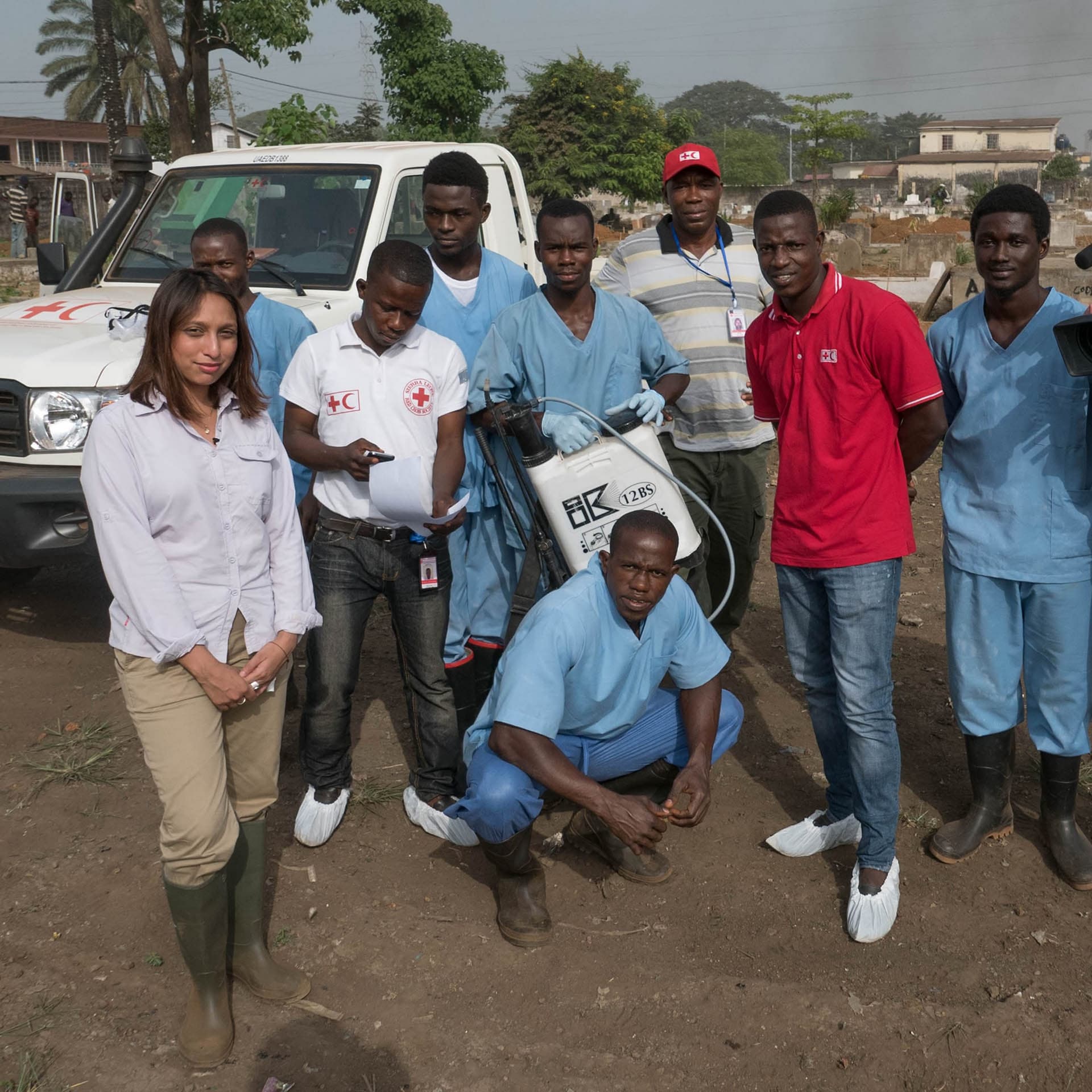
Describing the joy (and heartache) of football is the job of commentators at this summer's Fifa World Cup in America, Canada and Mexico. In the Studio hears how the loyalties of California's poet laureate Lee Herrick are divided between the USA and his birth country, Korea, while UK poet Ian McMillan finds inspiration for a new poem in the lines on the pitch.