

 The Fox News Rundown
21 Nov 2026 · 32m

 Add vo to ChatGPT or Claude to ask about everything you hear
vo listened to this episode to put together the overview and transcript, so there may be the odd mistake.
A Fox News Rundown episode analyzing a U.S.-China-Russia trilateral meeting in Shenzhen and the U.S. cyber/AI security fallout from major technology outages, plus related congressional testimony about staffing at CISA.
Stephen Yates, former national security advisor to Vice President Cheney and senior research fellow at the Heritage Foundation. Bridget Bean, former director of CISA. (Other voices include host Jessica Rosenthal and references to DNI Jay Clayton, Director of National Intelligence, and officials/testifiers at a House Homeland Security Committee hearing.)
The trilateral’s substance is uncertain, but the Quad rare-earths/critical-minerals agreement in Manila is “strategic table setting” to reduce China’s leverage. Nuclear arms reductions are limited by verification problems and China’s rapid arsenal growth. Export-control “toughness” should be separated from diplomatic tone toward Xi. Cyber outages are not seen as a coordinated attack; AI accelerates vulnerability discovery and patching needs.
Quad rare-earths agreement; allegations of China/Russia/Iran cooperation; AI chatbots providing mass-casualty and grid-attack plans (GAO test); Artex AI tool enabling automated cyber intrusions in under three hours; references to Iran-linked attacks on grocery freezers in France and water utilities in 15 U.S. states.
0:00Ryan Reynolds here for Mint Mobile with a story about deception. Beautiful little tin. You open it, expecting delicious butter cookies. Instead, 40 years of loose buttons. Mint wouldn't do that to you. What you see is what you get. All plans, even unlimited, are$15 a month. Unlike this blue box of lies. Give it a try at mintmobile.com slash switch. Upfront payment of$45 for three months,$90 for six months, or$180 for 12-month plan required. $15 per month equivalent. Taxes and fees extra. New customer offer for initial plan term only. Greater than 50 gigabytes may slow when network is busy. See terms.
0:30I'm Dylan, and today ChatGPT got me excited to wait in line. I wanted to step up my gift giving this year. Okay, let's make a list. It asked me who I'm getting gifts for. It asked me my budget. What's your Aunt Lisa do for fun? It gave me great options for everyone. What Max wants is on sale. It even pointed me to a couple local shops. I found a great artist nearby who sells stained glass. Now I'm in line at the post office, and I can't wait to mail this stained glass bird to my sister. Find something that means everything with ChatGPT. Try today at ChatGPT.com. I'm Lydia Hu from the Fox Business Rundown.
1:02Every Monday and Friday, we cut through the noise to help you figure out what matters for your money. Subscribe to the Fox Business Rundown podcast on Apple, Spotify or wherever you listen to podcasts.
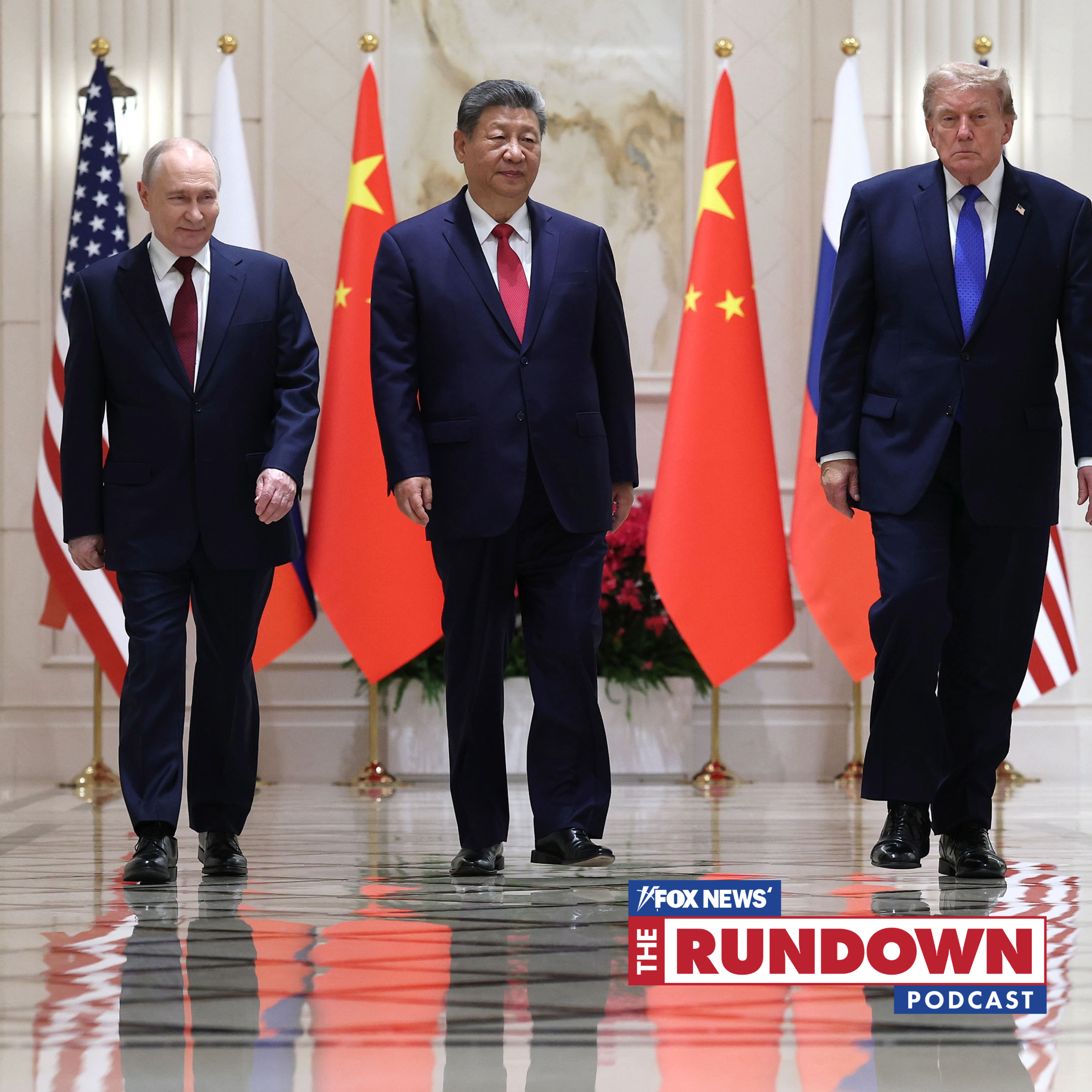
1:18Saturday, November 21st, 2026. I'm Jessica Rosenthal. The president went to Asia this past week and held a first ever trilateral with the presidents of Russia and China. But what, if anything, was achieved?
1:32Stephen Yates: It was important for there not to have been concessions on Taiwan so far. There wasn't any concession on chips that I could discern, even though the question came up. And there really wasn't any concession on Iran, Ukraine, or other areas to strike a grand bargain with the two others in this trilateral. And America was on edge all week as massive tech outages have many wondering if our cyber defenses are ready for the AI era. In technology, we call it everything, everywhere, all at once. I don't think that's what we're seeing. This is the Fox News Rundown from Washington.
2:15The president is back home after a historic trip to China. He's been there before, but this was the first trilateral meeting between the U.S., China and Russia. At a press conference Friday, the president said this about the trip. And it was big. It was big. It was great, great electricity. Unbelievable. And the relationship was fantastic between the three of us. Ahead of his sit down with China and Russia, the president told Fox's Jackie Heinrich the relationship with China is a friendship based on respect. But when asked about reports that Russia and China help Iran, he said they haven't really done that much.
2:50Frankly, they've treated us very well. They haven't fired. They haven't put ships in the water. You know, we have the total control of the hormones straight. He noted also that the U.S. helps Ukraine. When it came to Chinese access to AI chips and allegations of a Chinese spy having an affair with NVIDIA's now former CEO Jensen Wong, that wasn't a top of mind focus. But the president told Heinrich ahead of the sit down meeting that when it comes to spying, they say, oh, they spy on us. Well, we spy on them, too. I think we spy better than they do. I can't tell you that. I can't tell you what we do.
3:22But let's put it this way. I know everything. We spy on China. They spy on us. So you're not going to ask them to stop doing that? There's no point. They'll ask me to stop doing it, and I don't know if I do that. He said in his comments at APEC before a number of other country leaders about AI or SI, superintelligence. It's almost completely good, but it's got some bad elements. So we have to be very careful in managing those bad elements. So we oppose any form of globalist regulation or anything to control or stifle SI. And we won't allow that to happen, frankly. And during his sit down meeting with China's president, he said.
4:01It's an honor to be with you. You're my friend and we have a very special relationship. And I think as long as you and I are in charge of things, we never have a problem. The president also met with Russia's President Vladimir Putin, whom he says does want a deal. but nothing concrete was announced regarding the war in Ukraine nor Iran. The White House said the three leaders did agree to dialogue on reducing nuclear risks, maintaining stable energy supplies and reforming the United Nations.
4:27Stephen Yates: Well, the trilateral was historic in form, but it's to be determined whether it's historic in substance. Stephen Yates is a former national security advisor to Vice President Cheney and senior research fellow at the Heritage Foundation. That's not a criticism of the president. He's dealing with two tough co-partners in that conversation. I think the most strategic part of the whole visit took place in Manila with the rare earths and critical minerals agreement among the quad, U.S., Japan, Australia and India. That set the table strategically in a way showing to both Russia and China that America's got game and has options.
5:02Stephen Yates: This was, as the president said, going in an opening conversation about strategic arms reductions. China has always resisted that. So it was a net success for the president to rope China into that conversation. We'll see whether there's any fruits of that labor. And of course, they did cover a lot of the range of issues that are normally covered in their bilaterals, which they had while in Shenzhen, from Ukraine to some things Iran. But the meat of it just seemed to be this notion of strategic consultation, cooperation and conflict prevention among the three countries. Tell me about the table setting initiative that happened before with the Quad.
5:45You're referencing how important that is on the rare earths front. I think it's important to note for our listeners, this is because China dominates this market of rare earths, these critical minerals that we need really for many things, including our defense sector.
5:59Stephen Yates: That's exactly right. And in the wake of Liberation Day last year, their response was to retaliate by constraining rare earth supply chains. And for all of our smart ways of life, we were dependent on those things. And in our infinite wisdom, we allowed ourselves to be overwhelmingly dependent on those refining and export provisions from China for those needs. So the president and the allies in the Quad said that they are going to double down their commitments among themselves and with others in Asia to make it so that no one power can exercise that leverage over anyone in that grouping. That was an indirect way of addressing China.
6:44Stephen Yates: As the president was fond of saying in recent days, he didn't want to pick a fight or criticize China before going to China. But this was very clearly aimed at China. And he said that in about 10 months time, they wouldn't be able to play that, you might say, Trump card on the United States or others going forward. So after this historic trilateral, apparently European leaders had quite a bit to say. German Chancellor Mertz said this was just a photo op. Francis Emmanuel Macron said the possibility of Ukraine being in NATO needs to continue to be part of the discussion. And then presidential envoy Jared Kushner revealed that Russia is, quote, comfortable with NATO like security guarantees for Ukraine in order to end the war.
7:29That's a lot. What do you make of all of it?
7:32Stephen Yates: Well, as with everything, I think that we have negotiators who are trying to move the window of what might land in what has been protracted conflict and difficult negotiations. Of course, during the previous administration, there weren't negotiations. The president came into office this time thinking that being a very experienced and skilled negotiator, this might go quickly. I think Russia made that much more difficult than perhaps anticipated. But that's just the way things have ground through. The European commentary, I would basically throw a little bit of shade back. It's fine for them to offer some criticisms from the catbird seats.
8:15Stephen Yates: But what are they doing to increase their ability on their own to deter Russia and help bring peace to Ukraine? It's one thing. I mean, their economies combined are several multiples of that of Russia. And so the president's making an effort. Negotiations are moving forward. This was not a Yalta 2.0 where they were cut out and a sphere of influence was given away without them being in the meeting. let's let the chips fall where they verifiably go after this round of conversation. On that nuclear proliferation item, how big of a topic should this be? You kind of referenced this, but the president said to our own Jackie Heinrich that China is trying to catch up, that reducing weapons is a goal, but that it's hard to do when you know who else has them.
9:04What do you make of how this should move forward, given that we don't have START anymore?
9:09Stephen Yates: Well, one of the reasons we don't have START is because the Russians cheated on that for a very long period of time. And so it became a question of efficacy of why are we spending time talking and negotiating and trying to verify something that the other party is not in good faith making a similar reciprocal effort. And the president personally has consistently brought up the idea that doesn't make sense in this day and age to have these kinds of talks when the world's most rapidly growing nuclear arsenal is not those two countries. We actually can reduce, as the president was saying, we'd like to reduce.
9:44Stephen Yates: But China is moving very, very far and fast ahead. And they have always resisted the reduction discussions because they think it's not fair to them. And so I think it was to the president's credit that he forced the issue. I think it's right to have very limited and reasonable expectations of where this goes from here. But at the very least, I think it was a net contribution to at least awareness internationally, because I don't know that enough Americans or maybe those critical Europeans or others had really focused on where China's strategic weapons programs have been going. and that should be unsettling to them and they should want this to be more of a focus.
10:25I want to drill down on China for a minute with you. The president was very complimentary of President Xi. Before he left, he was asked about NVIDIA and this bit of a tug of war we're seeing over export controls, this fight between Treasury and commerce possibly. He said he could understand both sides of this issue, but that, quote, you don't want to blow up the relationship with China. That does strike many of us as a very different tone, I think, from how he spoke about China, even even just like six years ago. Why do you think there has been this shift?
11:00Stephen Yates: Well, I don't know that I've got an answer for why the sort of feel of the president's approach or the policies have shifted. He has always had sort of multiple voices in his own mind and in his team that would contend in front of him. It's sort of like the embodiment of what a lot of people describe the debates in the Oval Office. It's not a conventional White House deliberation or interagency bottom-up kind of process. He tends to bring in the leading contenders in a debate, have them duke it out in front of him, and he might actually agree with parts of both sides, and he will, on a whim or from time to time, pick which side he wants to lean with based on how he took that debate.
11:44Stephen Yates: And I think that whether it's the Bob Lighthizer approach to strategic decoupling, whether it's the more pro-engagement part that I think he brought that is a little bit of an echo of Henry Kissinger kind of thinking. And then there's sort of the people who are responsible for implementing. We have the Treasury Secretary, the War Secretary, the Secretary of State, all pretty convinced we need to make sure that we're implementing these controls. And so my point of view is if the administration does what needs to be done and that recent rule in commerce that was going to enforce these export controls and verification processes, that's where the meat of the conversation is.
12:28Stephen Yates: If the president wants to talk nice about his personal relationship and the nature of the strategic relationship, I might not like that. But if that's the choice, I can live with the meat being on the right side and the talk going a little bit touchy feely. Do you think it's strategic? Like he's almost separating? I don't I know you're not in the president's mind, but I know you watch him. We all are. Do you think it's almost right? Do you think it's almost like, OK, I'm going to treat China. I'm going to treat the leadership with the respect they're demanding, because we always hear these statements out of China, right, that they feel disrespected by the U.S.
13:04So I'm going to give them that on the one hand. But on the other hand, if you do see export controls, if you do see, like you said, the meat, you know, a toughness on sort of the rules and how you deal with certain companies, that you can almost separate that out and sort of appease both issues.
13:21Stephen Yates: Well, on the one hand, the Chinese saying that they feel disrespected is a mind game and political warfare. They've done it forever. It is something that we should heavily discount. And there are a lot of faux experts around town. You don't have to go very far to find them talk up this, I think, manipulation game that the CCP has used for fairly well. The reality is they throw their weight around just fine. And the president, from time to time, he indulges it on this account where he wouldn't on others. I mean, when he negotiates with Congress, it's bare knuckles. It's not kid gloves. Well, sometimes when he's negotiating with other Republicans, it's bare knuckles and not kid gloves.
14:02Stephen Yates: And when we're dealing with allies, we can throw some sharp elbows from time to time. And that is necessary in normal relationships. But there's something different about the approach to China where we're in these these negotiations. And I think that is a notable tone shift from the first term. But at the same time, there is a long list that the NSC and others can provide of the measures that have been put in place to lessen our dependencies on China in key areas where we might not be where we want or need to be today. But the direction is true where we have bolstered economic supply chain and defense relationships with many of our allies.
14:42Stephen Yates: And those East Asian allies have been notably improved. It's a positive theater, not one that is really in contention the way, say, Europe may be. And so and when we're doing things to make sure that we're bringing investment home and we're basically making it so that we can have options where their leverage is limited. All that he's done in this hemisphere from Alaska and Greenland all the way down to Argentina has been a profound shift that gives us near abroad options that will lessen China's leverage over us and make it so that we can have a better negotiating position. So these are works in progress.
15:20Stephen Yates: I'll take all of that if I have to deal with the puffery rhetorically. But I think for me, it was important for there not to have been concessions on Taiwan so far. There wasn't any concession on ships that I could discern, even though the question came up. And there really wasn't any concession on Iran, Ukraine or other areas to strike a grand bargain with the two others in this trilateral. Yeah, two more for you before I let you go. So to your points, you know, while the president was overseas, we heard during a congressional hearing that the Iranians are very focused on harming Americans, including here at home on our soil.
15:56He told Jackie Heinrich that he didn't feel the need to ask President Xi and President Putin to stop buying Iranian oil or even limit whatever intelligence sharing they may be doing. He said it's so insignificant. It doesn't matter. Do these things matter?
16:12Stephen Yates: Well, so there's maybe two levels of things at play. On the one hand, I think if we empirically look at how the military interaction with Iran has gone through 2026, there is nothing that Iran was able to put up that they bought or got from Russia or China that made any strategic difference with what the United States wanted to do. They only have been able to engage in economic terrorism, occasional nuisance strikes, stressing missile defense systems. I mean, it hasn't been cost free, but it's not strategic. It's more mind shifting for the region and markets. And so on that front, the president isn't wrong.
16:52Stephen Yates: At the same time, I don't think anyone likes hearing that it doesn't matter that someone we're engaged in major trade with and negotiations with is making material contributions to a country that is shooting at American soldiers and our allies and threatening the lives of people in our homeland. I mean, it seems like half his cabinet has moved to military bases because of threats directly attributed to Iran. So it's not inconsequential. And finally, to that point about Taiwan, we were told, I think, was it in 2022, that 2027 was the year that China was likely to try to take Taiwan? That's gosh, that's pretty close.
17:34Do you do you think this is likely? And what do you think President Trump might do in that event?
17:39Stephen Yates: Yeah, I've never believed that. I've spent my whole life. This year is the 40th anniversary of the first time I went to Taiwan. I've been in and out of government, in and out of the intelligence community. And this has been a conversation and sort of an alert status through the whole four decade journey. There's nothing magical about 2027 other than Xi Jinping said he wanted by then to have options should he choose to use them. It turns out, though, that I guess his top military was not giving him satisfactory options because he chose to purge all of the top members of the Central Military Commission except for a hand-pecked loyalist.
18:19Stephen Yates: And it's basically him alone with this loyalist on the top of the Central Military Commission. Not exactly the circumstance under which you'd launch a major joint operation that would be very complex and unlikely to succeed. They can damage Taiwan and global markets catastrophically if they do that themselves. But they can't take and hold Taiwan at the moment. And I think that's been basically a misframed issue for a time. Understandably so, because it's hard to understand if you don't spend a lot of time on my favorite island on the planet. Stephen Yates, thank you so much for your time Thank you
19:21Find something that means everything with ChatGPT. Try today at ChatGPT.com.
19:36The Director of National Intelligence testified before the House Homeland Security Committee Wednesday and was asked about the recent outages from Microsoft to the FAA, NSA, as well as in the banking sector. What we have seen over the last 10 days is not an orchestrated attack by a far and malign actor. We do not have any indication that it would be. But Jay Clayton said computing and application capabilities are increasing exponentially. Our digital infrastructure is becoming increasingly outdated and needs to be upgraded. This is a dramatic change that's going through the technology infrastructure around the globe, and we need to lead it.
20:15Part of leading things might mean addressing the findings of a new report from the Government Accountability Office. They tested AI chatbots to see if they'd offer plans on how to commit an event resulting in mass casualties and two on how to attack an electrical grid causing economic damage. The chatbots did provide those plans. During the congressional hearing, Texas Republican Congressman Morgan Luttrell asked Clayton, How do we protect ourselves from an AI-generated army that can be programmed to be a terrorist? One of the most important prongs is to have the best technology, because this is not geographically bound within the United States.
20:56One issue that came up a few times at the hearing was why in this environment are we not fully staffed at CISA, the cybersecurity infrastructure and security agency? Last year, nearly 1 ,000 people were cut from CISA's workforce. Virginia Democratic Congressman James Walkinshaw asked Homeland Security Secretary Mark Wayne Mullen. The cyber threat facing the American people is exploding. You don't have basic information. If you need 2 ,800 and you have today somewhere between 2 ,200 and 2 ,800, you don't know what work, what critical work that you seem to believe correctly, I agree, needs to be done is not getting done while those positions are vacant.
21:34I don't know if you were here earlier because I wasn't. I was. Then you heard me say we have not missed a mission. We're very mission. And why do you need them? We need it. We need to address the merging threats. Outgoing Texas Republican Congressman Michael McCall urged them to fully staff CISA once again. I think it's critically important to have CISA fully and appropriately staffed. Bridget Bean is a former director of CISA. She joined us earlier this week on the Fox News Rundown. With the right skill set to face the threats that we have today and those that are emerging. So I think it's critically important to fill those those roles.
22:09Do you think when several folks were let go, I think it was last year, that they did not have the skill set? Or is that something you have to be constantly training to have? So we've built a country where almost everything runs on technology and almost all of it is connected, even some of our classified systems. And so it depends on the same networks, the same clouds, the same handful of vendors. And so as these systems continue to support much of the American critical infrastructure, you know, we continually need to patch and update. And AI is making it so much faster for the adversaries to get in that, you know, we've got to continue to stay on it.
22:52But as we know, years of experience, when you do a patch, especially in a hurried fashion, things can break. And so trying to stay one step ahead of the adversary, then we're really balancing the risk calculus at this point. What is your assessment of the combined threat of Iran and other state adversaries and their use of AI? Like we hear about Iran's plans to try to commit physical attacks inside the U.S., but what about their use of AI to commit cyber attacks? I think we've got to realize that China, Russia, Iran, North Korea all have varying level of skill, right? We also know that China is in our critical infrastructure.
23:37Iran is a little different, but they have proven themselves to be capable in many ways. As you know, it was just attributed to Iran that they took down the freezers in France in 700 different grocery stores. also the water utilities in 15 states this summer. So they have technical capability, and it is their methodology, this asymmetric response to the conflict in Iran. So all of these nation-state actors absolutely have capability. Some of them have burrowed into our critical infrastructure, and we've seen them try to disrupt our critical infrastructure. So we need to be very, very mindful, which is why we must be on the defense right now.
24:23And so one of my frustrations about the hearing was that they didn't get to these really meaty questions, which the American public, they want answers to and they deserve answers to. What are we doing about the issue that we've seen over the last week? And, you know, I'm heartened that we have some steps we can take right now. We can harness the power of artificial intelligence to help our water utilities, our hospitals, especially those with limited IT ability to scan their networks and find vulnerabilities and then help them patch it. Tell me a little bit more about the reaction to, you know, all of these tech issues we are seeing as of late.
25:00DNI Clayton said they are not part of a coordinated attack. That's what he told the committee. So then the question is, right, what is going on? There's a lot of speculation about that. We keep hearing that the companies and governments are just patching things, securing things. Is this sort of maintenance happening because of the AI threat landscape? Or is this just routine maintenance that's not going right? It's not because of the AI maintenance. The AI is accelerating it. First of all, you update your phone and your phone doesn't work for five to seven minutes. And then sometimes when it comes back on, you have to tweak some of your applications.
25:37This is the same way with major systems that if you're going to make an update, and these updates often have a security feature or they might have an enhancement, an organization may have a new need. And so these patches or these updates might be responsive to the mission that's being executed. But because there's so much interdependency between the systems in every organization, you might inadvertently and unintentionally create a problem downstream. And this happens all the time. But what's happening is the speed with which the vulnerabilities are being found and exploited. That's why the patches are done quickly.
26:17Traditionally, you would get your patch, you'd get your update, you would do it in a test environment, you'd roll it out in a smaller environment to see what kind of those cascading impacts might be. But because of the environment we're in right now, organizations don't always have the luxury to do that. You know, in counterterrorism, we call it a complex coordinated terrorist attack. I don't believe that that's the case. In technology, we call it everything, everywhere, all at once. I don't think that's what we're seeing. I think when you have an event like the FAA, the airlines grounded, it is a very visible event that raises the awareness and the concern.
26:58And so, you know, although we have interruptions, network interruptions, systems interruptions frequently, when they're all bundled together in a week, it does raise concern. And I think that you heard in the hearing, there's no indication now that there was any malicious underpinnings, but they also said that they are continuing the investigation. And this stuff takes a long time. You're going through logs, you're going through the system, you're trying to recreate what happened. But at this point, they do not believe that it had any malicious genesis, if you will. You know, Bridget, last Friday as Microsoft was coming back, but before the FAA ground stopped, the FBI put out this release about Artex, this AI tool that's being weaponized by cybercriminals and state-aligned hackers, as they put it.
27:47They say this allows for the automation of cyber intrusions and for privileged network access in under three hours. You're talking in your last answer to us about cyber hygiene and the things we can do, like these sort of minor things, like not click on things. But how do we defend against a tool like that? You know, the irony is artificial intelligence, super intelligence, it's a dual use technology. This tool was originally used to find vulnerabilities in people's own system. It was out there for people to use as, you know, a good for mankind. But then bad actors got a hold of it and started using it.
28:26So what it used to take people weeks to months to do, having this software with the AI makes it happen so quickly. And I think they said like in three hours, they could do what it used to take, weeks and months. So it goes back to some of the very fundamental things. That's why you see organizations patching these vulnerabilities, taking their programs off for the open internet, not having, you know, internet facing programs that could get an adversary into their core business. So there's a number of things that organizations can do. But from the individual perspective, it really is what we just talked about, making sure that they don't have weak passwords or that they're clicking or that they're running on old software.
29:10And for organizations, it's the same thing. It's just at a much greater scale. Thank you so much for your time and expertise. We appreciate it. Thank you very much.
29:47details. That'll do it for this edition of the Fox News Rundown from Washington. Tomorrow, we talk about congressional leadership. While the House has their plan in order, Senate Democrats are gearing up for a bit of a fight. I'm Jessica Rosenthal. Thanks for listening to the Fox News Rundown from Washington.
30:17Fox News Podcasts Plus on Apple Podcasts. And Prime members can listen to the show ad-free on Amazon Music. And for up-to-the-minute news, go to foxnews.com.
30:30Black Friday, well, shop, way for now. Month-long big deals, yeah, these are steals. 80 % less money spent. You kick a run, check out the song. First, just go for big. Black Friday scores, your most is two. More than a few. Grab a big bed, two layer head, mattresses, two sheets. That are new, say that Wayfarer Save on these chairs, find just your style It makes you smile Here's a quick plug, area roast Free shipping while Wayfarer is how The season will win the season Wayfarer, Wayfarer, Wayfarer, Wayfarer, Wayfarer
Following President Trump’s trip to Asia and a first-ever trilateral meeting with the leaders of China and Russia, foreign policy experts are weighing what was accomplished on the world stage. Former national security advisor to Vice President Dick Cheney and Heritage Foundation senior research fellow Stephen Yates joins The Rundown to analyze the summit’s outcomes on Taiwan, Ukraine, Iran, and strategic arms talks. Yates also explains how new rare-earth agreements with U.S. allies and export controls on AI chips balance Trump’s warmer rhetoric toward Beijing.
Later, widespread tech outages across major platforms and government systems raise urgent questions about whether U.S. digital infrastructure is prepared for the artificial intelligence era. Former Cybersecurity and Infrastructure Security Agency (CISA) director Bridget Bean breaks down how rapid software patching can trigger cascading system failures, the growing cyber threats posed by China and Iran, and how organizations can defend against weaponized AI tools.
Learn more about your ad choices. Visit podcastchoices.com/adchoices



Scan the code with your iPhone camera
Listen in the app.