

 The Fox News Rundown
21 Nov 2026 · 26m

 Add vo to ChatGPT or Claude to ask about everything you hear
vo listened to this episode to put together the overview and transcript, so there may be the odd mistake.
Neil deGrasse Tyson discusses a mysterious solar-orbiting object (1998 KY26), UAP/UFO disclosure talk, his book Take Me to Your Leader (imagined first contact), and AI risks and governance.
Neil deGrasse Tyson, astrophysicist and author of Take Me to Your Leader. Interviewer: Aisha Hasady (Fox News Rundown Extra).
Headlines about scientists being “stumped” are clickbait; researchers are often stumped by frontier data. 1998 KY26 may be affected by non-comet physics like the Yarkovsky effect (light pressure) and/or outgassing, so its trajectory may not be purely gravitational. For alien contact, math is a universal communication starting point; smartphone-era abduction claims dropped because video evidence is now expected. For AI, the solution is “guardrails” akin to mutual assured destruction—world powers should agree on limits to prevent destabilization.
Yarkovsky effect; sublimation/tails expected in comets; Fire in the Sky influencing Tyson’s fear; Pythagorean theorem and periodic table as contact tools; Comic-Con as a “aliens think humans look like them” scenario; GPS/traffic as everyday AI.
0:01Black Friday, well, shop Wayfair now. Month-long big deals. Yeah, these are steals. 80 % less money spent. You kick a run, check out the song. These deals galore. Black Friday scores your most is two.
0:12Neil deGrasse Tyson: More than a few. Grab a big bag, two layer head mattresses, two sheets that are new. Save that Wayfair. Save on these chairs. Find just your style. It makes you smile. Here's a quick plug. Area rose. Free shipping while Wayfair is how. Win the season, win the win the season. Wayfair, Wayfair, Wayfair, Wayfair, Wayfair. This holiday, all plans, even unlimited, are just$15 a month. A holiday deal this good obviously deserves an enormously expensive holiday song, like All I Want. Right. Okay, we can afford that. You know what? Forget the music budget. We're going to stick with whatever's in the public domain.
0:45Neil deGrasse Tyson: Give it a try at mintmobile.com slash switch. Upfront payment of$45 for three months,$90 for six months, or$180 for a 12-month plan required. $15 per month equivalent. Taxes and fees extra. New customer offer for initial plan term only. Greater than 50 gigabytes may slow when network is busy. See terms. This is the Fox News Rundown Extra.
1:06I'm Aisha Hasady, and this past week I had the pleasure of speaking with the world-famous astrophysicist Neil deGrasse Tyson. There was a report this week about a mysterious object orbiting the sun. It's got a lot of scientists out there scratching their heads. There's also been a lot of talk all year about UAPs, or what people used to call UFOs, and the efforts in Washington to have the government release more files about them. So we had to talk to Neil about all of that and a whole lot more, including AI and his latest book, Take Me to Your Leader, and the growing concerns about AI and all of those tech outages.
1:46Our conversation was long. We couldn't fit it all into the segment that ran earlier this week. So today, we're going to let you hear our full interview. You can also watch that full interview on our Fox News podcast YouTube page. Thank you for listening. And if you haven't already, please follow the daily Fox News Rundown podcast. Neil deGrasse Tyson on the Fox News Rundown Extra.
2:10Neil, thank you so much for joining the Fox News Rundown. We appreciate it.
2:15Neil deGrasse Tyson: Happy to be with you. I cannot wait to talk to you about aliens because I think you've said that as long as you were, you know, far back as when you were a kid, you wanted to be abducted by aliens, which I think is insanity. That is my biggest phobia, like biggest, more than spiders, snakes, because my dad took me to go watch Fire in the Sky when I was way too young, inappropriate. And I, to this day, when I get up in the middle of the night to go to the bathroom, I have this skylight above in my bathroom. And I'm like terrified to look up and I might see a green head. So we'll talk about that in just a second in your book.
2:53But I want to start with this strange object that has been orbiting the sun. And we discovered it a while ago. But there's a lot of questions about what it is. It's called 1998 KY26. It does not have the usual telltale signs of a comet. So what do you think it is?
3:12Neil deGrasse Tyson: All right, just to be clear, there's millions of things orbiting the sun. Okay. And we've cataloged, ear tagged, half a million of them. OK. And so this is there are many things yet to be discovered. Now, we think we've discovered enough objects so we can classify them. There's sort of rocky asteroids and icy comets. And so we think we have enough categories. If something shows up that doesn't fit any of those categories, then we wonder what it is. And then it makes headlines. And I find the headlines odd, though, because it says scientists are stumped. Right. And then that's clickbait. However, if you are an active research scientist, you are always stumped because you find the things that you can't yet explain.
4:03Neil deGrasse Tyson: So don't be so spooked by the fact that there's an object orbiting the sun and we don't fully know what it is yet. So let's start with that. Right. It doesn't have telltale comet signs because you'd expect some as it nears the sun, you'd expect some evaporation. The official term is sublimation of the ices, and it makes a tail. And the reason why that's important is the trajectory of this object is not following standard laws of gravity. Okay? And that's why it's weird. So there's something outgassing in it, but we don't think it's a comet. or some other phenomenon going on that enables it to take a trajectory that is not purely ballistic around the sun.
4:50Neil deGrasse Tyson: And when that happens, people start coming up with all kinds of ideas. And in The Limit, you get, of course, aliens. But let me tell you this. If they were aliens, they wouldn't just be slightly different from a perfect gravitational trajectory as this is. It would come in, stop, make a left turn. speed up. It would do things like somebody's at the helm. And so, and in fact, Or have an invisibility cloak. That you wouldn't even see it at all. Precisely. And I talk about invisibility cloaks in I wrote an alien book, and I talk about all of that. Because it's fun. Aliens are fun. Because we've spent so much energy trying to imagine them that you've got to give it some attention in that regard.
5:37Neil deGrasse Tyson: But this object, I don't think we've settled on it. The head of NASA declared it's a rock, but he's not the one doing the research. So I don't think he should be making those declarations. He should say we have top people working on it. We'll figure it out and we'll settle on what it'll be soon. The idea that it could be a rocket booster left over from Phobos-1, I think it was, that is interesting because rockets have different reflectivity than rocks or comets. And so you combine all the data you can get, the spectra, the reflectivity, the trajectory. What does it match? What does it not match?
6:13Neil deGrasse Tyson: Put it all together and then arrive at a conclusion. But right now, I think the jury's still out. Could it be solar powered? Oh, so interesting. All right. So it turns out if you're an object in the solar system, the side of you facing the sun is receiving sunlight and light has pressure. There's not very much pressure, but it has pressure. For the smaller objects, it can be significant. The big ones don't care. The little ones can feel this light pressure. And it turns out that light, if it's absorbed, and if the object is rotating, it'll re-radiate that energy, but in a different direction from the momentum that came in.
6:55Neil deGrasse Tyson: This is called the Yarkovsky effect, and it's been known for more than a century. And the sunlight, because of this phenomenon, can alter the trajectory of an object, even if it's not a comet. So you have to factor all. Science is hard, you know, doing it on the frontier. The answers are not just simply derived. And then you say, I don't have enough data to answer it. Let's create a mission or a new telescope observation to help out. Yeah. This holiday, all plans, even unlimited, are just$15 a month. A holiday deal this good obviously deserves an enormously expensive holiday song, like All I Want.
7:34Neil deGrasse Tyson: Right. Okay, we can afford that. You know what? Forget the music budget. We're going to stick with whatever's in the public domain. Give it a try at mintmobile.com slash switch. Upfront payment of$45 for three months,$90 for six months, or$180 for a 12-month plan required,$15 per month equivalent, taxes and fees extra. New customer offer for initial plan term only. Greater than 50 gigabytes may slow when network is busy. See terms. So let's talk about the book. because you look at history, you look at literature, you look at all the things that we know, and there's a lot we don't know, but you look at the actual law of physics to come up with what it might actually look like if aliens were to show up one day.
8:10That's if you don't already believe that they're here. But if they were to show up one day, what do you think, you know, what do you say in the book would it look like? What would that day look like? What would I have to do to get the exclusive interview, the exclusive walk and talk inside the spaceship. What would that look like? That's what you... That's what I'm focused on.
8:32Neil deGrasse Tyson: You need a career boost. You need a career boost. You're already standing in front of the White House. You need more of a career boost than that. Excuse me. I need the one-on-one with the mothership. Yeah. So a big part of the book, it's just called Take Me to Your Leader, perspectives on your first alien encounter. and a big part of it is trying to figure out how you would communicate with it. It's not obvious that it knows English. Most people on Earth don't know English. To expect that of an alien would be asking a little too much. But what we do know is that math is a universal language, literally universal, not just Earth-wide.
9:11Neil deGrasse Tyson: I think we overuse the word universe. Miss Universe is really Miss Earth. We haven't compared her with Miss Mars. All right. So math is literally universal. And I give suggestions on what you might carry with you to share to at least show the alien that we have some intelligence worthy of preserving. We can talk to you. Right. Right. So maybe a little Pythagorean theorem. You might remember that from middle school or high school math. That's geometry. tree that's basic, if they see that, show them maybe at a periodic table of elements. They won't know the symbols within it, but the configuration of boxes, that should be familiar to them, because that's every element in the universe.
10:02Neil deGrasse Tyson: Every element is on that table, and it's configured in a way that reflects the physics of the universe itself. So I give suggestions on things you might share with them. But there are also things like, what do we look like to the aliens? No one ever thinks about that. I think about that. If they landed in Los Angeles on the 405, and it's a 12-lane freeway, and nobody ever walks anywhere in Los Angeles, they'd look around and say, I think the dominant life form is an automobile. Wow. They might think that. Yeah, you're right. But they don't see anything else. Yeah, just let's be honest with ourselves about what we could look like to them.
10:40Neil deGrasse Tyson: And the most important advice, I would say, most important takeaway is if it walks up to you with multiple appendages, don't just reach and grab one of them and shake it. Because you don't know a part of that. You don't know what part of its anatomy you just grabbed onto. Right. I think you don't want to know either is my guess there. So it's a celebration of all of our imaginations that have laid down tracks for novels, for movies, TV series. And I take the physics of our imagination to see which is plausible, which is impossible, and what might then show up. and I can tell you this if in Congress because you had all those whistleblowers say we got an alien in the back shed I'm waiting for them to just bring out the alien and if they do because if there's one there and they do I would be most surprised if it was humanoid if it just sort of walked out on two legs it's got a head, two eyes, nose, mouth, ears because if it came from another planet you don't expect it to look anything like humans.
11:53Neil deGrasse Tyson: Most life on Earth with whom we have DNA in common does not look human. So I think Hollywood has just put this image in our head because you could look at it at its eyes. Maybe if it's evil, it's more evil. If it can stare at you. You know, there are storytelling reasons for doing this. But I'm just saying biologically I want something very, very different from us. That's what I'm going to expect. So you obviously want to be abducted really badly. Do you believe people who say they've been abducted? So in the book, I take everybody's testimony on face value. I don't call it supposed abduct. I don't use the word, these buffer words.
12:38Neil deGrasse Tyson: I just say, let's say this happened. What I then do is pose another set of questions. Okay. Today, we live in a world where everybody, there's 6 billion smartphones. So basically everybody's got one of these on their hip. It takes high-resolution pictures and video. Where is the video of you walking onto the spaceship? This flying saucer getting abducted. You can stream that while it's happening and not have to worry about whether they delete it when you get on board. So what has happened is the testimonies of people's abductions have dropped off precipitously in the era of the smartphone. That's interesting to me.
13:17Neil deGrasse Tyson: Okay, so maybe it was in people's imaginations. Maybe. Okay? Another thing. I'm old enough to remember there were these photos of flying saucers roadside. Roadside flying saucers. All right? And back then, who carried cameras? Journalists and tourists. Nobody else really had a camera. So this is rare if you could photograph this. Those pictures went away when Detroit stopped making hubcaps that attached to the wheels of cars. Hubcaps. You ever take off a hubcap and hold it up and toss it in the air? Look just like a flying saucer. Right. Okay? Those pictures don't exist anymore. So these are things that make me go, hmm, I wonder if they were ever real.
14:03Neil deGrasse Tyson: And people's imaginations are extraordinary. But now we have whistleblowers and high-ranking people talking about it. So now I'm ready for them to bring it out from the shed. I'm ready. And that hasn't happened yet. So I don't want to believe something is true by having to believe someone else's belief that it's true Okay, okay, so no one has to ask you. Do you believe in elephants? That sentence doesn't even exist why because you've seen elephants it's like I know they exist because they we've all seen them But if the only evidence for elephants were Eyewitness testimonies and no one ever brought forth an elephant that would be a weird conversation You got to believe me.
14:45Neil deGrasse Tyson: It's got these two big teeth that stick out and a big rubbery nose and ears the size of bedsheets and legs the size of a tree trunk. And yeah, and you're just nodding your head as they give you this account of an elephant. And none of it is really believable until you see the elephant. So I'm waiting for this. Let me ask you a question, kind of follow up on that, because, you know, you mentioned these lawmakers and people talking about, you know, biologics. and things like that that we might have obtained not from this world. I've heard some really smart lawmakers, really smart, not the ones that just want to get on TV, smart lawmakers wonder, you know, could aliens just be us but from a different dimension?
15:32And I know you've talked about time travel a little bit in that you don't think we can go back in time, but we might be able to move forward in time. So maybe applying the laws of physics here, is it a possibility that a lot of people think that aliens are just us in a different form?
15:51Neil deGrasse Tyson: So there's a section in the book that I devote to dimensional aliens. Not demented aliens, but dimensional aliens. Demens from a higher dimension. And if they pass through our dimensions, they would manifest the three dimensionality of themselves. But the full manifestation of them would be in four or higher dimensions. Here's the thing. If any of them are hiding in plain sight, as is the case in the film Men in Black, you can hide for a while. But if you go to the doctor and they pull out a stethoscope and there's no heart beating where it should, you would know immediately if you were alien.
16:32Then if all of your organs are in the same place as ours, then why even make the distinction?
16:40Neil deGrasse Tyson: between aliens and us if they're just like us. And in the just like us category, I fantasize that aliens might have visited Earth, but it was in San Diego during Comic-Con when everyone's cosplaying. And then they look around, and then they phone home and say, hey, they're just like us. I love it. So if they're really close to looking like us, if it walks like a duck, acts like a duck, Just call it a duck. So I don't mind that. It's just less interesting than if they're completely different. Okay.
17:46So let me divert a little bit to another kind of alien, which is artificial intelligence. We're trying to figure this world out. You know, this week Anthropic goes public. We've seen a lot of tech issues in the last week that have been blamed on potentially, you know, AI kind of showing us the vulnerabilities in our different industries. We've got to upgrade, close those loopholes. AI now broadly available to bad actors all over the world that could hack into our systems. So just like based on history and what you know about, you know, who we are as humans and in this insane moment in time, right, where we're about to it feels like take a quantum leap in tech.
18:34are you worried about AI at all? And what do you think happens in the next 20 years?
18:42Neil deGrasse Tyson: Well, my urge is to say, we're all going to die. Don't, don't. But not to put fun at what could be a possibility, just I want to make it clear that we've had technologies in the past that have put large-scale survival of our species at risk. nuclear energy among them. Yes. There's plenty of AI we are engaging with every single day. On a level where you don't even call it AI because it's living with us. When you turn on the GPS and it tells you the shortest route to grandma's house, getting corrected every moment by traffic reports, it's talking to satellites, giving you this information. You don't even call that AI anymore.
19:25Neil deGrasse Tyson: Even though it's doing a task that we couldn't have even done even if you had access to that knowledge. Okay? Or done it as quickly or as efficiently. So, and everybody's got some AI helping them make a spreadsheet, organize an invitation list. So I don't want to implicate all of AI just because there's some bad actors on the frontier that could put the stability of civilization at risk. What that tells us is we need to put guardrails where those boundaries are. And we have to find the boundaries first, put up the guardrails. And to me, again, I'm old enough to remember, mutual assured destruction.
20:03Neil deGrasse Tyson: What brought the Soviet Union to the table with us? No one can win a nuclear war. Everyone dies if anyone launches a first strike. If that's the case, there are no winners. So in AI, I feel the same fate at its limits of application, where it destabilizes economies and everything that's otherwise computer controlled. So if world powers, in this case, it would be Russia, China, the United States, we all agree that if you keep going on this AI path, AI becomes our overlords, we become their pets, and no one wants that. We become their pets only if they think we're useful to them. And otherwise, we all die.
20:49Neil deGrasse Tyson: So everyone agrees, put up the guardrails. And then we go back to living. And so it's not a unique problem to have to rein in the dangers on the frontier of a new technology. Okay. I've always wanted to ask you this question. I've never gotten an opportunity until now. If you could have been born in any other time, you have to have thought about this. If you could have been born in any other time, when would that time be? Obviously, I'm thinking it would be the future. How far into the future? Neil, how far into the post-AI apocalypse? I can't tell you how correct you are. Yes, I can. So I thought about this.
21:33If you build a time machine, okay, if you are female, a person of color, on the gender spectrum,
21:44Neil deGrasse Tyson: and there's a time machine sitting there, there is no time in the past where you would have been treated better than the present. Right. Okay? And it's not that long ago I would not have been having this conversation with a female reporter, okay? Because no reporter is a female. In front of the White House. In front of the White House, okay? No, there were some journalists. I guess Lois Lane was a journalist, but not like a, okay? But news anchors, no. So, yes, we people, we, this group, would have to go to the future, okay? And then I'm quoting Theodore Parker, the Unitarian minister from when was it?
22:25Neil deGrasse Tyson: Early 19th century, which was then quoted by Martin Luther King, that the arc of justice bends towards progress. And with its fits and starts, you know, there's two steps forward, one step back. Yes. But so, yes, I want to go to the future. and I want to go maybe just before what could be the next apocalypse so that maybe I can help prevent it. I love that your answer was based not on science advances and tech advances as I think it would be for anyone. It was based on social justice and how we would be allowed to live as you and I. I love that. And that's what enabled my freedoms in the first place.
23:18Neil deGrasse Tyson: Yeah. So I can't take any of that for granted. And, of course, I complained about different things than my parents did, all right? And their generation is a whole other nother, all right? There was the civil rights movement and the like. No one put water hoses on me, all right, or attacked dogs. But I have other stories, milder than theirs, but they were still stories that influenced the arc of my life, wanting to be an astrophysicist rather than the forces of society channeling me to be an athlete where the expectations of anyone with my skin color would have replaced me. So, yeah, I'm putting me in the future.
23:56Neil deGrasse Tyson: And do I want to see some cool devices in the future? I want to see suborbital flight so I can go to Japan, have sushi for lunch, and then come back here for dinner. I know. Beam me up, Neil. That's what I want. If you want to make it a pin, beam me up. That's what I think. If I'm abducted by aliens, I'll learn everything that they do. Then I get to bring it back to Earth. I thought you were supposed to invent that. We're all waiting for it. If one night I go missing, then... I'll know you're in Japan having sushi for lunch. Yeah, or with the aliens. Yeah. Thank you so much. What a pleasure and how much fun and how much did we learn?
24:35I so appreciate it. Thanks for coming on the podcast.
24:38Neil deGrasse Tyson: And thanks for your interest in taking a break out of your coverage of the White House to go cosmic. I need a break from politics any day of the week. We all do. Thank you, Neil. We all do. Okay. Great to see you. All right. Night chat.
24:54Neil deGrasse Tyson: You've been listening to the Fox News Rundown. And now, stay up to date by subscribing to this podcast at foxnewspodcasts.com. Listen ad-free on Fox News Podcasts Plus on Apple Podcasts. And Prime members can listen to this show ad-free on Amazon Music. And for up-to-the-minute news, go to foxnews.com.
25:14Neil deGrasse Tyson: I'm Dylan, and today ChatGPT got me excited to wait in line. I wanted to step up my gift giving this year. Okay, let's make a list. It asked me who I'm getting gifts for. It asked me my budget. What's your Aunt Lisa do for fun? It gave me great options for everyone. What Max wants is on sale. It even pointed me to a couple local shops. I found a great artist nearby who sells stained glass. Now I'm in line at the post office, and I can't wait to mail this stained glass bird to my sister. Find something that means everything with ChatGPT. Try today at ChatGPT.com.
Some strange things are happening out in space and down here on Earth.
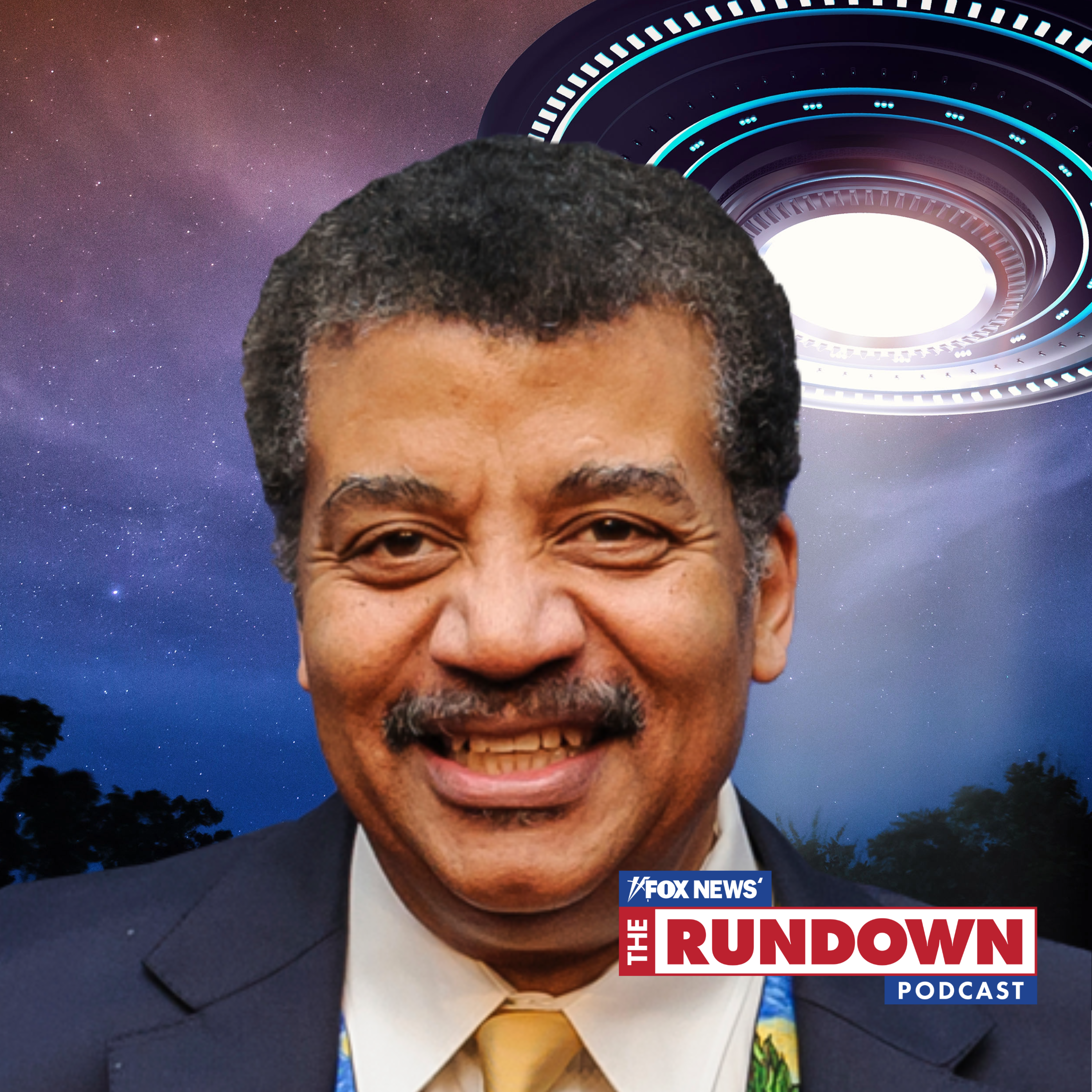
Earlier this week, astrophysicist Neil deGrasse Tyson joined Aishah Hasnie to unpack a fast-moving object known as 1998 KY26 orbiting the Sun, UAP discussions, and the physics behind what a first alien encounter might actually look like. Tyson broke down why its trajectory doesn't follow standard gravity alone, weighed theories ranging from space junk to the Yarkovsky effect, and shared insights from his book Take Me to Your Leader: Perspectives on Your First Alien Encounter.
They also dove into growing concerns around artificial intelligence, tech vulnerabilities, and why Tyson says global guardrails are essential—plus why he’d choose the future if he had a time machine.
The conversation was full of laughs and interesting perspectives on space and the potential for extraterrestrial life, but it was too long for our regular midweek Rundown. So, on today's FOX News Rundown: Extra, we'll let you hear the whole conversation with Neil deGrasse Tyson and more of his unique takes on the galaxy.
Learn more about your ad choices. Visit podcastchoices.com/adchoices



Scan the code with your iPhone camera
Listen in the app.