
In short
Podcast Notes: The GaryVee Audio Experience
Episode Title
2025 Marketing Strategy That Will Revolutionize Your Ads
Episode Description
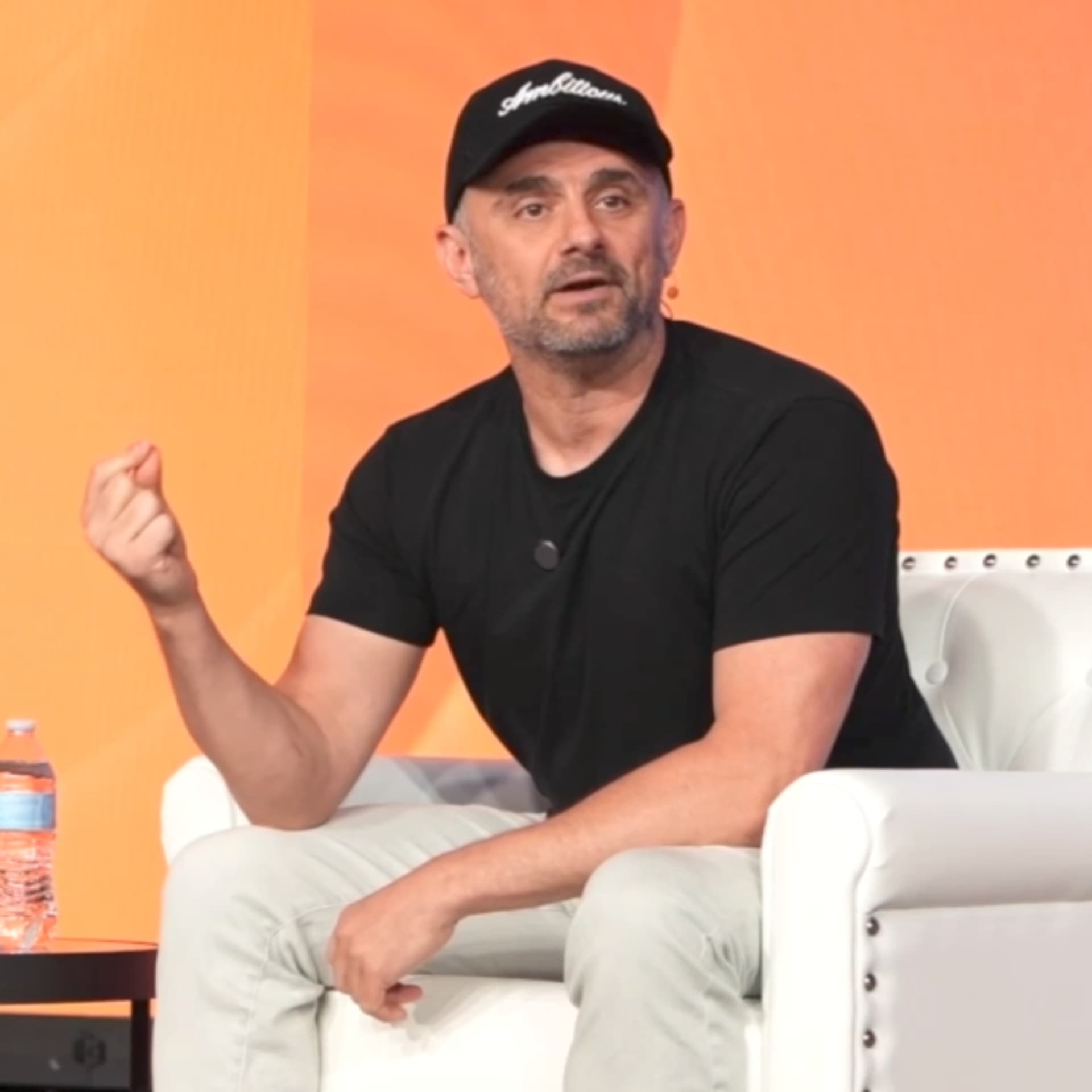
In this 2024 fireside chat, Gary Vaynerchuk shares advice for companies to bring common sense back into their marketing strategies. He discusses the importance of creativity in marketing and the necessity for businesses to innovate and adapt to consumer behavior, emphasizing that successful marketing strategies should be consumer-driven rather than boardroom-driven.
---
Key Themes and Insights
- The Need for Common Sense in Marketing
- Many companies revert to traditional methods due to fear of taking risks.
- Importance of simplicity and common sense in marketing strategies.
- Companies often face pressure to return to 'tried and true' methods, which can hinder innovation.
- The Value of Creative in Marketing
- Creativity is a variable that can significantly influence marketing success.
- Good creative leads to better consumer engagement and conversion.
- Use of AI in marketing to target the right audience effectively.
- Shifting Focus: Consumer-Centric vs. Boardroom-Centric
- Successful marketing strategies should originate from consumer insights rather than corporate agendas.
- Brands must prioritize understanding consumer behavior and adapting their strategies accordingly.
- The importance of using social media as a primary medium for creative testing and consumer reach.
- Integration of Media and Creative
- Historically, media and creative functions within agencies were separated, leading to inefficiencies.
- Reintegrating these functions can lead to more effective marketing strategies.
- Companies need to prioritize real metrics over flawed reports to justify creative effectiveness.
- The Role of Social Media
- Social media is a crucial platform for testing creative content and reaching consumers.
- The algorithms of social media platforms act as powerful tools for marketers to refine their strategies.
- Brands need to view organic social media as essential, not just supplementary, to their marketing efforts.
- Leadership and Empathy in Marketing
- Leadership styles that rely on fear can yield short-term results but are not sustainable.
- Empathy and kindness are essential for long-term success in leadership and organizational culture.
- The necessity for leaders to incentivize creative and innovative thinking within their teams.
---
Key Takeaways
- Risk-Taking in Marketing: Brands should be willing to take risks in their marketing strategies instead of reverting to safe, traditional methods.
- Creative Execution: The execution of creative ideas is critical; understanding consumer needs should shape marketing campaigns.
- Cohesion Between Creative and Media: Integrating creative and media strategies can lead to more efficient ad spending and better results.
- Harnessing Social Media: Companies must understand and leverage the power of social media for real-time feedback and creative development.
- Transformative Leadership: Embracing an empathetic leadership style can foster a culture of innovation and creativity.
---
Conclusion Gary Vaynerchuk emphasizes the need for a revolutionary approach to marketing that prioritizes consumer insights, creativity, and a cohesive strategy that integrates media and creative efforts. By leveraging the power of social media and adopting a leadership style rooted in empathy and innovation, brands can better navigate the evolving landscape of marketing in 2025 and beyond.
Written by AI. May contain mistakes. Listen to the episode to check what was said.
Transcript
Automatic transcript. May contain errors.0:00Podcast nation, before I get you into today's podcast, big announcement. as you probably heard at this point because I had John from Stan on the show. I'm an investor advisor to an incredible startup called Stan, Stan.Store. I'm sending you right now to garyvee.com, garyvee.com slash Stan. Go check this out. We've done a Gary V. Stan Store challenge which actually has a weekly call with me. This is built for everyone who's been affected, honestly, by my overall content. The tech stack, all these features and the minimal costs per month that Stand Store has built is really the tool that was needed for this world that I envisioned when I wrote Crush It, when I wrote Crushing It, and this overall thing I'm thinking a lot about lately, which is the individual empire, right?
0:48This creator entrepreneur slash entrepreneur creator economy that I think is gonna eat up the oxygen, very honestly, the thing that so many of you want in your life and the reason so many of you are not there yet is you've got the strategy for me. you've got the ambition within yourself but you don't have the tools for you to fully maximize it and I believe you can find that at Stan store Stan dot store but specifically I want you to sign up for it through my challenge because I want to get access with you and plus there's a bunch of cool things so if you want to go see those cool things go to GaryVee.com slash Stan S-T-A-N now to the podcast This is the Gary Vee audio experience I choose optimism Your old principles of building brands still stay true.
1:34Yes, but I think it's been the vulnerability of the industry in the last 30 years. You know, us wanting everything to be matching luggage and on brand based on our subjective opinions has made us incredibly not relevant. But I will say that how brands grow written in 1991 and some of the stuff you learned in the 90s in college about building brands is vulnerable in 2024 because distribution is different, consumer behavior is different, And so to me, incredibly optimistic about the transformation that I think you're going through, definitely have been burned by companies that are going through transformation in my 15-year career as an agency owner who's really trying to do consumer-centric work, not corporate work, in that you need a lot of things to move to actually get this done.
2:24So you may feel it in an offsite like this, but then next Thursday, if you're making a decision based on defense, you become in trouble. What I mean by that is it's all rah, rah, rah and fun and games. But then if your numbers are down the last 90 days, what I notice is that you go back to tried and true, which actually means let's kill ourselves even faster. And so I've been through a lot of transformations with all the Fortune 500 CPGs because it's my favorite category and everything gets going until it's a bad quarter or something else happens. and then people go to fake math. I mean, our entire current, you know, one of the challenging things when I looked at bullet point three, let's measure business results.
3:07Well, then let's bring back media and creative under one roof. I mean, look what's happened in our industry last 30, 40 years. Media and creative used to sit under one agency and we held them accountable for our business. What we've done is we've separated media and creative since the 90s. And what that's done is made you spend a lot of money on reports to measure stuff for no reason. The biggest elephant in the room is we've put common sense way back and we need to bring common sense back into companies. I appreciate that very much. You touched on a couple of these things. I'm going to build on a few things that you said.
3:42So you just released yet another New York Times bestseller about day training and attention. Everyone's going to get a copy of the book. I highly recommend it once you do. By the way, just a side note, I got an email from an English teacher in high school. So I am a historical poor student. Mrs. Horvath gave me four Ds sophomore year and three Ds and an F senior year. And in her email she said, this was an amazing email, I haven't talked to her in 30 years. She said, if you told me the student in my history that would have seven New York Times bestselling books would be you, I would have laughed you out of the room.
4:28I saved that email, it's a good one. Your books cover ranging topics. This one is more marketing focus. And it underscores how to build brands and how to grow sales. We've had a lot of, you touched on how brands grow. We've had a lot of exposure to Vibram Sharp and how brands grow. Could you just share a little bit more about the perspective from the book and what it takes to actually and you guys will see it and the book actually is underlined how to actually grow brands. Well, look, if I give the greatest speech of my life in a forest and no one hears it, what did it actually do? I think the writing in theory or philosophy is a great idea because there's truth to that.
5:15I mean, some of my favorite stuff to think about is that. But I think where we've lost our way is in execution. The way to actually get a brand to grow is to win on relevance at scale with as many consumer segmentations as humanly possible so that every person on earth buys your stuff that could conceivably buy your stuff. The only way to do that is first to get the media to actually be consumed. When you are buying potential reach, like this company does at scale versus actualized reach, you're already in a very vulnerable spot. I own one of the largest e-commerce wine businesses in the country, I know everything about everybody I'm marketing to.
5:57But when the creative doesn't convert, you still lose. The creative is the variable of this entire conversation. Even if you could target everybody everywhere, if I knew every single person I was talking to and everything about you, it still doesn't mean I'm gonna convert you. Your partners that have all the leverage don't convert all the time too. But when I say that, here's what I mean. I mean that we all stink at marketing because it's hard. It is hard to make a picture and a video or written words that compel someone to switch over to you or to buy your stuff when we're convening with so many other things like convenience or prior history or a million other variables.
6:37So, you know, for me, what I'm most passionate about is mitigating the risk of creative. What companies do, we start buying up fake reports to justify our creative. Right? We used to do animatics or things of that nature, but you all know this. You're in real life. The decision on creative is being made by three or four or two of you subjectively. And then we buy reports that are incredibly flawed to justify the creative effectiveness. Meanwhile, we're all infatuated with talking about AI and the single most important AI in all of marketing sits currently in the seven social networks platforms and their algorithms.
7:18we are now living in a social media world where the creative is finding you not you follow someone like I grew up with and you would get all their stuff now the creative finds you because the AI is that good all of creative testing in all of Fortune 500 marketing should be happening in native social media creative ads because those analytics and that data and that AI is disproportionately the most powerful it's also in the platform that's going to actually reach the consumer. You can get unlimited quantum call information out of just being good at doing day-to-day advertising on social media. And not only is it disproportionately the best creative testing, but you're actually getting the testing by actually doing marketing.
8:05You're literally getting a two-for-one. You're advertising for the sake of better advertising. Yet we prefer to be corporate and what we are doing and the elephant in the industry is that we take organic social media as something that's a nice to have matching luggage number 16 on our list of importance to our big campaign idea when it is disproportionately the most important place of consumer attention and the mitigation of creative risk. And once you understand that, then we can start to compete. Thank you.
8:48Luke, I'm going to take this moment because I feel like, I want all of you to hear this. This is a profoundly important conversation. Because of our subjective opinions of what social media is and our deep misunderstanding of what's happening there and because it's hard for holding companies and independent agencies to make a lot of money in it, We, as Fortune 500 companies, have disproportionately allowed startup brands to outflank us on the single most important platform in marketing in the world, which is organic social media creative. and what has happened is in the last three to four years, the platforms have completely changed to a for you page, content finds you dynamic built on AI, which is actually in our benefit because we're getting to test the creative in that environment.
9:41But the word test is banned at VaynerMedia because to me it's not a test, it's just a good ad that I'm making for someone to go to Target and buy my stuff that will give me feedback, quantum qual, to then make better ads going forward. And so you have to go consumer up the funnel, not boardroom idea down to matching luggage. We are getting outflanked. Brands in this portfolio are getting outflanked by startup brands with a couple of million dollars in VC funding because they are winning in consumer-centric environments. And we are doing things in corporate environments to appease our retail partners who are taking all of our money to private label us out and to appease our reports that we pay a lot of money for that are fake.
10:31You guys remember what Michael's saying about the power of constructive debate. I think you are seriously at the middle time. That's the point. Well, the debate is starting to unravel for the counter because now we have things like Prime Energy Drink and Poppy and now we have unlimited brands that people can talk to. Liquid Death was started by a creative director at VaynerMedia. Started by. Day before, Mike is working at my company. Next day, he's like, Gary, I'm leaving to start a bottled water company. Would you like to invest? Thank God my mom created a kind human being. So out of charity, I'm like, sure, Mike, I'll give you 10 ,000 bucks to get him.
11:11I'm gonna make like $30 million on this shit, Luke.
11:16But he's executing the model. I don't understand. There's nobody here that is confused. There's nobody here that's, that was the biggest eye opener of being in this business. I came in thinking like I was smart. I was like, these people don't get it. You do get it. It's just I'm empathetic that it's hard for you to change because the rules, the bonuses, the way everything's measured, and how I get it. People have mortgages, people have goals and dreams. So we are operating not on what we most believe our money is spent on to drive sales. We're doing what is accepted within the organization. we must debate the internal KPIs.
11:55We must debate what's actually happening out there. Because I know you see it. You're too smart. You wouldn't be in a soft site if you didn't see it. Let's stay on this a little bit longer because in the book you also talked about a mistake that many Fortune 500 companies made is to bring the traditional mindset, the TV internet mindset, into social. which forces brand guidelines into every single piece of content. Are you really interested in sitting and debating for 31 minutes about a color or a font on an individual social media post like it's a Super Bowl ad? But we do it all day long, Luke.
12:39No, I believe it. We do it all day long. And meanwhile, if you understood, so I'm sure all of you do social differently with different agents. How are you doing? Just please, if you remember, anything from this talk, please remember this. Whatever thought you have subjectively on that creative, ask your agency partner to make that as well as let them post what they made for you and then let the data educate you on it. We continue to debate in the boardroom as if the internet doesn't exist. As if these social networks don't have unlimited analytics. I'm empathetic that you have so many other, I mean half the room is even in marketing, so I'm incredibly empathetic that even for the people in marketing in this room, they're not so deep on these platforms that they understand what these platforms provide.
13:25But my friends, we are literally wasting ungodly amounts of dollars in boardrooms debating our opinions of what's on brand versus taking advantage of the quantum qual signals of the modern distribution platforms. Like my team asks me all the time, Nick will be like, what do you think about this? I'm like, I don't think. Like meaning I don't know what to think. I'm not interested in my opinion about this 13 second video or this picture. What I think is have we done best practices to get the most amount of people to see it? What I think about is the first second of the video. What I think about is the thumbnail.
14:06What I think about is the copy. What I think about is as I sit here right now as a practitioner of the craft of marketing, not as an executive of it, that I know that a one second loop reel is over-indexing on Instagram this nanosecond, and for every brand in this portfolio, we would get hundreds of thousands of people to see it versus 800 people. I think about the craft, not in the way you were all taught, which is like it's got high production value and the bougie creative director can romance you to think it's good. I mean the craft of the biggest conversation in marketing going forward, which is we can now measure if the creative is good.
14:44It is happening in the platforms not in some SaaS software that you paid a lot of money for. Luke.
14:57Well, I would not prefer more than that.
15:03But can you talk a little bit about how you see, in that context, how do you see the role of the brand identity and understanding the brand and what the brand stands for? People are like, Gary, but you don't get it. We have like a brief or we have a brand guideline. Like it's important. I'm like, you know what else is important? The constitution.
15:27The constitution's important. It's been written. I don't know if you've heard. Half of the country sees it one way and half sees it the other way. So what do I think about what the brand stands for? Who, what brand positioning in this portfolio do we want to talk about? First of all, all of your brand positioning, all of it, is a vanilla sentence so you can do anything. By nature, every brand position is very wide, empowering the everyday. I won this debate with Nick on a famous flight at VaynerMedia because I decided to ask my 12 executives who deeply disagreed with me, that I decided to go for the jugular and said, let's talk about just do it.
16:06You guys like brand positioning, let's talk about just do it. I go to them, you're not allowed to talk to each other, all of you take out your phone, and I want you to write yes or no in the notes pad of the phone. I'm about to ask you a question. And I said, just do it. Does that mean that that is, does just do it stand for a student going hard at homework every week to become a remarkable student? Reply yes or no. Luke, can you guess how the 12 votes worked out? Six and six. Let's clap it up for Luke.
16:42of course brand positioning matters. And comma, no human on earth that buys our stuff thinks about brand positioning. They think about relevance. We have lost our way on academia, dictating our behavior, and gotten too far away of how humans work. The only thing that's gonna save this company or any other CPG from what is just starting to really wake everyone up, which is this retail dynamic is a bigger deal than you think. It's just starting. 30 years ago, slotting fees were small. Now they're a bit shopper. Marketing's budget has gotten much bigger. Retail media, what are you going to do when a retailer represents 50 % of your business and they ask you for another$20 million in retail media?
17:33You're going to say, thank you very much. We must build demand to offset the toll booth. The only way to build demand is relevance at scale. So what do I think about brand position? I think it's wonderful. I also think the interpretation of it is much more fragmented than the ideology we hold about it. And so what I mean by that is keep doing it, knock yourself out, but how you actually execute ads to the consumer is incredibly important. It starts with the stuff we talked about earlier, publicist setup. Yes, you have to get in front of people and have as much information as you want. But good news, your direct competitors will always have the same ability to do the same.
18:19All big data and all AI at scale always become a commodity. What is not a commodity is an operating system to outflank on creating as many stories as possible that can motivate someone to buy your thing. That requires very different creative at scale because if I'm buying something, or anything like a Latina mom living in Texas who's 28 making$150 ,000 a year is a very different consumer than a 41-year-old first-time mother in Boston that loves the Celtics making$41 ,000 a year. and how on earth is the same video or picture gonna convert them both? This is an incredible misunderstanding of the power of social and why that needs to be the beginning of your marketing journey and then you go up and then you do socially informed campaigns.
19:21Campaigns that have black and white quantum qual data that consumers actually care about the creative and it's dictating their behavior and then you decide how to distribute it in places that are actually being consumed versus potentially being consumed. It's why I have always been a champion of Super Bowl. Super Bowl is the cheapest and cheapest added marketing. It's the most expensive, but for$8 million, you get 130 million people to watch 30 seconds of a video. No matter how good you are at day trading attention, you will never pull that off right now. The problem is if the creative isn't good, you're dead.
19:58Right? And now you just wasted 25. So to me, why I've become infatuated, Luke, with social is being able to mitigate the risk of the creative I put in Super Bowl by doing marketing all year is exciting for me versus what, as you know, everyone does, which is they start with a brief, an agency comes up with an idea, and then you bet the farm on it at Super Bowl, and then you do matching luggage the rest of the year. We have it backwards. I appreciate that. We're going to open up for questions from the audience in a second. So folks, please start to get ready. I'm going to slight pivot one more time.
20:39Please. And then we'll open it up. Slightly, you talk a lot about leadership and leading with empathy and kindness. Yes. Please just talk for a little bit about your leadership philosophy and how you think it better at new goals, performance, and action and transformation. weaponizing fear as a leader has unfortunately had tremendous short-term results and often does in a corporation. It just doesn't have long-term results. So I believe leadership styles are really the story of the tortoise and the hare. You have a lot of people that come out the gun with like you got these numbers and all that and there's unfortunately so many people that feel that fear is the right tactic, even when it's subtle and clever.
21:33They may not yell, but it's just a simple little comment of like, if we don't hit these numbers, you know, and I am empathetic to that. My father led with fear. So I understand it. I just think it's incredibly the wrong way to go about it. I think it is, the reason we continue to do it, politicians, parents, think about your parenting, you'd be stunned if you recorded yourself for a year parenting. I mean, you, I love when people in a corporate environment are like, yeah, yeah, screw fear. And I'm like, as a parent, they're like, damn, I'm straight pushing fear. Really don't, no baloney. If you really think right now, whatever you're dealing with with your children, you'd be shocked how 97 % of your tactics are fear-based.
22:18I'm gonna take your phone, da-da-da-da-da, ba-ba-ba-ba-ba, like, it's just a short-term weapon. but parents that parented their children only with fear paid the ramifications of that when the kids become in their 20s, 30s and 40s and the same way about corporations. It's not sustainable and you'll do it but you're gonna, I don't think leaders that sell on fear realize they're just getting seven out of tens from people. The only way to get 11 out of 10 is love, period. And unfortunately and I'm sure especially with the political situation in our country, this is not confusing to anybody given where society is right this minute.
23:00Like, you know, love windows tend to be smaller. Love is hard. You know, optimism is a much harder game to play than cynicism. Somebody said to me the other day, Gary, I'm just keeping it real. I'm like, real negative? You know, in life, my friends, I'll just go very philosophical. Here is the biggest thing I believe in. and I, for a living, basically watch people behavior, which is why I'm early on stuff. It's just I see it early because I'm always looking for it. In life, you find what you're looking for. If you want to be upset, I've got good news for you. You can open your phone and turn on your television.
23:37You can be upset 24-7. What people don't realize is if you want to be happy, you can't turn on your television, but you can turn on social media and be very happy. The algorithm is exposing who you are, not forcing you to be someone. And that's a great misunderstanding. I really do believe both in society and in marketing, we have a very deep, very naive point of view on social. And we also are incredibly not accountable. Humans and definitely human Americans and definitely human Americans that sit in this kind of room like myself and all of you, we've become remarkably good at pointing fingers, not thumbs.
24:19I, because I talk a lot about social media, get confronted, I'm pumped. I didn't get, it was so early in LA this morning, but maybe on the way back now, Luke, I'll give you a preview of my life. I'm gonna go to O 'Hare right now, and somebody will come up to me like, Gary, I like you. I like your stuff, but I gotta say, you're wrong about the social media stuff. It's a real problem. My 15-year-old, I'm really worried about a China and this and that, and then I look, and I'm like, so why are you yelling at me? I'm like, you're the parent. Somebody literally told me, like, This is the thing that they most fear is going to kill their child.
24:53And I said, so be a fucking parent and take the phone away.
25:01Like if you're sitting so worried about social media that it's going to cause all this great harm to your children, shouldn't you be a parent and take the social media off the kid's phone? Parenting's my next book, Luke. It is. By the way, it actually is. I'm writing a book called Perfectly Parented and it talks about what I think my mom was able to do, which is find this purple in a world of red and blue and that's how I think about bringing it back to marketing, brother, back to this. I don't think everyone realizes how deeply traditional we are. You're way more traditional than you think. I'm on the inside.
25:43And I would challenge you to get dramatically more educated on how brands grow and sell in 2024. And I'll give you the answer to the quiz. It's called social media. And as long as you continue to disrespect it, and boy, do we disrespect it. And let me tell you how we disrespect it. There's a multi-billion dollar company out on the West Coast in the apparel business. New CEO, I'm friendly with him. We're starting to talk. I brought him some information this weekend. There's a t-shirt brand that's gone from zero to$100 million in revenue in the last five years. They spend$6.6 million a year in organic social fees.
Read the full transcript
26:29Agency creative, 6.6. This quadrillion dollar company for its brand spends... That's what's happening. We disrespect it because you don't allocate the right money to it given its importance. You spend more on a fake report to measure your creative than you do on making creative and social.
26:55All right. Okay. End with that.
27:01It really is incredible. No bull crap. Like it's wild to see how many of the elements are sitting in the room. like I am we're in a lot of buildings the speed in which over the last 24 months we've had productive conversations crossing T's looking at it like I just I don't want to before we go to Q &A I want to say this as you can see I'm incredibly passionate about this and I think we really have a huge opportunity but it takes big girl big boy decisions to get there that being said it shouldn't bury the lead that in the last 24 months there's been significant progress on respecting the ability for that creative in social to be a meaningful force to above the line.
27:46And then obviously the horror films are videos people actually want to watch. And so the other key is when you're in commercials, like the way we see creative AOR, the reason we've been eating up a lot of creative AOR scopes is we come from social at the center. We go social up. The creative creates the brief that makes the ad and that's powerful and it matters. and by the way, it's intuitive to everyone. Ironically, guessing with four people on the brand side and the agency side, ironically, people realize is a bad model. All right, open up for questions from the audience. 10 years ago, our traditional agencies were saying, would that be right in the brief to us?
28:28Please don't ask for a viral video. Yes. Because what kind of brief is that? But it sounds like you've done enough to make a viral video. How do you do it? Yeah, so it's really funny. You're asking me this at a very interesting time. Your agency was correct. And I would continue to say that, you know, a viral video, let's break that down. First, let's start with this. The ability for a video to go viral as we sit in this conference room right now is dramatically higher than it's ever been in the history of marketing. So much so that you're catching me at an interesting time. I know my team's smiling over there.
29:07Nick knows this. I'm about to unleash to the organization that on a daily basis, because what's very unique about our creative agency is we are a production agency. We make every day, right? So we're not just thinking of ideas. We think and make, which is a very big part of all of this. That one of the remits internally that I'm launching post-Labor Day is that on a daily basis, because we're making five, seven, 12 ads a day. It's not like once a week. that there is something called attempted virality. Now, that is really important to break down for everyone here because a viral video was an impossible ask in the past.
29:51On the flip side, I want to take you to CPG land with me right now. How many people here, and this is going to require a child in a certain age, but show of hands please, how many people here are familiar with what happened with Walgreens and the mango gummy that sold out in every Walgreens in America. Just raise your hand. Higher. I feel like some of you are embarrassed about it. This should be a pride. So the people that just raised their hands, I just want everybody to understand this. A single video, not done by the brand or the agency, by a human, a single video. So I think a lot of you are familiar with Nice, the private label brand, because you've seen the peanuts, I'm sure, at Walgreens.
30:30They have a mango gummy under that private label. And a single video, not only sold out all the products, if you would appease me, if you have eBay on your phone right now, please go to it. You won't bother me that you're looking at it. Please go to eBay right now and type in nice mango gummy. Not only did it sell out, people have sold it for five to seven to 20 times its cost on eBay. The ocean spray example, I think we all know, right? The TikTok, that ocean spray sold out. every bottle of motion spray in America. I can sit here for the next three hours and tell you about individual videos on social media that sold out every single product at a retail store.
31:15Walgreens, Dollar General, Walmart, Target, Publix, HEB, all of it. And no one on earth can mention a single commercial that has done that in the last 25 years. Luke? I'm not going to try. think about I really need everyone to kumbaya with me on this. I can sit here and give you countless examples that have happened this year that have done that and we can't name one and the price of an individual video on social media organically I think you know is very different than paying for an AOR fee to come up with one idea then go pay another agency to make that 30 second video spend all the out of pocket and production fees and all the other testing and then put it into market on very expensive media that is based on GRPs, which is a laughable metric if you know what GRPs are.
32:18Another question. So the answer, my friend, is no. We do not know how to make a viral video. We just make a lot more than most people because we know the elements that are needed to and we make so much more advertising than anybody else in the world that we just have more at bats. It's hard to go viral when you bet the whole farm on one video on guessing based on one person's opinion. I have another question. How do you view this as being a potential creating leveraging to strike disruption, innovation and breakthroughs? It's a great question, John. Thank you so much. I use kindness as the lubricant.
33:05The reason I hate fear so much is I think it leads to slowness. The reason my companies have always been fast is because people aren't scared to lose. I don't think, I think where y 'all are caught is measuring success. I believe the thing that will unlock, John, is what we're measuring. Right? Like I'm telling you like to your point, one of the things that always made me wanna work with this company for years, you know, was I always heard about the kindness and that really speaks to me in a real way. Kindness when it's too far isn't creating slowness, it creates entitlement. My big flaw in my career is I've created a lot of entitlement cause we didn't have the candor to match the kindness because candor was viewed as a negative.
33:57that has been my great flaw as an operator and I've really worked on that and both personally and professionally everything that has not worked for me it was my, you know it's so funny on stage like this candor is easy as you can tell but the more I know you and care about you and one-on-one candor was my flaw I'm literally the reverse of this which is wild but it's just the way I am and I've really worked on that over the last so I don't think kindness is making us slow I think we are not incentivizing our marketers to market the proper way. Somebody said, so I really believe in this huge issue of allocation of creative fees to social.
34:36So I have a CEO and three of the six board members who I've known for 15 years in one company who are like, take it, help us. And they're like, and they like to blame their people. They're like, but they're not listening to us, Gary. We've been telling them to do the thing you're saying. I'm like, no, you haven't. I'm like, if you believe in what I'm saying, if 50 % of their bonus was based on them allocating 50 % of their creative fees to social, I have a funny feeling every brand would allocate 50 % of their fees. That. I think at the top, the tippy top, we have to have the discussion of how we're scoring it because we will all go towards how it's scoring because that's how we justify our jobs, keep our jobs, get promoted.
35:21We've got to change and force the organization to spend accordingly to what we, if we believe these things, we have to do it that way. So I think kindness is your strength. I think how we justify success, what reports hold weight, what structures are we putting in to incentivize behavioral change. The best part of a corporation is, if I bought this company tomorrow, I could make everyone change how they act. I just changed the bonus structure.
35:56I did that. My company, Nick will tell you, we put in bonuses or P &L. All of a sudden I wake up like last year, I'm like, my company is what I make fun of. I'm watching all of them completely make their decisions based on the P &L. So this year I'm like, that's scrapped. Now 100 % of the bonuses is my subjective opinion if you're doing it the way I want you to do it.
36:24Let me tell you what's amazing about that John team. All of a sudden, the inner department politics, the inner company, everything vanished. Because people know how much I value kindness. All of a sudden, funny thing happens. I think we can do that too. I know I promise, but one more, Luke. I have to get one more in. All right, one more, one more. What fortune by 100 companies do you think are doing a good job at working with your job? I think Wendy's touched on it. I think Slim Jim, the brand, in that portfolio touched on it. But this is the whole conversation, Katie. Fortune 500 companies are getting outflanked by Fortune 10 ,000 companies.
37:05They have no money and they're beating us up. I don't like it. It especially bothers me because they're my friends. Like Logan, Paul, and KSI, and definitely Liquid Death as you can imagine, and Mr. Beast and Beastables. Like all of a sudden, now Hershey's gives a shit. You know? And so what I would tell you, and by the way, I don't have to tell the diapers team in here, stuff's brewing. And by the way, this is the most important thing I need you to hear. In the CPG category, every brand is next. Every day, an influencer with a lot of followers that has pure organic reach is trying to figure out cogs on what category they're gonna go and just like technology doesn't have any feelings.
37:57It just continues to evolve and so unfortunately for people that had bookstores in the 80s and 70s and early 90s, they got unlucky that Jeff Bezos decided that's where he wanted to start but eventually got to everyone, right? And so what I would say to people in this room is I do this for a living as an investor. There's not a CPG category that people aren't looking at to disrupt because you set up a Shopify, we outflank you on social media with a million dollar budget to your$50 million budget. And then we have the leverage with the retailer because they want new customers. So they take your money and they give it to your competitor.
38:36They pay them to be in their stores. Do you know what? Like you're watching, right? We have to get better at marketing. You can have big data and text facts all you want. If the creative's wrong, you will lose. Mitigating creative risk is the number one task at hand. Social media is sitting there willing to help you do it for free, but your disrespect and misunderstanding of it is putting you in a secondary spot. And I want to change that for anybody who's willing to listen to it. And I appreciate the opportunity to go on this journey with all of you. It's really been enjoyable and I'm on LinkedIn.
39:17If anybody wants to say hi, I got a four hour flight back to LA right now. I'm happy to talk to you. So please connect and thank you.
From the publisher
In this 2024 fireside chat I share my advice to companies who are looking to bring common sense back into their marketing strategies. Too many companies get scared of taking risks and go back to what's tried and true. I also share my two cents about the importance of the creative and why it is the variable of any marketing conversation. A winning strategy is going consumer up, not boardroom down. It's all about trying new things in your day-to-day advertising and letting the intelligence of AI bring your ads to the right audience!