
In short
Podcast Notes: The GaryVee Audio Experience
Episode Title
KEYNOTE: The Real Marketing Strategies That Work in 2025 | Possible
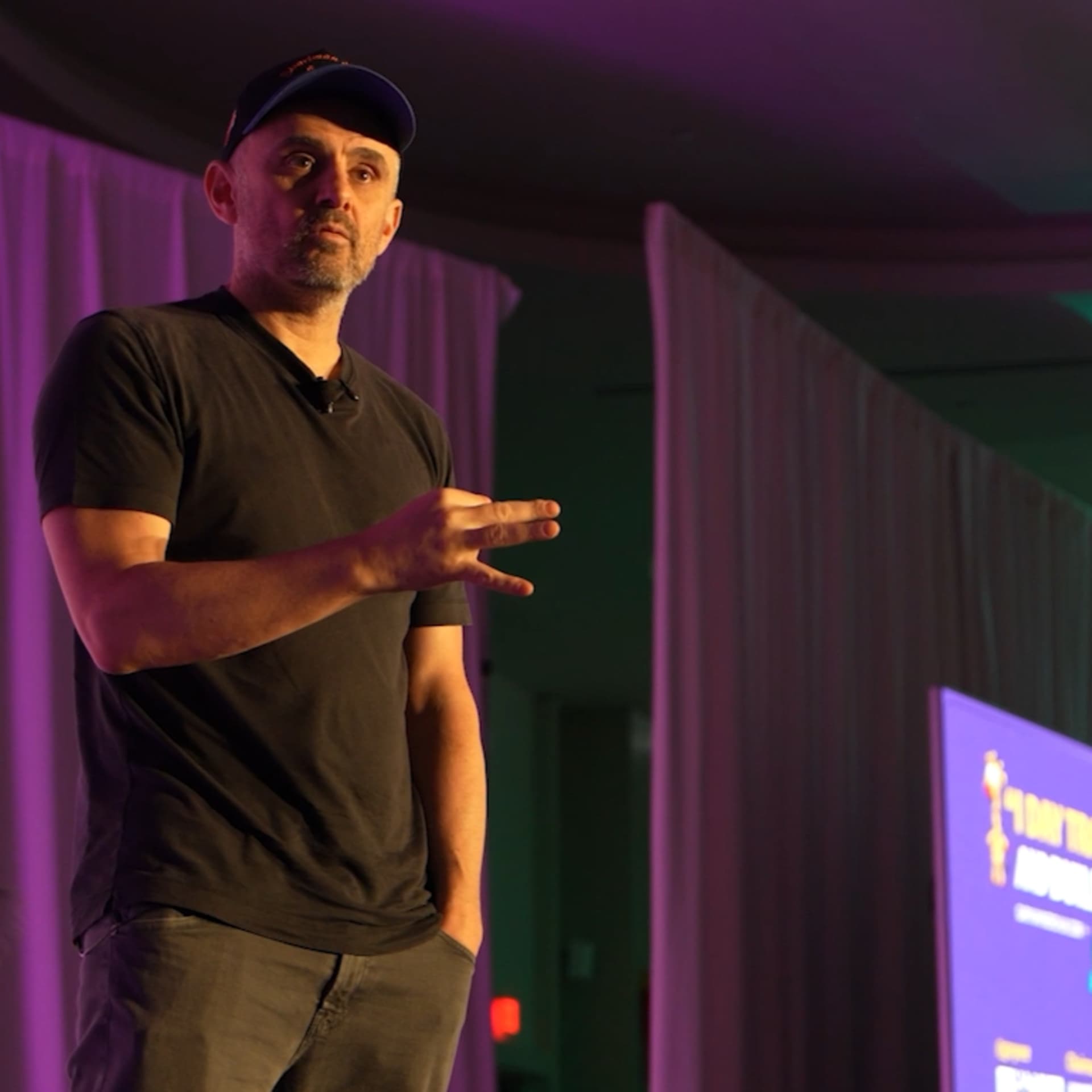
Episode Overview In this episode, Gary Vaynerchuk delivers a keynote address at the Possible conference, focusing on marketing strategies that will be effective in 2025. He emphasizes the need for brands to adapt to changing consumer attention and the importance of creative content in marketing.
---
Key Themes and Concepts
- Shift in Marketing Paradigms
- From Paid, Owned, Earned to Owned, Earned, Paid:
- Gary argues that the traditional framework of marketing (paid, owned, earned) is outdated.
- He suggests that businesses should focus on organic social media creativity before spending on paid media.
- Creative is Key:
- Historically, paid media was used to cover up bad creative.
- Now, effective marketing relies on the quality of creative content, which directly generates engagement and reach.
- The Power of Organic Social Media
- Investment in Organic Content:
- Brands that do not over-invest in organic social media are making a strategic error.
- The algorithms of major social platforms favor content that resonates with viewers, offering brands the chance to reach their audience effectively.
- Real Measurement of Success:
- Gary emphasizes the importance of measuring success based on organic reach and genuine engagement rather than traditional metrics like views or ad spend.
- Crisis in the Marketing Industry
- The Need for Change:
- Gary expresses frustration with the marketing industry's failure to adapt, calling for a reassessment of practices.
- He stresses that agencies must prove their value or risk becoming obsolete as brands shift to in-house marketing.
- Merit of Creative:
- "Good" creative is defined by its ability to garner views organically; poor performing content should not be amplified through paid media.
- The Importance of Understanding Consumer Behavior
- Interest Media Era:
- Gary describes a transition from social media as a broadcast medium to interest-driven content distribution.
- Brands must create content that captures genuine consumer interest to thrive.
- Future Trends
- Emerging Technologies:
- Discussion on the rising significance of AI and blockchain in marketing.
- Gary foresees that the line between human influencers and AI-generated personas will blur, especially for younger demographics.
---
Key Takeaways
- Invest Heavily in Organic Social: Brands should prioritize creating and sharing engaging content on social media platforms before relying on ad spend.
- Measure What Matters: The effectiveness of marketing should be gauged by real engagement and sales, not vanity metrics.
- Adapt or Die: The marketing industry is at a critical juncture; agencies need to innovate or risk losing relevance.
- Focus on Relevance Over Production Value: The quality of ideas and content is more important than the budget spent on production.
- Embrace Change: Understanding shifts in consumer behavior and technological advancements is crucial for future success in marketing.
---
Audience Interaction
- Gary opens the floor for questions, providing insights on:
- The importance of identifying and engaging with superfans.
- Measuring the impact of organic content.
- Strategies for brands to connect with older demographics who are often overlooked.
Conclusion Gary concludes with a call to action for marketers to be more genuine, focus on what truly matters, and leverage the current technological landscape to enhance their strategies. He emphasizes the importance of gratitude and common sense in both life and marketing.
---
Final Thoughts This episode serves as a powerful reminder of the ongoing evolution within the marketing landscape. It underscores the necessity for brands and agencies alike to prioritize meaningful engagement, adaptability, and truth in their marketing efforts to remain competitive in the digital age.
Written by AI. May contain mistakes. Listen to the episode to check what was said.
Transcript
Automatic transcript. May contain errors.0:00I would like to focus today's talk on the biggest opportunity in marketing marketing, Um and selling it śmall I'm that you wanna let's my vying Yeah. Yeah, we should clap that up.
0:35You know, the format I'm taking with this talk actually, and you can see a mic there and a mic there, is to just go into Q &A. I think at this point, I've been fucking talking for 15 years about the same, literally about the same shit. And so I'd rather go into Q &A to see if there's anyone in the room that has a nuance underneath the thesis, so please start lining up because I'm gonna spend three to five minutes max right now to set up the conversation, but I'd love to jam with all of you, so please start lining up. The jam of the conversation for the ad folk in here is very simple, which is, there's a couple things that stand out to me.
1:15Number one, I believe over the last 70 years of marketing, working media dollars have been used to disguise bad creative, and I believe that we are now living in the era of working media dollars being used to amplify good creative. And I do not believe our industry is actually doing that and I want to talk about that and compel people to understand how real this is. It sits in a classic marketing framework which is a lot of people have been in the mindset of paid, owned, earned and I believe we're actually living in the owned, earned, paid era. And so what that means, if I put it into English for some of the entrepreneurs here or salespeople, very simply put, very simply put, I believe any Fortune 5000 company that is not remarkably over-investing in organic social media creative is making a fundamental strategic mistake.
2:18Because the way we sit today with these seven social networks is that when you put out creative, they are fully running a model that is based on relevance. And for the people that love the old school marketing books, good news, I agree with you. Relevance creates consideration. Consideration leads to people buying. The fact that we have at scale the biggest tech companies in the world, Google, Shorts, Meta, Facebook, and Instagram, TikTok, ByteDance, TikTok, the biggest marketing companies in the world the biggest tech infrastructures in the world have algos when we post on social that are desperate for that content to reach an audience that's actually interested in it so that you all stay on the platform so they can sell more ads is the greatest opportunity for marketers ever, ever.
3:13For the first time in marketing history, the creative creates reach. That's insane. and it creates reach based on relevance. For 70 years, we have been guessing in boardrooms through our egos and our politics on what the campaign or commercial should be, and then spend an ungodly amount of money disguising that it was probably a piece of shit. And now we can post at scale with content that is relevant, see that human beings, not us in the industry, care about it and have the ability to amplify it or campaign on top of it. I believe a paid, owned, earned model is broken. In fact, every business that I own, the ones that are on that screen or anything that I'm the chairman of the board of or a very disproportionate investor in has in 2025 gone to a model where we do not spend$1 of working media until it has been affirmed organically on social.
4:19There is actually, if I may, with all due respect, zero reason to spend media dollars amplifying any piece of creative that has not been affirmed with organic reach in 2025, yet 99.9 % of the brands represented here and agencies will do such. I don't know what else to say. It's black and white. The VC, the ecosystem of entrepreneurs in here, the companies that are going from zero to$50 million a year in revenue are only living in a social organic first framework. And then there's us. I beg our industry. I know the financial reasons we're not doing this. I get it. I get the agency stuff. I get the brand stuff.
5:10I get the bullshit reports that justify all our behavior in this industry from the MMMs and the MMAs and everything else. I get it. But there's not one fucking person in here that has a half a brain that doesn't know that I'm 100 % right. And it is time we act as much because for my fellow agency friends, I do not view us competing. I view us as an industry in a crisis where if we do not prove value, we will not exist. There's a reason shit's going in-house. It's because we fucking suck. Thank you, everybody. I'll see you later.
5:51For the first, by the way, for the first time ever, brands, agency, friends, we can measure creative. Creative does not get views in social if it is not good. I don't care what your opinion is or what color of fucking fuchsia you like or what adjective makes you get going or what's on brand from something written 100 years ago. If it doesn't get views, it is not good. good is defined as views achieved organically nothing else we are here i'm sorry to tell you i am also mad i also desperately wish that this was the don draper 1950s i would drink tons of alcohol in midtown manhattan i'm charismatic as fuck and i can sell my ass off i would have fucking crushed it.
6:41But we're not here. And the level of merit in creative that everybody is trying to run away from is not going anywhere. So either we learn the new craft, which is knowing how to make creative that actually gets views, not the production value of an$800 ,000 video that nobody's gonna watch, or we will die. both the agencies and the brands. And that is where we're at. And now I would like to open my Q &A. Thank you.
7:20You've spoken about most recently, first time I heard it, was on a LinkedIn Live interview back in November about the paradigm shift of social media is now interest media. where content is not being pushed by algorithms to people who are connected to you, but it's being pushed to people who have that interest that connects with that piece of content. To your point, Elliot, the entire rant that I just went through, there is no doubt in my mind that we are no longer in the social media era. We are fully in the interest media era. We are standing up accounts that have no followers and getting more views on our content than the accounts that have a million followers.
8:02It's over. Go ahead. I'm so happy that I was able to set that up for you. Thank you, sir. My question is, what does the industry do? What are you doing to track it authentically, accurately? Vanity metrics, it all can be manipulated. Now that we're in a range of interest media, if someone's interested in it, they're shoving the content to them. Let me jump in since we're jamming. Yeah. Miralax, a brand we work on, which normally gets 300 views on its creative before we started working with it, had a video the other day that got 36 million views. Immediately, in the next 72 hours, miraculously, stunningly, its Amazon rank went from four, whatever, some absurd number, 437 ,000, to in the thousands.
8:59They sold an obnoxious amount of product. Elliot, the only thing VaynerMedia has been measuring for the 15 years we've been in this industry is sales. Now, sales doesn't come immediately sometimes, and you've got to figure all that out, and I'm very empathetic that I will forever die on this hill. Measuring brand is like measuring love and God. It's not going to be a black and white thing. But again, for the people in this room that are paying attention to the miraculous things that have happened to Chili's Restaurant or Abercrombie & Fitch, there is a 100 % correlation to organically earned views and business results.
9:40Not posting a piece of crap on social media and spending media dollars to amplify it to give it a million views. No, no, no. Organically earned views lead to sales. And Elliot, the reason everyone in this room will be on this bandwagon is because the data's black and white to the sales. and that will be too compelling to ignore no matter how much some in this room want to hold on to yesterday. Same thing with Ocean Spray. You've talked about the mango gummies, crazy moments. There's every day on social, on TikTok and Instagram, there is a video that is going viral that is creating more financial impact on brands than every TV commercial that that brand has run in the last several years.
10:26it's just real life again we can continue to live as if not we continue to fight for things we make more margin on or what our company does for a living that does not map to this but it doesn't make it any less true and i do believe the walls are closing in on us and that's it and then leading it to the creator economy and i'll finish with this so i can sit down and give other people a chance is superfans, right? Everyone wants to know and identify who their superfans are. How do you see that growing that you can be able to identify it, not to manipulate it, but to quantify it and to be able to do something with it authentically?
11:09Yeah, I mean, I think, look, people will continue to build CRMs. There's tons of startups. There's, you know, new startups like WAP and others that are giving you the data instead of it being owned by the social networks. The blockchain is an incredibly important technology that will continue to grow. You know, that data, I feel more comfortable that this room has mapped or has optionality. The question is how many people understand that their heavy users or their superfans are actually a disproportionate impact on their business. That gets a little blurry, but the ability to identify and manage and engage, those pipes are in place.
11:45Thanks. Thanks, brother.
11:50Hey, Gary. Thanks so much for the time. I really appreciate it. What's your name? My name is Jacob Wallach. I run a social first consultancy called Social for the Win. Awesome. I'm also a creator. I have about 500 ,000 followers on TikTok. I teach Microsoft Excel in a fun, sassy way. Nice. With my character, Excel Daddy. No need to call me Daddy. I'm thrilled to call you Daddy, Jacob. Absolutely. I love it. You know, I think what you're saying is incredibly on point. You know, relevancy, relatability, organic first, obviously being such an important thing for a lot of brands. But I feel like we look at brands like Duolingo as the case study to determine what's successful in terms of organic.
12:29But if you look at the spectrum of social, not every brand can do outrageous and ridiculous content and move at the speed of sound like that. I agree. How do you see brands building more evergreen, organic, creative strategy with more 10-pole creative moments that they can then optimize on? Because I feel like from my side, most brands are really not focused on that. They don't see the value. I agree that there is a ton of value, but how are you positioning it as a way to drive relevancy, to stay in the game and build that? By doing, again, it's fun to now be so part of this industry because I have years now, not just thesis.
13:00By doing what we've always done, we've never told a client that virality is the punchline. We believe that getting 5 ,000 and 10 ,000 views every day, three, four, five times a day on four different platforms adds up, and the math supports us. Again, because we played outside the matrix of reporting and have asked our clients to judge us on the health of their business at the end of our relationship, we've been willing to lose and win on business results. Obviously, that oftentimes has led us to try to get the media and the creative together so we could be fully held accountable. So obviously, when we don't have one or the other, it's a little bit harder for us to fully play on that.
13:37But now, just on organic social creative, we're able to prove our merit because of what we're talking about here. So honestly, it's just about truth telling. When we pitch a client, we're not like, Vayner's gonna make you go viral. We're like, we are gonna get more views per day across the board. Here's the big one for all the business people here. Because we make such a high volume of creative, as a creative agency, we're also a production company. We don't come up with an idea and pay someone else to make it. So for the same price that they're accustomed to paying a creative agency, they get creative and production output daily.
14:11and because we're producing so much creative, we're able to win on relevance. When I look at the crowd here that I can see in the front rows, for me to sell Ocean Spray or an Excel course or these sneakers, I need a lot of different content to get everyone, I got different genders, races, interest, income levels. I need relevance at scale with as many different consumers as possible to actually grow my business. I love marketing because it's offense for business. This is business for me. I'm not trying to win some bullshit headline in a magazine. And so to me, we just tell them the truth. This is what you're currently doing.
14:49This is how you're wasting your money. You're buying potential reach, not actualized reach. I believe in reach and frequency too, but you need the reach to be seen. This industry is very good at buying fake reach. Oh. And I just said one other quick thing. So, you know, if you look at companies in the gaming space and in the sports space, they have a ton of IP, right? Even just like traditional media, like look at Family Guy or South. Of course. There are people who are literally just out there clipping content on a continuous basis, putting it on social. And it's basically free views for brands, right, without them having to do anything.
15:23Well, that's intellectual property is the beast of the game for sure. Absolutely. But how do you look at brands who don't necessarily have that intellectual property, like maybe within the CPG space or, you know, within home and personal goods, and give just general creators the opportunity to put out content for them? like how do you position that or how do you tell them, hey, you need to create different types of IP to then let your audience kind of take control and push it out there for you? Brother, I'm just trying to get them to give a fuck about social. Like, yes, we have those conversations, but the reality is is that, for example, if this is day one and if this gentleman's the CEO or CMO of Reebok or Dr.
16:02Pepper, my opening line is 20 % of your entire marketing budget of the entire marketing budget, not the creative budget. 20 % of your entire marketing budget needs to be allocated for social creative production. Sure. For a company like a Dr. Pepper that spends, I'm going to make this up, I have no clue, but if they're spending$100 million, I'm asking for$20 million in fee for social production, and they're spending$500 ,000 a year. We've got a long way to go for this ecosystem to understand how much they're getting outflanked by much smaller brands, much smaller brands than the Fortune 500 brands in here are spending three to four X in real money on social creative.
16:47They don't even understand what's happening. And so before I get them to think about IP or resurrecting the Jolly Green Giant or doing smart shit or understanding what WAP is or all this stuff, I need them to even understand they're not even in the game financially. You have multi-billion dollar companies getting outspent in the most important channel in marketing today, five to one by a brand that didn't exist a year ago. Because they want to spend$900 ,000 throwing a fucking party at possible.
17:19Thank you. Go Jets. Go Jets. Hey, Gary. My name's Scott. Thanks for all the pep talks over the years. Thank you. Virtually. Thank you. I'm the president of a company called Map.Media, and we do geographically focused influencer marketing. Okay, like that. In-house, we own Iowa Chill and the Midwest First Everybody social media brands. And we focus on local creator authenticity. Love. I want to back into the title of your talk about social e-commerce, virtual influencers, and reaching Gen Z. Gen Z is notoriously hard to get to trust. And I'm curious if you know anything about how they will perceive virtual influencers.
18:02Well, they won't know the difference. Won't know the difference. Every fucking Gen Z and Gen Alpha kid in the world in 24 months will see a video and have no fucking clue if it's a person or an AI influencer. Thank you. Thank you.
18:20And that, this is why I'm glad you asked the question, because what I get excited about is my biggest belief, brother, and you're a young entrepreneur, is put yourself out of business before someone else does it. If you do your homework, don't take me for an answer, but if you do your own homework, it sounds like you have a little context of me given the way you started this conversation. If I've got any credibility with you, I hope that leads to you doing five hours of homework the way I've done 50 hours of homework on this subject matter. I believe you will see how real what I just said is. And now that allows you a 24-month window to decide what you want to do with that information.
18:53Do you want to build your own AI infrastructure? Do you not? And that's why I want you to know it. But I promise you right now, almost every person in this room has already seen an AI influencer that they have no clue is an AI influencer. Of course, I know the ones that are super obvious and like all that shit that you see on Instagram, you have seen AI influencers that you do not realize are not people. And like, that's today's tech. In 24 months, it's game, game over.
19:21Hi, Gary. I'm going to go to the opposite side of the demographic. What's your name? My name is April and I have a startup agency called Openly Gray. Amazing. And so we are working with the brands to focus on the gray market, 50 plus. Love. And I realize that a lot of brands are sleeping on them. Sleeping. And, you know, there's the great wealth transfer that's about to happen, but these people are still alive and thriving and they are holding the purse strings. They're fucking 50. Yeah. I always laugh at this like people live to 90 you know that right everybody like they're fucking 50 right right have you seen 50 year olds recently they all act like they're 27 they're 50 they're definitely not gray they're all fucking coloring their hair what are we talking about here keep going yeah so I just wanted to know your perspective on any advice for brands that to stop being idiots they have the money and we call openly gray Yes, I understand.
20:22Facebook Blue. Facebook. Right this second, of the seven social networks that I'm most obsessed over and their algorithms is disproportionately the most interesting one to market on. Yeah. Absolutely. There is an ungodly amount of attention at scale on Facebook Blue from 45 to 70 and they buy shit. What would I tell brands? Be a fucking marketer. how would you like i'm aware that we become youth obsessed yes i love a good gen alpha as much as the next one but like when you're a big brand for how many people here are working for a fortune 500 or are an agency that works with fortune 500 just raise your hands just hi if you don't mind thank you like at that scale we need to sell to everyone of course there's going to be certain products that don't match i mean if you're selling to elder like diapers for elderly people like 20 year olds might not necessarily, but I just, what I love is that our industry lacks a severe level of common sense.
21:27What would I tell brands? If you want somebody to buy your product that's 50 to 80, market to them with content that they would like to see and maybe buy your product in places they spend their time. Oh, by the way, they fucking live on Facebook. Absolutely. Thank you. Yeah, thank you. Thank you.
21:49Hi, I'm Kit Huffman. I'm building an agency. We do content communications for startup tech. Amazing. My question is just, I think what is so inspiring about your career and just the agency that you've built is that you're up playing with some of the biggest marketing agencies and you are in just, like you said, 15 years competing with some of the biggest marketing agencies. and just me myself as a founder like me having so much excitement and also like anxiety about like I feel so excited about what I am building at what point or if you could just maybe walk us through like what were the emotions that you were maybe feeling when you were like first starting off or what was like maybe there was a turning point or a moment that you're like I'm not just building another marketing agency I'm gonna build like one of the biggest fucking marketing agencies thank you and good luck here's what I would tell you based on what I understand you're asking me the reason that things worked out the way they did for us is I built an internal culture that was focused on one very important nuance that this industry has done very poorly which is I as the founder and the owner desperately cared more that the people in my agency cared about each other than the clients.
23:14Advertising agencies are really bad at over bending to keep the business and doing shit they don't believe in. I was willing to be patient. I knew that what we were focusing on was going to take more and more market share. And I was willing to leave a lot of money on the table and a lot of lumps on the table in the first five to 10 years to get to a place where I thought we were stronger, grounded on continuity. How many people work at agencies? Raise your hands. So this crew knows, like the average time someone spends at an agency is non-existent. We have almost 100 people that have been at the company for over 10 years of a 15-year company.
23:57I really thought that if I could keep continuity with people that we would have speed and trust and I just didn't compromise. for you to build what you want to build it's going to be about you not compromising to get the money in the short term and I think agencies do a poor job with that and they become agencies are always like I don't want to be like a vendor I want to be a partner to be a partner you have to speak your truth and too many agencies bite their tongues to keep the next check coming which ironically is why they lose the client in the end I ask one follow up How did you find your truth, especially when you were starting?
24:38I'm a practitioner. I'm not like these people.
24:44What we sell at VaynerMedia, I do. Today, I wrote the copy for the social media post that you saw if you follow me. My truth was very different. I was selling something I already did and continue to do to this day. the skill in getting views and social through your thumbnail the first three seconds the copy and the overall piece of creative whether in picture written or video form is the most complicated and most important skill in marketing today i do that every day for not only gary v but for wine text for v friends i am the practitioner ceo of my company i am not in one meeting in my company where I don't know what's going on better than everybody else in that room.
25:31That is unheard of in this industry. The CEOs I compete with live in France and are bankers. Thank you. Thank you.
25:44My question is, where does podcasting come into play when it comes to both agencies advising large brands and large brands that are trying to figure it all out? Because in our experience over the past decade of helping people figure out how to get into the world of podcasting and where their role is with it. They're just wildly confused and lost. And a majority of them are, we don't need that. We're not really a media company. I know you've been preaching the podcast gospel for quite some time now. I have some good news for you. There's a tipping point going on. I've spoken to more B2B companies in the last six months about them finally doing their own podcasts as a production day for the social creative they need for LinkedIn than I have in the last seven years.
26:27That's where I would focus. The future's bright. The future's bright if you're able to communicate to everyone in here that the podcast is the added value. It's actually a production day for creative. I would argue that the people in this room that are experiential are in the same place. I would argue today that every experiential execution and marketing is actually a production day for social creative. And when you mix that together, it becomes very ROI positive, I would position it that way. If you tell them we're not doing a podcast, we're doing a couple of production days for creative and you happen to get the podcast for free, I feel like you're gonna get a very big audience.
Read the full transcript
27:07What does it look like for the world of biz dev and sales though for opening up doors when I'm trying to get a coffee with you, that may not be available. But if I invite you to a interview on Zoom. You know how I've said this, this has been forever. When you host the party, you win. When you start a podcast and invite your clients that you want on it, it always works. You've replicated something just now that I've been talking about for a decade. It works. I've watched it time and time again. And for anybody in here, and there's a lot of salespeople running around Miami right now. For a lot of you that will spend the money to come down here and shoot your shots and make your decks and try to biz dev and sponsor stuff and cocktail hours, if that money and energy went into a podcast around the industry that you're in and you invited these CMOs that you're so desperate to meet downstairs, as guests, you would have them captive for two hours.
27:58Thanks, brother. Love you, man. Good to see you. Thank you. Hi, Gary. Great seeing you this year as well. Pleasure. So I'm Russell Karim. We built an AI-powered company to streamline the supply chain for uniform and promotional product industry globally. For what, brother? So we built an AI-powered technology to streamline uniform and promotional product industry. Very cool. Okay. So I know, you know, just listening to you all these years, you talk about live selling. I mean, so much about the live selling. What do you think, like this geopolitical influence on social platforms or even the global supply chain, how does that impact that future of live e-commerce?
28:42Look, politics, I mean, I love what, I don't, so I was a terrible student. student, but I was really good at history. You know, I'm fascinated by people who don't know anything about history. I don't know if you know this, but there's always shit going on between countries.
29:02Like, we act like this trade war between us and China, some like unheard of phenomenon. You motherfuckers ever hear about the Cold War? Do you know that your grandparents never went to Eastern Europe for 70 years? you couldn't go to Poland or to USSR. Like, what do I think? I think it's fucking life. Like, I don't even think about that shit. Like, if it's more expensive, you either pass it on to the customer or you take the hit. That's called business. During COVID, we pass it on to the customer. Right now, the prices with inflation are too high, so everybody with supply chain is taking the hit.
29:37So they're cutting costs, firing people, spending less on marketing. This is business 101. One, live shopping, to me, maybe why you're bringing it up is live shopping happened in China 10 years ago. It is a good trillion dollar industry in China. It will be the same in the Western world. TikTok shop and whatnot, and soon to follow eBay and Facebook and Instagram and everybody else, the QVCification of social media is here. It is a massive opportunity for the people in this room who are like not in love with what they do for a living. Raise your hand if you hate your job real quick. Just curious.
30:14Yeah, I know your boss is here. I was just trying to get you. For the half of you that actually hate your job, even though none of you raised your hand, if you're looking for an opportunity that might be interesting to you, I could not push you more to do some homework on live social shopping. There's some really fascinating human dynamics in live social shopping. I think there's a subconscious tipping mechanism so people spend more because they're actually being entertained so they end up buying stuff almost like a tip. I've been really studying it. I've been in it now for about a year, very deeply, many, many, many, many hours.
30:53I believe live social shopping is one of the most interesting things but that is a separate, completely different thing than supply chain like realities. That's just, that's always gonna happen. There's always gonna be something, bro, right? Like Japan had a financial crisis in the 80s and it fucked it up because we were all in on Japan and fucking 2008 crisis happened. In 1987, in October, the stock market collapsed and the junk bonds and in 1979, people are like, it's never been worse. I'm like, motherfucker, in 1979, gas stations had no gas. Like, I don't understand. Like, let me just, this is a, I know I'm over time.
31:29This is a perfect thing to end. I apologize to everybody in line. Feel free to, my phone number's right there if you want to text me your question. I'm flying to Toronto tonight. I'm happy to fucking answer it. I'm just gonna leave you with this. We have it so good that we think it's bad.
31:48We complain about dumb shit. Everyone's like, it's never been worse. The Black Plague was worse.
32:00That Holocaust thing was no fucking joke. Like, World War II was messy. we are just so fortunate that we're around to complaining about dumb shit people talk about like I don't make 10 million a year I'm broke we've lost our fucking way friends in marketing for damn sure but even in life so I think we need to be more grateful more grounded less materialistic more humble the fact that you're fucking breathing is a win we need to calm the fuck down we gotta stop using thank you
32:39We need to desperately, desperately stop weaponizing words. You're not anxious, you're inconvenienced. Like we have really fucked our shit up. We've created new words. I have imposter syndrome, you're insecure. We didn't need another word. So let's just be grateful and let's bring common sense and gratitude back. It'll be good for your life and it will make all of you much better marketers because our industry is full of shit. You do not need to make TV commercials that cost millions of dollars and then spend millions of dollars to amplify it. The world has moved on, I'm sorry. We bought, buying the lowest cost programmatic CPMs, I don't know if you heard this, you get what you're paying for.
33:34You get excited about$3 CPMs, it's on fucking mommymommy.org below the fold banner ad on the right. It's fucking garbage. And don't get me started with principal buying and all the other shit we make up to fucking make margin that's good for the agency and not for the brands. We need a fucking wake up call as humans and definitely as an advertising industry. Otherwise, it's going to be much worse than you think. So I ask all of you to have the courage to start telling the truth and start getting educated on what's really going out there because that will be good for everyone and I thank you for your time and I wish you the best possible ever.
34:12Thank you. Thank you.
From the publisher
In this keynote from the Possible conference, GaryVee goes off-script and into the real tactics brands need in 2025. From attention shifts to marketing ROI to the power of creative, he answers raw, unfiltered questions from the crowd. Whether you’re a founder, brand builder, or agency lead, this is a must-listen if you want to win where people’s attention actually is.