In short
The episode asks whether tech billionaires—especially crypto figures—are gaining enough money and influence to reshape politics and governance, replacing democracy with blockchain-based systems.
Guest backgrounds
Matt Shea is a filmmaker and writer who reports on billionaires accumulating power via cryptocurrency. He presents the BBC documentary The Tech Billionaire Takeover.
Key claims
Justin Sun (Chinese crypto billionaire) became famous for buying and eating a Sotheby’s “Comedian” banana artwork for about $6.2M. Shea argues Sun’s wealth comes from Tron, a major blockchain used for crypto transactions, and that Sun has faced SEC fraud/market-manipulation allegations (Sun denies them). Shea links Sun’s political influence to Trump family crypto ventures (World Liberty Financial) and to the idea that wealthy elites want to replace government with code.
Notable examples
Sun’s banana; SEC investigation paused then dismissed after Trump took office; Sun’s role as lead investor in World Liberty Financial; Liberland micronation “elections” via token “Liberland Merits” (more money = more voting power); Curtis Yarvin’s “CEO monarch”/corporate-state theory.
Written by AI. May contain mistakes. Listen to the episode to check what was said.
Chapters
Tap a time to open that second in VOThe $6.2 Million Banana Auction
1:01 to 3:10
Discussion on the bizarre auction of a banana duct taped to a wall.
“when it was first exhibited at the art bars on Miami Beach in December 2019.”
Introducing Justin Sun and His Wealth
3:10 to 4:14
Exploration of Justin Sun's background and rise in the crypto world.
“And today on The Global Story, who are the tech billionaires?”
Understanding Blockchain Technology
4:14 to 6:00
Explanation of blockchain technology and its significance.
“such that they have enough of it to buy$6.2 million bananas.”
Justin Sun's Controversies and SEC Investigation
6:00 to 7:45
Overview of Justin Sun's controversies and SEC investigations.
“The other significant thing about Justin's son is he is in business with the Trump family.”
The Trump Family's Crypto Ventures
7:45 to 10:41
Insight into the Trump family's involvement in cryptocurrency projects.
“We invested around$125 million, making us also the largest investor of the Trump token.”
Justin Sun's Political Aspirations
10:41 to 11:48
Discussion on Justin Sun's political role and aspirations in crypto governance.
“And it was very interesting to me to learn the rise of supposed debanking is also linked to the rise of crypto that it's seen as an alternative, which was not something I was familiar with before.”
The Future of Governance by Blockchain
11:48 to 14:01
Exploration of the potential for blockchain to reshape governance.
“The White House has denied that President Donald Trump is profiting from his presidency.”
The Concept of Digital Governance
14:01 to 16:50
Explore how Justin Sun envisions governance through blockchain technology.
“And Justin Sun believes, and this will get us to the Micronation story, Justin Sun believes, like many other tech billionaires believe, that the system of government we now have, i.e.”
Challenges of Creating a Micronation
16:51 to 18:02
Discusses the practical challenges faced by the micronation of Liberland.
“I mean, this sounds like a pretty dystopian view of the future, especially if these are ethereal places, not really real places.”
The Future of Governance According to Tech Billionaires
18:03 to 19:22
Understanding the ideology driving tech billionaires and their vision for governance.
“But in practice, I think it's kind of adolescent.”
Show all 13 chapters
Curtis Yarvin's Controversial Ideas
19:23 to 22:23
Examines Curtis Yarvin's radical views on democracy and governance.
“One thing that people should know about the tech billionaires that I've met and the tech millionaires I've interacted with is they see themselves as the ones with the real power.”
The Dystopian Vision of Tech Utopians
22:24 to 25:54
Analyzes the dystopian implications of tech billionaires' visions for society.
“historically in periods with large numbers of small states.”
Reflections on the Disconnect in Tech Culture
25:55 to 27:55
Matt Shea reflects on the disconnect between tech billionaires and reality.
“just income just to be alive by the blockchain by whatever you know so the blockchain would be the ultimate provider in a way.”
Transcript
Automatic transcript. May contain errors.0:00This BBC podcast is supported by ads outside the UK. Hi there, I'm Asma Khaled. And I'm Tristan Redmond. And together we're the hosts of the Global Story podcast from the BBC. For those of you who might be new to our show, we here at the Global Story dive deep every weekday on one big story at the intersection of where the world and America meet. And you can now watch the Global Story on the iHeart app. Catch every brand new episode every weekday. Just tap into iHeart to start watching. and we hope you enjoy the show. What do Beatles member Sir Paul McCartney, YouTube megastar Mr Beast and former Facebook executive Sheryl Sandberg all have in common?
0:43They're all being discussed in the new season of Good Bad Billionaire, the podcast which explores the lives and fortunes of the world's super rich. That's Good Bad Billionaire from the BBC World Service. Listen now and search for Good Bad Billionaire wherever you get your BBC podcasts.
1:00Ladies and gentlemen, the viral sensation that has skyrocketed to universal recognition when it was first exhibited at the art bars on Miami Beach in December 2019. We're in New York with a Sotheby's auction. We're going to begin at$800 ,000,$850 ,000. $850 ,000,$900 ,000. Thank you, sir. Valuable art is being auctioned off, art that's worth millions. 950 is with Opelie. One million is with me already, actually. A piece comes up for auction. Here it is, in all its splendor. Maurizio Catalan's comedian. And the gavel comes down at$6.2 million. The Catalan is yours. Congratulations. Thank you very much indeed.
1:42A piece of art is a banana duct taped to a wall. And I'm selling it here. The world's most expensive banana. A real banana. Yeah, just a banana. Like the ones you probably have at your house. but duct taped to a wall. The winner of this$6.2 million auction on a banana is a Chinese crypto billionaire called Justin Sun. That's bananas. The crypto entrepreneur who bought a banana duct taped to a wall for$6.2 million. Who's ecstatic that he's won it. And right after winning this, you know, multimillion dollar piece of art, he then says, I think I'm going to eat it. Justin Sun chowed down on the artwork, proclaiming, it's much better than other bananas.
2:28It's really quite good.
2:35If you find it hard to wrap your head around the idea of paying$6 million for a banana and then eating it, you're not alone. But wait until you hear some of the other things that various tech billionaires have in store for us. Are you up for government by algorithm, say, or the introduction of CEO monarchs? And untold riches, just maybe not for everyone. From the BBC, I'm Tristan Redmond in London. And today on The Global Story, who are the tech billionaires? What do they want? And what's their plan for the rest of us?
3:21I mean, look, really he's purchasing the display authority. So he's purchasing the right to duct tape a banana to the wall and call it comedian. I'm talking with the filmmaker and writer Matt Shea. Matt's made a documentary called The Tech Billionaire Takeover for the BBC. And he's picked up some goodies along the way. I actually have one. You have... I had one. You have a banana duct taped to your wall. Congratulations. Justin Sun gave me one. And it came with a little thing that said, you are allowed to replace this banana, basically. You are worth$6.2 million. Congratulations, Matt Che. Well, the reason we're talking about all this, Matt, is that you've been doing some reporting on billionaires who are amassing enormous amounts of power and money via cryptocurrency, such that they have enough of it to buy$6.2 million bananas.
4:20You've made a documentary about this for the BBC called The Tech Billionaire Takeover. And in the film, you've spent quite a bit of time talking to this individual, Justin Sun. Who is he? So Justin Sun is a Chinese crypto billionaire. He is worth$8.5 billion. He's perhaps most known for eating that$6.5 million banana. but really the way he's made his wealth is through the crypto platform Tron which is one of the biggest crypto platforms in the world. Tron is what is known as a blockchain which is a very complicated and kind of mysterious bit of technology but it is essentially a decentralized encrypted software network that is not ruled over by one bank one authority one person but rather exists on many computers all across the world and it's where you can buy and sell crypto.
5:11So roughly speaking, cryptocurrency, if cryptocurrency is cash, blockchain is where you keep the cash, roughly speaking, a bank. Is that right? It's so difficult to explain the blockchain. It's a digital ledger that contains data. And that data is essentially transactions. For example, this person moves this amount of crypto from this wallet, crypto wallet, to that corporate wallet. All which is to say, it's a decentralized form of banking, essentially. Which is ultra secure in the ether in no one particular place. Yes. And crucially, is not attached to your name. It exists independent of people, right?
5:52Yeah. And so Tron processes around over$20 billion worth of transactions every day. The other significant thing about Justin's son is he is in business with the Trump family. So he was the initial lead investor in the Trump family's most profitable crypto venture, World Liberty Financial. And that is despite having several very serious controversies. He is someone who was accused of fraud, market manipulation, of running the crypto platform Tron, which sees the highest volume of illicit transactions. This is a platform that was allegedly used by mafia organizations, drug traffickers, by Hamas, by Hezbollah.
6:41And the guy who runs that platform is the lead investor in the Trump's main crypto business. Tron denies these allegations and says that it has innovated new technologies to allow law enforcement to crack down on illicit transactions on the blockchain and has seen a decline in illicit volume. So back in 2020, under President Biden, the U.S. financial regulator, the Securities and Exchange Commission, the SEC, began to turn its eye towards crypto. They claimed it was rife with fraud and criminality, and they began investigating people. One of the people they investigated was Justin Sun. SEC charged him with fraud, claiming he manipulated the price of his tokens and hid payments to celebrities who promoted them to the public.
7:25So Sun was being investigated. Then Trump was elected. I pledge to the Bitcoin community that the day I take the oath of office, Joe Biden, Kamala Harris's anti-crypto crusade will be over. And shortly afterwards, Sun invested in the Trump family crypto project, World Wifi Financial. I met with President Trump, Donald Jr., Eric and all his family. We invested around$125 million, making us also the largest investor of the Trump token. Shortly after that, the SEC, which was now staffed by Trump with crypto-friendly appointees, filed a joint motion with Sons Lawyers to pause the investigation into him.
8:12And within a year, the case was dismissed, along with a lot of other cases around crypto. Some people have pointed specifically to the timing of the SEC investigation being paused, being around the time that you invested heavily in the Trump family crypto projects. Yes. What is your response to those allegations about the kind of coincidence of that, Tammy? He can say that, right? No comments. No comment on the current case. It's worth saying that Justin Sun denies those allegations, that the Securities and Exchange Commission case against him has been dismissed. And also that he says that Tron is now leading the way in creating new technological innovations to combat illicit crypto transactions and that they've seen a huge decline.
9:04But those controversies are there and they didn't stop the Trump family from accepting him as the lead investor in their crypto project. Why would people who are into the blockchain want to hide or obfuscate what they were doing with their money? That's a really good question. One of the main appeals of cryptocurrency is that no one can see whose money it is, which means it's harder to tax, it's harder to regulate. You know, it's traceable. Your public kind of encrypted key is traceable and visible on the blockchain. But the private key, the you behind that is invisible. Trillions of cryptocurrencies have been used by criminal organizations, by terrorist organizations.
9:48But, you know, there are other reasons why people want to use crypto. It's quicker than a bank transaction. A lot of people see the banking industry as kind of corrupt or unfair, and they see crypto as a way to liberate us from that. That certainly is something that the Trump family says, and when they advertise their reason for creating world liberty financial. Once we did get political, which we got quite political, we woke up one morning and had 300 bank accounts just eliminated. You know, Donald Trump Jr., you can see a bit of him in my film, he often talks about how his family, the Trump family, were debanked when they became political.
10:27We got into crypto because out of necessity. We were debanked, so we came up with a solution. Which, you know, isn't really true. I don't think anyone would believe that the Trumps can't, like, have a bank account, right? But that's one of the reasons they supposedly created World Liberty Financial. The idea of debanking Trump's aside is a phenomenon which exists. And it was very interesting to me to learn the rise of supposed debanking is also linked to the rise of crypto that it's seen as an alternative, which was not something I was familiar with before. But what does the Trump family want from Justin's son?
11:03Why do they have such a close relationship? What I can say is that Justin Sun was the initial lead investor in World Liberty Financial. Now, what World Liberty Financial does is its main thing is minting a cryptocurrency product called USD1, which is what's known as a stablecoin, a cryptocurrency product that is theoretically linked to the US dollar. One USD1 is worth one US dollar. The Trump family has made around$2.3 billion off of their crypto ventures. Billion with a B. This is an unprecedented speed at which one family has gained wealth. The Worldly Financial is about as direct of a way as you can give money to the Trump family.
11:54The White House has denied that President Donald Trump is profiting from his presidency. But what is Donald Trump's actual relationship with this company, World Liberty Financial, as we can understand it? It's owned by his family trust, of which he is a beneficiary. I mean, that is unprecedented for a president. I mean, some presidents would tend to put their money or their assets in a blind trust. But, you know, the reason that this is an issue is because there are decisions that the president could undertake or that people could undertake around the president that could financially benefit his family trust.
12:31Anna Kelly, a representative for President Donald Trump, said of my film that this is the same tired narrative that Democrats have pushed against President Trump, his family, and his administration for a decade. President Trump only acts in the best interests of the American public. There are no conflicts of interest. Okay, so there is a huge amount of money, it would appear, to be made right now if you either devise a cryptocurrency of some description, or if like Justin Sun, you are in more of the kind of management, the blockchain side of things. Justin Sun has himself acquired a huge amount of wealth.
13:10He's invested some of that in this Trump family venture. But he is not just a tech billionaire. He's also a politician. I understand he's prime minister of a small micro nation called Liberland. And I want to give a shout out to our listener, Sean, here in Vancouver. Sean has been asking us for some time now to do an episode about micro-nations. So I'm dedicating this question to Sean in Vancouver. So how did Justin Sun become prime minister of a micro-nation? Well, so this is a really important question because we've seen how politicians can benefit from crypto. But what did the crypto world want in return?
13:56What do these tech billionaires want in return? Well, a lot of them want to rewrite the rules of how we govern society. And Justin Sun believes, and this will get us to the Micronation story, Justin Sun believes, like many other tech billionaires believe, that the system of government we now have, i.e. democracy, is outdated and can be replaced with the blockchain, the technology that underwrites cryptocurrency. So laws, voting, governance could all be transactions that are automatically undertaken via the computer code that makes up the blockchain. And that is how Justin Sun was elected the prime minister of a small libertarian micronation called Liberland, which exists on a disputed spit of land between Serbia and Croatia in the middle of the Danube river okay so how big is liberland and who lives there liberland is is tiny but it has about 200 companies registered the president vit jedlicia he essentially founded it because he's a tech libertarian there are no taxes in liberland and there you know there are a few permanent settlers on that spit of land but the the main kind of citizens of liberland they they struggle to visit There's conditions for visiting Liberland from the Croatian side, because I've got this five-year ban from Croatia.
15:25In fact, the Croatian police have gone in and destroyed their encampment a few times. Don't touch myself. Don't touch me. Don't touch me. This is the problem with starting a tiny new country. You sometimes have to contend with proper, bigger countries with police and military and stuff. And that's what's happening to Liberland. But Liberland is really, it exists more in the blockchain than it does in the physical world. You know, that spit of land is what's called a physical node. But it's really a digital country, if you will. And a lot of these tech billionaires think that we will all live in digital countries in the future.
15:59But how is Justin Sun elected on the blockchain? He was elected through a crypto token called Liberland Merits. The elections are every three months. They're taking place on blockchain and the person is elected with merits. So the people that have more merits are able to have more say in who is going to be in the leadership of the country. And can you purchase Liberland merit? Yes, yes. What that means is the more you buy, the more voting power you have. OK, so the wealthier you are, the more influence you have on how your home is governed. Exactly, which is arguably the case already in Western democracies.
16:36It's just that in this case, it's literally written into the constitution and the computer code of this country. So it's not one person, one vote. It's one million dollars, one million votes. Yeah, pretty much. Yeah. I mean, this sounds like a pretty dystopian view of the future, especially if these are ethereal places, not really real places. If I think of governance, it might be a health service sort of fixing an ingrowing toenail or educating my daughter or whatever. How is blockchain going to do those things? Yeah, so this is a really good question. So in theory, if the government's budget is on the blockchain and we vote on the blockchain with our tokens to allocate$50 ,000 of government budget to building a bridge, then that money would automatically be allocated to building a bridge.
17:35But then you're right. Then the question is, OK, but who builds the bridge? Well, maybe we can vote on which contractor builds the bridge, right? But then you still need a company and people building that bridge. And this is why this technology, I think, ultimately doesn't work, is it ultimately relies on human beings and people to implement it. And already you see in Liberland, they have politicians with titles like the minister for the interior and stuff. So the idea that the technology could basically replace all of government, replace all of laws, replace the banking system is one that everyone seems very excited about in Silicon Valley.
18:11But in practice, I think it's kind of adolescent.
18:41The Global Story on the iHeart app. Catch every brand new episode every weekday. Just tap into iHeart to start watching. And we hope you enjoy the show. What do Beatles member Sir Paul McCartney, YouTube megastar Mr Beast, and former Facebook executive Sheryl Sandberg all have in common? They're all being discussed in the new season of Good Bad Billionaire, the podcast which explores the lives and fortunes of the world's super rich. That's Good Bad Billionaire from the BBC World Service. Listen now and search for Good Bad Billionaire wherever you get your BBC podcasts.
19:18I mean, what's the ideology that's at the root of all of this? If you're Justin Sun, Prime Minister of Liberland or whatever title you might happen to have given yourself, what kind of world do you envision? What are you trying to build? One thing that people should know about the tech billionaires that I've met and the tech millionaires I've interacted with is they see themselves as the ones with the real power. They see themselves as the ones defining the future, governing the future. And they would like to replace the kind of what they see as inefficient, bureaucratic, human-led systems of government with a technology-based one and one in which the individual's freedom is paramount.
20:03and no institution, bank, or government can kind of take your money from you, your rights from you. But the ideas get weirder and weirder. I mean, we can talk about Curtis Yarvin. Matt, good to meet you. Pleasure to meet you. You too. Oh, my God. I just had the... Well, you went to go and meet Curtis Yarvin. Obviously, it's in these institutional meritocratic structures with these ancient brand names. Right. Can we save the bulk of the chat for the bench? Absolutely. So actually the amount that he has is not actually very high. Curtis Yarvin is an interesting character, isn't he? He's a name that I've heard floating around.
20:39Who is he exactly? Curtis Yarvin is a very famous near reactionary thinker. He looks a bit like Johnny Ramone. He has like long black hair and like a leather jacket. The punk singer. Yeah. He speaks in these sort of circuitous, rambling kind of rants about philosophy and history. And it's a little bit like if you've ever been to the Stone Circle at Glastonbury at like 4am, the kind of things that people speak to you. I don't know what you're talking about. I would never. it's essentially you can imagine it's that it's that kind of rambling except except this is also someone who has garnered the respect of peter teal um one of the richest people in the world what does he think he thinks that democracy is outdated and that we should replace it with something more akin to a kind of corporate monarchy where these tech bros that we've been talking about are actually are kings.
21:39I would define it as an accountable monarchy. It sort of centers around this notion that democracy has failed, that like the will of the people has not been successfully enacted by democracy. It's inefficient. And therefore, what we really need is essentially more like an enlightened monarch, or as he calls it, a kind of CEO king. I think that people can very easily see that there's a very simple analogy between a company and a state. A company has a CEO, an army has a general, a film has a director. This is just nothing other than monarchism. And that society in the future should be run, as he calls a patchwork, of almost city-states.
22:22So the patchwork system is the idea that the greatest human flourishing has been seen historically in periods with large numbers of small states. Where each one of them is actually more like a corporation than a country, and it has customers rather than citizens, and they compete for citizens like a company would compete for customers. And you could switch countries like you might switch gym memberships, for example, if one offers something more than you like than the other one. And these companies would be run by hereditary monarchs who are held accountable by a kind of shareholder aristocracy, a board who have shares in this country.
23:01And he believes this would be a better way to run society because corporations are more successful than governments. Okay. So Mr. Yarvin, his name is remarkable. His name makes him sound like a country music singer from the 1970s. Mr. Yarvin is not anti-elitist. He doesn't want to wipe away and get rid of the elites altogether. He just wants to replace them with another group of elites, if I understand correctly, who conveniently enough for tech billionaires are tech billionaires. But what does that mean for, you know, the kind of rank and file people like me who are not tech billionaires? Where's my say in all of this?
23:44In Curtis Yarvin's society? Yeah. Well, you don't know what you want. That's what he would say. So, I mean, like the masses often do not know what they want or what they want isn't enacted by democracy. Someone who might know what you want better than you is an enlightened CEO monarch, someone who's smarter than you, someone like a tech billionaire. The idea is a sort of enlightened tech despot. Yeah, exactly. Yeah. Justin Sun, who is a real life tech billionaire. Yes. Does he believe in this kind of stuff? Justin Sun believes that the government should be replaced by technology. And the important thing is, he believes that the Trump administration is helping enact this vision.
24:32He believes that the Trump administration is at least helping him enact his vision of replacing money with crypto, replacing the banking system with the blockchain. But what he really wants is to replace every aspect of government with the blockchain. And so I think we need to start thinking about not just how is this wave of money from the world of crypto affecting our politics. And it is a wave of money, by the way, because just in looking at the last election cycle in the US, for example, the crypto industry contributed around$238 million, which surpassed the fossil fuel industry, making the crypto industry now the most powerful lobby in the United States.
25:11That wave of money is clearly affecting our politics. but what do those people want in return? And when you dig into it, the ideas that you find often lead to wealth and power flowing directly into the hands of the people who are already the wealthiest and who control the technology. What's the future that tech billionaires, and you've met a few of them on this journey you've been on, what's the future that they envision for poor saps like you and me, Matt? their idea is that money will be replaced by crypto your job will be replaced by ai and you'll essentially live on some form of universal basic income which is doled out by if there's no taxes where does that money come from i mean you'll be given some kind of like just income just to be alive by the blockchain by whatever you know so the blockchain would be the ultimate provider in a way.
26:07Yeah, I guess so, yeah. You spend quite a lot of time in this world, Matt, so maybe you're blasé about it, but some of this does sound somewhat dystopian. What kind of impact does it have on you when you've spent so much time digging into it? The main sense that I get is like how far removed from reality the wealthiest and in some ways smartest, in terms of a technology type of smartness, people are.
26:45They really do believe that their brains are superior and that they should and could run the world better. they really are onto something that's left the realm of a business or technology advancement and entered the realm of a kind of spiritual semi-spiritual movement they believe that they really are accomplishing the most incredible thing in history and i think it's quite funny seeing it from outside perspective because you realize that they don't have one foot in reality they're only surrounded by people who are either trying to get money from them or who work for them were there to support them.
27:25So no one's in there being like, what the hell are you talking about? And I think a lot of them saw me, because I'm a journalist, I'm not trying to get money out of them. That was like a really rare moment for them to meet someone who they almost were able to open up to like a friend in a way, because they finally, there was someone who's like, isn't sucking up to them, you know? Tech billionaires get lonely too. Yeah, yeah. Maybe more than us.
27:53Matt, thank you so much. I'm not sure I found that reassuring and comforting as far as the future is concerned, but it was a story I think I probably needed to hear. Thank you so much. Thank you. Thanks.
Read the full transcript
28:12That was Matt Shea, journalist and presenter of the new BBC documentary, The Tech Billionaire Takeover. As always, our email is theglobalstory at bbc.com and a message to Sean, our listener in Vancouver. We hope our segment on Liberland today has delivered for you. You wrote us a message in which you said, quote, basically, I'm going to keep emailing you about micronations until you do an episode about it. And we read your message just as we were putting the finishing touches to this episode. So that was quite satisfying. Consider our mission for you completed, Sean. Friends, our sister show, The Global News Podcast, is available with the very latest news headlines for you, and you can find it on bbc.com or wherever you listen.
29:00Today's episode was produced by Zandra Ellen and Ron Keller. It was edited by Bridget Harney and mixed by Travis Evans. Our digital producer is Matt Pintus. Our studio managers were Rowan Madison and David Evans. Our senior news editor is Chyna Collins, and I'm Tristan Redman. We'll be back again tomorrow. See you then. Cheerio.
29:43And you can now watch the global story on the iHeart app. Catch every brand new episode every weekday. Just tap into iHeart to start watching. And we hope you enjoy the show.
From the publisher
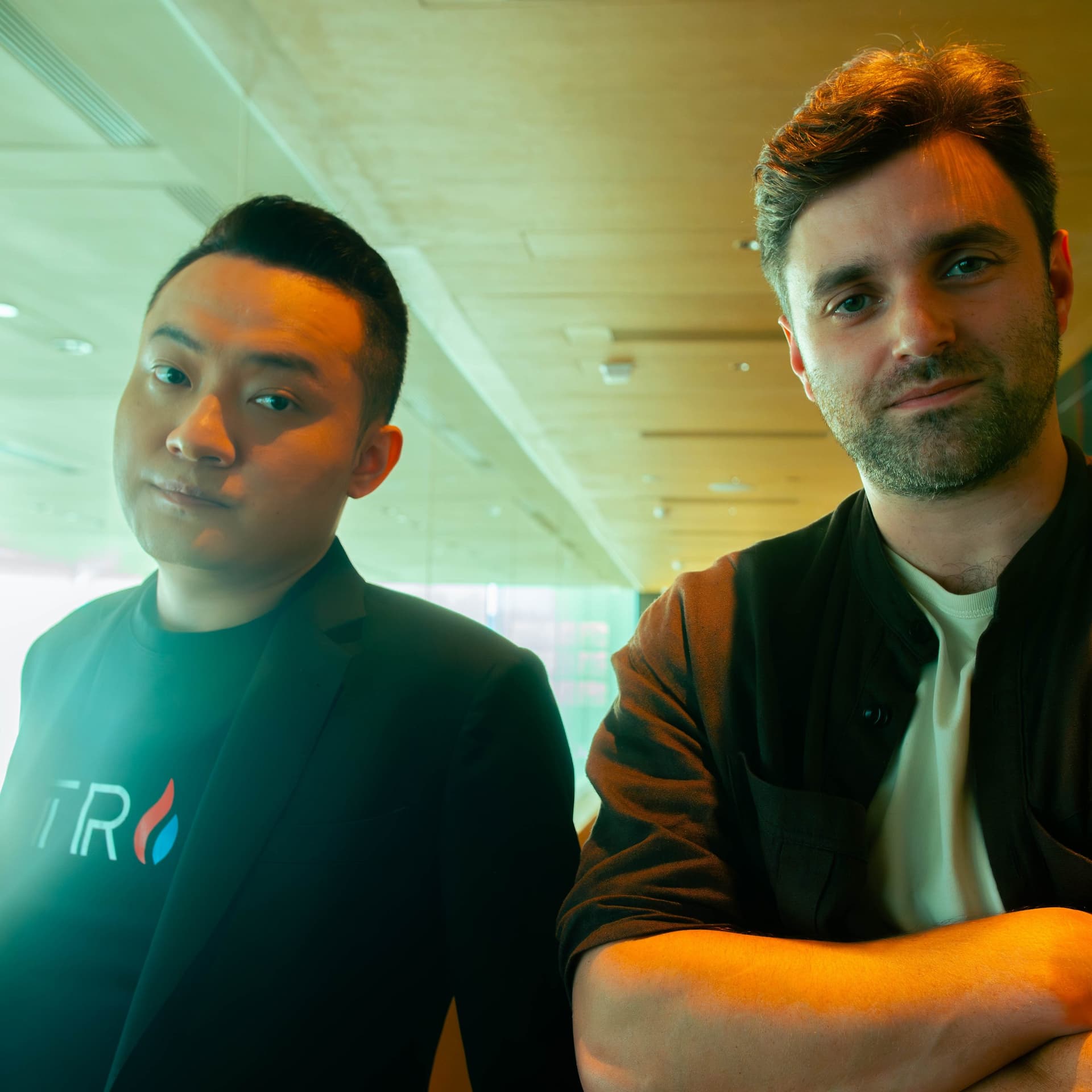
According to a recent financial disclosure, President Trump made more than $1.4 billion last year from business dealings in cryptocurrency. Though the White House has denied Trump was profiting from the presidency, he has been championing crypto in recent days — describing himself in one news conference as a, "big crypto guy". Trump’s embrace of crypto raises big questions about the future of the technology. But according to the new BBC documentary, 'The Tech Billionaire Takeover', Trump’s support is just a fraction of the story. Presenter Matt Shea shows how cryptocurrency’s wealthiest advocates are steadily growing their power, and in some cases, even advocating for a total overhaul of government and commerce as we know it. Today, Shea joins us to explain what the tech billionaire takeover really is — and whether it’s already begun. Producers: Xandra Ellin and Aron Keller Executive producer: Bridget Harney Mix: Travis Evans Digital producer: Matt Pintus Senior news editor: China Collins Photo: Reporter Matt Shea with Crypto billionaire Justin Sun in Hong Kong. Credit: BBC.