
In short
A breaking-news BBC Global Story episode on a conditional two-week “double-sided” US-Israel-Iran ceasefire announced by Donald Trump, and the negotiations and risks around it, especially in the Strait of Hormuz and the Israel–Lebanon/Hezbollah front.
Guest backgrounds
Jane Corbyn, BBC Panorama investigative journalist, reporting on Iran for decades.
Key claims
Pakistan (Prime Minister Nawaz Sharif and military chief Asim Munir) acted as intermediary, relaying Iran’s 10-point plan and the US’s 15-point plan. The 10-point plan’s centerpiece is two weeks of “safe passage” through the Strait of Hormuz via coordination with Iran’s armed forces, plus cessation of regional conflict, reconstruction compensation, and sanctions-lifting commitments. Israel’s war aims (including regime change) may diverge from the US’s (Hormuz access and Iran’s nuclear/missile capabilities), creating uncertainty over whether Israel will pause strikes on Hezbollah.
Notable examples
Trump’s threats to “send Iran back to the Stone Ages” and “end a civilization,” Israel striking eight Iranian bridges to disrupt IRGC logistics, oil prices reportedly falling ~15% and gas ~20% after the ceasefire news, and Iran demonstrations near bridges/power infrastructure.
Written by AI. May contain mistakes. Listen to the episode to check what was said.
Chapters
Tap a time to open that second in VOThe Conditional Ceasefire Announcement
0:00 to 0:48
Discussion on the recent ceasefire in the US-Israeli conflict with Iran.
“This BBC podcast is supported by ads outside the UK.”
The Conditional Ceasefire Announcement
1:46 to 4:40
Discussion on the recent ceasefire in the US-Israeli conflict with Iran.
“Let's start off with the ceasefire and then we can go back to the events that preceded it.”
Negotiation Dynamics with Pakistan
4:40 to 6:14
Analysis of Pakistan’s role and the details of the 10-point plan.
“The can's been kicked down the road, if you like.”
Hezbollah and Regional Implications
6:14 to 8:06
Examining Hezbollah's role and the implications of ongoing conflicts.
“What are the other unknowns, though, at this stage?”
Differences in US and Israeli Objectives
8:06 to 9:50
Discussion on the divergence of US and Israeli aims regarding the conflict.
“The key thing is I personally feel that Israel is the junior partner in this.”
Claims of Victory by Both Parties
9:50 to 12:26
Exploring how both the US and Iran frame the ceasefire as a victory.
“not just with regard to Israel-Lebanon, but also with regard to Iran continuing, as it has done this morning, to fire missiles at its Gulf neighbours.”
Trump's Negotiation Tactics and Language
12:26 to 14:01
Analysis of Trump's rhetoric and its impact on negotiations with Iran.
“We don't know, were Trump and Netanyahu or their militaries discussing this, you know, a threat from the US to destroy bridges while the Israeli military is actually destroying bridges.”
Rhetoric and Negotiation Tactics
14:01 to 16:36
Discussing Trump's use of provocative language and its implications.
“I'm not sure it was ever meant to be that.”
Concerns Over Civilian Targets
16:37 to 19:18
Analyzing the implications of Trump's statements and their potential classification as war crimes.
“He made the end of a civilization remark, which is, as I've said, apocalyptic.”
Market Reactions to Conflict
19:19 to 22:34
Examining how oil markets reacted to the escalating conflict and ceasefire.
“I mean, setting aside the question of whether or not it's even over, I mean, as we've discussed, it could resume again.”
Show all 13 chapters
The Reality of Regime Change
22:35 to 24:22
Discussing the failure of regime change in Iran and its implications for U.S. policy.
“OK, so regime change, so-called regime change, clearly has not been achieved.”
Lessons Learned from the Conflict
24:23 to 27:09
Reflecting on what Iran and the U.S. have learned from recent tensions and negotiations.
“And perhaps he's learned that, you know, the kind of language he's used and the bluff is also something that might, you know, serve him well.”
Reflecting on the Discussion
28:10 to 28:30
A recap of the conversation and gratitude expressed to the guest.
“Well, mercifully, the temperature has been turned down for now.”
Transcript
Automatic transcript. May contain errors.0:00This BBC podcast is supported by ads outside the UK.
0:30And to think, that's just a small taste of what Schwab offers. Because Schwab knows that when it comes to your finances, choice matters. No matter your goals, investing style, life stage or experience, Schwab has everything you need, all in one place, so you can invest your way. Visit schwab.com to learn more. From the BBC, this is The Global Story and I'm Tristan Redmond in London. As we record this, it's 9am on Wednesday here in London, 4am in Washington DC. Donald Trump made a last minute announcement last night, which means this is something of a breaking news, rough and ready episode from us.
1:16And to talk through that announcement of a conditional two-week ceasefire in the US-Israeli conflict with Iran, I'm joined by Jane Corbyn from Panorama, which is the BBC's flagship investigative programme. And Jane won't mind me saying that Jane has been reporting on Iran since I was quite literally in short trousers. So we are in very good hands with Jane. Welcome, Jane. Thank you, Tristan. Great to have you here with us. Let's start off with the ceasefire and then we can go back to the events that preceded it. What do we know?
1:52Jane Corbin:Well, we were all waiting, weren't we, with bated breath. The world was waiting late last night for the 1 a.m. in the UK, 8 p.m. Eastern Standard Time deadline that Donald Trump had set. And then about an hour, 90 minutes an hour before we began to get the rumour that, you know, there's going to be a ceasefire. And he announced it. He announced that there would be, as he called it, a double-sided ceasefire. Both sides had agreed to it. He hailed it as a great day for peace in the Middle East. And at the same time, a little bit later, actually, Iran announced that through the foreign minister, Abbas Ar-Aqchi, that Iran would also agree to a ceasefire if the attacks, if the US and Israeli attacks against Iran are halted.
2:40Jane Corbin:And so they went to the brink, as it were. And it really looked very bleak early yesterday evening. It didn't look as if there would be a ceasefire. And then suddenly Trump made that announcement. What do we know about who the United States is actually negotiating with? Because there's been so much information and counter information over the last few weeks about the state of those negotiations. What do we know? Well, we know that Pakistan is the interlocutor, is the intermediary. And we know also that Donald Trump has a good relationship, both with the Pakistani prime minister, Shabazz Sharif, and also with Field Marshal Munir, Asim Munir, who is the head of the armed forces in Pakistan.
3:22Jane Corbin:There is a personal relationship and it's always very important, especially with Donald Trump, those personal relationships. And so Pakistan offered to try to bring the two sides together, not physically in the same room, but to be the intermediary and to negotiate in that way. And it really didn't look as if it was working for, you know, the US put forward a 15 point plan. Iran put forward a 10 point plan. And it seemed as if it wasn't going anywhere. The usual people from the US side were rumoured to be involved and some were confirmed. Steve Whitcoff, President Trump's envoy, his son-in-law, Jared Kushner, and also J.D.
3:59Jane Corbin:Vance, the vice president, was very important in this. So it sort of went dark for a bit. And then suddenly we heard that over the weekend, Sunday, the talks were intensifying and there was a chance of a deal being done. And then those hopes were dashed again. But we know obviously that Pakistan did somehow manage to exchange those 10 and 15 point plans and come back with a 10 point plan from Iran, which Donald Trump had already been saying was there were substantive things in it, substantive issues that could result in a deal. So I think it seems that Pakistan has played a very, very strong and successful hand if the ceasefire holds.
4:39Jane Corbin:But at least to get us to the point when Donald Trump's threats as to what was going to happen to Iran have at least been pushed now. The can's been kicked down the road, if you like. What do we know about what's in that 10 point plan? because our colleague Jeremy Bowen this morning, early Wednesday, has already been talking about how some of the points in that 10-point plan may not be entirely to the liking of the United States, and yet they seem to be the basis for progress. Yes, and I think one of the most important points in that 10-point plan, the most, and that's the one that Donald Trump was fixed on, is what happens in the Strait of Hormuz.
5:18Jane Corbin:Will the Iranians open it fully? And the foreign minister said in the statement that went with the 10-point plan that for a period of two weeks, there would be safe passage through the Strait of Hormuz. But he added it would only take place via coordination with Iran's armed forces and with due considerations of technical limitations. Well, what does that mean? Does it mean the Iranian military have to allow each and every tanker to pass through? And what will that mean for insurance, for example, and the willingness of the oil containers and oil tankers and gas to actually pass through the straits?
5:54Jane Corbin:So that's one of the things in the 10-point plan. It also covers cessation of war totally, ending all conflicts in the region, compensation for reconstruction and a commitment to lifting sanctions. These are the main issues within that 10-point plan. But first and foremost is what happens in the Strait of Hormuz. Which is the big one. What are the other unknowns, though, at this stage? The other big unknown is what happens in the region. Israel has been striking Lebanon hard and furiously for weeks now with the aim of degrading the ability of Hezbollah to strike at Israel. Hezbollah was the first to hit at Israel in this recent conflict.
6:38Jane Corbin:Hezbollah is a proxy or a friend, an ally of Iran. So what isn't clear is that the Pakistanis seem to have said when this was agreed that part of the deal was that the attacks on Lebanon, that Israel would desist from striking Hezbollah and indeed Hezbollah desists from striking Israel. but that isn't apparently Israel's view or certainly as we're sitting here speaking obviously things are changing all the time but Netanyahu has made it clear that Lebanon is not included or Hezbollah is not included in the agreement for a ceasefire and that Israel will obviously keep on with the attacks in Lebanon.
7:14What is the significance of that though? What's the kind of worst case scenario if the Hezbollah conflict carries on how could that play into what's going on between the United States and Iran?
7:26Jane Corbin:Well, I think this brings into play the whole question of what was the relationship, what is the relationship, and the war aims of Israel and the United States. Are they different? And if so, what will that mean? And they are slightly different because right from the beginning, Israel's avowed number one aim is regime change, to change the regime that they consider to be an existential threat to Israel. So for Israel, that's still, I think, a main, main aim, as is getting rid of the power of the proxies of Hezbollah. But for America, it's been replaced, obviously, with the Straits of Hormuz, number one, and with the nuclear and the missile capabilities of Iran.
8:06Jane Corbin:So we are seeing a bit of a divergence. The key thing is I personally feel that Israel is the junior partner in this. it would be quite hard for Israel to continue, certainly against Iran and even potentially against Hezbollah, if the senior partner, Donald Trump, didn't want that to happen. So I think we're going to see that situation develop over the next 24 hours. Well, what's the significance of that potential daylight between Israeli and US aims? We're always looking for daylight as journalists in this way. But what does it mean if Israel and the United States see things slightly differently?
8:43Jane Corbin:Well, obviously, well, then the war may continue. The ceasefire may not be realistic. What would Iran's reaction be if it believes and America believes that a cessation of conflict in Lebanon is part of it and Israel continues that conflict? Iran will presumably then start, could then start to hit Israel. So I think they'll have to be in step. And I do think that at the end of the day, Netanyahu will bow to the will of Donald Trump in this. But it may continue for a few days yet, because as with all ceasefires, it takes a while for everybody out on the ground to understand, to get the military instructions.
9:21Jane Corbin:And we know that in Iran in particular, before the war began, they were ready for this. So they delegated responsibility to field commanders in all the provinces. And of course, now it's quite difficult to inform them all, particularly with the strikes and the number of people that have been killed in the military apparatus. It's quite hard to get the message out to all those commanders that the time has come to cease operations. So I think we're going to see a couple of days where things are a little messy and we don't quite know where the ceasefire is going, not just with regard to Israel-Lebanon, but also with regard to Iran continuing, as it has done this morning, to fire missiles at its Gulf neighbours.
10:01It's still early days as we're talking, but how is this deal being framed by the different parties in the conflict?
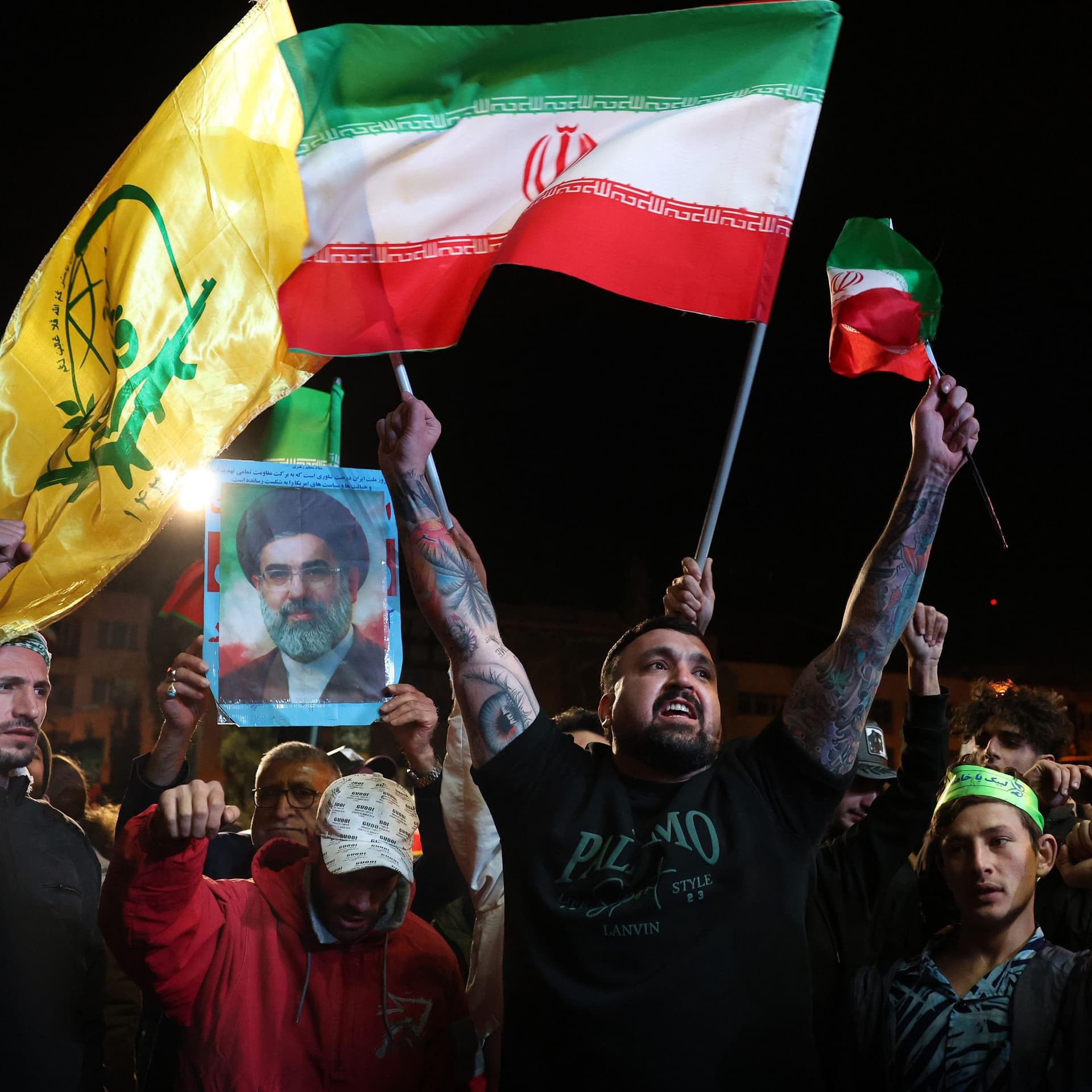
10:10Jane Corbin:They're both claiming victory. And Donald Trump has said it's a great day for world peace. And the Iranians have said the same, that they believe that this is a great victory. I mean, they brought, the government brought its supporters out yesterday when the threat was that the civilization would die overnight, the threat from Trump. They brought them out to the bridges, which were going to be the focus of the next wave of strikes with flags, chanting. So we saw a sort of sense that the Iranian regime had already claimed victory, had already said to its people, you know, we have got something out of this.
10:46Jane Corbin:And that's, I think, what those demonstrations showed, though it has to be said they were probably the regime supporters who are, we know, are in the minority within Iran. We're not hearing from the great bulk of the majority of people who are, we have to presume, are just staying, trying to stay safe indoors. And, you know, I think it's interesting that Israel has also been trying to sort of push the envelope there. We know that Donald Trump was going to attack, he said, bridges and he was going to attack power stations. And it was very interesting yesterday that while the war was still in full swing and America hadn't carried out that threat, we actually saw Israel hitting a number of bridges within Iran, eight in total.
11:31Jane Corbin:And we received a briefing on that. On Tuesday this was. Yeah, this was on Tuesday. And they were very widely spread throughout the country. It wasn't just Tehran. Israel said that these were bridges which were enabling the Islamic Revolutionary Guard to move weapons, to move men, to move material. And therefore they considered them to be a justified target. But they took out, as they said, sections of eight bridges. Well, of course, they're effectively taking the bridge out because they're taking a great chunk out of it. And I'm wondering if could that have been the push at the last minute that sent the Iranians negotiators through Pakistan with a 10 point plan to to sort of try to realise that what could be done when those eight bridges were hit by Israel on Tuesday.
12:21But the suggestion is that those threats may have worked in that case. Is that what you're saying?
12:26Jane Corbin:They may have worked. Yeah, they may have worked. We don't know, were Trump and Netanyahu or their militaries discussing this, you know, a threat from the US to destroy bridges while the Israeli military is actually destroying bridges. They would say IRGC bridges or bridges that facilitate the flow of weapons for the IRGC. But obviously, eight bridges is a lot, isn't it? And, you know, obviously nobody, trains stopped running. People were warned by Israel and Iran not to take trains. I think people began to take it very, very seriously. And that's step one. And step two was going to be, we'll take out all the electric power stations.
13:09Jane Corbin:The nation will go dark. And they began to see how this might actually work in practice and the devastating effects it would have on the country. Well, and there have been other threats too. I mean, it started during the weekend when Easter weekend, I should add, when Donald Trump posted a number of times on Truth Social. He threatened to send Iran back to the Stone Ages. There was an expletive laden message that he posted. And then on Tuesday, the White House was actually forced to deny that it was considering using nuclear weapons in Iran when he made this comment about the potential end of a civilisation happening overnight.
13:51What did you make of that particular threat?
13:54Jane Corbin:I think it was not unreasonable for people to believe that perhaps there was a nuclear threat implicit in that. I'm not sure it was ever meant to be that. I think it's more of an example of Trump's hyperbole. You know, he uses very quite flowery and over the top language. But it obviously has had the desired effect. And, you know, a couple of days ago, President Trump was challenged in a press conference about before he made this final end of a civilization remark. He was challenged about why he used, as I think the reporter put it, such abusive language. And he said, it's to make a point. He was very clear about it.
14:30Jane Corbin:It's to make a point. That's why I do it. So there's a method to it. There would seem to be a method to it, at least in the president's mind. I mean, the language is kind of apocalyptic, isn't it, that we've heard ending of a civilization. And I think people were shocked. They were shocked earlier at some of the tweets. But he's ramped it up and people have actually got to the point of thinking, well, where do we go from here? Well, the debate as to whether Donald Trump is, on the one hand, a master negotiator who's used this sort of tightening noose of pressure to bring Iran to a deal on the one hand, or on the other hand, has used dangerous rhetoric that cannot be put back in the box on the other is a debate that's going to be playing out, we can imagine now for the next few days.
15:22Having suggested that there is some method to this ramping up of rhetoric, what's the case on the other side, Jane?
15:29Jane Corbin:Well, you talk about, you know, is this part of a negotiating tactic? Was it a bluff at the end of the day? I mean, we went right to the wire, didn't we, 90 minutes before. Was it a bluff? Would he have struck? I suppose that's what we don't know, particularly because we know that his supporters, by and large, are not in favour of foreign and forever wars. And this is going to be and will be a problem for him as the midterm elections approach in November. So there was a bit of a, there was definitely a timetable for Trump. The timetable of an election in America and of course the very pressing timetable of what was happening in the markets in the price of oil and gas and what was happening to the stock market and the bond market.
16:14Well, I want to come to the markets question in a second, But on the other side of the debate, is Trump a master negotiator or was his language dangerous? Was what Donald Trump said on Tuesday potentially genocidal in nature, as was suggested by a number of politicians and commentators on Tuesday?
16:35Jane Corbin:The jury is out, isn't it? Because he did two things. He made the end of a civilization remark, which is, as I've said, apocalyptic. And, you know, many experts would say that is the mark of a genocide, that you get rid of a whole. The mark of a genocide or definition is to get rid of a whole people. And that's what that seems to imply. And previous to that, he'd been very specific about what America would attack. And those were civilian targets, power plants and bridges, you know, transport and energy. And other scholars have said, and I think that with some degree of accuracy, that too is classified, would be classified as a war crime because you are attacking civilian infrastructure.
17:23Jane Corbin:Donald Trump does not seem to have had a problem with either of those remarks. And as you say, the debate will go on for a long time. But technically, both those remarks would indicate, you know, attacks on innocent civilians and therefore war crimes. Let's talk about markets because they've been in turmoil for the last few weeks, particularly the oil markets. What's been the response so far on Wednesday? Well, immediately the price of oil fell by about 15 percent. Obviously, perhaps even while we're speaking, it's maybe gone down or maybe up. Gas by about 20%. And I think this reflects the reality, which is 20 % of the world's oil and gas passes through the Strait of Hormuz.
18:10Jane Corbin:So we saw the markets adjusting immediately. The stock market has yet to open in the States. But, you know, this is a two-week window. We don't know what's going to happen at that point. so I would imagine that the markets will climb but of course we know that Iran is only going to allow shipping through with the cooperation of the Iranian military so that's going to be patchy we're not suddenly going to get back to I think the normal flow through the Strait of Hormuz was 120 ships a day we're not going to get back to that overnight are we or even within two weeks and we have yet to see what insurers and owners of ships what their reaction is We don't know about the mining of the waters of mind.
18:56Jane Corbin:We don't know what plans there are for warships in the region, American or otherwise, to escort vessels through. These are all questions as yet unanswered. So I think the oil markets have rebounded because of the good news of the ceasefire. But it's going to be a rocky road for the next two weeks at least until we know even if there is going to be a longer term ceasefire. Let's move on to talking about what's actually been achieved in this conflict. I mean, setting aside the question of whether or not it's even over, I mean, as we've discussed, it could resume again. There's been some remarkable reporting from The New York Times in the last 24 hours, which laid out the circumstances in which Benjamin Netanyahu traveled to Washington, made a case to Donald Trump and his administration as to why the United States should join Israel in going to war against Iran.
19:54And this reporting suggests that regime change was a priority, that pro-democracy demonstrations could break out. Now, if we fast forward to yesterday, Tuesday, far from being pro-democracy demonstrations, we actually saw Iranians in support of the government demonstrating, I suppose, on bridges near power plants in reaction to the threats against those infrastructure installations by the Americans. How much should we read into that?
20:34Jane Corbin:I think that those are pro-government demonstrations. We've seen them happen throughout these five weeks. We've seen them on the streets of Tehran. We've now seen them on bridges. I think that is a minority. It is the minority that is allowed to protest, that is allowed to go to the streets. The vast majority would not be allowed to do that. There would be a crackdown. There have been remarkable pictures coming out of Iran in recent days of very threatening nighttime patrols, cars through the street. You know, the message to the people hidden in their houses, the vast majority who might be the ones that Israel had hoped would stand up for regime change, the message to them is don't dare.
21:18Jane Corbin:And that has, I think, been the problem right from the start. You know, after the June war last year, when Israel and America hit the nuclear installations, it was in a sense an unfinished job. And I think that the protests in January, where we saw so many Iranians come onto the streets. We know that between 6 ,000 and 7 ,000 officially were killed, possibly, probably many, many more than that. But that was put down with extreme brutality. That's the reality of life in Iran. But those protests were possibly what enabled Benjamin Netanyahu to say to Donald Trump, there is a cohort, a strong cohort of pro-democracy, angry people who want change, young people.
22:03Jane Corbin:And those visits that he made, several visits in the early part of the year to Donald Trump, one in Mar-a-Lago, one in Washington, were obviously the moments at which he put that case. And in the early hours and days of the war, Donald Trump said, rise up and take your future into your own hands. But it became clear very quickly that it wasn't going to be as the Israelis had foretold or had wished. There wasn't going to be a popular uprising that would change the regime. And therefore, it became the very difficult conflict which drew in the Gulf neighbors as well and American bases across the region.
22:44OK, so regime change, so-called regime change, clearly has not been achieved. There was a Khamenei in power in Iran at the beginning of this conflict and there is a Khamenei, we believe, still in charge now. What has been achieved?
23:01Jane Corbin:Well, from Iran's point of view, what's been achieved is an understanding of the power that they have in controlling the Strait of Hormuz. It's ironic, isn't it, that before the war, everybody believes that Iran's strength derived from its acquisition and knowledge and its ability potentially to create at some point a nuclear weapon and its possession of 400 kilograms of high enriched uranium. But I think the proof of the reality is that actually their real strength is their geographical position and their control over the Strait of Hormuz. And I don't think that's going to go back to the way that it was.
23:44Jane Corbin:I think Iran will, and it's clear from their 10-point plan, that they will still want control over the Strait in some form or another, possibly with Oman, which sits on the other side of the Strait. So that's a lesson learned from Iran's point of view. And from America's point of view, the lesson that has to be learned, despite the fact that President Trump keeps saying that there has been regime change because there's a different set of people there. The fact is they're potentially more extreme and not very different from the old set of people that were there. I think from his point of view, they've learned that regime change is not easily achieved.
Read the full transcript
24:23Jane Corbin:And perhaps he's learned that, you know, the kind of language he's used and the bluff is also something that might, you know, serve him well. He's not had to use it in quite that way before. He didn't have to use it in Venezuela when he unseated Maduro. That was a very different operation. He didn't use it, of course, over the situation with Greenland and Denmark and Europe. But he's used it in Iran. And I think that the language and the ability to go to the brink, which is his trademark, if you like, as a dealmaker, is something that America has learned on one hand. But on the other hand, they've learned that wars are much more difficult to stop than they are to start.
25:09Jane Corbin:And, of course, that you don't have control over the markets and the economy. And that's the real shock that's going to be felt. The fallout will be on the world economy. What should we be looking out for in the next two weeks? Because as we're talking, this is just a two-week ceasefire. Yeah, I think we obviously have to watch what Israel does. Will Israel stop and will Hezbollah, on the other hand, will they stop trading missiles and combative situation in Lebanon? We have to presume that Hezbollah will probably be more under the influence of Iran in stopping and abiding by the 10-point plan, will Netanyahu be in the same position vis-a-vis Trump?
25:55Jane Corbin:Will he accede to America's desire to calm it and cool it for the next two weeks? That's what we should be looking out for. And I think how quickly ships begin to be allowed to pass through the Strait of Hormuz will also be a big indicator because I think that Trump will, if that doesn't happen, you know, Trump will, we may be hearing the threats and the bluff again. One of the things that strikes me, Jane, as we're talking, is that there are things that cannot be unsaid and things that cannot be undone. And there are two big ones here on Wednesday morning. Iran has learned that it has great power, as you mentioned.
26:36It can close the Strait of Hormuz and use that as leverage, which is incredibly powerful. Donald Trump has potentially learnt in the last 24 hours that he can say certain things, potentially genocidal things, as has been suggested by some of his critics, and those can have great leverage in a negotiation. What do you make of those two facts?
27:01Jane Corbin:Well, you can't unsay the things you've said, as you so rightfully say, and I don't know where you would go from a remark about ending a civilization tonight, how much further could you go down that line? I think we've sort of reached a point where it's also unknowable. People tend to say this with Trump. What could he do next? He's kind of pushed the envelope as far as he can and then he pushes it even further. But I really think this end of a civilization remark was quite extraordinary. And also it begs the question, where will we be in two weeks' time? Will he reiterate that? Will he say, well, this is where we were on the eve of potential escalation and, you know, Iran, you haven't abided by the 10 points and we haven't been able to reach agreement.
27:47Jane Corbin:Do we then, are we just delaying a repetition of the end of civilization remark? Who knows? I mean, it's all so open and so unpredictable, as has been so much in the Trump presidency too, which, let's face it, isn't much more than a year old, just over a year now. Well, mercifully, the temperature has been turned down for now. Thank you so much for taking the time to talk all this through with us, Jane. We're so grateful for your expertise. Thank you, Tristan. I wish I had a crystal ball. I don't think anybody does, perhaps not even Donald Trump. Well, please come back and see us again soon. Thank you, Jane.
28:28Thank you. And that's it for this episode of The Global Story. Thank you so much for joining us. If you want to send us thoughts or questions, email us on theglobalstory at bbc.com. Today's episode was made by Kat Farnsworth, Sam Chantarasek, Aaron Keller and James Shield. The studio manager was Mike Regard. Our digital producer was Tom Bage and our senior news editor is China Collins. I'm Tristan Redman see you tomorrow thanks for joining us cheerio
From the publisher
Iran and the US have agreed to a conditional two-week ceasefire.
Donald Trump says the US has “met and exceeded all military objectives”, while Iran says the ceasefire is a “humiliating retreat” for Washington. So what has actually been agreed, and is this ceasefire likely to pave the way for an ending to the war?
We speak to Jane Corbin from the BBC’s Panorama, who has reported from the world's major conflict zones for three decades.
Producers: Cat Farnsworth, Sam Chantarasak and Aron Keller
Executive producer: James Shield
Studio manager: Mike Regaard
Senior news editor: China Collins
Photo:Iranians wave the country's flag following the announcement of a two-week ceasefire. Credit: Abedin Taherkenareh/EPA/Shutterstock