In short
Britain’s political instability over the last decade, linked to Brexit; why Keir Starmer resigned now; and what Brexit changed in immigration and the economy.
Guests
Adam Fleming, BBC Newscast host (formerly Brexitcast), former BBC colleague of Chris Mason; Brexit process reporter and analyst.
Key claims
The UK went from 4 prime ministers in 30 years to 6 in 10; Starmer’s resignation follows Labour’s poor midterm results and Nigel Farage’s Reform UK surge. Brexit’s legacy is a lasting political “cleavage” and chaos in leadership turnover. Immigration fell after a post-Brexit spike, but the “control” promise shifted from EU freedom of movement to other routes.
Notable examples
Farage/UKIP driving the 2016 referendum; post-COVID net migration near one million; refugee/Hong Kong/health-care visas; OBR estimate: economy ~4% smaller long-term; EU trade down ~15%.
Written by AI. May contain mistakes. Listen to the episode to check what was said.
Chapters
Tap a time to open that second in VOThe Resignation of Keir Starmer
0:00 to 0:37
Discussion on the recent resignation of Keir Starmer and its implications.
“This BBC podcast is supported by ads outside the UK.”
The Resignation of Keir Starmer
2:12 to 2:54
Discussion on the recent resignation of Keir Starmer and its implications.
“is Britain still reliving the same political forces that produced Brexit?”
Political Instability in the UK
2:54 to 4:16
Analysis of Britain's political instability over the past decade.
“It's 23 minutes past nine on Monday, the 22nd of June.”
The Impact of Brexit
4:16 to 6:20
Exploration of how Brexit has shaped the current political landscape.
“And we'll put a link to that episode, listeners, in our description.”
Adam Fleming on Brexitcast
6:20 to 7:48
Guest Adam Fleming discusses the origins and impact of Brexitcast.
“colleagues could just get together, be calm, be quite methodical about what was actually being negotiated what the options were.”
Nigel Farage's Role in Brexit
7:48 to 9:48
Insight into Nigel Farage's influence and promises leading up to Brexit.
“with all the great and the good and the commentators and the journalists gathered to watch the results come in.”
The Concept of Global Britain
9:48 to 10:40
Discussion on the vision of 'Global Britain' post-Brexit.
“It's just that they've become part of the oxygen that is breathed by British politicians.”
Challenges of a US Trade Deal
10:40 to 14:01
Exploration of the difficulties faced in negotiating a trade deal with the US.
“He was a member of the European Parliament for Britain.”
Brexit's Trade Deal Challenges
14:01 to 15:12
Learn about the complexities and public perceptions surrounding the UK-US trade deal post-Brexit.
“So a big group of leavers said one of the advantages of leaving the European Union is that Britain will have its own independent trade policy.”
Immigration Trends Post-Brexit
15:12 to 18:38
Explore how immigration patterns in the UK have changed since Brexit and the factors influencing these trends.
“which the UK has changed over these last 10 years.”
Show all 13 chapters
Economic Impact of Brexit
18:38 to 20:29
Discuss the economic ramifications of Brexit and how it has affected the UK's financial landscape over the past decade.
“have a lot of control over immigration and the numbers went through the roof, to use a British phrase.”
Political Chaos and Legacy of Brexit
20:29 to 22:48
Understand how Brexit has reshaped British politics, creating lasting divisions and instability.
“And Mississippi, for some context, is the poorest state in the United States.”
Leadership Changes and Future of Labour
22:48 to 27:08
Examine the leadership dynamics within the Labour Party and the potential future under Andy Burnham.
“that only started when Brexit was injected into the British political bloodstream so it was sort of a reset moment for our politics But we went from a calmer politics to a much more chaotic politics.”
Transcript
Automatic transcript. May contain errors.0:00This BBC podcast is supported by ads outside the UK.
0:30business needs in one place, saving you time, headaches, and serious money. Stop paying for missing pieces. Go to odoo.com. That's O-D-O-O dot com to learn more. With the new Schwab Teen Investor Account, teens can gain hands-on investing experience and build positive money habits. It's an account co-owned by you and your teen, so you can monitor and engage with the account while your teen learns how to invest and manage money. Learn more at schwab.com. Good morning, Tristan. Good morning, Asma. Here in London, it's another day and another UK Prime Minister has resigned. Every decision I've taken has been about putting the country I love first.
1:13That is why I will resign as leader of the Labour Party. I have spoken to His Majesty the King this morning to inform him of my decision. and there's a certain neatness here Asma because this is happening almost exactly 10 years to the day since Britain voted to leave the European Union everyone knows this as Brexit now is this just a coincidence? maybe not because ever since that vote in 2016 Britain has been racked with political instability and this is a country which has usually been pretty stable politically speaking Fair, but when you all have had six prime ministers in 10 years, I do wonder, are the two things linked?
2:02And that is exactly what we're going to get into today. From the BBC, I'm Tristan Redmond in London. And I'm Asma Khalid in Washington, D.C. And today on The Global Story, a decade on, is Britain still reliving the same political forces that produced Brexit?
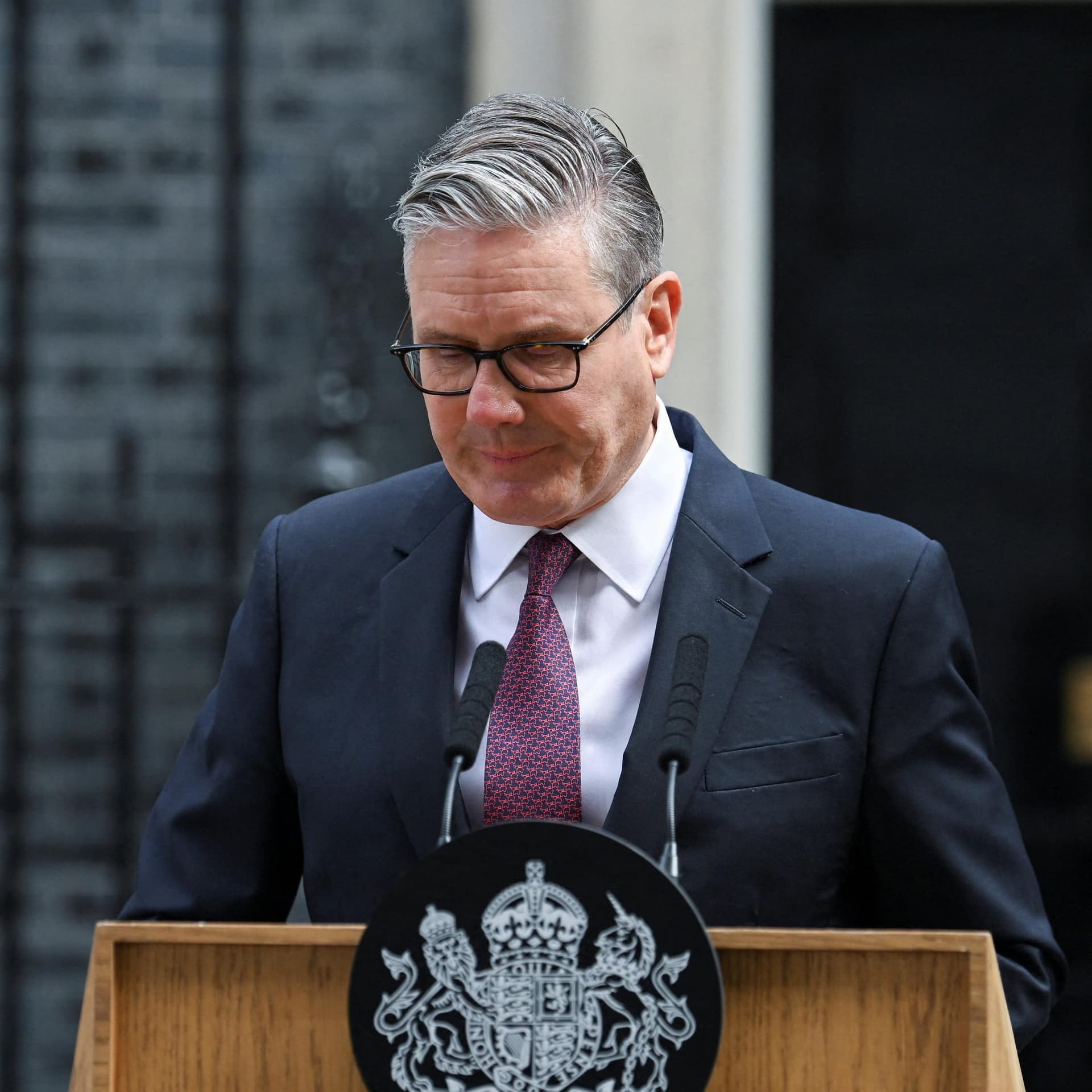
2:26All right, Tristan, take me through it. What just happened in the UK? Well, that's a very good question, Asma. The first thing I think I should say is just to emphasize how unusual all of this is. So in the first three decades of my life, the United Kingdom had four prime ministers. Okay. In the last decade, it's had six prime ministers. So we've gone from a situation of some stability to not very much stability. You're watching BBC Breakfast live on BBC One. It's 23 minutes past nine on Monday, the 22nd of June. We're live in Downing Street. What we had on Monday morning was a scene that people in Britain are getting quite used to now.
3:08So a lot of journalists cramming onto what is quite a small street, Downing Street. Three months period, here's the lectern. Here's the lectern. the lectern out in number 10, which is a pretty certain sign that what Westminster's been preparing for for the last 24 hours is about to happen. This has happened so often in the last decade that the person whose job it is to bring out the lectern has started to become recognised. Really? I tell you what, this guy here, I've seen him come out and do the testing of the microphones umpteen times over the last few years. I mean, he probably never thought that when he got that job that he would be doing it quite so regularly.
3:47I think he's known on the internet as hot podium guy, John. So he's the lectern guy. That's the sign of how common this is now. That this moment, which ought to be kind of constitutionally exceptional, has all become a little bit run of the mill, I would say. You say run of the mill. And to that point, Tristan, we did do an episode a few weeks ago with the BBC's James Landau, looking at the question of whether the UK is in fact just ungovernable at this moment. And we'll put a link to that episode, listeners, in our description. But Tristan, the question I have for you is why now? Why did Starmer resign at this moment?
4:25We knew that there had been pressure building on him for some time. Well, that's a very good question because on its face, Keir Starmer's party has still a very large majority in Parliament and he should therefore be politically in a pretty stable spot. But that's not the case. And that's partly down to some recent elections, midterm elections, you might call them, in the UK where Starmer's party Labour did very badly. But someone else did well. And that was Nigel Farage and his party, the Reform Party. Now, Nigel Farage is somebody known outside of Britain as being one of the primary movers behind Brexit.
5:02Some people called him Mr Brexit. it. So there is a feeling amongst the Labour Party that they have to do something to address this increasingly urgent problem that's coming down the line. And this is something that Keir Starmer spoke about in his speech to the country on Monday. The question my party is asking now is whether I am best placed to lead us into the next general election. I have heard the answer of my parliamentary party to that question. And I accept that answer with good grace. But to understand this decade of political upheaval, we can go back to 10 years exactly to the day, which was the day of the Brexit referendum.
5:51And we're going to a special BBC guest who knows exactly what he's talking about on this topic.
5:57Adam Fleming:I'm Adam Fleming. I'm currently the host of the BBC's daily news podcast, Newscast, which used to be called Brexitcast.
6:08What was Brexitcast, Adam?
6:11Adam Fleming:Brexitcast was a little experiment that started off with me and my mate Chris Mason, who's now the BBC's political editor in the UK. Brexitcast was a place where me and my BBC colleagues could just get together, be calm, be quite methodical about what was actually being negotiated what the options were. And for us working on it, it was like therapy, because if you were involved in the Brexit process, it took over your life. There was just something about that subject, about that process, how it worked, how high the stakes were, that it got into your soul. How long did this process go on for? So the Brexit referendum itself was in 2016, in the summer.
6:48Adam Fleming:The negotiations to actually leave started in the summer of 2017. We didn't leave the EU formally until 2020. Then there was a transition period. Seems just like a really bad, long, awkward breakup. Yes. Just like people are dragging on. Yes. Except you then still see your ex at international summits with Donald Trump. Okay, well, let's start at the beginning. Do you remember, Adam, where you were when you heard the Brexit referendum result? Yes, very clearly. that night actually started with everyone getting to the BBC studio in North London in the middle of an enormous thunderstorm. A huge, huge thunderstorm.
7:34More pyrotechnics in the sky across the southeast of England. And we have another amber warning in force. Yes, more torrential downpours.
7:41Adam Fleming:So the universe obviously had something in store for us that night. And so we were in this huge, cavernous TV studio with all the great and the good and the commentators and the journalists gathered to watch the results come in. So Big Ben has struck 10 o 'clock, and we can now start trying to discover which side thinks has carried the day on the basis of the results that come in. Some of the poem, as I said, they were all closed, are staying open, apparently. And they came in bit by bit, place by place around the UK, with the tally kind of counting up for the leave side and the remain side. It looks as though the gap's going to be something like 52 to 48, So a four-point lead for leaving the EU.
8:25Adam Fleming:And at about maybe four o 'clock in the morning, David Dimbleby, who's the BBC's veteran election night anchor, announced. The British people have spoken and the answer is we're out. Adam, during that time period, I was covering the 2016 US presidential election. And I remember so many of us political journalists here were really intensely and eagerly watching that result. And I remember hopping on the phone with a British friend of mine, and I just said, it feels like something is going on. And it was a premonition that so many of us had about what might transpire here in the United States with Donald Trump's victory.
9:01Very different. I understand that. Very different consequences and very different reasons. But it felt like there was something brewing in the atmosphere. And I realize part of this is because Donald Trump is still the president here. But these things linger in politics. And though this happened 10 years ago, is it still a part of the conversation that people have in the UK?
9:19Adam Fleming:I think Brexit as a thing has gone from, and this is totally unscientific, during the period when it was happening, I'd say it was 98 % of the news was Brexit. I would say now it's probably more like 5 % to 6%. If that. It has plunged. Yeah, maybe in my world it's more like 8%. But it has absolutely plunged. plunged. But that's not to say that the passions that aroused and the issues that threw up and the implications of the process aren't still with us. They're still with us in a massive way. It's just that they've become part of the oxygen that is breathed by British politicians. So it's sort of not noticeable, but still very prevalent.
10:03So Adam, you are the man to give us Brexit 101. I mean, there is one driver who's well known even in the United States, Nigel Farage, believes himself to be a close friend of Donald Trump. Can you cast us back to the lead up to the referendum? What was Nigel Farage promising and why was he so convincing for so many people in Britain?
10:28Adam Fleming:Well, this is interesting because Nigel Farage was completely instrumental in the referendum happening in the first place. He was the leader of a upstart political party called UKIP, the UK Independence Party. He was a member of the European Parliament for Britain. So he was in the belly of the beast of the organisation that he hated. And he was a showman. He was an entrepreneur with political ideas. He was a character. And he just for years was banging this drum of the EU being a bad thing for Britain. Look, whichever way you cut this, immigration is the number one issue in British politics. It has been for some years.
11:06Adam Fleming:And his big thing was about immigration. He would say the UK is not a sovereign country because under EU law, anyone who lives in the European Union has the right to come and live in Britain, settle in Britain, get a job in Britain, be part of the benefits system, the welfare system in Britain. We have no control. The only way we get control is to vote to leave the European Union. In my mind, this is the issue that will decide the referendum.
11:38Adam Fleming:And so he was getting a lot of traction as well because UKIP was starting to do quite well in elections. And he was on the media all the time. And lots of the then Prime Minister David Cameron's political party were starting to get worried about the threat to them posed by UKIP. And so then he promised, ultimately, if I get reelected in 2015 in the general election, I will hold a referendum on whether we should stay in the European Union or not. And David Cameron would quibble that it was because of the pressure from Nigel Farage. But I think most people who were covering politics then would say Nigel Farage played a huge role in making that referendum happen.
12:20But in the United States, he's known as Mr. Brexit. Is that a fair moniker for him?
12:25Adam Fleming:I mean, if it hadn't been for Nigel Farage, there's a fair chance we would not have had Brexit. So it probably is a fair moniker. But in terms of what the leavers in general, and we call them leavers, the people who were advocating to leave. And that's a word that never existed before. And we also had one called Brexiteers. And they loved because it made them sound really kind of like swashbuckly, sort of Errol Flynn pirate types. And on the other side of the equation, you had Asma Remainers, who were then christened by their political opponents Ramoners because they were seen to be always moaning about things.
13:02Did they have a swashbuckling term? I can't remember the Remainers. No, no swashbuckling.
13:07Adam Fleming:And also just that thing as well, like I think a lot of people on the Remain side were thinking, oh, we're here to campaign for, yay, what do we want? The status quo. Where are we going to go? Nowhere, we're going to remain. That's always politically a challenge. But I want to ask you, Adam, was the conceit that, okay, in leaving the EU, maybe in some ways through, you know, for example, trade deals, they might have a better relationship independently with the US. There were lots of different groups of leavers. And one of the leave groups were people who believed in this idea that they called global Britain.
13:42Adam Fleming:Because when you're a member of the European Union, you do not have your own national trade policy. When you join the EU, you hand the power to do trade deals or set tariffs or impose quotas on soya beans to the European Union. And that is all done centrally from the EU's HQ in Brussels. So a big group of leavers said one of the advantages of leaving the European Union is that Britain will have its own independent trade policy. We'll be able to go out and yeah, be swashbuckling on the high seas like Britain used to be in the 19th century, a big naval trading power. And that will be one of the benefits of Brexit.
14:17Adam Fleming:And actually one of the key kind of the jewels and the crown, if you like, of that vision was a trade deal with America. huge, huge, huge market. So what then happened with this free trade deal? Turns out doing a free trade deal with the USA is very difficult because A, the USA is a very hard negotiator. B, the president doesn't hold all the power. It's got to get through Congress as well. And C, oh, maybe once you start presenting to the British public what a trade deal with America means. They might not like it. British people like, for example, high welfare chicken in their supermarkets. And there's this idea that American chicken is pumped with antibiotics or washed in chlorine or full of other pharmaceuticals.
15:05Adam Fleming:And so actually, that sort of element of a U.S. trade deal was never very popular with the public. Adam, I want to talk about some of the ways in which the UK has changed over these last 10 years. And maybe we can break this down into a couple of categories. I'm really interested both in immigration, because you say that was a major reason why many Brits wanted to leave, and then also on the economy. So maybe we could talk about immigration first. If indeed one of the big reasons people voted to leave was to cut immigration, has immigration declined? So the way the UK measures immigration is a figure called net migration, which is the number of immigrants basically being added to the population each year.
15:50Adam Fleming:And in the years immediately after Brexit and once COVID restrictions had eased, that net migration number, as it's called, reached nearly one million people in a single year. Many more people were continuing to move to the UK. Yes. From where? Not from the EU? Yeah. And that was a historically high number. So EU people basically... Wait, that was a historically high number. Yes, yes. So we had had a referendum where one of the main claims of the winning campaign was that we will take back control of Britain's borders and there will be less migrants. And you can argue over whether that's a good thing or a bad thing till the cows come home.
16:29Adam Fleming:But as soon as we got reliable immigration figures after COVID, the number of immigrants coming to the UK had exploded in a uniquely historical, recent historical way. But there is a nuance to this, isn't there, Adam? And the nuance is that if you pick apart the promise of the Leave campaign, it was not necessarily to stop immigration altogether. It was to control immigration and to increase... Which people read as reducing. Yes. It was to increase Britain's deciding power over who would be allowed in. Which type of immigrants you're saying. Yes. And consequently, that meant in the minds of many Brexit voters, we don't want so many people benefiting from freedom of movement from countries of the EU or Eastern Europe in particular.
17:20But we do want to choose people who have skills, who might want to come in from South Asia or other parts of the world. Now, where has a lot of this new immigration come from? So presumably it's not coming as much from the EU.
17:32Adam Fleming:What does the graph show, Adam? So at that point, there were some new immigration schemes that were introduced in relation to things that were happening in the world. So there was a scheme for refugees from Ukraine because they'd just been invaded by Russia around about that time. Lots of people came through that route. Hong Kong, which historically had been British, but of course now part of China. There was quite a lot of political repression in Hong Kong at the time. the British government said, if you are a Hong Konger with British links and you want to flee the Chinese, come and make your home in Britain.
18:05Adam Fleming:You'll be very welcome. Also, in the wake of COVID, we had a huge need for people to work in the health service and also the social care service. So looking after adults who had care needs. And so there was a special visa for people who had those skills. And also our immigration system is in some places quite generous in terms of bringing your family and your dependents over as well. And so it turned out the UK had left the EU on the promise of more control over immigration, but it turns out the government didn't actually have a lot of control over immigration and the numbers went through the roof, to use a British phrase.
18:45Adam Fleming:They've come down now because successive governments have put a lot of effort into closing off certain routes, making the visa restrictions much tighter, making it more expensive for British employers to hire somebody from abroad. And so that net migration number, which is the name for the immigration statistics, has kind of plunged since that high. And so the number has now fallen back down to where it was in the old days, pre-Brexit, of about 200 ,000 people a year. What about the economic promise, Adam? Because there was talk from the Leave campaign about all the economic opportunities that Brexit would open up.
19:26Now, the answer I know is somewhat obscured by things like COVID and now the Iran crisis, and it makes it sometimes a bit difficult to pass what's happening. But on balance, what does it look like 10 years on?
19:39Adam Fleming:The most reliable estimate we've got comes from an organisation called the Office for Budget Responsibility, which is the independent organisation that monitors the government's finances. They reckon that in the long term, so over the next decade or two, the economy will be 4 % smaller as a result of Brexit than it would have been otherwise. and they say if you look at imports and exports between the UK and the EU, that's fallen by about 15%. But the problem with all of these calculations is they are projections based on assumptions. And as you were saying, Tristan, so many other things have happened to the British economy and the global economy at the same time that it's very hard to disentangle all those different factors.
20:28Adam, there was a really provocatively headlined article that was published in the Atlantic magazine earlier this month titled How Britain Became as Poor as Mississippi. And Mississippi, for some context, is the poorest state in the United States. I don't know if you would say that's fair.
20:47Adam Fleming:Yeah, I mean, I think Britain has been buffeted by a lot of bad economic news that is not Brexit related. so Brexit's a factor but it's not the only factor and I just think your average British person who am I to speak for the average British person doesn't put their money troubles down to Brexit they put their money troubles down to just the state of Britain for a long time of which Brexit is a par you don't hear people going I feel really poor this month it's because of Brexit let's put it that way but they don't feel richer either you're saying because of Brexit
Read the full transcript
21:31so adam a decade later is brexit itself actually over brexit as the act of leaving the eu is done
21:40Adam Fleming:and dusted the main legacy i think though is just that brexit created a new kind of line on the graph or division on the political map or whatever metaphor you want to use. Political sciences talk about cleavages, don't they? Which I always think is a slightly strange word to use. Cleavage in the political science world. And that actually you still do feel, even though people don't call themselves leavers or remainers, people still identify a bit as the sort of person who thinks Brexit was good or Brexit was bad. So it has forever changed your politics. Yeah. And that maps on to all sorts of issues like immigration, jobs, freedom of speech.
22:26Adam Fleming:How do you react to terrible crimes?
22:34Adam Fleming:and also for me as a political journalist Brexit unleashed absolute chaos on our political system where we basically felt like we got a new prime minister every 10 minutes that is a result of Brexit that whole changing the leader of the country that only started when Brexit was injected into the British political bloodstream so it was sort of a reset moment for our politics But we went from a calmer politics to a much more chaotic politics. And Nigel Farage, who you mentioned, he's still around. And his party, Reform UK, a new party, which has nothing really to do with Brexit at all. He's topping the polls and has a chance of being our next prime minister, as you were alluding to earlier on.
23:19I mean, that's such a linear through line, Adam. that the man you say who's been nicknamed Mr. Brexit could now become the next Prime Minister of the UK.
23:30Adam Fleming:Yeah, although Nigel Farage has got a huge mountain to climb in our political system to become Prime Minister. I see. So I would just caution that.
23:41Adam Fleming, thank you so much. This is great. Thank you.
23:49you know Tristan I was struck by what Adam said there a moment ago that Nigel Farage still has it seems a mountain to climb to actually become prime minister so more immediately who could be Keir Starmer's replacement so Keir Starmer has resigned he will stay on in a kind of caretaker role until someone is chosen by his party to replace him. Now, because Labour, Starmer's party, has the most MPs in Parliament and has a considerable majority, the next Labour leader becomes, by default, the next Prime Minister. Now, there might be an internal vote within the party to decide who that person is, or there could be somebody who stands unopposed and is just kind of crowned, essentially, the chances are that a man called Andy Burnham will be the winner and therefore the next prime minister of the country.
24:44Yeah. So he is he's a longtime political operator. He left parliament a little bit more than a decade ago and he has become mayor of Manchester, which is a city in the north of England. So he is expected to become leader of the party. He would then become prime minister. Now, there isn't another general election until 2029, most likely. I mean, you know, things can change. But in theory, he would then have three years as prime minister and leader of his own party. Tristan, how is Andy Burnham fundamentally different than Keir Stormer? Why is he seen as being, for some Brits, it seems, the possible hope to save his party?
25:23People are excited about him in some corners of the Labour Party right now. Because he does seem to be a little bit more kind of approachable, have a little bit more dynamism than Keir Starmer in some ways. Keir Starmer, some people thought, was a little bit staid. He's bringing some energy to things, but whether or not he's able to really excite the country, that's another question altogether. Despite this moment of political turmoil, you know, I was struck by how Adam described the last decade in the UK and what that's looked like after Brexit. it. And it seems like some of the major challenges are rather systemic.
26:03You know, we talked about, let's say, the economy or immigration. And so if whoever comes in next, what happens if they cannot fundamentally fix these systemic issues? From afar, Britain looks like it's in a fairly chaotic state. But if you look closely at what's happened over the last decade, the through line in all of it is, it would appear, a desire for change. That was the case in the Brexit referendum. People wanted out of the European Union. And every successive general election since then, it would appear that change is the one thing that voters are sure that they want. Now, whether or not Andy Burnham can deliver the change that people apparently want is another question.
26:53And if he's unable to, then the big showdown will be the 2029 general election where Nigel Farage and others will have something to say about that.
27:07Well, that's it for The Global Story today. Earlier, we heard from Adam Fleming, host of the BBC podcast Newscast and an expert on Brexit. And as you know, here on The Global Story, we look at one story every day in depth where the world and America meet. For the very latest news headlines, check out our sister show, The Global News Podcast, on BBC.com or wherever you listen. And listeners, we have some exciting news. We're working on a special series tied to the United States' 250th anniversary. And as part of that, we'd love to hear from you all. As you all know, because we've talked about it a lot on this show, President Trump has ripped up the old world order.
27:47Do you all have questions about where this might go? You can send us a note at theglobalstory at bbc.com. The producers of today's episode were Sam Chantaracic and Lucy Paul. It was edited by James Shield. Our senior news editor is China Collins. Our digital producer is Matt Pintus. Our studio managers were Mike Regard and Rowan Madison. and I'm Tristan Redman, a.k.a. The Panther La Pantera. And if you don't know what I'm talking about, listen back to our episode from last week on Colombia. And I'm Asma Khaled, unfortunately with no wild nickname for you all. But thanks for tuning in. As always, we really love spending some time with you all.
28:30See you again tomorrow. Cheerio.
From the publisher
Britain has had six prime ministers in the past decade. It’s about to get a seventh after Keir Starmer announced his resignation on Monday. The country used to be seen as a bastion of political stability. But this latest resignation comes ten years - almost to the day - that Britain voted to leave the European Union.
In this episode we speak to The BBC’s Adam Fleming, Brexit expert, and host of the BBC podcast Newscast. And we ask if Britain is still experiencing the same political forces that produced Brexit.
Why Britain keeps losing prime ministers: bbc.co.uk/programmes/w3ct8mks
Producer: Sam Chantarasak and Lucy Pawle Sound engineer: Travis Evans
Editor: James Shield
Senior news editor: China Collins
(Photo: British Prime Minister Keir Starmer announces his resignation outside 10 Downing Street, in London, Britain, June 22, 2026. Credit: Jaimi Joy/Reuters)