
In short
Whether Apple can “cut ties” with China amid U.S.-China political pressure, tariffs, and Apple’s massive manufacturing dependence.
Guests
Asma (host). Patrick McGee, former Financial Times Apple reporter for four years; author of Apple in China: The Capture of the World’s Greatest Company.
Key claims
Apple’s manufacturing is deeply China-centric due to decades of outsourcing control, quality training, and supplier scale; U.S. pledges and optics (e.g., Mac Pro production in Texas) don’t change the underlying supply chain. China benefits via technology transfer and workforce training, strengthening China’s industrial capacity. Beijing and Washington both pressure Apple, but disentangling is difficult.
Notable examples
Tim Cook’s White House visit and $600B U.S. investment pledge; 2019 Texas Mac Pro line built by Flex with Chinese workers flown in; iPod-era Foxconn “Shenzhen speed” (factory built from a field to 100,000/day); China visa recalls for engineers working in India.
Written by AI. May contain mistakes. Listen to the episode to check what was said.
Chapters
Tap a time to open that second in VODiscussion on iPhone 17
0:29 to 1:07
Hosts discuss the new iPhone 17 and its implications for Apple’s manufacturing.
“That's schwab.com slash Washington Wise.”
Tim Cook's Commitment
1:07 to 3:58
Examining Tim Cook's promise to shift manufacturing out of China and recent investments.
“So have you heard about the new iPhone, the iPhone 17?”
Apple's Vulnerability in China
3:58 to 7:12
Understanding Apple's complex relationship with China and its impacts on the U.S. economy.
“Sometimes you can spend years reporting on something and never get to the root of it.”
The Rise of Foxconn
7:12 to 12:06
Exploring the partnership between Apple and Foxconn and its significance for Apple’s growth.
“So they end up training an extraordinary amount of people year in, year out, such that since 2008, they've now trained 30 million people.”
The Shift in the Relationship
12:06 to 13:20
Discussing how the dynamics of Apple's relationship with China changed over time.
“per day at a rate that nobody could compete with.”
Conclusion and Future Implications
13:20 to 14:00
Reflecting on the implications of Apple's ties with China under Tim Cook's leadership.
“Up next, China turns the tables on Apple.”
Apple's Complex Relationship with China
14:00 to 18:11
Explore how Apple's operations in China are influenced by both local and US governmental pressures.
“He doesn't want China to be a forever haven of low value assembly.”
Impact of Trump's Policies on Apple
18:12 to 22:26
Discuss the consequences of Trump's America First stance on Apple's manufacturing and investment strategies.
“And, you know, we've seen President Trump take this really tough tone again towards China.”
The Dichotomy of Apple's Operations
22:27 to 24:56
Analyze the tension in Apple's operations between the US and China and the implications for the company.
“until a few months ago through that relationship.”
The Feasibility of Decoupling from China
24:57 to 27:04
Evaluate the challenges and realities of Apple's potential separation from its reliance on China.
“You've described a situation for Apple that seems existential without China.”
Transcript
Automatic transcript. May contain errors.0:00This BBC podcast is supported by ads outside the UK. Decisions made in Washington can affect your portfolio every day. But what policy changes should investors be watching? Washington Wise is an original podcast from Charles Schwab that unpacks the stories making news in Washington right now and how they may affect your finances and portfolio. Listen at schwab.com slash Washington Wise. That's schwab.com slash Washington Wise.
0:55Every brand new episode, every weekday. Just tap into iHeart to start watching.
1:00Patrick McGee:And we hope you enjoy the show.
1:06So Asma, what have you got for us?
1:08Patrick McGee:So have you heard about the new iPhone, the iPhone 17? I had not. So you're not keeping track. I stopped paying attention to that a while ago. Yeah, I will say, you know, there's not been a whole lot of excitement about this new phone. But there is one tiny detail that might mean a lot politically. Okay. on the back of the box, particularly the ones that are being sold in the United States, it might not read assembled in China. Yeah, because it said that for as long as I can remember. And that is because of a big promise made by Apple CEO Tim Cook to try to move the business away from Chinese manufacturing.
1:43To where?
1:44Patrick McGee:Well, to this point, he actually brought up this very idea when he visited the White House just last month to talk about. Did you hear this? I mean, I'm aware that this event happened, but I was also mostly aware that it was really awkward when it did. So I didn't watch it. I'm going to play it for you. Okay, I will watch it for you, Asma, and for professional reasons. Professional reasons. This afternoon, we're pleased to welcome to the White House one of the great and most esteemed business leaders and geniuses and innovators anywhere in the world, Apple CEO Tim Cook. Amazing job. What are we actually looking at here?
2:19I'll interrupt my own speech by you might show them a little bit about the product that you're going to be doing in Kentucky Tim Absolutely, do you mind if I stuff up here? Yes, please So Tim Cook has got a box, it looks a bit like an iPad box and he's taking out a sort of glass disc Oh and there's a base for it It looks like a gold ingot
2:41Patrick McGee:Oh yes, he says it's 24 karat gold What is that? He's giving him an award Congratulations Thank you very much And what's the award for, exactly? It is unclear, but it came with a commitment to make more stuff, a lot more of its stuff, they say, in the United States. Today, Apple is announcing that it will invest$600 billion, that's with a B, in the United States over the next four years. That's$100 billion more than they were originally going to invest. And this is the largest investment Apple has ever made. in America and anywhere else. The thing that's been on my mind, Tristan, is I've been reading this book called Apple in China, and it explains how incredibly complicated and costly it would be for Apple to actually shift its manufacturing out of China and, say, back to the United States.
3:35Because they make almost everything that they make in China, right?
3:38Patrick McGee:Yeah, they make a lot of things in China. And what I learned in this book, though, is that China appears to be benefiting more from the relationship than Apple is. And so today on The Global Story, how Apple created a big vulnerability for itself in China and possibly for the whole U.S. economy.
4:08Patrick McGee:Sometimes you can spend years reporting on something and never get to the root of it. I was the Financial Times Apple reporter for four years. And when I look on it now, I realized I didn't really know how Apple made their products. And I didn't know much about their operations or their relationship with China. And that's, of course, foundational to the company. That's Patrick McGee. He's the author of that book I was mentioning. And like I say, I hadn't really thought much about Tim Cook before. But reading this book made it clear that without him, Apple could have been a complete mess. And to understand where it's at now, you've got to know a bit of the history.
4:46Patrick McGee:When Tim Cook joined the company in the late 1990s, Apple was crawling back from the brink of bankruptcy. And its manufacturing process was, I would say, chaotic, to put it mildly. Steve Jobs, who was the CEO then, had a whole lot of strengths, but running factories was not one of them. So Tim Cook is brought on to lead operations in around April 1998. In some ways, he is the opposite of Steve Jobs, but he's also the perfect counterpart. Both have no tolerance for defects, no tolerance for B players, but their temperaments are very different. One of my favorite quotes in the book is from someone who worked with both of them.
5:22And he says, the difficulty of working with Steve Jobs is emotionally, he'd go from zero to 100. Tim Cook would go from 35 to 36. and I love that because it's difficult to read him and he's very demanding of like layers upon layers of details when he comes in the first meeting he holds which is usually 90 minutes ends up being 13 hours long so he's just asking for people to go through hundreds upon hundreds of excel sheets to look at every component every facet of the supply chain and really understand it in great detail. A few people on this team had glasses when Tim Cook joined. Within a few years, everybody has glasses, right?
6:02Because they're all staring at these Excel sheets. So he really cares about the minutiae, and yet he's able to see the big picture as well.
6:09Patrick McGee:So he's an operations guy. What was his plan for trying to get Apple manufacturing at the scale that it needed to be? I mean, Tim Cook's biggest accomplishment in the earliest years is probably convincing Steve Jobs that the level of control that jobs really demanded was possible even by outsourcing.
6:34Now, to understand outsourcing is to almost see a conundrum or a paradox, because if you're outsourcing, you're inherently relying on a third party to build your products. Like, in other words, it sounds like a loss of control. And most cases, it is. This is actually usually an advantage to companies because they don't want to bother with manufacturing. The difference between Apple and basically everybody else is they don't chase cost. They chase quality. And the trouble with Asia and in particular China in the late 90s and early 2000s is they don't quite have the quality levels that Apple demands, which are really off the charts.
7:09So Apple's solution to this is to send over reams of engineers to basically train people on how to do this kind of stuff. And as the years go on, it just becomes clear that China is willing to work harder, introduce policies that are tailor-made for the likes of Apple, and build factories and build suppliers and have a dynamic labor force that just outcompetes everybody. So they end up training an extraordinary amount of people year in, year out, such that since 2008, they've now trained 30 million people. And so what you have, with really no direction or decision being made at the top level of Apple, is that everything begins to consolidate into China.
7:51Patrick McGee:At the point you get to by what the late 90s, early 2000s, and I'm going to quote you here because I thought this was such a striking line. You write, the meeting of the minds between Steve Jobs and Johnny Ive had made Apple products unique, but it was Tim Cook and Terry Guo who would ensure they were ubiquitous. Terry Guo, he's the founder of Foxconn, which is the company Apple eventually outsources most of its manufacturing to. Tell me about him. Why do you see him as being just so critical to Apple's growth? Terry Guo is the most consequential contract manufacturer of all time. You could really think of him as the Henry Ford of Asia.
8:28And he knows Tim Cook. Terry is the first person to really understand that the challenge is an opportunity. Because if you can please Apple, you can please anyone. And Foxconn just sort of emerges as the perfect partner that will move heaven and earth to respond to Apple's demands like no other contract manufacturer will.
8:45Patrick McGee:I mean, what was he fundamentally offering them that they could not do by themselves and that other companies would not or could not do? One is that Terry's hero is Genghis Khan, and that he runs his factories with a military efficiency. Second is that he's really taking advantage of what China offers, which is not tech competence, but it is a seemingly unending supply of rural citizens who are moving to places like Shenzhen, just across the harbor from Hong Kong, to work in these factories for 12 hours a day. One thing I love about Terry Guo is that in the earliest years of his relationship with Apple, any money he was making was going to the production line.
9:24So even his own office, as late as 2010 was essentially like a 20-foot shipping container with a tin roof. And the result of that is that Shenzhen often has these monsoon seasons, so it's raining all the time. And people calling Teru Guo wouldn't be able to hear him because the rain on the tin roof was like a little symphony of hammers drowning out anything he was saying. And so even though it It was problematic to have this little office that would have been frowned upon. It was actually serving a purpose by saying we are all about the clients. Every dollar we earn is going towards your production, not our comfort.
10:07Thanks for coming today.
10:09Patrick McGee:So this is happening in the early 2000s. We have something really exciting for you today. The same time that Apple launches the iPod. To have your whole music library with you at all times is a quantum leap in listening to music. So by 2001, two major things happen. One is that Steve Jobs comes on stage and introduces an all-white product and says, This amazing little device holds a thousand songs and it goes right in my pocket. And China enters the World Trade Organization.
10:53So this is a really fateful few months where basically the future of handheld devices are going to get their start in China. And China is now part of the world, as it were. And so you're going to have more integration with other countries, more trade. And so the stage is set for the Apple and China marriage to sort of come together. You know, this is the meet cute moment between Apple and China.
11:15Patrick McGee:2001. I love that. Yeah. So how does the iPod as a product cement the relationship with Terry and with Foxconn for Apple. I mean, I have this great anecdote where the head of hardware, John Rubenstein, is with Terry Guo in China. And Terry Guo points to a field of garbage and he says, there's your factory. And this is about eight or nine months before he's going to be developing the iPod Nano. And John Rubenstein nearly has a panic attack because he's just looking at a field with nothing in it. And this is where Terry really demonstrates what Westerners come to know as China speed or Shenzhen speed.
11:50And it's that when he goes back just a few months later, the factory is basically up and running. And John Rubenstein's quip about this is that we wouldn't be done the environmental paperwork in the time in which Foxconn had actually built the factory. So Foxconn could go from building zero of something to building 100 ,000 per day at a rate that nobody could compete with. And they just absolutely wow Apple. And the result of that supply and the cool aesthetics is that the iPod just becomes wildly popular.
12:17Patrick McGee:Did anyone at Apple during this time period raise alarm bells about Apple becoming increasingly tethered to China? China was on the march to democracy, right? That's what we all thought. And so there wasn't particular reason to think, wait a minute, we're too exposed to China. The asterisk is that on the one hand, this is still when Steve Jobs would prefer to take back the supply chain and sort of have things built in America. But what is demonstrated in these years is like that's just not going to happen. Like it's just not cost competitive. It's not going to make sense. And China on the world stage is not really considered a threat.
12:53And it's all running so smoothly that they just have a get it done mentality. But you do have people like Tony Fidel, who's known as like the pod father, you know, the godfather of the iPod, saying this is too much exposure to China when everything's moving there. Now, I don't think he's necessarily thinking in a geopolitical sense, but it's just that In supply chain 101, you'd say you don't put all your eggs in one basket.
13:18The fact that China is going to go in an authoritarian direction, that's not really on anybody's horizon.
13:27Patrick McGee:Up next, China turns the tables on Apple.
13:37Patrick McGee:Patrick, this relationship seems so mutually beneficial for Apple and Foxconn. Was it indeed actually mutually beneficial for both of these companies? Yes, absolutely. I mean, the marriage of Apple and Foxconn, and I think you could say for Apple and China as well, is really the marriage of skill and scale. But what basically happens is that when Xi Jinping comes into power in 2013, he basically hardens the stance against Apple. He doesn't want China to be a forever haven of low value assembly. He views Apple as this exploitative company that is sort of taking from China and not giving back. And this is a policy that he calls in China for China.
14:17And so he makes increasing demands that Apple allow China to move up the value chain and win more orders at the expense of multinationals operating in China. Apple by that point is so wedded to the country that they don't really have a counter move to take. And so what you have is the rise and rise of more and more Chinese companies within the Apple supply chain. So it goes from being deeply multinational to more and more Chinese over the last 12 years.
14:43Patrick McGee:So Apple had been facing extreme pressure from the Chinese government. So when Steve Jobs dies in 2011, Tim Cook becomes the CEO. You know, you see then as Tim Cook became CEO, they are also facing increasing competition just with sales of iPhones inside of China with rivals like Huawei. And that's happening, you know, pressure campaign from the Chinese. But I think what's really interesting to me about the last few years, last several years at this point, is that Apple is also beginning to face pressure from the U.S. government. I mean, my background is I cover American politics. I remember in 2017, Donald Trump started his first term in office and he campaigned rigorously against China and campaigned on the idea of making more things in America, an America first promise.
15:35Patrick McGee:How does that criticism from the American government begin to affect Apple? I would say probably for the first four decades of Apple's existence, politics isn't really something they need to consider. Everything changes in the 2010s. So Tim Cook is placed in this hugely difficult position where on the one hand, he has to please Xi Jinping so that the operations remain humming. And he also somehow has to placate Donald Trump, who's running on the America First platform and basically wants the supply chain to be in America. Something that if you know enough about supply chains, you realize basically isn't possible.
16:17And yet Trump's not the sort of person you can just say it's impossible to. Right. So that's why you have Tim Cook in the first term promising to build big factories in America, which never really panned out. I used to say, Tim, you got to start doing it over here. And you really have, I mean, you've really put a big investment in our country. We appreciate it very much, Tim Apple.
16:40Patrick McGee:And so none of these factors you're saying actually materialized that he promised to make in the United States during President Trump's first term? The reality is that nothing happened, but the optics did happen. And I think for the Trump White House, sometimes the optics are enough. I'd like to thank everybody for coming and joining us. And I particularly like to thank President Trump. And the most famous example of this is November 2019. Tim Cook basically shows Donald Trump a production line in Texas of Mac Pros being built. It's an example of American design, American manufacturing and American ingenuity.
17:21And basically just leaves journalists like me like in a huff because the factory isn't an Apple factory. It's a company called Flex, and they'd been building the Mac Pro since 2013. So it was the sixth year of production. And not only that, but it was a fiasco. Like, it wasn't a sign of American manufacturing being reinvigorated. It was actually sort of all the evidence you needed as to why Apple would never, without the political pressure, be building in America. And in fact, the only way the Apple Pros actually ended up getting made in Texas was that they flew in a bunch of Foxconn workers, Chinese workers from China that Apple had trained, and they essentially took over the factory to get it all done.
18:04Are you for real?
18:04Patrick McGee:So Chinese employees came here to the US to carry out the task, to get it done. That is wild. That is a wild story. So here we are in September of 2025. And, you know, we've seen President Trump take this really tough tone again towards China. and sometimes I think even show that he's displeased with Apple. You know, I recall in the spring following the tariff news, Tim Cook announced that they were going to make more iPhones in India. And then President Trump, he said, like, I have a little problem with Tim Cook. Do you remember that? Yes. And then we saw Tim Cook visit the White House just last month.
Read the full transcript
18:47And it's just an honor to have you. As you know, Apple's been an investor in other countries a little bit. I won't say which ones, but a couple.
18:53Patrick McGee:And he pledged$100 billion on top of an already existing$500 billion announcement that Apple made to invest more in the United States. $600 billion. It's the biggest there is. What do you make of these new back and forths between the Trump administration and Apple in the second term? Well, the result of Apple investing billions upon billions of dollars into the workforce and the production machinery distribution and logistics within China is that you really can't build the combination of quality, quantity and cost anywhere outside of China. That's what 25 years of Apple investment will do to a country.
19:32And so what Tim Cook has done as a statesman, right, as a diplomat, is to make big investments that are sort of like eye popping to Donald Trump. But the thing is, when you talk to Apple operational people, they have no idea where this math comes from. I mean, if you think of something like the Chips Act, which is Joe Biden's policy of bringing chip fabrication back to America, like there's a big numbers there. I believe TSMC, the Taiwanese chip maker, has invested$165 billion in facilities in Arizona. But the thing is, you and I can fly there, Asma. We can go to Arizona. We can see the factory.
20:06Major fabs. Yep. Apple, since 2017, has made four major pledges for American spending and investment, and they total$1.38 trillion. So roughly 10 times more than what TSMC has invested. Where are we flying to? Where's the factory that you and I are going to go check out and see, oh my gosh, this is world leading? It just doesn't exist. So when you go into the nitty gritty details, Apple will say things like they're investing$2.5 billion into Corning, which has been the glassmaker for the iPhone since 2007. I don't know that that's some major big investment. And$2.5 billion certainly doesn't explain much in a$100 billion announcement.
20:45So certainly some things are happening in America, but all roads lead through China. I mean, just to give you a number that Tim Cook will give, especially when he's in China, the number of people working for Apple in China is 3 million. That's per year. And the number of employees in America responding to demand from 1.4 billion people in China is somewhere between 1 million and 2.6 million, according to different estimates. So it just boggles the mind that one corporation has more of an impact on job creation in China than all of China has on America.
21:20Patrick McGee:You wrote in the book that, quote, it's not merely that Apple has exploited Chinese workers, it's that Beijing has allowed Apple to exploit its workers so that China can in turn exploit Apple. And then you went on, and China wouldn't be China today without Apple. What do you mean? That's the crux of the book. If it were so obvious that Apple was just exploiting Chinese workers, which has really been the standard narrative about Apple in China over the last 20 years, well, why would an authoritarian government continue to allow that to happen? And the answer, probably feeling obvious in retrospect, is technology transfer, that Apple is there training and teaching and supervising and auditing and installing machinery worth billions of dollars and so many production lines that, of course, it is worth it to have Apple in your country.
22:11because if you have Apple's production in your country, they are training up millions of people to get it done. So the sort of quid pro quo is that Apple gets this world-leading production and is able to build more than 200 million iPhones a year, and they've become the world's most valuable company until a few months ago through that relationship. But what China is getting out of it, I think arguably, and especially for the long term, is more. In other words, take China out of the equation, there's no iPhone next year, probably not the year after either, Certainly not in the volumes that Apple builds them in.
22:43But take out Apple from China. Well, China still has Huawei, Xiaomi, the supply chain. I mean, there's so much that China has gotten out of this relationship. And I worry that it's played an instrumental role in building China into a peer rival of the United States.
23:00Patrick McGee:So we've spent so much of this conversation talking about Tim Cook and Terry Guo. Where are they now? I mean, obviously, I know Tim Cook is the CEO of Apple. But how does this story finish, you think, for him and then also for Terry Guo? So Terry Guo has since retired from Foxconn. And remember that Foxconn is Taiwanese. And so Terry has tried to become a politician and he's run for the presidency of Taiwan twice, but hasn't made it. My thinking about Tim Cook is that what he was assigned to do when Steve Jobs passed away was scale and distribute and iterate the products that Steve Jobs had already come up with.
23:38And I would say by the first trading day of 2022, when Apple became worth$3 trillion, it should have been mission accomplished. And then they should have moved on to somebody else. And I say that because he would have been leaving at the absolute height. Instead, you have a whole new foray of artificial intelligence products really coming to the fore. And Apple's not leading in any of those things. Yeah. In the same way that I can talk about LeBron James being a great fit for one team, but not for another, or at one time, but not for another. That's sort of how I see Tim Cook. I think there was probably nobody better to fill the shoes of Steve Jobs.
24:13But now what you need at Apple is someone who's adept in product design, in product vision, and in artificial intelligence. The sooner Apple recognizes that, the better it will be for Apple shareholders.
24:25Patrick McGee:We contacted Apple and a spokesperson wrote us back and said, the claims in the book are untrue, filled with inaccuracies. and the author did no fact checking with Apple prior to publication. What do you say to that? Well, you'll notice there that they haven't said what the inaccuracies are, right? And Apple won't play that game. The whole narrative is essentially told through the eyes and ears of Apple employees and executives. And it's really not an anti-Apple narrative. So I'll let the listener deduce what they think of that statement. You've described a situation for Apple that seems existential without China.
25:02Patrick McGee:if you buy Apple's new iPhone this fall, where is it fundamentally being made? It might say that it's assembled in India, and that may very well be true. But if there are a thousand steps in building an iPhone, and the final one is in India, for tariff reasons, that's a substantive change to the product. So it can legally say it's made in India. But that phone will be no less dependent on the China centric supply chain than any other iPhone you've ever held. Which leads me to the ultimate question that I've had, which is, is it possible to disentangle from China? Even if this is something that the US government wants, even if it's something that in theory, Apple executives maybe think is a wise and prudent thing to do, can it be done?
25:50The reason why I don't think it's going to happen is multifaceted, but I could basically just point to three reasons. For starters, Apple has a$70 billion retail business in China. The Chinese rightfully think of the iPhone and other Apple products as indigenous products. The more that Apple expands to India, and the more it's seen as the poster child for de-risking from China, the more their China business is at risk. Second is how Beijing would respond. What we've already seen in the last few months is Chinese engineers working in India, having their visas recalled so that they have to go back.
26:23And then the third challenge is that even if Apple just like hunkered down and said, we are absolutely going to replicate every inch of the supply chain that we have in China, but within India, what they can do is limited.
26:38Because who's building the eight lane highways from those world leading factories to the ports? Who's building the ports? Who's building the high speed rail? Unless India really ramps up, they're just never going to be the great destination that Apple probably wants them to be. So I don't see it happening, but I would love to be wrong.
27:01Patrick McGee:Patrick, thank you again so very much for your time. Appreciate it. Thanks, Asma.
27:09Patrick McGee:That's Patrick McGee. He wrote the book Apple in China, the capture of the world's greatest company. And that is a wrap for today's show. Folks, thanks for joining us, and we will see you again tomorrow.
From the publisher
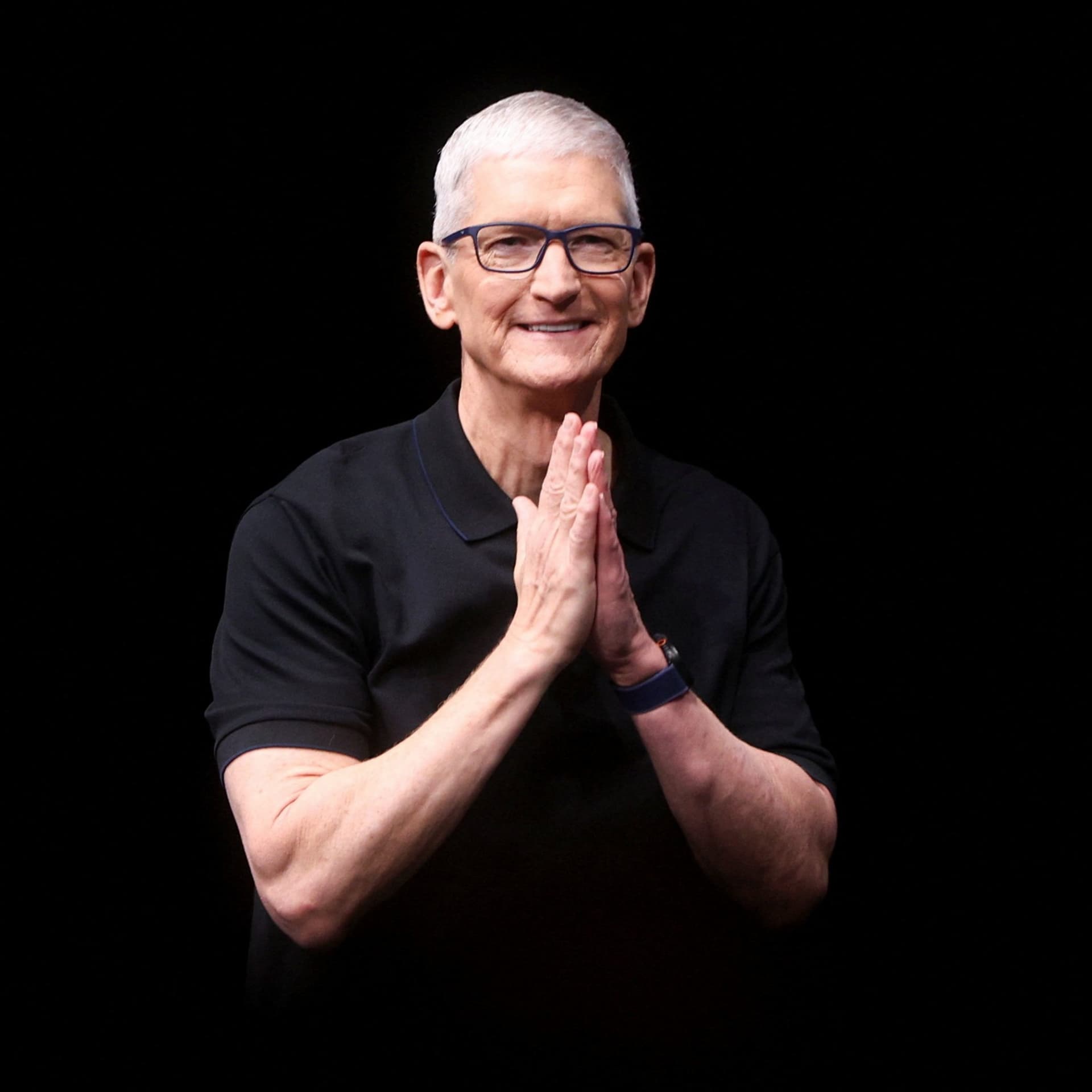
Apple is promising to make more products in the US, backed by a $600bn investment over the next four years. But after decades of relying on Chinese manufacturing that promise is going to be tough to keep. Today we’re joined by journalist and author Patrick McGee to discuss whether Apple can navigate the demands of Donald Trump’s America First agenda and disentangle itself from a made-in-China business model. Producers: Hannah Moore and Aron Keller Executive producers: James Shield and Annie Brown Mix: Nicky Edwards, Travis Evans Senior news editor: China Collins Picture: Apple CEO Tim Cook in Cupertino, California, U.S. September 9, 2025. REUTERS/Manuel Orbegozo