
In short
How the Iran-UAE war has damaged “Brand Dubai” (global perceptions of safety and luxury), including impacts on daily life, media control, and tourism.
Guests
Asma Khaled (BBC host, in Washington, D.C.). Samir Hashmi (independent journalist based in Dubai; previously BBC Middle East correspondent until last year; covers the Gulf).
Key claims
Dubai’s global “safe oasis” image was shattered when Iran launched missiles/drones at the UAE; in the first two months (Feb 28–May), about 2,800+ projectiles were fired at the UAE, with over 90% intercepted. UAE authorities clamped down on social media videos citing national security; about 375 people were detained for violations. Tourism dropped sharply during peak season (Nov–Apr): passenger traffic down ~30% Jan–Jun; hotel occupancy 20–25%.
Notable examples
attacks/alerts affecting Dubai airport and Dubai port; “You live in Dubai, aren’t you scared?” influencer video trend; population largely South Asian (about 4.7M residents; Emiratis ~10%).
Written by AI. May contain mistakes. Listen to the episode to check what was said.
Chapters
Tap a time to open that second in VODubai's Luxurious Image
1:12 to 2:20
Exploration of Dubai's image as a luxury destination and its recent challenges.
“When you think of Dubai, what do you imagine?”
The War's Impact on Dubai
2:20 to 3:16
Discussion on the implications of the war between the US, Israel, and Iran for Dubai.
“I'm an independent journalist based here in Dubai.”
Public Reaction to Attacks
3:16 to 4:32
Analysis of how social media captured the public's fear and disbelief during the attacks.
“Expats who thought they were living their best lives.”
Historical Context of Dubai's Safety
4:32 to 6:28
Understanding why the recent attacks on Dubai were shocking given its history of safety.
“I mean, that is the image we always see of Dubai.”
The Scope of Attacks on UAE
6:28 to 8:13
Details of the scale and nature of the attacks directed at the UAE.
“Much more than Israel, because Israel is much further down from Iran.”
Life in Dubai Amid Conflict
8:13 to 11:10
Insights into daily life in Dubai during the ongoing conflict and its effects.
“and the Ministry of Defense, more than 90 % of them were intercepted successfully.”
Demographics and Expat Life in Dubai
11:10 to 13:06
Discussion on Dubai's diverse population and the reasons for expatriate migration.
“The UAE has become the number one country in terms of millionaire migration.”
Government Response to Social Media
13:06 to 14:00
Examination of the Emirati government's crackdown on social media during the war.
“or the supreme interest of the country or its society.”
Media Controls and Detentions in the UAE
14:00 to 18:48
Learn about the restrictions on media and the detentions related to content sharing during the war.
“And did they threaten legal action if people chose to, say, publish or share or circulate images of their own?”
Impact of War on Dubai's Tourism
19:15 to 28:00
Explore how the ongoing war has significantly affected tourism in Dubai.
“I understand the bikes are not over, but some people were, I mean, certainly trying to leave in those early days.”
Transcript
Automatic transcript. May contain errors.0:00This BBC podcast is supported by ads outside the UK.
0:30We do the things we do. And how to make better choices to help avoid costly mistakes. Each episode covers the latest research in behavioral science and dives into themes like the power of self-control, shaping your mindset for success, navigating new beginnings, and why starting over can feel so hard. Listen to choiceology at schwab.com slash podcast or wherever you listen. How many streaming subscriptions do you have? Is it the same for your business? Avoid it by having all your business on one platform. Try Odoo for free at odoo.com. That's O-D-O-O dot com. When you think of Dubai, what do you imagine?
1:15Let me guess. Luxury hotels, endless shopping malls, sun-soaked beaches, gleaming towers, five-star restaurants. Essentially a resort-style oasis in the middle of the desert, right? Well, earlier this year, that image seemed to come crashing down. The thing is, Dubai is part of the United Arab Emirates, a little country in the Gulf that has built a reputation on being safe and luxe. It's also just south of Iran, near the Strait of Hormuz. And when the United States and Israel launched their war against Iran back in late February, the UAE became the target of Iran's retaliation. The UAE has close ties with the U.S., and in the past few years, it's been cooperating more with Israel, too.
1:58And during this war, it has been attacked by Iran more times than any other nation, including Israel. For years, Dubai has been a place that promised safety, security, and stability. But has that promise fallen apart? From the BBC, I'm Asma Khaled in Washington, D.C. And today on The Global Story, six months after the war began, whatever happened to Brand Dubai?
2:30I'm Samir Hashmi. I'm an independent journalist based here in Dubai. I cover the Gulf region. I used to be the BBC's Middle East correspondent based in Dubai until last year, but now I'm independent. Well, Samir Hashmi, welcome to The Global Story. You live and report in Dubai. And in late February, when the United States and Israel began attacking Iran, we saw Iran very quickly retaliate. And it began by specifically aiming a lot of missiles and drones at the United Arab Emirates. And Samir, sitting here in Washington, you know, I certainly saw the images, the image, say, of a luxury hotel on fire.
3:08We saw these social media videos. I'm actually so scared. I'm in JDC right now and I can see it. Oh, no, no, no, no, no, no. Expats who thought they were living their best lives. Right now I'm in Dubai. This is my house. There have been missiles for the last 20 hours. We have just been hit by a drone. It stinks of oil in here. I didn't even finish my cup of tea. Well, that got my heart racing. What a time to be alive, hey? There was this one video in particular on social media that struck a nerve with people. Not meant to be happening now. We're supposed to be in a safe place. Like, please just stop.
3:47And I want to understand from you, Samir, why were these images or these videos so disorienting to people around the world? We have to take a step back and talk about what was Dubai's perception globally. Yes. Before the war started. So Dubai was considered as the safe oasis, a hub for tourism business, luxury hotels. This was a picture that was painted globally about Dubai, which was partly true, of course. Travel and lifestyle influencers, they projected a lifestyle of opulence, that they're living in these fancy villas, going to the beach side for a swim, going to these five-star, seven-star hotels, and that somehow projected the image of Dubai.
4:29Some of it is true, some of it is not, Asma. Yeah, I was going to say, Samir, do you live in a fancy villa? I mean, that is the image we always see of Dubai. I was like, show us your crib. Unfortunately, no. But that's the case for most of the city, actually, Asma. I think what these influencers show or project is not even one person of Dubai's population. Why was it glaring, the images that were coming out? Because Dubai has never been under attack. Even when there was a war in 1990-91, which was the Gulf War, Saddam Hussein's Iraq invaded Kuwait at that point of time. And a lot of countries in this region, the Gulf region, including Saudi Arabia, were under attack.
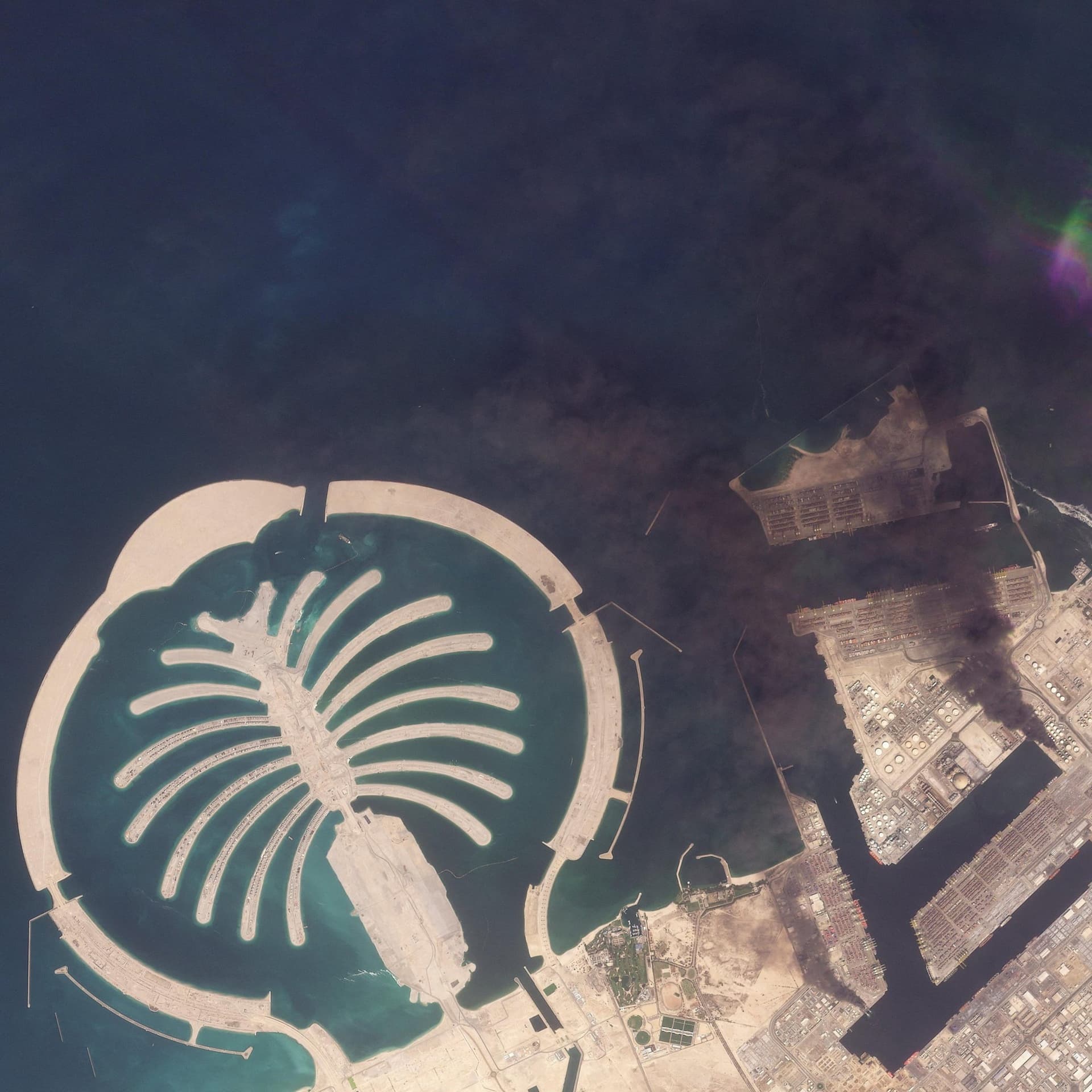
5:10And I was a child living in Saudi Arabia at that time, so I witnessed that war as well. Even at that point of time, Dubai never came under attack. Even if this region has seen turmoil, Dubai has always remained the safe place, isolated, insulated. So when people saw those images of the luxury hotel on the Palm Island, which is one of the poshest areas here, coming under attack, or some of the commercial buildings, some of the civilian areas, the Dubai airport, the Dubai port, that was really glaring because people have always associated the word Dubai with safety, with luxury, with tourism, with a good lifestyle.
5:49Was it a shock to you that Dubai was ensnared in this war? Did you see it as a safe haven? I think it did come as a shock for many. I did witness myself drones and missiles that were being intercepted by the UAE government. And there were a lot, though, Samir, right? I mean, I think the sheer scope of it as I was prepping for this episode, it is staggering. Well, that's right. In the first two months of the war, which is when the war started on 28th Feb, all the way until May, especially the first two months, March and April, drones, missiles, all kinds of missiles, 2 ,800, a little over that, were shot towards the UAE.
6:27So at one point of time, among all the attacks that we saw in this region And when I say this region, this includes countries like Saudi Arabia, Qatar, Bahrain, Kuwait, more than 40 % of the attacks or those missiles and drones were shot towards the UAE. More than Israel as well. Much more than Israel, because Israel is much further down from Iran. So Iran cannot shoot drone towards Israel. They can only launch cruise or ballistic missiles, which take much more time. And geographically, the UAE is just across the sea. It's really close for Iran to just shoot a drone that would just land on the UAE territory.
7:06What was that like? What were the days and nights like? I mean, it was quite staggering because usually when we think about conflict and war, it's like people, you know, fleeing their homes. That didn't happen. But you constantly had these alerts coming on your phone from the UAE government saying that the country is under attack and the Ministry of Defense is intercepting missiles. glaring sound on your phone every day whenever the city or the country was under attack. And imagine everyone would get it on their phone at the same time. So if you're in a public place or you're in an office, everyone's phone suddenly starts buzzing.
7:41There were no shelter rooms as such. Yeah, so what do you do if an alert comes through your phone? I think in the first few weeks, people were getting away from the glass windows because a lot of buildings here in Dubai are built of glass. This happened as far as the first three weeks. But then it changed. I think then people started getting used to it. Because as I was saying, more than 2 ,800 projectiles been shot towards the UAE. And most were intercepted, Samir, but some targets were hit, right? I mean, I recall hearing the airport was struck. Yeah, more than 90%, according to the official figures from the military and the Ministry of Defense, more than 90 % of them were intercepted successfully.
8:19But yeah, there were a number of locations, which includes civilian infrastructure like airports, Dubai and Abu Dhabi airports both. Which is significant, Samir, no? Because I recall hearing that the Dubai airport is one of the most popular, well-transited airports in the world for international travel. It's the busiest airport for international travelers in the world. In 2025, 95 million people passed through that airport. Wow. Yeah, that was struck on a few occasions. Though officially, the government didn't confirm all those incidents. But yes, there were a number of videos, especially in the initial days that came out, which showed that the airport did come under attack and due to which Dubai airport had to suspend flights or flight operations for a few hours.
9:03But even the Dubai port, Asma, because the Dubai port is one of the largest ports in the world, the largest in this region, a very important engine of the Dubai economy because you have vessels coming, going and out for trading. So even that was, you know, a big shock. It strikes me that some people come to Dubai for a luxe lifestyle. Other people might move there for legitimate economic opportunities. There are many versions of a Dubai life you can have. But I want to get a sense from you of why so many people want to uproot their lives and move to Dubai. It is a city full of people from all over the world.
9:39Dubai, the figure right now, the latest data that's come out is 4.7 million people living in Dubai, out of which 60 % to 65 % are South Asians. When I say South Asian nationals, this includes Indians, Pakistanis, Bangladeshis who have relocated here. And then you also have people from other countries like significant populations from Egypt, Philippines. It's an estimated figure across the UAE, 240 ,000 Brits. The Western expat population across the UAE is estimated to be about half a million. Predominantly South Asian diaspora. The local population of the UAE, when I say local population, as in the Emirati population, the UAE nationals are just about 10 % of the population, which is why this country relies heavily on migrant workers or people expatriates to come and work here and keep this country moving.
10:35Now, the UAE does not give citizenship, unlike many Western countries. There's no straightforward pathway to get a passport or a nationality. Very few people get that. There are long-term visas now. People would come here, spend a few years, earn some good money and go back to their home country. But for a lot of people, this has become a long-term home. Yes, there is a section of the population which is effluent, but that is a very small population. When I say effluent, like the millionaires, that population would be 2-3 % of the overall population or 4-5 % max. And it is true, interestingly, after COVID, The UAE has become the number one country in terms of millionaire migration.
11:16And what's the attraction? The attraction is safety. The crime rate is very low. You will barely hear stories about people getting mugged on the streets or, I mean, I've never heard that story, actually. I've never heard anyone getting mugged here. Yes, there are some petty crimes that have happened, but the rate is very low. And there are a lot of surveillance cameras across the city. It's one of the most underwatch city in that sense. plus the lifestyle it offers. It's a very clean city. It's a very modern city. You can get all the convenience you want. The average salary of someone in Dubai, and there's no government data that comes out.
11:54So a lot of them is based on these surveys that are done by institutions and things like that. The average salary is about$5 ,000, which is nowhere close to, let's say, someone who's projecting an image of opulence or luxury. But based on the surveys that come out, 60 % of the population would be earning less than$1 ,500 a month in city because a huge section of that are also blue collar workers. And there's no minimum wage system in the country. So, you know, there's a lot of disparity. But nevertheless, having said that, there is zero percent tax on your personal income. Samir, if we can go back to the start of the war, when Iran first started aiming missiles at the UAE, there were some people sharing this all on social media.
12:45How did the Emirati government respond to those posts? I think the initial one or two days, the government came out with statements asking people not to post these videos. Now, the thing is, Asma, that there are some rules and regulations here in the country, especially when it comes to social media, what you can post. The law is very clear. Anything that can be seen as disrespecting the country's sovereignty or the symbols or the institution or the supreme interest of the country or its society. Now, these are very broad terms. Or the culture or the national identity or the values. Or refrain from circulating information that may compromise national unity or social security or inside violence or panic.
13:30You know, these were the general rules. But I think what happened during the war is because of the videos, the government came out and very categorically said that these videos are impacting the national security because it gives away sensitive information. In some cases, it's disseminating misinformation. Some of them are AI-generated videos, which is not true because some of them were actual real videos. But they really wanted to clamp down on the information that was going out because they said that it could compromise national security. So they essentially wanted the public to only share government information about the war and these strikes.
14:07That's correct. And did they threaten legal action if people chose to, say, publish or share or circulate images of their own? Yes, they did say that this could lead to imprisonment or a heavy fine. And a lot of people were detained. The figure, official figure, was about 375 people across the country were detained for different violations. Not all of them were detained for just posting videos, but a sizable of them were. There was one organization that claimed more than 20 Brits were detained, actually. Smeet, can I pause and understand this a little bit? Because this just seems so normal in many environments, right?
14:44I've covered breaking news events here frequently in the United States. And if a moment of crisis happens, I think it is such a part of how we operate that people pull out their phones and they document what is happening. You're right. It is an alien concept for many countries because usually you have the freedom to pull out your phone and film anything, basically. I think what the challenge at the UAE and a large section of this region, it's not just the UAE, even countries like Saudi Arabia, Kuwait, Bahrain, all of them are autocracies. There's no democracy here. These are ruled usually by families, royal families, and they have an absolute say on what is published in the press, local press, and also the perception of what goes out publicly.
15:30So they try to manage perceptions of the country through keeping a strong hold on media as a whole. And when I say media, oh, it's social media as well as the mainstream media. And those rules apply, you're saying, to individuals, social media videos, also journalists in Dubai. And so, Samir, I imagine many listeners are wondering, well, here we are having this conversation with you as a journalist. Are you restrained in some capacity? I just want listeners to understand and understand this transparency we're having here with you. So, yes, there are some clear guidelines of how the press has to function.
16:06And they became even more strict during the war. It didn't happen with me personally, but I know a number of colleagues who are working for other international outlets that face a lot of pressure from the authorities because they were posting videos on the news stories. Can I ask you then about these videos, right, Samir, because you're saying that the port was hit and people shared images of that. But if I understood you correctly, you're saying the government did not acknowledge that or at least initially did not acknowledge that. I mean, the port came under attack a number of times. The videos were circulating, but the government did not come out and explicitly say whether the port was attacked or not.
16:44One thing they did continuously confirm was that every day, whenever there was an alert, they would give out the numbers. How many missiles were shot? How many did they intercept? They did give out the casualty numbers. So over 230 people were injured during the course of the war and 13 people lost their lives. That is the figure that they gave out. and they did release photos and visuals of those who were injured, especially when the president went to meet them and things like that. But yeah, in terms of videos, they were quite strict. And when you say they were quite strict, there were some people who were arrested.
17:16Have they been prosecuted? That's a very tough question to answer, Asma, because the problem here is the courts and the police don't release any public data or they don't comment on any specific cases. So if you as a journalist reach out to them, they will never give you an answer. And this is not because of the war. This is in general. I can't go to the court here and just sit in a hearing. I can't do that as a journalist. It's against the law. But what my understanding, Asmaa, is from my sources that I've been speaking to, the government, that a number of these people that were detained were let off because the embassies of these various countries.
17:52Of their home countries. They did not comment publicly, most of these countries, because I think that was a part of the understanding. But a lot of these cases were dropped. and some people who were detained were let go. Because I think what was happening also, and I'm not trying to defend the UAE government here in any way, but the problem also was, which I also felt, that a lot of Western news publications, especially the tabloids, started running headlines how Dubai was under attack, how, you know, the bubble has burst, painting a picture which did not truly represent what was happening on the ground because it gave a sense that there was this full-blown-out war and people were panicking and they were just trying to, you know, flee the country and how Dubai's story was over.
18:47John Deere is putting in work and putting up highlights. Oh man, look at those passes. Tillage, planting, harvesting. Three years in, and these pre-owned machines are still at the top of their game. We're talking reliability, performance, and long-term potential. And get this, these veteran machines can pick up the latest precision tech with ease. You know it, and fans ready to add John Deere-certified pre-owned equipment and more options to their lineup can shop at machinefinder.com. Booyah!
19:19I understand the bikes are not over, but some people were, I mean, certainly trying to leave in those early days. Some people, yeah. I think that qualification is important. I myself have reported about it. I know people who left the city. They didn't leave the country for good. But if you look at the number of people, official data, the number of people who left the country during the war, was only 61 ,000 out of a population of 4.7 million. So that's about 5 % during the war. And now the population has gone back to that same level. The latest data that's come out in August, the population's actually slightly increased to what it was pre-war.
19:57So it's in that context of the government professing national security concerns for clapping down on the sharing, you're saying, of videos or photos on social media. And yet shortly after that, I recall seeing this sort of wave of videos online. Influencers from across the UAE, but particularly in Dubai, have taken to social media to post near identical videos. Many people in the comments have remarked how many similar videos they've seen. A near identical format soundtrack and even the stock footage involved in the videos. It seemed to be showing a very similar counter message. Now they all follow the same pattern, the same template.
20:40They start with the content creator with a picture-perfect background of Dubai featuring the caption. You live in Dubai, aren't you scared? You live in Dubai, aren't you scared? You live in Dubai, aren't you scared? And then it would show this montage of photos of Emirati authorities. Adding, no, because I know who protects us. No, because I know who protects us. I mean, who knows? I have a question of whether these were really organic or in some ways being promoted within Dubai. But we saw these images that all seem to be projecting a very similar message about the safety and security of Dubai.
21:15And how do you understand that? Yeah, there was a lot of controversy around that video. I spoke to a number of people, Asma, within the government and also to a lot of influencers. I didn't find a single influencer who said that they were paid by anyone to put that video. The government sources told me that they have not sanctioned any campaign. However, I want to add here that there are a lot of influencers who are more aligned with the government, right? And that happens in a lot of countries. I come from India. I see that in India. It could be a case that there was a nudge from the government that maybe some of those influencers should put it out.
21:53But then I did see a number of people who are regular influencers, have nothing to do with the government, that started putting that video out.
22:04Now, I asked some of these influencers why were they doing it if they're not getting paid. So I got mixed answers. I mean, I spoke to one influencer who was based here for about 10 to 15 years. And she said, I did it because Dubai is home to me. I've spent 15 years of my life here. I just want to show my support and solidarity because this city and country has given me so much. One influencer who was here just about two or three years told me that, look, as a social media influencer, whatever I see is trending, I try to create similar reels, which will help get me more followers probably. And there was one influencer, interestingly, who moved here very recently, less than a year, said that because their plan is to live and work here, they just want to make sure that they publicly show the government that we are very much here with you, standing with you.
22:54I mean, I'm very clear that it was not paid. I don't think it was a paid campaign at all. You could argue that there might be a nudge from the government, especially towards the influencers who are close to the government, who might have started this trend, because we don't know how it started, right? So yeah, it's a mix of answers, really. Samir, earlier you had mentioned tourism. And I think regardless of what people may be posting online, the mere existence of a regional war that is still not yet over, I mean, it undoubtedly does impact the sort of boost of foreigners who might visit a place as a tourist destination.
23:33And I want to ask you about that. To what degree Dubai has seen a drop off in tourism? Tourism has been battered completely since the war has started. Tourism is one of the main pillars of the economy here. It's a business hub. A number of industries here rely on tourism. The war has taken a toll on the tourism economy. What was worse for the tourism industry was this happened during the peak tourism season from November all the way to April. That's the busy period. So when the war started, which is on the 28th of Fed, March, April were part of the peak season. So certainly because the flights got canceled, there was a significant drop.
24:12And it's still playing out even during the summer. A number of carriers, especially Western carriers are still not flying, British Airways being one. There are still advisories from a lot of Western governments, including the United States, that have advised people not to travel to the region. So if you look at the first half of the year between January and June, air traffic or passenger traffic, as it's called, dropped by 30 % compared to last year, the same period last year. So that's a significant drop. And that's because A, there are less number of flights and B, less people flying for tourist reasons.
24:48So that's one part. Second is the hotels and restaurants have been struggling. Occupancy levels are down to 20, 25%. A number of layoffs have happened in industries which are linked to tourism. The worry is the second half of the year because right now the war asthma hasn't stopped. Even though we don't have the same situation as March and April. Yeah, I was going to say, are the attacks continuing towards the UAE? No, actually we haven't seen much except for one occasion in the last one month. Just two weeks ago, there was an alert that was issued that two missiles were shot towards the UAE, but one fell in the water and one fell on non-civilian area in the land and no one was hurt.
25:27But you know that uncertainty is there, right, Asma? I mean, if you talk about last year, 19.5 million tourists visited Dubai, which puts Dubai at the top 10 most visited cities in the world. But this year, that number could go down dramatically, like we saw during COVID. it. Samir, you're describing a city that still feels very much like it's living through uncertain days. You know, when this war began, I think that image of Dubai as the safe, secure oasis in the Middle East was punctured. Is it your sense that this promise of safety, security, and importantly, stability, has that promise fallen apart?
Read the full transcript
26:09And if so, what does that mean? I mean, look, there's no doubt that when you talk about brand Dubai, I think that definitely has cracked. I think there are two things here. I think one thing is the long term stability of Dubai. People still believe that because they feel that this war will finally come to an end. And the UAE will be able to rebuild or repair that image. But having said that, Asma, I think it's also important to remember that by and large, the population here are South Asians and Asians. For them, despite this war, Dubai remains a very attractive destination because A, it offers them better opportunities.
26:55They rely on remittances. Remittances is the money that people make here and send back to their home countries. India, Pakistan, Bangladesh, Nepal, a sizable amount of remittances come from the Gulf. Because people who are working here, they earn that and send that back. So I don't think that for the global south, that Dubai is going away anyway. Because even today, it is the business hub of the region. There's no replacement yet. Yes, Riyadh is coming up, Doha to an extent. But Dubai is still the undisputed business hub. But yeah, I think there are definitely short-term challenges about whether Dubai can go back to what it was before.
27:37In terms of the image, I think that will take time. And a lot would depend how long does this war take to come to an end. And that is the great unknown, Samir. It is. Yeah. Well, on that note, I just want to say thank you for joining us on The Global Story. I really appreciate it. Thanks, Asma.
28:00That was Samir Hashmi, who spent more than a decade reporting for the BBC. He's now an independent journalist based in Dubai. And as always, if you all have any feedback for us, any story ideas or questions, our email address is theglobalstory at bbc.com. And a quick recommendation before we wrap up today's show. As you all know by now, we here at The Global Story dive deep every weekday on one big story about where the world and America meet. If you're also looking for a way to catch up on the latest news headlines, then we recommend checking out our sister show, The Global News Podcast. Our show today was produced by Zandra Ellen and Vari McKenzie.
28:38It was mixed by Travis Evans. Our digital producer is Charlie Firth. Our executive producer was Martine Powers. And our senior news editor is Chyna Collins. Thanks, as always, for spending some time with us. And we'll talk to you again soon. Thank you. forward slash subscribe to find out more.
From the publisher
As the summer holiday season draws to a close, foreigners travelling to and from Dubai in the United Arab Emirates are facing delays, cancellations and severe travel warnings. The disruption comes as a result of the UAE’s position in the ongoing US-Israel war with Iran. Throughout the conflict, Iran has attacked the UAE more times than any other country, including Israel.
Until the war with Iran began, Dubai was a major tourist destination, famous for its modern skyscrapers, luxurious beaches and low crime rate. For decades, the Gulf city has promised residents and tourists alike safety, security and stability – so has that promise fallen apart? And what could that mean for the city’s future?
The Global Story’s Asma Khalid speaks to Sameer Hashmi, an independent journalist based in Dubai, about how Brand Dubai is weathering a major regional war.
Producer: Xandra Ellin
Mix: Travis Evans
Digital producer: Charlie Firth
Editor: Martine Powers
Senior news editor: China Collins
Photo: Jebel Ali Port after one of the berths caught fire because of debris from an intercepted missile, March 1, 2026. Credit: Planet Labs PBC/Reuters