
In short
Whether Donald Trump’s UN-backed 20-point Gaza plan can turn the Oct 10 ceasefire into lasting peace, and what happens if it fails.
Guests
Yolande Nell, BBC Middle East correspondent in Jerusalem (two years focused on the Gaza war).
Key claims
The ceasefire is mostly holding, but most of the 20-point plan remains unresolved. The UN Security Council resolution would create an International Stabilisation Force and a “Board of Peace” (Trump expected to chair), plus a pathway toward a Palestinian state. Hamas refuses to disarm until an independent Palestinian state exists, undermining demilitarization and stabilization.
Notable examples
Hamas fighters emerging from Rafah tunnels led to Israeli casualties and renewed strikes; Israel still controls about 53% of Gaza behind a “yellow line” marked deeper than expected; aid delays include Israel’s “dual use” restrictions and a new aid-group registration process; Rafah crossing hasn’t opened.
Written by AI. May contain mistakes. Listen to the episode to check what was said.
Chapters
Tap a time to open that second in VOUN Security Council and Trump's Peace Plan
0:30 to 1:30
Discussion on the UN Security Council's support for Trump's peace plan and its implications.
“so you can monitor and engage with the account while your teen learns how to invest and manage money.”
Interview with Yolande Nell
1:30 to 2:35
Tristan Redmond introduces Yolande Nell, discussing her background and current events in Gaza.
“And we ask, can Trump's plans still bring a permanent peace to Gaza?”
Current Situation on the Ground
2:35 to 4:06
Yolande Nell explains the ongoing ceasefire and the situation of Hamas fighters in Gaza.
“The peace plan was signed with great fanfare in Egypt.”
Challenges to Ceasefire Viability
4:06 to 6:12
Discussion on the challenges facing the ceasefire, including violence and military actions.
“Can you tell us what's going on with these fighters who are trapped underground that we're hearing about?”
Understanding the 20-Point Peace Plan
6:12 to 9:00
Analysis of Trump's 20-point peace plan and its phases, including hostages and military actions.
“The Israeli Prime Minister Benjamin Netanyahu has made clear that he is not going to just simply let them go into the Hamas-controlled part of the Gaza Strip.”
Aid Delivery Challenges in Gaza
9:00 to 11:12
Yolande Nell discusses the status of aid deliveries to Gaza and the obstacles faced.
“So when we sat down and looked at the 20 points, it seemed to us there were three of them which have been achieved.”
Aid and Military Politics
11:12 to 14:00
Examination of the political and military factors affecting aid distribution in Gaza.
“History has shown us that the line of control can sometimes solidify and become concrete and can last for a very long time.”
Aid Process Delays in Gaza
14:00 to 15:10
Learn about the challenges faced by aid agencies in Gaza due to new regulations.
“And then you have other particular issues that are causing delays.”
Current Hunger Situation in Gaza
15:10 to 16:41
Explore the ongoing famine situation and food distribution efforts in Gaza.
“and at the moment out of the five crossings going into Gaza, you only have three of them being opened.”
Hamas's Control and Strength
16:41 to 18:20
Examine the current state and resilience of Hamas amidst ongoing conflict.
“although still shortages, people say, of fruits and vegetables and meat and some kinds of dairy.”
Show all 16 chapters
Trump's 20-Point Peace Plan
18:20 to 19:50
Understand the key elements of Trump's peace plan for Gaza and its challenges.
“Just going back to the Trump 20-point peace plan, Gaza will be a de-radicalized terror-free zone that does not pose a threat to its neighbors.”
International Stabilization Force Controversies
20:30 to 22:32
Delve into the complexities of establishing an international force in Gaza.
“In order to disarm Hamas, it sounds like a key element is this international stabilization force.”
Update on the Board of Peace
22:32 to 24:25
Get insights about the status and challenges of the proposed Board of Peace.
“I mean, it feels like whoever commits to that stabilisation force has to be prepared to draw weapons when confronted with Hamas fighters.”
Mixed Opinions on Ceasefire Deal
24:25 to 25:22
Discuss the mixed feelings about the ceasefire deal and its implications.
“that Israel is ready to resume the war if it doesn't disarm.”
Stories of Resilience from Gaza
25:22 to 26:34
Hear heartwarming stories from Gazans about resilience and normalcy.
“Yolande, on The Global Story, we've been exchanging for a while now with a Ghazan mother called Leila and hearing about her experiences both before and after the ceasefire.”
Life in Israel Post-Ceasefire
26:34 to 28:00
Explore the changes in mood and life for Israelis following the ceasefire.
“And do you sense that there is a similarly palpable relief and resumption of normal life in Israel as well?”
Transcript
Automatic transcript. May contain errors.0:00This BBC podcast is supported by ads outside the UK.
0:30so you can monitor and engage with the account while your teen learns how to invest and manage money. Learn more at schwab.com. The United Nations Security Council backed the Trump peace plan, and we have a great peace plan. We have peace in the Middle East. That was Donald Trump last week celebrating his peace plan for Gaza coming closer to reality. The UN Security Council vote that Trump's talking about here brought the Gaza conflict back into the news. It had all gone a bit quiet since the ceasefire came into effect back on October the 10th. But the ceasefire was just that, a ceasefire. A lasting peace is something different, and we're still a long way from that.
1:14Most of the elements of the US-led 20-point peace plan, which covers everything from how to disarm Hamas to who governs Gaza, are still unresolved. Peace in Gaza isn't a done deal. I'm Tristan Redmond in London, and today on The Global Story, we speak to Yolande Nell, the BBC's Middle East correspondent in Jerusalem. And we ask, can Trump's plans still bring a permanent peace to Gaza? And what could happen if it fails?
1:52My name is Yolande Nell. I'm a BBC Middle East correspondent. And for the past two years, my work has really been dominated by the war in Gaza. Well, the Gaza ceasefire came into effect on October the 10th. It's still in place for the most part. I guess six weeks ago, there were many people who might have been surprised to be told that it would still be in place. in six weeks time. So that's a positive thing. But we've heard very little since the ceasefire came into place about Donald Trump's 20 point peace plan. And we really wanted to take the opportunity to speak with you to kind of get up to speed on where things are with the situation, not just with the peace plan, but also on the ground.
2:35The peace plan was signed with great fanfare in Egypt. And then it kind of disappeared without a trace, at least to international observers maybe. What happened at the UN that was so significant? So this was a really crucial development. You have the UN Security Council passing this new resolution, really approving the Trump blueprint for Gaza. And it authorizes a number of things. First of all, this international stabilization force to bring security for Gaza. And then you have this transitional governance in the form of what's been called the Board of Peace, and that we're expecting President Trump himself to head.
3:16Then you've also got a line in the resolution that really Arab countries in particular had been pushing for, and that does envisage a future possible pathway for a Palestinian state. Now, this has been welcomed by Arab countries, by the Palestinian Authority, but a key detractor has been Hamas itself, which is still refusing to disarm until there is an independent Palestinian state. Well, we were very struck here in London by the kind of split screen moment between, on the one hand, the UN Security Council in New York and, you know, this kind of talk of this monumental moment of this important peace plan.
3:56Whilst at the same time in Gaza itself, there are apparently still Hamas linked fighters scurrying around in tunnels underneath Gaza. Can you tell us what's going on with these fighters who are trapped underground that we're hearing about? Their presence was really highlighted just over a week into the ceasefire where you had two Israeli soldiers killed and another couple who were wounded. Tonight, a truce teeters in the Middle East after a day of violence between Israel and Hamas. Breaking news in the Middle East, we're hearing of strikes in Gaza. This is the first major test of this U.S.-brokered ceasefire.
4:39It seems that Hamas fighters came out of one of these fortified tunnels in Rafah, in the very south of the Gaza Strip, and, you know, they opened fire. This would be the first incident of Israeli military casualties since the start of this ceasefire nine days ago. There are Hamas operatives who, throughout the war, were in this extensive tunnel network, which is across Gaza. Israel is clear that it still hasn't destroyed much of it, despite the fact it's been targeting these tunnels for the past two years. It's said that there are between 100 and 200 of these Hamas fighters who are still there.
5:16Their threat to the Israeli soldiers is very clear. And you had Hamas trying to distance itself from blame for the actions back in October by saying that it had no contact with these cells. It lost contact with them way back towards the beginning of this year. It may well be that these fighters, especially in the initial stages of the ceasefire, didn't know anything about it and what was being agreed on an international level. Mediators have now been very much involved. First of all, we have Israeli strikes. At least 45 people were killed in Gaza in the aftermath of those soldiers being killed.
6:01And mediators had to step in to try to shore up this very fragile ceasefire. And they have been trying to negotiate a way to get those Hamas fighters out. The Israeli Prime Minister Benjamin Netanyahu has made clear that he is not going to just simply let them go into the Hamas-controlled part of the Gaza Strip. That's, you know, very dangerous for him. But Hamas has been saying that these fighters are not just going to simply give up their weapons and give up fighting. It's understood that President Trump's son-in-law, Jared Kushner, when he's been talking to the Israeli prime minister, he has been trying to find a way through all of this.
6:42We've not really had any word on progress recently. Okay. Well, let's have a look at the peace plan itself, because six weeks ago, Trump created this 20 point plan. And one result of that was in early October, we got a ceasefire agreement. but since then we've heard people talk about the peace plan in terms of different phases phase one phase two but the 20 point plan itself if you look at it doesn't actually seem to be it's not clearly divided into phases can you explain to us how this talk of phases has come about and what it actually means practically speaking on the ground i think this is sort of language that we used to from former ceasefires in Gaza and former discussions of ceasefires.
7:33So when this took effect on the 10th of October, you basically had both parties to the fighting, Hamas and Israel. They then were obliged to make their moves to meet its terms. So Israeli troops, first of all, withdrew to stay in control now of about half of the Gaza Strip. And then you had Hamas on that really memorable day, returning all of the 20 living hostages to Israel that it was still holding. Israel then, in exchange, freed nearly 2 ,000 Palestinians who were held in its prisons or detention centers. There were lots of delays about handing back the bodies of 28 deceased hostages held by Hamas, but also other Palestinian armed groups.
8:22And that has been a really major threat to this ceasefire in its early stages. Until now, you have the bodies of two Israelis and one Thai agricultural worker that have not been handed back. Now things going through to the next phase of the ceasefire, despite the fact that that initial sort of stage does not seem to have been totally completed because not all of the bodies have been returned. And that's where we're now talking about these other steps with the Board of Peace, with the International Stabilisation Force. The next stages should see them coming online. OK, if we zoom out a little bit and look at the 20 point plan as a whole, I wonder if you can help us to understand where we are overall on it.
9:10So when we sat down and looked at the 20 points, it seemed to us there were three of them which have been achieved. So live hostages and almost all of the dead hostages returned to Israel. That seems to be almost complete. Cease fire still holding for the most part, not entirely, but for the most part. And then the withdrawal of Israeli soldiers to agreed upon lines. Now, is that correct? Is that where we are? So three of the 20 or can you update us on more that have been completed? I mean, in terms of ones that we've seen real progress on, those are the main issues for the moment. When it comes to the Israeli forces, they have pulled back to what's being referred to now as this demarcation line, the yellow line.
10:00Israeli forces still control 53 % of the Gaza Strip. And although very few people are now being killed in fighting compared to what we saw over the course of the war, Still on a regular basis, we're getting these announcements that Palestinians have crossed the yellow line. Israel then classes them as terrorists, and they announce that they have been killed. Now, certainly in some cases, it's very hard for us to verify, but it does seem that there are Hamas operatives who have been killed. But we've also heard about families being killed as they've gone back to try to find the remains of their homes.
10:38And speaking to people in Gaza, they have told me that the level of destruction is such that it is very confusing for people, particularly in the area around Gaza City. They've talked to me about how they can't identify easily on the ground where this yellow line was supposed to be. So now you've got action being taken by the Israeli military to try to put actual yellow blocks and indicators of where this yellow line lies. According to the Hamas-run government media office, close to 280 people have been killed since the ceasefire came into effect. When you have territory that is divided by opposing military forces, in this case, part of Gaza is under the control of Hamas and part of Gaza is under the control of Israel, and they're divided by this so-called yellow line.
11:27History has shown us that the line of control can sometimes solidify and become concrete and can last for a very long time. Is there evidence that Israel is making plans to withdraw further as they're bound to by the 20 point plan? Or is there a possibility that the Israeli presence could become longer term? Well, actually, I mean, when BBC Verify recently did analysis, they found that these yellow markers that are being put in place by Israeli troops to mark out the yellow line, that they had been positioned sometimes hundreds of metres deeper inside the Strip than was expected. And there's also concern that just the very act of marking out this yellow line could in fact make that become a new fact on the ground.
12:15So there's a fear that Israel could potentially still want to annex what's on their side of the yellow line in the long term if this plan stalls. At the moment, it's written into the peace plan of President Trump that Gaza specifically will not be annexed. But that is still something that members of the government of Prime Minister Benjamin Netanyahu would like to see. They have been talking about wanting to see Gaza annexed through the course of the war and wanting to re-establish Jewish settlements there. OK. I mean, one of the absolutely key conditions of the 20-point plan is the resumption of aid being delivered into Gaza.
12:55And we've seen multiple reports from non-governmental organizations saying that some aid is entering Gaza, but not enough. Can you update us on what the situation is with that, please? Yeah, I mean, aid has been coming in. And importantly, the United Nations is back, you know, being the main player in that after Israel and the U.S. had previously really been trying to sideline it and bring in the Gaza Humanitarian Foundation, which was such a controversial initiative. Now, it's part of Trump's peace plan that the UN should be involved in this way. Now, definitely, we've had that message coming from the UN agencies that they have wanted to get more aid into Gaza, that particular supplies, they're having difficulties getting them in because Israel considers them to be dual use.
13:48That means that they could be used, according to Israel, for both civilian and military purposes. I had one organization pointing out to me that tent poles are on this list of very restricted items, and that's proving a difficulty with shelters. And then you have other particular issues that are causing delays. So that, for example, back in March, Israel introduced this new registration process for aid groups that are working in Gaza. And it cited security reasons for that. It wants them to give details of their local Palestinian staff. And what aid agencies are saying is that they can't give that kind of information.
14:27That goes against data protection laws in the countries where they're based and in donor countries. So that has really led to a lot of difficulties for some aid agencies or aid organizations when they want to bring goods that they have already purchased and that are waiting in Jordan and Egypt and in Israel. when they want to bring those into Gaza, they're being told they can't get the necessary approvals to do that. And Jan Egeland, who's head of the Norwegian Refugee Council, told me that this was a bureaucratic, military-politicised quagmire. And just one other point on that is about border crossings, because specifically the RAFA border crossing with Egypt was supposed to open as part of President Trump's 20-point peace plan.
15:09That has not happened. and at the moment out of the five crossings going into Gaza, you only have three of them being opened. So we've had the UN consistently calling for all of those crossings to be opened so that aid can get in and also that sick and wounded people in Gaza can get out for treatment. Okay, so I mean the Israelis have responded to these calls for more aid to go into Gaza. Kogat, which is the Israeli defence body that controls the border crossings, has told the BBC that, quote, Over the last few months, it's coordinated the entry of close to 190 ,000 tents and tarpaulins directly to the residents of the Gaza Strip.
15:46And it said that in accordance with the terms of the agreement of the ceasefire, it was allowing hundreds of trucks carrying food, water, fuel, gas, medicines, medical equipment, tents and shelter supplies to enter the Gaza Strip every day. Where are we with the hunger situation in Gaza? because the United Nations did declare that there was a famine situation in the north of Gaza. Has that abated now? I mean, certainly we're hearing about more than a million food parcels being handed out in recent days by UN aid agencies. There was a lot of concern, particularly that there were still shortages of food in the north of the Gaza Strip where famine had been declared.
16:30It's very unclear at the moment, and I think it's because the situation is so chaotic on the ground, whether the famine has spread to other areas of the Gaza Strip. If you look at footage of markets, there is quite a lot of food available, although still shortages, people say, of fruits and vegetables and meat and some kinds of dairy. Yolande, you mentioned that Israel controls just over 50 % of the territory in Gaza behind the yellow line, the so-called yellow line. A significant rest of Gaza is under the control of Hamas. What kind of state is Hamas in at this point? How strong are they and how much power and coordination do they have over that remaining part of Gaza?
17:17First of all, if you went to Gaza before the war, Hamas were definitely visibly in control. What we see now is that Hamas has been weakened, but it remains a resilient force, I would say. Thousands of its fighters have been killed, including very senior people, including the leader of Hamas, Yahya Sinwar, and the circle around him. But it does seem that Hamas has been recruiting thousands of new recruits. And what has been a real concern of Israel and even of Gazans is they've seen Hamas trying to to reassert its control using the opportunity that's been provided by the ceasefire and some of the delays in implementing the next steps of the plan.
18:05They've been doing things like providing law and order. And so long as there's no other kind of viable governance, it's going to keep building on that. I mean, the big question does remain whether Hamas will disarm. What is to be done about this?
18:25Just going back to the Trump 20-point peace plan, Gaza will be a de-radicalized terror-free zone that does not pose a threat to its neighbors. That is point number one of the 20 points. You know, there's other things in there, promising amnesty for Hamas members who give up their weapons. But also it commits to a process of demilitarization of Gaza under the supervision of this international stabilization force. It's supposed to involve weapons being placed permanently beyond use, those that remain. We have not seen any evidence of anything like this even beginning to happen. Hamas continues to reject the idea of giving up its weapons, saying it will only do that when there's an independent Palestinian state and that keeping its weapons is, in its view, a legitimate form of resistance.
19:49The End Group chats that never shut up. Neighbors texting you the score before your TV catches up. Come on! Get a load of this guy. Catch up. On a dog. Yeah, we've got thoughts. Too loud? In Chicago, you're gonna hear it. Because nothing here gets built without conversation. Nothing moves without connection. So, if you think you know AT &T, it might be time to rethink that. Because their network has improved, like, a lot. So Chicago can keep speaking its mind with AT &T Wireless and AT &T Fiber. Chicago won't stop talking. Our improved network backs it up. AT &T, connecting changes everything.
20:28AT &T Fibre, limited availability in select areas.
20:35In order to disarm Hamas, it sounds like a key element is this international stabilization force. Is that the same as a peacekeeping force or is that a kind of UN Blue Beret force or is that a different thing? No, and that is a point of contention where there are many that would have liked to have seen a UN peacekeeping force going in under this UN mandate. But instead, it's a UN mandate for a different kind of multinational force, and it's being called the International Stabilisation Force. They're supposed to bring law and order on Gaza streets. They're supposed to help secure the aid corridors because there has been this repeated problem of goods being looted.
21:17They're supposed to oversee this demilitarization and just generally kind of protect civilians. But the real sticking point of all of this is that Hamas is rejecting the idea of this international stabilization force. And what they've said previously is that even if there are troops on the ground who are speaking Arabic, so if they come from Arab countries nearby, for example, they will still be seen as a new form of occupation that Hamas will resist. Which countries are volunteering their forces to take part in this international stabilization force? So you have Arab and Muslim countries that have all expressed interest in this.
21:58Indonesia came out saying it was ready to commit thousands of troops. But interestingly, when it was talking about what their mission would be, it talked about them being involved in aid work and not addressing this idea of decommissioning weapons. And that is where the sticking point lies, because it's going to be very difficult for countries, even if they're ready to send their forces, for them to go into that part of the Gaza Strip that Hamas is currently sort of still, in effect, controlling and to take their weapons off of their fighters against their will. Well, I mean, precisely. I mean, it feels like whoever commits to that stabilisation force has to be prepared to draw weapons when confronted with Hamas fighters.
22:46Is that correct? And who's actually up for doing that? It's not clear who would be taking the weapons off Hamas and which countries are ready to supply forces that would do that. And I think there's so much devil in the detail here that is key to whether this part of the plan will work or not. Well, back at the moment that the ceasefire was signed, there was a lot of talk of this so-called board of peace. Can you just bring us up to speed on where we're at with that? Is there anyone in charge of it? Is it actually in place? There's not much evidence that it's actually kind of properly in place.
23:19and we only know that President Trump himself is planning to head this Board of Peace. They endorse the United Nations, what's called the Board of Peace, chaired by a person called Donald J. Trump. I accepted the chairmanship. They asked me to be chairman. That's what I needed. It's just a little more work. Tantalizingly, when he was speaking to the Saudi Crown Prince, Mohammed bin Salman, at the White House, He talked about his hopes for him to be part of this board of peace. I believe we're going to be lucky enough to have the crown prince be a very distinguished member of the board. And he said for leaders of every major country to be on the board as well.
24:00There'll never be anything like this in terms of, I know you all have wonderful boards, but this is going to blow it away. It's going to blow them all away. We've yet to hear more details on that. Yolande, six weeks of a ceasefire, even if it has not always been entirely peaceful, is still pretty good news, all things considered. Are you optimistic that this deal could still work out? I'm trying to be optimistic. I mean, I think there are threats that are being made to Hamas, that Israel is ready to resume the war if it doesn't disarm. And I think that is really a main focus for mediators right now.
24:37And it's also a main concern for Ghazan that I've spoken to as well. I mean, the deal is far from perfect. There are many who say that they would have preferred to see a UN peacekeeping force. They would have preferred to see the UN Secretary General overseeing this. It doesn't specifically spell out that this is heading towards a two-state solution. But for Palestinians, I think, you know, right now, many feel that this is still their best hope. and it's brought about a lot of goodwill when it comes from the aid community, from US allies. They do want to see this work and it has President Trump behind it and he is such a key player.
25:17So right now, this is the best plan because it's the only plan that's really got a chance. Yolande, on The Global Story, we've been exchanging for a while now with a Ghazan mother called Leila and hearing about her experiences both before and after the ceasefire. And the other day, I was very pleased to see that she had posted online some pictures of a very tasty looking meal that she'd made for her family and how happy she was about this. And it made me happy to see that she was doing well. What's the most heartening story that you've heard from Gaza since the ceasefire began? I mean, I think some of the ones that really touched me as the mother of a young child is when I've just spoken to Gazans about trying to get their children back to school.
26:06And even though the education that is in place right now is really inferior to what they experienced before, I did have somebody that I used to work with often in Gaza talking to me about how his 15-year-old daughter is walking five kilometers each day to get to a school in Deirabalakh. Even though it's so imperfect, for them education is so important. You know, Gaza is a society which has a high degree of literacy. And that little taste of normality is really making a difference to people as well.
26:47And do you sense that there is a similarly palpable relief and resumption of normal life in Israel as well? Yes, I mean, in Israel, there has been a real impact caused by hundreds of thousands of reservists having to go into fighting, not just in Gaza, but in the other wars that Israel has fought in the past two years. and it's been an extremely sort of depressing time for many Israelis. You do feel that the mood has changed somewhat, that there are some tourists coming back. When I've looked on the streets of Jerusalem around the old city, you know, some glimpses of hope and normality in that sense as well.
27:36Thanks, Yolande. It's been a pleasure. Thank you.
Read the full transcript
27:45That was Yolande Nell, the BBC's Middle East correspondent. And that's it for today's episode, which was produced by Viv Jones and edited by James Shield and Chyna Collins. It was mixed by Travis Evans and I'm Tristan Redmond. If you'd like to contact us with any comments or story ideas, we're on theglobalstory at bbc.com. And please take a second to rate us wherever you're listening to this. It helps others find us. thanks for listening see you tomorrow cheerio
From the publisher
A ceasefire took effect in Gaza just over six weeks ago, and although both sides have accused the other of multiple violations of the agreement, there has not been the return to full-blown war that many feared. But the ceasefire agreement that was signed in early October was not a complete peace settlement. It left many issues still to be negotiated.
That ceasefire was part of the first phase of President Trump’s peace plan. Last week, that plan came a step closer to reality when a resolution endorsing it was adopted by the UN Security Council. Within that 20-point plan - which covers everything from how to disarm Hamas, to who should govern Gaza – there are many sticking points that are still unresolved.
We speak to Yolande Knell, the BBC's Middle East correspondent in Jerusalem, and ask whether Trump’s plan can still bring a permanent peace to Gaza. And what could happen if it fails?
Producer: Viv Jones
Executive producer: James Shield, China Collins
Mix: Travis Evans
Senior news editor: China Collins
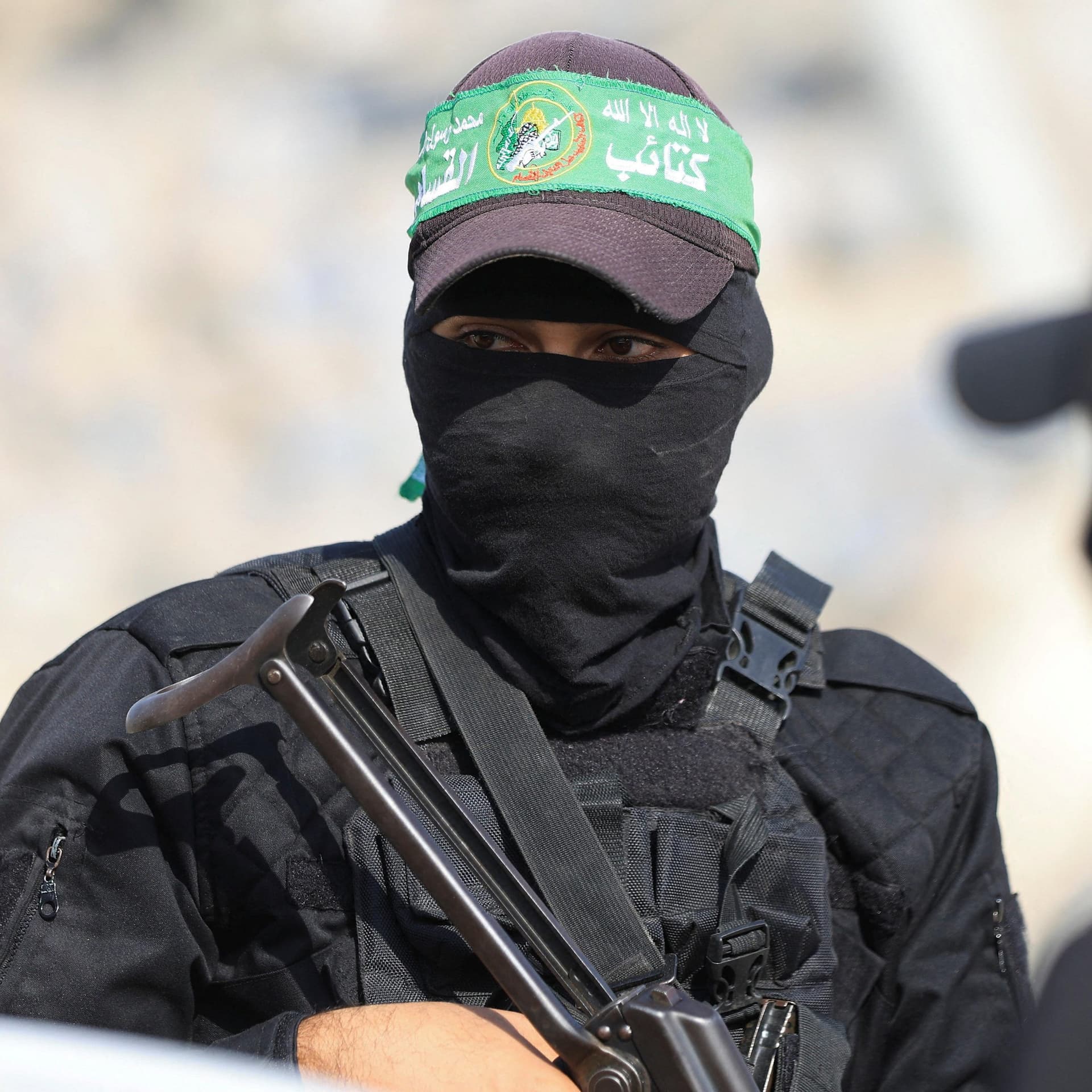
Photo: Hamas militant in Gaza city. Reuters/Dawoud Abu Alkas