In short
Eurovision Song Contest 2025 and how Israel’s participation amid the Gaza war has triggered the biggest boycott in the contest’s 70-year history, raising questions about whether Eurovision can be “apolitical.”
Guests and backgrounds
William Lee Adams, BBC journalist and Eurovision-focused YouTube channel operator; Eurovision fan and “skeptic/curmudgeon” discussion partner. Tristan Redmond and Asma Khalid are hosts for BBC’s The Global Story (Tristan in London, Asma in Washington, D.C.).
Key claims
Eurovision is officially apolitical, but Israel/Gaza has divided countries; EBU rules restrict political lyrics yet enforcement is “gray.” Russia was banned for broadcaster-government alignment, while Israel’s broadcaster allows dissent, so EBU treats cases differently. Rule changes (vote limits) aim to curb political influence.
Notable examples
Eden Golan’s 2024 “October Rain” lyric changes after EBU review; 2024 security escalation and booing; 2024 Israel public-vote win tied to alleged government-sponsored social media/AI ads; 2025 withdrawals by Netherlands, Ireland, Spain, Slovenia, Iceland citing Gaza journalists and humanitarian crisis.
Written by AI. May contain mistakes. Listen to the episode to check what was said.
Chapters
Tap a time to open that second in VOEurovision's Cultural Impact
0:00 to 0:37
Exploration of personal experiences and cultural significance of Eurovision.
“This BBC podcast is supported by ads outside the UK.”
Eurovision's Cultural Impact
3:01 to 4:17
Exploration of personal experiences and cultural significance of Eurovision.
“And today on The Global Story, how one of the world's biggest music competitions is being torn apart over Israel and Gaza.”
Eurovision 101: Understanding the Contest
4:17 to 7:18
A breakdown of the Eurovision Song Contest's origins and structure.
“So I moved to England in 2006, and my British boyfriend, now husband, he said, we've got to go to this Eurovision party.”
Controversies Surrounding Israel's Participation
7:18 to 9:01
Discussion of political controversies linked to Israel's entry in Eurovision.
“And it's not just European countries, though, at this point.”
The 2024 Contest: Tensions and Security
9:01 to 12:00
Description of heightened tensions and security during the 2024 contest.
“So Israel's participation is very controversial and complicated.”
Reactions and Outcomes of the Contest
12:00 to 14:00
Reactions during the contest and its aftermath, highlighting the winner.
“So the theme of Eurovision that year for the first time was united by music.”
Emotions at Eurovision: The Booing Controversy
14:00 to 15:10
Learn about the intense reactions and controversies surrounding performances at Eurovision.
“During the performance, they were booing.”
Israel's Complicated Eurovision Participation
15:10 to 18:51
Explore the complexities of Israel's participation in Eurovision and the surrounding political implications.
“Yuval Raphael, the Israeli singer, she was a major talking point in international media.”
Changes in Voting Rules and Country Withdrawals
18:51 to 21:04
Understand the changes in voting rules and the implications of countries withdrawing from Eurovision.
“However, in other instances, it has said that it is subject to a global smear campaign.”
Russia and Israel: A Comparison of Participation
21:04 to 22:25
Discover the differences in how Russia and Israel are treated in Eurovision amidst political tensions.
“Okay, William, so the organizers, in spite of all of this, maintain that Eurovision Song Contest is apolitical.”
Show all 11 chapters
The Politics of Art and Global Events
22:25 to 25:14
Examine the debate around the political nature of art in global events like Eurovision and the Olympics.
“That's what I was going to ask you, William.”
Transcript
Automatic transcript. May contain errors.0:00This BBC podcast is supported by ads outside the UK.
0:30William Lee Adams:business needs in one place, saving you time, headaches, and serious money. Stop paying for missing pieces. Go to odoo.com. That's O-D-O-O dot com to learn more. With the new Schwab Teen Investor Account, teens can gain hands-on investing experience and build positive money habits. It's an account co-owned by you and your teen, so you can monitor and engage with the account while your teen learns how to invest and manage money. Learn more at schwab.com.
1:01William Lee Adams:Please welcome our amazing 26 finalists. It's the now traditional flag parade, kicked off in style by the drum corps from Basel. There's a moment every year when dozens of singers, probably dressed in sequins or latex or maybe even leather, parade across a huge stage to the sound of screaming fans and some pretty heavy Euro pop beats. And they're waving the flags of their countries. This is the grand final of the Eurovision Song Contest 2025. The Eurovision Song Contest has been described as the most watched entertainment show in the world. Last year, more than 160 million people tuned in. Now, to put that in American terms, for some context, that is a bigger audience than the Super Bowl.
2:04And this year, Americans can watch it all on YouTube. But this weekend, when that flag parade takes place, it'll be missing a handful of countries. Within minutes of the announcement that Israel would be competing, the boycott began. It's one of the biggest TV events of the year in the world. I think the most fair thing would be for Israel to withdraw. I own Eurovision and with it, this trophy. Today, I no longer feel like this trophy belongs on my shelf. The Eurovision Song Contest is facing the biggest boycott of its 70-year history. The contest is supposed to be apolitical. But for the past couple of years, Israel's participation has divided the contesting countries because of the war in Gaza.
2:48And this year, some major countries have withdrawn for the competition altogether. From the BBC, I'm Tristan Redmond in London. And I'm Asma Khalid in Washington, D.C. And today on The Global Story, how one of the world's biggest music competitions is being torn apart over Israel and Gaza. And can culture ever really be separated from politics?
3:20I feel like I need to lay my cards on the table here, which is that I am something of a Eurovision skeptic, maybe a Eurovision curmudgeon. I think live and let live is my feeling about Eurovision. It's not my bag, but I don't like boiled eggs either, but I accept that other people like to eat boiled eggs. Ooh, Tristan, first I want to start by saying that eggs have protein. They are good for you. And so sometimes the things we don't like, they have these surprising benefits. So I would encourage you to come back into the fold, give it a try, learn their backstories. Check it out this year. Yeah, and we can talk afterwards.
4:00For you, William, I will give it a go. Thank you. William Lee Adams is a journalist for the BBC, and he also has a side hustle in which he runs a YouTube channel devoted to the Eurovision Song Contest, as well as reporting on Eurovision. He's a massive fan. So I moved to England in 2006, and my British boyfriend, now husband, he said, we've got to go to this Eurovision party. And I was like, I've watched American Idol. I don't need another singing contest on my radar. But he was like, no, no, no, no. You're from the American South. You're from Georgia. You love the ostentatiousness of beauty pageants.
4:41You love the choreography of figure skating. You love the geopolitics of the Olympics. In short, he said I would like the star-spangled booty, which he uses to refer to American excess. And so I go to this party with him. We're watching these acts. And I remember this so well. A Serbian female singer who I perceive to be a lesbian, she sang this sapphic ballad. It was so powerful. And she beat a Ukrainian drag queen wrapped in tinfoil who had caused a geopolitical stir with this phrase, dancing Lasha Tumbai. He said Lasha Tumbai meant whipped cream in Mongolian, but it sounded like Russia goodbye at a time many in Ukraine were looking to the West.
5:27And I'm sure y 'all will remember that in 2007, Ukraine was gripped by this crisis, this power struggle between a pro-Western president and a pro-Russian prime minister. The Orange Revolution. Exactly. And at Eurovision, orange becomes technicolor bright, right? You hone in on these outside issues. And so from that moment, the 2007 contest, I fell down a rabbit hole. Well, William, I'm pleased that you mentioned early doors, this thing with the orange revolution in Ukraine, because that's in the same ballpark as what we're here to talk about today, which is the crossover between Eurovision and politics.
6:03But as Asma has already alluded to, not all of our listeners, particularly maybe in the United States, necessarily know what Eurovision is. So can you give us, please, Eurovision 101 for the uninitiated? It's a big task, but if we have to break it down, the answer is in the title. This is the Eurovision Song Contest, and it's essentially Europe's search for the great pop song of the year. The contest started in 1956 in the aftermath of World War II. Europe was splintered. It was divided. It was still rebuilding. And organizers thought, let's bring people together with music. Let's let them compete with songs rather than weapons.
6:45It was also this great test for technology. This was one of the first times people across different countries, different time zones, different borders were watching the same thing at the same time, this great European campfire. Fast forward decades on, and it's now a massive spectacle. More than 160 million viewers last year. Songs are voted for by the public. They account for 50 % of the score. And the other 50 % comes from a professional jury. And it's meant to bring people together, united by music. That's a slogan. But as we'll see, that's not always the case. And it's not just European countries, though, at this point.
7:21You know, Israel is a part of this. Australia is a part of this. How does that square? Bureaucracy, not geography. That demarcates which countries can participate. So a broadcaster in any country needs to be a full member of the European Broadcasting Union. So the BBC, they're responsible for the United Kingdom's entry at Eurovision. In each country, it's different, but typically it's the big state broadcaster. One thing we have to point out is that you don't have to geographically be in Europe. Australia, they participate. And very interestingly, there are several Arab and North African nations who are allowed to participate and broadcast in Eurovision, but they choose not to.
8:02Oh, that's interesting. Yeah. You know, Morocco competed once in 1980. And you say they could because they're part of this broadcasting association. Yes, they all are or have been full-fledged members of the EBU. Well, William, Europe is full of strange and unexpected things. And the kind of administrative broadcasting union that hosts a global cult phenomenon song contest is definitely one of the weird and wonderful things that has emerged from Europe. So William, Israel is participating in the contest as it has for a number of years. I mean, I will say, I don't know very much about Eurovision.
8:43I don't watch Eurovision. But as a layperson who reads American news, the controversy around Israel and Israel's participation has made it into American news headlines. You've seen things in, you know, the New York Times, for example, about this all. Where did this controversy begin? Sure. So Israel's participation is very controversial and complicated. But I guess the discussions we've had lately, the headlines we've read, you can trace them back to Eurovision 2024 in Malmö, Sweden, but actually before that to the October 7th attacks in 2023. Now, in the aftermath of all of that, and amid the ongoing tensions, the national trauma, Israel had to choose a singer for Eurovision 2024.
9:28It staged a contest, and a young woman named Eden Golan, she won that competition, and her song was initially called October Rain. Now, the title, in the eyes of many, referred directly to the October 7th attacks. People said that the rain could refer to Hamas fighters descending on paragliders. It could refer to rockets. People were taking the title October Rain to be very political. The EBU, of course, has strict rules. It says songs cannot contain political lyrics. There cannot be political messaging. I did not know that. Okay. Yeah, and this goes back to the foundations of Eurovision in the 50s.
10:07So no political songs are allowed at all in Eurovision? Allegedly. Allegedly. Tristan's absolutely right to say allegedly, as we'll probably come to. It's a bit of a gray area. So in this song, October Rain, as it was initially called, there was the lyric, no air left to breathe. That was the experience of a lot of people who didn't breathe when they were hiding from attackers. And you also had lyrics like Stolen Moon and Taken Light, which could reference the hostages held in Gaza. Now, the EBU, after they received the song, they looked at the lyrics and they went to Khan, that's Israel's public broadcaster.
10:42And they said, look, you've got to change these lyrics. Now, that didn't go down well with political figures in Israel. The culture and sports minister, Mickey Zohar, he actually said that was scandalous. And he said that the song wasn't political, but instead it was an emotional number that reflected the feelings of the country. You know, music is born of the zeitgeist, was essentially the argument. And it's not like Israel was going to send a celebratory pop banger in the aftermath of this national tragedy. And Israel's president, Isaac Herzog, he also weighed in. And this has been reported across Israeli media and statements were later released by the public broadcaster where President Isaac Herzog, he called for necessary adjustments to the song because participating in Eurovision is too vital.
11:29What do you mean by vital? How big is the following in Israel for Eurovision? And, you know, how why is it deemed to be such a big deal? President Herzog, he said we have to participate in Eurovision because in his words, the people who hate us are seeking to repress and boycott the state of Israel. And through Eurovision, Israel could raise its voice, you know, in international forums. And so, William, what ultimately happened? Was the song changed? Were lyrics changed? How did it all play out? So the theme of Eurovision that year for the first time was united by music. But the contest, it really was more divided than ever.
12:08Usually the contest is a celebration. It's joyous. You know, there are lots of smiles. But there was a sense that people were on lockdown. There was a no-fly zone over Malmo Arena. Police brought in anti-drone technology to shoot down incoming attacks. Denmark and Norway, they sent in police backups. The Swedish military, they were on call. They didn't say why or what they were doing. But all of this was part of an enhanced security apparatus because of Israel's participation. I remember being outside of the arena. You could see snipers on roofs in nearby hotels. And the Israeli contestant, Eden Golan, whenever she left her hotel, there were 12 police cars, six motorcycles.
12:46There was an overhead helicopter flying. On the streets, there were protests. As you can see behind me, a huge number of Palestinian flags. Lots of very passionate chants here, passionate feelings. What we would like to see is that they disqualify Israel like they did with Russia. Israel competed twice, in the semifinal and then in the grand final. Welcome to the grand final of the Eurovision Song Contest 2024. And welcome to Malmö, Sweden, and the biggest music competition in the world. And when Israel took the stage, the TV goes dark and they're playing some pre-recorded footage. And in the arena, as they're setting up the stage, security guards came out of every single entrance in the arena.
13:39It really changed the mood because there was a real fear that something might happen. The audience during this moment, they were booing. I don't recognize this. I've been doing Eurovision for many years. and the European tribe is not hateful people. We're a lot of people. During the performance, they were booing. And people who booed, I spoke to some of them, they said we wanted to get our message across. Others on the opposite side, they said, look, this is a contest that's meant to be neutral. I don't think that's appropriate. The winner was actually Switzerland, a non-binary performer called Nemo.
14:21and Nemo also spoke out against Israel, but in a sort of roundabout way. I have to say this whole experience was really intense and not just pleasant all the way. I really hope that Eurovision continues and can continue to stand for peace and love in the future. And I think that needs a lot of work still. Okay, so Nemo from Switzerland wins. You see, I'm picking things up here. And one thing I do know about Eurovision is that the winner one year then goes on to host the following year. So 2025 must have been in Switzerland. What happened at that edition? Yuval Raphael, the Israeli singer, she was a major talking point in international media.
15:16So Yuval Raphael, she herself was a survivor of the October 7th attacks. She survived by hiding underneath corpses of other people. Now, that's a hugely traumatic personal experience. We've talked about this before. Music is born of the zeitgeist. Music is born of your experience. So her song, New Day Will Rise, very clearly it would have spoken to her own perseverance, to her own struggle, to her own ability to overcome. the lyrics were not deemed to have the same extent of political content. So she was allowed to compete with this song without any sort of drama, without any great controversy, as we saw the preceding year.
15:59On to song number four now, and it's the turn of Israel. Now, of course, their participation in the competition continues to be controversial. Fewer protests this year, but a mixed response to some of the rehearsals. The song was in a way generic. It was very beautiful, very classic. It was perfectly fine, but it was just fine in the eyes of many. Thank you, Europe! And as such, no one expected it to do particularly well. Not sure what you're hearing at home. A slightly mixed response here in the hall. People thought, OK, of the 25, 26 countries in the final, maybe this will finish in the middle.
16:41Tetris. Now, Israel, the audience have awarded you 297 points! Night of the Grand Final, this song won the public vote. And people said, hang on, there was very little hype for this song. How did that happen? Well, we didn't really get an answer until after the contest, when international media started reporting on this. Well, as it turns out, there was a mass social media campaign sponsored by a government agency, a third party, as the EBU put it, which encouraged people to vote for Israel. So let's break that down. On the day of the final, Israel's Prime Minister Benjamin Netanyahu, he posted an appeal encouraging his more than 2 million followers on Instagram to vote for Israel 20 times.
17:38Is that okay? Can you advocate for your country? So according to the rules, you can advocate, you know, just as any normal citizen would. A president, a prime minister can advocate for an act. And actually that year, that same night, the foreign ministries of Lithuania and Ukraine, they also posted appeals on social media. However, in this context, and as we'll see with this scale, people thought that it went too far. And this was on top of a mass social media marketing campaign. There were AI-generated advertisements of Rafael Yuval in various countries. There was a lot of money pumped into this.
18:16Now, marketing is part of the game. Yes, that's part of pop music. But other broadcasters, they said, whoa, whoa, whoa, hold on. This is actually going too far. It's instrumentalizing the contest for political ends. Well, why is that? Because Israel's government wants to send the message, people are voting for us. We're not as politically isolated as you might think. And this is where things got complicated. This is why broadcasters said, you know, this is more extreme than any other advertising campaign we've ever seen. So how did Israel respond to all of this? So when all this media coverage came out about this marketing campaign, this voting campaign, Israel did not respond.
18:55However, in other instances, it has said that it is subject to a global smear campaign. I mean, if we scooch forward to this year, politics have not completely left the equation, have they? What's happening in the run-up to this year's Eurovision? The EBU had that general assembly where they voted on those rule changes which we just discussed. So no longer can people vote 20 times. They can only vote 10 times. The idea is that if we reduce the number of voting per person, any type of marketing campaign, it won't interfere in the result quite as much. But other countries, they wanted to go further.
19:35They said, no, no, no, Israel needs to be banned from the contest because of what they saw as its poor behavior at the most recent edition. Now, the EBU ended up not holding that vote because they said that these rule changes were enough to counteract any potential misbehavior. Off the back of that, five countries decided to withdraw from this edition of the Eurovision Song Contest. They're the Netherlands, Ireland, Spain, Slovenia, and Iceland. They released statements and individually and collectively, they referenced the death of journalists in Gaza. They referenced the ongoing humanitarian crisis in Gaza.
20:16When you have countries voluntarily removing themselves from a competition, that does dent the brand. That suggests that something is not right. It the EBU would point out that three more countries came back into the fold this year, Moldova, Romania, and Bulgaria. Now, obviously, these countries are smaller, they're not as wealthy as, say, Spain or the Netherlands, and as such, the EBU charges them less money. So the EBU will be feeling a financial impact from the withdrawal of these five countries.
21:05Okay, William, so the organizers, in spite of all of this, maintain that Eurovision Song Contest is apolitical. Do you want to run us through maybe some of the reasons why that may be called into question? I mean, Russia is banned, for example, right? Sure. So Russia launched its full-scale invasion of Ukraine in February 2022. Russia was excluded from the contest a few weeks later. The European Broadcasting Union has always argued that Russia being excluded from the contest is a different situation to Israel participating in the contest. They say this is not a contest between governments. It's a contest between broadcasters.
21:51If you want to be part of the European Broadcasting Union, you have to follow certain rules. These include press freedom, not having government interference in your news programs. The EBU views Russia's broadcaster as a mouthpiece for the state, whereas Khan, the Israeli broadcaster, they allow dissent on their programs. They have critics of the president, of the prime minister, appear on television. So they've always said this analogy is really quite imperfect. when people say, well, why is Russia out but Israel is in? And we should just state the obvious, that art is inherently political. That's what I was going to ask you, William.
22:30I mean, so much of art is political that I find it a really strange and impossible requirement that Eurovision asks these songs to be apolitical. I just find it a bit of an unrealistic assessment or unrealistic expectation. Is it though? I mean, not all songs. Some songs are political, but not all songs are political. Art is often, and books and culture, I find that they say the things that sometimes politics and journalists don't say about key moments in time. And that's been the case throughout key moments in history. And indeed, throughout Eurovision. Circle back to 2016, right? So this is in the years after Russia's illegal annexation of Crimea.
23:15Ukraine chooses a singer called Jamala. Jamala had a song called 1944, and that year that referenced Joseph Stalin's forced deportation of Crimean Tatars from Crimea. Now, the singer, either her grandmother or great-grandmother, was on this long march out of Crimea, and she lost her child. Her child died during this long march. And so in the song, Jamala, to represent that moment, she screams, she shrieks. And in that moment, it was like she was screaming for everyone who had ever been displaced from Crimea, and in particular, Ukrainians like her. Now, people said, oh, this is very political. But Jamala herself, she told me in an interview just weeks after she had won the contest in Ukraine, she said, this is not political.
24:02This is personal. I mean, it's hard to see how that one would pass the apolitical test. I mean, that's happening two years after the annexation of Crimea by Russia, right? Yeah, and this is exactly what critics of the EBU at the time said. They said that is extremely political. I think the way the EBU thinks about these things is that, well, maybe it's political, but it aligns with prevailing Western values, so we'll let it pass. That's one way you could interpret it. Like there's a relative consensus you're saying when it relates to Ukraine. And support for Ukraine in opposition to Russia's aggression.
24:38Whereas with Israel— And there's not that same consensus. That's exactly it. Okay. William, none of this is happening in isolation, is it? I mean, this is a moment where on the kind of worldwide event scale, we have debates about which countries should be allowed to compete in the Olympic Games, in the World Cup. Right now, as we speak, there's a debate about whether or not it's appropriate for Russia to be present at the massive arts festival in Venice, the Biennale. What's the point, do you think, of a boycott or a ban of events like this? Does it actually serve any purpose? Participation in these big global events, the whole point of them is to bring people together for dialogue.
25:25That's why Eurovision was established. And there's this sense that if we can see each other as people eye to eye and what we can offer, maybe we'll work toward peace. Obviously, that doesn't always happen, if ever. But there is value in participation. and I think that applies to you regardless of what side of the argument you're on. I think with Eurovision, individuals, they compete as the nation. You're not voting for Cindy or Jessica. You're literally voting for the flag, for the United Kingdom, for Spain, for Israel, for Italy. And so it takes on bigger significance. Whereas at the Olympics, yes, they've removed the Russian flag, but the athletes, they're still competing.
26:06And indeed, they compete against each other. And I think the removal of the flag, you know, that has big significance. And at Eurovision, you can't remove the flag. You can pack so much meaning into three minutes of art. And I would argue much more than you can by, say, going down a luge race or by throwing a basketball through a hoop.
26:32Thank you so much, William. It's been great to have you today. and I pledge to you that I will watch some Eurovision and I will report back to you. I look forward to that discussion, Tristan. Thank you, William. Thanks, Asma.
26:50That was William Lee Adams, a journalist with the BBC and culture commentator who also runs a Eurovision YouTube channel. As always, we love hearing from you. So if you've got story ideas or questions for us, you can send us a note. Our email address is theglobalstory at bbc.com. And those of you all who are loyal listeners of our show know that here at The Global Story, we go deep every weekday on one big story at the intersection of where the world and America meet. If you're also looking for a way to catch up on the latest headlines from around the world, then we recommend checking out our sister show, The Global News Podcast.
Read the full transcript
27:25Today's episode was produced by Sam Chantarasek, Zandra Ellen, and Aaron Keller. It was edited by James Shield. It was mixed by Travis Evans. Our senior news editor is China Collins. Our studio managers were Stephen Bailey and Mike Regard. Our video producer was Richard Kenney. And I'm Tristan Redman. And I'm Asma Khaled. That's it for our show today. Thanks as always for tuning in. We'll be back again tomorrow. Cheerio.
From the publisher
This Saturday, the 70th edition of the Eurovision Song Contest final takes place in Vienna, and this year’s competition is again mired in controversy.
A boycott over Israel’s participation by several countries, including Spain and Ireland, threatens to put the competition’s stance of political neutrality to the test. And it is part of a wider debate over which countries should be allowed to compete in prestigious international arts and sports competitions.
We speak to William Lee Adams, a culture reporter at the BBC who also runs a Eurovision YouTube channel, to unpack the controversy surrounding this year’s contest and discuss whether politics and art can ever really be separated.
Producer: Sam Chantarasak
Sound engineer: Travis Evans
Executive producer: James Shield
Senior News Editor: China Collins
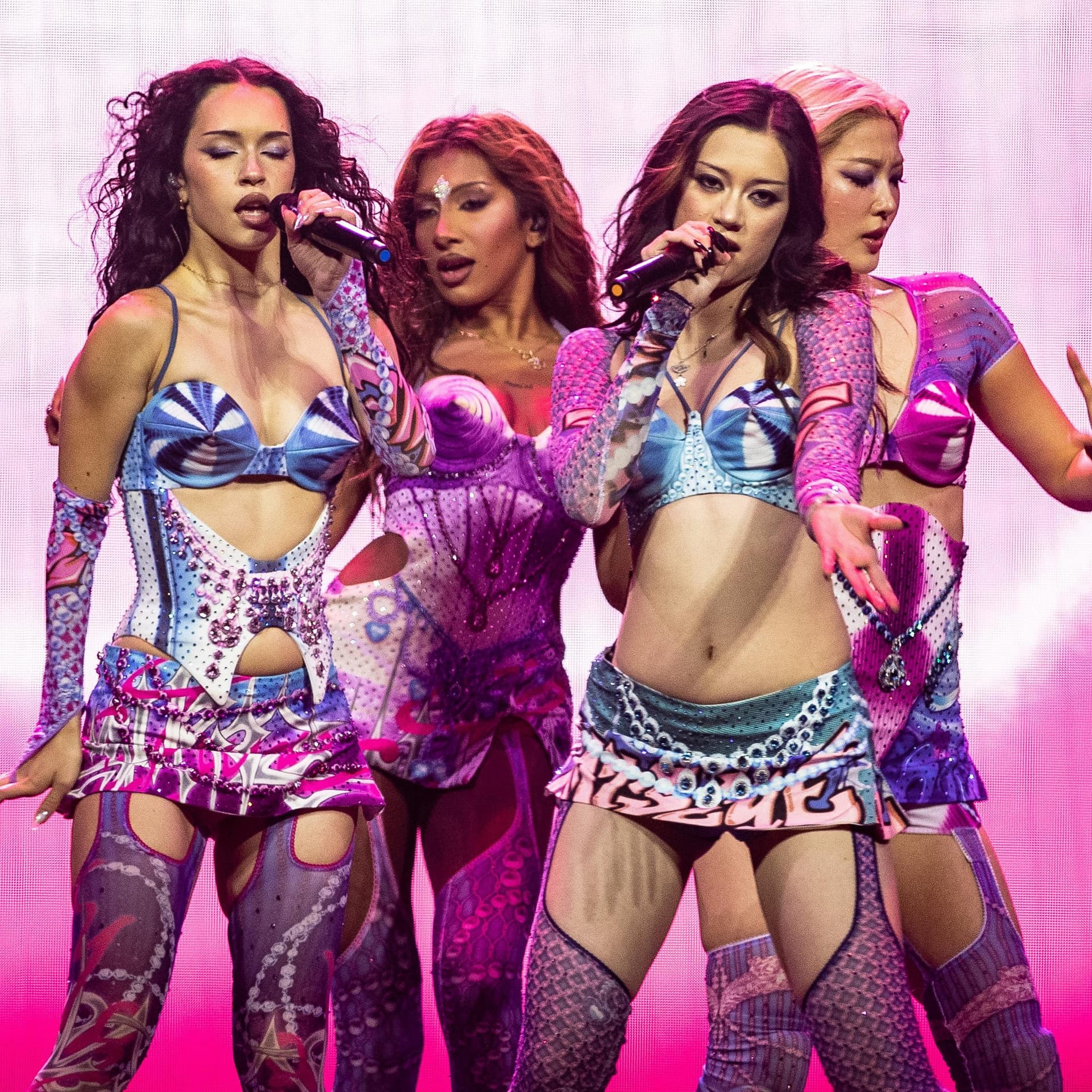
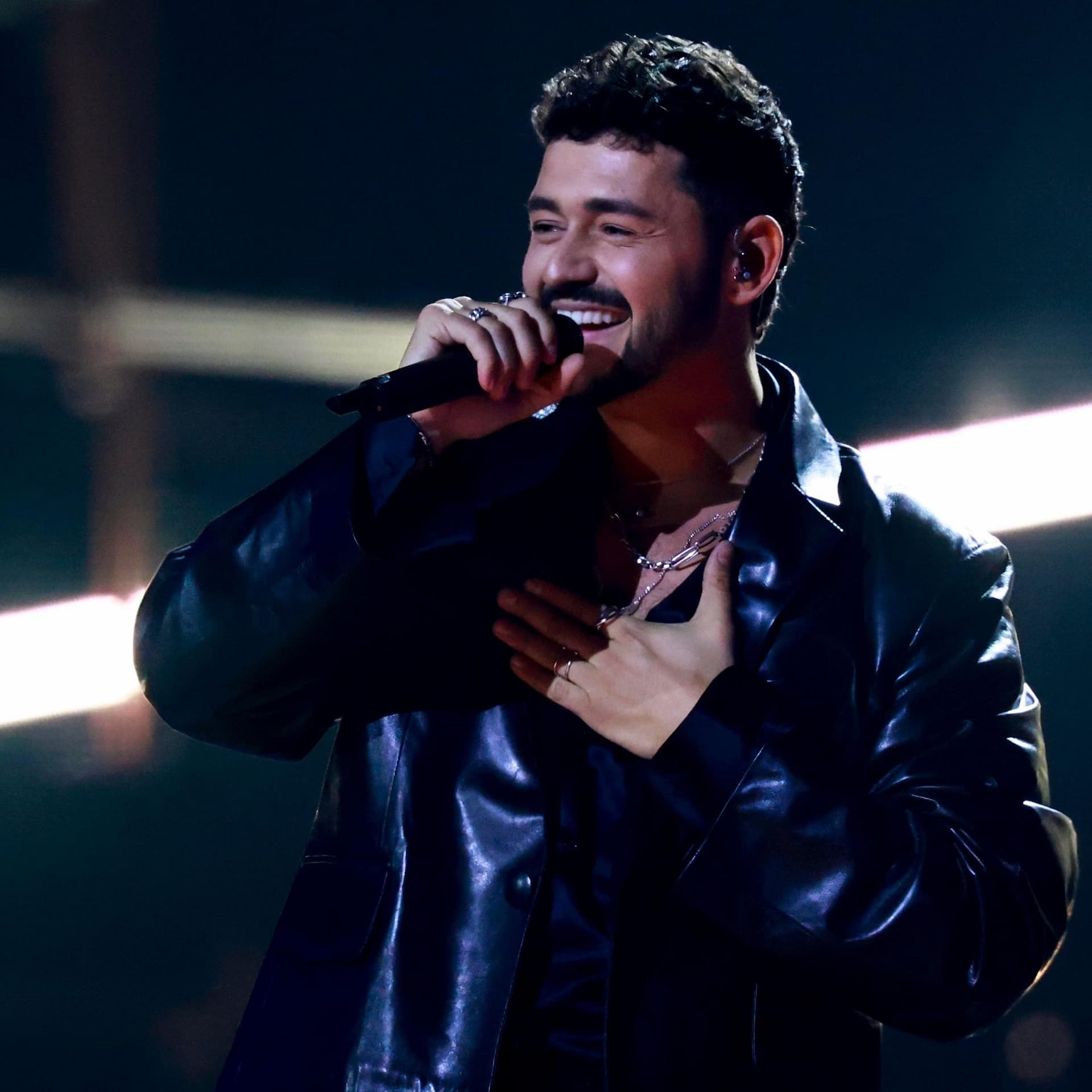
(Photo: Noam Bettan of Israel performs during the first semi-final of the 70th Eurovision Song Contest in Vienna, Austria, 12 May 2026. Credit: Hannibal Hanschke/EPA/Shuttershock.)