
In short
The episode examines whether resistance to AI is becoming a lasting cultural backlash. It links protests and student anger to a broader shift in how institutions respond to AI.
Key claims
Pope Leo’s encyclical argues AI must be “disarmed,” warning of “digital slavery,” job displacement, and AI-driven warfare that weakens critical judgment; it calls for government regulation and tech-industry responsibility. Examples include the Vatican presenting the encyclical with cardinals and tech figure Chris Ola (Anthropic co-founder). Another example is Gen Z booing Eric Schmidt at University of Arizona commencement over AI concerns.
Guests
Ali Makbool, BBC religion editor covering the Pope’s encyclical; Rachel Janfaza, founder of Up and Up consultancy studying Gen Z views; Chris Ola, Anthropic co-founder (appearing at the Vatican event).
Written by AI. May contain mistakes. Listen to the episode to check what was said.
Chapters
Tap a time to open that second in VOThe AI Revolution and Backlash
0:38 to 1:51
Discussion on the dual nature of AI as a societal hope and a source of backlash.
“that this new technology would transform our lives, free us up from tedious tasks, help eradicate diseases, and make the world better.”
Gen Z's Relationship with AI
1:51 to 2:30
Exploring Gen Z's perspective on AI and their possible opposition to it.
“AI and our big question really is has the tide toward AI turned in some sort of permanent way well we're trying to get a handle on that and I've been speaking to a woman called Rachel Jan Faza.”
Papal Concerns Over AI
2:30 to 3:59
Discussion on the Pope's recent manifesto addressing the dangers of AI.
“Well, while you were doing that, I called up the BBC's religion editor, Ali Makbool, because this week the Pope issued his first big manifesto, and the main focus of it was the perceived dangers of AI.”
AI's Moral Implications According to the Pope
3:59 to 6:27
Analyzing the Pope's views on AI's ethical concerns and need for regulation.
“Well, Pope Leo did choose to present it.”
Digital Slavery and AI
6:27 to 8:01
The Pope's warning about AI leading to a new form of digital slavery.
“His message throughout the first year of his papacy, in a lot of ways, has been about how we should look at the most vulnerable.”
Tech Leaders and the Pope's Message
8:01 to 10:37
Discussion of the Pope's call for action directed at technology leaders.
“You say this is a message that was directed in part to tech leaders, and that the Pope was also joined by some in the tech community.”
Vatican's Use of AI
10:37 to 11:16
The Vatican's practical use of AI despite concerns raised by the Pope.
“On that note, thank you so much for joining us, Aleem.”
Gen Z Protests Against AI
11:16 to 14:01
Exploring Gen Z's protests and skepticism towards AI during graduation speeches.
“And I'm Tristan Redmond, and together we're the hosts of the Global Story podcast from the BBC.”
Gen Z's Skepticism Towards AI
14:01 to 14:58
Explore the complex feelings Gen Z has about AI as they navigate their futures.
“The conventional wisdom might be, certainly amongst the olds, that people who are just graduating from college and starting off in their lives might be into using AI in their lives and not hostile to it.”
Defining Gen Z: Two Distinct Groups
15:01 to 17:24
Understanding the different experiences of Gen Z and how events shape their views.
“Before we embark on what it is that might be driving all these feelings, I think it's important that we understand some of the terminology.”
Show all 16 chapters
AI's Impact on Education
17:25 to 18:47
Discussion of how AI tools like ChatGPT are changing the educational landscape.
“A lot of it is this internal dialogue that they're having with themselves about when they should use AI and when they shouldn't.”
Anxiety and Opportunity in AI Use
18:48 to 20:05
Balancing the fear of being left behind with the opportunities AI presents.
“And the number one thing we hear young people say that they want in their future when they think about success is to feel fulfilled and to feel that they have a meaning and that they're serving some greater good.”
The Revealed Preference of AI Usage
20:06 to 22:36
Insights into how Gen Z's declared feelings about AI differ from their actual usage.
“who are using it for almost everything will say, well, everyone else is too.”
Finding Fulfillment Beyond AI
22:37 to 24:26
Exploring how young people seek purpose and fulfillment amid AI advancements.
“The whole point of this whole conundrum is that they're saying that it makes them anxious.”
Advice for the Next Generation
24:27 to 25:01
Discussion on how parents can guide their children in an AI-driven world.
“These things sound a little bit cheesy and cliche, but I do think that there is merit to it.”
Cultural Backlash Against AI
25:02 to 27:49
Examining the public response and cultural movements against AI technologies.
“That was Rachel Janfaza, the founder of the Up and Up consultancy that looks into what young people are interested in.”
Transcript
Automatic transcript. May contain errors.0:00Aleem Maqbool:This BBC podcast is supported by ads outside the UK.
0:30Just tap into iHeart to start watching. And we hope you enjoy the show.
0:37We were all told that artificial intelligence was our great societal hope, that this new technology would transform our lives, free us up from tedious tasks, help eradicate diseases, and make the world better.
0:51Aleem Maqbool:The AI revolution apparently will be the biggest change in our lives, and we ought to jump on board whether we like it or not. The rise of artificial intelligence is the next industrial revolution.
1:12Aleem Maqbool:But in recent weeks, a backlash has been brewing. From college students... Okay, we've got a bipolar topic here, I see. To protesters angry about data centers... Go Dallas Center! Go Dallas Center! To the Pope, artificial intelligence needs to be disarmed. From the BBC, I'm Asma Khalid in Washington, D.C. And I'm Tristan Redman in London. And today on The Global Story, signs of resistance to the AI revolution.
1:50so Tristan we have both been speaking to different people this week about the apparent backlash to AI and our big question really is has the tide toward AI turned in some sort of permanent way
2:04Aleem Maqbool:well we're trying to get a handle on that and I've been speaking to a woman called Rachel Jan Faza. And Rachel runs a consultancy. It's literally her job to understand what Gen Z are thinking. And she says that Gen Z might be the generation who use AI the most, but may also be the most opposed to it. So we're going to do that a little bit later. All right, Tristan. Well, while you were doing that, I called up the BBC's religion editor, Ali Makbool, because this week the Pope issued his first big manifesto, and the main focus of it was the perceived dangers of AI. Well, Aleem, you covered the Pope's encyclical, and I was going to say when I first saw this word even, I felt a bit, I will say, naive.
2:50I didn't really know what this term meant. So can you first just tell us what an encyclical is? So it is one of the highest levels of teaching that a Pope can issue. Technically, I suppose, it is considered to be a letter to bishops around the Catholic world. But in reality, over the last 30, 40 years, maybe even longer than that, it's really been seen as a letter to the world. On some occasions, it is dealing with things that are very real life, like Pope Francis released his most famous one was called Laudato Si, which was about climate change and about our responsibilities to the climate. it felt like Pope Francis was talking directly to world leaders.
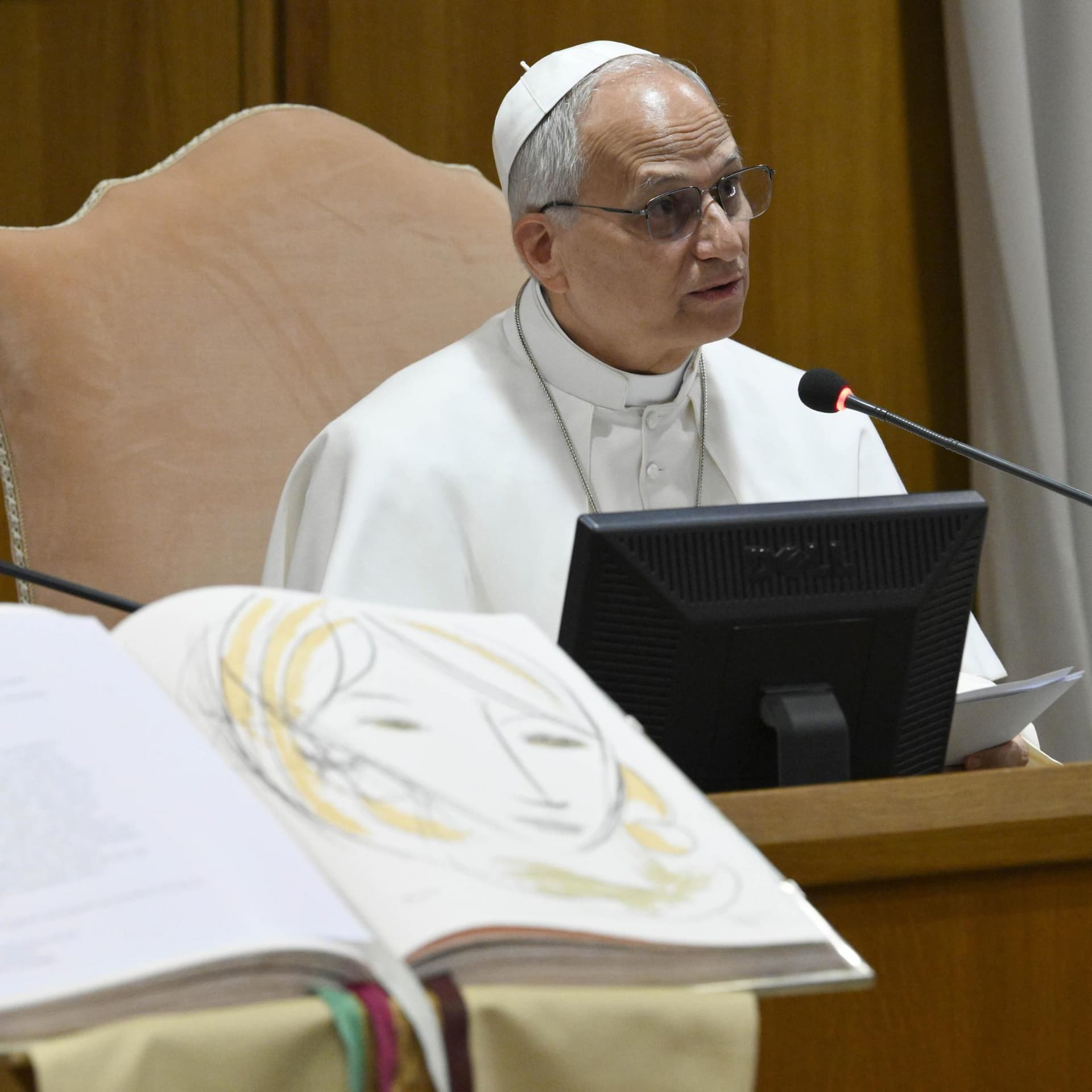
3:32And similarly in this case, to me, when I read Pope Leo's new encyclical, felt like that kind of message directly to, yes, the Catholic world, but also as a direct message to those in positions of power. And Alim, he not only issues this encyclical, my understanding is he reads it out. And that took place at the Vatican on Monday, earlier this week. You were there. What was the scene like? Well, Pope Leo did choose to present it. And it was essentially in, for all intents and purposes, something that looks like a lecture theatre. But he also presented it with cardinals, he presented it with a theologian, and he presented it with somebody from the tech world as well.
4:18It was about an hour-long lecture, essentially. And then at the end, the Pope gave his summing up of why it was important. It certainly seems like the headlines, and I saw your reporting, Aleem, is that the central tenet was artificial intelligence and the need to morally deal with this new technology. What was your top line takeaway? It was all focused on artificial intelligence. I would say, reading through the document, it was heavily weighted towards the negatives of artificial intelligence. he did touch on some of the good, but even when he talked about some of the good, the message really was, good will only come of artificial intelligence with regulation.
5:01And without that, we're heading for disasters in lots of ways. Artificial intelligence already touches many areas of our lives and affects decisions that shape human coexistence. And he looked at different aspects of why he felt that. It is also dramatically changing how war is waged. For example, AI-driven warfare. When technology weakens our critical sense, peace itself is at risk. That gave him huge concern. He also said AI replacing people in the job market was something that he was concerned about. And so he was really looking at all of these things as ways in which it was taking away something of what it means to be human.
5:52Did he spell out what he wants to see done? Yes. He was talking about power being in the hands of a few and then wielding that power to the detriment of those who were more vulnerable. So a lot of this document was talking to those few, to the tech leaders, but also global leaders. So it was about legislation to rein in where AI was going, calling for regulation at governmental level. But also he was talking very directly to those in the industry about their responsibilities. His message throughout the first year of his papacy, in a lot of ways, has been about how we should look at the most vulnerable.
6:33And his worry was the way things were going with AI, it was creating a new layer of people who would essentially be slaves to the technology, would be commodified. Did he use that word actually, slaves to the technology? He talked about a new digital slavery. And actually, that's how he sees AI, if it goes unchecked, that it will be a new generation, many generations of people who will be trapped, who will be powerless and will be there as a commodity. and as part of that explanation, he talked about historical, traditional slavery, if you like. He made a very clear apology for the Catholic Church's role in that, but he also talked about how long it took for the Catholic Church to condemn slavery.
7:24And his message really was, we shouldn't let that happen again. I want to ask about specific wording in the encyclical. Artificial intelligence needs to be disarmed. Disarmed? What's your sense of why he chose that word? Well, he explained precisely why he used that word. The word is strong, I know, but deliberately chosen because this moment needs words capable of attracting attention, awakening consciences, and indicating paths forward for humanity. That's how important a subject matter he thinks it is, and how dangerous a juncture we are at. You say this is a message that was directed in part to tech leaders, and that the Pope was also joined by some in the tech community.
8:15Who specifically was there? So Chris Ola, who is one of the co-founders of Anthropic, he was sitting beside the Pope and he had a fascinating take on all of this. I want to begin with something that may sound strange coming from the co-founder of an AI company. Every frontier AI lab, including Anthropik, operates inside a set of incentives and constraints that can sometimes conflict with doing the right thing. He was agreeing with the Pope on a lot of the things he was talking about. We need more of the world, religious communities, civil society, scholars, governments, and indeed all people of goodwill to do what His Holiness has done here, to take seriously, to look closely, and to push events in a better direction.
9:06I haven't seen a great deal of response from the tech sector as such. But I think for me, when I looked at the document, I was surprised at how much it lent towards the negatives. Towards the negative. I wanted to ask you about that, yeah, because we've done a number of episodes here on The Global Story about artificial intelligence. and it's sort of like it or hate it. It's a fact of our life. Like there's nothing I can do, I think, to put the genie back in the bottle for my young children. They're going to grow up in this world, right? That's right. And even I have done, you know, programs about AI and faith where, you know, there was somebody who had created an AI saint and who could answer religious questions.
9:47And they put it in an old people's home. And some of those old people who hadn't necessarily engaged with others found some kind of companionship. But even there, the Pope warned about how really what we should be focused on is putting that energy into having greater human interactions. The Pope has certainly become a strong moral voice on the global stage. There will be some who will sit up and listen, but we're talking about the decision makers here, the political leadership, the tech leadership, and there are real questions about how any of them or whether any of them will deliver on what the Pope's asking.
10:37On that note, thank you so much for joining us, Aleem. I really appreciate it. That's a pleasure. That was Aleem Mikbul, the BBC's religion editor, And as he just laid out, the Pope seems to have a lot of questions about a world shaped by artificial intelligence. But it is worth pointing out that despite the Pope's reservations, there have been reports that the Vatican uses AI in some capacities. For example, for translating mass in real time into dozens of languages. So it seems like even the Vatican can't entirely escape from artificial intelligence.
11:15Aleem Maqbool:Hi there, I'm Asma Khaled. And I'm Tristan Redmond, and together we're the hosts of the Global Story podcast from the BBC. For those of you all who might be new to our show, we here at the Global Story dive deep every weekday on one big story at the intersection of where the world and America meet. And you can now watch the Global Story on the iHeart app. Catch every brand new episode every weekday. Just tap into iHeart to start watching. And we hope you enjoy the show.
11:50Aleem Maqbool:Well, Asma, I don't wish to be facetious for what is a very serious topic, but it has not escaped my attention that the link between the conversation that you have just had and the one that I'm just about to have is both sets of people in these two interviews wear robes and interestingly shaped hats. So you have a Pope and I have been speaking about recent graduates who've been angry about AI at their commencement ceremonies. And I've been doing that with Rachel Janfaz. I mentioned her at the beginning. So she runs a consultancy and she speaks to young people for a living to try and understand their concerns.
12:36Aleem Maqbool:And she's been telling me all about them. Can you please, Rachel, tell us the story of what's been happening at these commencement ceremonies? Yeah. So essentially, here in the States, there have been a bunch of high profile speakers at graduations. One of the most high profile situations was at the University of Arizona. Please join me in giving a warm welcome to Eric Schmidt. When Eric Schmidt, the former CEO of Google, spoke about AI to the group of graduates at the commencement there. Last December, Time magazine selected its person of the year for 2025. And it was this time, it was the architects of artificial intelligence.
13:21Interesting.
13:25And the students started to boo him and he could hear it. I know what many of you are feeling about that. I can hear you. If you don't care about science, that's OK, because AI is going to touch everything else as well. Whatever path you choose, AI will become part of how work is done. I think he was taken aback. I mean, he is a man of massive success. And here he is being booed on the stage, speaking to a group that is meant to look up to him in many ways.
14:01Aleem Maqbool:The conventional wisdom might be, certainly amongst the olds, that people who are just graduating from college and starting off in their lives might be into using AI in their lives and not hostile to it. What did you feel about these videos when you saw them? Were you surprised? Not at all. It was like the most classic Gen Z thing ever because Gen Z hates authority. They don't like being told how they're supposed to feel. And they are very skeptical of AI, despite the fact that they're using it every day. They really do feel like they're graduating into uncharted territory. And in many ways, they are.
14:43And while every generation has had to go through its fair share of tumult and chaos, the fact that so much is unknown about what the future is going to look like at a time when these young adults are being asked to prepare for their future is creating a lot of tension.
15:01Aleem Maqbool:Before we embark on what it is that might be driving all these feelings, I think it's important that we understand some of the terminology. And the most important one of all is, what does it actually mean, Gen Z? Yeah. So Gen Z is anyone born between the years 1997. And And technically, there isn't really a cutoff on the back end yet, although it is said to be around 2012, 2013. And I've talked a lot about how within Gen Z, there are actually two Gen Zs. There's what I call Gen Z 1.0 and Gen Z 2.0, because I think that looking at the pandemic and also TikTok and the way that it has shaped other forms of technology, too, and the way that everything is now short form content.
15:45Young people who are part of Gen Z 1.0 and Gen Z 2.0, the older and younger halves of Gen Z, have had a really different adolescent experience based on how old they were at the time of these major world events and crises.
15:57Aleem Maqbool:Okay, so there is a divide, but let's talk a little bit about how all of this is manifesting, particularly in education, which is how we got to this story. What are you hearing from students that you're talking to about how AI is actually appearing in their education? So I want to roll back the clock a little bit to when ChachiBT first came out. And that was such a noteworthy moment because it was immediately a tool that everyone had access to. Classrooms, schools, more broadly, educators in particular, were very resistant and thought that this would be something that would make it really easy to cheat.
16:41And that's true. But the genie's out of the bottle. And so very quickly, there was this sort of tension between educators who were telling students not to use it, students who wanted to use it or were going to use it anyway. And then there was a cohort and sort of a school of thought of educators who realized that this was here to stay and that if AI was going to be a part of all facets of our society and culture, then it would be a disservice to students to not actually teach them how to use it. And when I ask now students, and I've been asking this question more and more frequently, can you describe your education pre and post AI?
17:22They're like, these are two totally different ballgames. A lot of it is this internal dialogue that they're having with themselves about when they should use AI and when they shouldn't. And also what they're losing when they seed their own skills to a chatbot. They don't want to feel reliant on technology to think for them. And at the same time, they're also being told that if they don't learn how to use AI, they're going to be left behind.
17:51Aleem Maqbool:That idea that if we don't get across AI and what it can do and how it works, all will be left behind. Was that something that was coming top down from schools and teachers initially or from the kids themselves or a bit of both? I think it's actually a third party, which is the AI CEOs and executives who have really marketed these tools as such. If you're not engaging AI actively and aggressively, you're doing it wrong. They have said point blank that this is going to revolutionize our economy and our society. You're not going to lose your job to AI. You're going to lose your job to somebody who uses AI.
18:34And if you don't know how to use it, there's not going to be a place for you in the future society. If that's how it's been messaged, of course they're going to be anxious about it. I think the bigger question here is a question about purpose. And this is a generation being told that their human purpose and capacity and potential might not be necessary because a robot's going to do everything for them anyway. And the number one thing we hear young people say that they want in their future when they think about success is to feel fulfilled and to feel that they have a meaning and that they're serving some greater good.
19:10And they're not sure where to find that anymore.
19:12Aleem Maqbool:There must be people within Gen Z 1.0 and 2.0 who see AI as an opportunity. Yeah, I mean, I think back to last spring, I was at a pre-professional school in Arkansas, and I've spoken with students from that school in particular. And I heard from a young man who was talking about how he had coded his own app, and he was so excited about this. and I could have a whole book about the number of young people who have told me about what they've done for themselves, the opportunities that they've created for themselves because they've coded with AI, vibe coded X, Y, or Z thing. And yes, of course, when there's any point of disruption, there's going to be opportunity.
19:53But I think a lot of our generation's relationship to AI is driven by FOMO, a fear of missing out, and less of an intrinsic desire to actually use it. One story that I've heard from young people who are using it for almost everything will say, well, everyone else is too. And so if I don't, I'm the sucker. I'll go back to a conversation that I had with a young woman at the University of Arkansas. And she had shared that she was in a job internship interview and it was a completely virtual exercise. And she did not use AI. She sent in the interview and she was talking about it with her friends and her friends were like, oh, so this was totally unregulated.
20:42You could have used AI for the whole thing. In her mind, it was sort of this realization after the fact of, am I going to miss out on this opportunity because I didn't use the tool that could have increased my own potential when all of the other job applicants might have.
20:57Aleem Maqbool:And are there people, young people, who are actually refusing to use AI altogether, just won't touch it? There are people who say that they don't use it. There are people who say that they will use it, but not for schoolwork. They'll use it more for lifestyle, like figuring out a recipe to cook or a workout to do. There are other students who will tell me how they used it as a study guide or as a tutor. and have it ask them questions that they might not think about in order to prepare for a test. And then there are other people who are just totally using it outright altogether for everything and are not shy to share that.
21:37Aleem Maqbool:We were talking with our editor, James, in the lead up to recording with you, Rachel, about something called, he taught me something called revealed preference, which is the difference between what you say you do and what you actually do. So the example that James gave, which I thought was fascinating, was back in the Dark Ages when Netflix and other rental platforms like that would send you a physical DVD instead of being able to stream a film on demand. you would pick your films according to what movies you thought your future self might want to watch. And therefore they tended to be more maybe highbrow and self-improving than they would be if you could just turn on your TV and click on the first thing.
22:24Aleem Maqbool:And that apparently is called revealed preference, which is fascinating. So what is the revealed preference amongst Gen Z 1.0 and 2.0 when it comes to AI? I think it's exactly that. The whole point of this whole conundrum is that they're saying that it makes them anxious. They're saying that it makes them angry and yet they're still using it. Rachel, I have two daughters. They are eight and 11. And I'm sure you've been asked a similar question by parents such as myself. I mean, I struggle sometimes slightly with what, if anything, I can advise them on what to study, what to aim for when all of this is coming down the pipeline at the speed that it is coming.
23:09Aleem Maqbool:What are young people telling you? Is there advice on this question? Yeah, it's a great question. And I'm not a parent. You are. So you're definitely, you know, better suited in this than I am. But what I will say I'm hearing from young people is that they are finding confidence by just experimenting and sort of honing their own passions and blocking out the noise of what everyone is telling them as much as they can and really leaning into where they find happiness and community. and that's what's driving purpose. Our generation has been constantly climbing a rung of a ladder that might not really exist anymore.
Read the full transcript
23:52And so I think as a result, it's well worth recalibrating our relationship to fulfillment and what brings fulfillment and trying to find joy in relationships and things that are rooted in human-to-human connection. And we're seeing a resurgence in this, whether it be an analog revival, Things like run clubs are becoming more popular, in-person dinner parties where everyone puts their phone in the center of the table. Really just moments where you're in your community and with your friends. And I think a lot of that was lost during COVID. These things sound a little bit cheesy and cliche, but I do think that there is merit to it.
24:33Aleem Maqbool:I don't think it's cheesy and cliche at all, Rachel. I think it's heartening and encouraging. I think the problem I might encounter, though, is that I can't realistically advise my daughters to block out the advice that everyone is trying to give them. It's a bit of a catch-22, but I could try. That's true. That's true. Thank you so much, Rachel. It's been really great talking this through with you. Thank you so much for having me, Tristan. That was Rachel Janfaza, the founder of the Up and Up consultancy that looks into what young people are interested in. And earlier before that, we heard from the BBC's religion editor, Aleem Maqbool.
25:17Tristan, when we talked about this episode initially, there was a big question. Are these incidents mere coincidence, this sort of brewing backlash that we're seeing to AI? Or are they in some ways signifying a broader cultural trend?
25:33Aleem Maqbool:Well, you know, when you look at sort of a handful of young people at a commencement ceremony who are booing and angry about AI, you wonder how could they possibly compete against, you know, the huge tech giants with vast wealth, vast influence. But on the other hand, if you start to get a figure like the Pope involved, then you wonder if actually the movement might be taking on some kind of heft. Yeah. And to that point, I will say it's not just the Pope. In fact, yesterday we saw J.D. Vance, Vice President of the United States, deliver a commencement speech to the U.S. Air Force Academy in Colorado.
26:13I watched a few highlights of graduation speeches where this or that corporate leader will discuss artificial intelligence, AI, and be met with literal boos. And he spoke about artificial intelligence. Now, you can't boo me. I'm the vice president of the United States.
26:34But your fellow Americans are, understandably, they're worried about AI. And this caught my attention. But the thing I worry about most with AI is how it will change warfare. The vice president of the United States is someone who has spoken about the power of technological growth in the past. In fact, just a year ago, he was in Paris warning about the dangers of excessive regulation of AI. And so to hear him speak just yesterday in rather stark terms about artificial intelligence. Use technology to make you better, but never submit to it. to me suggests that maybe public sentiment is shifting on this all.
27:14You are the masters of warfare. And both your minds, but also your hearts, are the opposite of artificial.
27:26Well, on that note, that is it for The Global Story today. As always, we really appreciate hearing from listeners. So if you all have any thoughts or story ideas for us, you can email us at theglobalstory at bbc.com.
27:38Aleem Maqbool:Today's episode was produced by Zandra Ellen, Kat Farnsworth and Valerio Esposito. The studio engineer was Mike Regard. Our video producer is Matt Pintus. The episode was edited by James Shield and mixed by Travis Evans. Our senior news editor is China Collins. And I'm Tristan Redman. And I'm Asma Khaled. Thanks as always for tuning in and have a lovely weekend. We'll be back on Monday. Cheerio.
28:09Aleem Maqbool:Hi there, I'm Asma Khaled. And I'm Tristan Redmond. And together we're the hosts of the Global Story podcast from the BBC. For those of you who might be new to our show, we here at the Global Story dive deep every weekday on one big story at the intersection of where the world and America meet. And you can now watch the Global Story on the iHeart app. Catch every brand new episode every weekday. Just tap into iHeart to start watching. And we hope you enjoy the show. Thank you.
From the publisher
At the Vatican on Monday, Pope Leo XIV issued his first encyclical, a letter issued to the world’s bishops. In it, he criticised artificial intelligence and what he called the “culture of power” fuelling its rise, urging world leaders to regulate the technology more forcefully.
The Pope’s scepticism towards AI does not exist in a vacuum. It comes after several weeks in which numerous commencement speakers championing artificial intelligence on US college campuses were booed by Gen Z graduates.
Is a backlash to AI brewing? We speak to BBC religion editor Aleem Maqbool about the Pope’s AI-critical encyclical, and to Rachel Janfaza, founder of the Gen Z research firm The Up and Up, about why Gen Z’s relationship with AI is far more complicated than many think.
Producer: Xandra Ellin, Cat Farnsworth, and Valerio Esposito
Executive producer: James Shield
Sound engineer: Travis Evans
Senior news editor: China Collins
(Photo: Pope Leo XIV during a meeting with Italian bishops in Vatican City, 28 May 2026. Credit: Vatican Media/EPA)