
In short
BBC Newsnight’s Victoria Derbyshire interviews Gisèle Pelicot about the 2024 Avignon trial where her husband Dominique Pelicot drugged her and arranged about 200 rapes by at least 50 men, then she waived anonymity and confronted shame to find hope.
Guest backgrounds
Gisèle Pelicot is a French survivor and memoir author; Dominique Pelicot was her husband and the accused. Derbyshire is a BBC journalist with 30 years’ experience, including interviews with sexual-assault survivors.
Key claims
Gisèle describes being drugged with crushed medication and muscle relaxants, leaving her unconscious and unable to feel pain; she says the crowd outside court “saved her.” She argues shame must change sides and chose healing over hatred.
Notable examples
police questioning with “do you like swinging?”; her daughter Caroline feeling like the “forgotten victim”; Dominique’s maximum 20-year sentence; ongoing investigations include attempted rape of estate agent Marion (DNA kept) and the murder of Sophie Naam (DNA lost).
Written by AI. May contain mistakes. Listen to the episode to check what was said.
Chapters
Tap a time to open that second in VOMeeting Gisèle Pelicot
2:46 to 4:56
Victoria Derbyshire shares her apprehension before interviewing Gisèle.
“Hello, I'm Victoria Derbyshire and I am one of the hosts of BBC Newsnight, which is the BBC's flagship news and current affairs programme live each weeknight.”
The Shocking Revelation
4:57 to 7:35
Gisèle learns about her husband's heinous actions and their consequences.
“I saw that he had changed, so I asked him if everything was all right.”
Gisèle's Struggle for Understanding
7:36 to 10:00
Gisèle reflects on her experience and the gradual realization of her husband's betrayal.
“It seems like she sort of had a kind of sense of detachment.”
Life During the Assaults
10:01 to 11:28
The impact of the drugging and assaults on Gisèle's perception and health.
“She was angry at herself and not realising.”
Public Support and the Trial
11:29 to 12:36
Gisèle finds unexpected public support as she confronts her abuser in court.
“To think that one of them was HIV positive, it was sheer luck that I didn't contract the virus.”
Facing the Courtroom
12:37 to 14:00
Gisèle's reaction to the courtroom proceedings and the defense's arguments.
“and quite a few told me they would now have the strength to do so.”
Confronting Shame and Trauma
14:00 to 18:24
Gisèle Pelicot discusses the profound shame and trauma experienced after her rape.
“I felt so much shame about what had been done to me, and I think most victims...”
Gisèle's Ex-Husband and Ongoing Investigations
18:24 to 20:39
Discussion on Gisèle's ex-husband's criminal history and her feelings about it.
“we here at the Global Story dive deep every weekday on one big story at the intersection of where the world and America meet.”
Seeking Answers and Healing
20:39 to 21:38
Gisèle expresses her desire to confront her ex-husband for closure and healing.
“She wants to look him in the eye and ask him, did you do it?”
Impact on Society and Rape Laws
21:38 to 23:23
Exploration of how the case influenced societal views and legal definitions of rape in France.
“and what it said about the possibility that all men might be rapists.”
Show all 12 chapters
Finding Love Again
23:23 to 26:06
Gisèle shares her unexpected journey to finding love after trauma.
“In France, as you know, the definition of rape did not include the word consent anywhere.”
Emotional Reflections on Strength
26:06 to 27:30
Reflections on the emotional impact of the interview and admiration for Gisèle's strength.
“It's brought a lot of colour into our lives.”
Transcript
Automatic transcript. May contain errors.0:00This BBC podcast is supported by ads outside the UK.
0:08Another game day. But while he's glued to the TV, I'm winning my own way with Mistplay. Let's go! Mistplay rewards me just for playing free mobile games. I earn points and swap them for gift cards to Amazon, Uber Eats and Sephora. Yeah! We won! And I just redeemed a Target gift card. Woo! Download Mistplay today and turn your downtime into rewards.
0:58Every weekday. Just tap into iHeart to start watching. And we hope you enjoy the show.
1:08Before we start today's episode, I want to let you know that we'll be discussing sexual abuse and rape. It's September 2024. French journalists have gathered in Avignon in southeastern France. And they're there to cover what they've been told will be a deeply harrowing rape case. but they're not expecting to be able to report much on it at all because the trial will take place behind closed doors and that's the case for almost all rape trials in France. But then one of the lawyers in the case who represents a 71-year-old woman announces that his client, the victim, has waived her right to anonymity.
1:48Her name is Giselle Pellico. Arriving at court to a chorus of support. Giselle Pellico. A woman subjected to around 200 rapes, proud to show her face. Over the course of almost 10 years, her husband Dominique drugged her and raped her. And he invited at least 50 men into their house to rape her as well. Supporters have been here every day of this grueling trial to cheer on their new feminist hero. She's become an icon for survivors of sexual violence. for her insistence that, quote, shame must change sides. A year after the trial, Giselle has written a memoir, and she's been speaking to the BBC about how she's rebuilt her life.
2:40From the BBC, I'm Tristan Redmond in Paris. And today on The Global Story, Giselle Pellicot on confronting shame and finding hope.
2:58Hello, I'm Victoria Derbyshire and I am one of the hosts of BBC Newsnight, which is the BBC's flagship news and current affairs programme live each weeknight. Thank you so much, Vic. So great to have you. You are recently back from Paris where you've been speaking with Giselle Pellico. You've been reporting for the BBC for decades. You've done a lot of hard hitting interviews, including with people who've been sexually assaulted and raped. How do you approach an interview like this? I was really apprehensive about meeting her because despite being in journalism for 30 years, I actually haven't met that many global icons that mean so much to women.
3:45And I was also a little nervous because I'm embarrassed to say I don't speak fluent French. I wanted to greet her. I wanted to tell her that I'd read her book four times. I wanted to tell her how it left me feeling. And I wanted to say all that in French. And so I learned some French with the help of an app and with the help of my sister's best friend who is half French. But I was worried about that. Also, it wasn't one of those interviews where you're able to have a briefing conversation over the phone beforehand. So I had no idea how she was going to be talking about these grotesque assaults.
4:21And so I was apprehensive. As soon as I met her in the stunning and beautiful Hotel de Ville in Paris, she looked me in the eye. We shook hands. There was a warmth about her. There's an aura about her. Our whole production team wanted to meet her, wanted to shake her hand. And then we began the interview. Can I take you to the autumn of 2020 when your life as you knew it changed forever? Your husband was arrested for the crime of filming underneath the clothes of three women in a supermarket. He told you what he had been caught doing and that he'd had his phone and computer seized. How did you react to that?
5:09I saw that he had changed, so I asked him if everything was all right. And this is when he admitted that he'd done something stupid, that he'd taken upskirt pictures of two or three women. Then he started crying and told me he didn't want to lose me. I think the fear of losing me has always obsessed him. So a couple of months before September 2020, her husband Dominique Pellico had called her up and said, essentially, I've been arrested for filming underneath the skirts of women at a supermarket. And Giselle Pellico was shocked. and couldn't believe it, and said to him, this must never happen again.
5:49She said, I won't leave you, but I will if this happens again, and you must talk to a therapist. And by the way, that night, he drugged and raped his wife again. The police called them both into the station a couple of months later and spoke to them separately. And the officer asked Madam Pellico questions like, how would you describe the character of your husband? and then this weird question, do you like swinging? At which point she was taken aback and said, of course not. You know, I'm a modest woman, I'm this, I'm that. And then he said, I'm going to show you some photos which you are not going to like.
6:26And they were images that Dominique Pellico had taken of his wife, drugged, plunged into a state of unconsciousness, wearing underwear that she would never have chosen to wear, being raped by a stranger.
6:44I see two or three photos, but I don't recognise myself in them. This woman is lying on the bed as if she were dead. There are men next to her. I don't understand who they are. I don't know them. I've never met them. And at first she said to this officer, that's not me. That can't possibly be me. And gently he said, is that your bedroom? Are those your bedside lamps? And then the horror, as she put it, it's exploded inside me. It was like a tsunami when she realised what her husband had been doing.
7:19I think I only started to understand once I'd got home, when I called my friend, they'd asked me not to be alone. I told her, Dominique is in custody because he raped me and had me raped. That's when I used the word rape. It was after five hours of questioning that I put words to Monsieur Pellicot's crime. I heard her speaking on French radio about how after she was told by the police, she went home and her first reflex was to clean the house because she assumed that all of this was a misunderstanding, it would somehow be cleared up and that her husband would come home because at that point he was under arrest.
8:00It seems like she sort of had a kind of sense of detachment. What did she say about that? And when did the reality of what had happened to her start to dawn? The way I read it in her book, my understanding was that she cleaned the house from top to bottom as a way of distracting herself, almost like a way of having some control over something. It wasn't long before she called her friend and said, Dominique Pellico has raped me and he brought other men into the house to rape me too. And then later she begins to call up her three grown-up children and explain to them what their father had done. And as she said, it completely decimated their family.
8:46The children, as adults, they could not believe it. And the children came the next day and they began to rip up treasured family photos from when they were kids with their father and chuck out items from their childhood because they wanted to erase every bit of their father from their lives. What kind of marriage did they have until that moment? And how does she speak about him now? She told me they were happy. I mean, their friends would describe them as the perfect couple. They had both come from challenging backgrounds. They fell in love at 19. They'd been married for almost 50 years. And it was only from sort of 2011 onwards when she began to have health problems like serious memory loss and also some gynecological problems, which really weighed on her.
9:38And she would go and see specialists. He, Dominic Pellico, would make the appointments. He would always be alongside her. And of course, she had no idea that the memory loss was because of the drugs he was poisoning her with, crushing his own medication into her glass of wine in the evening, into her food in the evening, also giving her powerful muscle relaxants so that her body would slacken so she wouldn't feel pain the next day after being raped by these men. She had no idea what was going on. She was angry at herself and not realising. But why would you think that about your husband? Why were you angry with yourself?
10:12Because I didn't realise anything. I saw nothing. I think it was right at the beginning when he started drugging me, in fact. I didn't remember what I'd done the day before, so I said to him, you're not drugging me by any chance. And when I saw him break down in tears, I immediately thought there might be something wrong because I have an excellent memory. I really remember a lot of things. And there, I couldn't remember at all what I'd done the day before. What you also didn't know at the time is that as well as drugging you, he was giving you a very powerful muscle relaxant so that your body would slacken and dilate, which is why you believe you never felt pain the day after being raped by him and other men.
10:59This question was put to me in court by the defence lawyers, especially the women. They said, how is it that you had no problems, no pain and so on? But it turned out that he was putting muscle relaxants in the drugs. I think that if he hadn't used them the next day, I would have been in agony. It's true, when you see what they did to me, the images in those videos are truly unbearable. I was truly sacrificed on the altar of vice. I was a martyred woman, thrown as prey to all these individuals. To think that one of them was HIV positive, it was sheer luck that I didn't contract the virus. Because of that, too, I feel that someone up there protected me, because I really am a survivor.
11:44When the trial began in 2024, there was a huge outpouring of public support for Giselle Pellico. I think a lot of people expected a broken woman to turn up at court, but the opposite happened. And there were people from all over France, from all over Europe who turned up to support her. What was that like for her? She didn't expect it. And when people started to gather in Avignon each morning, essentially to form a guard of honour as she walked into that courtroom, and then to applaud her as she left each evening, she said that crowd saved her. Their presence outside brought calm in the face of what was happening inside the courtroom.
12:28They gave me incredible strength, and I think my story echoed their suffering. They identified with my story. The women I met were often victims who'd never dared to file a complaint, and quite a few told me they would now have the strength to do so. In court, she was forced to sit through these videos of men raping her while she was unconscious. She was forced to sit opposite 50 men and her husband who were accused of raping her. How did she get through that? She watched the videos before the court case. Her lawyers said, you need to watch these before, but now you've made this decision to open up this trial to the world.
13:09You will need to watch them. She watched them once on her own. It took several hours. In the courtroom, she didn't look. When you see this lifeless body on a bed, you wonder how a man can rape a sedated woman. Where's the pleasure? I didn't understand it. I watched them once. That was enough for me. During the trial, I didn't look at them. I could hear myself snoring. That was unbearable for me. But there aren't really any words to describe what I saw. For me, they were animals. They weren't human. How did you feel about the prospect of the court and the world's media viewing them?
13:54I'd prepared myself for that. That's why it took me so long to make this decision, because, as I said, I felt so much shame about what had been done to me, and I think most victims...
14:11I was before I made the decision, before I rejected the offer of a closed hearing, of course I felt ashamed. I absolutely didn't want to be seen, and I think all victims feel shame at having been raped. This filthy stain stays with you for life, really. the entitlement that some of these men felt. In that court case, they argued that they couldn't be guilty of rape because the husband was there, so he must have consented. They argued that she must have been complicit. She must have known about this. Maybe the husband and her had had a little agreement that he would drug her and let these men come in and rape her.
14:47She had not consented. Most of the men denied rape. And then they would show the videos. and again Giselle Pellico's lawyers would say so you did rape her then having just showed the video no, no I mean that is quite astonishing Her family's been completely blown apart by this hasn't it? What did she tell you about how her children are doing now? She said sometimes people think that when something horrific happens to a family it can make the family stronger she said this was a tragedy on such a scale that actually it did, it devastated us. Particularly with her daughter, the strain on their relationship, because Caroline said in the court case she felt like the forgotten victim.
15:31She believes her father sexually abused her. Because these photos were found of her asleep in bed, wearing underwear that were taken by her father. In the court case, she shouted at Dominique Pellico, did you abuse me? He said he didn't. And she, as Giselle Palico describes it, her daughter is in this perpetual hell.
15:59What Caroline is going through is extremely painful and I'm devastated by her suffering. There's the incestuous way he looks at his daughter, of course, which is deeply troubling. And there's also this doubt that condemns her to perpetual torment. She filed a complaint against her father. I hope she gets answers. But that put a real strain on mother and daughter. Madame Pellico said they are taking steps now towards healing. Her daughter called her before Christmas and they are looking to the future to continue that healing process. Dominic Pellico was given the maximum sentence of 20 years in prison.
16:37What is Giselle Pellico's relationship with her ex-husband now? Because they are now divorced, right? She describes him, all of them, as animals, as a pack of rapists, that he betrayed her in the most unimaginable way and she cannot comprehend that. She believes that he has been perverted by spending time on the internet where he was clearly accessing extreme and illegal pornography. He was on forums called Without Her Knowledge where he was discussing with other men how you could chemically submit your partner so they wouldn't know what was happening to them. and she explains that he would sometimes ask her to indulge his fantasies and she would always say no.
17:32And so she believes that he used the drugs to make her submit. So I think he found a way around it by subduing me. That's what he said. I subdued an unbreakable woman. Because in my marriage, I wasn't at all a submissive woman. I always worked. He always shared the housework. We were always quite a modern couple, even though we got married in the 1970s. I think he'd found his way around it, and he satisfied his fantasies by subduing me chemically.
18:16Hi there, I'm Asma Khalid. And I'm Tristan Redmond. and together we're the hosts of the Global Story podcast from the BBC. For those of you who might be new to our show, we here at the Global Story dive deep every weekday on one big story at the intersection of where the world and America meet. And you can now watch the Global Story on the iHeart app. Catch every brand new episode every weekday. Just tap into iHeart to start watching. And we hope you enjoy the show.
18:48He's in jail now. There are two ongoing investigations against him for alleged crimes that he also committed. What are they and what did Giselle Pellico tell you about her reaction to these new investigations against her ex-husband? One of them is the attempted rape of an estate agent called Marion in the 1990s. She was attacked by a man she was showing around a property. She managed to escape. He fled. There was some DNA that was kept on file. And Dominique Pellico was asked about this attempted rape in this latest investigation in 2020-21. And he denied it and in the end admitted it. So he has admitted the attempted rape of Marion.
19:45The second case is the rape, strangulation and stabbing to death of another young woman, a 23-year-old called Sophie Naam, again, an estate agent who was showing a man around a property. And he has been questioned about the murder of Sophie Naam. He has denied that. Unfortunately, the police have lost the DNA from the time. And so that is a big challenge for them in terms of trying to reopen this cold case. So that's where we are with both those cases. And even with these two ongoing investigations on top of everything else, Giselle Pellicot still told you that she wants to go and see her ex-husband in prison?
20:35Correct. Why? To ask him questions. did you kill Sophie Nam? She wants to look him in the eye and ask him, did you do it? She wants to look him in the eye and ask him, did you sexually abuse our daughter? She wants to look him in the eye and say, how could you not pity me over breakfast the next morning when you had allowed these men into our home to do the most unspeakable things to me? And that, she said, she wants to do as part of her own healing process. She told me that she had made an active choice not to be consumed by anger and hatred. Outrage, yes, but not hatred, not anger. Because that can be self-destructive, can't it?
21:22And she has managed to, as she put it, walk towards the light. I followed this case when it was in court in France. And one of the things that struck me about it was the extent to which men I spoke to said that it made them question the state of manhood being a male in society and what it said about the possibility that all men might be rapists. Now, Giselle Pelico has told a story about a man who told her that he was ashamed of being a man. And she told him not to feel that way. Did you talk to her about that? We talked a little about the men who came into her home. and what we discussed was the fact that yes on the face of it they may seem ordinary you know they were all recruited within a 30 mile radius of Mazon this beautiful village in the Provence region of France and they were you know IT specialists, volunteer firefighters, painter and decorators, farm workers, shop workers, they were husbands, they were fathers, they were grandfathers.
22:43They were aged between their mid-twenties and mid-seventies. So far, so mundane. But they were not ordinary in the fact that the choice they made to do what they did was not an ordinary choice. That was a disgusting choice. And, you know, it's such an obvious thing to say. Not all men would make that choice. And she knows that. And everyone watching and listening knows that. They made a particular choice and that's on them. How has the case changed society in France and in the wider world? In France, as you know, the definition of rape did not include the word consent anywhere. And the French Parliament, after this case, agreed that the word consent would be included, that it had to be clear and specific and prior, and it could be withdrawn at any point.
23:42So that is progress. I think it's worth remembering as well. Most people who are the victims of alleged rape do not have the kind of damning evidence that Madam Pellico had. And even so, there are still some people who did not believe that she couldn't have known what was going on. I mean, that's just extraordinary to me. One of the things that struck me over the last few days is the difference, actually, between the title of her book in English and the title of her book in French. So in English, this book which has just been published is called A Hymn to Life, Shame Has to Change Sides. And the word that stands out there is shame.
24:24In French, her book is actually called Et la joie de vivre, which means and the joy of life. The joy of life, is that something that came through to you from her? It did towards the end. And she was completely composed and calm, talking about the things that had been done to her and the horrific betrayal by her former husband. When we were approaching the end of the interview, I asked her about finding love. And I had met her new partner before the interview, Jean-Luc. Oh, wow. A very lovely man. He was charming. He was well-dressed. He wore spectacles. He and I spoke in fluent franglais about our respective dogs.
25:12He has a bulldog called Zoe. I have cocker spaniels called Gracie and Lola. So we had a really good conversation. He's a widower. He told me about the death of his wife. He told me the circumstances in which he and Giselle Pellicot met. So I obviously asked her about that in the interview and her eyes lit up. She said it was completely unexpected that she fell in love. She said, quote, we fell in love like a couple of teenagers.
25:42I've always been focused on other people, on the future. I didn't think at all about falling in love or even wanting to. But life put a man in my path who has the same values, the same principles as me, and who's also been through many ordeals in his life. And we had the stroke of luck. We fell in love like teenagers when neither of us was expecting it. So you see, life always holds beautiful surprises. It's brought a lot of colour into our lives. And because she kept her heart open, she ended up meeting this man. And I could see the kindness between them, the love between them, and the sparkle between them.
26:22It was really lovely. How did you feel after this interview, Vic? I never know how an interview is going to end. and I thanked her for her time. I thanked her profusely, and there was complete silence in this vast, beautiful space. And we both breathed out, and we looked at each other. I said, are you OK? In English. And I got up and sort of took a couple of steps towards her and hesitated. And she got up, and then she hugged me, and sorry I feel emotional talking about this and she kissed me on the cheek. Sorry, it's not about me. I don't know why I'm getting emotional. Just because I think I'm in awe of her, actually.
Read the full transcript
27:15Yeah, that's how I feel. I'm in awe of her. I've never met anyone as strong as her.
27:23Vic, thank you so much. Not at all, thank you. Sorry, I hate crying. Sorry. It's okay.
27:58Our senior news editor is Chyna Collins, and I'm Tristan Redman. Thanks for listening. Cheerio.
28:13Hi there, I'm Asma Khalid. And I'm Tristan Redman, and together we're the hosts of the Global Story podcast from the BBC. For those of you who might be new to our show, we here at the Global Story dive deep every weekday on one big story at the intersection of where the world and America meet. And you can now watch the global story on the iHeart app. Catch every brand new episode every weekday. Just tap into iHeart to start watching. And we hope you enjoy the show.
From the publisher
***This episode contains distressing details of rape and sexual assault***
Gisèle Pelicot earned international recognition after waiving her anonymity at her mass-rape trial in 2024, in which her former husband, Dominique, was sentenced to 20 years in jail for drugging her and inviting dozens of other men to their home in the south of France to rape her while she was unconscious.
In court, Gisèle Pelicot bravely faced her abusers, and in public, she stood stoically in defence of sexual assault survivors, saying that, “shame must change sides”.
The BBC’s Victoria Derbyshire talks through her recent interview with Gisèle Pelicot, as her memoir, A Hymn to Life, is published.
If you are suffering distress or despair and need support, you could speak to a health professional, or an organisation that offers support. Details of help available in many countries can be found at befrienders.org. For a list of organisations in the UK that can provide support, go to bbc.co.uk/actionline.
Producer: Hannah Moore
Mix: Travis Evans
Senior news editor: China Collins
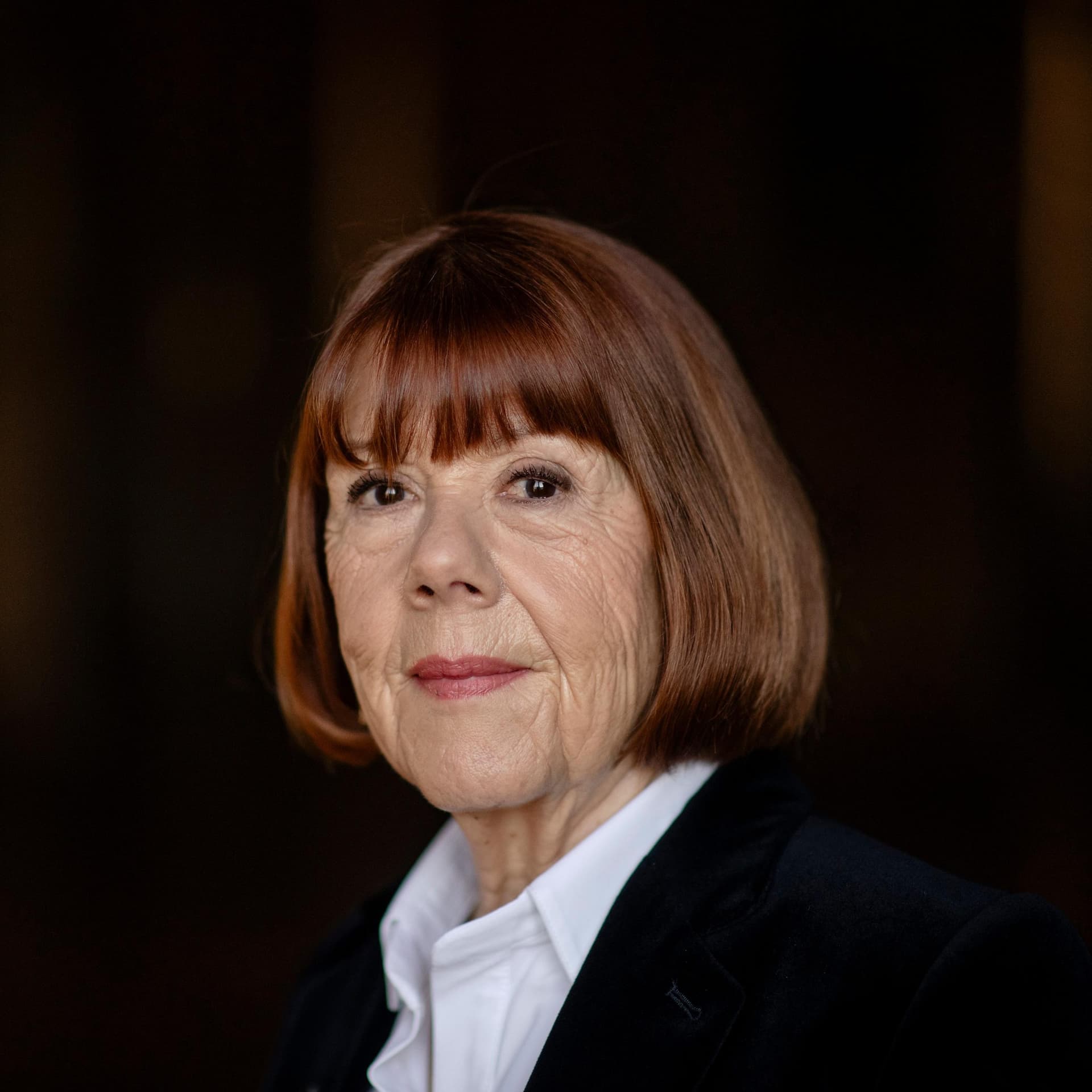
(Photo: Gisèle Pelicot in Paris, France. Credit: Dmitry Kostyukov/BBC Newsnight)