
In short
The 1996 shootdown of two civilian aircraft operated by Brothers to the Rescue and the U.S. decision decades later to indict former Cuban leader Raúl Castro, amid current U.S. pressure on Cuba and fears of a Venezuela-style intervention.
Guests and backgrounds
Cecilia Barria, Chilean journalist at BBC Mundo based in Miami; she attended the indictment announcement at the Freedom Tower. Will Grant, BBC reporter based in Havana; he reports on Cuba on the ground.
Key claims
U.S. prosecutors allege Raúl Castro (then Cuba’s defense minister) authorized fighter jets to shoot down unarmed aircraft over international waters, killing three U.S. citizens. Cuba calls it a political maneuver and says the planes violated Cuban airspace. The episode suggests “why now” may reflect the Trump administration’s broader “all options” pressure campaign, including oil blockade/sanctions, and possible leverage for negotiations.
Notable examples
Brothers to the Rescue founded by Cuban exile José Basulto; Miami diaspora celebrations; Cuba’s claims of U.S. “extrajudicial executions”; mention of CIA Director John Ratcliffe’s Havana visit and parallels to Nicolás Maduro in Venezuela.
Written by AI. May contain mistakes. Listen to the episode to check what was said.
Chapters
Tap a time to open that second in VOThe 1996 Incident and Its Fallout
0:38 to 2:25
Discussion of the shooting down of civilian planes and US political reactions.
“In the winter of 1996, three small airplanes took off from Florida en route to Cuba.”
Charges Against Raul Castro
2:25 to 3:05
Details surrounding recent charges against Raul Castro related to the incident.
“The Cuban government says the indictment is a political maneuver devoid of any legal foundation.”
Cecilia Barria's Insights
3:05 to 4:32
Cecilia shares her observations from the announcement of charges in Miami.
“And today on The Global Story, 30 years after that deadly shooting, why are charges being brought now?”
Understanding Raul Castro's Leadership
4:32 to 6:22
Exploration of Raul Castro's background and leadership style.
“In fact, today, anytime there is a gathering, anytime there is a celebration, they gather there.”
Cuban-Americans' Reactions
6:22 to 9:00
Reactions of Cuban-Americans to the indictment and expectations for the future.
“Well, he was a military commander and also a politician who ruled Cuba after his older brother, Fidel Castro, the famous one, passed away.”
Cuba's Current State and Will Grant's Perspective
9:00 to 11:10
Will Grant discusses the current situation in Cuba and the historical context of Brothers to the Rescue.
“Cecilia, it's often the case that people living in the diaspora feel really different than the people inside of a country.”
Cuban Government's Response to Indictment
11:10 to 14:03
Will shares the Cuban government's position on the indictment of Raul Castro.
“So that's the view of the Cuban diaspora from Miami.”
Cuban Government's Response to U.S. Actions
14:03 to 17:24
Learn about the Cuban government's reaction to U.S. indictments and military actions.
“What's the response been like from the Cuban government?”
Introduction to The Global Story Podcast
17:24 to 18:07
Get an overview of The Global Story podcast and its focus on global narratives.
“And I'm Tristan Redmond, and together we're the hosts of the Global Story podcast from the BBC.”
Analyzing U.S. Military Strategies Towards Cuba
18:07 to 20:14
Explore the reasons behind the U.S. government's timing and strategy regarding Cuba.
“And so one question that has been on my mind is, why now?”
Show all 13 chapters
CIA's Role and Pressure on Cuba
20:14 to 23:05
Understand the CIA's involvement and the implications of their actions in Cuba.
“Are you really going to extradite a man who's 94 years old?”
Living Conditions in Cuba Amid Political Strain
23:05 to 26:38
Discover the struggles and resilience of ordinary Cubans amidst political turmoil.
“So much of the reporting on this story is happening out of Miami in the U.S.”
Final Thoughts and Reflections
26:38 to 27:54
Reflect on the implications of the current situation in Cuba and the U.S. relationship.
“There are the echelons of the Communist Party and those who couldn't access basics.”
Transcript
Automatic transcript. May contain errors.0:00This BBC podcast is supported by ads outside the UK.
0:30Just tap into iHeart to start watching. And we hope you enjoy the show.
0:38In the winter of 1996, three small airplanes took off from Florida en route to Cuba. But they never made it. Good evening. The Clinton administration is calling for an emergency session of the United Nations Security Council after two civilian aircraft were shot down by Cuba yesterday. Two of the planes were shot down by Cuban fighter jets. The third was able to escape. They were operated by a group known as Brothers to the Rescue. It was founded by Cuban exiles. The group said that they were providing humanitarian assistance in international waters. The Cuban government say the group repeatedly violated Cuba's airspace.
1:18In the end, four people were killed, including three U.S. citizens. A pall of smoke shot on home video by horrified passengers on a cruise ship, the only visual evidence of what happened. The incident immediately sparked outrage in the United States against the Cuban government.
1:39Down with Castro, the cry from Cuban Americans. The United States have to do something about this. If they wouldn't want to do something, they should let us do something. Us, the Cuban here in Miami, will do something. And the repercussions were not just felt by the Cuban diaspora in Miami. The shooting caused a political fallout here in Washington. In their memory, I will continue to do everything I can to help the tide of democracy that has swept our entire hemisphere finally, finally reach the shores of Cuba. It led to new legislation that tightened the economic embargo on the island. Now, three decades later, the U.S.
2:22has announced charges in that case against Cuba's former president, Raul Castro. He's the brother of Fidel Castro. The Cuban government says the indictment is a political maneuver devoid of any legal foundation. The Cuban people must receive the blessings of freedom they have been so long denied. And I hope and believe that this day is another important step toward that ultimate goal. And all of this is happening as the U.S. has been mounting intense pressure for months on Cuba through an oil blockade on top of hefty sanctions. From the BBC, I'm Asma Khalid in Washington, D.C. And today on The Global Story, 30 years after that deadly shooting, why are charges being brought now?
3:13Is the U.S. setting the stage for a Venezuela-style military intervention?
3:28I'm Cecilia Barria. I'm a Chilean journalist. I work for BBC Mundo, and I'm based in Miami. Cecilia, it's wonderful to have you on the show. You were based in Miami and you were in the room as the indictment against Raul Castro was announced. What was it like? First of all, it was a historic moment because the Cuban community in the exile had been waiting for something like this for decades. The people attending, most of them were Cuban-Americans. So for them, it was an emotional moment. People were so happy. Some of them were crying. Some of them were shaking, clapping. And they felt like finally the day where justice is going to be accomplished.
4:21And the charges were announced at the Freedom Tower. The Freedom Tower is a place where many Cubans in the exile were received, were welcomed. So it's quite symbolic. In fact, today, anytime there is a gathering, anytime there is a celebration, they gather there. And Cecilia, can you walk us through the specific charges that were announced? Well, he was charged by the U.S. Department of Justice in connection with the 1996 shutdown of two civilians' planes. They were part of an organization called Brothers to the Rescue, and they were trying to put pressure on the Cuban government to step down.
5:06Today, we are announcing an indictment, charging Raul Castro and several others with conspiracy to kill U.S. nationals.
5:22So the counts were one count of conspiracy to kill U.S. nationals because three of the people that were flying in those aircraft were Cuban-Americans. The United States and President Trump does not and will not forget its citizens. And then you have also four counts of murder and two counts of destruction of aircraft. So that was the heart of the indictment. And the U.S. prosecutors alleged that Castro, who was the Cuba's defense minister at that time when the incident took place, authorized or allegedly authorized Cuban fighter jets to shoot down these unarmed aircraft. The U.S. government says that the incident happened in international waters.
6:15However, the Cuban government says that the incident happened in the Cuban airspace. You mentioned that Raul Castro was the defense minister at the time in Cuba. He was also the former leader of Cuba. But who exactly was he? What kind of leader was he? Well, he was a military commander and also a politician who ruled Cuba after his older brother, Fidel Castro, the famous one, passed away. So he was president of Cuba from 2008 to 2018. But also he was head of Cuban Communist Party and he's been Cuba's defense minister for many decades. So he was one of the main leaders of the Cuban Revolution that overthrew the government at that time in 1959.
7:05After that revolution, Fidel, his brother, became the main leader of Cuba, and Raúl controlled the military and was considered the second most powerful person in the country for many decades. And people say that even though today he's not technically in office, he allegedly is in charge of many important decisions. You mentioned he was involved with the Communist Party at the outset. I also think of him as the person who famously met with President Obama when Barack Obama went to Cuba. And there was this moment of rapprochement maybe between these two countries, right? And there was a sense that maybe he might be a wee bit more pragmatic.
7:49Absolutely. He was a more pragmatic leader. Fidel Castro was a very charismatic leader. He was very close to the people. Raul Castro, he wasn't Fidel Castro, his brother. Raul Castro is more like a Western world leader at the time. As you said, very pragmatic and very close to the military. You've been describing the exuberance, Cecilia, that Cubans in the diaspora there in Miami were feeling as these charges came down. I was reading that there was a crowd gathered outside also celebrating. Did you speak to people? I'm curious what they were saying. I spoke to many Cuban Americans outside the Freedom Tower.
8:35They were happy. They were emotional. It's a good day for all Cubans. All Cubans believe in justice and fairness. Justice is being served through a communist dictator. I think it's wonderful because for 67 years, the Castro family has killed so many, not only Cubans, but international people. So it's about time. I really appreciate the Trump administration and the judicial for doing this. Cecilia, it's often the case that people living in the diaspora feel really different than the people inside of a country. And so it might not be surprising to listeners that Cubans in Florida are celebrating the charges.
9:20But what did you hear from them about what they want to happen next? Some of them are expecting that this indictment is going to be the first step that's going to open the door for basically an overthrow of the current government in Cuba. Some of them said, yes, absolutely, we will like the U.S. military going into the island the same way they did in Venezuela with Nicolás Maduro, the leader of Venezuela. They're going to do it. I know they're going to do it. They're going to bring him back to the United States and serve sentence and serve time, whatever it is. But at least this is the first step that we needed.
10:04Other Cuban-Americans, they were kind of skeptics about that. I think that the Cubans should resolve their problems on their own. I think that anybody that I expect for a nation, however generous like the United States is, to liberate us, It's mistaken. I think there is a divide between the way they see what should be the future of these criminal charges, the indictment, but even what should be the whole policy from the U.S. to the island. But also they were making sure to put the message across that they support the current administration. And they were thankful to President Donald Trump. For them, this is an iconic moment.
10:57It's the right timing for President Trump to intervene in the island. Well, Cecilia, thank you for joining us on the show. Appreciate you bringing your reporting to us. Thanks to you. So that's the view of the Cuban diaspora from Miami. But I also wanted to know more about what people inside Cuba are thinking. Here on The Global Story, we've spoken in the past about conditions on the island nation. For months, Cuba has been experiencing prolonged power blackouts. And last week, Cuba's energy minister even said the country had run out of diesel and fuel oil. So I called up my colleague, Will Grant, who reports on Cuba for the BBC.
11:36He's in Havana, and as you can imagine, connecting with someone in Cuba is not the easiest. We caught up with Will on a phone line, and as you'll hear, the sound quality isn't the best. We started with the backstory of that 1996 shootdown, and I asked him to explain exactly who that Brothers to the Rescue group was. It was a key part of the sort of Cuban-American diaspora lobby, in a way. It was run by a man called José Basulto, who was a well-known Cuban émigré, very staunch opponent to the Castro brothers. He was on the plane that survived. Now, he created this in 1980, which dates us to the Marielle exodus.
12:21Now, this is a moment when, in the end, 125 ,000 Cubans left the port at Marien outside Havana, out towards the west of the country, where they then headed on very rickety boats that had come over from Miami to pick them up. Fidel Castro said, anybody who wants to leave can leave. And there was suddenly this explosion of people trying to leave Cuba. Around that time, or indeed that year, Brothers to the Rescue was set up. And it started with this aim of dropping supplies to some of those boats, the rickety boats and the dangerous rafts as people are trying to make it to the United States. And that kept on going pretty much until this moment when they were shot down.
13:06And I think they certainly didn't go anywhere near that close to the Cuban airspace ever again. Because the other thing that they were doing or were certainly accused of doing by Havana was dropping leaflets over the city of Havana, trying to encourage people to rise up, basically dropping propaganda over the country, over the city, and had been warned repeatedly over doing this by the Cuban authorities that they were violating Cuban airspace. So this indictment comes down to Raul Castro's role in that he was the head of the armed forces. Did he give a preordained, a preplanned order to basically blow them out of the sky if they came too close?
13:52That is really at the heart of this. The accusation from Miami, from Washington now is that he absolutely did and that he has charges to face over murder, the downing of a U.S. plane, and conspiracy to kill U.S. citizens. Will, you're there in Cuba. What's the response been like from the Cuban government? How are they responding to the indictment itself? Well, the current Cuban president, who was handpicked by Raul Castro and Miguel Diaz-Canel, basically called the entire thing a political maneuver devoid of legal foundation. He basically painted the entire thing as an act of vengeance, as an act out of Miami against the facts that are known by Washington and Miami.
14:39There was a whole series of lines out of a very long tweet by the Cuban president, where he made these and other accusations where he specifically said it was an effort to sort of basically besmirch, damage the reputation of one of the country's heroes. So, you know, it is the direct opposite from what you'll be hearing out of Miami. You know, in that statement that you referred to, this lengthy statement that came out from the Cuban president, he said that no imprudent action was taken, nor was international law violated as U.S. military forces have indeed been doing, these are his words, coldly calculated and openly publicized extrajudicial executions against civilian vessels in the Caribbean and in the Pacific.
15:28What do you make of that? It sounds like he's comparing the 1996 shooting to the strikes that we've seen from the U.S. against vessels now under the Trump administration. Yeah, what was interesting as well is in this long tweet from President Diaz-Canel, he said that the U.S. lies and distorts the events surrounding the downing of those planes by what he called a narco-terrorist organization, Brothers to the Rescue. Now, we've heard that line, haven't we? Narco-terrorism. Now, that is interesting in a way because he's sort of making, the Cuban government is making that jump between an event that took place 30 years ago and the way the Trump administration is acting in the region.
16:10That the actions of the Trump administration today are actions of an illegal nature. Those are the actions that are breaking international law. And all that Cuba did at the time, 13 years ago, was defend itself against repeated violations of its sovereignty, of its territory, of its airspace by a group that it considered a terrorist organisation because it does consider Brothers to the Rescue to be an illegal and a terrorist organisation. In fact, it infiltrated it with a group of aspiring, including the men that were known as the Cuban Five. Part of their role was to infiltrate groups that were considered by Havana to be terrorist groups plotting against Cuba, plotting actions against Cuba, and to, I believe, were inculturating the Brothers to the Rescue.
17:06So, look, Brothers to the Rescue is part and parcel of the broken binatural relationship between the US and Washington, particularly today.
17:24Hi there, I'm Asma Khalid. And I'm Tristan Redmond, and together we're the hosts of the Global Story podcast from the BBC. For those of you all who might be new to our show, We here at The Global Story dive deep every weekday on one big story at the intersection of where the world and America meet. And you can now watch The Global Story on the iHeart app. Catch every brand new episode every weekday. Just tap into iHeart to start watching. And we hope you enjoy the show.
17:58Will, this shooting happened 30 years ago. and Raul Castro is now an old man, 94 years old. And so one question that has been on my mind is, why now? Why has the US government decided to do this in this moment? What's your assessment? I mean, the why now is a question we could have been asking all year when it comes to the Trump administration and Latin America. Why now with Nicholas MacDurdo? Having dealt with him for years, why now are you squeezing the Cuban revolution to its breaking point, trying to shut off oil to the island. Why now are you charging Raul Castro for the crime that was committed 13 years ago?
18:37I think the truth of the matter lies in this thing that we'd spoken about before, this shorthand that's used in Washington, the Don Roe Doctrine, the idea that you can't have really any state that is against US interests on your doorstep, and that action will be taken to stop that happening. Now, there is none more than Cuba that represents that to Washington, a nation that is lined up against Washington, whose interests don't tally with Washington. Of course, in the Cuban government, they repeatedly say that they are not carrying out any action that jeopardizes Washington, that is attacking the United States, that is involved in harming the United States.
19:20But simply, the Trump administration don't see things that way. They see them as working with U.S. enemies, whether or not that's Iran, China, Russia over the years, that they are simply on the doorstep of Cuba, 90 miles away off the coast of Florida. And the push has ultimately come to shove in Latin America and that the Trump administration is not prepared to tolerate things that were tolerated by previous administrations in Latin America. This indictment is obviously drawing a lot of parallels to the situation with Nicolas Maduro in Venezuela. You know, the Trump administration had charged him with a crime in the United States.
20:02They use that to justify his capture and now have brought him here on trial in New York. Has this indictment of Raul Castro now laid the groundwork for some sort of military intervention? I mean, I don't know. Are you really going to extradite a man who's 94 years old? Or is there some other broader strategy at work here? That's the heart of it, isn't it, Azma? I mean, I think to what extent is this a negotiating position by the Trump administration or to what extent are they actually serious that they could do something against Raul Castro and the Cuban government more broadly? I feel like it wasn't that long ago before we would have thought the idea of airstrikes in Caracas would be unthinkable, and yet that happened in 2026.
20:42So I think that fact is in the background of everything that is going on between Washington and Havana, all the conversations that are taking place. Anything that was delivered the other day by the director of the CIA in Havana. On Thursday, CIA Director John Ratcliffe traveled to Havana to meet with a number of officials, including Raul Castro's grandson, as part of this pressure campaign. Bringing no doubt a message with him from President Trump and a pretty uncompromising message at that directly to Raul Castro's grandson, as well as the interior minister and the head of the Cuban intelligence services.
21:23In a statement, the CIA said that Director Radcliffe traveled to, quote, personally deliver President Trump's message that the United States is prepared to seriously engage on economic and security issues, but only if Cuba makes fundamental changes. And I assume it will be a message along the lines of, we are preparing an indictment for Al Castro. We're serious about this. You need to start making genuine, wholesale, wholesale, really branched economic and political reforms. And anything less than that, we will act upon, which is pushing Cuba in a direction that it hasn't been pushed for a long, long time.
22:07Exactly where that ends, I don't know. But I would say this, I think the threats are definitely part of everything that's on the table. The Trump administration, I think we can safely say that all options are open, that they are taking all of these choices seriously, and that Havana, or for that matter, any other government in the region can't assume, well, they won't actually act in that way. I like you assume the idea of them dragging off Raul Castro age 94 is a pretty slim possibility, but I wouldn't put my hand over the flame on it entirely, not in the current set of circumstances. And even if it's not that, it can be something that's related to that, something that where that is used as a bargaining chip to gain other space, if you like, at the negotiating table, to weaken Cuba's hand so that when it does sit down in the Trump administration, it's in a far weaker position than it would have otherwise been.
23:05So much of the reporting on this story is happening out of Miami in the U.S. press. We're getting the reports from the U.S. I feel like we're so fortunate, Will, to hear from you bringing us the reporting from Havana. And I just want to know what it's like to be a reporter in this moment on the ground as a country that you've reported on for so many years, but it's in a really, really critical moment. Yeah, it is very, very interesting to be here again. I've been a lot this year. I've been a lot over the past few years, but I've lived here for seven straight years. And so to see that arc of the thought with the Obama administration reach this point now has been really an interesting and a very upsetting thing as well for ordinary, you know, for people I know, the ordinary Cubans I know.
23:53So watching that curdle to this point, this moment of optimism becomes such a moment of threat and fear and darkness, you know, with the night's off, has been, an interesting experience. It's one I feel very thankful and lucky that I've got to witness. But it's very, very upsetting as well to watch how it has hurt ordinary Cubans, people who have no, as it were, no dog in this fight. Yes, of course, they may support a lesser or a greater extent than government on both sides. But really what they're worried about is making sure that their elderly parents are okay, that their children are okay. You know, I've spoken to pregnant women.
24:34I know somebody who has a 92-year-old mother. When that blackouts last 20 hours a day, then she is, you know, unable to get proper sleep. She's exhausted at her age. The mosquito sting as we move into the summer is worse and worse and worse. The public health crisis gets worse as the heat rises and this rubbish, this trash isn't being picked up. You know, all of these things are considerations. and somebody pointed something out to me the other day which just had not occurred to me there are high-rise buildings here there are people who have to walk 20 flights up and down to get to their apartments because obviously the elevators are not working there are no lifts and they're working this at all so what do you do any people are trapped in their homes all of these things are just the ways that we forget there's something that you know as you said a headline out of Miami or really anywhere in the United States, anywhere that's not actually in Havana, might be a very broad one about Havana hurting and Cubans staying resilient and what have you.
25:38Actually, that resilience has a limit and people are reaching it in many different ways, whether or not that's impacting their mental health, their physical health, whether or not that's because they're becoming skinnier. Wherever you look at the situation, it is bleak. And yet there is this other side of things, which is where private businesses who've got access to solar panels, who've got access to black market fuel, who've drawn in fuel from the US, are actually doing okay. There are still people on the island who do have money, who can afford to eat out, who can keep their homes lit when other people are in darkness.
26:12So what you're seeing, I think, is the one thing that the Cuban Revolution prided itself on not having, which is a bit more of a stratified society. Well, that stratification now is through the roof.
26:29There are those who have and those who have not. There are people who have said it was always like this. There were those who were in the Communist Party who had access to things and those who worked. There are the echelons of the Communist Party and those who couldn't access basics. They all had to work very hard for tiny wages. But whatever's going on now is this sort of post-Cold War, post-Orwell Chavez, post-Fidel Castro Cuba is a very, very interesting and complex beast.
Read the full transcript
27:06Well, we are always thankful for your reporting. So thanks again, Will. Welcome.
27:15That was the BBC's Will Grant reporting from Havana, Cuba. And before that, we heard from BBC Mundo journalist Cecilia Barria in Miami. And as a reminder, all you loyal listeners know that we here at The Global Story, we go deep every weekday on one big story about where the world and America meet. If you're also looking for a way to catch up on the latest news from around the world, then we recommend checking out our sister show, The Global News Podcast. Our show today was produced by Sam Chantarasek and Aaron Keller. It was edited by James Shield and mixed by Travis Evans. Our senior news editor is Chyna Khalids.
27:50And I'm Asma Khalid. Thanks, as always, for tuning in. And we'll talk to you again next week.
28:05Hi there, I'm Asma Khalid. And I'm Tristan Redmond. and together we're the hosts of the Global Story podcast from the BBC. For those of you who might be new to our show, we here at the Global Story dive deep every weekday on one big story at the intersection of where the world and America meet. And you can now watch the Global Story on the iHeart app. Catch every brand new episode every weekday. Just tap into iHeart to start watching. And we hope you enjoy the show.
From the publisher
US Secretary of State Marco Rubia has said Cuba poses a "national security threat" to the US and the likelihood of a peaceful agreement is "not high". His comments come days after the US announced criminal charges against Cuba’s former president Raul Castro, the brother of Fidel Castro.
The charges relate to his alleged role in the shooting down of two planes in 1996, which killed four people, including three Americans. The Cuban government say the move is “a political manoeuvre, devoid of any legal foundation.”
The indictment has drawn comparisons to the capture of Venezuelan president Nicolas Maduro, and whether the US has set the stage for military intervention.
Asma speaks to Cecilia Barria, a journalist based in Miami for BBC Mundo, and Will Grant, the BBC’s Mexico, Central America and Cuba correspondent, about the story behind the charges — and why three decades on, the indictment is only happening now.
Producers: Sam Chantarasak and Aron Keller Executive producer: James Shield Mix: Travis Evans Senior news editor: China Collins
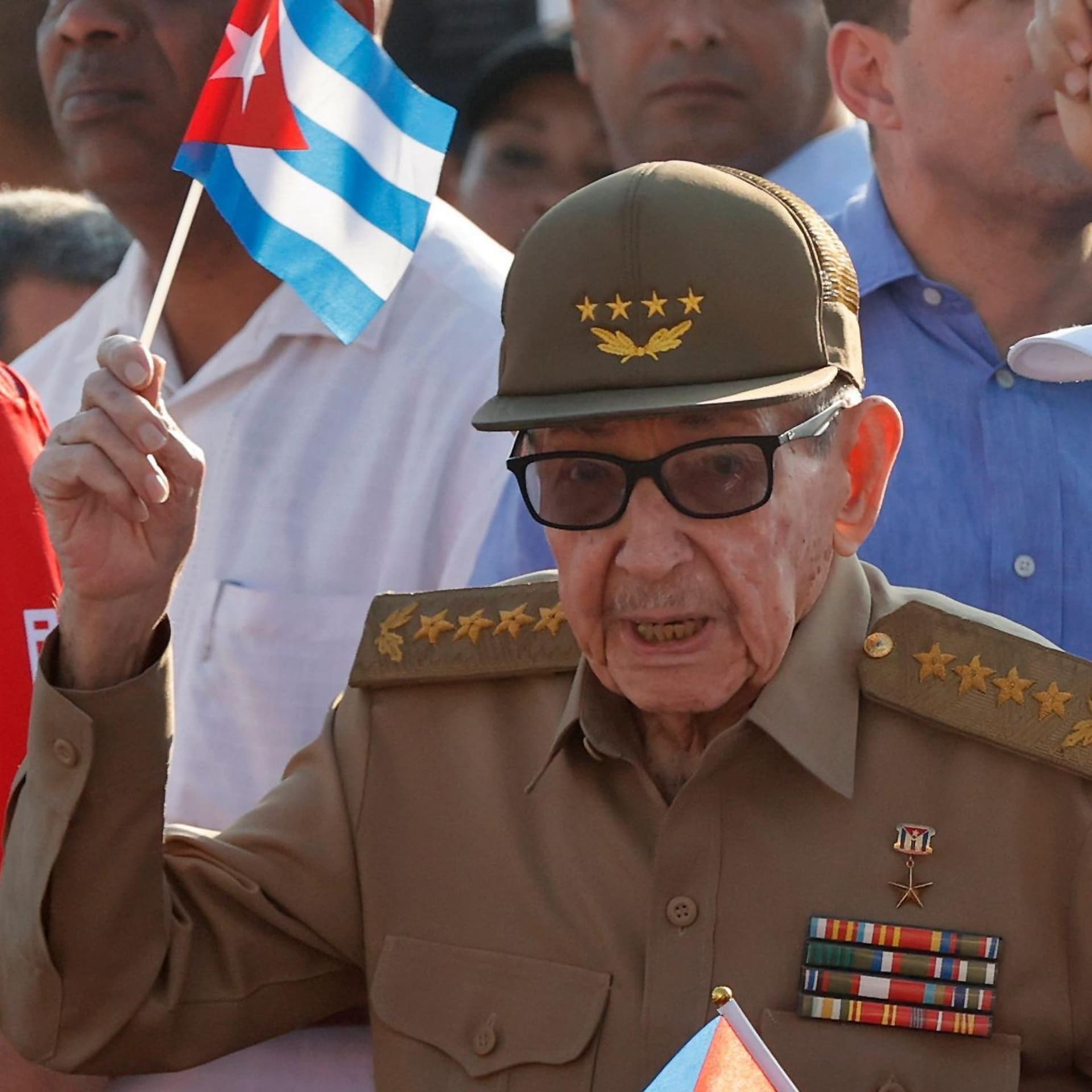
Photo: Raul Castro attend the International Labor Day commemoration in Havana, Cuba, 01 May 2026. Ernesto Mastrascusa/EPA/Shutterstock