In short
Whether Xi Jinping has outmaneuvered rivals by quietly building China’s power, and how Trump’s renewed assertiveness could change Xi’s strategy.
Guest backgrounds
Mariko Oi (host of BBC World Service’s Asia’s Pacific podcast; based in Singapore) and Laura Bicker (BBC China correspondent; based in Beijing).
Key claims
Xi’s “Chinese Dream” (leader since 2012) targets a modern socialist China and global influence by 2049; China’s rise accelerated after 2017–2018 via diplomacy spending, rare-earth/EV battery ambitions, and Belt and Road lending that can create debt leverage. Xi has tightened control domestically, cultivating fear and stability. China uses transactional alliances rather than fixed “spheres of influence.”
Notable examples
2012 leadership shift; 2013 Belt and Road; Laos high-speed rail; 2018–2020 US-China tariffs; 2024 Beijing military parade with Putin and Kim; APEC Busan Trump-Xi meeting; “first island chain” and Pacific island outreach; Taiwan retake timing “when the time is right.”
Written by AI. May contain mistakes. Listen to the episode to check what was said.
Chapters
Tap a time to open that second in VOChina's Historical Context
0:42 to 1:11
Explore the evolution of China's global position since the 1980s.
“And to think, that's just a small taste of what Schwab offers.”
China's Historical Context
2:38 to 4:28
Explore the evolution of China's global position since the 1980s.
“has the quiet man Xi Jinping outmaneuvered his rivals?”
Xi Jinping's Leadership Transformation
4:28 to 9:00
Discuss Xi Jinping's rise to power and his growing authoritarianism.
“Can you just lay out for us, please, exactly when it was that Xi Jinping came to power and how did he set out his stall?”
The Belt and Road Initiative Explained
9:00 to 11:18
Understand the Belt and Road Initiative and its implications for China and its neighbors.
“People don't talk about President Xi here.”
Trump's Influence on U.S.-China Relations
11:18 to 14:00
Analyze the impact of Donald Trump's presidency on U.S.-China relations.
“There's a difference between how Northeast Asian countries see China versus how Southeast Asian countries view China.”
The Rise of Trade Wars
14:00 to 15:25
Explore the initial trade tensions between the US and China during Trump's presidency.
“We need things to stop being made in China.”
Xi Jinping's Display of Power
15:26 to 17:54
Discuss Xi Jinping's recent parade and its implications for global power dynamics.
“As we know, President Biden followed Trump's first presidency, and it was, relatively speaking, all quiet on the Eastern Front.”
Analyzing Xi Jinping's Strategic Outlook
17:55 to 21:39
Delve into Xi Jinping's worldview and China's approach to global alliances.
“was that image of President Xi flanked by President Putin of Russia and Kim Jong-un from North Korea.”
The First Island Chain and Military Strategy
21:40 to 25:59
Learn about the significance of the First Island Chain in US-China relations and military strategy.
“And there are many countries that feel pretty much overlooked by the West for many years.”
Future Strategies: China, Russia, and the US
26:00 to 28:00
Evaluate the roles and influences of China and Russia in global power structures.
“And as you know, potentially the three great global empires.”
Transcript
Automatic transcript. May contain errors.0:00This BBC podcast is supported by ads outside the UK.
0:30No bouncing between tabs. And best of all, no spreadsheets. Stop managing software and start managing your business with one unified system. Try for free today at odoo.com. That's O-D-O-O dot com. Self-directed investing. Trading. Full-service wealth management. Automated investing. Financial planning. Thematic investing. Retirement planning. Phew. And to think, that's just a small taste of what Schwab offers. Because Schwab knows that when it comes to your finances, choice matters. No matter your goals, investing style, life stage or experience, Schwab has everything you need, all in one place, so you can invest your way.
1:11Visit schwab.com to learn more. Before Xi Jinping became the leader of China, there was this saying there, hide your strength and bide your time. It was a mantra for how the People's Republic should approach military and foreign policy. And then Xi came to power and China started to show its strength. We saw that back in September when Xi held an enormous military parade in Beijing and in China's calm reaction to U.S. tariffs. But militarily, he's biding his time over Taiwan, for example. The contrast with his opposite number in Washington could hardly be more striking. Breaking news this morning.
1:52President Trump says the U.S. carried out large-scale strikes on Venezuela overnight. We are going to do something on Greenland, whether they like it or not. If we don't do it, Russia or China will take over Greenland. Commander-in-Chief said, quote, we are locked and loaded and ready to go if Iran shoots and violently kills peaceful protesters. How will China respond to this new American assertiveness? Will Xi Jinping continue on his discreet path, building China's power and influence around the globe? Or could the spectacular events of Donald Trump's second term change his calculations and persuade Xi to start flexing Chinese muscle?
2:34From the BBC, I'm Tristan Redmond in London. And today on The Global Story, has the quiet man Xi Jinping outmaneuvered his rivals?
2:48As the former head of the British spy agency MI6 told the BBC last week, you either have a sphere of influence or you're in one. And this week, we're teaming up with our sister podcast at the BBC World Service, who are experts in their region to look at those spheres of influence and tell the story of how we got here. Today, we're speaking to Mariko Oi in Singapore, the host of Asia's Pacific podcast, and to Laura Bicker in Beijing, the BBC's China correspondent. I'd really like to understand how China's view of its own position in the world has kind of evolved over the last couple of decades.
3:26Now, Laura, where does the story of that evil ocean start for you? I think what you have to look at is where President Xi started. So China started to open up in the 1980s, the so-called reform and opening up. China's economy before that had been rigidly controlled by the state. But the kind of Soviet-style central planning, it failed to kind of lift up prosperity. You know, they were recovering from the likes of the Cultural Revolution and the Great Leap Forward. If you speak to people in their 80s here, if you speak to some of the antis who dance in the park around the corner, they will tell you that they went hungry during the Cultural Revolution.
4:05They went hungry during the Great Leap Forward. And then you start to see this kind of opening up, this China deciding that it's going to engage with the world. And they had these kind of emerging industries. It became the world's manufacturing powerhouse. I'd like to just go back a little bit to the kind of beginning of Xi Jinping's leadership. Can you just lay out for us, please, exactly when it was that Xi Jinping came to power and how did he set out his stall? He became leader in 2012, and just shortly after becoming leader of the CCP, the Chinese Communist Party, he gave this big speech about the Chinese dream during a big high-profile tour.
4:49And that vision was about the long-term goal for a China that was fully developed, what he called a modern socialist country, that would be the leading global influence by 2049. But when he first came to power in 2012, Barack Obama would have been president at the time. And I think it's fair to say that he was not an equal player alongside President Obama at that moment. How far behind the U.S. president was he? Mariko? In terms of when Mr. Obama was still in power, you know, militarily, China didn't even have a single aircraft carrier at the time. You know, by the time Obama left, China had one.
5:36And now, you know, they have more. Technologically, it's become a lot more innovative. You know, TikTok being the most popular app among American youth, DeepSea. You know, again, that just kind of almost came out of nowhere and people were really caught off guard that China developed so quickly. So quietly, it feels like China has been building up all these power. And that's when he became a lot more confident. I was there at the end of President Obama's time in office. And there was a determined view that China did form a rising threat. But what they hadn't seen was what China had managed to do behind the scenes, which has become this kind of rare earth capital of the world.
6:19the long-term plan to become an EV, not just maker, but battery powerhouse. This long-term plan to become this kind of higher quality producer of goods, especially after 2017, 2018, China also starts to double its spending on its diplomacy. So it basically starts to create more diplomatic posts, embassies, consulates, permanent missions to international organisations. It really gets far more involved in world politics, whether it's climate change or the United Nations, increased its budget for foreign aid by 7%. So I think when you come about 2017, 2018, we see a kind of more ascendant China. From a distance, Xi Jinping appears to be a fairly kind of mild-mannered fellow.
7:10How has Xi Jinping evolved as a character since he's become the leader of China? I think he's grown ever more powerful. As he took over, I think there wasn't a kind of idea that he would be as an authoritarian leader as he is now. When you see him on these state media trips he's very keen to go back to his roots back to the countryside now he was one of the kind of party elite that were sent down into the countryside as a young boy to work with locals and learn about local life and that stuck with him so when he goes on these visits and you see him on state media they will surround him with people who are applauding who are there to kowtow to him, to thank him for lifting, which he has done, 800 million people out of poverty.
8:07And wherever he goes, he will leave a portrait. A portrait? Yeah, yeah. There's always a massive portrait of presidency on a wall or a building or a house, wherever he's been. He's created what some believe is a cult of personality. However, he covets stability. And that means wherever there is dissent, whether that is in Xinjiang, Tibet, elsewhere, he will ensure that that is met with strict enforcement. So when you look at where President Xi has gone, from this mild-mannered, perhaps unknown bureaucrat coming in to where he is now as this strict leader who has gained real power and who is wielding that power within his country and without, I think that is the change that we've seen from 2012 to now.
9:00Is he loved or feared or a bit of both? People don't talk about President Xi here. I mean, even like I find myself when I'm talking to you being very careful about what I say, because I know that it's a sensitive topic. You don't ask about the leadership. And when they do, they speak in hushed tones, which would suggest a level of fear. So President Xi becomes leader of the CCP, the Chinese Communist Party, in 2012. And he sets out his stall and he starts opening up China to a more international outlook. And a key policy of his is something that we often hear about. It's called the Belt and Road Initiative.
9:43I wonder if you could explain to us exactly what that is and why it's so important. Basically, what it means is that China will invest in your country. Right. Let me give you an example of Laos, which sits on the border here with China. Quite a poor country, very much in need of infrastructure. What China does is lend money. Now, in the case of Laos, what it wanted was a high speed railway link. It can whisk you through Laos, especially through the northern half of Laos in a couple of hours, where a journey like that through the mountains used to take, you know, seven or eight hours. It now takes you just a couple of hours.
10:17So whether it's ports, whether it's roads infrastructure, all the way through parts of Africa, There are roads infrastructure built by Chinese money. These are huge infrastructure projects, huge investment projects, and they span all over the world. And that was his idea back in 2013. And that's when you begin to see President Xi's global ambitions to try to compete with the United States for world influence. Mariko, I'm really interested to understand how China's neighbors have received things like the Belt and Road, this huge infrastructure outreach project that spans across Asia. One of the things I've heard said in the last week or so, in the current era, you are either a predator or you are prey.
11:07Do China's neighbours feel as though they are prey when something like the Belt and Road Initiative stretches out across Asia? Or do they feel like they are partners of China? There's a difference between how Northeast Asian countries see China versus how Southeast Asian countries view China. All those countries in Southeast Asia have very close business ties, trade ties, and there are very few countries which would strongly defy China's interests. But even in Northeast Asia, you know, Japan and South Korea, even though they have very strong ties to the United States, their trade relations are very strong as well.
11:55Mariko, it sounds like you're saying they're more like partners and less like prey. Do you agree with that, Laura? When it comes to the Belt and Road Initiative, I think it's really important to point out that it does bind countries to China and put them in quite a lot of debt. I think I spoke to one analyst who talked about the Belt and Road and he said, look, if it was a dashboard on an aeroplane or a ship or even a car, there would be red lights going up everywhere. It's because so many infrastructure projects have defaulted on their loans. And what does that mean? You know, how does China make use of that?
12:30China does have the capacity to use its trade relationships and use those leverages when it wants to. What does President Xi want? What President Xi wants is exactly what's happening. He has once said that the West is declining, the East is rising. He wants an East that is rising and a China at the heart of it. So Donald Trump becomes president for the first time in 2016. And most of us in the West remember our reaction at that moment because Donald Trump was already a fairly recognizable figure. But to what extent was he a known quantity in Asia? He was known as a TV celebrity and a very successful business person who's really good at making money and making deals.
13:17You know, opinions are very split. He has almost like a cult following in some parts of Asia, you know, in Japan, South Korea, men, especially young men who worship him as someone who speaks his mind very freely instead of worrying about political correctness. And then those who just really like the fact that he's a very strong leader. What's your take, Laura? So I think when it comes to Donald Trump, you know, all the way through Donald Trump's campaigning, and I was at many of these rallies, it was China, China, China, China, China, China, China, China, China, China, China. There was always going to be something about China.
13:55China's stealing our jobs. China's not being dealt with. China's making sure they're not giving us a good deal. I'll get a good deal from China. We need things to stop being made in China. And that's when we start to hear, you know, perhaps there is a problem, you know, with this rise and the threat that China poses. And then through Donald Trump's first term, we have this trade war. Game on here. A trade war between the United States and China is here. It's real. At the stroke of midnight, the U.S. hit China with tariffs on$34 billion worth of goods. The trade spat between the United States and China first started in Donald Trump's first term.
14:33What actually happened? Well, it didn't go well. China immediately responded with its revenge tariffs of equal value, accusing the U.S. of launching the largest trade war in economic history and calling America trade bullies. I was in the U.S. and the tariffs, you know, piled up on either side. It's a dangerous escalation in the trade dispute, pitting the world's two biggest economies. President Xi fights back against that. And in 2020, the two sides came to an agreement. Contessa, we have three sources confirming reports of a deal in principle between the US and China. They decided, right, OK, China is going to buy more goods from the United States.
15:17The deal really didn't amount to much. And of course, China waited out the clock. They knew Donald Trump, perhaps might lose the election. And of course, that is what happened. As we know, President Biden followed Trump's first presidency, and it was, relatively speaking, all quiet on the Eastern Front. But then, of course, in 2024, Donald Trump stands again and he wins. And you've got Donald Trump repeating the same message. We need to get a better deal from China. We need to get a better deal from China. You're meeting with President Xi in a few weeks. If you can't come to an agreement or a deal at that meeting.
15:52Are we in for a sustained trade war with China? Well, you're in one now. Here's the thing. China was ready for this trade war. They studied for this trade war. They had prepared. And I think really, even after months of these tariffs piling up between the United States and China, basically nothing has changed. And now we wait to see if they can come out with a longer term deal in the future.
16:31Can you bring us forward to the present day? Just recently, in September, in fact, Xi held this massive parade in Beijing, which we actually we covered as a story on The Global Story. There were a whole bunch of world leaders there that week. There was Modi from India. There was Putin from Russia. Kim Jong-un showed up on his train. And we spoke with our colleague Celia Hatton in London. I mean, it was being called widely in the press the axis of upheaval, but our colleague Celia Hatton called it the axis of frenemies. Xi Jinping at this event gave this really surprising speech. And contrary to Donald Trump, in his speech, he talked about the international rule of law.
17:21He talked about multilateralism. He was delivering the kind of speech that you would normally expect to hear from an American president. How did that happen? So I was at this parade and can I just tell you, you hear the thunder of every single bit of military equipment that passes.
17:48But Celia's right in terms of the first image that we saw before there was even a kind of gun salute was that image of President Xi flanked by President Putin of Russia and Kim Jong-un from North Korea. And then, of course, you have the inspection of the troops where President Xi gets in his car and he heads along and he shouts at each of the troops, yes, I have inspected you. And you have this entire spectacle that opens up in front of you for a couple of hours. Why is this important? Because it's a show of strength. To his left and to his right, he's looking at two leaders that President Trump would love to have discussions with.
18:39And that parade was a really good example. not just of his defiant push against the US-led world order, but of how China has become the big brother in this relationship. Russia is beholden, North Korea is beholden, and China, under President Xi, is now the leading superpower alongside the United States. And then straight after that, we had APEC, the summit in South Korea. US President Donald Trump and China's leader Xi Jinping are sitting down for high-stakes talks in the South Korean city of Busan. I was there at APEC when the two leaders met. Great honour to be with a friend of mine, really for a long time now, if you think about it.
19:21The very, very distinguished and respected president of China. It was the obviously first meeting since Donald Trump became president second time around. I actually thought Donald Trump looked nervous. Oh, really? Yeah. He said, you know, this is a tough negotiator. He's a very tough negotiator. That's not good. I think we can see the difference between President Trump's first term and President Trump's second term. You know, during the first term, Xi Jinping still kind of rolled out the red carpet, at least kind of entertained him, whereas he seemed a lot more confident in the most recent meeting that Laura mentioned.
20:01Since we're talking a lot this week about spheres of influence, is that a view of the world that President Xi Jinping shares? And if not, what is his worldview? you? I think when it comes to sphere of influence, I struggle with this concept. Because when you speak to Chinese analysts, the kind of China that they want is one that's not challenging the United States, but where perhaps they're looking at the United States as not just a single solitary power. And I think with China alone, when you're looking at the power that it's managing to consolidate, it's not a sphere of power. It's not like you get a map and start colouring in, you know, blue for America and red for China.
20:45You can't do that because China is involved in every single aspect right across the world. I think what China wants to do is to ensure regime survival, first of all, that the Communist Party survives. And to do that, they know that they need to make their country and their people prosperous. So what they're trying to do is have control over its own economy. And to do that, it's gone out and it's spread its tentacles wide. It sounds like what you're saying is that Xi Jinping has a quite nuanced, complex view of the way the world fits together. Tristan, you've hit the nail on the head. I think when it comes to that kind of Trump doctrine of the world, where, you know, it's a good country or a bad country, China doesn't see that.
21:34It doesn't see its alliances as good or bad. It sees its alliances as transactional. You either work with us or you don't. And there are many countries that feel pretty much overlooked by the West for many years. I mean, I spoke to one analyst when it came to the likes of Latin America, and they said if the US wants to get back into Latin America, they're 20 years too late, because China's already there and has been for some time. So I guess the thing that I struggle with slightly, if the worldview of Donald Trump is that the planet can be kind of separated into three co-equal geographic regions.
22:12Does that mean that the principal leaders of those three co-equal geographic leaders are rivals or are they allies in some respect? Mariko? I would have thought that President Xi, he's a quite strategic leader who wouldn't rule people out as rivals. And if there is a way to find a happy medium bromance relationship, you know, China and India, China and Russia, North Korea, you know, it feels like, you know, he sees it as what's strategically important in China's interest. Laura, back in December, we talked a bit on the podcast about the new United States national security strategy. And there wasn't that much mention of China in there, with one exception.
23:03There was a little bit in there about something called the first island chain. But what is this first island chain? And why is it potentially a flashpoint that might necessitate China having all these weapons? There's an arc of islands in the Western Pacific. It's stretched from Japan all the way through the archipelago of Japan, Taiwan, the Philippines. It ends near Borneo, the Malaysian Peninsula, and it's almost like a natural barrier. It contains China's navy and doesn't give it access to the open Pacific. And this is where the US defence strategy is focused. So basically, it's an idea to contain China within this kind of Western Pacific.
23:45What is happening, though, is that China has come out of the Pacific and has started to influence countries further away. So you're looking at some island nations further into the Pacific, Solomon Islands, Kiribati, Nauru, all of these islands that have decided, hang on a second, maybe we'll talk to China. And they were once allies of Taiwan. I have to ask, if the world is now about looking after your own back garden in your sphere of influence, why shouldn't China re-annex Taiwan? There's a lot of talk whether or not if Donald Trump can head into Venezuela, snatch the president. Even here, there's been a lot of talk online.
24:30What's stopping us heading into Taiwan and taking the president of Taiwan? Look, they don't need a president to embolden them to head in. They don't need America to set a precedent when it comes to Taiwan. I think when President Xi decides that the timing is right, that is when he'll retake Taiwan. And he hasn't ruled out the use of force if necessary. I mean, didn't Donald Trump say in the most recent interview that it's up to Xi Jinping if, you know, what he wants to do with Taiwan? And I think, as Laura said, Venezuela, you know, I was actually with a bunch of journalists when it happened. And everyone, especially in this part of the world, was saying, wow, China could do next.
25:12But it's about at what cost. I think that's a huge cost militarily. And also it's very, very risky whether the PLA has the capability to actually successfully execute that. I think that's still up for debate as well. I think when it comes to this argument, in terms of international norms, China's been trying to play by the rulebook for many years. It's been trying to go to the United Nations to resolve disputes, join the World Trade Organization. Now, all of a sudden, they're watching the United States throw out the rulebook, rip it up and wonder, well, hang on a second, you know, Should we still abide by it?
25:47I think, yes, it does open a window. It does change the calculations somewhat, but it's certainly not a slam dunk for a presidency in that, well, hang on a second, he's done that. I'll do this. This week, we're looking at the United States, China and Russia. And as you know, potentially the three great global empires. And tomorrow we'll be speaking about Russia. Laura, do you think that classifying Russia alongside China and the United States is giving Russia too much credit? My Russian colleagues are going to kill me.
26:21In terms of who is the big brother here, it is definitely China. Russia does appear to be on the decline when it comes to world influence. But I think when it comes to the future, China definitely has a real foothold to control everything that is around us. Because who has the economy? Who has the influence? Who has the strength? Who has the power? We're looking at Beijing. Where you're looking at the great power competition, is Russia part of it? I'm not sure in five, 10 years time. I'm not so sure. But certainly, China is. Mariko and Laura, thank you so much for talking this through with us.
27:08It's been a total pleasure. Thank you. Lovely to speak to you. Thanks, guys. That was Mariko Oi, host of Asia Specific Podcast, and Laura Bicker, the BBC's China correspondent. Please send us your thoughts and ideas on theglobalstoryatbbc.com and rate us wherever you're listening. It helps others find us. And if you want to catch up on the latest news from around the world, then look out for the Global News Podcast wherever you get your podcasts. You can listen back to our earlier episodes with Laura when President Trump met with President Xi, as we talked about on this episode. That will be in your feeds on the 31st of October.
Read the full transcript
27:46And Laura also talked to us on the 27th of November about the fast fashion company Shein, which is another great story. And that's it for the global story for today. Today's episode was produced by Kat Farnsworth and Valerio Esposito. It was edited by James Shield and mixed by Travis Evans. Our senior news editor is China Collins, and I'm Tristan Redman. See you tomorrow. Cheerio.
28:13Thank you.
From the publisher
How will China respond to a new era of US assertiveness? Could the spectacular events of Trump’s second term change President Xi Jinping’s calculations about whether to flex China’s muscles in Taiwan?
All this week, we are teaming up with our sister podcasts to explore how power and influence around the world is shifting. We’re exploring who has a sphere of influence and who finds themselves in one.
Today we’re joined by Mariko Oi, host of Asia Specific from the BBC World Service, and the BBC’s China correspondent, Laura Bicker.
Producers: Cat Farnsworth and Valerio Esposito
Executive producer: James Shield
Mix: Travis Evans
Senior news editor: China Collins
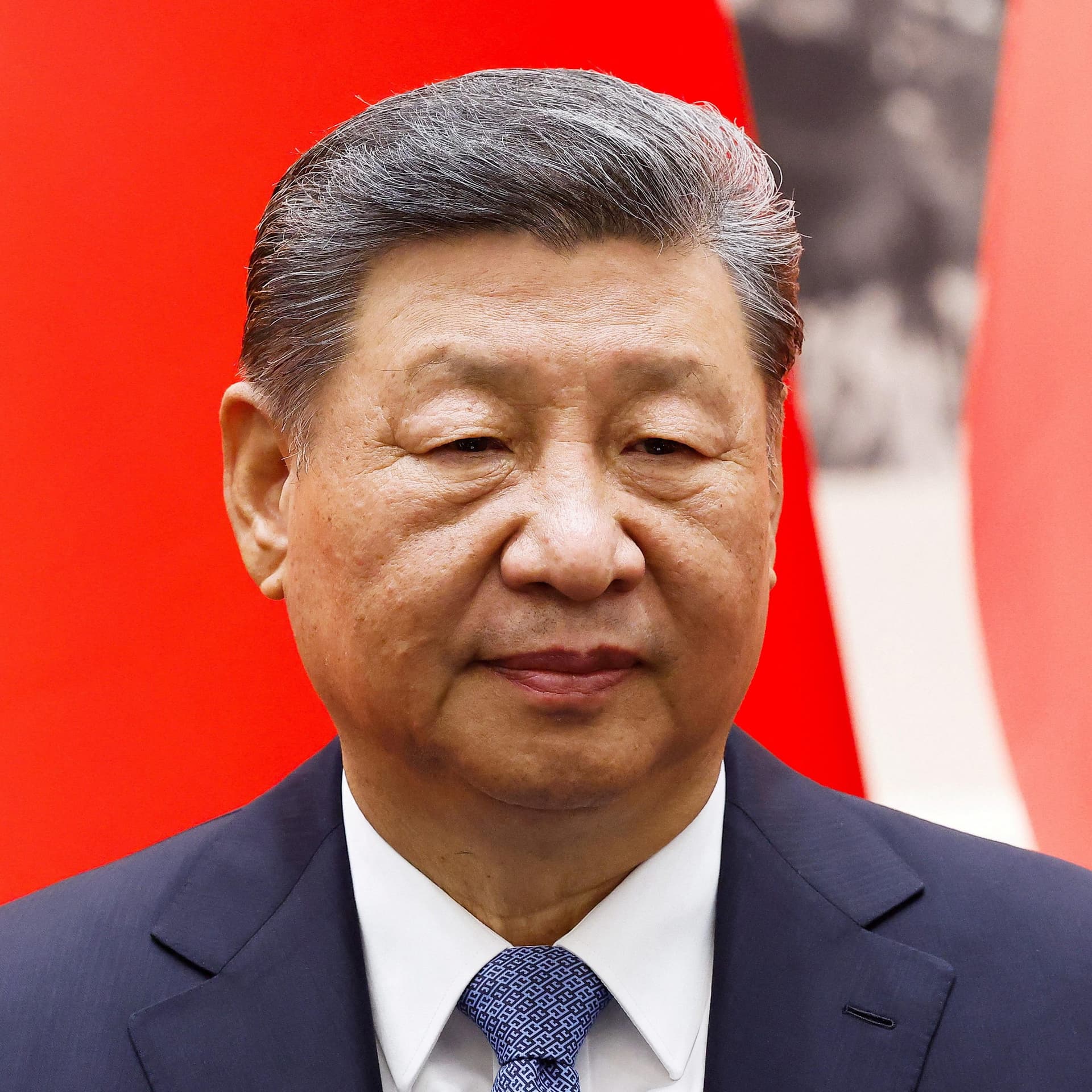
Photo: China’s President Xi Jinping. Maxim Shemetov/Pool/Reuters