
In short
Whether Iran’s late-December/early-January nationwide protests failed, and why, amid an internet/phone blackout and a severe crackdown.
Guests (backgrounds)
- Parham Gabbadi (BBC Persian; analyst/anchor in London, explains protest dynamics and external reactions).
- Ganshe Habibi Azad (senior BBC Persian reporter; helped decipher events from abroad).
- Maryam Zohdi (BBC Persian planning; coordinates material produced inside BBC Persian for other services).
- Sara Namjoo (BBC Persian producer/editor; describes reporting during communications blackout).
Key claims
- Protests began Dec 28 after currency devaluation, spread from Tehran bazaars to small towns, then became political.
- Trump’s threats to “come to their rescue” may have emboldened protesters; no US military action followed.
- Reza Pahlavi (exiled son of the last Shah) was invoked widely; he backed protests and called for a strike Jan 8–9.
- Iran’s government cut internet/phones, labeled protesters “terrorists,” and used Revolutionary Guard forces; thousands were killed in days.
- Internet blackout prevented verification; protests appear to have stopped in major cities, though smaller towns may have continued.
Notable examples
- Karizak Morg footage of hundreds of bodies; a viral body bag with birth date 2009 (Green Movement era).
- Reports of entire families killed, including a football player killed with his wife, leaving two daughters.
Written by AI. May contain mistakes. Listen to the episode to check what was said.
Chapters
Tap a time to open that second in VOOverview of Iranian Protests
1:08 to 2:14
An introduction to the current state of protests in Iran and BBC Persian's role.
“So this is Persian Newsroom, and we are doing rolling news at the moment.”
Challenges of Reporting from Abroad
2:19 to 3:06
Insight into the difficulties faced by BBC Persian journalists covering Iran.
“Ganshe Habibi Azad is a senior reporter with the team, and she showed me around.”
The Harrowing Reality in Iran
3:09 to 5:27
Accounts of the brutality faced by protesters and the high death toll.
“Our businesses in Tehran, other cities, we are gathering them, we are trying to translate them.”
Protests: A Historical Context
5:30 to 5:48
Understanding the significance of the current uprising against the Iranian government.
“For the BBC, I'm Tristan Redmond in London.”
Role of Donald Trump in the Protests
5:48 to 8:01
Exploring Trump's impact on Iranian protests and how he inspired demonstrators.
“friend of the Global Story podcast, and his colleague Sara Namjoo.”
The Shah's Son and Public Sentiment
8:07 to 11:00
Discussing the growing support for Reza Pahlavi among Iranian protesters.
“If they start killing people like they have in the past, I think they're going to get hit very hard by the United States, he says.”
Government Response to Protests
11:10 to 13:07
Analyzing the Iranian government's actions in response to the protests.
“But we know for a fact that he has definitely have more support now than before.”
Desperate Measures for Communication
13:08 to 14:01
How Iranians risk their lives to share the truth during a blackout.
“One of our viewers, he drove around 1 ,000 kilometers to go to the border and use the internet coverage from the neighboring country and then send us videos and his account of what's happening in Tehran.”
The Distress of Reporting from Iran
14:01 to 18:10
Learn about the emotional impact on journalists reporting on protests in Iran.
“or trying to kind of identify their family members.”
Government Responses and International Reactions
18:10 to 21:12
Explore the Iranian government's labeling of protesters and international responses.
“Sara, I want to let you get back to your team and carry on your work.”
Show all 13 chapters
The Impact of Donald Trump's Comments
21:12 to 22:54
Discuss the mixed reactions of the Iranian people to Donald Trump’s remarks on the protests.
“Well, actually, his government, his administration is saying that Donald Trump managed to stop 800 executions.”
Challenges Faced by Protesters
22:54 to 24:25
Understand the brutal crackdown on protesters and the challenges they face.
“I was just talking to some of my colleagues.”
Future of Protests in Iran
24:25 to 27:38
Analyze the potential for future protests in Iran and their implications.
“And also critics of Reza Pahlavi are also blaming him for not having a clear strategy of what to do next, of not organizing people better for such brutal crackdown.”
Transcript
Automatic transcript. May contain errors.0:00This BBC podcast is supported by ads outside the UK. Psst, I have a secret that's about to seriously upgrade your downtime. Mistplay is always running these massive sweepstakes, from major cash prizes to top brand bundles to thousands of dollars in gift cards for Amazon, Visa, Target, and more. You just play your favorite mobile games, earn points, and you cash out those points for entries. Mistplay is 100 % free. No deposit, no subscription, no hidden fees. Download Misplay today and start winning. Save big money on everything for your next project at Menards. Update your home with Palmero vinyl blank flooring.
0:42It provides a genuine weathered wood look that complements any decor and clicks together for easy installation. It's waterproof, scratch and dent resistant, making it perfect for active households. Save big money on our wide variety of flooring options at Menards. Plus, check out our weekly flyer on Menards.com for all the great deals happening now.
1:07All right, so tell us what we're seeing here. So this is Persian Newsroom, and we are doing rolling news at the moment. We have got our reporters, our editors, everyone is in, and we've been working almost non-stop during these days. Over the past few weeks, Iran has experienced a massive nationwide protest movement and a brutal crackdown. It's been difficult to know exactly what's going on there because the Iranian government cut off the internet and phone communications. That's been a big challenge for the BBC Persian team. OK, so where are we going now? So this is our digital department. Yes.
1:48Oh, wow, it's huge. Lots of people. You might have heard a previous episode of The Global Story where we talked about the BBC Persian service. It has a huge audience in Iran, particularly through its satellite TV channel and its Instagram account, even though it's illegal in Iran to watch the channel. Ever since the protests began, BBC Persian has become a hub for deciphering what's happening inside the country. Last week, I went to their newsroom to find out how they're doing that. Ganshe Habibi Azad is a senior reporter with the team, and she showed me around. So we have got programming here.
2:26Hi, guys. Hi, hi. I'm giving a tour of BBC Persians. We're here from the Global Story podcast. What's your name? My name is Maryam Zohdi. Nice to meet you. I'm working with BBC Persians Planning. We're trying to give our material, which actually we produce inside our BBC Persians, to the other services, including English. BBC Persian journalists can't travel to Iran, so they're used to covering the country from a distance. but they rely on people sending them messages and videos. During this communications blackout, it's been impossible for most people in Iran to contact the BBC. But a few people are finding ways to communicate.
3:09We received some narratives. Our businesses in Tehran, other cities, we are gathering them, we are trying to translate them. How does it feel reporting on this from a distance? It's crushing, isn't it? Three years. Because, for example, myself, I haven't heard from my family. I think several of us haven't received any messages from them, haven't received any calls from them. So on top of that, the pictures, we're all sitting in front of our laptops and seeing the videos, which are really graphic all the time. And what are the things that you're hearing? Horrible things. Shocking. they're speaking of direct shooting to people's hearts, to people's heads and sometimes they say the corpse remain in the streets they put them there because they want us to get afraid and they want us to see them and stay at home, not to protest again it's horrible some of the voices I've heard, they ask help from outside.
4:21I could hear them crying and saying, just help us, just tell anybody outside Iran who can help us, come and help us. Mariam told me this last week, but the question now is, has the window for anyone to answer that plea for help now closed? Many protesters thought that President Donald Trump would help them. He said, help is on the way. A few days ago, we saw media reports that a US aircraft carrier and warships were being redeployed to the Middle East. But we haven't seen any military action yet. As we're recording, the internet is still down. But it's becoming clear that the protests seem to have stopped and the crackdown has been extremely bloody.
5:09The death toll is contested, but Iran's Supreme Leader, Ayatollah Ali Khamenei, says thousands have been killed. A recent report obtained from Doctors on the Ground says that 16 ,500 protesters may have died and more than 300 ,000 injured. But it's impossible right now to verify those figures. For the BBC, I'm Tristan Redmond in London. And today on The Global Story, this uprising was the biggest challenge to the Iranian government in decades. Why does it seem to have failed?
5:47After our tour of the newsroom, we sat down with BBC Persians Parham Gabbadi, friend of the Global Story podcast, and his colleague Sara Namjoo. I started by asking Parham to explain how the protests started. So the protests started on December 28th because of the devaluation of Iranian currency. And first we saw some protests in Tehran's Grand Bazaar. The shopkeepers, the people who do business there, they took to the street and they started chanting slogans.
6:22After two, three days, it started spreading to other cities.
6:32So there were a few elements that surprised us. One of them was the sheer size and the crowd that were present on the street.
6:44Especially in really small towns, huge, huge crowds on the streets. Some of the towns were so small that I, as an Iranian, had to Google them. I at least don't remember having protests in such small towns before. That was one of the key differences between this round of protests and the previous ones. I just want to understand, Paham, the significance of this demonstration starting with shopkeepers. Are you saying that at its core, this is an economic grievance that set off these demonstrations? Well, it set off the demonstration because of economic grievances. However, every single time what happens is that it changes immediately into a political protest.
7:27People are chanting death to the dictator. It's around this point, I believe, Parham, that Donald Trump enters the story. I want to read a couple of comments that Donald Trump made on Truth Social. So on the 2nd of January, he posted on Truth Social and he said, if Iran, quote, violently kills peaceful protesters, which is their custom, the United States of America will come to their rescue. And then he says, we're locked and loaded and ready to go. And then on January the 4th, he tells reporters on Air Force One. If they start killing people like they have in the past, I think they're going to get hit very hard by the United States.
8:07If they start killing people like they have in the past, I think they're going to get hit very hard by the United States, he says. What's the significance on the ground in Iran of Donald Trump weighing in in this way? How did it affect the protests? I mean, we can't say it for sure, but I know that some of my colleagues talked to protesters and we see it on social media that many people were thinking that this time it's different because they've seen what Trump has done to Maduro. and Trump has explicitly threatened them that you're not allowed to kill protesters. So they felt emboldened that regime is not going to dare to do what they did in the past.
8:46Okay, the protests seem to get larger at this point. What are you seeing coming in in terms of pictures over at BBC Persian? So he repeated his threats at least four times, I remember. And every time we see the protests spreading more and more. The other thing that surprised us was that in many different towns in Iran, people were chanting in favor of Reza Pahlavi, who is the son of the last Shah of Iran and who lives now in exile in the United States. That sounds like quite a symbolic thing. Can you tell us more about Reza Pahlavi? Who is he and how has he come to be invoked at this point in the protests?
9:25How significant is that moment? So he's the eldest son of Muhammad Reza Pahlavi, the last Shah of Iran. Shah being king? Yes, he was the king of Iran from Pahlavi dynasty. So his grandfather was the founder of Pahlavi dynasty. His father, Muhammad Reza Pahlavi, reigned Iran for several decades. And then after mass protests in 1979, he fled Iran. So Reza Pahlavi, his son, has been living in exile and mostly in the United States for the almost past five decades. Okay, so he's been in the United States for 40 something years at this point. That's correct. What's the first thing he does in this story?
10:05So, I mean, he has always supported the protests. So he released a video statement saying that he supports the protests.
10:19But after a few days, he then called on people to go on the streets and stage a strike at the same time. So strike plus protests on January 8th and January 9th. Many people were, they were not 100 % certain, especially his critics, that that would result in mass protests. But it did, and it was quite unprecedented. To what extent do people who are protesting in Iran support the Shah's son? Is he seen as a potential leader in Iran? Well, it's really difficult to say because what we know is that many people are calling his name on the streets of Iran in different towns all across the country. However, people are chanting all sorts of slogans.
11:04Death to the dictator, that is the main thing. People are just fed up with the situation and they are on the streets. So it's really difficult to say what percentage of Iranian people support him. But we know for a fact that he has definitely have more support now than before. Okay, so the protests are gaining traction, potentially because they've been encouraged by Donald Trump and the Shah's son in exile. How does the Iranian government respond at this point? What they tried to do was saying that, yes, we want to have some dialogue with the protesters. But when they saw that the protests are spreading throughout the country after January 8th, we saw the brutal crackdown.
11:48On Thursday, January 8th, we had the mass protests across the country. Iran just cut off the internet. So the entire communication was shut off. People, neither from outside the country nor from inside the country, they could not make a phone call. So Parham, you've been behind the anchor desk for BBC Persian here in London. Sara, you have been working with the producers of BBC Persian to try and decipher what is happening in Iran. What's it like trying to report this story during a communications blackout? First of all, I have to say that this is not the first time that we are facing internet blackout in Iran.
12:32When the internet is out, we know from the experience that something is going to happen in Iran. because if you don't have access to the internet, how you are going to send your account to other people, to international media. And that's the main kind of tool that the Iranian government and the Iranian regime has to stop the communication between the country and the rest of the world. And with the internet cut off, how are you actually receiving these pictures? What do people have to do to get them to you? And how much of a risk are they taking? People are trying to come up with, if we can call it, creative ways to send their accounts of what's happening inside Iran to the rest of the world.
13:16One of our viewers, he drove around 1 ,000 kilometers to go to the border and use the internet coverage from the neighboring country and then send us videos and his account of what's happening in Tehran. And the pictures that this person sent to you, having, you know, he drove a thousand kilometers to send them, what did they show? They show Karizak Morg in a Tehran suburb.
13:50And in that footage, we can see hundreds of bodies laying underground.
13:58It's very distressing footage. and you see like people trying to find their family members or trying to kind of identify their family members.
14:13And it's really distressing.
14:18Can I add one sentence to that? Please. The day that these footage were published, I was at work and in every corner of the newsroom you would see someone was crying either secretly or openly, and colleagues were supporting each other, soothing each other. So it was a difficult day for everyone. Yeah, I mean, it must be very difficult for your team seeing all these pictures coming in. The man who drove those thousand kilometers, what did he say to you about why he was so determined to get these pictures out? He said that he wanted to be the voice of the people inside Iran because they have no means of communication with other countries, with international media.
14:59He wanted us to know what's happening and report on it. When the footage were released, one of the body bags became kind of viral because of the date of the birth of that person. Most of the protesters, they're very young people. And one of the body bags was written, the date of birth was written 2009. And that was during the Green Movement. And the Green Movement was a previous national protest movement in Iran, right? Yeah, exactly. And I remember that clearly. I was still in Iran and I was a university student back then. So, you know, the fact that somebody was born during the Green Movement and now he's old enough that he was killed on the streets of Tehran and we are still reporting the same brutality to many people.
15:44It was, you know, very iconic and dramatic. Again, one of the differences between these round of protests and the previous ones is that many people tell us that entire families went on the streets. So it was like grandparents with their grandchildren or parents with their children. And that's why, for example, one of the football players was killed with his wife. And he's got two kids. He's got two daughters. So the two daughters are left behind, but both parents were killed. And we are receiving more and more accounts of families that few people within a family were killed in the protests. Has the Iranian government responded to those pictures?
16:25Who are they saying has caused the violence? They are generally labeling protesters as terrorists. They don't recognize them as people who want their freedom. They are labeling all of them the same. Iranian leaders, they were saying that whoever comes to the streets and protests, they are directly supported by our enemies, which is the United States of America and Israel. And they bear the charge of enmity with God, which everybody in Iran knows that that bears an execution and death penalty. Sarah, what have you and your team been able to verify in terms of the death toll at this point? That's a very, very difficult and complicated process.
17:07It's very difficult to determine the exact number. But what we are verifying and also what the human rights groups across the world, they are saying is that the number of people who have been killed is in thousands. We haven't seen killing at this level for many decades in Iran. Sarah, from all the people you've been hearing from inside Iran, Have you heard from anyone who's had specific thoughts on the comments made by Donald Trump about Iran? People say that Donald Trump is just delaying the process. They don't know whether he's going to finally strike Iran or not. It's just a game of wait and watch and see what's going to happen.
17:55It's a very difficult moment and even bitter moment to expect another, like a foreign country to attack your country, but people know that they have no means against this regime.
18:10Sara, I want to let you get back to your team and carry on your work. Thank you so much for joining us. Thank you.
18:25Save big money on everything for your next project. at Menards. Update your home with Palmeiro Vinyl Blank Flooring. It provides a genuine weathered wood look that complements any decor and clicks together for easy installation. It's waterproof, scratch and dent resistant, making it perfect for active households. Save big money on our wide variety of flooring options at Menards. Plus, check out our weekly flyer on Menards.com for all the great deals happening now. Save big money at the Nards. Hi there, I'm Asma Khalid. And I'm Tristan Redmond. And together we're the hosts of the Global Story podcast from the BBC.
19:02For those of you who might be new to our show, we here at the Global Story dive deep every weekday on one big story at the intersection of where the world and America meet. And you can now watch the Global Story on the iHeart app. Catch every brand new episode every weekday. Just tap into iHeart to start watching, and we hope you enjoy the show.
19:27At this point, Sarah was called back to the newsroom, and we carried on talking to Parham. Okay, so Parham, at this stage in our story, we know that there is an internet blackout. Pictures coming in seem to suggest that there is a government crackdown. And at this point, Trump doubles down on his previous comments. On Tuesday, the 13th of January, he posts on Truth Social, Iranian patriots keep protesting, take over your institutions, save the names of the killers and abusers. They will pay a big price. I have counseled all meetings with Iranian officials until the senseless killing of protesters stops.
20:05Help is on its way. And then on the 14th of January, the United States pulls some of its personnel from its big air base in Qatar, which is very close to Iran. At this point, what did you think might happen? So it was at midnight. I was in bed, actually. One of the producers called and said that we might want to go on air because we are receiving signals. So they called you back into the office, in fact? Yeah, they called me back into the office. So I rushed back to the office. I was at work at around before 11 p.m. and we stayed until 3 a.m. And then we realized that it's, you know, It was after 6 a.m.
20:41in Tehran. So we found it unlikely that the U.S. is going to strike after the sunrise. So we went back home. But even at that time, we were receiving mixed signals. There were some signals that were suggesting the U.S. will definitely strike. But then other signals were, you know, telling us that, well, they might wait. Well, the very next day after your late night, Donald Trump said that his administration had been told that, quote, the killing in Iran has stopped. Do you and your team think that's correct? Well, actually, his government, his administration is saying that Donald Trump managed to stop 800 executions.
21:19We don't know if that's true or not, but anyhow, he's claiming victory already. Now, there are two analyses. Is he just trying to trick Iranian that he does not want to strike, to surprise Iranians all of a sudden and strike? Like misdirection, essentially, you're saying? Yeah, exactly. Mislead Iranians. Or he might have just said something on social media and then he was convinced by his military advisors. And also, as it was reported on Friday, January 16th, that Qataris and Saudis and Egyptians and Amanis managed to convince him not to attack Iran because that will lead to a regional conflict.
21:57If that report is correct, why would the Saudis and Qataris try and convince Donald Trump of that? Well, there are different interpretations of that. We have some analysts who say that Saudi Arabia wants a stable Middle East because of their economic ambitions. Qataris might have different interests because they are kind of an ally to the Iranian regime. But they're worried about a more regional war that is going to unstable the entire region. However, there is another interpretation, and that is they want a stable Iran, but weak Iran, because that's much better for them than an Iran that is, you know, flourishing economically and is an ally to the West and is really strong and independent.
22:45So these are two different interpretations. Paham, do you and the BBC Persian team, as best you can tell, agree that the protests have stopped? It's really difficult to say. It's really difficult to say. I was just talking to some of my colleagues. They're saying because of the internet blackout, it's extremely difficult to establish the entire picture. So what we know is that we've managed to talk to some people, for example, in Tehran, Qaraj, Esfahan, which is like a major big city in the central Iran, or Sanandaj, which is like the capital of Iranian Kurdistan. So there are no protests, at least in these cities, and there is a huge presence of security forces in some cities like in Tehran.
Read the full transcript
23:25They've got armored vehicles with machine guns mounted on them deployed to the streets of Tehran. So there is also, you know, a kind of martial law and there's a curfew on some streets. They're saying that people need to be back home before 8 p.m. So from the information we've gathered so far, there are no more protests at the moment. at least. But maybe, maybe in smaller towns, protests may have continued sporadically. We do not know for a fact. If that state of affairs continues, Parham, and the analysis that the protests have stopped is borne out, why has this uprising seemingly not succeeded?
24:04Because of the brutal crackdown, first and foremost. This was unprecedented. Thousands were killed in only two, three days. So this is one of the reasons, but there are some other reasons as well. For example, what would happen if Donald Trump fulfilled his promise of helping Iranian protesters? That did not materialize either. And also critics of Reza Pahlavi are also blaming him for not having a clear strategy of what to do next, of not organizing people better for such brutal crackdown. But the reality is that these are protesters and they are facing a government that is armed to its peace and it has unleashed some level of brutality that we have not seen before.
24:51If the uprising has failed, to what extent is that to do with the loyalty of the security forces? I like that question. So, you know, Reza Pahlavi was saying that before the protests started, that almost like 50 ,000 members of Iranian security forces have kind of pledged loyalty to him. So his critics are saying that where are those Iranian security forces to help Iranians? So what we've seen so far is actually Iran's Revolutionary Guard, which is like the parallel of the army, because Iran has basically two militaries. One is like normal army, and the other one is the Revolutionary Guard. and the Revolutionary Guard, the difference is that they are the loyal forces to the supreme leader and they have remained loyal as far as we can tell right now.
25:46How much does their loyalty surprise you? Not much to be honest because this is a regime based on an ideology and it's a theocracy. So these are the people who are, most of them are deeply religious. They think that they are fighting for a cause. And when their leader is saying that the protesters on the streets are the Zionist stooge, according to them, so they think that they're fighting traitors. Are you surprised that they have been apparently prepared to kill protesters? No, I am not. But I am surprised at this level of brutality, to be honest, because although we have seen stories like that back in the 80s, you know, the mass execution of Iranian political prisoners, back then there was no social media.
26:38We wouldn't see the pictures of morgues and piles of corpses on top of each other. And we wouldn't see this vividly that people are grieving over their loved ones.
26:52people are just crying and wailing to see this number of young protesters being killed so this day and age it's very different and it cuts deeper we've seen over the last couple of decades quite a few uprisings in iran you've spoken about some of them today 2009 2022 what does this moment mean? Will Iranians ever protest again, given what's happened over the last couple of weeks? That's a fantastic question. Most of the Iranians I've talked to, they say that their lives has been divided before and after January 2026 protests because of the emotional toll and the kind of magnitude of the protests and the scar it has left on their soul and their psyche.
27:42So when I'm interviewing analysts who've been covering Iran for years, many of them are saying that they are disappointed and they think that protests alone would not topple this regime. Protests alone without a foreign support will not topple this regime because this regime has shown that it can unleash unlimited amount of brutality on its own citizens.
28:10Paham, thank you so much for joining us. Thanks for having us again on the show. That was the BBC's Paham Gobadi. And earlier, we heard from Gonche Habibi Azod, Mariam Zodi, and Sarah Namjoo. That's it for today's episode of The Global Story. It was produced by Viv Jones, Aaron Keller, and Lucy Paul. It was edited by James Shield and Bridget Harney. It was mixed by Travis Evans. Our senior news editor is Chyna Collins. And I'm Tristan Redman. And you can message us at theglobalstory at bbc.com. If you want the very latest breaking news from around the world, then look for our sister show, The Global News Podcast, wherever you get your podcasts.
28:55That's it for today. Thanks for listening. See you tomorrow. Cheerio.
29:08Hi there, I'm Asma Khalid. And I'm Tristan Redmond, and together we're the hosts of the Global Story podcast from the BBC. For those of you who might be new to our show, we here at the Global Story dive deep every weekday on one big story at the intersection of where the world and America meet. And you can now watch the Global Story on the iHeart app. Catch every brand new episode every weekday. Just tap into iHeart to start watching. And we hope you enjoy the show.
29:40Thank you.
From the publisher
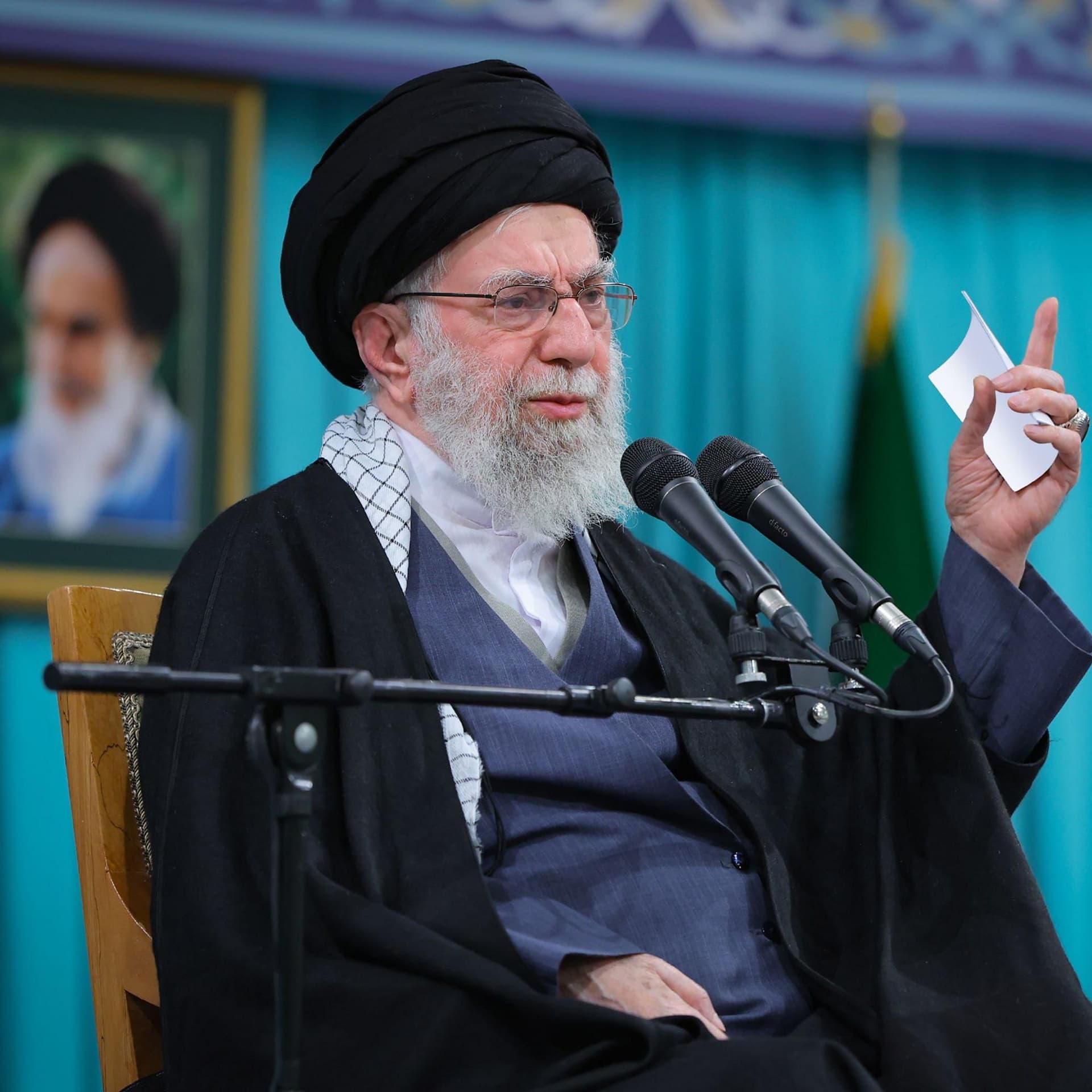
After weeks of mass demonstrations, Iran is reeling from one of the deadliest government crackdowns in its history. In a rare speech on Saturday, Iran’s Supreme Leader Ayatollah Ali Khamenei admitted that thousands of protesters have been killed, "some in an inhuman, savage manner", but he also blamed the US for their deaths.
President Trump urged Iranian demonstrators to “keep protesting”, promising that “help is on its way”. Yet the window for US military intervention appears to have narrowed while the Iranian government has largely quelled the unrest. Amid a near-total internet shutdown however, the situation on the ground remains unclear.
In today’s episode, we speak with journalists in the BBC’s Persian Service in London, to unpack how anger over the economy escalated into a nationwide uprising that seemed to genuinely challenge the government’s grip on power. They walk us through the difficulties of covering these protests from outside the country, explain why the movement failed to topple the Iranian leadership, and explain what this means for the stability of the Iranian government going forward.
Featuring Parham Ghobadi, Sarah Namjoo, Ghoncheh Habibiazad and Maryam Zohdi.
Producers: Viv Jones, Aron Keller and Lucy Pawle
Executive producers: James Shield and Bridget Harney
Sound engineer: Travis Evans
Senior news editor: China Collins
Photo: A handout photo made available by the Iranian supreme leader's office shows Iranian Supreme Leader Ayatollah Ali Khamenei speaking during a ceremony in Tehran, Iran. Credit: Leader's office handout/EPA/Shutterstock.