
In short
How Pakistan became the key mediator for US-Iran talks to end an Iran–US war, amid a fragile ceasefire expiring Wednesday and uncertainty about what happens next.
Guests and backgrounds
Caroline Carey Davis, BBC Pakistan correspondent based in Islamabad, covering the negotiations and Pakistan’s diplomatic role. Asma Khalid, BBC host in London, introduces the story.
Key claims
Pakistan has emerged as “the key potential peacemaker,” hosting marathon talks in Islamabad and running back-channel diplomacy. The US-Pakistan relationship has “flourished” recently, with President Trump praising Pakistan’s leaders and especially Army Chief/Field Marshal Asim Muneer.
Notable examples
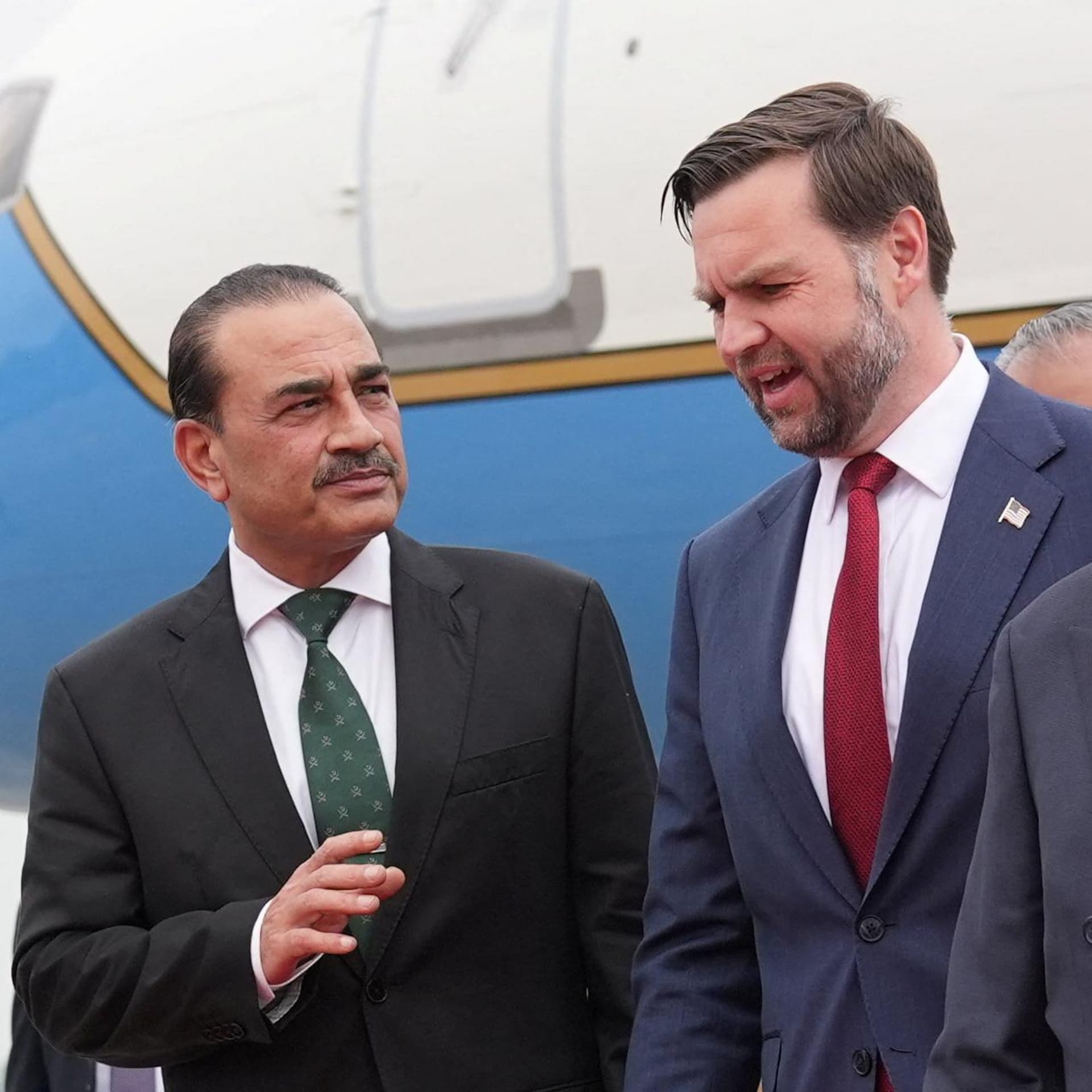
Pakistan nominated Trump for the Nobel Peace Prize after a 2025 Pakistan–India crisis where Trump brokered de-escalation; Pakistan handed over the alleged Kabul airport bombing planner (Abbey Gate) that killed 13 US service members; a June 18 White House lunch between Trump and Asim Muneer; April 11–12 Islamabad talks with Iran and US Vice President J.D. Vance, ending without an agreement but with continued trust-building.
Written by AI. May contain mistakes. Listen to the episode to check what was said.
Chapters
Tap a time to open that second in VOPakistan's Role in Peace Negotiations
0:00 to 0:32
Explore how Pakistan emerged as a key mediator in US-Iran talks.
“This BBC podcast is supported by ads outside the UK.”
Pakistan's Role in Peace Negotiations
0:34 to 2:06
Explore how Pakistan emerged as a key mediator in US-Iran talks.
“Despite a lot of mixed messages, not to mention threats that we've seen in the last 48 hours, there are preparations in Pakistan underway for the US and Iran to negotiate an end to this war.”
Surprising Talks in Islamabad
2:06 to 3:17
Understand why Pakistan is an unexpected site for peace talks.
“And yeah, I've been keeping a very close eye on the talks and the discussions that have been going on in Islamabad.”
The Path to Favor with Trump
3:17 to 4:25
Learn how Pakistan gained favor with President Trump through strategic actions.
“That was after the Pakistan-India crisis that happened in 2025.”
The Role of Field Marshal Asim Muneer
4:25 to 6:29
Discover the significance of Pakistan's military leadership in diplomacy.
“It's obviously a moment of high tension because both countries have nuclear weapons.”
Emergence of Pakistan as Negotiator
6:29 to 7:58
Find out when and how Pakistan became involved in negotiations.
“I've heard President Trump repeatedly refer to one particular person in Pakistan, and that is the army chief, Asim Mounir.”
Details of Initial Talks
7:58 to 12:36
Get insights into the first round of talks facilitated by Pakistan.
“And from what we know of the way that President Trump often does international diplomacy, it's quite often through these kind of person-to-person relationships.”
Outcomes of the April Talks
12:36 to 14:00
Review the results and implications of the peace talks held in Islamabad.
“So the delegations arrived, Iran arrived first, and we could tell that Iran was coming in because it was around sort of midnight.”
Diplomatic Disappointment at the Conference
14:00 to 15:10
The hosts discuss the disappointing outcome of a recent diplomatic meeting concerning Iran.
“across the road in a convention center that they had set up for us.”
Trust Issues in U.S.-Iran Relations
15:10 to 16:51
The conversation shifts to the complexities of trust between the U.S. and Iran and the challenges for Pakistan.
“They have chosen not to accept our terms.”
Show all 14 chapters
Pakistan's Strategic Interests in the Conflict
16:51 to 19:15
The discussion focuses on Pakistan's interests and its precarious position regarding the U.S. and Iran.
“we got a question from one of our listeners named Donald, not that one sitting in the White House, but a different Donald who asked us about how the Sunni Shia sectarianism is factoring into this conflict.”
The Role of Cryptocurrency in Diplomatic Trust
19:15 to 22:10
The hosts explore the link between cryptocurrency and diplomatic relations involving Pakistan and the U.S.
“So I imagine that puts them in such a tricky position if culturally you're so similar to your neighbor and you're potentially going to be fighting them.”
Pakistan's Image on the International Stage
22:10 to 24:39
The conversation highlights how Pakistan is attempting to reshape its international presence amid ongoing conflicts.
“And a key negotiator for the Iran discussions as well.”
Changing Roles in Global Diplomacy
24:39 to 26:12
The hosts discuss the shifting dynamics of global diplomacy and Pakistan's emerging role as a mediator.
“And I also think that there is a level to which like now Pakistan is being seen as well by other countries around the world.”
Transcript
Automatic transcript. May contain errors.0:00This BBC podcast is supported by ads outside the UK.
0:30learns how to invest and manage money. Learn more at schwab.com. Despite a lot of mixed messages, not to mention threats that we've seen in the last 48 hours, there are preparations in Pakistan underway for the US and Iran to negotiate an end to this war. The fragile ceasefire expires this Wednesday. And while as of this recording, at 9am London time, 4 a.m. in Washington, D.C. It's not clear what exactly might happen next. One thing that has become clear in these last few weeks is that a South Asian country little known for global diplomacy has somehow emerged as the key potential peacemaker in this fight.
1:10All eyes on Islamabad right now. This is the place which has become a major diplomatic hub around the world. Pakistan stepped in and brought the world back from the brink of a third world war. It was absolute diplomatic conquest, and I feel proud today. Pakistan not only hosted the first round of marathon talks earlier this month, the country's leaders have also been working behind the scenes to get Iran on board. And President Trump, well, he seems impressed. The field marshal has been great. The prime minister has been really great in Pakistan. From the BBC, I'm Asma Khalid in London. And today on The Global Story, how did a country that had barely been on the U.S.
1:54radar in recent years win over Trump to become the unlikely mediator in this war?
2:05Carrie Davies:So I am Caroline Carey Davis. I am based here in Islamabad. I'm the BBC's Pakistan correspondent. And yeah, I've been keeping a very close eye on the talks and the discussions that have been going on in Islamabad. This is not a role that Pakistan has played, at least quite as prominently before. So it's a really interesting time to be in Islamabad, in the capital, seeing the world's eyes on what's going on in Pakistan. I mean, Kerry, on the surface, it might seem surprising, I think, to many listeners that Pakistan is holding these talks. I would say for many Americans, this is a country that has been somewhat off the public radar since Osama bin Laden was killed in 2011.
2:45And it hasn't been historically a huge priority for U.S. foreign policy, I would say, compared to all of those years during the war on terror. If someone had told you even just two years ago that Pakistan would be America's chosen place for peace talks, what would you have thought?
3:00Carrie Davies:I think it's been really surprising. But the more you look at it, the more you think about it, it starts to become a bit clearer about why Pakistan is playing this role. And the US-Pakistan relationship has been something that's really kind of flourished in the course of less than the last year or so, really. So it's a really recent change in a transition.
3:23Carrie Davies:There have been a few things that Pakistan has done that seems to have got them into Trump's good books Today again, I would like to nominate this great president for Nobel Peace Prize So one of them was the fact that Pakistan nominated President Trump for the Nobel Peace Prize He has brought not only peace in South Asia saved millions of people, their lives. That was after the Pakistan-India crisis that happened in 2025. And they put out a comment saying we're nominating him and this is in recognition of his decisive diplomatic intervention during that crisis. You're the man this world needed most at this point in time.
4:10World would always remember you.
4:14Carrie Davies:Pakistan and India have a very long-running conflict. And occasionally this sparks off into actual sort of bigger conflict. And this was particularly what happened in May of 2025. It's obviously a moment of high tension because both countries have nuclear weapons. And so whenever something like this happens, it is a moment of international concern. There was a de-escalation after sort of several weeks of buildup and some real tense moments. America was involved in brokering that. And of course, Pakistan gave President Trump that real win, being able to say you played a crucial role. And it was not something that we heard in the same degree from India.
4:53Carrie Davies:So a lot of people have looked at the way that Pakistan kind of positioned itself after this conflict and says they really understood what President Trump and his team were looking for by giving him that credit and publicly saying that several times over. Yeah. And then nominating him, of course, for the Peace Prize, which he's so wanted. Yes. And the other thing that we've also seen was that Pakistan also handed over the man that was accused of planning the Kabul airport bombing, which happened during the withdrawal of the U.S. from Afghanistan. Three and a half years ago, ISIS terrorists killed 13 American service members and countless others in the Abbey Gate bombing during the disastrous and incompetent withdrawal from Afghanistan.
5:35Yeah, I mean, Trump was so grateful. I remember he actually addressed it during, I believe, his first address to Congress. Tonight, I am pleased to announce that we have just apprehended the top terrorist responsible for that atrocity. And he is right now on his way here to face the swift sword of American justice.
5:56Carrie Davies:So the sort of analysts that I've spoken to have said this gave Trump two big wins. They got into his good books quite early on after that. And I want to thank especially the government of Pakistan for helping arrest this monster. I think that those gave Trump something to talk about, good, positive talking points. And again, it sort of indicates that Pakistan seemed to be able to recognize what it was that President Trump would want from that relationship. And so that seems to be the start of this dialogue between the two sides, is that those consecutive things have started to build up this rapport.
6:32I've heard President Trump repeatedly refer to one particular person in Pakistan, and that is the army chief, Asim Mounir. He has referred to him with a lot of lofty language. My favorite field marshal from Pakistan, who's not here, but the prime minister is here and you're going to give his regards. And his favorite field marshal. Who's a tough man, a tough, good fighter, right? serious fighter. I like good fighters, actually. Great fighter, a very important guy, an exceptional human being. The praise goes on and on. Great general, great field marshal, a great guy. Who exactly is he? And why is it your sense that President Trump seems to trust him so much?
7:10Carrie Davies:So their relationship kind of stems back to the summer. So it was 18th of June. There was a lunch held in Washington between Asim Muneer, field marshal Asim Muneer, as he is now, and President Trump. And that was of note because, again, there are not a huge number of world leaders that get treated to lunch in the White House in that kind of prominent way. But also the fact that, as I say, I call him a world leader. I mean, he's the head of the army, but he is not an elected official. And in fact, there was no sign of Pakistan's prime minister at that particular lunch. So that got a lot of notice.
7:45Carrie Davies:After that lunch, as you say, there was a lot of kind of positive language. And one of the things I think was interesting that came out of it was that President Trump talked about Pakistan knowing Iran very well. So maybe some of the seeds of what we're seeing now potentially was sown back then in that conversation. And from what we know of the way that President Trump often does international diplomacy, it's quite often through these kind of person-to-person relationships. And it's clear that that dynamic and that relationship is really strong. And in terms of who Phil Marshall Assaminer is, He's been the head of Pakistan's army since the end of 2022.
8:23Carrie Davies:And he was given the title of field marshal after the India-Pakistan crisis of 2025. And also at the end... Which means exactly what, though, Carrie? Because that's not a title I would say I'm particularly familiar with. But it means you're essentially the head of the armed forces. Yeah. I mean, he was already the head of the armed forces. This is almost like another promotion above that. And it's a job title that he will have for the whole of his life. So it's essentially saying he's not just the head of the military. He has been given this very sort of honorific title. So it's even more of a kind of accolade for him as well.
8:51Carrie Davies:But as well as that, near the end of last year in 2025, there was an amendment done to the constitution here in Pakistan. And that amendment also gave Field Marshal Asamunir lifetime immunity from arrest and from prosecution as well. So people often describe the system of government here in Pakistan as being a hybrid system between a democratically elected government and military. And the influence of the military over that political system kind of waxes and wanes at different times. A lot of people saw the fact that that constitutional change happened and was voted through as an indication that we are on the more extreme end of the hybrid system at the moment with a lot more military influence.
9:34Carrie Davies:This is obviously something that the military here deny being involved in politics, but that's what a lot of analysts look at the system and say. If he's able to get that level of influence and power and lifelong immunity, then that suggests we're more on that end of the spectrum. And I think it's really interesting that you will see and you have heard a lot about Field Marshal Asim Muneer. So we know that President Trump certainly likes diplomacy through personal relationships. And you've described a situation in which he respects, it seems, the Field Marshal there in Pakistan. So when did Pakistan first come into play as the key primary negotiator in these talks?
10:10Carrie Davies:So we first started getting hints that Pakistan might be involved at the end of March, around the 23rd of March, 24th of March was when we started hearing kind of rumors that Pakistan might be running the back channel talks between Iran and the U.S. and then we had a post on social media by Shabazz Sharif, the Pakistan's prime minister, offering to host what they called meaningful and conclusive talks to try to find some form of solution. We weren't entirely sure what on the spectrum Pakistan was doing. So on the one end of the spectrum, you've got a country that could in theory kind of really push the other sides to come to the negotiating table and come up with some form of deal.
10:54Carrie Davies:But on the other end of the spectrum, you've got essentially a go-between who's passing messages back and forth. So are they on the side of a kind of intermediary or are they essentially just a messenger? And I think to start with, we thought there was definitely a messenger element. But now as things have progressed, it's much more likely to be moving towards a kind of more of an intermediary role where they seem to be going a lot more back and forth. I see. So after weeks of fighting in Iran, we see an announcement of the ceasefire. Yes, so it came in a few different stages. So the first of all, we had this countdown to President Trump saying that he was going to go in and cause the death of a civilization with the sort of messages he put out on social media.
11:36Carrie Davies:And we had this countdown to that. And in the run-up to that, we started hearing whispers here in Pakistan that Pakistan was still running these back channels. And then a few hours before this countdown was due to finish, we got a message from Pakistan's prime minister essentially calling on both sides to follow a ceasefire. We firstly heard from the US who said that provided the Strait of Formus would be opening that they would not go ahead with the planned attack. And then we heard from Iran saying that provided that there were certain levels of ceasefire followed that they would reopen the straighter for Moos.
12:15Carrie Davies:And then we got, just before this deadline was due to reach, we got a post from Pakistan's prime minister saying that there was a ceasefire that was agreed and also saying that they would be wanting to host talks in Islamabad. Tell us about these initial talks. They were on April 11th and 12th and you were there? Yes. So the delegations arrived, Iran arrived first, and we could tell that Iran was coming in because it was around sort of midnight. We started hearing the noise of Pakistani fighter jets echoing across the city. Escorting them essentially. Yeah, exactly. So they escorted them into the airspace.
12:56Carrie Davies:That was our first indication. Yes, they are about to land in Islamabad. And then it was around 10 o 'clock in the morning. We also heard the fighter jets again. I was standing outside doing lives and we suddenly heard the fighter jets. And that was the arrival of Vice President J.D. Vance. I see. So there'd been a lot of tension about whether both sides were going to come. Both sides ended up in Islamabad. The then big question was, are they going to sit in the same room in front of each other? That's not always been the case when the U.S. and Iran have engaged in discussions and negotiations.
13:30Carrie Davies:Sometimes they're in different rooms and it's sort of shuttle diplomacy where messages being passed back and forth between the rooms. and we had relatively little information about these talks although we had some sort of public messaging from both sides talking about like the basis that was a sort of the U.S. talked about a 10-point plan that had been put forward there was a lot of confusion about what was in any of these plans there was an awful lot of secrecy around exactly what was going to happen which is understandable because the situation is incredibly delicate and where were you in relation to where the talks were happening where were the journalists we were inside the red zone but we were just across the road in a convention center that they had set up for us.
14:06Carrie Davies:So we could go and stand on the lawns of that convention center and see the hotel where this was happening. But we were not allowed in. Which couldn't grab the diplomats to, for example, just quickly have a sidebar or anything of that sort. Exactly. This was tantalizingly close because you could see across and you could see the convoys, but you obviously had no idea what was going on, even though we were just across the other side of the road. We have been at it now for 21 hours and we've had a number of substantive discussions with the Iranians. That's the good news. So early Sunday morning local time, April 12th, we saw the American Vice President J.D.
14:43Vance deliver some remarks. The bad news is that we have not reached an agreement. And I think that's bad news for Iran much more than it's bad news for the United States of America. He essentially said that they were leaving Iran with their best offer. We go back to the United States having not come to an agreement. We've made very clear what our red lines are, what things we're willing to accommodate them on and what things we're not willing to accommodate them on. But the suggestion was that, you know, that there was no deal that was reached. It didn't sound promising. They have chosen not to accept our terms.
15:13Carrie Davies:Yes. When we were all sitting in that conference hall and suddenly heard there is no deal, I think a lot of people's instant reaction was disappointment, particularly for the sort of Pakistan delegation that were there that were really you know hoping that this would be the big breakthrough moment but then as the hours and the days kind of went on there was a little bit more noise that made us feel like maybe this is not the end of it and one person I spoke to said when you go and look around a house you don't just look around the first time before you put an offering. So we started getting...
15:48Carrie Davies:Sometimes you might, I suppose. Sometimes. There's occasions if you really love it. Yes. But I think a lot of the time, his suggestion was that it takes some time to build up that trust. Especially when you've had no real diplomatic relationship for years, as the Americans and the Iranians have it. Completely. And I think there were sort of little hints that, again, it's difficult to know whether you're over-reading into things. But it was the fact that the Iranian delegation was saying things like, the U.S. didn't win our trust on this meeting. So then a lot of people started looking at that and going, well, does that mean that's it?
16:20Carrie Davies:Or does that mean they didn't win their trust this meeting, but that's opening the door for more meetings? I see. Okay, so we've already gotten some sense of why the Trump administration is turning to Pakistan for these talks. But what about Iran? I mean, I imagine Iran is not going to trust any of the Gulf countries. These are some of the very countries that they have been hitting during this war. They're not going to trust a country like Saudi Arabia, which tries to pride itself in being the leader of Sunni Islam. And Iran, of course, is a majority Shia country. And in fact, to this point of some of the sectarianism of this all, we got a question from one of our listeners named Donald, not that one sitting in the White House, but a different Donald who asked us about how the Sunni Shia sectarianism is factoring into this conflict.
17:03And, you know, just to explain really broadly here, I mean, Sunni and Shia are the two main denominations of Islam. It's a divide that goes back centuries. Does that sectarianism factor into why Iran might trust Pakistan in this all, Carrie? I think that is quite key in this dynamic.
17:24Carrie Davies:Pakistan has a large, it is a minority, but a large Shia population. In fact, by many estimates, it is the second largest Shia population after Iran's Shia population. And obviously the two countries are next door neighbors, meaning that there are a lot of people who are in Pakistan who will look to spiritual leadership from their next door neighbor in Iran. So there is a known connection there, a deep religious connection. That certainly plays an important part in this dynamic too, and about why there is a level of trust. But it also, I think, explains a bit more about why Pakistan wants to be involved.
18:04Carrie Davies:Pakistan has also got skin in the game here. It's not just that they're doing this to try to help the entire world. They would also be really quite damaged if this war escalates. Firstly, Pakistan is highly dependent on imported oil and gas coming through from the strait of Hormuz. So the fact that that blockage is there and the fact that the prices are so high has a real impact in Pakistan. And Pakistan has got a fragile economy. And obviously, we know that when the fuel costs go up, then that affects lots of other things and it filters through the whole economy and then you end up with inflation and that is a worry.
18:36Carrie Davies:Another thing to bear in mind is that Pakistan has got a defense pact with Saudi Arabia. Yes. Saudi Arabia who has obviously been repeatedly hit by Iran during the course of this conflict. And the concern is, does Saudi Arabia at some point decide to get involved with this conflict? And if they do, do they invoke this defense pact, which puts Pakistan in this very difficult position because either they then say, OK, we'll get involved too. And then they are at war with their next door neighbor, Iran, which, as I say before, is likely to be very unpopular. Right. I mean, I was going to say my family's Pakistani and both my grandparents knew Persian, right?
19:14I mean, it was Farsi was a language that so many Pakistanis of older years knew. So I imagine that puts them in such a tricky position if culturally you're so similar to your neighbor and you're potentially going to be fighting them.
19:27Carrie Davies:Yeah, and also to bear in mind as well that they're already in an active conflict with Afghanistan as well. One of their other neighbors, yeah. Which is their other neighbors. And then this ongoing animosity and occasionally sparking into very active conflict with their other neighbor, India. So that's three out of their neighbors that they could potentially be in conflict with. That's not really a position I don't think that Pakistan would want to put itself into. So that's difficult. But then the other position is if Saudi Arabia says, right, we're invoking this defence pact, and Pakistan says no, Saudi Arabia is a very important economic ally.
20:01I see.
20:02Carrie Davies:So that puts Pakistan in a real situation.
20:10Carrie Davies:So there are lots of reasons why Pakistan wants this conflict to die down and diminish. For their own national reasons, as well as the sort of international reasons, Pakistan also has something to lose from this.
20:31So we've talked about Pakistan's relationship with Iran. We've talked about what Pakistan would potentially gain if the situation de-escalates, if this war ends. And we've talked about President Trump's personal relationship and trust with the army chief. But is there something else that explains why the United States, the Trump administration, broadly trusts Pakistan to be the key negotiator here?
Read the full transcript
20:55Carrie Davies:Yeah, and they are definitely the key negotiator. There are other things that people have highlighted between Pakistan and the U.S. about building that trust. One of those things is cryptocurrency. So we know that... Okay, explain that, because I've seen a little bit of that in the press. And my eyes kind of gloss over sometimes with that. It's a bit of a wonky story. I'll keep it kind of like broad brushstrokes. Okay. But President Trump's family have a cryptocurrency venture, which is called World Liberty Financial. That was launched in the middle of the presidential campaign. And there is a lot of interesting crypto here in Pakistan.
21:30Carrie Davies:And in particular, in January, we saw Pakistan signed an agreement with World Liberty Financial. And that was a memorandum of understanding to explore World Liberty Financial's stablecoin for cross-border payments. Now, the exact details of that, of how that's being explored is not entirely clear at the moment. But it was interesting when that agreement was signed, we were given images of Steve Witkoff's son, Zach Witkoff. Huh. Which Steve Witkoff, which to remind listeners, is President Trump's top advisor. He's been so key in negotiating so many of these conflicts around the world. Exactly. And a key negotiator for the Iran discussions as well.
22:14Carrie Davies:So I think what a lot of people found really interesting and what I found interesting was seeing that image that came out, which was Zach Witkoff flanked by some very, very senior figures. In fact, the most senior figures from Pakistan's establishment. and the fact that that picture was put out quite prominently as well as being a clear indication that Pakistan wanted that image out there. Okay. So the exact connections between how this operates, I mean, obviously the White House has repeatedly said there are no conflicts of interest that the Trump family engage with. Pakistan's also said that, you know, this is all about engaging with credible global players, they say, to try to understand crypto and its impact and make sure that Pakistan is connected.
22:58Carrie Davies:I think what a lot of people saw with that photo was that Pakistan, again, is creating very strong connections with people that are also close to President Trump in a circle, in an area that is not directly politics. Keri, you mentioned earlier what Pakistan itself has to gain in trying to de-escalate this situation. But it strikes me that part of this is also about soft power. You know, if you're the negotiator here, particularly if you're a country that hasn't really been huge on the international radar, right, let's say for the last number of years, it's about branding your image abroad and also kind of cementing your power at home.
23:38And I'm curious how you see that all play out.
23:41Carrie Davies:I think it's a really interesting question. And I think that, you know, we talked about all the other reasons why Pakistan would want to get involved. but it's certainly getting noticed it's certainly being talked about in a way that i think pakistan is quite enjoying being talked about and in a way that pakistan is not often talked about yeah i see those memes on the internet a bit about jd vance oh yeah there's been a lot of memes there's been a lot of memes there's been a lot of like ai generated of of him like eating lots of different types of pakistani food or having like selfies with shabazz sharif or other sort of like him enjoying...
24:14Carrie Davies:And Pakistan is taking pride in that. Yeah, I think that there is a pride, actually. I mean, the day after this ceasefire was announced by Pakistan's prime minister, there was a headline in one of the Pakistan newspapers saying that Pakistan had saved a civilization, which is, of course, a reference to the fact that President Trump had said that a civilization will die tonight. People are, I think, really pleased that Pakistan is being thought about in a different way on the international stage. And I also think that there is a level to which like now Pakistan is being seen as well by other countries around the world.
24:47Carrie Davies:If you look at the foreign minister's ex-account and you see all the phone calls that he is having, that all these foreign ministers who are calling into Pakistan, and suddenly people might be looking at Pakistan and going, well, maybe we should, you know, factor Pakistan in or maybe we should be talking to Pakistan in a different way. At least I think that's what Pakistan hopes might happen as a result of this. I think what's really interesting about this is not hopefully just that there will be some form of end to the fighting. It's bigger than that. Pakistan has kind of slipped itself into this position and said, you know, we can help here.
25:26Carrie Davies:And this is a very different way to how a lot of these negotiations often operate. the key kind of bodies that maybe we'd have thought of that would have been at the heart of facilitating these negotiations maybe the countries that have previously done this that they're not the ones taking this role so i think it's another indication of how our world is changing and how the rules of engagement are changing and how certain countries are approaching that change and while some countries are i think waiting to see how the dust settles how this new structure and the system is going to work before they decide to put themselves into the heart of it.
26:05Carrie Davies:Other countries like Pakistan are jumping in and are hoping that they can kind of carve out this new role for themselves and a new way of being perceived.
26:22Well, it's no doubt an incredibly interesting moment to be a correspondent then in Pakistan. And Carrie, thank you so much for joining us. I really appreciate it. Thank you very much. Nice to be on.
27:00thoughts and ideas by emailing us at theglobalstory at bbc.com. And a reminder that we here at The Global Story, we dive deep every weekday on one big story about where the world and America meet. But if you also want to catch up on the latest news from around the world, then check out our sister show, The Global News Podcast. You can find it on bbc.com or wherever you listen. And that's it for The Global Story today. Our episode was produced by Kat Farnsworth, Viv Jones, Aaron Keller, and Zandra Ellen. It was edited by James Shield and mixed by Travis Evans. Our digital producer is Matt Pintus.
27:35Our studio managers were Mike Regard and Ricarda McCarthy. Our senior news editor is Chyna Collins. And I'm Asma Khalid. Thanks as always for tuning in, and we'll talk to you again tomorrow.
From the publisher
For decades, Pakistan sat on the margins of global diplomacy. But now it’s due to be the unlikely venue for another round of peace talks between the US and Iran.
We speak to the BBC’s Pakistan correspondent, Carrie Davies, to ask how the country became a trusted intermediary between the parties in this conflict, and whether it can use this moment to increase its influence on the world stage.
Producers: Cat Farnsworth, Viv Jones, Aron Keller and Xandra Ellin
Studio managers: Mike Regaard and Ricardo McCarthy
Executive producer: James Shield
Mix: Travis Evans
Senior news editor: China Collins
Photo: U.S. Vice President JD Vance with Pakistan's Chief of Army Staff Field Marshal Asim Munir after arriving for first round of talks with Iranian officials in Pakistan, April 11, 2026. Credit: Jacquelyn Martin / Reuters