
In short
How Palantir became indispensable to governments, and the controversies around its surveillance-style data software.
Guests
Mike Steinberger, New York Times Magazine writer and author of The Philosopher in the Valley; he began researching Palantir around 2017–2018 and wrote after learning CEO Alex Karp attended Haverford College with him. Alex Karp is CEO of Palantir (interviewed via earnings-call and described throughout).
Key claims
Palantir software lets large organizations pool their own data and find patterns without Palantir collecting/storing/selling data. It underpins major government and defense uses (ICE, U.S. Army, Ukrainian military). The “bin Laden killer app” legend boosted mystique; critics worry clients could misuse it because Palantir doesn’t monitor use. Karp frames Palantir as defending the West; he argues governments can’t refuse contracts based on presidents.
Notable examples
ICE immigration enforcement protests; COVID/vaccine rollout; Ukraine support (meeting Zelensky); Mossad-linked Israel work; bin Laden raid attribution; AI-driven business growth (stock rise).
Written by AI. May contain mistakes. Listen to the episode to check what was said.
Chapters
Tap a time to open that second in VOUnderstanding Alex Karp and Palantir
0:32 to 2:18
Exploration of Alex Karp's persona and Palantir's significance.
“Alex, as always, we have a lot of individual investors on the line.”
Inside Palantir's Operations
2:18 to 4:32
Discussion on how Palantir operates and its data analytics role.
“I'm Mike Steinberger, a writer for The New York Times Magazine, and I've written a book called The Philosopher in the Valley, Alex Karp, Palantir, and the Rise of the Surveillance State.”
Alex Karp's Unique Background
4:32 to 6:26
Insights into Karp's upbringing and education affecting his leadership.
“the CEO, in the same bracket as other kind of big beasts of the tech world, the sort of Elon Musks or the Mark Zuckerbergs?”
From Philosophy to Technology
6:26 to 8:25
Karp's transition from academia to leading a tech company.
“He grew up in Philadelphia, the son of a Jewish pediatrician and a black mother who's an artist.”
Palantir's Rise to Fame
8:25 to 10:40
How Palantir gained public attention, particularly during the Bin Laden raid.
“one of the most distinguished philosophers of the second half of the 20th century, who's still around.”
Palantir's Ethical Challenges
10:40 to 12:22
Discussion on the criticism and ethical implications of Palantir's technology.
“Certainly put the company on people's radar.”
Political Connections and Controversies
12:22 to 14:00
Examination of Palantir's ties to the Trump administration and controversies.
“How does a company view itself and how does it project what it is that it does?”
Palantir's Controversial Role During Trump's Presidency
14:00 to 16:50
Discover how Palantir faced backlash due to its association with ICE during Trump's term.
“had been one of Trump's biggest supporters in the business community.”
Biden's Administration and Palantir's Continued Relevance
16:50 to 18:00
Learn how Palantir maintained its position in government amid changing administrations.
“Many people assumed that a Democratic administration would seek to distance itself from Palantir, but that didn't really happen.”
Karp's Support for Ukraine
18:00 to 19:08
Explore Alex Karp's motivations for supporting Ukraine during the Russian invasion.
“Alex Karp very much goes all in on supporting Ukraine.”
Show all 14 chapters
Karp's Personal Connection to Israel
19:08 to 20:20
Understand how October 7th impacted Karp's views and his support for Israel.
“He goes to Kiev, where he meets President Zelensky and expresses his support for Ukraine, offers to open an office in Ukraine.”
Karp's Political Shift and Identity Politics
20:20 to 22:33
Examine Karp's evolving political views and his stance on identity politics.
“One way of thinking about Palantir, and I think this is actually, I think this is quite literally the case, is that it exists in some sense to make the world a safer place for Alex Karp.”
Palantir's Business Strategy Amidst Global Crisis
22:33 to 24:26
Analyze how Palantir capitalizes on crises for business growth.
“I mean, a full confession, I had not heard of Palantir until Trump came back to the White House and then I started hearing about it for the first time.”
The Debate: Is Palantir a Force for Good or Bad?
24:26 to 27:08
Discuss the contrasting views on Palantir's impact on society and democracy.
“He thinks that humanity is naturally given to violence, to chaos, to anarchy.”
Transcript
Automatic transcript. May contain errors.0:00This BBC podcast is supported by ads outside the UK.
0:30Just tap into iHeart to start watching. And we hope you enjoy the show.
0:37Alex, as always, we have a lot of individual investors on the line. Is there anything you'd like to say before we end the call? We're doing it. We're doing it. And I'm sure you're enjoying this as much as I am. We're in a bland boardroom. There's a guy with wild hair dressed in a white T-shirt, and he's gesturing energetically. I'm very happy to have you along for the journey. and you are partners for us. He's called Alex Karp and he's CEO of the software company Palantir. And he may be the most powerful billionaire you've never heard of. I didn't know who he was until we did this story. Karp is talking to investors at a company earnings call about a year ago.
1:17Now, calls like this with investors are usually pretty dry and carefully choreographed. But not with Alex Karp. For him, they're a chance to revel in his company's success. what he calls its mission. We have dedicated our company to the service of the West and the United States of America, and we're super proud of the role we play, especially in places we can't talk about. Palantir isn't just any software company. Its technology underpins everything from immigration and customs enforcement at ICE to the Ukrainian military. There's an urban legend that it even helped capture and kill Osama bin Laden.
1:52Under President Trump, Palantir has become an essential tool in American wars abroad and policy at home. Palantir is here to disrupt and make the institutions we partner with the very best in the world and when it's necessary to scare enemies and on occasion kill them. I'm Tristan Redmond in Washington, D.C. And today on The Global Story, what does Palantir actually do? And why has it become indispensable to governments around the globe?
2:25I'm Mike Steinberger, a writer for The New York Times Magazine, and I've written a book called The Philosopher in the Valley, Alex Karp, Palantir, and the Rise of the Surveillance State. Well, Michael, I have read your book and it was fascinating. I mean, he's a huge CEO that many people have never heard of. How did you first become aware of Alex Karp and why did you decide you wanted to write a book about him? Well, I first became aware of him around 2017, 2018. I started reading a bit about Palantir and then discovered that Karp was a guy I'd gone to college with. We both went to the same small liberal arts college outside of Philadelphia called Haverford College.
3:07Astonishingly, despite the fact that there are only like 1 ,300 total students there, we never met, never exchanged a word there. And so that piqued the interest. There's been a mystique around this company for years. It was started with money from the CIA. It works with a number of clandestine services. It has become a major defense contractor. And as I said, Karp was this completely distinctive figure on the business scene. It looks different than most CEOs with his wild hair, his wild gesticulating, talk very differently, very unscripted. And I thought, you know, writers were always looking for characters.
3:43And this struck me as a character. Well, it seems like reading your book that you spent a huge amount of time with him while you were researching and writing. What's he like as a person to follow around? He's very funny, very smart. You can keep him engaged for about 30 to 45 minutes before his attention starts to wander. He likes to argue. And if you don't argue back, he kind of gets frustrated. I like to argue too. So we had very spirited conversations. but he gives you a lot to think about. Even if you don't agree with him, he does make you think. Okay, well, I mean, he's CEO of one of the world's largest and fastest growing companies.
4:27And I want to come in a second to what it is that his company, Palantir, actually does. But would you put Alex Karp, the CEO, in the same bracket as other kind of big beasts of the tech world, the sort of Elon Musks or the Mark Zuckerbergs? Is he at that same level? He is now. He wasn't when I started working on the book, but over the last year, year and a half, he has absolutely achieved that kind of level, that kind of prominence. I've just seen it myself. When I started working on the book, people were like, who's Alex Karp? What's Palantir? I don't hear those questions very much anymore. How do you explain to the uninitiated, such as myself, what it is that Palantir does?
5:13Palantir is a technology company that specializes in data analytics. And I think it's important to note that there are some misconceptions about Palantir. It doesn't collect the data itself. It doesn't store the data itself. And it definitely doesn't sell data. It produces software that enables organizations to pool the data they have and to find patterns, correlations, trends, connections in that data that would take human analysts hours, days, even weeks to find. They typically work with large organizations that pull in massive amounts of data on a daily basis. We're talking organizations like the U.S.
5:49Army, which is a Palantir client. We're talking about Airbus, which, you know, 50 ,000 Airbus employees a day are using Palantir. But you can think of it in a certain sense as a digital detective board. You think of all those procedurals we see on TV where the detective, you know, they're up there pinning things against a board. Palantir software does that for you. Well, Alex Karp, the CEO whose biography you've written, has been at Palantir since almost at the beginning, around about 2001. What do we need to know about his background and where he comes from to understand him? He's got a very interesting background, a very unusual background for someone who has become a Silicon Valley mogul.
6:31He grew up in Philadelphia, the son of a Jewish pediatrician and a black mother who's an artist. Very left-wing household. Much of his childhood, as he tells it, was spent going to anti-war protests, anti-nuclear protests. He used to describe himself as a neo-socialist. In college, he was very much a social justice activist, very involved in black student affairs, biracial. He identified very strongly with his black heritage. In our senior yearbook, he's wearing a keffiyeh. So he was very much a person of the left, very much someone attuned to injustice both at home and abroad. He went to Haverford College, my alma mater as well, where he majored in philosophy, then went to Stanford Law School in California.
7:19That's where he befriended Peter Thiel. They bonded over their shared hatred of law school. They both didn't really like it. And their shared love of political argument. Peter and I have been friends for almost 30 years. We met at Stanford. He was on the right side of many issues. And I was mostly, if not exclusively, on more kind of a progressive side of things. Karp was on the left. Peter Thiel was on the right. And as Karp once put it to me, they argued like feral animals. Look, I think one of the problems in this country is there are not enough people like Peter and me. Like we've been fighting about things for 30 years.
7:57Thiel, who's also something of a legend in the tech world for backing lots of big startups. Absolutely. He's a major, major figure in Silicon Valley. It was co-founder and CEO of PayPal, then went on to be the first outside investor in Facebook, is now invested in all the companies everyone's talking about. Now, after finishing Stanford, Karp had no interest in pursuing a career in the law. He went off to Germany to pursue a doctorate in social theory from Goethe University Frankfurt, where for a time his mentor was Jürgen Habermas, one of the most distinguished philosophers of the second half of the 20th century, who's still around.
8:33He's in his mid-90s now. But Habermas is a god in the field, and Karp was for a time his protege. What's his actual speciality when he's studying in Germany? Part of the reason he'd gone to Germany was not just because he wanted to earn a doctorate there, but he wanted to get a better understanding of why the Holocaust had happened. On his father's side, there were people who had fled Germany to escape the Nazis. And Harp was very interested in understanding at a deeper level why the Holocaust had happened, why Germany, this pillar of civilization, had descended into such barbarism and then turned on its Jewish population so violently.
9:13And then he ended up doing a dissertation on the rhetoric of fascism. He had no intention, though, of pursuing a career in academia. And he was kind of at loose ends when he reconnected with Peter Thiel in San Francisco in around 2004 or so. And Thiel had this idea that he and some of the software engineers he had worked with at PayPal could develop technology that could help the U.S. government to prevent future terrorist attacks, to thwart terrorists before they acted. And that was what gave rise to Palantir. And Thiel brought Karp on first to help raise money. Karp was very good at getting people to sign checks.
9:50He's very convincing. And then Karp ended up as the CEO of this company. But it was an unusual choice because he had no background in business and no background in computer science. So Alex Karp becomes CEO. You mentioned that the CIA is an early investor in Palantir. And then so necessarily that means that some of its early work is pretty secretive because it's on national security stuff. But what does it then go on to do that brings it more widely into the public consciousness? Well, for one thing, going back to the early 2010s. Tonight, I can report to the American people and to the world that the United States has conducted an operation that killed Osama bin Laden, the leader of al-Qaeda.
10:33It was reported that Palantir's technology had played some part in the raid that killed Osama bin Laden. Certainly put the company on people's radar. Terrorist who's responsible for the murder of thousands of innocent men, women, and children. The claim of bin Laden came from a book that was written about the raid that got him, and that has never been proven. However, just that mere claim gave the company this mystique. You know, you have the author described it as a kind of killer app. And that sort of stuff is gold. If you're a fledgling startup and you're being credited with helping take out America's arch enemy, that's just gold.
11:14And Palantir benefited immensely from that. But it also made people fearful of the company because they said, wow, if it is really such powerful technology, it could be turned on us. Well, what is Palantir's response to criticism that the company's technology could be turned against members of the public, as you put it? Their response is that there are these robust security controls built into the software that make it very hard for people to abuse the software. Now, that is true to a certain extent, but the thing you have to remember is that Palantir doesn't control how its technology is being used.
11:52It is the client. And so, you know, Palantir would have no idea if, say, the CIA was basically just saying, well, to hell with these guardrails. We're going to do what we want. They would have no idea if a corporate client was abusing the software. They assume that people are complying with the laws in the jurisdictions in which they're operating and that they're adhering to best practices. But at the end of the day, Palantir does not monitor how its clients, whether in the government or in the corporate world, are using its software. And that's always been the risk here. How does a company view itself and how does it project what it is that it does?
12:30Well, it views itself as a force for good, of course. It was started, they say, to help in the war on terrorism, but more broadly, to help defend the West. The basic idea is that the West or Western values will win if we in the West believe in what we're doing. They saw the Palantir technology as a sword and shield defending the American way of life and the way of life of our allies. You have to think of terrorists as entrepreneurs. And they tend to be, I think, very good at what they do. And my view is we need to put our best entrepreneurs against their best entrepreneurs. That's how we win. From the start, they refused to sell the technology to China or to any Chinese-owned entities.
13:14They refused to sell it to Russia or any Russian-owned entities. They saw both China and Russia as fundamentally adversarial. So, yeah, they were only going to sell to the United States, to American corporations, and to countries that they considered allies to the United States. I want to fast forward a couple of years to 2017, please, Michael, when Donald Trump comes to power. And Palantir is seen as being allied with Donald Trump's White House. Why did people make that link between Trump and Palantir? And what was the consequence for the business? Well, they made that link because Peter Thiel, one of the company's co-founders and the chairman of its board, had been one of Trump's biggest supporters in the business community.
14:03There was an assumption that, you know, The contracts it won, for instance, from the military during Trump's first presidency were somehow tied to Teal's support for Trump. There was also controversy because Palantir, for instance, worked with ICE, Immigration and Customs Enforcement in the United States. This was a contract that predated the first Trump presidency. It had been signed under President Obama, and it really generated no controversy during Obama's presidency. But when Trump came to office in 2017 and initiates a very harsh crackdown on undocumented immigrants, Palantir becomes an object of protest.
14:41The data mining firm Palantir faces backlash over its partnership with ICE. Palantir's services include digital profiling tools, which are reportedly being used to investigate undocumented immigrants and compile evidence against them. There were protests outside its offices in Palo Alto and New York.
15:04Protests outside of Karp's home in Palo Alto.
15:10It was a very difficult time for the company. They were not popular. Well, how does Alex Karp, the CEO, navigate this moment? Well, he makes very clear that he personally is not a fan of Donald Trump. I've had the rare opportunity to meet Trump, which I turned down. Like, I don't I mean, this is off the record, but like I don't respect him. I respect nothing about the dude. Like you could almost make up someone that I find I don't it's hard to make up someone I find less appealing. But he also made a couple of points in Palantir's defense. For one thing, he said, look, we're a government contractor.
15:47We chose to work with the government. We can't pick and choose the presidents we're willing to work under, and we can't pick and choose the policies we're willing to enforce. That would be in some way overriding the will of the voters. I do not believe that these questions should be decided in Silicon Valley by a number of engineers at large platform companies. It would be sort of thwarting the democratic process for us to say, oh, well, we disagree with this policy, we disagree with this president, so we're not going to do this work.
16:47Transcription by CastingWords every weekday. Just tap into iHeart to start watching. And we hope you enjoy the show.
16:58Well, if during Trump's first term, Palantir gets significant business opportunities with the US government, particularly with ICE, as you mentioned, does the opposite happen when Trump leaves office and Joe Biden is elected? Is that bad news for Palantir? There was concern about that. Many people assumed that a Democratic administration would seek to distance itself from Palantir, but that didn't really happen. For one thing, Palantir played a very significant part in the COVID response to the United States, and in Britain too, very much involved in the vaccine rollout. Its technology was critical to that.
17:36And so the Biden administration comes in amid this crisis, this once-in-a-century pandemic, and then they're not going to switch horses midstream. I mean, it sounds like you're saying that Palantir and Alex Karp are quite skilled at keeping business and politics separate from each other, which is why it sort of surprises me when I was reading your book that in 2022, Alex Karp very much goes all in on supporting Ukraine. Why does he take a stand on this issue in particular? Well, in one sense, it wasn't CARP's choice. The United States was giving support indirectly to the Ukrainians right from the start to try to help them repel the Russian attack.
18:22And Palantir's software played a significant part on that. But of course, CARP wants to talk about this. I think we in the West should stick by the line that every country should be able to have its own sovereignty over its territory. Palantir was involved in the war on terrorism. The war on terrorism ended up as a black eye for the United States for different reasons. and then the Trump years where Palantir is being criticized left and right. Now, here was an issue where Palantir was unquestionably on the side of good. It was helping Ukraine withstand Putin's assault. And so Karp is very eager to talk about this.
18:54Here you have a tiny country with very little assets, and in the use of software and heroism, you can push off and win against a Goliath. And in fact, three months after Russia invaded Ukraine, He goes to Kiev, where he meets President Zelensky and expresses his support for Ukraine, offers to open an office in Ukraine. And he also wanted to kind of let the world know that Palantir was on the side of right. Right. Soon after the war in Ukraine starts, we have the war in Gaza that then starts after the October the 7th attacks by Hamas in Israel. Were you following Karp for your book at this particular moment?
19:44And why did it make such an impact on him? Absolutely. I was with him through all of this. And he identifies very strongly with his Jewish heritage as a staunch supporter of Israel. you need to understand the role that fear plays in his life, which may sound crazy to talk about a multi-billionaire who's got a large security detail protecting him. But he's biracial, he is Jewish, he is also severely dyslexic. And from a very young age, he says, he understood that this was a world that wouldn't necessarily be a very hospitable world for someone like him. One way of thinking about Palantir, and I think this is actually, I think this is quite literally the case, is that it exists in some sense to make the world a safer place for Alex Karp.
20:29And so October 7th happens, and this gets right to his sense of vulnerability. Did you see him emotionally affected at that moment? I did. I remember we had a conversation. It was just a couple of weeks after the October 7th massacre. And we were talking by video. He was at his home in New Hampshire. And he's usually pretty animated. And in this case, he was kind of like a puppet who had its strings cut. And I finally said to him, you seem really down. And he said that he was. He saw it as ushering in a period of enormous danger for Jews everywhere, not just in Israel. And this kind of informed his reaction.
21:09Palantir was already working with Israel. It worked with the Mossad. The Mossad uses its technology. But now after October 7th, he just says, whatever the Israelis want, we're going to give it to them. It took out a full page ad in the New York Times saying Palantir stands with Israel. This was deeply personal for him. And Karp is furious over the protests on American college campuses, the protests over Gaza. Against the war in Gaza. He sees it as evidence of a broader rot on the left. That is now a pagan religion infecting our universities because Because it's dangerous to America. It is dangerous to allow discrimination on our college campuses simply because the people who are being discriminated against are viewed as successful.
21:52He still calls himself a progressive, but he thinks they've been just wildly irresponsible on the issue of immigration. The Democratic Party has constituents that will disproportionately suffer under unlimited migration. He is increasingly unhappy over the role of identity politics. Because people want to live in peace. They want to go home. They do not want to hear your woke pagan ideology. They want to know they're safe. So he's already drifting away from the Democrats and away from the left. In the meantime, Donald Trump is running for president again. And you see Karp not just warming to Republicans, but warming to the idea of a second Trump presidency.
22:33I mean, a full confession, I had not heard of Palantir until Trump came back to the White House and then I started hearing about it for the first time. I'm obviously maybe a bit slow on the uptake because it's been around for 20-something years. But why has the second Trump presidency been so significant for the company and its visibility? Well, I mean, Karp recognized that it was a huge opportunity for Palantir if they played their cards right. So there's opportunism at play here and also necessity. Palantir is a major government contractor and it would not be in their interest to tick off Donald Trump.
23:09But I also think CARP has found some ideological reasons to get on board with Trump this time around. I mean, a major thing that's happened in recent years is the advent of AI. How has Palantir managed to use that to its advantage or not? Very smartly. They jumped on that right away. And basically what they did is they realized that there was a huge opportunity. There's going to be huge demand, huge interest among corporations and incorporating AI functions into their operations and that Palantir software could play this sort of bridging function. And it just turbocharged their business. It's shocking to remember, but the stock a few years ago was trading at$9,$10 a share.
23:53A few months ago, it topped$200 a share. It is at the vanguard of the AI revolution and has milked this opportunity for all it's worth. Well, Michael, you've told us when we've been speaking that Alex Karp is a person who's extremely concerned for his own safety. He worries a lot about security. And you've also written that he said... Look, bad times are incredibly good for Palantir. Does Palantir need bad things to happen in the world for it to be successful? No, but the company has always been guided by a very dystopian view of the world, which is Karp's view of the world. He thinks that humanity is naturally given to violence, to chaos, to anarchy.
24:38That is the normal state of human affairs. I mean, his view became Palantir's view. Its elevator pitch was essentially, look it, we live in an incredibly dangerous, disjointed world. Our technology might make it marginally less dangerous for you. I'm interested that you mentioned the word dystopia, Michael, because some of Palantir's critics like to portray the company almost as an organization a bit like Skynet in Terminator, you know, this kind of all-seeing, all-controlling company. Palantir's supporters, of which there are many, say the company is saving Western civilization from collapse.
Read the full transcript
25:20Who's right, Michael? It's a great question. And I think, look, at any honest accounting of Palantir, we'd have to acknowledge that the company, much of what the company does is completely benign. I mean, it's helping make businesses operate more efficiently. Palantir has also done a lot of good. It played an instrumental role in the COVID response and in the vaccine rollout. It was being used by the World Food Program when the pandemic began. So there's been good stuff, and then there's been stuff that's very concerning. And, you know, what is interesting now is Carp's view of what it means to defend the West seems to have changed.
25:58You know, for much of Palantir's history, defending the West meant defending liberal democracy, the rule of law. And what you've seen in recent years is a not very subtle evolution in Carp's view, something closer to Peter Thiel's view. Thiel has spoken very disparagingly of democracy. He wrote years ago that democracy and freedom, by which he meant economic freedom, were not compatible. Defending the West, in his mind, doesn't mean defending pluralistic multiracial democracy. He thinks of the West as a collection of countries bound by a shared Judeo-Christian heritage and by attachment in varying degrees to free enterprise.
26:38Karp seems to have moved closer to that. You don't really hear now from him nor from Palantir talk of defending liberal democracy. They talk about the West now as a cultural entity, a superior culture. There's always this tension, this political tension between the two of them. You know, Karp on the left, Teal on the right, you know, and Karp has clearly moved closer to Teal's view than vice versa. So the answer is not entirely one thing, nor the other thing, but we land in the middle, which means, Michael, that we have done some quality journalism today. because that's where all good journalism tends to land.
27:16So grateful for your time. Thank you. It's been a real pleasure talking with you. Thank you very much for having me. That was Michael Steinberger, author of The Philosopher in the Valley, Alex Karp, Palantir, and the Rise of the Surveillance State. We contacted Palantir for comment on this episode and they didn't respond. This episode was produced by Aaron Keller and it was mixed by Travis Evans. The executive producer and senior news editor was China Collins. And I'm Tristan Redman. If you'd like to contact us with any thoughts or story ideas, you can email us at theglobalstory at bbc.com. And a quick note before we go, if you want to catch up on the latest news from around the world, then look out for our sister show, The Global News Podcast, wherever you get your podcasts.
28:01Thanks for listening. Cheerio.
28:11Hi there, I'm Asma Khaled. And I'm Tristan Redmond. And together we're the hosts of the Global Story podcast from the BBC. For those of you who might be new to our show, we here at the Global Story dive deep every weekday on one big story at the intersection of where the world and America meet. And you can now watch the Global Story on the iHeart app. Catch every brand new episode every weekday. Just tap into iHeart to start watching. And we hope you enjoy the show.
From the publisher
Palantir isn’t just another tech firm - it’s reach cuts across almost every aspect of modern life, from AI to healthcare to Formula 1 racing.
Founded in 2003 to support US counter-terrorism efforts, the company has since grown into a global powerhouse and is central to the Trump administration's policies, from its military to immigration enforcement.
At the centre of it all is billionaire co-founder Alex Karp – the philosopher turned tech-CEO who built the company from the ground up.
So how did this software company built for bad times become indispensable to governments across the globe, and what does its rise reveal about the future of politics?
We speak to journalist Michael Steinberger whose book The Philosopher in the Valley charts Karp’s life and Palantir’s rise.
Producer: Aron Keller
Mix: Travis Evans
Executive producer: China Collins
Senior news editor: China Collins
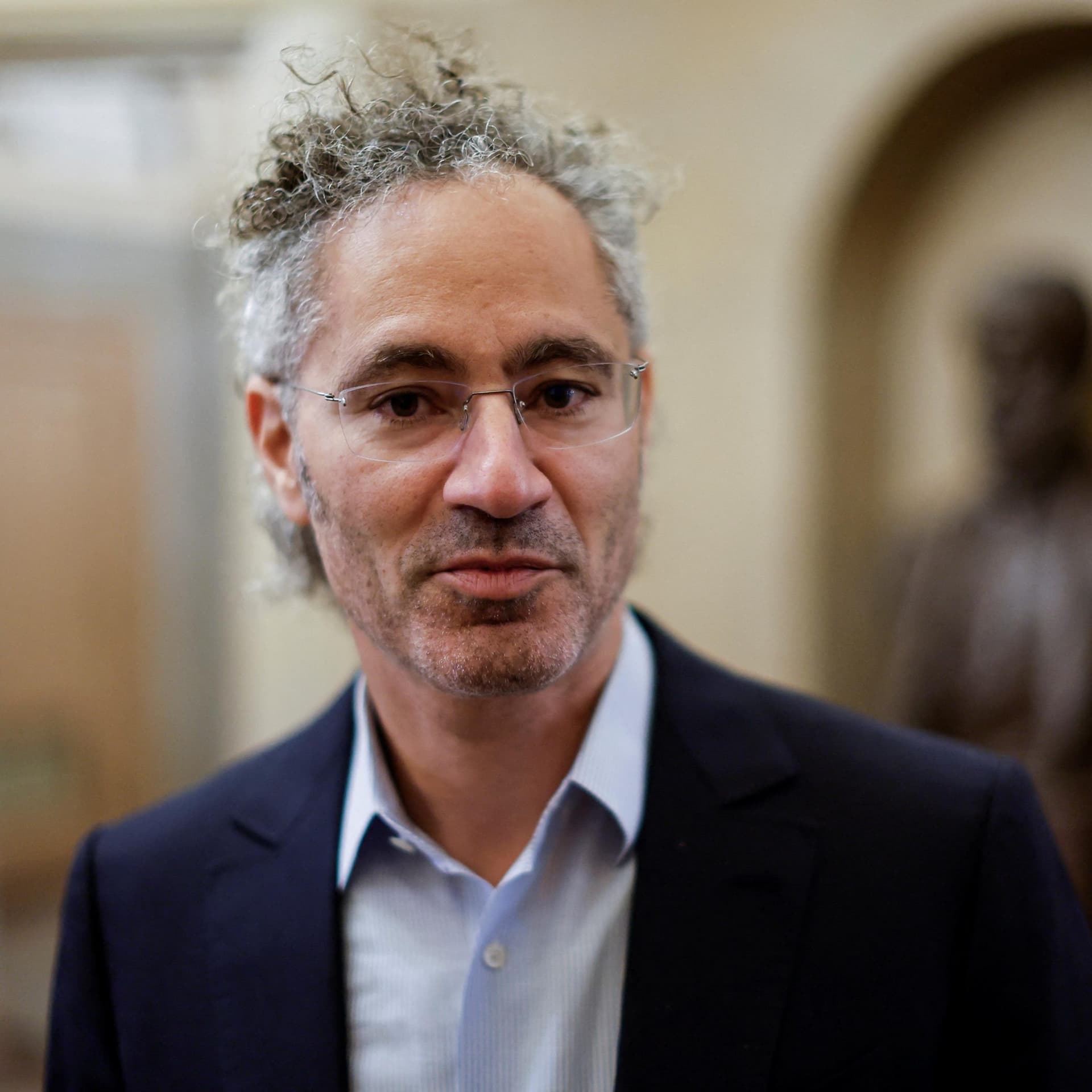
Photo: Palantir co-founder & CEO Alex Karp. Credit: Jonathan Ernst/Reuters.