
In short
How Germany’s far-right AfD is gaining power and pushing to “rewrite” German history by challenging “memory culture” focused on the Holocaust, including calls to teach less about Nazis and cut funding for “anti-German art.”
Guests and backgrounds
Jessica Parker, BBC Berlin correspondent (reported from Magdeburg and Saxony-Anhalt); Asma Khaled (BBC, Washington, D.C.); Tristan Redmond (BBC, London). Parker interviews local figures including theatre director Frank Martin in Eisleben.
Key claims
AfD’s rise in Saxony-Anhalt is a watershed for postwar Germany; AfD leaders argue Holocaust remembrance has become a “guilt complex” and advocate “more Bismarck, less Hitler.” Critics say this is revisionism and “flirting with extremism.”
Notable examples
AfD supporter Gert’s rally chant (“Second World War has nothing to do with us anymore”); Alice Weidel as potential chancellor; Ulrich Siegmund’s campaign and reported neo-Nazi links; chants resembling Nazi slogans; proposal to raise the German flag and sing the anthem more; theatre director Martin calling AfD plans “playing with Nazi propaganda.”
Written by AI. May contain mistakes. Listen to the episode to check what was said.
Chapters
Tap a time to open that second in VOThe Rise of the AfD Party
0:49 to 2:34
Discussion on the AfD's political stance and recent electoral success.
“At an election rally in eastern Germany a couple of weeks ago, this is Gert, a supporter of the far-right AfD party.”
Understanding AfD's Ideology
2:34 to 9:24
Exploration of the AfD's nationalist views and policies.
“how the AFD wants to rewrite Germany's Nazi history.”
Ulrich Siegmund and His Influence
9:24 to 14:01
Analysis of Ulrich Siegmund's role and impact in the AfD's campaign.
“But it's interesting, for people in the East, or a lot of people in the East, there was also a big experience of loss.”
The AfD and Extremism Concerns
14:01 to 15:45
Exploration of the AfD's reluctance to condemn extremist supporters.
“Look, I think for some people, that'll be another example of a willingness by the AFD, critics say, to flirt with extremism.”
Revisiting Memory Culture in Germany
16:01 to 19:09
Discussion on the AfD's proposals to change Germany's approach to its Nazi past.
“One of the things you mentioned that the AFD has prioritized is re-evaluating the focus on the Holocaust and how Germany thinks of its own past.”
The Battle for German Identity
19:16 to 23:10
Examination of the AfD's impact on German identity and voter priorities.
“You have got a real battle here, not just on terms of immigration or economic and environmental policy or all these other areas.”
The Future of German Politics
23:13 to 24:23
Analysis of the AfD's political power and its implications for traditional parties.
“But just to make clear, I mean, it would have been pretty remarkable, had they?”
Changing Perceptions of the AfD
24:27 to 27:04
Discussion on how perceptions of the AfD have evolved and its implications.
“and his centrist party, the CDU, who's very much part of the German political establishment?”
Transcript
Automatic transcript. May contain errors.0:00This BBC podcast is supported by ads outside the UK.
0:30Listen to Choiceology at schwab.com slash podcast or wherever you listen. If you are currently overpaying on software to run your business, remember this number, 10 ,000. That's the number of new businesses that join Odoo per month. Join Odoo today at odoo.com. That's O-D-O-O dot com. At an election rally in eastern Germany a couple of weeks ago, this is Gert, a supporter of the far-right AfD party. The Second World War has nothing to do with us anymore. That's gone. Many Germans disagree, and for decades their leaders have made pledges like this. There is no German identity without Auschwitz.
1:18The memory of the Holocaust remains a thing of all the citizens who live in Germany. That's the former German president Joachim Gauck saying there is no German identity without Auschwitz. To remember the Holocaust is a concern of all Germans, he said in 2015. But Gert and other supporters of the AfD party say that promise to never forget the Nazis' crimes is holding Germany back. We have to look out for ourselves, for our times, finally becoming the German people we once were, the land of poets and thinkers. Alternative für Deutschland, the party Goethe supports, says it wants to end what it's called Germany's guilt complex.
2:03And it may soon be in a position to do something about it. For the first time since Adolf Hitler, a far-right party has won a major election in Germany. the eastern state of Saxony and Holt. They've fallen just short of a majority, but that did not stop President Trump from congratulating them, and the parties also leading the polls nationally. From the BBC, I'm Asma Khaled in Washington, D.C. And I'm Tristan Redmond in London. Today on The Global Story, how the AFD wants to rewrite Germany's Nazi history.
2:47I'm Jess Parker, or Jessica Parker. I'm the BBC's Berlin correspondent, have been for a few years, and just back from Magdeburg, and a few days in Saxony-Anhalt. And yeah, it was fascinating, a fascinating time, but a city that really felt like it was at the centre of something big, not just for Germany, but it kept bumping into international media. There was so much interest in this election. Well, I mean, there have been a lot of superlatives about this story, haven't there? that AFD has just won its first state election in Germany and it's topping national polls. We wouldn't normally cover a state election in Germany on this programme, but this is a particularly unusual one.
3:26How has a far-right party done that in Germany, Jess? And just give us a little primer on what the AFD actually is as well. The thing that was really big this time in Saxony-Anhalt is they actually had a shot and still potentially have a shot, depending on what happens with negotiations, at taking power at a state level. That's what hasn't happened before for the AFD and for a far-right movement in post-war Germany. In terms of Alternative for Deutschland, I mean, they're a party that was founded back in 2013 as a sort of anti-Euro, Eurosceptic party. Over the years, they've put immigration and anti-immigration message more and more at kind of the core of their political arguments.
4:11They are in favor of rebuilding ties with Russia. They are a party who locally in Saxon-Anhalt talked about wanting to ban flying LGBT pride rainbow flags at schools, saying schools shouldn't fly them anymore. And they're very kind of pro, what I guess some people would term like the traditional family. They want people to be having more babies. And I guess there you can describe them as a bit Germany first. Some of their supporters, there was a guy at a kind of counter demo I saw. He was driving past and he had a Germany flag sticking out his window. And I said to him, what's this all about? Schildegong, a carbeiter for BBC News.
4:52Was ist die Demonstration? For? Safe Germany. Safe, what does that mean? Yeah, make Germany great again. So they're sort of echoes of Donald Trump's movement in America, for sure, around alternativa for Deutschland. Are they far right, as you would describe them politically? And what exactly does that mean? They are certainly a party that's often described as a nationalist party. They started talking about remigration more. Now, remigration can refer to the mass deportation of people from a migrant background and a campaign of pressure to get people to leave who are from a migrant background, even if they actually have the legal right to be in the country or even have citizenship.
5:37Now, the AFD insists that's not on an official level. That's not their version of remigration. They just want to pursue getting people to leave the country who are here illegally or whose visas have run out, that kind of thing. But also worth mentioning, I mean, sections of the AFD are classed as right-wing extremists by domestic intelligence. Again, the AFD rejects that. They think this is all part of a sort of an establishment effort to smear them. Well, to each populist right-wing party in Europe, Jess, there is a prominent leader in Marine Le Pen in France, Nigel Farage in the UK. Who's the leader of the AFD in Germany?
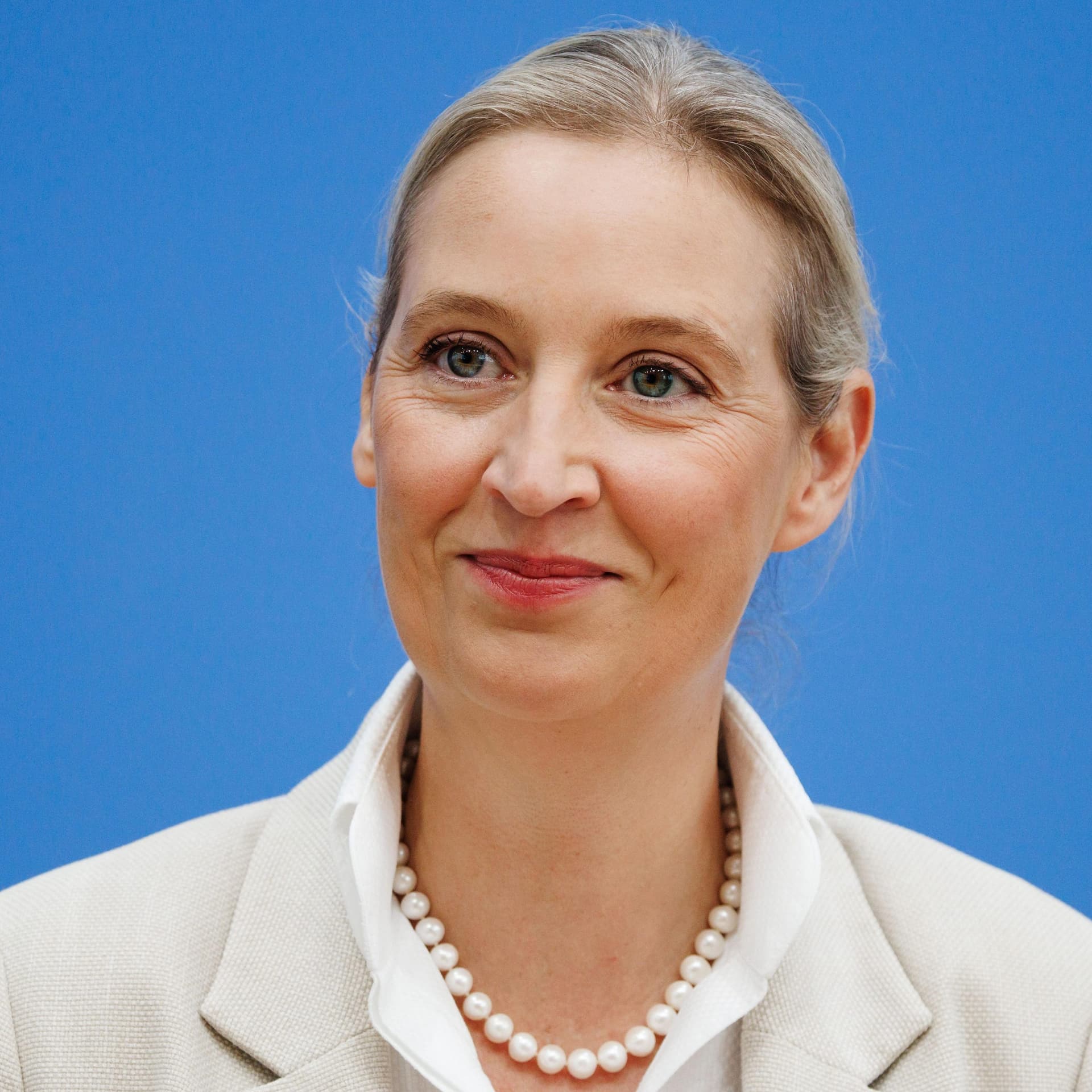
6:15Well, technically, there's two. But I think the most prominent one is Alice Weidel. Thank you for giving me the opportunity to bring greetings from the freedom-loving patriots of Germany. She was their chancellor candidate in the last election. She's certainly the person that, you know, when the AfD talks about their dreams of power at a national level, the person that's talked about as a potential chancellor figure. Establishment politics have turned Germany into a danger zone for its citizens. Its people suffer from mass migration, exploding crime rates, high taxes and energy prices, inflation and the destruction of wealth.
7:05And she's an interesting character. I think she is somebody who is seen to have maybe softened the image of the party a little bit. How so? Because she's a woman. She's in a same-sex relationship with a woman who's of a Sri Lankan background, but I think grew up in Switzerland. And certainly when I've spoken to AFD supporters over the years, a lot of them bring her up as somebody they find appealing. But critics would say that Weidel and the man that leads the party locally in Saxony-Anhalt or Exigmund, critics regard them as kind of wolves in sheep's clothing, disguising a more extreme message.
7:46What we want to have is we want to have a future for the next generation here. And we don't want to have this chaotic politics being imposed on the people. I mean, there's been reported before when supporters chanted Alice for Deutschland, which sounds rather like Alice for Deutschland, which is everything for Germany. And this was picked up as a kind of Nazi signaling. Now, for some people, this is clear, inappropriate, completely wrong, kind of flirting with Germany's Nazi past. It's calling back to a Nazi slogan, right? Yes. Can we talk about who are the core supporters of the AFD? Where do they come from within Germany?
8:31I think one of the big points to talk about here is the geography of Germany. The AFD have their strongholds in eastern Germany. It's the former communist east. It's quite fascinating. So their strongholds are in these states that were once part of the GDR. The German Democratic Republic. Exactly, yes. The German Democratic Republic, which was a sort of Soviet satellite state. And there have been, I really don't know, probably a million or more column inches dedicated as to trying to understand why that is. But the former communist East, I think when everyone thinks about German reunification, they think about the Berlin Wall falling.
9:04This is the middle of the checkpoint. The police are making no attempt to stop people. the gates have been thrown open, and thousands of people are pouring over to take a look at a West. In some cases, their first look. And the elation is enormous. Those jubilant scenes, people being reunited, old travy cars crossing the border into West Berlin. David Hasselhoff. Yeah. One morning in June, some 20 years ago. But it's interesting, for people in the East, or a lot of people in the East, there was also a big experience of loss. Their society just changed overnight. They were sort of absorbed into the West German capitalist system.
9:44And a lot of businesses in the East massively downsized, collapsed, people lost their jobs. Lots of people actually left Eastern Germany. Sometimes people in East Germany will talk about feeling like they've been looked down upon. And the AFD has really bedded into these communities. So they've really managed to kind of establish their strongholds in the East. But they are leading the polls nationwide as well. So they've been building that popularity over the best part of a decade, which brings us to Sunday then, when we had this election in Saxony and where you were in Magdeburg. Why do you think that the AFD succeeded particularly there and not in, say, another state over the last previous elections?
10:30And why is this such a watershed moment in the international conception. I think all the things we've talked about as to why they're popular apply, but then they also had this guy, Ulrich Siegmund, who has really electrified this campaign.
10:51He was all over social media, often being seen riding an old East German scooter.
11:00He's a 35-year-old guy, former air freshener salesman. Air freshener salesman? I asked my producer to check this because some people were saying he was a former perfume salesman. But my producer sort of double-checked this and we think former air freshener salesman is the correct term. But he's a good salesman. I think, you know, even his critics would give him credit for that. He chats to the media. Good. It seems, yeah. Welcome to Germany. Welcome to Germany. In 10 minutes I'll do the first press round. Now I'm here for the Bürger. I've been to events where he's been there and people will queue for hours to meet him.
11:35I've seen people queue and stand in the rain in order to get a signature of it or an autograph or a selfie. What do you like about Eric Siegmund? The aura. The aura. The aura. The aura.
11:52The aura. who reportedly has, there are people reportedly around him with influential roles who were once part of the neo-Nazi scene. And I actually asked him about this. And he said, I paraphrase a bit, but he doesn't care what, I think he says sort of left-wing media has to say about this. He doesn't care if somebody went to a camp decades ago. And he's sort of brushed off those reports. But I have seen him reported out in some news outlets as being Germany's most dangerous man. That was their Spiegel article, yeah. So Der Spiegel is a very well-known weekly German magazine that's kind of known for its big splash covers.
12:29And it produced this particular cover with Ulrich Siegmund calling him Germany's most dangerous man. And it became, I think, quite a big moment in the campaign and a big focal point. And he didn't seem to care. He happily sort of signed copies of it. But I think if you look at some of the policies of Alternativa for Deutschland, I think you've got to dig into that in order to understand why some people are very worried about them. You look at their policies around culture and education, and those are things you actually run at a state level. So they want to defund what they've called anti-German art.
13:04And they want to teach less about the Nazi past. One of the kind of influential figures in the AFD was asked about this. And he said, in terms of what they want to teach, more Bismarck, less Hitler. Otto von Bismarck, of course, being the sort of mastermind behind German unification. And some people put this together and feel like or argue that there are echoes of Nazi ideology and that this does amount to downplaying the country's Nazi past. And there have been other figures in the AFD have been accused of taking a kind of revisionist approach. Now, the AfD, of course, would reject all this, but they say they want to see a more positive view of German history taught to children.
13:45So Ulrich Siegmund, on a Politico podcast, declined to condemn some of his supporters who chanted the first syllable of his last name in a way that calls back to a Nazi slogan. How significant is his refusal to condemn those supporters? Look, I think for some people, that'll be another example of a willingness by the AFD, critics say, to flirt with extremism. And it's interesting, I was at a rally during the campaign, and Ulrich Siegman was on the stage talking about how nobody there was an extremist. And when I was at this rally, one of the people I saw was a man wearing a T-shirt that said Arish, which is the word for Aryan.
14:41that's not banned but the word Aryan clearly many people would associate with the Nazis use of it to promote and discuss their false theories about a master race I actually tried to go up to this guy and asked him about it he didn't want to talk about it But I think it's an example of the kind of thing that makes some people quite worried about the kind of extremes that the AFD may be attracting and even emboldening in Germany.
15:45We'll be right back. precision tech with ease. You know it. And fans ready to add John Deere certified pre-owned equipment and more options to their lineup can shop at machinefinder.com. Booyah!
16:01One of the things you mentioned that the AFD has prioritized is re-evaluating the focus on the Holocaust and how Germany thinks of its own past. And potentially it seems like altering something that is known in Germany as memory culture, which is this really forthright approach that Germany has taken towards teaching and educating its population about its Nazi past. And Jess, I will say, you know, to us here in the United States, I've often thought Germany had a really effective way of reckoning with its political history, you know, perhaps more so than many other countries, including the United States has always done when it comes to slavery or Jim Crow laws.
16:42And I thought Germany, it felt, had been really forthright and clear in the need to educate to avoid repeating some of those historical pasts. And so it's striking to hear you say that this party wants to revisit how this is now being discussed. Yeah, it's a kind of a highly controversial proposal from them. Memory culture is this idea that Germany has to face up to the crimes of the Nazis, take responsibility, and probably the most key thing is never again, the phrase never again. And here in Berlin, I mean, reminders are all around you. You'll see them including, for example, in the centre, the Holocaust Memorial.
17:23And this feeling of taking responsibility or this sort of established consensus around taking responsibility for the Holocaust and for Nazi crimes. It sort of extends into German foreign policy. So there's something that's known as the Statsraison, the reason of state, that's what that means, that was declared by former Chancellor Angela Merkel back in 2008, which is this idea that Israel's security is a fundamental cornerstone of German foreign policy. And Alternativen for Deutschland are saying that memory culture has become a guilt complex. That's what they actually wrote in the Sachsen Anhalt Manifesto.
18:07What's their explanation for that? Can you expound on that? They are saying that Germany needs to be a self-confident nation and that its confidence has been dented by being too consumed by its Nazi past. They're saying teach less and more about other periods of German history that they view as more positive. And one of the things it wants to do is cut funding for what it describes as anti-German art. Now, worth understanding in Germany, theatres rely heavily on state funding. And I went to a theatre, a regional theatre in Eisleben, it's a town in Saxony-Anhalt, and I spoke to the director of Eisleben Theatre, Frank Martin, about this and his concerns.
18:53This is playing with Nazi propaganda. Really? Yes, I would say. Yes, definitely. But the AFD are saying that German memory culture, they think it's sort of turned into a guilt complex. That's what they say. You don't have to feel guilty, especially not born after the Second World War, but you have to deal with all of that to make it never happen again. That's part of our DNA in Germany. You have got a real battle here, not just on terms of immigration or economic and environmental policy or all these other areas. There's a battle about German identity. Where is it on the list of priorities of voters in East Germany that you've spoken to, Jess?
19:35So, I mean, you were there for the campaign. Are they telling you that they're more concerned about economic issues, the cost of living? Or is this right up there with their major concerns? I don't think many people brought that up, actually. What people more tended to bring up would, I guess, three things, if I think about it. Immigration, the economy, cost of living is certainly one that comes up again and again. And then another thing that people bring up is sending money abroad, specifically to Ukraine. So Germany's a key backer of Ukraine, but people talk about, and this is an AFD, AFD want to end support to Ukraine and reopen ties with Putin's Russia.
20:16So again, they're completely at odds with what the government wants to do. Jess, so much of what you've described, though, reminds me of covering American elections, which I did for many years. And I would hear from supporters of President Trump who often cited immigration, the economy. And yet I was struck by what you said about memory culture and the desire to change how the past is taught, because while that was never really a concern I heard about from voters here, we have seen the president of the United States threaten to cut government support for the Smithsonian museums here in Washington, D.C., because of what his administration deems its radical ideology.
20:53He's called for warning signs to be placed outside of the Smithsonian National Museum of American History to caution visitors about exhibits that his administration deems as having inaccurate views. And so regardless that you're saying, though, of why voters may choose somebody, it reminds me of covering American elections and hearing all these other reasons why people are voting for a candidate, but also looking at how history and culture can and does inevitably change, even if that's not the primary reason somebody is voting for a particular candidate or particular party. And so I am curious how the AFD would plan to practically change the culture around memory?
21:36Have they spelled out their plans? Yeah. I mean, so locally, for sure, they've talked about trying to do things kind of within the physical landscape. So one of their policies is to basically better maintain German war memorials. So I guess you've got there a kind of idea of what you teach children, what you do with your physical landscape. They're very pro the German flag. So they want the flag raised at schools, more singing of the national anthem. And I was at the AFD election night party. And, you know, they burst into song with the national anthem. But is that bad, Jess? I mean, I come from a culture and a country in which I grew up in the middle of the country before every high school sporting event, we would sing the national anthem.
22:21Yeah, exactly. So that might sound a bit weird. I think it's very safe to say that Germany traditionally has not been a particularly kind of flag waving nation. You know, people always say, come out at football tournaments. But apart from that, kind of big displays of patriotism because of the, I don't know whether you want to call it recent or not, the Nazi past. But you're seeing the sort of increased focus on patriotism, you're saying. Yeah, I mean, you have a country that, yes, traditionally isn't in some massive overt displays of patriotism and a party that basically wants that to change.
22:55To bring it back to the elections and what we saw transpire over the weekend, And the AFD did not get a clear majority in Sunday's election. So what happens next? Are they on the brink of taking power in this state? Yeah, I mean, they didn't win a clear majority. But just to make clear, I mean, it would have been pretty remarkable, had they? Because German politics is designed to really have a kind of coalition consensus-based makeup within parliament. In terms of the possibilities now, there is something in Germany that's known as the firewall, the Brandmauer, which is a policy that most of the parties have to not work with Alternativa for Deutschland, not go into coalition with them.
23:39Now, I think that firewall is coming under ever increasing pressure because if a party takes such a huge chunk of the vote, how can you justify not letting them get into government? And at what point does it become unsustainable to try and cobble together a coalition to keep them from power? I think it's unclear as to what's going to happen at the moment. And some people have even mooted the idea of a further election if the deadlock can't be broken. if they did go into government in Sachsen-Anhalt, they will have power like they've never had before the AFD. And it's sparking, I think, a bit of a crisis in those more traditional centrist parties who have long been trying to see off the AFD, and it hasn't worked.
24:23What does all this mean for Friedrich Mertz, who's the German Chancellor, which is the equivalent of Prime Minister, and his centrist party, the CDU, who's very much part of the German political establishment? Yeah. Yeah, Charles de Friedrich Mertz was already pretty embattled. He suffers from personally low approval ratings and there are open questions about whether he can see out his term in office. Ja, meine Damen und Herren, herzlich willkommen zu unserer Pressekonferenz nach der Landtagswahl in Sachsen-Anhalt. He's spoken after this result, speaking of his shock, saying they need to communicate, their policies better, their plans better.
25:00Wir haben es selbstverständlich zu akzeptieren. That's the rules of our democracy. But with the last day, something changed not only in Sachsen-Anhalt, but in the whole of Germany.
25:33understand it. How are the AFD expected to do in future? I spoke to my producer, Michael, about this. He's been in Germany for many years and is indeed German. It used to be, I think, quite hard to find somebody who would admit, say, for example, on camera for an interview with us to actually say they were voting alternativa for Deutschland and here was why. I mean, Germans are pretty camera shy generally. It's not like America. I love working in America because Americans are always for talking. But certainly it feels like people who are AFD supporters are more prepared to tell you about it now.
Read the full transcript
26:06And I think that does tell you that it's a party that has managed to, at least in the eyes of some people, change its reputation and change the way it's perceived. Germany absolutely does get praised by some people for having a very strong tradition now of facing up to the darkest chapter in its past. Now, I've spoken to people who actually feel it doesn't go far enough in Germany, that they need to do more, that there's a danger that people over time can somehow forget.
26:49And then you have the kind of argument that you hear that isn't new. Like Alternative for Deutschland is not the first group of people to say this idea that memory cultures have become a guilt complex, but certainly because of their prominence in politics, they've given it a new impetus. But it is divisive because when you have figures in the AFD who have previously been accused of downplaying the Nazi past and the Holocaust or taking a revisionist approach to it, there are immediately suspicions raised that this is another element of that.
27:35That was Jessica Parker, the BBC's Berlin correspondent. If you all have any questions or thoughts about today's episodes or ideas for a future episode, you can reach us anytime by sending us an email. Our address is theglobalstory at bbc.com. And as you all know, here on The Global Story, we go in-depth every weekday on one big story about where the world and America meet. If you're also looking for a way to catch up on the latest news headlines from around the world, then check out our sister show, The Global News Podcast. Today's show was produced by Hannah Moore and Zandra Ellen. It was mixed by Travis Evans.
28:13Our digital producer was Charlie Firth. Our executive producers were James Shield and Martine Powers. Our senior news editor is Chyna Collins. And I'm Asma Khaled. And I'm Tristan Redman. Thanks, as always, for spending some time with us. We'll be back again tomorrow. Cheerio.
28:49You can also enjoy a range of our podcasts ad-free with an Amazon Music subscription.
From the publisher
For the first time since World War Two, a far-right party has made a significant win in Germany – taking almost 44% of the vote in Saxony-Anhalt. The Alternative for Germany (AfD) party, which has been labelled as “right-wing extremist” by domestic intelligence, is leading the national polls.
Among its pledges at a state level are to defund “anti-German" art and teach children less about Hitler, as part of a “patriotism” agenda. This idea challenges the deeply held and decades-long German memory culture that insists people must never forget the Nazis’ crimes. The AfD describes German memory culture in its manifesto as a "guilt complex".
BBC Berlin correspondent Jessica Parker talks us through the complexities of remembering Germany’s past, and the controversial ways in which the AfD wants to shape its future.
Producers: Hannah Moore and Xandra Ellin
Mix: Travis Evans
Executive producers: James Shield and Martine Powers
Senior news editor: China Collins
Photo: Alternative for Germany (AfD) party and parliamentary group co-chairwoman Alice Weidel looks on during a press conference in Berlin, Germany, 07 September 2026. EPA/Shutterstock.