
In short
A BBC World Service Global Story Oscars preview arguing that the Academy is increasingly nominating non-U.S., non-English international films, while Hollywood’s domestic industry is struggling and the Oscars’ cultural impact is declining.
Guests
Tom Brook, BBC broadcast journalist and on-camera presenter; he has covered Oscars since 1982 and interviewed Academy president Lynette Hal Taylor (Liverpool-born, working-class background).
Key claims
International representation is accelerating after Parasite (2020) won Best Picture/Director and as the Academy expands its membership; however, the Oscars still largely market and reward American studio films. Hollywood’s fundamentals are “out of whack” (production slump, strikes, AI anxiety, lower box office). Oscars may follow culture more than lead it, and political tensions are making filmmakers cautious.
Notable examples
One Battle After Another and Sinners (both Warner Bros); Sentimental Value (Norway) and The Secret Agent (Brazil); Parasite; The Salesman (Iran, 2017).
Written by AI. May contain mistakes. Listen to the episode to check what was said.
Chapters
Tap a time to open that second in VOHollywood's Comeback and Global Influence
0:54 to 2:02
Discussion on Hollywood's current status and the increasing nomination of international films at the Oscars.
“And one way to look at the Academy Awards is that Hollywood is back.”
Meet Tom Brook: Oscar Expert
2:02 to 2:54
Tom Brook introduces himself and shares his experiences covering the Oscars.
“And is America's cultural influence abroad on the decline?”
Reflections on Early Oscar Experiences
2:54 to 5:24
Tom shares memorable moments from his first Oscars and the cultural impact of film stars.
“Tom, you are wearing a tux on our podcast.”
Current Oscars Context and Challenges
5:24 to 6:34
Analysis of the current state of the Oscars amid industry challenges and societal issues.
“while you are in California to cover this Sunday's Academy Awards ceremony.”
Declining Viewership and Cultural Relevance
6:34 to 8:10
Exploration of the declining viewership of the Oscars and its cultural significance.
“And then in the wider world, we have this huge conflict in the Middle East.”
The Rise of International Films
8:10 to 11:45
Discussion on the increasing recognition of international films at the Oscars.
“Do you have that sense where you are right now in California?”
Academy's Evolving Relationship with Foreign Films
11:45 to 14:00
History of the Oscars' relationship with foreign films and the impact of recent changes.
“I have a lot of questions about that and what it means about the power of American culture.”
The Academy's International Shift
14:00 to 16:40
Explore how the Academy's diversity initiatives are changing its membership and focus on global cinema.
“It's also, of course, coincided with the Academy expanding its membership.”
Interview with Academy President Lynette Hal Taylor
17:27 to 21:59
Insights from the Academy president on international representation in film and its cultural implications.
“And we had time booked to interview the president.”
Oscars and Cultural Politics
21:59 to 25:56
Discussion on how the Oscars reflect and react to contemporary cultural and political climates.
“and there haven't really been that many people speaking that urgently about political issues.”
Show all 11 chapters
Concerns for Hollywood's Future
25:56 to 28:01
Analysis of the challenges Hollywood faces from international cinema and the future of film.
“And you mentioned two in particular, Brazilian film and then a film from Norway.”
Transcript
Automatic transcript. May contain errors.0:00Tom Brook:This BBC podcast is supported by ads outside the UK.
0:30music moguls and celebrity CEOs. We'll be taking a closer look at the lives and fortunes of some of the world's richest people. And asking you to decide if they're good, bad, or just another billionaire. Good, bad billionaire from the BBC World Service. Listen now or search for Good, Bad, Billionaire wherever you get your BBC podcasts.
0:53It's the Oscars on Sunday. It's Hollywood's biggest night. And one way to look at the Academy Awards is that Hollywood is back. The main contenders for Best Picture are two distinctly American movies, one battle after another. What time is it? Uh, you know, I don't, I don't, I don't remember that part, all right? Let's just not nitpick over the password stuff. Look, this is Bob Ferguson, all right? You just called my house. And Sinners.
1:25But beyond that headline about Hollywood's comeback, there's another, much more complicated story that raises questions about the enduring power of American movies. The Oscars are increasingly nominating international films. Films not made in Hollywood, not made in America, and not made in the English language. So what does that mean for American movies, which have long been America's great cultural export? From the BBC, I'm Asma Khalid in Washington, D.C. And today on The Global Story, how did the Oscars go global? And is America's cultural influence abroad on the decline?
2:16Tom Brook, welcome to The Global Story. A pleasure to have you with us. Could I have you introduce yourself to those who may not know you?
2:24Tom Brook:Well, I've been a broadcast journalist with the BBC for a long time. Actually, April will be the 50th anniversary of me joining BBC News as a trainee in London. Congratulations. I know. Big milestone. I'm actually quite old. I'm 72 years old. I was young when it all began my journalistic career. And I began really covering the film industry, I suppose, in the early 1980s. And I think I came to my first Oscar ceremony in 1982, which is a long time ago. Tom, you are wearing a tux on our podcast. I've never dressed up for a podcast, but here I am. Presumably because you're very excited to join the global story.
3:04Tom Brook:No, I'm wearing a tux because I'm a very pretentious British person and I feel it makes me look important. So I just put it on. But the real answer is I'm an on-camera presenter for the BBC and we're doing this Oscars preview show. So I've been running around. Actually, I mean, it's absurd. I was up in the Hollywood Hills wearing this sitting on a rock the other day. But I just interviewed the president of the academy on camera. So I couldn't really go in jeans and a T-shirt. And actually, I like wearing a tux because I'm a bit scruffy by nature, but the minute you put this thing on, it makes you look respectable.
3:42Well, thank you for making that make sense. I was saying I felt a bit underdressed, but I appreciate that you have dressed up.
3:48Tom Brook:Why are you not wearing this kind of underwear? Wearing a ball gown. Okay, well, we're going to talk about the Oscars, but I would love to just get a sense from you of what you recall from your first year covering the Oscars. You say that was 1982. Yes. I mean, I was very young. And I think when you're young, the images that you've grown up with in terms of movies are larger than life, you know? So there were figures, I think, at that first Oscar ceremony, like Elizabeth Taylor and Bette Davis, Kirk Douglas all these characters and they had a kind of power in a way that I find movie stars nowadays don't have maybe it's because I'm older and a bit blasé because I've met a load of them but there was something very magical about it you know I was just like a kid from North London I was in Los Angeles I was working with Barry Norman who was a very well-established television critic for the BBC.
4:44Tom Brook:And my job on Oscars night then in the early 1980s was to go to the governor's ball, which is where all the winners and presenters would go after the Oscars ceremony. And Barry was a real gentleman, but he was rather shy. And it was my job to yell at all these people to get them to come over and talk to Barry. So I was on my, because there's very little space, I was on my knees the whole time in my tuxedo yelling, Elizabeth, come and talk to Barry. And so that was my, and she did. And as Taylor came over, I thought. And that is how you got your start in covering so many Oscars. Now, here we are 40 years later.
5:23Well, Tom, we are speaking to you while you are in California to cover this Sunday's Academy Awards ceremony. Can you just give us a sort of brief picture of what you see as being the top line story of this Oscar season?
5:37Tom Brook:I think you have to look at the Oscars in the context of the real world. and I think there's a big disconnect this year. The Oscars ostensibly honours excellence in filmmaking. It's also a gigantic public relations exercise for Hollywood. But right now, locally in Los Angeles, the film industry is in dire straits. All right, coming up is Hollywood over.
6:02Tom Brook:There's a production slump. Production budget cuts multiple strikes domestically, taking Hollywood elsewhere. People are anxious about what AI may bring. The AI boom has come to the entertainment industry and the tech is being used for far more than just changing faces. Will it bring them the promised land or will it destroy their careers? This October, ticket sales in North America hit just$445 million, the lowest take since 1997. Cinema going has still not returned to pre-COVID levels. So there's a lot of anxiety. And then in the wider world, we have this huge conflict in the Middle East. And so this Oscar ceremony is taking place within that.
6:44Tom Brook:And I only hope that out of it, there is some brilliant cinema being recognized. I just hope it doesn't end up being a hollow Hollywood spectacle. I've been wondering a lot how culturally resonant the Oscars are, because I saw that in sort of its heyday, at its peak in 1998, 55 million people tuned in and watched Titanic win Best Picture that year. You look at the statistics, the viewership has completely declined since then. You're looking at, what, 18 million people last year. And I'm curious how you interpret that. Well, I think why this has happened in a way is that film is less central to the culture than it used to be.
7:30Tom Brook:I remember the first Godfather movie coming out. That movie saturated the whole planet. Everyone knew Marlon Brando's lines. Consequently, the Oscars were showcasing films that were really part of the planet's everyday chit chat in a way. Nowadays, we have movies that do well. But if you look at the films this year, One Battle After Another, I mean, it's a great movie to my mind. But it hasn't had that kind of intergenerational penetration that movies used to have. And I think part of it is to do with the way in which the media has kind of fractionalized in a way and splintered. There's so many different viewing alternatives now.
8:12So before we jumped into this conversation, one of our producers told me that there is this perception with One Battle, which you mentioned, as well as Sinners, both competing for the top slot this year, that perhaps Hollywood is back. Do you have that sense where you are right now in California? Does that what it feel like that this year is different?
8:33Tom Brook:No, I don't have that sense. I mean, if one battle after another actually wins the best picture, it will be the first best picture winner in the history of the Academy to have actually lost money at the box office. It will have lost$100 million. So there's something wrong with the underlying infrastructure. The art is fine. So Hollywood is not back. The fundamentals are out of whack, really. And interestingly, both One Battle After Another and Sinners come from Warner Brothers, this 102-year-old traditional Hollywood studio that's probably or possibly going to be taken over by Paramount Skydance.
9:12Tom Brook:So these are very uncertain times. I have spoken to filmmakers who are very negative about what's going on in Hollywood. but they say it's dying, it's dead. And that's what worries me about the Oscars, that the reporting can get very superficial. Everyone in the auditorium there on Sunday night will be applauding. But, you know, half of the people they know are out of work in the industry. Tom, our show, The Global Story, looks at where the world and America meet. And there is a narrative that's been percolating for the last few years about the increasing popularity here in the United States and within the Academy of International Films.
9:53This year, films like Sentimental Value from Norway. Rachel Kemp.
10:02And The Secret Agent from Brazil.
10:11We're both nominated for a number of awards, I believe nine and four, respectively. And I know you've spoken to the director of both of these films. What do they make of how their movies are being viewed, particularly at the Oscars?
10:27Tom Brook:Well, yes, you know, I did speak to both the director of the Brazilian film, The Secret Agent, Cleber Mendoza Filho, and to Joaquim Trier, who directed Sentimental Value. I like both these films a lot, big time. And in a way, what they told me, particularly Joachim Trier, is that Hollywood has dropped the ball in making films for grown-ups. There are still some voices in America that are allowed to express themselves very freely and do interesting stuff, but it's true. We used to have a lot of American humanist cinema in the 70s and 80s. Family stories, stories about love and existential questions, and maybe not so much anymore.
11:06So, of course, we are glad that now they're looking to us to get those kinds of stories.
11:10Tom Brook:Hollywood does very well with a film like a Minecraft movie. That was one of the top grossing films of last year, or Zootopia 2. But art films, intelligent films, thought-provoking films are not really being made by the studios anymore. I mean, they used to make them when I was younger. I mean, there were great films like Erin Brockovich was a studio film directed by Steven Soderbergh. So what these filmmakers... That was a great film. It was a really good film. What these filmmakers have told me is that they see a window of opportunity. Hollywood is not making these films, but they are, and they're filling a void.
11:45Tom Brook:And the Academy is embracing them. I have a lot of questions about that and what it means about the power of American culture. But I want to spend a little bit of time with you understanding the history of the Academy's relationship with foreign films. Tom, when and how did we first begin seeing international films represented at the Oscars? Well, I mean, the Oscars will be 100 years old. Three years hence, in its early days, well, silent films were around, so foreign language films, as they were called, were not really an issue. They would give honorary Oscars to non-English language films. But it wasn't until the 1950s that they introduced this category called the best foreign language film category.
12:27Tom Brook:And in a way, it was a token. It was somewhat condescending. It was saying, oh, we're Hollywood. We love British costume drama. OK, yeah, there's a world out there. So we'll read it. There's huge areas of world cinema that's just never recognized by the Academy. I mean, take Bollywood, which is so prolific. And by Bollywood, I mean actually Hindi cinema, but also Indian cinema with all the regional language cinemas. I mean, hardly get some looking at the Oscars. And there are other countries too, large parts of Africa, African cinema. So, you know, they've got a long way to go. But personally, I think it's nice that, you know, they are actually engaging and embracing international cinema.
13:10So it sounds like initially the best foreign film or the best international category was sort of off to the side. It was an island not necessarily taken seriously as a contender for other awards. But I know that at some point that changed. I mean, Parasite, for example, a few years ago stands out to me, the Korean film. When does that actually begin to change?
13:32Tom Brook:Well, you mentioned it. Parasite in 2020, it won four Oscar trophies and two very significant ones, Best Picture and Best Director. And it's the first time that a foreign language film had actually won that award. And I think that really was a very pivotal moment. There was always this kind of phobia about films with subtitles and that people were resistant to them. Well, Parasite put paid to that. And I think since then, the Academy has definitely moved towards embracing more international films. It's also, of course, coincided with the Academy expanding its membership. I mean, until maybe 10 years ago, the bulk of the Academy's membership resided in Los Angeles, New York and London.
14:15Tom Brook:But because they became under pressure for being so kind of old, traditional white male, they launched a kind of diversity initiative to recruit a broader membership in their voting body. And now almost a quarter of the membership is described as international, a lot of them in Europe and elsewhere. And that, of course, has had a big impact in why they're going now for more global cinema. I mean, I think there is a geopolitical element to this because, as you may have noted, I mean, a few weeks ago, we got evidence that EU leaders were pushing back against the United States. I get a sense that European filmmakers, in a way, are pushing back against the hegemony of Hollywood.
15:05Tom Brook:There's a confidence. It's that, you know, geopolitically, people in Europe realize, well, you know, if NATO's not an absolute verity in our lives, we've got to do our own defense. So I went to the European Film Awards and I got a sense of pride that, you know, maybe we could get by without Hollywood. And it's interesting how it ties in with what's happening politically in the world. How do you compute the fact that with the rising popularity of foreign language films, of international films, we're still seeing the key race for best picture between two American movies? Well, because Hollywood and the Oscars work hand in hand and the Oscars, as I said earlier on, it recognizes excellent in cinema, but it's also a very important public relations exercise and that's what governs it.
15:59Tom Brook:I mean, it used to be when films were in theatres not being streamed so much, if they got nominated and won Oscar prizes, it really brought in extra dollars at the box office. Nowadays, it just boosts the credibility of the people who are making it. And there are strong financial reasons for getting all these Oscar prizes. So I think it's more to do with marketing. Marketing has a very, very powerful effect in America on which movies have prominence. But I mean, Hollywood and the Oscars are still very focused on American product. And these international films that we're talking about, they're not getting masses of amount of money at the box office.
16:43Tom Brook:So America still rules in that respect.
16:50Hi, I'm Simon Jack. I'm Zing Zing. And together we host Good Bad Billionaire. The podcast exploring how some of the wealthiest people on the planet made their money. And we are back with a new season. From sporting superstars to music moguls and celebrity CEOs. We'll be taking a closer look at the lives and fortunes of some of the world's richest people. And asking you to decide if they're good, bad or just another billionaire. Good Bad Billionaire from the BBC World Service. Listen now or search for Good Bad Billionaire wherever you get your BBC podcasts.
17:27prior to sitting down with us tom i know that you interviewed the president of the academy what was her perspective on the increasingly international representation at the academy does she see it as a positive sign for the organization does she see it as an existential
17:46Tom Brook:threat for hollywood well it was interesting i i went to the dolby theater just now where the Oscars are going to be handed out on Sunday night. And we had time booked to interview the president. She's an interesting person. Her name is Lynette. Actually, when someone has the name Lynette, I think, is it going to be a country singer? Anyway, her name is Lynette Hal Taylor. What was your favourite Oscars ever? She's actually a Brit. She comes from Liverpool. I remember Sally Fields saying, you love me, you love me. I remember, of course, more recently, you know, the slap in the face and everything.
18:20Tom Brook:So I really actually quite liked America. And we need things like that right now. We need to have a joyful collective memory. So that would be my answer. Well, that's what we're going to give you on Sunday. I don't know if you will. If you don't, you have to pay me$5 ,000. Is that okay? Have some faith. Have some faith. I think we're going to have a great time on Sunday. Or give me baked beans on toast. I'll give you some baked beans on toast. You know, there's something interesting when you have anything to do with the Academy. They've got this grandiosity. Could we take our shoes off? They didn't want us to drink any water or eat anything in the room.
18:58Tom Brook:Anyway, having said all that, Lynette was a very nice woman. And I thought it was interesting that she now heads the organization. She seems very vivacious. She has a kind of young demeanor. And it's significant that she is a woman because for such a long time, the Academy was viewed as being this kind of bastion of old traditional Hollywood males in a way. And she assured me she was not of that ilk that she came from a working class background in Liverpool in England. And I pressed her on this issue of why was the Academy now embracing more international films? And she gave me a pretty decent answer, I felt.
19:38The world has gotten smaller. I mean, just think about how we all communicate with each other now. And so it made sense that the Academy was a reflection of that and that we're not just a U.S.-based organization celebrating only U.S. movies, that we really are celebrating cinema around the world. Throughout our conversation, Tom, we've been talking about Hollywood and American cinema as a cultural force and the idea that perhaps the cultural relevance has been diminishing. Did she address that at all?
20:11Tom Brook:Well, she did address it, but, you know, I said to her, look, film is less central to the culture than it used to be. Do you think that's part of the reason why the Academy Awards has become less central to the culture? Well, I don't know that I would agree that the Academy Awards is less central to culture. So what did she say? Well, it's declined in terms of people watching on traditional TV, but she maintained that the Oscars is a phenomenon through social media. I think there's a downward trend in the traditional consumption of linear television. But I think that the way that audiences are engaging with the Oscars on multiple platforms, I do think that that has evolved and is continuing to evolve.
20:56So the way that people want to engage... You alluded to this a little bit earlier in our conversation, and that is the ways in which what's happening now at the Oscars, what's happening in cinema is a reflection of the politics of this moment. And I've had this question on my mind actually for a while, and that is whether the Oscars really lead culture or follow culture. And I ask this because, you know, several years ago, there was this trend of celebrity activism, at least here in the United States. But right now we are seeing a retreat from that and a desire from some celebrities to avoid political statements at all.
Read the full transcript
21:32I'm curious what you think of the Oscars as a leading cultural force or a following force and how much you think politics is a part of the conversation around movies and films right now.
21:45Tom Brook:Well, the Oscars will make a political statement if no one utters political rhetoric from the podium or if everyone does. If no one says anything in these very extreme times, that's a political statement. It's interesting, though, I have covered the film awards this season. and there haven't really been that many people speaking that urgently about political issues. But interestingly, with the Grammys, there was a lot of rhetoric that was very anti the Trump administration, anti-ICE and everything. I'm not quite sure why it is, but I do think there's a lot of fear in the filmmaking community right now, a lot of anxiety.
22:24Tom Brook:And I noticed this because, as I said, I've been covering this awards season pretty diligently and I've never had such a, encountered such a kind of febrile atmosphere in a way. I did an interview with Elle Fanning who is in Sentimental Value. She's the one American actress in the film. And at that time, I mean, there were really awful things happening in Iran and I said to her, her film is going out into a world where people are thinking about the conflicts in the Middle East, Iran, the United States being divided. I said to her, and there were about 10 people in the room, her flunkers and everything, given that we live in these kind of strife-torn times, is there something in the film you think that could be helpful for people in sentimental value in understanding the world?
23:15Tom Brook:She gave a fine answer. But then, the minute the interview was over, my phone went off with a text message from the public saying, why are you asking these actors about Iran if you continue like that, no one will want to participate. And I thought, you know, have we reached the point that we cannot as adults talk about the way in which film is interpreted in the wider culture? Do you find that concern more prevalent when you're speaking with American actors or here at the American awards ceremonies? I think it is more intense in the United States right now. I mean, I'm still working on doing a feature on how Trump has affected the film industry, really.
23:54Tom Brook:And it's hard to get people to comment, you know, and I can understand why, because, as I said, the atmosphere is so difficult right now, so tense, that you could get a lot of vitriol because you don't like Trump's tariffs or non-tariffs that are going to be imposed on the film industry. I mean, look, I have to say it's a fascinating time to be a film journalist because you see the intersection of Hollywood and politics. And you can see people being very uncomfortable. And it strikes me how this moment is so different, right, than when President Trump first won office. I was thinking back to that year, 2017.
24:33Tom, I'm sure you recall this, where the film that won best foreign language film that year was The Salesman, directed by an Iranian. And some would say that it was sort of a protest vote by the Academy. It was shortly after President Trump had come in and issued this travel ban on people from a number of Muslim-majority countries, including Iran. And I thought it was really interesting to see the Academy choose that film in that moment and what that meant or didn't mean.
25:01Tom Brook:It's interesting because voting for the Academy Awards finished a few days ago. But at that time, Academy voters were well aware of the news that the US-Israeli war in Iran was taking place. And it's interesting to think about how this might have affected their minds in a way and how they cast their votes. There is a film from Jaffa Panahi, a very well-respected, dissident Iranian filmmaker in the running for an Oscar. Will this have brought Oscar voters to his side? Will they vote for him because they want to see him up at the podium on Sunday night speaking out about Iran? I don't know. I'm sure it affects people.
25:41Tom Brook:I know, as I said a moment ago, how you perceive a film is so colored by that moment in time. And that's what's great about cinema. It's a living art form. We've had a number of questions here about the increasing prevalence of international films in the Academy Awards. And you mentioned two in particular, Brazilian film and then a film from Norway. Does the increasing prevalence of international films at the Academy Awards tell us anything about American cultural dominance in the movies? Well, I think Hollywood culture, Hollywood filmmaking is being challenged by European cinema right now. It must be of concern that the studios really have dropped the ball, that they're not making engaging, vibrant cinema in the way that Europeans are.
26:34Tom Brook:And I think you have to look at one battle after another and Sinners as being flukes in a way. Hollywood really, it's a moment of reckoning right now for the film industry. And my concern is that we'll have the Oscars ceremony and everyone will say, oh, One Battle After Mother or Sinners, great films, came from studios, aren't we doing well? Well, you know, I'm sorry, that's not the case. But I still believe in the magic of cinema and love it, but let's have more of it and let's have it on a firmer financial footing.
27:12Well, thank you on that note, Tom. We really appreciate you spending the time to speak with us here.
27:16Tom Brook:It's a pleasure to be with you.
27:23That was Tom Brook, the legendary BBC journalist who covers the film industry. He's been reporting on the Oscar ceremonies since 1982. And that's it for our show today. Before we go, a big thank you for all the questions you all have sent in about what's been going on in the Middle East. We're planning an episode next week in which we'll answer some. So keep the questions coming. We really love hearing from listeners. You can email us at theglobalstory at bbc.com. Our episode today was produced by Zandra Allen and Valerio Esposito. It was edited by James Shield and mixed by Travis Evans. Our senior news editor is Chyna Collins.
28:01And I'm Asma Khaled. Thanks as always for listening. Have a good weekend and we'll talk to you again on Monday.
28:35We'll be taking a closer look at the lives and fortunes of some of the world's richest people. And asking you to decide if they're good, bad, or just another billionaire. Good, bad, billionaire from the BBC World Service. Listen now or search for Good, Bad, Billionaire wherever you get your BBC podcasts.
From the publisher
On Sunday, many of the film industry’s biggest stars will gather in Los Angeles for Hollywood’s biggest night: the 98th annual Academy Awards.
Looming over the celebrations are some major upheavals in Hollywood: big corporate mergers, the incursion of AI, and mass layoffs. And it’s against that backdrop that the Oscars are increasingly nominating films, filmmakers, and actors from elsewhere in the world.
BBC film reporter and critic Tom Brook explains how the Oscars went global, and what it can tell us about the status of American soft power.
Producers: Xandra Ellin and Valerio Esposito
Executive producer: James Shield
Mix: Travis Evans
Senior news editor: China Collins
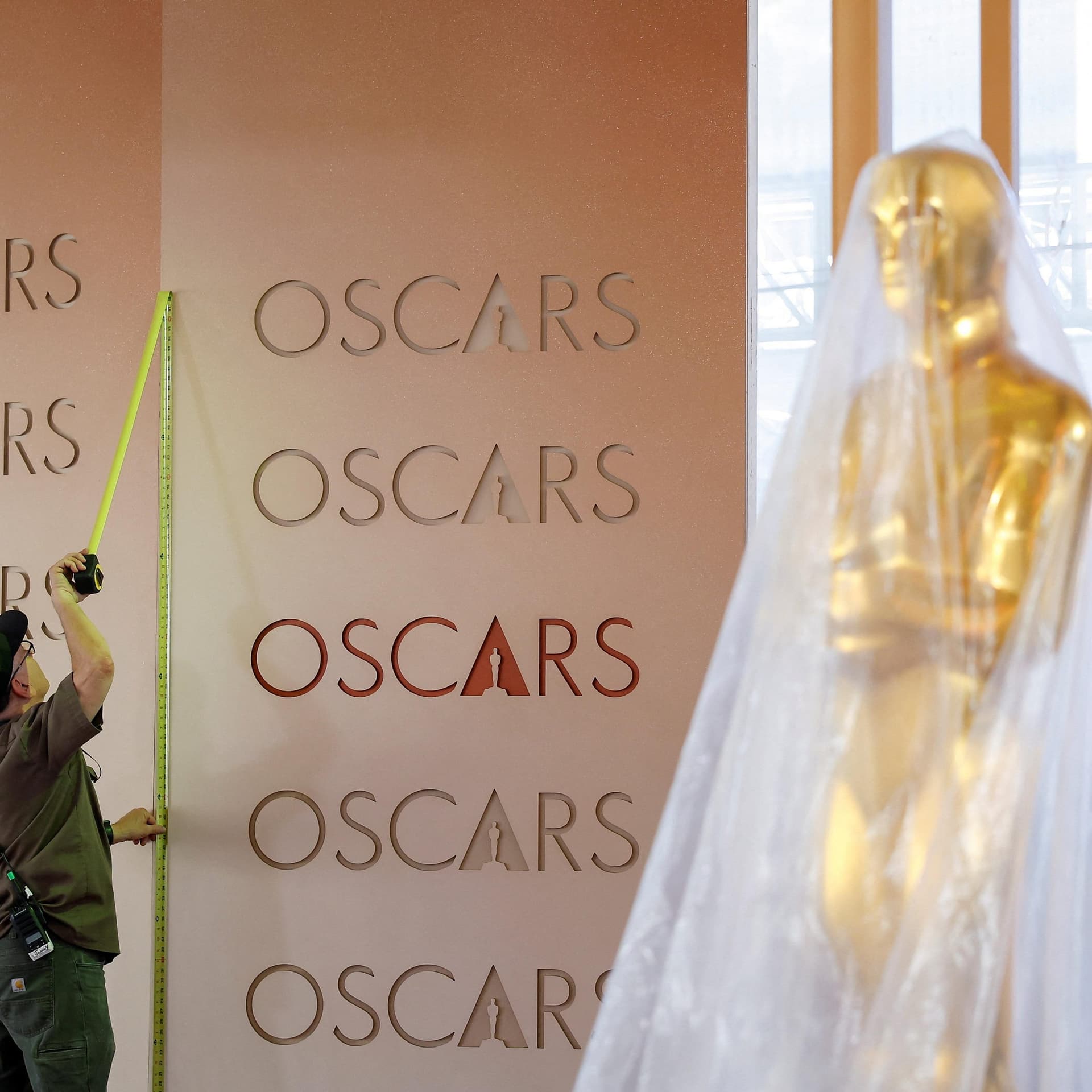
Photo: Workers make preparations for the 98th annual Academy Awards ceremony in Los Angeles Credit: Reuters / Caroline Brehman