
In short
The Massachusetts trial of Lindsay Clancy—an American mother accused of murdering her three children—and how the case would be treated differently under UK/Canada “infanticide” laws, revealing contrasting views of motherhood, postpartum mental health, and criminal responsibility.
Guest backgrounds
Dr. Karen Brennan, senior lecturer in law at the University of Essex; researches infanticide laws for 20+ years.
Key claims
Clancy’s defense argues postpartum psychosis removes criminal responsibility; prosecutors argue calculated intent. Public opinion is split between “punish for horrific child murder” and “failed postpartum care/institutions.” Infanticide laws (e.g., UK/Canada) can reduce murder to a separate offense with typically lighter outcomes, historically tied to avoiding death-penalty executions and recognizing disturbed maternal mind after childbirth. Critics say infanticide laws can be sexist, over-biological, and medically outdated.
Notable examples
UK Infanticide Act history (1922 newborn-only; 1938 Hale case). Testimony examples include former husband and nanny describing Clancy as a dedicated mother (e.g., making “green eggs and ham” for Cora).
Written by AI. May contain mistakes. Listen to the episode to check what was said.
Chapters
Tap a time to open that second in VOLindsay Clancy Case Overview
0:30 to 1:08
An overview of the Lindsay Clancy case and its implications.
“Listen to Choiceology at schwab.com slash podcast or wherever you listen.”
Lindsay Clancy Case Overview
1:33 to 2:46
An overview of the Lindsay Clancy case and its implications.
“This week, people have been riveted by a trial in Massachusetts, the case of Lindsay Clancy, an American woman on trial for the murder of her three young children.”
Public Reaction and Media Attention
2:46 to 4:00
Discussion of the public's divided reaction to the trial.
“and Canada treat crimes of infanticide and what that reveals about our ideas of motherhood and mental health.”
Legal Arguments in the Trial
4:00 to 4:58
Explanation of the prosecution and defense arguments in the trial.
“She is now paralyzed from the waist down and, as we said, now on trial.”
Cultural Perspectives on Motherhood
4:58 to 6:15
Exploring societal views on motherhood and how it affects the case.
“Is this one of the trials which has been televised, Asma?”
Infanticide Laws in Other Countries
6:15 to 9:11
Discussion on how infanticide is treated in places like the U.K. and Canada.
“You know, on one side, there are those who feel that Lindsay Clancy must be punished for an unimaginably horrific crime that was committed towards children who were defenseless.”
History and Evolution of Infanticide Laws
13:22 to 14:00
A look at the historical context and evolution of infanticide laws.
“Brennan, you've mentioned this infanticide act that has been on the books in the UK for now over a century.”
Understanding Vulnerable Women and Infanticide
14:00 to 16:00
Explore the socio-economic factors contributing to infanticide laws and their implications.
“When it did happen, it was usually, well, always very vulnerable women and girls.”
Critiques of Infanticide Laws
16:00 to 19:25
Delve into the arguments against infanticide laws and their perceived implications on women's rights.
“But my understanding is that there are similar infanticide laws in a number of other countries.”
Lindsay Clancy Case and Mental Health
19:25 to 21:58
Analyze how the Lindsay Clancy case highlights issues of mental health and motherhood in the U.S.
“and postpartum psychosis is quite ambivalent about what role childbirth itself as a biological event plays in the onset of these mental disorders.”
Show all 11 chapters
Public Perception and Criminal Justice
21:58 to 25:06
Discuss how public opinion on mental health and motherhood influences perceptions of criminal justice.
“Our show is about where the world and America meet.”
Transcript
Automatic transcript. May contain errors.0:00This BBC podcast is supported by ads outside the UK.
0:30Listen to Choiceology at schwab.com slash podcast or wherever you listen.
1:00It's everything your business needs in one place, saving you time, headaches, and serious money. Stop paying for missing pieces. Go to odoo.com. That's O-D-O-O dot com to learn more. Before we start today's show, I want to note that this episode touches on violence against children, postpartum mental health, and suicide. It is undoubtedly an important story, but it's also an incredibly tough one. So please be cognizant of when and where you're listening to this episode and with whom. This week, people have been riveted by a trial in Massachusetts, the case of Lindsay Clancy, an American woman on trial for the murder of her three young children.
1:43A jury has spent hours and hours trying to find some consensus. They have been deadlocked. And at times, the scene in the courtroom has gotten really tense. This was Clancy's defense attorney on Thursday afternoon. And if we come back here in a half an hour with a mistrial because of a juror that has just spurned the instructions of this court, it's a shame. It's a real shame. This case has clearly gotten quite heated in the courtroom and in the court of public opinion. In part because of the issues it raises about postpartum mental health, and in part because of the gravity of the murder charges that Clancy is facing.
2:21Our show is, of course, about where the world and America meet. And we've been wondering how to think about this story from a global perspective. And one thing that we were surprised to learn is that if this crime had taken place in another country, the case against Lindsay Clancy might look different. From the BBC, I'm Asma Khalid in Washington, D.C. And today on The Global Story, how some other countries like the U.K. and Canada treat crimes of infanticide and what that reveals about our ideas of motherhood and mental health.
2:58Hey there, Tristan. Hey, Asma. I have to confess, I've been keeping this story somewhat at arm's length because it's quite a hard one to address. But I also know it's an important one. So it's good that I'm engaging with it with you today. It's a really difficult story to digest. And Tristan, it is nonetheless one that I think has riveted the country in a really unusual way. I mean, it's not the trial of a celebrity, and yet it seems to be sparking so much debate, conversation and headlines. Yeah, and it's one that's crossed the Atlantic as well. It's made a lot of headlines in Europe. And for folks who may be unfamiliar with this story, let me just outline the basics here.
3:38This is the story of a woman by the name of Lindsay Clancy, as we said. And in January of 2023, she strangled her three young children, five-year-old Cora, three-year-old Dawson, and eight-month-old Callan at the family's home in Massachusetts. She then attempted to end her own life by jumping out of a window. She did survive. She is now paralyzed from the waist down and, as we said, now on trial. Yeah, I mean, it's such a tragic story. And I think the scale of the tragedy is what's gripped people in Europe as much as it seems people have been gripped in the United States as well. I think it's important before we dive further into this episode to actually explain what the arguments are and what the arguments have been in the courtroom.
4:29Prosecutors are saying that Lindsay Clancy made a calculated decision to intentionally kill her children, that she sent her then husband, Patrick Clancy, out to run errands to pick up some takeout dinner. Now, her lawyers do not dispute that she did indeed kill her children, but Clancy has pled not guilty to three counts of first-degree murder. Her defense is arguing that she is not criminally responsible because she was experiencing postpartum psychosis. Is this one of the trials which has been televised, Asma? What's been happening in the courtroom? It's been live-streamed, Tristan. And I think that has also explained why you see so much public attention on this all.
5:12And so for the last five-ish weeks, people have had a front row seat to this all. And I think because of that, the story became more ethically complicated for some people as they heard and saw the testimony in the courtroom from people like her former husband. What kind of a mother was she? She was very dedicated. She did everything. she made up songs for them um i remember she used to make green eggs and ham for cora because she liked that book or from the family's former nanny did you have the occasion to observe her interacting with the children i did and did you have any concerns about her interacting with the children none at all she was a wonderful mom well i know that people in the united states have responded there's been a bit in a kind of divided fashion people are coalescing in different camps around how they feel about Clancy in the trial.
6:11Can you explain to me what the divisions are on that? Well, she's certainly become a polarizing symbol. You know, on one side, there are those who feel that Lindsay Clancy must be punished for an unimaginably horrific crime that was committed towards children who were defenseless. And they worry that this is a really sort of slippery slope to not punish her, that a woman who kills her children has agency and that you can't necessarily blame this all on post-baby hormones and mental health. And so that is one camp. Then on the other side, there are those who feel that Lindsay Clancy herself was vulnerable and failed by health institutions, by the broader societal structure or lack of structure around women who give birth, often in the United States, and that she was not mentally well and did not receive adequate care after giving birth.
7:05And the death of her three children in and of itself is already a horrific thing to endure. Is that playing into it? That is certainly one argument being made. You know, part of what makes this case so thorny is the fact that Clancy is being prosecuted for first degree murder. That is the specific charge. But one aspect of this story that I think is incredibly fascinating is that it turns out how her case would be prosecuted would play out quite differently if it was unfolding in, for example, the United Kingdom or Canada, just to name a couple of other countries. And so, Tristan, for this episode, I called up Dr.
7:42Karen Brennan, a senior lecturer of law at the University of Essex. My area of research is infanticide laws, which I've been researching for over 20 years now, and they still continue to fascinate me. Why do people find these sorts of cases of mothers who kill their children so intriguing? Why do people follow them so closely? Well, I think there are probably two reasons. One, that women very rarely kill. And so when a woman does kill, unless it's in a more kind of typical type of homicide, it is going to draw public attention. But I think more importantly, in this type of case, it's to do with wider cultural, societal attitudes we have towards motherhood and ideas that we have that, you know, mothers are supposed to obviously look after their children.
8:30and they're supposed to be self-sacrificing. Motherhood is supposed to be this joyous and wonderful experience. And I think culturally we then really struggle to process the fact that a woman could actually kill her child and in this particular case kill three of her children. And it is a shocking thing. In terms of the specifics of this case, Lindsay Clancy has been facing three counts of first-degree murder. My understanding is that if this case were to be tried in, say, the United Kingdom, Canada, in fact, in a number of other Western countries, the charges against her might have looked somewhat different, at least for her youngest child, who was eight months old.
9:14She may have been facing a charge of infanticide rather than murder. And for people who are not familiar with that term, infanticide, what exactly does it mean in legal terms? And can you help us understand how is it different from murder or manslaughter? Yeah, sure. The broad definition, though there are some differences between jurisdictions, would be a mother who kills her own child, her biological child, who she gives birth to within 12 months of the child being born. though in some jurisdictions, for example, in Victoria, in Australia, I believe, the age limit is two years. And where she did so in circumstances that would otherwise have amounted to murder or manslaughter, so it needs to be kind of some of the elements of those crimes may need to be met.
10:05So, for example, an intentioned kill. And then the core kind of rationale or basis for reducing to infanticide and recognizing reduced culpability. It's based around the idea that the balance of the mother's mind was disturbed as a consequence of her not having fully recovered from the effects of giving birth to the child or the effects of lactation, so breastfeeding, consequent upon the birth of the child. Now, there are some jurisdictions which have dropped the reference to lactation replaced it with a reference to a mental disorder consequence upon giving birth to the child. But in terms of infanticide acts where, you know, in England and Wales, but also in other jurisdictions which have adopted similar laws, been influenced by the English and Welsh approach, what the law essentially does is it creates a separate offence and defence of infanticide, which in our homicide scheme sits sort of alongside manslaughter, but also possibly under it, carries a lighter prison sentence.
11:14And that was the whole rationale behind introducing these laws in the first place, because they were introduced at a time when we still had a mandatory death penalty for murder. And juries are refusing to convict women who killed their babies of murder because they didn't want to have them executed. And so the law was eventually reformed to create this infanticide offence or defence, which carried a flexible sentencing regime. And the sentence varies from country to country. So in Canada, I believe, for example, the maximum sentence is five years in prison. But the maximum sentence here in England and Wales is life imprisonment.
11:53But most women who are convicted of infanticide are given a non-custodial sentence. They're not sent to prison. You know, often they've received maybe suspended sentences or probation or community orders, or in some cases as well, maybe a hospital order, which may involve detention as part of it. It will just vary from case to case. Most of the cases in which a woman has been convicted of infanticide in England, the woman is not sent to prison. Yes. Historically, that's since the law has been introduced. And it's something that, you know, was remarked on by academic commentators 40, 50 years ago, the remarkable shift in sentencing practice that came with the Infanticide Act, which was that prison virtually was never the outcome for women who were convicted of infanticide.
12:54John Deere is putting in work and putting up highlights. Oh, man, look at those passes. Tillage, planting, harvesting. Three years in, and these pre-owned machines are still at the top of their game. We're talking reliability, performance, and long-term potential. And get this, these veteran machines can pick up the latest precision tech with ease. You know it, and fans ready to add John Deere-certified pre-owned equipment and more options to their lineup can shop at machinefinder.com. Booyah!
13:26Dr. Brennan, you've mentioned this infanticide act that has been on the books in the UK for now over a century. Why was it passed? And can you help us understand what the circumstances were in that moment and how it's evolved over time? Yeah, so the first infanticide act we had came in in 1922. It applied only to newborn babies. And the whole purpose of introducing that act was to deal with the type of situation where a woman concealed her pregnancy and gave birth alone and killed the baby at birth. And it wasn't an uncommon crime at the time. When it did happen, it was usually, well, always very vulnerable women and girls.
14:08Often they were in situations of kind of economic precarities. At the time, having a child outside of marriage carried enormous social stigma. A woman, for example, if she was a domestic servant, would lose her job probably. If her employer found out that she'd been pregnant outside of marriage, her family might disown her. So these women were in incredibly vulnerable situations. And juries were refusing to convict women of murder in these circumstances because they recognised the social context. And they didn't believe that the death penalty was appropriate. And then the 1938 Act extended the law to babies up to the age of 12 months.
14:48And the case that kind of precipitated that legal reform was the Hale case. And it was the case of a married woman. She was a farmer's wife who killed her baby, who was a few weeks old, I think four or five weeks old. and the existing infantified law was held not to apply because the baby couldn't be termed newly born and there was medical evidence in the case that she was suffering from a postpartum mental illness but there was a reluctance to use the insanity defense and because of the stigma that would attach to an insanity verdict and also at the time an insanity verdict would have meant indefinite detention for public protection purposes.
15:29So this case and one of the experts who provided evidence in the case came up with this new formulation for the law, basing it around the idea that women can become mentally ill as a result of kind of a mixture of, you know, having given birth and the burdens of childcare, exhaustion and those sorts of factors. And so there was that particular case then which brought back the 1938 Act, which is the act that we still have. Throughout our conversation so far, we have focused a lot on the situation in the UK. But my understanding is that there are similar infanticide laws in a number of other countries.
16:05You've referenced Canada, I believe in Australia, also New Zealand, Poland, Italy, countries in which the killing of a child by their mother is considered a special type of crime and usually associated with a lighter prison sentence than a murder charge would carry. I imagine that there are many people who are listening to our conversation and are confused by the idea of a law that might allow some level of leniency in the killing of an innocent child, the killing of a newborn, of a baby. What are the arguments you have heard against having a specific infanticide charge like this on the books?
16:46Yeah, there are lots of arguments against the infanticide law. One of the key ones, obviously, is what you have just mentioned in relation to the vulnerability of the victim, but also the idea that if we have these special laws that give leniency when a baby is killed, does that not convey the impression that infant life is less valued? and in a context where we are all much more aware of child abuse, it makes it even more difficult in some ways to justify having this law. So that is one argument, the idea that it lightens the punishment for a type of crime for a particularly vulnerable individual who is not able to defend themselves.
17:27What are the others? And I mean, I imagine some people would think that it reinforces the idea that women are not, that they are sort of uniquely governed by their reproductive biology. Exactly, yes. That was the second one, that the legislation is sexist, that it pathologises women, that it creates the idea that all women are potentially mad due to their natural reproductive functions, that it ignores women's agency and responsibility. and linked with that there is also an argument that the legislation appears to blame hormonal consequences of childbirth and by doing that it fails to recognize that there are social and political factors that contribute to this crime connected with women's for example reproductive autonomy their ability to avail of abortion their ability to access contraception poverty being another one, mothering in isolation without any support.
18:29All of these factors that are real and help to actually explain why infanticide as a crime occurs. Infanticide laws kind of ignore all of that and appear to blame the woman herself and her imbalanced hormones and that this is obviously then quite sexist. And then a final criticism of the law is that the medical basis itself is unsound. So the legislation tends to be understood, though it hasn't actually ever been interpreted by the courts here, but it tends to be understood as providing for what we would call a biopsychiatric defence. And what that means is the idea that the woman had a mental disorder that was caused by the biological consequences of giving birth, so the hormonal consequences of giving birth.
19:20But medical science in the area looking at postnatal depression and postpartum psychosis is quite ambivalent about what role childbirth itself as a biological event plays in the onset of these mental disorders. A lot of medical evidence tends to show that there are lots of other factors that are connected with giving birth, which help to or which contributes to a woman developing these illnesses. So it might, for example, be a history of mental illness prior to giving birth. There could be relationship problems, poverty. So factors that are more social in nature than biological in nature. And so some people argue that the law itself is based on kind of outdated medical understandings of mental illness after childbirth.
20:16The defense in this Lindsay Clancy case has argued that she was experiencing severe postpartum psychosis. They have essentially argued the insanity defense, that she should not be found guilty because they say she was not sane at the time of the killings. Do these infanticide-specific laws in other countries suggest anything about how these countries understand, in your view, the relationship between motherhood and mental health? You're saying in the UK or Canada, these cases would not be treated under the broader umbrella of an insanity defense? It would probably depend on the case. So some have been, you're saying?
20:56Possibly. And one of those, I suppose, the interesting things to think about is that if somebody is able to rely on insanity, they are not found guilty of any offence. Whereas if somebody is convicted of infanticide, they have a criminal conviction for a homicide offence and with it consequences which go beyond the punishment. I mean, it brings with it consequences for a woman, for example, if she was ever to become pregnant again or if she ever wanted to work with children. So it's a conviction which, of course, is more lenient, but it's still a criminal conviction. In some situations, an insanity plea may actually be preferable.
21:34And there is a risk sometimes with having an infanticide law that everything gets kind of pushed down the infanticide route, when actually other outcomes like insanity may be more appropriate, depending on the severity of the mental illness and the nature of the mental illness in terms of how it affected her cognitive capacities and, you know, then ultimately her criminal responsibility. Our show is about where the world and America meet. And it strikes me that the case of Lindsay Clancy touches on two major perceptions around the world about the United States. One is a perception that the U.S.
22:11is particularly ungenerous towards new parents, that mothers often have very brief maternity leave, sometimes just a matter of weeks before they have to return to work. The second perception is that the U.S. has a disjointed, expensive health care system where proper care is sometimes difficult to access. Does it feel to you that the case of Lindsay Clancy has reinforced some of these pre-existing perceptions about the United States globally, or is her case being viewed as a total anomaly? From my perspective, and based on kind of some of the research I have done on how these sorts of cases are treated in the United States, I don't view this case as an anomaly.
22:58I think the massive maybe attention that this case has garnered perhaps seems unique or exceptional to me, but the way the case itself has been handled reflects practice in the United States, which varies from jurisdiction to jurisdiction. And my understanding from some of the research that I've read is that because the laws vary across states, because there's a lot of prosecutorial discretion involved, that sometimes cases can be treated very leniently and then other times they can be treated very harshly. And it's that inconsistency between the way cases are treated is hugely problematic. And so I see the Clancy cases reflecting the situation in the United States, I think, in terms of the tendency towards punitive outcomes.
23:56the, I don't know again if failure is too strong of a word, but I'll use failure to understand the impacts of mental illness on women in the early months and years after they give birth. So I suppose overall, as I've said, I view the case as probably not as exceptional in terms of US treatment. And it's been more typical of how these cases are perhaps dealt with. Dr. Brennan, this case has riveted people, and I do think it has opened up these conversations around postpartum care, around mental health after having a baby, in ways that I have not seen any other case really do before. I mean, maybe it's my age, maybe it's the fact that I myself am a mother now, but I have seen people have these sort of ethical conundrums and questions around this case in a way I've not seen personally in previous cases.
24:48You know, it has also been striking to see that in the actual case itself, the jury has been deadlocked, struggling, it seems, to deliver a verdict. And that verdict needs to be unanimous. And it seems that people are not able to come to agreement. I mean, I think it reflects many of the conversations and the arguments that, as I say, regular people here in the U.S. are having about how to view Lindsay Clancy and how to interpret the horrific deaths of her three children. and what do you think it says about how we view these crimes, about how we view mothers more broadly? Well, I think it shows a kind of how public opinion can be very divided on these sorts of issues, which can be influenced by, I suppose, lots of different factors, which include kind of knowledge of these issues, particularly issues around mental ill health for mothers, which, you know, there's still quite a lot of stigma attached to that.
25:42Many mothers themselves are reluctant to seek help when they become mentally ill after giving birth. There was a case in this country a few years ago of a woman who was diagnosed with postnatal depression and then wouldn't take medication she'd been prescribed because she felt that this made her look like she was a bad mother. And she then unfortunately killed her baby. And so there are lots of issues around kind of the stigma of mental illness after giving birth, which links in with something I mentioned earlier around kind of our perceptions of motherhood, how motherhood is idealised and how women are kind of expected to be perfect mothers, self-sacrificing, able to cope, mostly unsupported, because for most women, there's very little support available.
26:32You know, maybe you have a partner who may be supportive, maybe you have family around who may be supportive, but you're still coping with the kind of the burdens of early motherhood in isolation. I would imagine that broader attitudes to criminal justice in general affect how people view this case. I would imagine there are views, you know, amongst people who think that it is wrong to allow for any leniency because of the defenselessness of the victims and that no amount of kind of mental ill health or whatever is going to excuse the crime given how serious. but it's such an emotive issue.
27:18Well, on that note, Dr. Brennan, I just want to say thank you for helping us understand how a case like Lindsay Clancy's might be interpreted differently in different parts of the world. We really appreciate it. Thank you. It's a pleasure.
27:39That was Dr. Karen Brennan, a senior lecturer in law at the University of Essex in the UK. Now, this all is a topic that, as you all have gleaned by now, is sparking a lot of debate. And we're curious what you all, our listeners, are thinking about it. You can share your thoughts with us by emailing us at theglobalstory at bbc.com. Our show today was produced by Kat Farnsworth, Aaron Keller, and Zandra Ellen. It was mixed by Travis Evans. Our digital producer was Charlie Firth. Our executive producer was Martine Powers. Our senior news editor is Chyna Collins. And I'm Asma Khalid. Thanks, as always, for spending some time with us.
28:18We hope you have a nice weekend, and we'll speak to you on Monday.
28:38Good Bad Billionaire and You're Dead to Me with a subscription to BBC Podcasts Premium on Apple Podcasts. You can also enjoy a range of our podcasts ad-free with an Amazon Music subscription.
From the publisher
Lindsay Clancy faces first-degree murder charges over the deaths of her three young children. But if her case had happened elsewhere, the charges might have looked very different.
Clancy’s trial in Massachusetts has captured international attention. It has divided public opinion and ignited debate over how the US prosecutes cases involving mothers who kill their children — and the charges brought against them.
Other countries, including the UK, Canada and Australia, have specific statutes that allow mothers to be charged with infanticide — a conviction that’s more lenient than murder and often results in mental health treatment rather than prison time. So why is US law different?
The Global Story’s Asma Khalid speaks with Dr Karen Brennan, a senior lecturer in law at the University of Essex, to discuss what the Lindsay Clancy case reveals about how American law understands motherhood, mental illness and criminal responsibility.
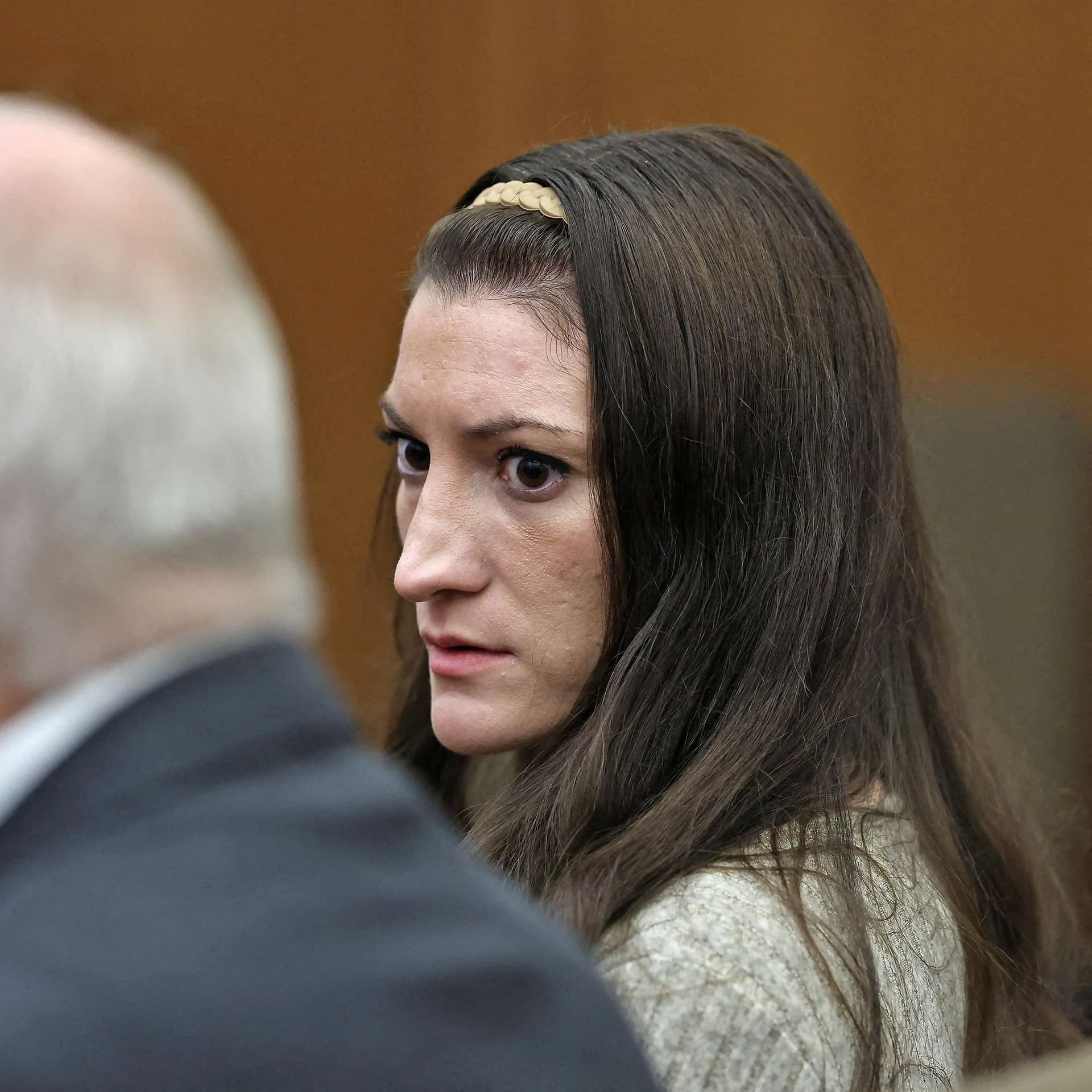
(Photo: Lindsay Clancy, with long straight dark brown hair, looks to her lawyer Kevin Reddington, on the day the jury in her murder trial determined that they cannot reach a verdict, in Plymouth, Massachusetts, US, 1 September, 2026. Credit: Greg Derr/Reuters)
Producer: Xandra Ellin, Cat Farnsworth and Aron Keller
Digital producer: Charlie Firth
Sound engineer: Travis Evans
Editor: Martine Powers
Senior news editor: China Collins