
In short
A BBC Global Story episode with former Pentagon Iran expert Elon Goldenberg explaining how a hypothetical US-Iran war could unfold and what options might follow, including escalation paths and de-escalation requirements.
Guest backgrounds
Elon Goldenberg spent ~20 years advising on Middle East policy inside and outside the US government; he worked as an Iran expert in the Pentagon and White House, and advised during the Obama and later Kamala Harris administrations. He has participated in Iran war games.
Key claims
War games often start with an Israeli strike on Iran’s nuclear program; Iran initially de-escalates to avoid US entry, but once the US is deeply involved Iran escalates “fully in.” Iran’s strategy is raising costs for the US and global economic harm, including Strait of Hormuz pressure. Goldenberg says Iran has managed to disrupt Hormuz without stopping its own oil exports, which war games didn’t predict.
Notable examples
Predicted Iran actions include mining the Straits, driving oil prices to $150, Hezbollah missile launches into Israel, missile attacks on Gulf bases, and attempts to sink US ships. He discusses US options like seizing Karg Island (to cut oil exports), a special-forces raid to retrieve enriched uranium from tunnels in Esfahan, and why full invasion/large troop deployments are implausible; he also argues killing Khamenei empowered hardliners and that successful de-escalation needs clear terms (stop attacks, stop nuclear restart, allow Hormuz shipping).
Written by AI. May contain mistakes. Listen to the episode to check what was said.
Chapters
Tap a time to open that second in VOInsights from War Gaming Iran
0:31 to 0:45
Elon discusses the dynamics of war gaming scenarios with Iran.
“Because Schwab knows that when it comes to your finances, choice matters.”
Insights from War Gaming Iran
2:02 to 4:25
Elon discusses the dynamics of war gaming scenarios with Iran.
“And today on The Global Story, will Donald Trump put boots on the ground?”
Escalation Scenarios Between U.S. and Iran
4:25 to 7:21
Exploring how conflicts generally escalate between the U.S. and Iran.
“So a war game takes a lot of different forms.”
Unexpected Iranian Strategies
7:21 to 10:50
Iran's surprising tactics in response to conflict and their oil strategy.
“happened in some of the games that I previously played.”
Potential U.S. Military Options Against Iran
10:50 to 14:00
Discussion on various military options the U.S. might consider against Iran.
“where Iran was doubling its oil revenue as a result of an American-launched military campaign against it.”
Challenges of Military Operations in Iran
14:00 to 17:05
Explore the complexities and risks of executing military operations in Iran, particularly regarding nuclear materials.
“And it's unclear exactly how accessible the tunnels are right now or if the entrances have been destroyed.”
The Impossibility of a Full-Scale Invasion
17:05 to 19:23
Discuss the practical and strategic challenges of a full-scale invasion of Iran and the potential consequences.
“option, which is one that is being evoked by a lot of people in the United States, which is the possibility of boots on the ground, a full-scale invasion of Iran.”
Regime Change Considerations
19:23 to 22:17
Analyze the implications of regime change in Iran and the potential outcomes of leadership transitions.
“So those options are just not very good escalation options.”
De-escalation Strategies
22:17 to 24:16
Learn about effective strategies for de-escalation in the context of U.S.-Iran relations and military operations.
“Now, this week, Donald Trump said in a true social post, the United States is in serious discussions with a new and more reasonable regime to end our military operations in Iran.”
Critique of Military Intervention Policies
24:16 to 26:33
Examine the risks and consequences of muscular military policies towards Iran, reflecting on past actions and their outcomes.
“they were mostly for democratic administrations and democratic campaigns.”
Show all 13 chapters
Future Prospects for Iran
26:33 to 28:05
Discuss the long-term prospects for Iran and the potential for reform within the country amidst current tensions.
“The first was just de-escalation before it even got here.”
Reflections on Iran's Future
28:05 to 28:26
Exploration of the challenges facing Iran's reforms and future.
“I still believe that will happen one day.”
Guest Farewell and Contact Information
28:26 to 28:48
Wrap-up of the discussion with guest Elon Goldenberg and contact details.
“It's been really interesting to hear your thoughts and your expertise.”
Transcript
Automatic transcript. May contain errors.0:00This BBC podcast is supported by ads outside the UK.
0:31Ilan Goldenberg:Because Schwab knows that when it comes to your finances, choice matters. No matter your goals, investing style, life stage or experience, Schwab has everything you need, all in one place, so you can invest your way. Visit schwab.com to learn more. I want to play you some tape. The person you're about to hear is our guest on the show today. But this is him speaking on another show. about a hypothetical war between the United States and Iran. And this is what he predicted Iran would do. They'll just sort of release everything they got. They'll start trying to try to drop mines in the Straits. They will drive oil prices to 150.
1:17They'll try to get Hezbollah, and I think probably successfully get Hezbollah to start launching missiles in Israel. They will launch missiles at bases all over the Gulf. They'll try to sink American ships. They'll try to attack Americans. His name is Elon Goldenberg, and he used to work as an Iran expert in the Pentagon and the White House. And when we heard him speaking here in this clip, apparently predicting many of the events of the current war all the way back in 2019, we thought we should speak with that guy. Because right now, the big question in this war is, with thousands more American troops now in the region, Where could this conflict go next?
1:59From the BBC, I'm Tristan Redman. And today on The Global Story, will Donald Trump put boots on the ground? A top expert whose wall-gamed Iran tells us what could happen next.
2:18Thank you very much. My fellow Americans, good evening. On Wednesday night, Donald Trump gave a rare prime time address to the nation. As we speak this evening, it's been just one month since the United States military began operation. Epic fury. Here on the team, we've been wondering all day if this would be a major announcement. There was all this speculation that he was going to maybe pull the United States out of NATO. But in the end, it was kind of a greatest hits of all his social media posts for the last couple of weeks. There's never been anything like it militarily. Everyone is talking about it.
2:59And tonight I'm pleased to say that these core strategic objectives are nearing completion. What's he going to do about the Strait of Hormuz? The United States imports almost no oil through the Hormuz Strait and won't be taking any in the future. We don't need it. We haven't needed it and we don't need it. He seemed to say it wasn't really America's problem. The countries of the world that do receive oil through the Hormones Strait must take care of that passage. They must cherish it. They must grab it and cherish it. They can do it easily. What will happen next? We're going to hit them extremely hard over the next two to three weeks.
3:41We're going to bring them back to the Stone Ages where they belong. Trump sometimes uses misdirection to wrongfoot his adversaries. And sometimes he just changes his mind. What's clear is the arrival of thousands more troops in the region gives Trump options. And these are options that our guest today is going to talk us through. I'm Elon Goldenberg. I spent the last 20 years of my career in and out of the U.S. government working on the Middle East. OK, so a quick bio on Elon. He's been a leading advisor on Iran for both Barack Obama's administration and then for Kamala Harris. And he's taken part in many Iran war games.
4:24I started by asking him to explain exactly what a war game is. So a war game takes a lot of different forms. But at the end of the day, what you are trying to do is take policymakers and stick them in different, usually conflict and war scenarios. Usually you have a whole bunch of different teams. Team blue is the U.S. or the good guys. Team red is the bad guys. It might be Iran. So if you're doing Iran, you will have Iran experts who really can try to play the role of how would the Iranians be doing this. And it's not that what you take out of this experience is, okay, this is exactly how it's going to go.
5:08You don't. It's the experience of thinking through what the different actors might value, how they might do this, what the biggest strategic questions and challenges are going to be. And you take insights out of that and you take it back for the rest of your knowledge and it really helps you inform how you're thinking about policy and how you plan for these possible scenarios. In all the war games you've run, how does a conflict between the United States and Iran generally start? So the first step in most war games that I played on Iran was an Israeli strike on Iran. Israel decides it's going to go after the nuclear program.
5:47And in many ways, that first step is what we actually saw in June of last year, when Israel does strike Iran, starting with the nuclear program and key elements of it. And the biggest insight that you would take from that step one, usually, is Iran would respond. It would respond proportionally against Israel. But at the end of the day, the Iranian team's preoccupation in that first phase and in that scenario was, how do we avoid having the U.S. come in? Because as long as it's just Israel attacking us, that doesn't fundamentally threaten our existence and our regime. If the U.S. comes in and starts going after us, now that's an existential threat.
6:28So the Iranians usually in that first step would be de-escalating or very tactical in their response. The U.S. team usually was trying to avoid getting deeply sucked in as well. But one thing we did find a lot in that first step is that we always knew as the Americans that the Israelis couldn't actually take out fully the nuclear program. And so it was also always a question of, well, now that the Israelis have taken out half of it, what do we do with the rest? And that becomes a really hard question for the American team. And we saw that play out last June too, right? It was Israel that started the war and got deeply involved.
7:06But at the end of the day, before the war ended, Donald Trump did order American military forces to essentially destroy the Fordow nuclear facility, drop a 20 ,000-pound bomb basically down an air chute to take out that facility because that was very much something that happened in some of the games that I previously played. But even with that, you'd ultimately end up with a scenario where you are able to successfully de-escalate that first step, which is actually what happened in June. Yes, so they went in in June, they attacked the Iranian nuclear program, and then essentially pulled back. But how would it continue in the scenarios that you've played?
7:49Part of the way these word games work is you have people from the outside who are running it who purposefully at moments inject to force, okay, what if we go a step beyond this? What if the U.S. does really get involved? You add things that make sure that happens. And so then you usually would end up playing a step two where, yeah, the U.S. gets directly involved and things start to escalate. And the most important initial finding that you take once you get to step two is once the U.S. gets deeply involved, then Iran is in, fully in. And at that point, they think they're fighting for their lives, and they go from restraint and de-escalation to trying to exact as much cost as possible to get the U.S.
8:36to back down. And what does that look like? Well, it looks a lot like what we're seeing now, right? Trump has said, look, look what happened in the last two weeks. Nobody expected this to happen. They weren't supposed to go after all these other countries in the Middle East. Those missiles were set to go after them. So they hit Qatar, Saudi Arabia, UAE, Bahrain, Kuwait. Nobody expected that. We were shot. And the other one, you know, they fought. I will tell you, people have been playing these war games for the last 15 years. absolutely expected this to happen once the U.S. launched. What the Iranian strategy ultimately would be in most of these games is what we've seen.
9:18Raise the cost for the United States and raise the global economic costs for the United States was probably the biggest one. So in some of these games, we had strikes on, certainly on American bases in the Middle East, and then over time on oil infrastructure. And then what we usually assumed would happen is eventually if Iran was pushed into the corner, they'd cut off the Strait of Hormuz, which, again, is what we've seen because that's a huge lever point for them. Now, one of the biggest surprises that I've seen in this conflict and something we didn't really anticipate is the fact that Iran has actually managed to cut off the Strait of Hormuz without stopping their own oil shipments.
10:04We always thought they would cut off the Strait of Hormuz by dropping mines in. And then the problem with that, the reason that was a last resort, was that it would be incredibly costly for them because they couldn't ship anything through the strait either. And what Iran has managed to do is a combination of drones, missiles, and coastal defenses. It's created enough risk around the Strait of Hormuz that nobody else wants to push ships through, but it can still push its own ships through and not fire at them. Iran is exporting more oil today than it was before the war started and making much more money off of it.
10:45That's the most shocking thing in all of this and the thing that none of the war games predicted. That was not a scenario that I ever played where Iran was doubling its oil revenue as a result of an American-launched military campaign against it.
11:02Well, Ilan, Donald Trump is talking about negotiating with Iran, but he has also said that if those negotiations aren't successful, then there are different military options available to him. So we're going to run through some of those different options and see what you make of them. So let's start with the first one, which is one that we're hearing a lot about at the moment. It's the idea that the United States might seize control of this island Karg Island in the middle of the Gulf. What do you make of that possibility? What are the possible risks associated with it? And what are the possible rewards the United States could get if it did that?
11:41Yeah. So this island, Karg Island, is essential for Iran's oil exports. If the U.S. takes it, that is one way to stop Iranian oil exports. They drop by 90 percent because so much of Iran's oil is refined there, goes through there, and then is shipped out of there. Now, obviously, a lot of risks associated with it. The first question is, how hard is it to take and what are the casualties? This is a land operation on an island. It's about the third the size of Manhattan. I've never been part of a game that actually involved what the casualties would look like and what the numbers would look like.
12:15But from a strategic perspective, I think the American rationale for this, the thought process is we're going to coerce. We're going to take this and get the Iranians to give up. What happens more often is the Iranians don't give up or suddenly concede to a better deal and cry uncle. They just escalate. And it's pretty obvious what they would escalate with. They would just be more aggressive in targeting oil infrastructure across the Persian Gulf and the Arabian Gulf. I don't think it'll end the war. And I don't think it ultimately changes the calculus. It just causes things to get more escalatory.
12:47And then the U.S. is still stuck with this question. what do we do with this island in the middle of the Persian Gulf that we now own? Well, let's move to the second scenario, Ilan, which is a pretty radical and daring one if it were to come to pass. Now, this is a special forces operation. So U.S. troops on the ground going in to seize Iran's uranium. Now, over the weekend, Donald Trump said, they're going to give us the nuclear dust. They're going to give up nuclear weapons. They're going to give us the nuclear dust. They're going to do everything that we want to do. And you know what? They're going to go on and maybe have a great country again.
13:29And he was referring to Iran's stockpile of enriched uranium. Did you ever game out this particular possibility and what happened? Yeah, we looked at a number of these scenarios. It's incredibly risky and incredibly hard to pull off. I think much riskier than the island option, frankly, and much harder to do than the island option, which is why I think it's less likely. Because, you know, the facility you're now talking about, the main one is in a place called Esfahan. You have this enriched uranium basically hidden in tunnels that are built into the mountain. And it's unclear exactly how accessible the tunnels are right now or if the entrances have been destroyed.
14:08So you'd have to bring special forces in. Drop them in Esfahan. And Esfahan is in central Iran? Where is it exactly? Yes, it's basically in central Iran. This is not like bin Laden, where you're just right across the way in Afghanistan. You're talking about going inland a few hundred miles into Iran, dropping enough special forces in there to do two things. One, you're going to have to create a perimeter, and you're going to have to hold it for potentially hours or days. And this is a country of 90 million people that has a regular army of hundreds of thousands. And so now they're going to start flooding troops in from all different places.
14:49So you have to have a big enough force to hold that while then you have your technical experts going into these tunnels that may require rubble clearing just to get into, finding the material, which is something like 25 canisters of this gas that is highly enriched uranium, that, you know, if it's destroyed in the wrong way, could have toxic implications. The chances of a nuclear reaction, I think, are not very significant. But this is delicate stuff that you now need to physically pull out of these tunnels and somehow transport on helicopters because you don't have any other place to land. Out of the country, a few hundred miles out, all under fire, it's kind of movie kind of stuff.
15:35And the key is, this is not a smash and grab. When we killed Osama bin Laden, we went in and we killed Osama bin Laden and then we got out. Snap, right? And so you're able to do that quickly. And so therefore, the element of surprise is going to give you the time and space to execute the mission and have all your people out of there before military on the ground really understands what has happened or what is going on, similar to Maduro in Venezuela. But you can't do that in this case. And so once the element of surprise goes away, you have to have a much bigger force to actually hold this area.
16:05When you say a much bigger force, how big a force exactly? I'm honestly not sure, but you're talking about hundreds or maybe even a thousand, right? I mean, you're talking about a lot of people on the ground to do this. And when you've gamed it out, what happened with such an attempt? So I've never gamed out this specific scenario, but when we've done similar concepts associated with special operations raids into Iran to get out highly enriched uranium. It's incredibly complex with high levels of casualties, and it doesn't always work. And it was less complex than this, and it wasn't, those scenarios weren't played out deep in the middle of a war when already you have forces on high alert.
16:45And the risks that you were dealing with and the possibilities of POWs, you end up with prisoners of war. There's also the risk of just getting bogged down and not being able to get your people out in a prolonged fight where you lose just a lot of people, you know, a lot of casualties. Okay, so that would be potentially fraught with risk. Let's talk about another option, which is one that is being evoked by a lot of people in the United States, which is the possibility of boots on the ground, a full-scale invasion of Iran. Now, military experts seem to think that that's relatively unlikely at this stage for lots of reasons.
17:22But when you've game this one out? What's actually happened? Yeah. I mean, we've never fully gamed this one out because it was such a bad idea that we never felt it was so seriously to be undertaken to the point of doing a full game. But, you know, we studied and looked at the problem and you're talking about a country of 90 million people, somewhere between three and four times the size of the population of Iraq or Afghanistan. In Iraq and Afghanistan, we weren't able to keep those countries together and, you know, fight an insurgency with 150 ,000 to 200 ,000. We probably needed more like 300 ,000 to be successful.
18:01In this scenario, you need three to four times as many people. You start talking about a million American troops, which just, it's just not a plausible option. The other possibility that exists that's maybe more realistic land operation is to work with proxies, to work with various other actors. So you've heard conversation of supporting Kurds in northwest Iran. There's also Baluchi separatists who have long fought the Iranian government sometimes on the border with Pakistan, which is really more in Iran's southeast. So there's a world where you start supporting these kind of actors and groups to try to overthrow the regime.
18:41And what's most likely to happen in scenarios like that is you could trigger civil war and instability. Not enough to actually cleanly change a regime, just chaos. And chaos is not a good outcome for the United States and certainly for Iran's neighbors. In a country that big, surrounded by Afghanistan, Iraq, Pakistan, countries with a long history of extremism, terrorism, having big security vacuums in Iran, just bad in all kinds of different ways in the world, blaming the United States for really a sort of what would be a humanitarian catastrophe. I don't think that works. A land invasion is just a preposterous idea, frankly.
19:23So those options are just not very good escalation options.
19:30In terms of land forces that are being brought in, such as the Marines that are being brought in, 82nd Airborne, this feels much more like the U.S. giving itself the option. I don't think there's been a decision to take some islands in the Persian Gulf than it does a major military operation and certainly land operation.
19:57Let's move on to regime change, which is something we heard a lot about at the beginning of the conflict. Then it went away for a bit. But now both President Trump and the Secretary of Defense, Pete Hegseth, have said this week that they've already achieved regime change in Iran by killing the Supreme Leader Ali Khamenei and most of the senior leadership. Did you ever model regime change in Iran? I don't remember ever playing a game where we actually killed the leadership right at the top. That's not something we ever really modeled. but spent a lot of time looking at strategy of potential scenarios for eventual transition in because Ali Khamenei was 86 years old and he had had prostate cancer multiple times.
20:46So it was clear he wasn't going to be around for that much longer. And the question was, what comes afterwards? There are what you'd probably call the hardliners. There are those who are more pragmatic, who put more emphasis on let's integrate into the world. That's the long-term path for stability and success for Iran. And you had even more folks who were what you'd call reformists, the reformist camp, who wanted to go even further. And there was going to be, I believe, many of us believe, a real debate and power struggle when Khamenei died about what comes next. You know, one of the people who was considered for supreme leader in the aftermath was Hassan Khomeini, who was very much a reformist and also the grandson of Ayatollah Khomeini, the original founder of the Islamic Republic.
21:36And you could have had a world where he became the supreme leader. But by killing Khamenei and basically forcing the system to make a decision about the next leader under the most intense duress possible, fighting for their very survival, you really empowered the hardliners. You made it almost a guarantee that they would choose the guy who was going to fight. If you define regime change as replacing one guy who's 86 with his son who's 56 and is probably more hardline than he is and has deeper ties to the Islamic Revolutionary Guard Corps, then by those standards, you've achieved regime change.
22:16I want to ask you about our final scenario, which is how you actually de-escalate. Now, this week, Donald Trump said in a true social post, the United States is in serious discussions with a new and more reasonable regime to end our military operations in Iran. And he said that great progress has been made. In the games that you ran, what led to successful de-escalations? I think the most important thing is there's such little trust and also there's such bad communication that what was really important and is really important is to have very clear, realistic terms and objectives of what you actually want.
23:02even if both of them believe this actually did happen in a lot of games where both sides kind of wanted to end it but both sides had very different interpretations and beliefs of their negotiating power of who was actually in the position of strength and who was in the position of weakness and then you just they end up talking way past each other in terms of the minimum of what each side needs to accept is just not the maximum what the other will give And so I worry that that's the scenario we're in right now. If I was advising the American administration right now, what I would advise the U.S.
23:37to do is put forward a pretty simple proposal. Trump can say, we will stop and also get Israel to stop as long as Iran doesn't restart its nuclear program, one. Two, stops attacking its neighbors. And three, allows shipping through the Strait of Hormuz. If you were to say that publicly, the whole world wants this to stop. pretty much everyone would jump on top and say, yes, this seems like a good proposal. That would put a lot of pressure on Iran. And I think pretty quickly you could get to an end. Far from an ideal end, but that would be, in my view, the best thing. Ilan, the work that you did, these war games, they were mostly for democratic administrations and democratic campaigns.
24:23Donald Trump and his administration have been very critical of Iran policy that was pursued by the United States in that era. They've said, for example, that the Iran nuclear deal, the JCPOA, was too weak on Iran's nuclear activity and its ability to arm proxy groups like Hezbollah and Hamas. How do you respond to those criticisms? I mean, isn't there a case that the kind of muscular military interventionist policy has achieved some successes under Donald Trump? Qasem Soleimani's death, for example, but there have been others as well. Yeah, look, I think there's two things. One is Iran's nuclear program was never further back than for the three years that we had the Joint Comprehensive Plan of Action going, and they never violated that deal.
25:12So I still think that it was by far the best option we had on the table amongst a series of bad options. The other thing I'll say about Trump, though, and this is the biggest problem, right? People like me were warning for years about the risks of ending up in a war with Iran. And so when he'd killed Qasem Soleimani, who was the head of really the IRGC Quds Force, he was a legendary Iranian figure in general. I warned that was very risky. And it turned out it did not cause a war. He kind of got away with it and was in a better position afterwards. So it also raised tensions around the region. And then you see the war between Iran and Israel last spring that worked better than anyone expected, right?
Read the full transcript
25:57And did not get the U.S. into a major war. And so I think when people like me warn about all the negative consequences, part of the reason we do is if you're right nine times in a row and then you're wrong once, the being wrong is so much worse than the nine times right. We might be stuck in this war for months on end. We might be stuck in this war for years on end. We don't know. And now look at all the negative consequences as we are seeing. So this is my critique of Donald Trump's muscular foreign policies. When you keep taking these risks, eventually it blows up in your face. Of all the war games you've gamed out on Iran, what was the most common outcome between the United States and Iran?
26:41Either one of two. The first was just de-escalation before it even got here. The second is what I would call Saddam Hussein of the 1990s, which is at the end of the day, the regime is still there. Their Navy is destroyed. Their missile program is set back, but still exists. The nuclear program is set back, but still exists. And the U.S. in the aftermath is stuck, having to leave large numbers of American forces trying to contain what will be an Iran that We'll just be much more aggressive going forward. Before this war started, the idea of Iran launching a missile at an oil facility in Saudi Arabia or Qatar or UAE was beyond the pale.
27:29Now it's an everyday occurrence. And that means that even when this war ends, the threshold for going there is so much lower, then it's going to require much more attention, force, and commitment to keep it from happening again.
27:45I always believed the better strategy was to try to essentially contain and wait this regime out. You could over time just manage this problem, and eventually you would have the Iranian people who are highly educated, resourceful, take back their country. I still believe that will happen one day. In the meantime, instead of managing, containing, and speeding up that process of reform, I think what we've done is made it less likely in the immediate that we'll see the kind of Iran we would like to see.
28:26Ilan, thank you so much. It's been really interesting to hear your thoughts and your expertise. Well, thanks for having me.
28:41That was Elon Goldenberg, former Iran team chief at the Department of Defense during the Obama administration. If you want to get in touch, you can email us on theglobalstory at bbc.com. We love hearing from you. And if you want to catch up on the latest news from around the world, then look for the Global News Podcast wherever you get your podcasts. And that's it for today's episode. The producers today were Lucy Paul and Viv Jones. The episode was edited by James Shield and mixed by Travis Evans. Our senior news editor is China Collins. Our studio manager is David Evans. Our digital producer is Matt Pintus.
29:18And I'm Tristan Redman. Thanks so much for listening. We'll be back tomorrow. Cheerio.
From the publisher
Roughly 10,000 additional US troops have now arrived in the Middle East, giving President Trump options ranging from an invasion of Kharg Island to an elaborate special forces operations to seize Iran’s ‘nuclear dust’.
For years, the Pentagon has run war games to try and plan for what might happen if the US went to war with Iran. Our guest, Ilan Goldenberg, was in the room during the Obama years, taking part. Ilan Goldenberg is Senior Vice President and Chief Policy Officer at J Street. Previously, he was an adviser on Iran for President Barack Obama, and for Vice President Kamala Harris.
Producers: Lucy Pawle and Viv Jones
Sound engineer: Travis Evans
Senior news editor: China Collins
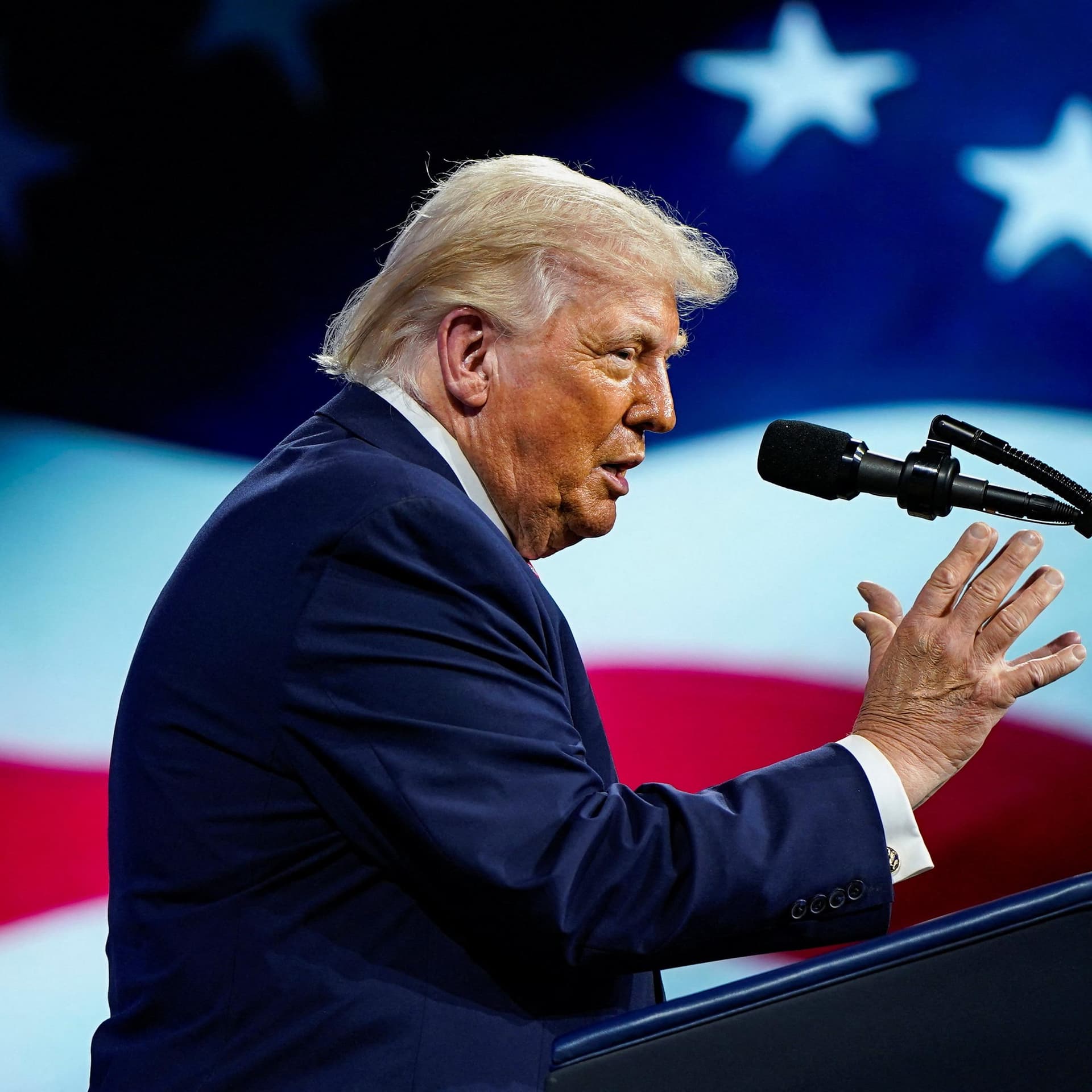
(Photo: President Donald Trump. Credit: Elizabeth Frantz/Reuters)