
In short
The Global Story examines why the Lebanon war is hard to end, how a “ceasefire in name only” is failing, and whether Lebanon could become a sticking point or key for a US-Iran deal. It also covers US involvement and the linkage Iran wants between Lebanon and the Iran war.
Guests
Hugo Meshager, BBC Middle East correspondent based in Beirut.
Guest background
Reports from Lebanon; visited southern villages and Lebanese military checkpoints near the Israeli “yellow line”/occupied zone; previously reported with paramedics in Nabatea.
Key claims
Ceasefire hasn’t stopped daily Israeli airstrikes; over 400 deaths since April ceasefire; civilians killed alongside Hezbollah fighters; Hezbollah embeds in civilian areas without uniforms; Israeli claims about using ambulances/medical facilities lack evidence.
Notable examples
Arab Salim (destroyed grocery after missile); Saxakhir (Saturday lunchtime strike killing nine, including a 2-year-old); Nabatea paramedic station destroyed; Lebanese checkpoint near abandoned petrol station near Gi’am.
Written by AI. May contain mistakes. Listen to the episode to check what was said.
Chapters
Tap a time to open that second in VOCurrent State of the War in Lebanon
0:32 to 1:48
Discussion on the current ceasefire and ongoing conflict in Lebanon.
“President Trump is yet again warning Iran that the clock is ticking.”
On-the-Ground Reporting from Southern Lebanon
1:48 to 6:34
Hugo shares insights from his reporting in southern Lebanon amidst ongoing conflict.
“Hugo, last Friday, the US State Department announced that Israel and Lebanon had agreed to extend this shaky ceasefire for another 45 days.”
Civilian Impact of Airstrikes
6:34 to 11:18
Exploration of the civilian casualties resulting from airstrikes in Lebanon.
“We went to a village called Arab Salim as well.”
Paramedics and Health Crisis in Conflict Areas
11:18 to 14:00
Insights into the challenges faced by paramedics and healthcare facilities during the war.
“So we also visited a town called Saxakhir.”
Paramedics Under Fire in Nabatea
14:00 to 15:00
Learn about the experiences of paramedics in Nabatea amidst airstrikes.
“And we did like a special report with paramedics in the city of Nabatea, which is a major city in the south.”
Claims of Military Use by Hezbollah
15:00 to 15:47
Explore the accusations against ambulances and health facilities in Lebanon.
“If they have any evidence, let them show us.”
Filming to Counter Allegations
15:47 to 16:42
Understand how paramedics are using footage to defend against military claims.
“And the Lebanese authorities have been very vocal in saying that these are possible war crimes.”
Israel's Perspective on the War
16:42 to 18:38
Gain insights into what the war means for Israel and its security concerns.
“Because they want to counter the allegations and the claims that they are somehow involved with Hezbollah or that they are somehow militarily involved in the war.”
Complexity of Disarming Hezbollah
18:38 to 21:45
Learn about the challenges of disarming Hezbollah amid diplomatic tensions.
“And they say that the situation is unsustainable.”
The Stalemate of Peace Negotiations
21:45 to 23:25
Discover the obstacles in peace negotiations involving Israel and Hezbollah.
“Can talks ever be viable when one of the principal actors is not there?”
Show all 11 chapters
U.S. Involvement and Regional Dynamics
23:25 to 26:08
Examine the implications of U.S. involvement in the Lebanon conflict.
“So it gives you a sense of how complicated the situation is on the ground.”
Transcript
Automatic transcript. May contain errors.0:00This BBC podcast is supported by ads outside the UK. Hi there, I'm Asma Khalid. And I'm Tristan Redmond. And together we're the hosts of the Global Story podcast from the BBC. For those of you who might be new to our show, we here at the Global Story dive deep every weekday on one big story at the intersection of where the world and America meet. And you can now watch the Global Story on the iHeart app. Catch every brand new episode every weekday. Just tap into iHeart to start watching. And we hope you enjoy the show.
0:38President Trump is yet again warning Iran that the clock is ticking. On Sunday, he posted on his Truth Social platform, quote, they better get moving fast or there won't be anything left of them. Time is of the essence, end quote. Talks to end the war in Iran have stalled with multiple sticking points. and one of them is another country altogether. Iran has reportedly insisted on an end to the war in Lebanon, before talks can continue with the U.S. about Iran. In Lebanon, there's a ceasefire, but fighting continues. Though there have been talks, there's not much progress. From the BBC, I'm Asma Khalid in Washington, D.C.
1:24And I'm Tristan Redman in London. And today on The Global Story, why is the war in Lebanon so hard to end? And why could it hold the key for a deal between the United States and Iran?
1:43I'm Hugo Meshager and I am a BBC Middle East correspondent based in Beirut. Great to see you again, Hugo. Thanks for joining us. Good to be back. Good to see you. Hugo, last Friday, the US State Department announced that Israel and Lebanon had agreed to extend this shaky ceasefire for another 45 days. But we've seen reports just in the last couple of days that the fighting has continued in southern Lebanon. And so I want to ask you here at the outset, is there actually a ceasefire in place? Yeah, this is very interesting because the way I've been framing it is this is a ceasefire in name only because it hasn't really stopped the war here.
2:24So you have Israeli airstrikes every day with many people being killed. More than 400 people have been killed since the beginning of this so-called ceasefire. When you say 400 people have been killed since this ceasefire, you're talking about the first iteration of the ceasefire that was announced by President Trump on social media back in April. Back in April, yes. So in four weeks, we had more than 400 people being killed. So Israel says it is targeting Hezbollah, and it is true that a number of those people are indeed Hezbollah fighters, operatives, but a high number of civilians have also been killed.
3:03And let's not forget that there is a strip of land in Lebanon that is now under Israeli occupation, a no-go zone for the Lebanese. And there Hezbollah is still fighting Israeli forces. We've seen those attacks, particularly the drone attacks that have also been killing Israeli soldiers inside Lebanon. And some of them are also hitting communities in northern Israel. So the war here, despite the ceasefire, hasn't really stopped. How dangerous an operation is this? How many Israeli soldiers have been killed? What about on the Lebanese side? So at least 20 Israeli soldiers have been killed. At least four civilians, Israeli civilians have been killed since the beginning of the war.
3:44And around 3 ,000 people in Lebanon have been killed, according to the Lebanese Health Ministry. They don't separate fighters from civilians. The Israeli military says that the vast majority of those people who have been killed in Lebanon are affiliated with Hezbollah. But the Lebanese authorities say that there's a very large number of civilians who have been killed. Is there any material difference because of a ceasefire? Does it mean, though, for example, that things are calmer in Beirut as opposed to in the south of the country? So I think for the government, you know, with the ceasefire, the priority was to stop the bloodshed and the widespread airstrikes.
4:26When I talk to people here in Lebanon, they say, well, yes, it's a ceasefire, but it's really one-sided. Because if you read the terms of the ceasefire, it gives Israel the right to attack in self-defense. But the wording is very vague. And what people also complain here is that there is no indication of when those invading Israeli troops are going to pull out from Lebanon. They say they are targeting Hezbollah, that they are trying to disrupt Hezbollah's activities. But again, this is the feeling of many people here in this country. And so Hugo, you say that in many ways this appears to you like a ceasefire in name only, that the fighting has continued there in the south of Lebanon.
5:13I know you recently spent some time going to the south of the country, reporting there. What is happening there? Who did you speak with? I'm curious what you heard, what you saw. We went to the south to get this idea of how people are living under the constant fear of these Israeli airstrikes. And the drone, the Israeli drone, was flying overhead all the time. We could hear fighter jets, Israeli fighter jets in the sky as well. We could hear getting closer to the so-called yellow line, which is now the division, if you like, between Lebanese territory and territory that is now occupied by Israel.
5:51We could hear the sound of detonations, explosions happening in the distance. So this was in the background. And then visiting those villages, what really struck me is that at the beginning of the war, there was a sense of frustration with Hezbollah because people are tired, people are exhausted. But now with the war continuing again with the ceasefire, people are supporting Hezbollah again or continue to support Hezbollah because they see Hezbollah as the only force defending them and protecting them. And I think this is, you know, very important to understand because this is a key factor in what is a very complicated story and issue here.
6:28So we spent two weeks going to different parts of the south of the country. We went to Tia, which is the largest city in the south. We went to a village called Arab Salim as well. And then we also went to a checkpoint of the Lebanese military right before the so-called Yellow Line, which is the part of Lebanon that is now under Israeli occupation. Around 5 % of Lebanon's territory is now under occupation by the Israeli military and they control those areas. And, you know, this is a no-go zone for the Lebanese. And to go to those places, we had to coordinate with Hezbollah. You can't simply just show up and...
7:09Just to go to the south, you're saying, of Lebanon? Exactly. And this is the heartland of the Shia community in Lebanon, and it is the heartland of Hezbollah. And for decades, Hezbollah has been, by and large, the authority. So this isn't a place where you go as a journalist and you just arrive and I am going to interview people. You need to let them know that you're going to show up because if you go to those places without a level of coordination almost instantly, you're going to have some Hezbollah members, operatives, people affiliated with the group asking questions about what you're doing, where do you work.
7:45But there was no interference in the reporting and this is, you know, kind of standard practice and has been standard practice for many, many years. What's Hezbollah's actual presence like on the ground, Hugo, in those areas of southern Lebanon where there's conflict ongoing? Do they have the appearance of a kind of regular military force or do they look like something else altogether? You never really know because when you go to those places, they don't wear uniforms, they don't wear any kind of badges and it's impossible for you to say, well, look, this is a fighter, this is a member, this is an operative, because they are embedded in those neighborhoods and in those areas.
8:27And they also rely on what you may call reservists, let's say. So it is your neighbor, it is the guy who owns, I don't know, the pharmacy in your town or the vendor in your town. But this is the thing, I mean, you can't really see their presence on the ground. Obviously, You feel the presence because, again, let's say if you show up in a village as a journalist, almost instantly you're going to have half a dozen men coming to you asking you questions. But if you go to a place, you're not going to see men wearing uniforms or identifying themselves as being members of the group. Hugo, did you go into these Israeli controlled areas and what did you see?
9:11No, it's impossible. You cannot cross. And what is very interesting is that we visited, just to be very clear, the Lebanese military is not a party to the conflict. So this is a conflict between the Israeli military and Hezbollah with no involvement of the state and of the Lebanese military. But you do have a presence of the Lebanese military. And especially now they have set up some checkpoints along this yellow line because not far from those areas, the Israeli military is operating. And it was very interesting that we went to one of those checkpoints near the occupied town of Giam in the south.
9:48And we were interviewing some Lebanese soldiers. They had set up a checkpoint near an abandoned petrol station to indicate that was the end of Lebanese controlled territory, if you like, and the start of Israeli occupied territory. And I tried to get close to this barricade. And then the soldier said, don't get any closer because the Israelis are at the top of the hill operating from those houses and they are shooting at people trying to get close to the barricade. So that gives you an idea of the situation on the ground and why it is impossible for us to get into Israeli controlled territory at the moment.
10:24And where did you go specifically within southern Lebanon? One of the places we visited was a village called Arab Salim. This is a Shia village in the south. It was completely deserted. And we met a man and his grocery had been destroyed after an Israeli missile hit a building next door. And this building was targeted back in April when, you know, the Israeli military carried out that massive attack across the country for 10 minutes. More than 100 targets were hit. We are all civilians here, but the community supports Hezbollah because they're defending us. And I thought it was very interesting that essentially he said, look, we are supporting Hezbollah here because there's nobody else to protect us.
11:10We're the ones putting Hezbollah flags over destroyed shops and buildings here in the village. Not them. They're the only ones keeping us on our land. So we also visited a town called Saxakhir. And again, when I talk about civilians being killed in those attacks, it was an attack that happened on a Saturday at lunchtime. There was no warning. It was a house in a residential neighborhood in this town. a family, you know, a displaced family. They had moved from a different part of the south. They were living in this house. And then there was this massive airstrike. So the Israeli military said it was targeting Hezbollah operatives who were posing a threat.
11:52They didn't really explain what kind of threat, who they were. They didn't identify these alleged suspects, Hezbollah members. But the result of this attack was that nine people were killed, including a grandmother in her 70s, two sons, grandchildren, and then a great-granddaughter who was two years old. And I think this really is a reminder, if you like, of the civilian impact. And what's the Israeli response been to the reports that civilians have been hit in that attack? Well, initially they said that there were investigating reports that uninvolved civilians, as they put it, had been harmed in this attack.
12:37And they also say that they usually take measures to minimize casualties, civilian casualties in those attacks. But again, a lot of people will say that, look, they assume, they take the risk that civilians may end up being killed in those attacks, particularly attacks that happen in densely populated residential neighborhoods. Again, the accusation, and I think this is not an accusation, this is a fact that Hezbollah does embed its infrastructure, some of its military infrastructure, even in civilian parts of the country, civilian neighborhoods. This is something that I've heard from residents during my reporting trips in the south of the country.
13:22And again, it goes back to the point that you don't see a Hezbollah member wearing uniforms. So you don't really know who is a Hezbollah member, who isn't. But also a lot of people will say that, look, all these attacks happen. There's so many of them that you never really understand the reasons behind those attacks, who was being targeted and what exactly happened. Hugo, you know, my understanding, based on your reporting, is that this war isn't just happening on the streets. It's not just taking place inside villages. What have you found? At the beginning of the war, we spent weeks, you know, with paramedics in the south of the country.
14:00And we did like a special report with paramedics in the city of Nabatea, which is a major city in the south. It has been a frequent target of those airstrikes. And the city now is very much abandoned because it continues to be targeted almost on a daily basis. And we heard from the paramedics, you know, the fear they had of being attacked. This is the only strike in this area, only outstakes. Ali takes us to what is left of the paramedic station, destroyed by an Israeli airstrike. So I'll show you here. A colleague was killed. He was here. And Israel says some ambulances and some health facilities are being used by Hezbollah.
14:47This is a false claim. This is not true. They're trying to hide what they did by saying this. This is the only explanation. They've been saying this repeatedly. They don't have any evidence. And you haven't seen anything? If they have any evidence, let them show us. And we heard from those paramedics how they were working constant fear of being attacked and how they had to change even the way they operated. So they were waiting 20 minutes before going to a certain site in order to avoid being caught up and hit in a second attack. And days after we published that story, one of the paramedics of the team, he was killed in one of those strikes.
15:34And I remember going to the funeral and meeting his family and his mother, who essentially said he did nothing wrong. So more than 100 paramedics, medical professionals, have been killed across Lebanon since the beginning of the war. And the Lebanese authorities have been very vocal in saying that these are possible war crimes. They have been demanding international investigators to look into those cases. And we've seen a number of hospitals, medical facilities being hit as well. And what's the response from Jerusalem been to these accusations? The frequent allegation is that ambulances are being used for military purposes by Hezbollah.
16:11Medical facilities are being used for military purposes as well. Now, we haven't seen any evidence and the Israeli authorities have never provided evidence to support these allegations. And what is very interesting is that many teens, rescuers, paramedics in Lebanon, they film their missions and then they publish the footage of those missions. When you say they film it, they have sort of a body camera or they're... A GoPro in the helmet. Oh, I see. Because they want to counter the allegations and the claims that they are somehow involved with Hezbollah or that they are somehow militarily involved in the war.
16:53So we haven't seen any evidence to support those claims. And we did ask the Israeli military for comment and they didn't reply to our requests. Hugo, what has this war meant for Israel, particularly the north of Israel? And I ask this question in part because we did an episode recently where we talked about the fact that from the vantage point of Israelis, there are some who want the Israeli government to continue to push further in this war. They don't want to see a ceasefire. What has it meant for the Israelis? Yeah, let's just take a step back before I answer the question, because, you know, Hezbollah was created during the Lebanese civil war, the occupation of Lebanon by Israel.
17:37So supporters see Hezbollah as a resistance movement and they see Israel as the enemy. And one of Hezbollah's official goals to this day is the destruction of Israel. So for decades, Hezbollah has been firing rockets into Israel. The Israeli military said last year that Hezbollah had a plan to carry out a similar attack that was carried out by Hamas in 2023 from Gaza to invade northern Israel. and to carry out a grounding invasion of Israel. The Israeli military says, you know, we've seen in the south the infrastructure that had been created by Hezbollah, the tunnels, the weapons, and they see Hezbollah as a major threat.
18:21And so the goal in the south of Lebanon, they say, is to create this security buffer zone free of Hezbollah to guarantee the security of those communities in the north of Israel. These are communities that have been on the receiving end of Hezbollah's rockets for a very long time. And they say that the situation is unsustainable. And a lot of people believe that this is the opportunity to kind of fix the problem, get rid of Hezbollah, or at least push Hezbollah away from the border to eliminate the problem, if you like. Because they do see Hezbollah as a major threat to those communities in northern Israel.
19:09Hi there, I'm Asma Khalid. And I'm Tristan Redmond. And together we're the hosts of the Global Story podcast from the BBC. For those of you who might be new to our show, we here at the Global Story dive deep every weekday on one big story at the intersection of where the world and America meet. And you can now watch the Global Story on the iHeart app. Catch every brand new episode every weekday. Just tap into iHeart to start watching. And we hope you enjoy the show.
19:41Last week, Hugo, here in Washington, there was another round of talks to end the war. And these talks came ahead of a deadline for the old iteration of the ceasefire. It was set to expire last Sunday. I know these timelines are kind of confusing because there's like a deadline, a ceasefire extension, another extension. But at this point now, you know, as we're talking, there has been yet another extension to the ceasefire. I do want to understand from you, though, who was there at these talks? And what's your sense of what actually transpired? These are significant talks because Israel and Lebanon are countries that don't have diplomatic relations.
20:21So the fact that you have Israeli and Lebanese officials in the room having those conversations is something significant. For the first time, you have an American president and an American administration giving a lot of attention to what happens in Lebanon. It seems that the Trump administration is heavily involved in trying to solve this problem. I was at the presidential palace here talking to some senior Lebanese officials a few weeks ago. And what they say is that, well, look, the goal is there to try to come up with a plan. The problem is that, as we know, President Trump wants everything done overnight.
20:56And this is a problem that has been here for a very long time, for decades. And you're not going to solve it overnight. So there is a feeling here I get from senior Lebanese officials and even from many Lebanese I talk to that a lot of people don't understand how difficult and how complex the situation is because Hezbollah is supported by Iran, has been funded by Iran. No decision about Hezbollah's future will be made without Iran's consent. So you have a lot of talk about, okay, we need to disarm Hezbollah, which is something that the vast majority of the Lebanese support. But this is not going to happen by force.
21:35And this is something that the government cannot deliver. So you're talking about Hezbollah's disarmament without the participation of Hezbollah. And this is something that is impossible to be achieved. Well, Hezbollah is a prescribed terrorist group by the United States. Can talks ever be viable when one of the principal actors is not there? I don't want to downplay what is happening because it seems that there is a process. But I think you're not going to be able to issue a statement to say this is the deal without kind of addressing the elephant in the room. And that is Hezbollah's weapons.
22:09And Hezbollah has been saying for now that we're not going to discuss the future of our arsenal. We're not going to disarm. So what I hear is that there is the idea of a process that is going to take years at least, and that would involve a lot of money for reconstruction so people can return to their homes. It would involve supporting the Lebanese military, kind of deal with Hezbollah. But I met the president last year and he told me, look, we cannot do this by force because this is a country with a history of civil war and you're not going to have the Lebanese military going into Shia communities and seizing weapons because that is a recipe for violence.
22:52Because a lot of people will say, look, I'm not going to give up my weapons. And if you come here, I am going to confront you. So the president has been saying, we need to have a diplomatic process. We need to discuss this with Hezbollah. But at the same time, this is a very controversial point in Lebanon, because although polls say that the vast majority of Lebanese want Hezbollah to be disarmed, they also are against any kind of peace deal with Israel. They see, you know, the country under occupation, thousands and thousands of people who've been killed as a result of Israeli airstrikes. So it gives you a sense of how complicated the situation is on the ground.
23:30Hugo, it sounds like you're saying that there are two big things that need to happen for peace to occur. One is the disarmament of Hezbollah, and the other is for Israel to withdraw troops out of Lebanon. And I want to understand from you not just how realistic they are, but in order of operation, which one needs to happen first? Because it sounds like there are disagreements about which one needs to go first. When I talk to Lebanese officials, they say the way forward is to remove the justification for Hezbollah to have its weapons. And this is not going to happen if you have Israeli forces occupying parts of the country.
24:09So they say the withdrawal of Israeli forces needs to happen first before we can move on to disarm Hezbollah. And the Israelis want to disarm Hezbollah first before any discussion of withdrawing? I think there's been some discussion about things happening simultaneously. So you would have some kind of pull out from Israeli forces. The Israelis have been saying they have no territorial ambitions in Lebanon. They don't want to occupy parts of Lebanon again. but they say they want to have guarantees that this time disarmament is going to happen. So it is a little bit like a Cat 22 kind of situation because who is going to blink first, if you like?
24:47Is the war in Lebanon a major sticking point in resolving the war in Iran? I mean, we have seen indications that it is one of the things that Iran wants resolved. Yeah, so the Iranians really want to link the situation in Lebanon to the war in Iran. And the Israelis are saying, well, no, these are completely different things and we're not going to include the situation in Lebanon in any kind of deal with Iran. Whether this is going to be a major obstacle in these negotiations, we still don't know. I mean, it strikes me, too, that from the vantage point of the United States, the Trump administration got involved in a new conflict with Iran and in so doing got itself also entangled in a conflict that has been going on for decades, as you say, between Hezbollah and Israel.
25:39What is very interesting is that for a very long time, we've been talking about not only Iran's nuclear program, but also Iran's support for regional groups across the region, which the Israelis, the Americans say they have been involved in attacking and killing lots of civilians. They've been engaged in terrorism and they have been saying that any kind of bigger deal with Iran should include the end of Iran's support for these groups, including Hezbollah, which is something that the Iranians have rejected so far. Again, it's very significant. A lot of people are finally feeling that the Lebanon issue and American administration is paying attention to what is happening here and trying to come up with a plan to end, you know, decades of conflict.
26:22So people feel optimistic about the U.S.'s involvement. I wouldn't say optimistic because people here know that this is a very complicated, very challenging situation. But I think it gives some people hope because it seems that there is a process in place. Historically, we describe Hezbollah as a state within a state. And I think a lot of people are just tired of this situation. So they want to see the end of the militia, if you like, the end of a powerful organization having a very powerful arsenal of weapons and taking those decisions, dragging the country into wars without consulting anybody else.
Read the full transcript
27:08Well, on that note, Hugo, thank you. Thanks for joining us. Hugo, thank you so much. Thank you. Good to be back.
27:19That was Hugo Bashega, the BBC's Middle East correspondent, joining us from Beirut in Lebanon. A quick rec-o before we go. Here at The Global Story, we bring you one story every day where the world and America meet. For the very latest news headlines, listen to our sister show, The Global News Podcast, and you can find it on bbc.com or wherever you listen. As always, our email address is theglobalstory at bbc.com. We'd love to hear from you all, so keep those suggestions and questions coming. Our episode today was produced by Viv Jones and Aaron Keller. It was edited by Bridget Harney and mixed by Travis Evans.
27:59Our studio manager was Jack Graysmark, Our digital producer is Matt Pintus, and our senior news editor is Chyna Collins. I'm Asma Khaled. And I'm Tristan Redmond. Thanks so much for listening. We'll be back again tomorrow. Cheerio.
28:18Hi there, I'm Asma Khaled. And I'm Tristan Redmond, and together we're the hosts of the Global Story podcast from the BBC. For those of you who might be new to our show, we here at The Global Story dive deep every weekday on one big story at the intersection of where the world and America meet. And you can now watch The Global Story on the iHeart app. Catch every brand new episode every weekday. Just tap into iHeart to start watching. And we hope you enjoy the show.
From the publisher
President Donald Trump has warned Iran the "clock is ticking" as talks to bring their war to an end have stalled. "They better get moving, FAST, or there won't be anything left of them," he wrote on his Truth Social platform. "TIME IS OF THE ESSENCE!”
There are multiple thorny issues to be resolved between the US and Iran, but one of them concerns another country altogether: Lebanon. Iran has reportedly insisted on an end to the war in Lebanon before talks can continue with the US.
A ceasefire in Lebanon was announced back in April, but Israel and Hezbollah have continued to exchange fire since then and hundreds have been killed.
Hugo Bachega, Middle East Correspondent, discusses why the war in Lebanon is so hard to end, and what that means for the chances of a deal between the US and Iran.
Producer: Viv Jones and Aron Keller
Executive producer: Bridget Harney
Sound engineer: Travis Evans
Senior news editor: China Collins
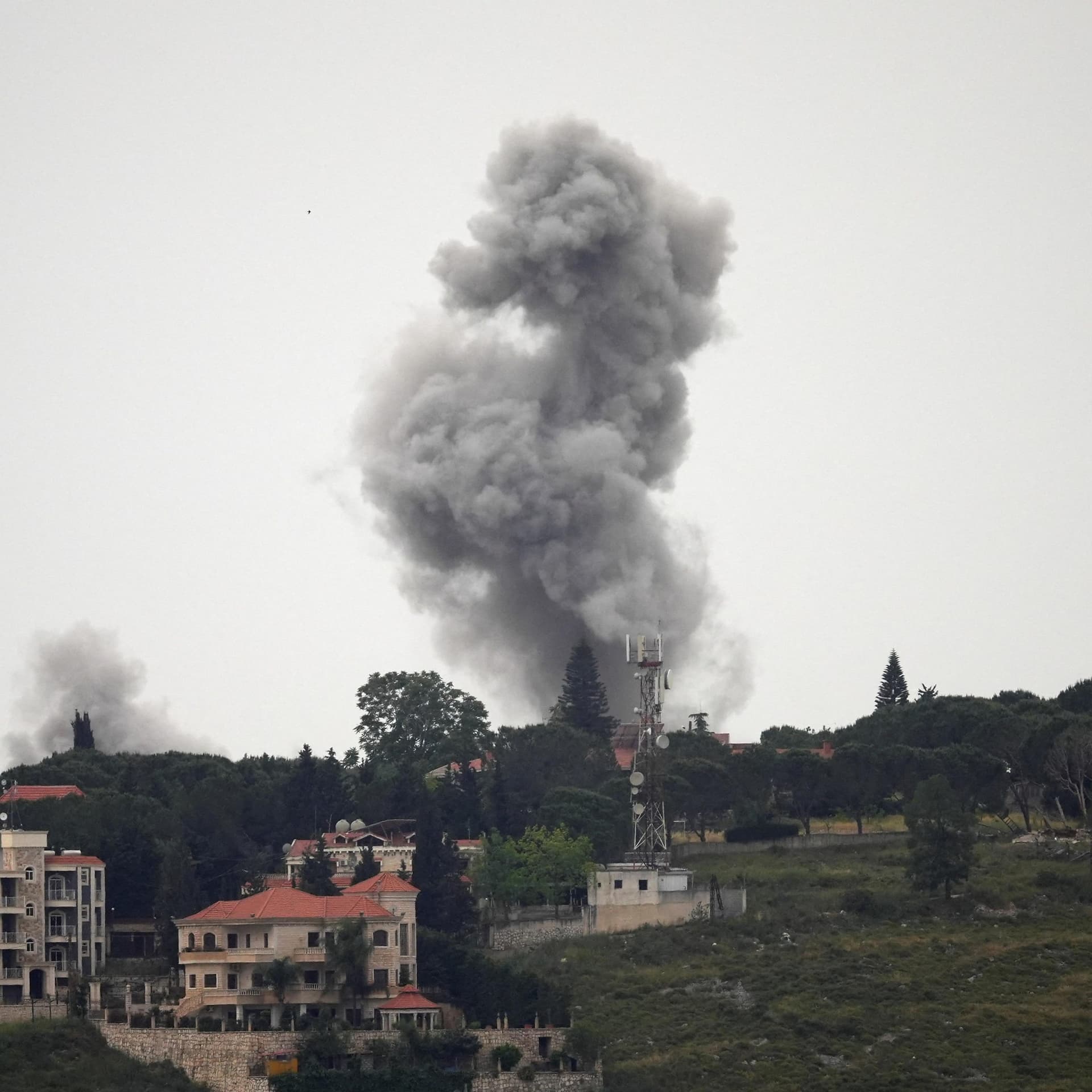
Photo: Smoke rises following an Israeli strike in Choukine, Lebanon (Reuters)