
In short
The episode examines whether U.S.-Iran diplomacy is effectively dead amid escalating U.S.-Israel attacks on Iran, Iran’s appointment of a new hardline supreme leader, and the failure of past nuclear negotiations.
Guest backgrounds
Nate Swanson spent nearly 20 years working on U.S. policy toward Iran across Republican and Democratic administrations, including roles implementing the JCPOA and later advising during Trump-era and Biden-era Iran negotiations.
Key claims
Diplomacy is unlikely “in the short term” because Iran expects attacks are inevitable and rejects negotiating with the Trump administration after past bombings and the U.S. withdrawal from the JCPOA. The JCPOA constrained Iran’s nuclear enrichment (3.67% for 10–15 years) but left enough highly enriched uranium for roughly 9–11 weapons, with breakout time potentially reduced to days/weeks. Negotiations were often dysfunctional (indirect “glass box” talks via Oman).
Notable examples
U.S. cut diplomatic ties in 1980; Trump’s withdrawal from the JCPOA; 2025/2026 escalation; Bloomberg-reported corruption/luxury properties tied to Mujtaba Khamenei; Oman-mediated indirect talks.
Written by AI. May contain mistakes. Listen to the episode to check what was said.
Chapters
Tap a time to open that second in VOThe U.S.-Iran Diplomatic Breakdown
0:00 to 0:37
Explore the historical context of U.S.-Iran relations since 1980.
“This BBC podcast is supported by ads outside the UK.”
The U.S.-Iran Diplomatic Breakdown
0:58 to 2:24
Explore the historical context of U.S.-Iran relations since 1980.
“government officially cut diplomatic ties with Iran.”
Iran's New Supreme Leader
2:46 to 3:56
Discussion on the implications of Mujtaba Khamenei's leadership.
“Could you introduce yourself briefly for those who may not know you?”
Challenges for U.S.-Iran Negotiations
3:56 to 7:45
Understanding the obstacles to diplomatic talks between U.S. and Iran.
“He was instrumental in some of the repression involved in the greed movement, cracking down on the protesters.”
Iran's Stance on Negotiations
7:45 to 8:23
Insights into Iran's current refusal to negotiate with the U.S.
“likes to do, and just draw out pain as long as possible.”
U.S. Strategy Options
8:23 to 10:46
Exploring potential U.S. strategies in response to Iranian conflict.
“Yeah, I think they've tried it and it's failed.”
The Iran Nuclear Deal Explained
10:46 to 14:00
An overview of the Iran nuclear deal and its implications.
“Well, Nate, a major reason I wanted to have you on our show is because you spent so many years working on Iran at the State Department, also in the White House there under the National Security Council.”
Iran's Nuclear Capabilities
14:00 to 15:00
Exploring Iran's enriched uranium and potential nuclear weapon capabilities.
“And so what you have left over is basically the equivalent of enough highly enriched uranium for somewhere between 9 and 11 nuclear weapons.”
The Iran Nuclear Deal: Benefits and Shortcomings
15:00 to 18:00
Discussing the outcomes of the Iran nuclear deal from both U.S. and Iranian perspectives.
“So, you know, it's a significant difference.”
The Implementation of the JCPOA
18:00 to 21:00
Understanding the implementation process of the Joint Comprehensive Plan of Action (JCPOA).
“There were these moments of, oh, there's these talks and something might develop.”
Show all 13 chapters
Challenges in Iran-U.S. Negotiations
21:00 to 22:40
Analyzing the difficulties and dynamics of U.S.-Iran negotiations during different administrations.
“Trump was engaging with Iran this time around.”
The Inevitability of Conflict
23:10 to 25:40
Discussing the perceptions of inevitable conflict between the U.S. and Iran amidst failed negotiations.
“So there's only the inner circle for the president Trump is so small, right?”
Reflections on U.S. Strategy Towards Iran
25:40 to 28:00
Reflecting on past U.S. strategies towards Iran and their effectiveness across different administrations.
“And so the negotiations were never close to happening.”
Transcript
Automatic transcript. May contain errors.0:00This BBC podcast is supported by ads outside the UK.
0:30business needs in one place, saving you time, headaches, and serious money. Stop paying for missing pieces. Go to odoo.com. That's O-D-O-O dot com to learn more. Nobody does it better than Regent Seven Seas Cruises. Enjoy all-inclusive, unrivaled luxury with unlimited shore excursions, indulgent cuisine, personalized service, and more aboard spacious, all-sweet ships. Visit rssc.com to experience the unrivaled.
1:00Nate Swanson:In the spring of 1980, the U.S. government officially cut diplomatic ties with Iran. The Iranian embassy here in D.C., which had once been the scene of glamorous parties, was shut, and it's remained boarded up ever since. And over the years, the U.S.-Iran relationship has been full of animosity. The U.S. angry over Iran-funding proxies in the region. The Iranians upset over economic sanctions, both in fundamental disagreement over Iran's nuclear program. And now the U.S. and Israel have attacked Iran, leading to all-out war. President Trump is talking about ultimate victory. We've already won in many ways, but we haven't won enough.
1:44We go forward more determined than ever to achieve ultimate victory that will end this long-running danger once and for all.
1:52Nate Swanson:The Iranian government is showing no signs of backing down either. They've appointed a new hardline supreme leader. And the country's foreign minister says he doesn't think negotiating with Americans is on the agenda anymore. We have a very bitter experience of talking with Americans. We negotiated with them last year, last June, and they attacked us in the middle of negotiations. And again this year, they tried to convince us that this time is different. From the BBC, I'm Asma Khalid in Washington, D.C. And today on The Global Story, we talk to Nate Swanson, a man who spent nearly 20 years working on U.S.
2:30Nate Swanson:policy toward Iran under both Republican and Democratic administrations. And we ask, was diplomacy really ever possible?
2:43Nate, it's a pleasure to have you with us here on The Global Story. Thanks for coming in. Thank you for having me. Could you introduce yourself briefly for those who may not know you? Could you describe what your role was in the U.S. government over the years? Yeah, thanks. I joined the U.S. government in 2007 and I did Iran work basically till the summer of 2025. And so from Bush, Obama to Trump won and then Biden and Trump again. Well, I want to start with a recent development in Iran on Monday morning local time. Iranian state TV announced that the country's new supreme leader would be a man by the name of Mujtaba Khamenei, who is the son of the late Ayatollah Ali Khamenei, who was killed when this war began.
3:26I presume over the years the U.S. government had intel, had a file on Mujtaba, because the former supreme leader, he was 86 years old. So there had to have been an assumption that he was not going to be around for a while. I'd really appreciate hearing from you. What What was the thinking within the U.S. government over the years about Mojtaba and how much harder or easier the relationship with Iran would be if he indeed took over? Yeah, Mojtaba, you know, has been involved very closely, really since 2009. He was instrumental in some of the repression involved in the greed movement, cracking down on the protesters.
4:01So he really started to develop much more of a public profile at that point. And so we've been following him pretty closely since then. At different points over the last 10, 15 years, Hominay has tried to make his son as a potential replacement for him. But it often ran into a lot of scrutiny and criticism internally. So even a few days ago, I was like, there's no way. There's too many obstacles. So, I mean, really, it took— And what were the obstacles? When you say internally there was some skepticism about him, even you're saying from amongst the Iranian leadership. Yeah, exactly. I mean, the whole Islamic Republic was breaking with the monarchy and hereditary rules.
4:34So, right, this idea of having this hereditary follow up to the father, Ali, is something I think is quite unpopular with Iranians. And so I think that's part of it. I mean, second, he doesn't really have the clerical credentials, nor did his father to be the supreme leader. And so and then he's quite controversial. You know, he is in many ways a more hard line version of his father, less willing to be, in theory, pragmatic. You know, like I said, the role in the crackdown. And he also has some of these corruption scandals following him. Bloomberg did a really good expose recently on a series of luxury properties around Europe, including the UK.
5:08So yeah, so he's a very controversial character. And I think it only would take these unique circumstances to get him in power. So as we're taping this conversation, we're looking at a situation in Iran, in the region broadly, that appears to be escalating. There is a rising death toll in Iran. We've seen people killed across the region. We've seen multiple U.S. service members who've been killed. And we also just mentioned that the country now has a new supreme leader who seems like a hardliner. And you have spent your career at the State Department working on Iran, also working on diplomacy.
5:43And so I'm wondering, do you think that given everything I just described, that there is a scenario in which this all indeed ends at a negotiating table? What's your time frame for that? That didn't sound promising. I don't think in the short term there'll be an off-ramp at the negotiating table. If you're looking at this from Iran, I think—so the U.S., Israel, and Iran are all looking at this from different perspectives. Okay. So I think if you're Israel, I mean, they've been pretty clear that their goal is regime collapse. And that hasn't happened yet. It hasn't happened yet, but we'll see where this goes.
6:18I think the U.S. goal is much more opaque, right? I mean, Trump's had different—he's regime change. It's regime degradation. It's I want to pick the new supreme leader. You know, it's kind of changes by the day. So I think he would like a negotiated outcome. And he said, you know, most of us, not an acceptable outcome last week, which is kind of an interesting statement. But if I'm Iran right now, I understand why they wouldn't want to talk. Right. So they've had bad interactions with the president, basically, where they feel like they negotiate in good faith or not. We can talk more about that, whether that's accurate or not.
6:48But from their perspective, they did. And then, you know, they've been bombed twice. You're talking about last summer. And before that, in the first Trump administration, you know, obviously they pulled out of the Iran nuclear deal that was negotiated by President Obama. So, I mean, if I'm Iran, I don't just unilaterally stand down like I did in June. You probably want to inflict so much damage on President Trump that he doesn't want to and he won't let Israel do this again. I mean, because to your point on what the Iranians want, it also struck me that over the weekend we heard the Iranian foreign minister on NBC's Meet the Press.
7:20and he seemed to reject any calls for a ceasefire. We don't see any reason why we should negotiate with the U.S. When we negotiated with them twice and every time they attacked us at the middle of negotiations. Felt that Iran ought to keep fighting. He does not seem ready to go to the negotiating table yet. I think that's right. I think for Iran, I mean, the short-term objective is to make this a war of attrition, which is not something the U.S. likes to do, and just draw out pain as long as possible. Long term, though, to your question, I mean, at some point, Iran has to come back and talk to the U.S.
7:57and Israel, or the U.S. specifically in the future, but I don't see that happening in the short term. What's your definition of short term and long term? I think Iran does not want to negotiate with the Trump administration again. That's a long time. So, I mean, maybe there's some small transactional deal, you know, there's some ceasefire. But you don't think the Iranians want to negotiate with this? No, I don't. I don't think they do. Yeah, I think they've tried it and it's failed. And I think they are all in on conflict helping to reset the playing fields, which is quite scary. So if you don't think this is ending at a negotiating table.
8:40In the short term. In the short term. Yeah. Where do you see this going? I mean, you're talking about what? Three more years of actual active war. Right. So that hopefully not that. Feels really disappointing for so many people in the region. It does. So I guess in my view, so Iran's not looking for the off ramp. So Trump will have to make a decision, I think, in the next couple of weeks. He'll basically have one of three options. He'll either have to back down and just kind of walk away. I mean, he can still declare victory. And he has some valid things he can claim. He killed Hamid the father.
9:13Iran's military is degraded. That's the narrative he can do as success and try to walk away. But like I said, I don't think Iran will take that. So basically in return for that, he needs to follow through on a ceasefire from June where he makes it so that neither Israel nor Iran can have hostilities. And so he has to basically ensure a ceasefire happens. So that's a very, very risky move for an American president to restrain Israeli freedom of action. And so he did that last June. But will he do that for an extended period of time? I don't know. Okay, so that's option one. So option two is he has to double down on the war.
9:46And then that could potentially mean ground troops. And that's not popular at all here. It's not. No, it's not. I mean, there's certainly some people. But yeah, it's extremely unpopular. Going into this war, I think it was, you know, 72 % of Americans were opposed to the intervening in Iran. So I don't think it's a likely option, but you never know with President Trump, he might consider it. So I think that's the second option. And the third one that seemed increasingly likely at the end of last week was this idea of kind of outsourcing the war by arming ethnic separatist groups and ethnic opposition.
10:18So this is the idea, the Kurds, yeah, and also the Belichis. And so that, I think, is a very cynical approach because by doing that, you're just kind of trying to engulf Iran into the civil war. But as huge implications and in my mind is far and away the worst outcome for a variety of reasons. But I mean, the president's backing off that a little bit and saying he won't arm the Kurds or doesn't support it is maybe makes that less prevalent. But it certainly seemed at least last Friday before he said that is like the most likely option. Well, Nate, a major reason I wanted to have you on our show is because you spent so many years working on Iran at the State Department, also in the White House there under the National Security Council.
10:57And I think in order to understand where we are in this moment and the complete breakdown, We're saying of diplomacy at this moment in time, of a negotiated settlement. I think it is worthwhile to understand the U.S.-Iran relationship, which has been problematic for several decades. There is no diplomatic relationship. We're not going to go all the way back to 1979, but we want to start with much of what you've witnessed firsthand in government. And I'll start in 2015. That was eight years into your career at the State Department. It is also the year 2015 in which the Obama administration signed the Joint Comprehensive Plan of Action, or JCPOA, what most people know as the Iran nuclear deal.
11:34So I want to talk about that. But first, can you just remind us what the deal itself actually was? Yeah, the deal itself was a set of very in-depth constraints on Iran's nuclear program in return for a very specific set of sanctions relief. But a more basic way of thinking about it is it basically did two things on each side. Or there was hope that it would do two things on each side. So for the U.S., we got very clear constraints on Iran's nuclear program that we felt good about. And what were those? They were limited to a very low-level enrichment, 3.67%, for 10 or 15 years. A very small stockpile of enriched uranium they could keep.
12:15And they couldn't do any research and development for a set part of the time. So the idea was you're buying 15 years where Iran's breakout timeline, the time it would take to get a nuclear weapon, was about a year. And so right now that breakout timeline is very, very short. You know, I mean, it's potentially a couple of weeks or days at this point. So I just want to be clear, when you say breakout time, you mean time in order to actually have a functioning nuclear weapon. Yeah. So when people talk about having a breakout, that is a decision that has been made by their political leadership to go for a nuclear weapon as fast as possible.
12:48And so you're saying at that time period, they would have been about a year's away. Yes, correct. You also mentioned that right now the breakout point is really, really tight. Right. They could do that, you said, in just a couple of days. A couple of days, a couple of days, a couple of weeks, yeah. What's the evidence for that? I ask that in part because the Trump administration had told us after the 12-day war last year that Iran's key nuclear enrichment facilities have been completely and totally obliterated. Iran, the bully of the Middle East, must now make peace. If they do not, future attacks would be far greater and a lot easier.
13:24But they didn't touch the highly enriched uranium. So to measure someone's ability to break out, it's the material and it's the ability to actually turn it into a weapon. And so the JCPOA was focused on both, but primarily on the material it needed. The enriched uranium. The enriched uranium. All right. So what the Trump administration did in their June strikes is we took out— June of last year. June of last year, 2025, is they took out the sites. They took out a lot of the centrifuges involved with this. But what they did not really touch was the highly enriched uranium that was already there.
13:57Because it was underground. Because it was underground and it was in a different location than some of these other places. And so what you have left over is basically the equivalent of enough highly enriched uranium for somewhere between 9 and 11 nuclear weapons. Now, Iran would have to basically then take that material and put it in a centrifuge and spin it a little more. But that's something that could hypothetically be done quickly. And that requires us to know where all their centrifuges are, and we don't. So you were saying part of what the U.S. got were these controls on the amount of enriched uranium.
14:31What else did the U.S. get and what did Iran get? Okay, so the U.S. got the controls. The other thing that I think we were hoping for, it was that it was a 15-year gamble that over the course of this deal, the change in U.S.-Iran relationship would fundamentally alter. They never really got tested. We pulled out of the deal within two years. But that was the second hope. For Iran, they got one thing and we're hoping for one other thing. They got full oil sales. So basically, they will sell their oil with no restrictions. And that was a big change. They were previously selling about 1 million barrels a day.
14:59And then after the JCPOA, they could sell 2.6 million barrels a day. So, you know, it's a significant difference. But I think what Iran was hoping for and didn't receive was investment into their economy, foreign investment. And that never really materialized, partially because it was a short deal, partially because, you know, people were hesitant to invest because they saw our looming political transition, but also because Iran's a very hard place to work. And so even though we made this nuclear deal, they're still doing lots of other bad things at the time. And so I think that, you know. Like what?
15:27They had proxies, you know, that had a significant role in what was happening in Yemen and Lebanon at the time, and Israel and the West Bank and Gaza. So, I mean, as a foreign investor, yes, there was some part of it. This was the U.S., but primarily it was Iran's fault. And you were not involved in negotiating the Iran nuclear deal, correct? No, correct. But you were involved in implementing. Right. And can you help us understand what does it mean to be involved in implementation? Yeah, sure. So what that meant, formally under the JCPOA, was you would have a quarterly meeting where the P5 plus one would get together, which is the five members of Security Council plus Germany plus Iran.
16:03All people who would sign on to that. All people who signed on the deal would meet every quarter and you would go through the quality of implementation. Where would you guys meet? In Vienna. Okay. And New York during the UN timeframe, but otherwise Vienna. Can you give us a sense of that? What was it like? It was you all would meet with the other countries? Yeah, you would sit in this like U-shaped table. that was like this massive table, you know, five or six from each country. And it was a lot of talking points back and forth that weren't terribly useful. But the real value of it came after the meetings where you would actually have these sit downs with Iran and the US just one-on-one and you talk about the broader issues.
16:36And so it was a real conversation. It was candid. And I think, you know, it would go beyond just the nuclear details into the broader foreign policy. So it's a conversation you should be having with them. Now, did it make fundamental changes in either of our policies? Not necessarily, but at least you could have a real conversation and try to make progress. And what were the Iranians like? I mean, did they seem like they were operating in good faith, the Iranian counterparts?
17:02Yes. That was a long hesitation. Yeah, you were thinking about it. I'm thinking about it. I mean,
17:11you kind of know what you're going to get with the Iranians where they're always going to push for the maximum while trying to give the minimum, if you will. So they spent a lot of time, especially in those Obama times, saying, you, the U.S., need to be doing more to promote foreign investment. So it was frustrating encounters, but I don't think it was bad faith. It was just them pushing for the maximum and generally being just kind of difficult to deal with. So if we fast forward, Donald Trump is in the White House. It's his first term as president. And he does what he promised he would do during the campaign.
17:42He pulls the United States out of the Iran nuclear deal. and his administration does try to revive the Iran nuclear deal. You end up actually joining the National Security Council. You handle the Iran file as the Iran director for the Biden administration, right? And the National Security Council. And I remember at the time, actually, I was reporting as a White House correspondent. There were these moments of, oh, there's these talks and something might develop. Nothing actually did end up developing. It all fizzled out. And I want to understand you were there at the time that this was all happening.
18:13Why did it not go anywhere? A number of reasons. I think most of them are Iran's fault, but we maybe made a few as well on the U.S. side. I think we got really close to a deal in the spring of 2022. But then the war broke out with Russia and Ukraine, and that kind of hit pause on everything as well for several months, especially as Iran started upping their support to Russia in that conflict. and so all this kind of stalled out the Iran negotiations for understandable reasons and then even still we were willing to go back into the deal at the end of summer 2022 but Iran you know changed the terms on the deal again they just I think had this misperception they could get a better deal and at this point you know this was just no longer viable and so at the end of 2022 it was done yeah pretty much and Iran had made so much progress in their nuclear program in that intervening period that the terms of the JCPOA no longer worked anyway, just because their program advanced so much during the time when Trump pulled out to then.
19:26Hi, I'm Simon Jack. I'm Zing Zing. And together we host Good Bad Billionaire, the podcast exploring how some of the wealthiest people on the planet made their money. And we are back with a new season. From sporting superstars to music moguls and celebrity CEOs. We'll be taking a closer look at the lives and fortunes of some of the world's richest people. And asking you to decide if they're good, bad or just another billionaire. Good, bad billionaire from the BBC World Service. Listen now or search for good, bad billionaire wherever you get your BBC podcasts.
20:01so in early 2025 we have a new president donald trump again re-enters the white house and you had left the national security council at some point you're pulled back into iran negotiations with the trump administration is that right and can you help me understand what was that like and and what was the thinking yeah once the negotiation started steve wickhoff and his team kind of reached out and said, hey, we're putting together an Iran negotiating team. Would you be part of it? I said, sure. And what does that mean that you were working on the negotiations? Well, I mean, that's a good question.
20:31A lot of people would be surprised to think that there was ever an effort to negotiate. I mean, there was, but then it sort of fizzled out after. So there ended up being five rounds of talks last spring and summer. And so Steve was at all of them. They really only deployed us as a full group to a negotiation once. And so there was a lot more done back in D.C. But when you were working on the negotiations on the back end, were you helping to devise what the terms ought to be? Giving them options. Right. Options. Were there any moments in the spring of last year? Trump was engaging with Iran this time around.
21:05Yeah. So after the U.S. pulled out of the JCPOA, Iran refused to meet directly with the U.S. again. I mean, there's some small caveats to that, but that was basically their posture. So what happened is you had just this incredibly dysfunctional process of indirect negotiations with Iran. And so really for the last couple of years of the Biden administration, you still had a number of periodic engagements with Iran where we would go to Oman. It was kind of a broader conversation. Meeting directly with the Iranians. Indirectly with the Iranians. You would go sit in a glass box in Muscat. The Iranians would sit in a glass box about 100 meters apart.
21:40You would look at each other through these glass boxes and the Omanis would walk back and forth trying to pass messages. I mean, it's hard to conceive of a less effective way of doing meaningful diplomacy than that. And that is, you know, Iran's fault. You know, so so this trend. They refuse to meet directly. Yeah, yeah, yeah. This is not a U.S. This is like the lack of flexibility for Hominay. Right. And so maybe this is where the opportunity. I mean, he basically, as we understand it, basically told his team, you cannot meet directly with them. But if you want to go talk to them, fine. You can't meet directly with them.
Read the full transcript
22:08Have an intermediary go back and forth. So they used the Omanis. And was that the same situation, the glass boxes you described during the Biden years? That carried over? Yeah. Okay. And that's not a good situation. And so it's like really ineffective. Now, look, I think it's gotten a little better, to Steve Wyckoff's credit, where he's been able to have at least these short interactions with the foreign minister Arachi on Iran's side. But for the most part, yeah, you're in these like glass boxes that could not be less conducive to actually getting anything done. you left the u.s government last summer yeah um many people have left the state department after working on you know a series of special area issue expertise and i want to understand how the negotiations are unfolding nowadays um are there experts still in the room who understand the region i mean steve whitkoff's a real estate man jared kushner's largely a real estate guy as well.
23:04So look, I mean, they try to incorporate people, right? I think every special envoy seems to have, there are experts still in the room, but I think the key traits is that the president really only trusts a few people, right? So there's only the inner circle for the president Trump is so small, right? It's a few special envoys that he trusts, you know, it's Wyckoff, it's Kushner, it's Barrack, it's Rubio, it's Vance. I don't know if there's anyone else, right? And so unless you have access into one of those very, very small networks of people, you basically aren't doing anything at all. In the past several months, I know you were not working inside the U.S.
23:43government, but as you were watching the latest round of negotiations unfold, did war seem inevitable to you? It did. So one reason is I think when Prime Minister Netanyahu went to see the president at the end of December, he basically got carte blanche to attack Iran anytime, anywhere on their missile program. And so at that point, if you're Iran, you know conflict's coming again, and you know that the missiles are your only line of defense that matter at this point. So that means that Iran's going to keep producing them. So that means Israel or the U.S. is going to need to basically hit Iran every six months.
24:23I just want to understand what you're saying, though, about this feeling inevitable to you, because nonetheless, President Trump, his team, was in active negotiations with the Iranians. And so what were they trying to get? I mean, we heard from Trump administration officials who briefed reporters afterwards saying that, you know, Iran wasn't serious about this. Nonetheless, they were sitting down to talk. They were. All right, so but my point is here, so I think at this point, Iran has calculated that attack is inevitable. And so basically what we saw in the last couple rounds of negotiations was zero flexibility.
24:53From Iran. From Iran, right? I mean, Iran has decided why even bother with actually having like a really significant or serious conversation. And what was ultimately put on the table, like the day of the attacks, was significantly worse than the JCPOA and significantly smaller. From the Trump administration? No, from the Iranians. Yeah. OK. And I mean, the Trump administration was asking for a thousand times more. So both, you would say, were. Nowhere even in the close. Moving from a point of light. Not even in the same universe. And I think, you know, Steve Whatcoff said in an interview that, you know, the president was surprised that Iran didn't capitulate.
25:28But it was the opposite, right? Iran decided an attack was inevitable and decided to show no flexibility. I think that was fundamentally a misreading of how Iran was going to operate. I mean, Khamenei was willing to die a martyr rather than capitulate to the U.S. And so the negotiations were never close to happening. So, yeah, I felt like it was 100 percent inevitable. Nate, you have worked on Iran for many years under different presidents, be they Republican or Democrat. Is there a strategy that you saw over your years of working in the State Department under a president or administration that you thought was strategically wise?
26:06I mean, look, here we are having this conversation. Nobody's strategy has actually led to a better result. But I wondered if there was a time. I'm biased on this. I mean, obviously, I think that investment in diplomacy is worth it just because the alternatives are bad. And so obviously, you know, Obama invested the most in this and obviously was probably not really a political winner for him. But but ultimately, I do think you want to avoid wars like the one we're having right now. And look, to be fair to Trump, I mean, he is expressed interest in it as well. Iran just can't not seem to adjust to him personally, you know, and I do think that is partially on Iran.
26:43But are you suggesting that President Trump would be open and has historically been open to meeting with the leadership of Iran directly? Absolutely. He's been very clear about this. And I don't even think it matters who he would meet with. I think he'd meet with the president, he'd meet with the Supreme Leader, he'd meet with the foreign minister.
27:01Nate Swanson:And what's your understanding of why the Iranians do not want to meet with him? It fundamentally was because of Ali Khamenei just refusing to engage or letting anyone engage with him. Hominay distrusted Trump, loathed Trump. And so that, I think, was a pride issue and was ultimately a massive mistake by the Iranian government and a miscalculation by Hominay himself.
27:27Nate Swanson:Well, thank you, Nate, for being so generous with your time. I really appreciate it. Oh, my pleasure. Thank you very much for having me.
27:39Nate Swanson:That was Nate Swanson. He worked on U.S. policy toward Iran for nearly two decades under both Republican and Democratic administrations. Before we go, I just want to say a huge thank you to you all for sending in questions. We love hearing from you all. We're actually planning to do an episode based on some of the listener questions that you all have sent in. So that is coming soon in your feeds. But in the meantime, if you have additional questions or story ideas for us, you can email us at theglobalstory at bbc.com. And by the way, if your preferred way of listening to a podcast is actually on YouTube and you want to see us all, we are now on YouTube every day.
28:17Nate Swanson:You can find us on the BBC News YouTube channel. Our show today was produced by Chris Bendrev and Valerio Esposito. It was edited by Bridget Harney. Our senior news editor is Chyna Collins. And I'm Asma Khalid. Thanks as always for tuning in and we'll talk to you again tomorrow.
29:00Good, Bad or Just Another Billionaire. Good, Bad, Billionaire from the BBC World Service. Listen now or search for Good, Bad, Billionaire wherever you get your BBC podcasts.
From the publisher
As the US-Israeli strikes on Iran continue and the death toll continues to rise, so too does the war of words.
President Trump has described Mojtaba Khamenei, Iran's choice for new supreme leader, as "unacceptable". He has also said he believes the war will be over “pretty quickly”, but it’s not clear how - or when.
Nate Swanson, a former State Department official who spent nearly two decades in the US government working on American policy towards Iran, answers our questions on how the next stage of the conflict is likely to unfold - and whether a negotiated peace with Iran is still an option.
Producers: Chris Benderev, Cat Farnsworth and Valerio Esposito
Executive producer: Bridget Harney
Studio managers: James Piper and Mike Regaard.
Mix: Travis Evans
Senior news editor: China Collins
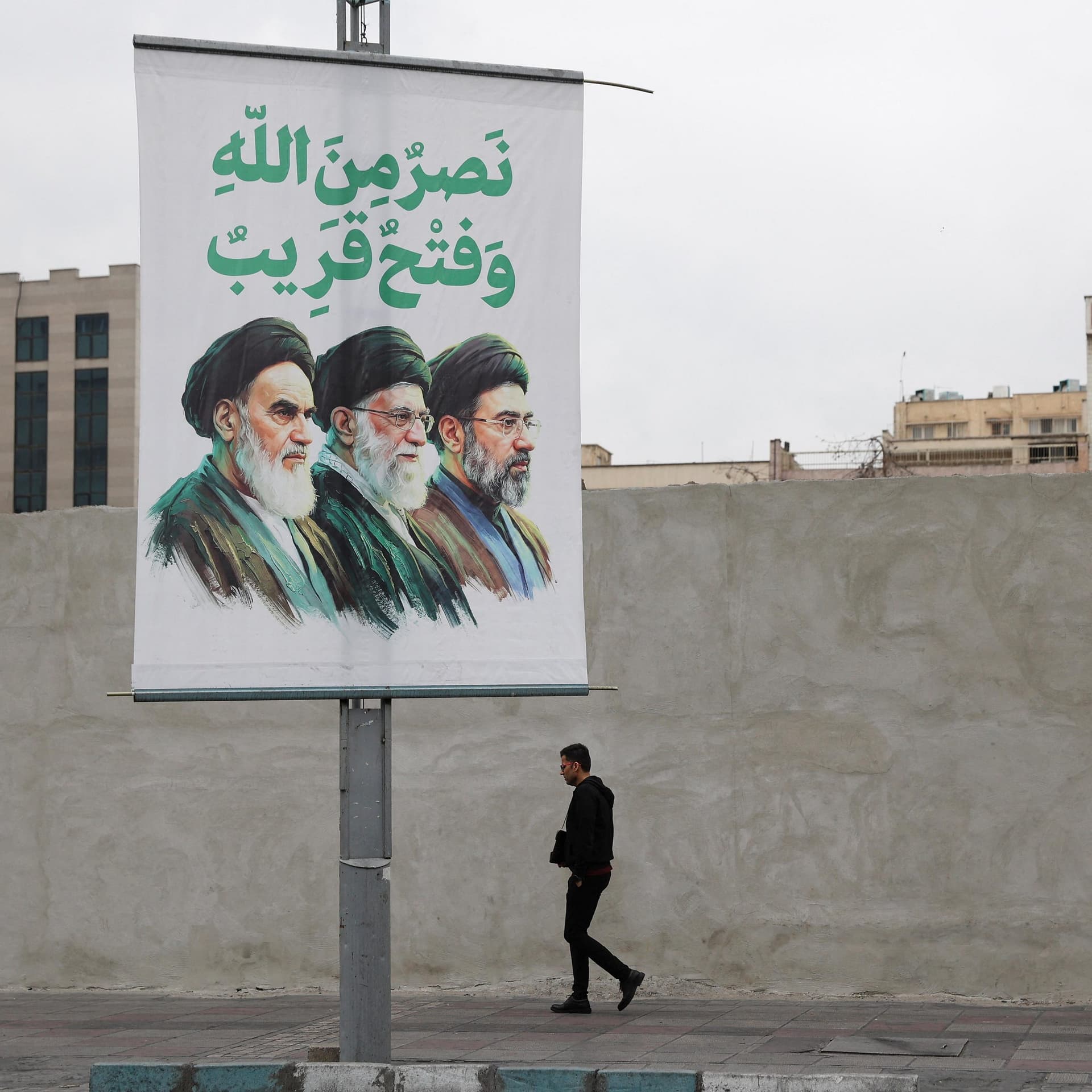
Photo: People walk past a banner depicting the Iran's supreme leaders since 1979. The late supreme leader Ayatollah Ruhollah Khomeini; the late supreme leader Ayatollah Ali Khamenei; and his son, the new supreme leader Mojtaba Khamenei. Credit: Majid Asgaripour/WANA via Reuters.