
In short
The episode revisits the February 28 opening-hours strike in Minab, Iran, where a missile hit an elementary school in the Shajar al-Tayyabah compound, killing 120 children (and 156 people total). Topic: whether the truth about responsibility will be disclosed, with evidence pointing to U.S. forces despite no U.S. admission.
Guest backgrounds
Nawal al-Maghafi, BBC senior international investigations correspondent (reported from Iran under Persian-service restrictions); Tom Bateman, BBC colleague covering the U.S. State Department.
Key claims
Iranian authorities expedited access and steered visits; experts cite Tomahawk use in a second wave, crater analysis, and U.S. preliminary findings leaked to Reuters/CNN; U.S. officials repeatedly said only “under investigation” for months.
Notable examples
teacher Amina Nadimi’s account of two strikes and children trapped; Red Crescent volunteer Reza searching for a relative; discovery of Maya Salari’s notebook; daily prayers and child graves at the school cemetery.
Written by AI. May contain mistakes. Listen to the episode to check what was said.
Chapters
Tap a time to open that second in VOIntroduction to the School Strike Story
1:30 to 2:35
Overview of the devastating school strike during the U.S.-Israel war.
“This summer, we're returning to some of the big unresolved stories of this year.”
Nawal al-Maghafi's Reporting Journey
2:35 to 3:22
Nawal discusses her journey to report on the school strike in Minab.
“And today on the show, the BBC visits Iran and the ruins of that school.”
Eyewitness Accounts of the Attack
3:22 to 5:50
Insights from the teacher and first responders about the attack's chaos.
“And then from Tehran, we took this train journey and it took us through some of the most strategic points in Iran.”
Aftermath and Emotional Toll
5:50 to 10:00
The aftermath of the attack and the emotional impact on families and survivors.
“I'm not talking about everyone, but quite a lot of people we spoke to say, you know, we thought that this intervention would topple the regime immediately, but we didn't quite understand the human cost.”
Seeking Accountability and Justice
10:00 to 14:00
Families express their anger and desire for justice regarding the attack.
“And, you know, Minab is a very tight-knit community.”
Conversations on Responsibility for the Attack
14:00 to 17:30
Discussing perspectives on who is responsible for the school attack.
“And did that come up in your conversations?”
Evidence and Analysis of the School Strike
17:30 to 20:02
Examining the evidence and expert analysis regarding the school strike.
“And I want to understand, Nawal, how has this actually unfolded in terms of who is deemed to be responsible and what evidence there is for that?”
Media Response and Government Investigations
21:14 to 28:00
Exploring the media's response and the investigations into the strike.
“So I called up my colleague, Tom Bateman.”
Lack of Transparency in Iran School Strike
28:00 to 28:16
Learn about the unprecedented lack of transparency regarding the Iran school strike.
“The degree to which we have seen a lack of transparency in this case far outweighs anything we've seen, you know, the last 20, 30 years.”
Listener Engagement and Questions
28:16 to 28:48
Discover how listeners can engage with the show and contribute story ideas.
Transcript
Automatic transcript. May contain errors.0:00This BBC podcast is supported by ads outside the UK.
0:30business needs in one place, saving you time, headaches, and serious money. Stop paying for missing pieces. Go to odoo.com. That's O-D-O-O dot com to learn more. Ever wonder why we make the choices we do and how to make smarter ones? Introducing Choiceology, an original podcast from Charles Schwab. Join Wharton professor Katie Milkman, an award-winning behavioral scientist and author of the best-selling book, How to Change, as she shares true stories from Nobel laureates, authors, athletes, and everyday people about why we do the things we do and how to make better choices to help avoid costly mistakes.
1:12Each episode covers the latest research in behavioral science and dives into themes like the power of self-control, shaping your mindset for success, navigating new beginnings, and why starting over can feel so hard. Listen to choiceology at schwab.com slash podcast or wherever you listen.
1:36This summer, we're returning to some of the big unresolved stories of this year. And one of the stories that we keep talking about on our team happened on Saturday, February 28th, in the opening hours of the first day of the U.S.-Israel war. There was an attack in the south of Iran, in the city of Minab, a missile hit an elementary school, killing 120 children. It was the deadliest civilian attack of this war to date. Experts say the evidence indicates it was American forces that hit the school. Though the U.S. government has not admitted responsibility. It's been five months now since that deadly strike.
2:15And if you're here in the U.S., you may have heard very little about the school since it was first hit. But in Iran, the school is in some ways the story of this war. The faces of the little kids who were killed are plastered around the country. Their memory is a constant presence. From the BBC, I'm Asma Khalid in Washington, D.C. And welcome to The Global Story, our show about where the world and America meet. And today on the show, the BBC visits Iran and the ruins of that school.
2:50Coming up, we'll hear from our colleague Tom Bateman, who covers the U.S. State Department. He has been trying for months to get answers from the U.S. government about the school strike. But first, I spoke to Nawal al-Maghafi, the BBC's senior international investigations correspondent, who's just returned from a big reporting trip traveling across Iran. Nawal reported from Iran on condition that none of her material is used on the BBC's Persian service. These restrictions apply to all international media organizations operating in Iran. So we went in via Turkey and then we traveled about 15 hours into Tehran.
3:28And then from Tehran, we took this train journey and it took us through some of the most strategic points in Iran. You know, we passed by Natanz and Fordow, the two main nuclear sites. One of the stops was Qum and from there to Bandar Abbas. Qom is the religious Shia center, is that correct? Exactly. And then from there, we went to Bandar Abbas, which is where the Strait of Hormuz is. We are right at the heart of the Strait of Hormuz. And behind me is an international ship that's been captured by the Iranians. And from Bandar Abbas, we then went to Minab, which is the site of one of the most significant attacks in this war.
4:06A school in which 156 people were killed, 120 of them children. And what did you go there, Nawal, hoping to find out? The war broke out and I had been speaking to the authorities asking for a visa. And it took us a couple of months, but it seemed like as soon as we said we wanted to go visit the school in Minab, that expedited things. You know, they were like, OK, you can get a visa right away. You know, send over your paperwork. They put a date for us to arrive in Iran. And things were in motion. But, you know, it's obviously the authorities steer you to go and see places that they feel like will benefit them.
4:49Why is it your sense that the Iranian authorities were keen for you to visit? You say that they were open to it and sort of expedited your visa. Well, firstly, let's just talk about February 28th. You know, that was quite a huge, significant day in the war. That's when the Supreme Leader Ali Khamenei was killed. And that was Washington and Israel's way of saying, look, we've already killed the supreme leader of this regime within the first day of the war. But on that very same day, the biggest civilian death toll of this war that we know of happened. The Iranian regime, their point of view is Washington and Israel have sold you this war that it's only going to target militants and military sites.
5:32But no, they're also killing civilians. They're killing our children. And for many Iranians on the ground, especially those who were welcoming of this intervention because they thought it would topple the regime quite quickly, what happened in Minab made them rethink how they felt. I'm not talking about everyone, but quite a lot of people we spoke to say, you know, we thought that this intervention would topple the regime immediately, but we didn't quite understand the human cost. I mean, wherever you go in Iran, these children's photos are kind of plastered on billboards. Every single person we spoke to, even without prompting them, spoke to us about Minab and how they felt about it, whether they were with the regime or whether they were against the regime.
6:20And we spoke to a lot of people off camera who are against the regime and still said, you know, that was devastating. And so it's worked for them to make that case. But for us, I knew that's why they really wanted to take us to the school. And so I was really kind of mindful to make sure that we get as many voices as possible and speak to people who were at those protests to find out how they feel about what's going on now. Of course, those voices aren't on camera because going on camera, speaking against the regime can get you in serious trouble in Iran. You know, we're hearing about these executions that are taking place right now.
6:57But it was important for us to have those voices in the piece, regardless of how we illustrate them, because, you know, their stories are very important for you to get a full picture of how people feel. No, it's really informative for me to hear, though, how so many people, you say, brought up the school strike unprompted, because that's how much it lives in the consciousness of how this war has unfolded in Iran. And I want to get a sense from you of what you learned about what happened in Minab on February 28th. So I met this teacher. Her name is Amina Nadimi, and she was the first grade teacher.
7:35She had taught first grade for about six years in this school, the Shajar al-Tayyabah school in Minab. And so she knew children in first grade, second grade, third grade, all the way till the sixth grade, because she taught them in their first year in that school. And she told me that on that day, you know, they didn't even know that the war had broken out. It was just another day at school. You know, the children were in their classrooms. It was Ramadan. And so outside in the garden, they were all in the prayer room reciting Quran. And she said that the head teacher had heard that the war had broken out.
8:09And she at first thought, well, they're not going to hit Minab. You know, there's nothing significant, you know, of military significance in Minab. And then she heard that they had attacked Minab quite far away. And so she decided to call all the parents and tell them, you need to pick up your kids because we don't know what's going to happen. So many parents started arriving, and some of them were successful in picking up their kids and getting away from the school. And then the attack happened. So the Islamic Revolutionary Guard Corps have this compound, and the school is within that compound.
8:45Now, many people told us that this compound hadn't been used for military purposes for over 10 years. But still, the school is within that compound. It's fenced off, but it's all quite close to each other. And so they'd hit the compound and that really shook the school. You know, a lot of people who were in the school thought it was the school itself that had been hit. So a lot of people had started to flee. But Amina Nadimi tells me, you know, my kids were in first grade. I couldn't let them just run out by themselves. And then she said, within moments of me trying to get their backpacks on because they refused to leave without them, the other strike happened.
9:20And then everything went black. She was hit in the head. And she said the kids that were with her, she held them so tightly. I think five of them survived. And then when she came out of the rubble, she thought that all those children whose parents had come for them had escaped. And then what she realized was that they hadn't made it out of the school because so many parents were rushing in when they heard the first attack and were actually caught up in the heart of the strike. So all of them were killed in the attack. And then, you know, we spoke to Reza, who was the first Red Crescent first responder to come to the scene.
10:01And, you know, Minab is a very tight-knit community. Everyone knows each other. And he said as soon as he ran in, he saw a relative. He was begging, just found my child, found my son. And I know that there is no one alive. and I couldn't tell her that your son is not alive. He just could not get himself to tell her. I mean, he's volunteering. A lot of these Red Crescent guys in Iran are volunteers with very little training who are doing it for free. When I close my eyes, even nowadays, I just remember these things that I have seen here. It's very hard for me. I had read so much about the school, But nothing prepares you for the gravity and magnitude of what happened until you walk through those empty classrooms.
10:52And do you walk through empty classrooms, Nawal? Does the school still look like a school? So most of it is rubble. They are still sifting through the rubble because one family still has no remains for their son. And as they were sifting through the rubble, did you just get this from the rubble? You know, they found this notebook. He's just found a little girl's notebook in the rubble. It was a notebook of a young girl called Maya Salari, and she was eight years old. She was killed with her brother who was in the first grade, and their mother had picked them up. And so she was killed too. You can only see two classrooms that are still standing.
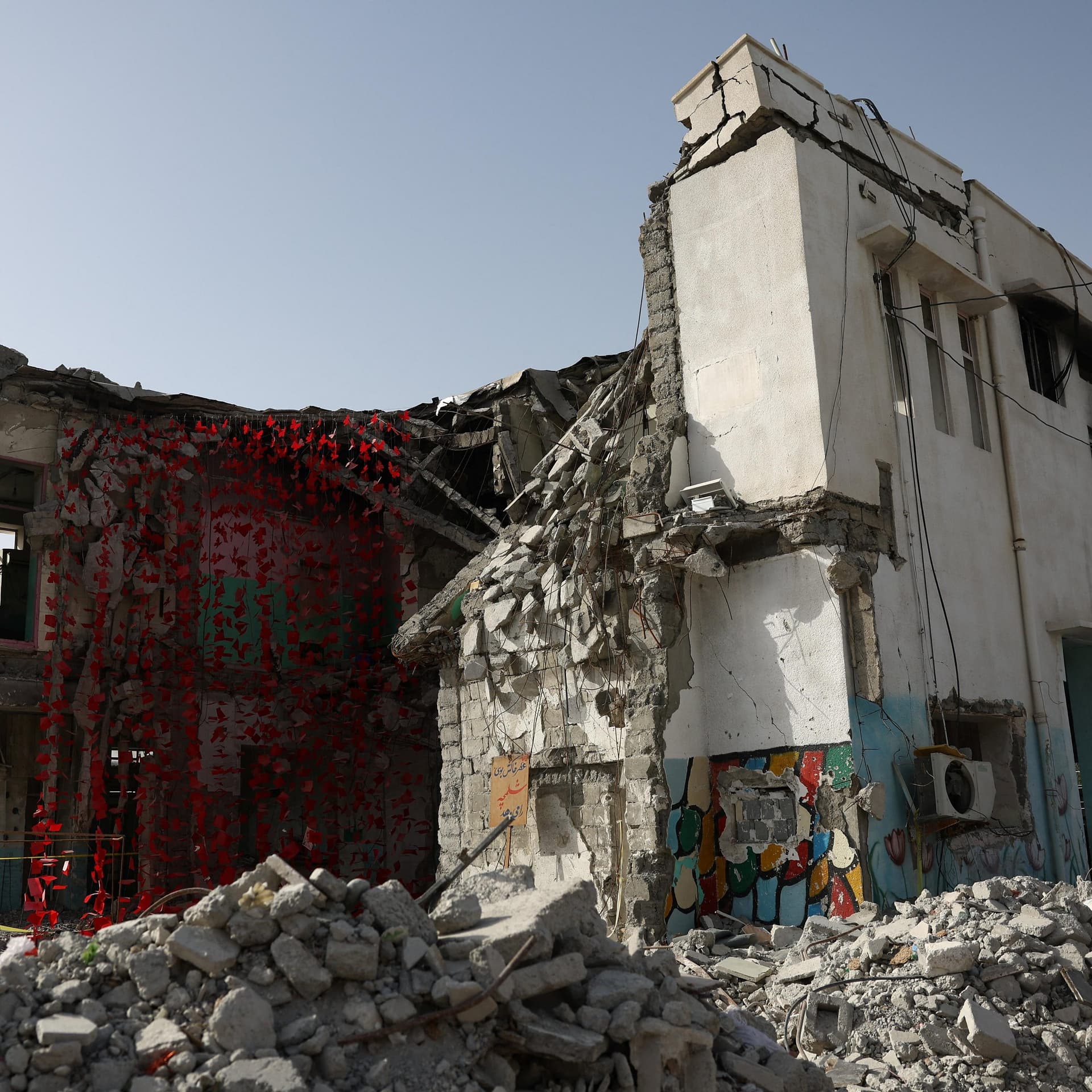
11:36Yes, it was two classrooms and a hallway. Everything else is destroyed. But in those two classrooms are, you know, what a normal children's classroom looks like in any school. Even here, you know, you saw the writing on the walls, their homework hanging on the walls, you know, children's desks, pencil cases, school bags. You know, I've gone to a lot of different bombing sites throughout my career. But going to a children's school whilst parents are still visiting every day and in mourning was incredibly hard. And I think what was particularly hard was going to the grave site. So there is a cemetery only for the children that were killed in the school and teachers and parents who were killed.
12:26It is just row after row of little small graves. There was this young girl who was rollerblading through the graves. She doesn't understand what has happened because she's so young. She, you know, she shouldn't need to understand something like this. And it really made me think of my own children. And I was like, you know, how would you even explain this to a child? It's really, really humbling to hear you describe what you heard and what you saw in Mina. because from a news perspective, at least here in Washington, D.C., the Iran war story has moved on. You know, there were many, many more strikes after that first day.
13:07Then, of course, there was a blockage of the Strait of Hormuz, a focus on the economic impact worldwide. Then talk of a ceasefire or maybe not a ceasefire. But it's very clear in hearing from you that the Iranian families grieving the loss of their children. Life has not moved on. It definitely hasn't moved on. And, you know, when we were at the school, they were holding a prayer and they hold it every day. And all the parents and teachers who survived come together in that sight of rubble and pray together. But, you know, it's very hard for them to move on when they haven't had a clear answer about who was responsible for the killing of their children and their colleagues and, you know, fellow parents.
13:48And that is something that really came across while speaking to people is they want accountability. Who do they blame? Well, I mean, you know, of course, all the reporting and all the evidence suggests that the U.S. was responsible for this attack. And did that come up in your conversations? Yeah, I mean, a lot of people were talking about it being the U.S. A lot of them said Trump is responsible for what happened in the school. Yeah, individually, exactly. You know, one of the mothers I spoke to, Mesume, her daughter Seteyech, who was nine years old, was killed in the school. and she has other daughters.
14:24They were sitting with her beside the grave of Setej.
14:30And she was just, before I even started to interview her, just crying. She was so angry when I brought up the question of the US and she sent a message to President Trump. I can't remember her exact words, but she said that, I hope he gets what he deserves and that she wants justice. She wants accountability. She wants to know who was responsible for what happened to that school. Noelle, we're now quite a few months on from when that first strike on the school took place and since this war began. Did you get a sense from any of the people you spoke with that there is a growing frustration at all with their own Iranian government?
15:14Or is most of the frustration directed towards the U.S. government and towards President Trump? We got a mix of responses to that question. You know, of course, the people we spoke to on camera have to be really careful about what they say. They could get themselves in serious trouble if they say anything against the government. And so many of them told us, you know, that they want this war to end, that the impact of this war, especially economically, is, you know, having a huge impact on their lives and that they feel the regime is winning this war. You know, a lot of people told us it has unified us.
15:52Even if you were against the regime beforehand, now you're with it because you don't want this foreign intervention. But then also we spoke to people off camera, people whose testimony we kept anonymous. In my opinion, America has sort of lost the war. It's lost its way. One of them said, I welcome this war, but I feel like the kind of ambitions of this war have changed. This campaign became about oil and the Strait of Hormuz. The people mean nothing. They are irrelevant. The people are no longer a consideration. And then we also spoke to someone else. She told us, I do think that the government has become weaker.
16:30The regime hasn't gotten stronger, but the bullying is more intense. I think because America is trying to negotiate and we have closed the strait that they are powerful. But in my opinion, as an Iranian living in Iran, the regime has no power. The power of any country is within the people of that place. I think it's really important to add that two things can be true at the same time. You can be anti the regime and want change for your country, but also be against this foreign intervention in your country. And I think that's something that's kind of been lost in some of the coverage. You know, people think, well, if they don't want the war, then they must be pro-regime.
17:09And that's not true. A lot of Iranians we spoke to do want change, do want a better future, but also don't want bombs dropping on their homes. and don't feel that this war is achieving anything that will get them any closer to what they're hopeful for. Thus far, no one has claimed responsibility for the strike on that school. And I want to understand, Nawal, how has this actually unfolded in terms of who is deemed to be responsible and what evidence there is for that? On the day of the attack, there were two waves of attacks. One wave which happened early in the morning, which is when the school itself was hit, there is no video footage of that attack specifically.
17:54And then a little while later, there is another wave of attacks that hit the neighboring IRGC compound. And when I say neighboring, it is a couple of meters away. It's very close by. The second wave of strikes were captured on film. And when experts see this video, they can see that that wave of strikes was Tomahawk missiles. Out of all the warring parties that are active in Iran right now, the United States is the only state that has Tomahawk missiles. And also experts say that usually you wouldn't use different types of weapons within the same attack. And so if you had used Tomahawks in the second wave, you would have used them in the first wave.
18:37In addition to that, there is the crater that was left behind in the heart of the school. Now, some experts have analyzed that crater, and they have said that that crater looks like the kind of crater that would be left behind by a Tomahawk missile. Do you still see evidence of that crater? Yes. Do you see any missile fragments, or have those all been removed? We haven't seen any missile fragments, and the regime did present missile fragments a few days, I think, after the attack happened. And they were fragments of a Tomahawk missile. But of course, they presented them. You know, it's not like an independent team of experts went to the site itself and found those remnants.
19:17So you have to take that with a pinch of salt as well, because it was presented by the regime. In addition to that, Reuters and CNN, they say that they've seen a preliminary version of this investigation by the US. And in that preliminary report, it does say that the U.S. is responsible. All of that evidence put together does point to the United States being responsible. But until the United States releases the findings of its own investigation, it is very hard to say unequivocally that they were responsible, even if all the evidence points towards them. well thank you no all for bringing your reporting thank you so much for having me asthma it's always a pleasure
20:17ever wonder why we make the choices we do and how to make smarter ones introducing choiceology an original podcast from Charles Schwab. Join Wharton professor Katie Milkman, an award-winning behavioral scientist and author of the best-selling book, How to Change, as she shares true stories from Nobel laureates, authors, athletes, and everyday people about why we do the things we do and how to make better choices to help avoid costly mistakes. Each episode covers the latest research in behavioral science and dives into themes like the power of self-control, shaping your mindset for success, navigating new beginnings, and why starting over can feel so hard.
21:02Listen to choiceology at schwab.com slash podcast or wherever you listen.
21:13As Nawal alluded to, we still don't have answers from the US government about what happened, And we wanted to understand why. So I called up my colleague, Tom Bateman. He covers the State Department for the BBC. When this war started, this news began to emerge that a school had been hit in Minab and a large number of children killed in what looked like an absolutely devastating incident. And obviously the Iranians were talking about this as state media was starting to show what had happened. And there was nothing on the US military's social media feeds about that. And when I looked, I think it was the following morning on their website for any kind of statement.
21:50It simply said, this incident is under investigation. The day the war started. And not just the first day, I mean, the first few hours. And that's another point, I think, which is really significant about this. Because remember that this war began in the daytime. And the reasons for that, we assume, are because that's when the Israelis and the Americans had intelligence of the whereabouts of the supreme leader, which was the starting point that they killed him. And I put that to Marco Rubio, one point is it wasn't this reckless. Because if you were trying to mitigate civilian harm, you know, you would start military action usually during the night.
22:25That's why wars often start, these kind of aerial campaigns often start at nighttime. Tom, I want to pause and understand the timeline. When did you begin to hear a recognition from the Trump administration about what had actually happened and what was their initial response? The very, very first response was from memory from U.S. Central Command's press office. and there was just a one-line written statement where they had said this incident is under investigation and i also asked marco rubio the secretary of state i believe that was the monday you know the war started on a saturday yes can you tell us what you know can you tell us what you know mr secretary or the administration knows about the strike on a building in southern iran the iranians are saying was the school uh reports of large numbers of civilians including children and killed.
23:10I've seen those reports. I don't have, I would refer you, not because I'm not trying to answer your question, but I don't want to get it wrong. The Department of War would be investigating that if that was our strike, and I would refer your question to them. He said, you know, this is an issue for the Pentagon, that the US would never target civilians. Are there indications this was an American missile? Well, clearly, the United States would not deliberately target a school. I asked Pete Hegseth at the Pentagon during the first week. Can you give us an update on What the administration knows, what you know now about the reported strike on a girls' school in southern Iran on Saturday?
23:45All I know, all I can say is that we're investigating that. We, of course, never target civilian targets, but we're taking a look at investigating that. And that's when I got the response. We're investigating that. And I pushed again and said. Just on the basis that with the information you would have, your reconnaissance abilities, ability to gather information. I mean, it's several days on now. So is there any clarity on whose munition this was? We're investigating it. Thank you.
24:17Here we are several months later. What's the status of those investigations and have we gotten any answers? Well, what we know is that there was an internal initial probe by the Pentagon that has not been made public. but the top lines of it leaked around the time that found that investigators believed this was likely the result of a US strike but that they would continue investigating to gather more information. We're nearly five months on now. Yes. And we still are none the wiser as to where that investigation is going, when it will be released. Now, the other element to this is that President Trump has been asked multiple times now about the Menard strike.
24:58I asked him on Air Force One a few months ago. of CEMCOM was asked yesterday about the strike on the girls' school on the first day of the war. Oh, that's under investigation. You're talking about the original. It was the only case of investigation at the moment. It's a civilian casualty. I think we have a couple of things under investigation, but that is under investigation. Are you able to confirm yet? And again, he was asked. There's footage that shows that an American missile strike and a Tomahawk missile likely destroyed that Iranian girls' school. So will the Americans, will the U.S. accept any responsibility for that strike?
Read the full transcript
25:34And I will say that the tomahawk, which is one of the most powerful weapons around, is used by, you know, is sold and used by other countries. You know that. And whether it's Iran, who also has some tomahawks, they wish they had more. But whether it's Iran or somebody else, the fact that a tomahawk, a tomahawk is very generic. So you have already a contradiction there because you're saying you hadn't seen the report about the information but was offering a theory about what had actually happened. The military experts and the former Pentagon officials I've spoken to have said that this is not a complicated incident when it comes to trying to work out what had happened.
26:09American missiles are precision guided. They're feeding data back to satellites. They know where they're going. Some have cameras in them. It's likely that they knew very early on exactly what had happened here. Certainly that is a view of the experts I've spoken to. The issue is likely to be, frankly, that if the system has found one thing, and the Pentagon knows that internally, but the commander in chief in the form of the president has said something almost diametrically opposed to that, it gets pretty difficult for them to put out a report that completely contradicts what the president has said.
26:42So that may be a factor here. And that's frankly about the way that the Pentagon has been run under Pete Hegseth, where there has been a very stringent control of information and attempt to shape the narrative. How out of the ordinary would you say the administration's response has been to this all? I mean, this is extremely rare in the modern history of the U.S. military and the Pentagon to have this amount of time for nothing to have been acknowledged, no information to have been released, given the scale of what happened. And, you know, to put this in context, if this is confirmed to have been a U.S.
27:17strike, this would count as one of the worst single cases of civilian casualties from a US war in the Middle East in the last three decades. I looked back at several other cases in the last 30 years where there had been American strikes that had killed a large number of civilians. And in almost all of those, there'd often be at the start an attempt perhaps by the US to suggest that it might not have been them or to sort of talk about the mitigating factors. But pretty quickly, when journalists start looking into these cases, you will have had an admission by the Americans and sometimes an apology, sometimes even compensation.
28:00The degree to which we have seen a lack of transparency in this case far outweighs anything we've seen, you know, the last 20, 30 years.
28:12Well, thank you for pressing the administration on this story. And thank you also for joining us here on the show. Thanks very much, Asma.
28:48from our listeners. So if you've got story ideas or questions, you can drop us a note. Our email address is theglobalstory at bbc.com. And if you appreciate what we are doing here on The Global Story, bringing you one big story every weekday about where the world and America meet, then we'd really appreciate if you all could take a moment to rate us or write a review. It really does help other people find the show. Today's episode was produced by Zandra Ellen, Kat Farnsworth, Lucy Paul, and Aaron Keller. It was edited by James Shield and mixed by Travis Evans. Our senior news editor is Chyna Collins.
29:22And I'm Asma Khalid. Thanks for tuning in, and we'll talk to you again tomorrow.
From the publisher
On February 28th, in the opening hours of the first day of the US-Israel war against Iran, an attack on a school in the southern city of Minab killed 156 people, including 120 children. To date, it is the deadliest single incident for civilians during the Iran war.
Experts say the school was hit by a precision guided Tomahawk missile - a weapon that neither Israel nor Iran are known to possess. Yet five months on, the US government has not formally accepted responsibility.
We speak to the BBC’s senior international investigations correspondent, Nawal Al-Maghafi, who recently returned from Iran where she visited Minab and met with survivors of the strike and the families of those who were killed. We also hear from the BBC’s State Department correspondent, Tom Bateman, about his attempts to get answers from US officials.
Producers: Xandra Ellin, Cat Farnsworth, Lucy Pawle and Aron Keller. Executive Producer: James Shield Mix: Travis Evans Senior News Editor: China Collins
Photo: The Minab school damaged by a strike on February 28, 2026. Credit: Majid Asgaripour/WANA via Reuters.