In short
The BBC “Global Story” episode examines what changed after a US-Iran framework deal to end strikes, reopen the Strait of Hormuz, and continue nuclear talks—asking who “really won” after months of war, economic disruption, and civilian deaths.
Guests
Lise Doucette, BBC chief international correspondent (leads analysis of global diplomacy, Middle East conflict, and nuclear issues).
Key claims
The deal is not full peace, but a fragile discussion framework. Reopening Hormuz is a major global-economy relief, though mine-clearing and logistics will take weeks to months and Iran may still control the strait via a toll/service-like arrangement after an initial toll-free period. Nuclear risk remains: Iran has ~440 kg uranium enriched to ~60%, and talks may involve suspending enrichment and diluting/handling highly enriched material, but “danger is still there.” In the Middle East, Iran is portrayed as emerging stronger and more central to regional diplomacy; US-Israel unity is strained, especially around Netanyahu’s Lebanon strategy and Trump’s election-era pressures. For Iranians, the “regime change” promise has not materialized; repression and executions increased.
Notable examples
Strait of Hormuz as a fifth of maritime traffic and key for oil, food, and fertilizer; reports of farmers using cheaper fertilizer; references to the 2015 nuclear deal and Trump’s “nuclear dust” claims; mention of Khamenei’s assassination and Iran’s deterrence via Hormuz; outreach/mediation involving UAE/Qatar/Oman; Israel’s continued strikes in southern Lebanon and Hezbollah ceasefire demands.
Written by AI. May contain mistakes. Listen to the episode to check what was said.
Chapters
Tap a time to open that second in VOOverview of the Iran Conflict
0:30 to 0:48
Discussion about the recent deal between the US and Iran and its implications.
“And to think, that's just a small taste of what Schwab offers.”
Overview of the Iran Conflict
0:52 to 2:45
Discussion about the recent deal between the US and Iran and its implications.
“I'm very happy to say, very signed, the deal's all signed.”
Introducing Lise Doucette
2:45 to 3:19
Introduction of guest Lise Doucette to discuss the Iran conflict.
“From the BBC, I'm Tristan Redmond in London.”
Impact on the Global Economy
3:19 to 3:40
Exploring how the Strait of Hormuz affects the global economy post-war.
“So kind of the global economy, the nuclear situation, the future of the Middle East and most importantly of all, arguably the situation for the people of Iran.”
Importance of the Strait of Hormuz
3:40 to 4:51
The significance of the Strait of Hormuz for global maritime traffic and energy.
“At the very heart of this is the Strait of Hormuz.”
Negotiations and Control of the Strait
4:51 to 6:06
Details on the control and management of the Strait of Hormuz post-deal.
“conduit for food and fertilizer, humanitarian aid.”
Iran's Strategic Gains
6:06 to 8:02
Discussion on Iran's strategic posture following the conflict.
“The Strait of Hormuz has been a gift of geography for Iran.”
Nuclear Weapons Considerations
8:02 to 10:03
Examining the nuclear weapons situation in Iran after the war.
“But for Iran now, you're asking what has changed in this war.”
The Future of Iran's Nuclear Ambitions
10:03 to 14:03
Discussion on the potential future for Iran's nuclear capabilities under new leadership.
“Now, because it seems to be ending, it may not be as bad as people feel.”
Iran's Evolving Nuclear Threat
14:03 to 15:01
Learn about Iran's changing leadership and its implications for nuclear capabilities.
“This new leadership in Iran, much more hardline.”
Show all 14 chapters
US-Israel Relations in Crisis
15:18 to 18:21
Explore the tensions between President Trump and Prime Minister Netanyahu and its effects on their alliance.
“Lise, let's move on to the situation in the wider Middle East.”
Iran's Strength in the Middle East
18:23 to 21:04
Understand how the recent conflict has altered Iran's position in the Middle East.
“I mean, I think it's fair to say that the United States and Israel to some degree went into this war with the ambition that they were going to, in some ways, reshape the Middle East.”
Domestic Struggles in Iran
21:05 to 24:56
Examine the impact of the war on Iranian society and the regime's response to protests.
“They will try to have some kind of a rapprochement or no aggression pact with Iran.”
The Ambiguous Nature of Victory
24:57 to 26:05
Delve into the complexities of defining victory in modern conflicts.
“But we don't know what's going to emerge.”
Transcript
Automatic transcript. May contain errors.0:00This BBC podcast is supported by ads outside the UK.
0:30And to think, that's just a small taste of what Schwab offers. Because Schwab knows that when it comes to your finances, choice matters. No matter your goals, investing style, life stage or experience, Schwab has everything you need, all in one place, so you can invest your way. Visit schwab.com to learn more. I'm very happy to say, very signed, the deal's all signed. And the strainer's already partially opened. As you know, they're doing a little hunting for a couple of mines that they've already found. But it's essentially, ships are starting to go out now on Friday. It'll be completely open.
1:17Ever since the US and Iran announced that they'd agreed on a deal to end the war, we've heard a lot from the Trump administration. But there are still a lot of questions. We've done a great job. And hopefully it's going to be a good relationship and we're going to get along. And if we don't, we go back to where we started. But I don't think it's going to be necessary. As we're recording this on Monday, we don't know what all this could be in the long term. Both sides appear to have agreed to end the strikes, to reopen the Strait of Hormuz, and to keep talking about the nuclear issue. Now, to be clear, this is not a peace deal.
1:56It's just a framework for discussions. And if all goes to plan, it'll be signed by the United States and Iran at a ceremony in Switzerland on Friday. The American Vice President, J.D. Vance, expects to be there. We've got a lot of leverage here, but we also have the President saying to them, we're extending an open hand. If you guys want to meet us, If you guys want to change your relationship with the United States, we will change our relationship with Iran. That's the offer. And we're going to have to see whether they they meet us there. So what's really changed? That's the key question we have after three and a half months of war.
2:31Billions of dollars and many civilian deaths. Is the situation we now find ourselves in better, worse or the same for the United States, for Iran, for the global economy and the broader Middle East? From the BBC, I'm Tristan Redmond in London. And I'm Asma Khaled in Washington, D.C. And today on The Global Story, who won the Iran war?
2:59I'm pleased to say that we're joined by the BBC's chief international correspondent, Lise Doucette. There are a lot of known unknowns at this point, but if there's anyone in the world who could help us understand where we are right now, It's Lise Doucette. Lise, thank you so much for joining us. It's always lovely to join you and Asma. Well, the big question we really want to answer today, Lise, is does this deal leave the following four areas better, worse or the same than they were before the war? So kind of the global economy, the nuclear situation, the future of the Middle East and most importantly of all, arguably the situation for the people of Iran.
3:39Let's start off with the global economy. At the very heart of this is the Strait of Hormuz. We're all very familiar with it now. We maybe weren't a few months ago. Opening the Strait of Hormuz was an imperative, but how desperate was the situation becoming at this point? Interesting how in this war of our time, how the Strait of Hormuz has become a household name. I'm sure there are parents across the world who are telling their children, Well, we might have a summer holiday if they open the Strait of Wormuz because there might be a shortage of jet fuel. And, oh, we're going to take a trip over land, but we might not be able to because the price of petrol is so high.
4:21Economists and people in the financial world had been warning that if this went on into the summer, then the global economic and financial shock and energy shock would have been much deeper and much more widespread. So I think we are hearing today, can you hear it all the way to Washington, Asma, this sigh of relief in capitals around the world because it has reminded us just how far reaching crises of our time are. I know all of our listeners and viewers must know by now that the Strait of Hormuz with Iran on one side, Oman on the other is a vital waterway, a fifth of the world's maritime traffic and oil and gas, also a vital conduit for food and fertilizer, humanitarian aid.
5:09So the fact that in this deal, and as we are recording at one o 'clock on Monday here in London, one o 'clock BST in the afternoon, that we don't have a lot of details about the deal. But what we do here, and this is important from both the United States and from Iran, they are both committing to open the Strait of Hormuz. Iran will lift its restrictions. And President Trump said that the naval blockade will end. And at least to your point, when you said that in capitals around the world, there's a sigh of relief, I will say that's what you're hearing even out of the White House. I mean, it was striking to see that the way the president framed this, and I'm going to quote him here, he said, ships of the world, start your engines, let the oil flow.
5:54When we look at the Strait of Hormuz, does the situation in the Strait appear to be better, worse or the same than where we were at the end of February before these strikes began? If Iran gets its way, and for Iran, this is now a red line, the situation in the Strait of Hormuz will never be the same again. The Strait of Hormuz has been a gift of geography for Iran. Iran has now recognized that it is much easier and not that costly. It has cost, but it hasn't been as costly as it feared to shut down the Strait of Hormuz, to control it, to mine it. And I could be corrected when the final details come out, but there are reports today that the strait will remain toll-free for 60 days.
6:39And then after that, there will be regional discussion about how to manage the strait. We are already having reports today that Iran and Oman have already started discussing how they will manage the strait. And they've had discussions in recent weeks as well that maybe it won't be called tolls, maybe it will be called services, but Iran will still maintain some kind of a hold on it. Belize, that's what's so striking is that 60 days toll-free is being presented as a victory in Washington when we need to remind folks that prior to this war beginning in February, there had never been tolls, right, for ships to go through there.
7:21And that's what I think is striking is that the metric has shifted now over the last three months. It still is going to be highly contested because, for example, at some point during the war, I spoke to the diplomatic advisor, to the president of the UAE, Dr. Gargash. And he said Iran's moves in the Strait of Hormuz were a dangerous precedent because there'll be countries the world over where there are similar strategic straits. They'll be watching. They'll go, oh. So for other countries in the Gulf, for many countries the world over, these are international waters and that Iran cannot impose its will.
8:01It cannot hold sway. So let's see what happens. But for Iran now, you're asking what has changed in this war. What has changed in this war is that for Iran, its ability to control the Strait of Hormuz is not just a bargaining chip, as it has been during these negotiations. It is a long-term strategic shift. It's part of Iran's deterrence. It's part of Iran's strategic posture that it can enforce an agreement because this will be a very fragile agreement. And also, if the sanctions are not lifted, it's also an economic lifeline, potentially. And how much do we know about how long it would actually take to get the straits functioning again in an entirely normal fashion?
8:42If everything resumed today, how long would it take to clear the backlog? Do we know? Very good question. What we do know is that it's not going to be as fast or as easy as President Trump indicates. Let's fire up your engines, get that oil flowing. There will be some initial movement. But what we're hearing today from maritime experts is that it will take weeks, possibly months, to fully clear that strait of mines. In the first place, they don't know exactly where they all are. Iran perhaps may have a map of them because it did lay a lot of that mines. Also, there are thousands of vessels which have been stuck there for months, that log jam there.
9:24So that's going to have to happen. Then the gas fields have to start producing again. We don't know what the damage is when you haven't been operating the fields. Iran has to get the oil moving again. So it is going to take some time. But the most important thing at this moment is that it has to start. But it will take time. But as if you set out, if it goes as planned, and we have to be cautious, at least it will be better than it is now. And we've had reports from around the world that farmers in their planting season had to use cheaper fertilizers. And that was going to affect yields. That was going to have an impact on the world's ability to feed itself.
10:01There was already talk of a hunger crisis. Now, because it seems to be ending, it may not be as bad as people feel. It's not good, but it could have been catastrophic if it had continued. But Lise, let's move on to the second big issue here, and that is nuclear weapons. I cannot count the number of times I've heard from President Trump, from his administration, that the justification for this war was, in their words, Iran can never have a nuclear weapon. That is what we heard from the president when he spoke just after these strikes began. So when we look at nuclear weapons, the ability to get nuclear weapons, the desire to get nuclear weapons, is that better, worse, or the same from the context of the United States than it was before the war?
10:48There's a big question mark over this. First of all, in President Trump's statements, he talks a lot about how his deal will be better than President Obama's deal, the landmark deal in 2015, where Iran agreed not to enrich uranium past 3.67%. It's enriched uranium then, which was only enriched at about 20%. 97 % of that was sent out to Russia. And until President Trump pulled out of that deal in 2018, it was widely all of the analyses and the inspections that Iran was keeping to that deal. Where are we now? Iran has a stockpile of 440 kilograms, we've talked of this before, of uranium enriched to 60%.
11:29That's dangerously close to weapons grade. On February 26th at the Geneva talks, two days before this war started, Iran did offer concessions. And I heard them myself when I was in Tehran just before the Geneva talks. They offered to dilute this highly enriched uranium. And that is now in the mix of what we are hearing about what could possibly be even mentioned in the memorandum of understanding or where the discussion is heading. President Trump had been insisting, saying what he describes as nuclear dust would be excavated. It's not going to be easy. It's buried under rubble. we believe, in one of the nuclear sites in Iran, and then taken out.
12:11It's a very risky, very costly operation. And he said, we want to send it to the United States. Iran refused that. President Trump has started talking about diluting it. We have to wait and see. But there will be some kind of a compromise over what to do about that highly enriched uranium. There will also be some kind of a compromise over, we understand that Iran will agree to suspend its enrichment of uranium. That is a big deal. They didn't agree to do that in 2015. But this offer now, in some ways, it doesn't make sense because they're not enriching now. Because of the damage from the 12-day war last year when the U.S.
12:47hit nuclear sites, they've not enriched anything since 2025. So they initially offered five years. The United States has 20 years of suspension. President Trump, I think, was asked about in his New York Times interview. He says it wanted to be forever. So that's another area where we're just not sure. But as we speak today, Osman, as you know, in the American media, many and in fact, in all of the commentary, many are saying you've spent billions of American taxpayers money. Lives have been lost in Iran, thousands in Iran, also in Lebanon, which is also part of this. You've burned through a lot of your munitions and your deal is not going to be that much better than 2015.
13:30And in fact, from the talks that were underway when all of this happened, you could have actually had the same kind of deal. The last thing I will say is that Iran is a different country now. The Supreme Leader Ayatollah Ali Khamenei was assassinated on the first day of the war. It was always said that he was very cautious. He was very risk averse. He for years, his main ambition was to avoid a direct confrontation with the United States. And he issued a fatwa saying that Iran could not develop a nuclear bomb. Ayatollah Khamenei is gone. This new leadership in Iran, much more hardline. The structure is much more militarized.
14:10They have seen what has happened in the last months. They have this new deterrent in the Strait of Hormuz. Maybe they don't need a nuclear weapon. But there will be some who will say, in fact, I heard people saying this in Iran after the 12-day war. Iran needs the bomb.
14:30Now Mossad, the United States, their satellites are so good that if Iran makes a move to start enriching or to move toward a bomb, it's quite likely to be caught. So they may buy their time, but it may be on their minds. And don't forget that what does it come down to? It's nuclear scientists. Israel did assassinate quite a few. There are nuclear scientists. There are computers. There are plans. Iran still has the knowledge of how to do it. So the answer to the question that you're posing today, Tristan and Asma, is we don't know, but the danger is still there.
15:18Lise, let's move on to the situation in the wider Middle East. coming into the war, Donald Trump and Benjamin Netanyahu said that they were working in lockstep, but now they're not claiming to be in lockstep. There's ample evidence that that is not the case. What does all of this mean for Israel and for Netanyahu personally? This is a pivotal moment between President Trump and Prime Minister Netanyahu. They're very, very strong personal and political relationship. This is actually another inflection point in the history of this very, very tight strategic partnership between the United States and Israel.
15:58This is the first time where you've had this kind of collision. And on the front page of the wider circulation Israeli newspaper this morning, the headline in Hebrew is confrontation. And it's not Iran and the US. It's President Trump and Prime Minister Netanyahu. And the kind of comments he's made in public, President Trump said to the New York Times, oh, he's a difficult guy. He's used the F word that that's been reported. He should be grateful that if Iran got the nuclear weapon, Israel, the latest thing is that Israel would have been gone in two hours. This is a moment. Elections are approaching.
16:30They have to be held before October. Prime Minister Netanyahu is under huge and mounting pressure right across the political spectrum in Israel, saying Israeli policy has to be set in Israel. It cannot be set in the United States. It's the most far right wing members. Ben-Gavir, the national security minister, is telling Prime Minister Netanyahu, we are going to continue to strike when we believe we have to strike. And it's not just the far right. The defence minister, Israel Katz, has said we are going to continue in southern Lebanon. At the same time as Abbas Adakshi, Iran's foreign minister, says this ceasefire has to cover all fronts and all parts of Lebanon.
17:07And that's what Pakistan's Prime Minister, Shabazz Sharif, said as well. This is going to be the Achilles heel, the weak part of this deal. Is the risk, therefore, for him that he cannot keep pursuing, under the possible terms of an eventual peace deal, a security operation against Hezbollah? Domestically, is that another problem for him? Where does that stand in this peace deal? We don't know. President Trump has at one point saying, I understand he's going to elections. That's why he wants to continue this war. President Trump is making it clear he doesn't want to continue this war. But we have seen in the past, again, where he used to call up Prime Minister Netanyahu and say, stop getting in the way of the Gaza deal.
17:49Stop attacking Hamas. And Prime Minister Netanyahu would stop and then he would continue again. This is going to be one of the biggest challenges facing this deal. And it's a big, big dilemma for Prime Minister Netanyahu. And American military and financial support to Israel has been absolutely crucial in Israel being able to wage this war and also the moral and political backing. So this really is a moment, what do we say, a defining moment, a hinge moment, and possibly a turning point. And Lise, it's not just the dynamic and the relationship with Israel. I mean, I think it's fair to say that the United States and Israel to some degree went into this war with the ambition that they were going to, in some ways, reshape the Middle East.
18:36You've covered the region for a while. You mentioned there Lebanon, the Gulf. When we look at the wider Middle East and we look again at this question of where it is three months, three and a half months later, what does it look like? It's not black and white, but if President Trump and Prime Minister Netanyahu have reshaped the Middle East, except it's now a shape that they didn't want and may not be heading in the direction that they want. Iran has emerged stronger. Yes, the mighty American military, backed up by the Israeli military and its intelligence assets, did inflict significant costs on Iran's military capabilities.
19:14But in an asymmetric war, Iran has shown that it has other tools and weapons that it is able to use. At the beginning of the war, it was said, well, if Iran survives, it will be seen as a victory. Iran just didn't survive. It actually has come out stronger in many ways. And across the region, it has actually strengthened its view. It has been the country that withstood the might. It took on the United States and Israel and didn't lose. And so therefore, it's seat at the table going forward to talk with its allies, its Arab allies in the Gulf. There had been this cautious rapprochement before this February 28th war.
19:51In the initial weeks, there was fury from Qatar, from UAE, even Oman had been hit, Bahrain, Kuwait, Saudi Arabia. They were furious with Iran as they kept being hit and not just on their U.S. military bases. What we have seen now, even the UAE has reached out. Reached out to Iran, the UAE did? Yes, they have, yes. There was even a report that they've given money, significant amounts of money to Iran to stop attacking. That was denied, but the meetings and the outreach are there. The relationship between Iran and the UAE has been strained. The relationship between Iran and Qatar. Qatar initially did not want to be involved in the mediation efforts.
20:31They had a feeling of betrayal. But again, you can't take on geography. They live within. They can look out their windows and see each other. What happens in that Vegas doesn't stay in that Vegas. They are too intertwined. They may be really, really nervous about it. They may have absolutely no trust. They may be doing it through gritted teeth, but they're doing it. And Iran is continuing to say, this war has shown you that American bases make you less secure, not more secure. The U.S. has to leave the region. Now, we're not seeing that because they will want to play both sides. They will try to have some kind of a rapprochement or no aggression pact with Iran.
21:14They will try to find a way to patrol the Strait of Hormuz. And they're not going to be, they're not united on this. There's big, big slips now between there was already before this war on other issues like Sudan and Yemen between Saudi Arabia and the UAE. But they're going to have to try to make this work. No one is going anywhere. So is it better, worse or the same? It's different. I remember, you know, it's, we don't often get things right. But I remember when this war started, I said, okay, I'm going to take a punt that this is a before and after moment. We remember before and after February 28th, the region is different and Iran is different.
21:51And it is. It is. When this war did start, the future of the Iranian people was posited and presented as a primary motivation in the military intervention. We're just going to hear what Donald Trump said back in late February when the intervention began. When we are finished, take over your government. It will be yours to take. This will be probably your only chance for generations. America is backing you with overwhelming strength and devastating force. Now is the time to seize control of your destiny and to unleash the prosperous and glorious future that is close within your reach. This is the moment for action.
22:36Do not let it pass. Has that chance now passed well and truly, or is it still open? There's great bitterness among the many, many Iranians who had dared to hope that an external intervention by the United States, backed up by Israel, would help them achieve what they couldn't achieve. An upsurge in protest every few years, and the last one, which had been put down with crushing force, which killed many thousands, that they had to look to outside help. Now there is a real, real depressing recognition that they can't look outside for help. It hasn't helped. The regime which has emerged, even though President Trump talks about regime change, it is the same regime except more hard line.
23:24And it is also, we saw it on the streets of Tehran when we were there a few weeks ago, the presence on the streets is much more visible. You can feel it on security officials in the Basich, the volunteer militia in plain clothes on motorcycles at every street corner, revving their motorcycles, sending a message, don't you dare come out onto the streets. The number of executions has increased of young Iranians who took part in the protests who are accused of conspiring and spying for the enemy, i.e. Mossad or the CIA. So Iran is sending, those in charge are sending a very strong message, don't you dare come out on the streets.
24:00And there was a general sense that while the war was going on, Iran wouldn't go out into the streets because people, quite frankly, are just trying to get by. the economic crisis is of staggering proportions. And again, this is going to be another test. I don't know how they're going to square the circle. We don't really know yet because the new leadership has emerged in wartime. How will they rule in, let us say, peacetime in the sense of that the hot war, there may be strikes here and there, but it won't be the same kind of a war. Will the new leaders be less interested in all of the clerical restrictions?
24:34Will they turn to the women and the girls who are not wearing the headscarves anymore? We talked about this the last time I was on. Are they going to be less worried about that, more worried about just keeping control? They'll give people a bit more freedom as long as they don't go into the streets. So this is another big question, Mark. Back to your question. Is it worse? Is it better? It's certainly worse for protesters. It was bad before. It's even worse now because now they feel, what are their options now? But we don't know what's going to emerge. We really don't know. Lise, there is generally assumed to be a winner in war, not always.
25:09But at this moment, do you have a sense of, did anyone win? The war's not over. The hot war is over, but these hostilities will be with the region for some time to come. And I think the pieces, the embers are still burning.
25:27What we do know is the people lost.
Read the full transcript
25:34those people who have not been getting humanitarian aid, the people of Iran, who hoped for better, who want a country that they feel is their own, where they have basic freedoms.
25:46What we do have is a war where, and this is not the first time it's happened, but that both sides say they won and believe that they won. And they all can find something to point to, to say this is the evidence of our victory. But victory, it's very difficult to define victory. And I think it's not black and white. And this is a measure of the world in which we live.
26:14On that note, thank you so much for joining us. We really appreciate it. Thank you so much, Lise. Great to have you. Thank you.
26:36That was Lise Doucette, the BBC's chief international correspondent. And that's it from us for today. A quick reminder, if you've enjoyed our show, please take a moment to rate us wherever you listen. It really helps other people find us. And as always, we appreciate hearing from you all. So listeners, if you all have thoughts, story ideas for us, you can email us at theglobalstory at bbc.com. And you all know here on The Global Story, we take a deep dive every weekday on one big story where the world and America meet. If you want to catch up on the very latest news headlines from around the world, then head for our sister show, The Global News Podcast, wherever you listen.
27:15Today's episode was produced by Sam Chantarasek and Lucy Paul. It was edited by James Shield. Our studio engineers were Ricardo McCarthy and Stephen Bailey. Our video producer is Matt Pintis, and our senior news editor is China Collins. I'm Asma Khaled. And I'm Tristan Redman. Thanks so much for listening. Cheerio.
From the publisher
The US and Iran have agreed a deal to end the war, which – if all goes to plan – will be signed at a ceremony in Switzerland on Friday.
But the agreement remains shrouded in mystery, and major questions remain about whether both sides can reach a long-term peace deal.
We speak to the BBC’s chief international correspondent, Lyse Doucet, about how the past few months have affected the global economy, the region, Iran’s nuclear capabilities, its regime and its people.
Producers: Sam Chantarasak and Lucy Pawle
Executive producer: James Shield
Audio mix: Travis Evans
Video producer: Matt Pintus
Senior news editor: China Collins
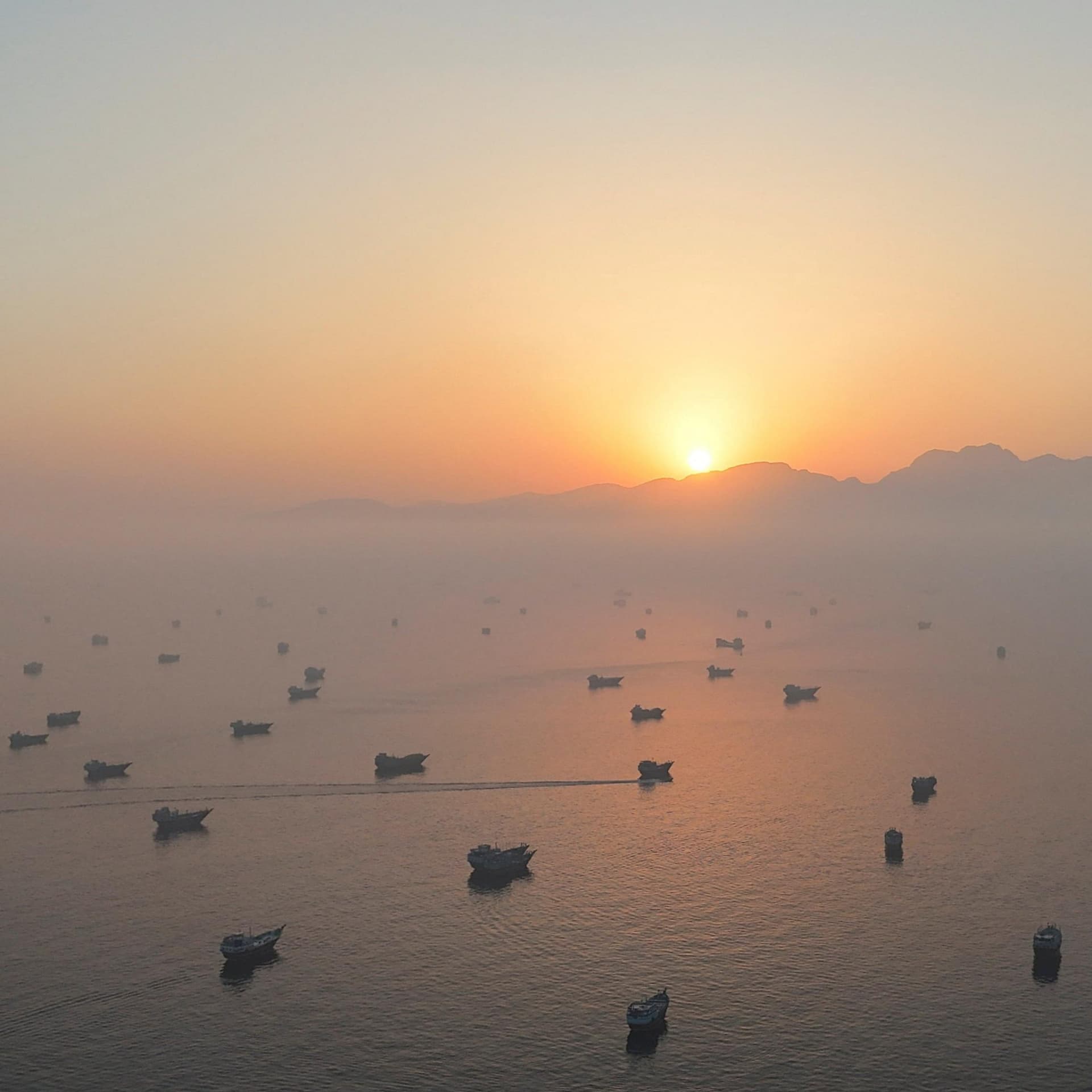
Photo: A drone view shows vessels in the Strait of Hormuz, as seen from Musandam, Oman, June 15, 2026. Photo credit: Reuters