
In short
Life inside Iran during an ongoing air campaign after the reported death of Ayatollah Ali Khamenei, including public reactions, civilian impacts, and uncertainty about who is running the country.
Guests
Parham Gurbadi, BBC Persian colleague reporting from/with contacts inside Iran (speaks about what people tell BBC Persian despite an internet blackout).
Key claims
Iranians are divided—some celebrate Khamenei’s death; as bombs fall, concern rises. Many who can afford it leave Tehran; others keep working, queue for petrol, and save cash. Casualties exceed 700 per Iranian officials, but civilian vs military breakdown is unclear. Iranian authorities say they’re in control via a “temporary leadership council” (Masoud Pezeshkian, judiciary head Ejei, and Ayatollah Ali Reza Arafi), while military units may operate “mosaic” and separately.
Notable examples
Videos of street celebrations; traffic jams delaying calls; reports of a school hit in Iran’s south/Persian Gulf coast with claims of 168 child deaths (ages 7–9); Marco Rubio saying the US doesn’t intentionally target schools but investigating whether it was an unintended strike near a Revolutionary Guard base.
Written by AI. May contain mistakes. Listen to the episode to check what was said.
Chapters
Tap a time to open that second in VOCelebration and Mourning in Iran
1:16 to 2:26
Exploring mixed reactions to Khamenei's death among Iranians.
“some Iranians mourned his death publicly in the streets of Tehran.”
Current Situation in Iran
2:26 to 4:25
Insights on how Iranians are coping amidst ongoing airstrikes.
“And today on The Global Story, what's life like in Iran right now?”
Life Under Siege: Daily Struggles
4:25 to 6:45
Describing daily life amid war and the resilience of citizens.
“They say that a foreign invasion has never led to democracy.”
Casualties and Civilian Impact
6:45 to 8:45
Discussion on casualty figures and the impact of strikes on civilians.
“So, and what we hear and my colleagues are hearing is that those who can afford it, they're leaving Tehran.”
Government Response and Control
8:45 to 13:32
Examination of the Iranian government's response to the crisis.
“We had the same problem during the 12-day war with Persian parents.”
Future Leadership and Uncertainty
13:32 to 14:00
Speculation on Iran's future leadership after Khamenei's death.
“And they kept him in the dark because they wanted Israel not to assassinate him.”
Iran's Targeted Political Leaders
14:00 to 15:49
Discussion on the potential impacts of attacks on key Iranian political figures.
“However, we don't know if he's alive or not.”
The New Ayatollah and Leadership Dynamics
16:16 to 19:04
Exploration of the new Ayatollah's emergence and current leadership structure in Iran.
“Well, I want to ask you about this Ayatollah that you mentioned that has appeared as if from nowhere.”
Public Sentiment and Support for Regime
19:04 to 22:30
Analyzing the public's view on the Iranian regime and potential changes.
“So Iranian president, Iranian head of the Iranian judiciary, who usually has a more threatening tone.”
Perspectives on Long-term Conflict in Iran
22:30 to 26:05
Discussion of the ramifications of a prolonged conflict in Iran.
“We've heard President Trump allude to the fact this week that this bombing campaign could go on for at least a month.”
Show all 12 chapters
Concerns for Civilians Amid War
26:05 to 28:00
Concerns regarding civilian safety and the humanitarian impact of military actions.
“So they're concerned about what comes the day after.”
Civilian Casualties in Conflict
28:00 to 28:30
The discussion highlights the tragic impact of conflict on civilians, especially children.
“When you see school kids getting killed, it doesn't matter who targeted them, whether Americans, Israelis, or Iranians regime, it's kids should not get killed.”
Transcript
Automatic transcript. May contain errors.0:00This BBC podcast is supported by ads outside the UK.
0:30Listen now or search for Good Bad Billionaire wherever you get your BBC podcasts.
1:00Catch every brand new episode every weekday. Just tap into iHeart to start watching. And we hope you enjoy the show.
1:15When Ayatollah Ali Khamenei was killed, some Iranians mourned his death publicly in the streets of Tehran. But others took to the streets to celebrate the Supreme Leader's demise.
1:32A lot of the celebrations we've seen among Iranians have come from members of the Iranian diaspora around the world. Whether in London, Washington, or Sydney. It would be like a giant party, lots of people dancing and singing and embracing, talking. We want to understand what's happening to Iranians inside Iran. So coming up, we'll be talking with our colleague Parham Gurbadi from BBC Persian. Now, despite an internet blackout, he and his colleagues have been figuring out ways to reach Iranians in Iran. As airstrikes continue to rain down on the country.
2:20From the BBC, I'm Asma Khalid in Washington, D.C. And I'm Tristan Redmond in London. And today on The Global Story, what's life like in Iran right now? And what do Iranians want?
2:38Paham, it's great to have you back with us. We're speaking to you on Tuesday afternoon, and we just want to note that time because it's plausible that the situation on the ground may change by the time listeners hear this. Now, Iranians have been under fire now for four days. At the BBC Persian service, you've been speaking to people inside in Iran in spite of the communications blackout. What have they been telling you? How are people coping? So the feeling is divided. Some of the people, they welcome an attack on Iranian, especially commanders and the leadership. So we received so many videos after Ayatollah Khomeini was killed.
3:22People were celebrating, people were cheering. In other smaller towns, people were dancing in the street, honking their horns. So there was a sense of happiness when they realized that he was dead. Some Iranians, obviously. However, as the war goes on, you know, sentiments can change because the bombs are dropping. So feelings are fluid. I hear more and more people are becoming concerned when they try to, for example, target a police station, but also the building next to it collapses. And if you have a relative there, so scenes like that can make people doubt if this is only about military leadership and there are going to be civilian casualties anyway in wars.
4:09But Iranians overall, to answer your questions, are divided. Some welcome the idea. They say that we've had enough under this brutal regime. They are going to kill us anyway. So it's better to see their end even if we get killed. Some others, they do not see it like that. They say that a foreign invasion has never led to democracy. So it's unlikely that this one will lead to a democracy. Have you been hearing from your own family and friends? I have. So my father just gave me a call yesterday and it was a relief after a few days. Was that the first time you heard from him? Yes, it was the first time.
4:45Because I realized one of our relatives died a day before the attack. And so they were on the way to the cemetery that the attack started. So through a friend of a friend, we managed to call them and we realized that they got stuck in a traffic jam. And I was extremely worried that they're going to be somewhere and mistakenly that that place is bombed. And they got stuck in a traffic jam. So it took them six hours to just get back home because of the traffic jam. And during that six hours, it was a tough six hours. Parham, where I sit in Washington, D.C., in the United States, we've heard very little about what this war looks like inside Iran.
5:25You've been speaking with people. Can you give us a sense of the conversations you've had or your colleagues have had? What have you heard? We have to keep in mind that this is happening right after that brutal crackdown of Iranian protesters that left a huge scar on Iranians' minds. Like it was a sense of national trauma that I've never seen before. I mean, I've seen brutal crackdowns by the Iranian regime, but this one was totally different. Thousands were killed. Everybody knew somebody who was killed. So many people have this unprecedented anger towards this. But that's like I said, this you cannot generalize that.
6:05Yeah, I've heard that sentence a lot, but that's not everyone. There are some people inside the country that they are extremely, you know, unhappy to see the bombs are dropping, you know, on their hometown. For me personally, when I see it, I lived in that city for 29 years of my life. And, you know, for example, yesterday I was seeing this video that the window was open and there was an explosion nearby. And there's just this wave of explosion moving the curtains and blowing the curtains away. It was unbelievable. It was surreal to see things like that happening in a huge city with millions of population like Tehran.
6:41I see it, but it's unprecedented for me. It's unbelievable for me. So, and what we hear and my colleagues are hearing is that those who can afford it, they're leaving Tehran. Those who can afford not doing their day job, they're leaving Tehran. They're going to other, especially north of Iran, is usually safer by the Caspian Sea, is usually safer place to be in. However, there are many people who can't do it. They were already before this. They were struggling to make the ends meet, especially because right before this war, there was this protest. And during the protest, many people just stopped working.
7:16They were not able to go to work. So some of the Iranians just have lost most of their income since January. And even before that, they were having a difficult time making the ends meet. So they have to go to work. They have to show up. And you see, that's one of the most bizarre things. I was looking at the video today and I saw this highway that is full of taxis. Taxis in Iran are yellow and some of them are green. You could see taxis going. and then it was a clear sky and there was this huge plume of smoke rising. I was like, what are you people doing outside? So people are still going to work.
7:54People are still going to work and you see people on the street. And the first day, so, and in other videos, you see that as well. You see that somewhere is bombed and people are just going about their business or it's clear that they were doing their business. They were doing their shopping. But apart from that, you see very long queues for petrol. People are worried. And that's one of the reactions. They want to have enough petrol in their car to be able to escape if things become more dire and more serious. So that and the other thing is that people are trying to save up some cash at home. If ATM machines, you know, cash machines stop working.
8:31But yeah, some of the people who cannot leave the city, they still have to go about their business and try to make some money for their families. However, we need to keep in mind that many people just refuse to leave their homes because there is a war going on. We had the same problem during the 12-day war with Persian parents. That's the problem I had with my own parents. And I wrote an article on BBC as well that my parents wouldn't leave. So he told me that if we get killed, we'd rather get killed together here in my own home rather than in someone else's flat or be a refugee or be. So I'm 70 years old.
9:08Even if I die, I'd rather die in my own house. And this was not just my parents. I heard that many people like me heard the same thing from their parents. And how much do we know about casualty figures? How many people have actually been killed on the ground? The latest update we've got is over 700 people, according to Iranian officials. But we don't know how many of those are civilians, how many of those are military personnel, because many military headquarters were targeted. But we know that the first place that was bombed was Ayatollah Khamenei's compound. And right after that, after a few hours, we hear...
9:43State TV claimed that a school in the south of the country was hit. That a school is bombed. The world must know the truth. This is a child's textbook. The children are buried beneath the rubble and they were all civilians. So the school is in the southern part of Iran, on the coast of the Persian Gulf. And so the number of the casualties at the school started rising up. And today it rose up to 168 people. These are kids from seven to nine, extremely young kids in a primary school. But to find who is responsible is very difficult. Obviously, those who are in the opposition are extremely suspicious of anything happens in Iran and they see Iranian regime behind everything.
10:28But there is no evidence for that. And Israelis said that it was not our fault. We were not involved. However, Marco Rubio, American foreign minister, said that we never intentionally target schools. Our colleague Tom Bateman, in fact, asked Marco Rubio about that school. Can you tell us what you know, Mr. Secretary, or the administration knows, about the strike on a building in southern Iran that the Iranians are saying was a school, reports of large numbers of civilians, including children killed. I've seen those reports. I don't have, I would refer you, not because I'm not trying to answer your question, but I don't want to get it wrong.
11:02The Department of War would be investigating that if that was our strike. And I would refer your question to them. And I'll make sure they're aware that you have that question. Are there indications this was an American missile? Well, clearly the United States would not deliberately target a school. Well, nobody intentionally targets the schools. But has it happened unintentionally? That's the main question. And at BBC Persian, my colleagues managed to find out that this is called what was right next to a Revolutionary Guard's base. So was it unintentionally targeted by the Americans? We don't know yet.
11:34At this point, Parham, the population of Iran has been hit by a number of strikes. What is the Iranian government doing at all to protect civilians? What has been their messaging to the population? So the main message is that we are in control because they do not want to see that they're losing control. They have lost their supreme leader who was in charge of the country for 36 years. So they've lost not only that, but the head of the Revolutionary Guard and so many other commanders at the same time. So I'm really surprised that they are still in power because in many other countries, when you have the entire military commanders and the head of the state as the most powerful man in the state is killed, usually in many countries that will lead to the collapse of the state and the regime is toppled.
12:24However, we see that the Iranian regime has survived so far and not only survived, they launched a barrage of missiles against Israel that they said it was the 15th round of missiles against Israel. And not only Israel, we know that they're targeting all the neighboring countries, Arab countries, plus Cyprus is being targeted by drones as well. We don't know where Iranians but might be behind it. If I was sitting at home, if I were a civilian in Tehran, how would I know who was in charge? Am I getting text messages on my phone telling me to do this or that? What are the actual signs of who's in control?
13:00After Khamenei was killed, the Iranian regime formed a, as they call it, temporary leadership council. Now, there are three members on that team. One is the Iranian president, Masoud Pazeshkian. The other one is the head of the the Iranian judiciary, Ejei. And there is this, unknown to many Iranians, an Ayatollah, a new face that not many Iranians know him. So he was under this assembly of experts, the body that chooses the next leader. But he's unknown to many Iranians. Is he going to be the next Iranian leader? And they kept him in the dark because they wanted Israel not to assassinate him. We don't know that yet.
13:39But he is one of the three people. So they're saying that don't worry about it. We are taking care of the leadership responsibility. But apart from that, there is an assembly in Iran called the Assembly of Experts that they're going to choose the next leader. However, in Iran, there were rumors for years and years that Mojtaba, one of the four sons of Ayatollah Khamenei, is the assumed successor. However, we don't know if he's alive or not. They're not just, you know, announcing it. We don't know that yet. An hour ago, Israelis said that they have targeted Iran's Supreme National Security Council headquarters, which is responsible for military operations inside Iran, political decisions and all that.
14:22Right next to the presidential palace. Was the president there? Was he not? We don't know. Was the head of the National Security Council there, Ali Larijani, one of the most powerful people in Iran? Was he there or not? And also the building for Assembly of Experts. So all these major decision-making bodies have been taken out. We don't know how many of the political decision-makers, if they were killed or not killed. However, during the 12-day war, according to Iranian president, they managed to target one of the meetings where the head of the judiciary, parliament speaker, and the president were there.
14:55They say they were lucky that they survived that attack. If it happens again this time, who is going to run the country?
15:35Transcription by CastingWords Just another billionaire. Good Bad Billionaire from the BBC World Service. Listen now or search for Good Bad Billionaire wherever you get your BBC podcasts.
15:48Hi there, I'm Asma Khaled. And I'm Tristan Redmond. And together we're the hosts of the Global Story podcast from the BBC. For those of you all who might be new to our show, we here at the Global Story dive deep every weekday on one big story at the intersection of where the world and America meet. And you can now watch the global story on the iHeart app. Catch every brand new episode every weekday. Just tap into iHeart to start watching. And we hope you enjoy the show.
16:21Well, I want to ask you about this Ayatollah that you mentioned that has appeared as if from nowhere. I mean, this is quite intriguing. What more can you say about this person? What's their name? What do we know about them, if anything? We don't know much about him. So I know his name is Ali Reza Arafi, and he's an Ayatollah, which it means that he has some level of religious education. What is his background? Where he comes from? We don't know much about him, but he is there. But like I said, if the political figures are also killed, then will that lead to the overthrowing of the regime or not necessarily?
17:00Because right now, like I told you, The fact that the military Iranian army is still functioning has surprised many people. What some analysts believe that is that they're operating in a mosaic style. What does that mean? So Iranian foreign minister in an interview said yesterday that he tried to explain saying that some of these units are not even in touch with each other. So they have received their instructions before. They were ready for the war. So they're acting separately. They're acting separately and they're not in touch with each other. I think, I assume, because of the security concerns, they are totally in the dark.
17:35They're probably not using communication skills not to be targeted. But this is quite interesting that they managed to survive this far as they are being targeted all the time. Parham, you mentioned this leadership trio. Are they the people actually in charge at this moment? Who is giving the orders? Who's actually running the country at this particular moment? And I ask this in part because President Trump has alluded to the fact that some of the people he might negotiate with are no longer alive. Some of the people they had in mind maybe to take over have also been killed. And so that makes me wonder who is actually doing this.
18:11I think it's a bit early to know that because I can give you an example why. Because during the last time, the 12-day war, something that surprised many people was that after the top military commanders were killed, Mohamed Bogher Qalibov, the Iranian parliament speaker, took the responsibility, was in charge of the Iranian military. And many people were surprised to hear that. Yes, he's a pilot and he comes from the Revolutionary Guard, but his position is the speaker of the parliament. Why would he take responsibility, be in charge of the—I mean, he has war experience and all that. So what I'm trying to say is that it's really difficult to guess.
18:51Usually after that, when they come out and they start speaking about these events, we understand. But it can be the information that comes out later. It can be as surprising to us. So at this moment, is somebody going on television on Iranian state TV or sort of giving a message to the Iranian public? Yeah. So Iranian president, Iranian head of the Iranian judiciary, who usually has a more threatening tone. So they play the good cop, bad cop. Hezashkian is this, you know, more, you know, in favor of dialogue with people and tolerance. At least that's what he shows. But Eze is a person who's more threatening, menacing and saying that if you come out on the street and if you protest, we're going to treat you like you're a CIA and Mossad spy because we're in a war with the West.
19:35Is it possible to know, and I'm not suggesting that anyone is taking opinion polls right now, clearly not. But is it possible to have any kind of sense, even in broad brushstrokes, of how much support the government still retains and how many people are opposed to it and would like to see it go altogether? It's very difficult to assess that because so what we know is that the majority of Iranians are unhappy with this establishment. That's what we know. But what percentage of Iranians support this regime is really difficult to assess. Because, for example, when there is an event such as the anniversary of the Islamic Republic, the revolution, they show videos that there are many people on the street.
20:17But we also know that they force some people to take part in those events. For example, soldiers, for example, those who work in governmental organizations. So it's really difficult to assess whether if, for example, let's say, I don't know, hundreds of thousands took part in an event like that. Do they all support the Iranian regime? and are those videos all reflect the reality of the number of the people who take part in there? It's really difficult to assess that. How much support is there for the idea of potentially Reza Pahlavi, the former Shah's son, returning? Is there enthusiasm around this figure or is there only enthusiasm for him outside of Iran?
20:57No, there is enthusiasm for him inside the country. That's a fact. But how big it is, I don't know that. But what I can tell you, there is a huge difference. What happened during the protest in Woman Life Freedom back in 2022, people were just chanting that Woman Life Freedom or Death to the Dictator. Yes, there were some people, you know, chanting in favor of Pah Levy, but that was so minimal that it was almost insignificant. And from that three years ago to their last round of protests where people chanting his name in so many cities, small towns. And when I saw the small towns, some of them, I'm an Iranian.
21:36I had to Google their names to find out where they are. And it was as if the entire town is on the street. I mean, the population of the town is 100 ,000 people. And when you looked at the videos, it was as if literally the entire town is on the street. And many of them were chanting his name. And it was not only in the Western Iran, it was in North, in South, in West, in East. Am I saying that everyone in Iran is in favor of Pahlavi? Of course not. Of course not. There are many, he has got many critics. He, there are many people who believe that he's going to restore a monarchy and not necessarily like the one that you have in the UK.
22:14But his supporters, they say that, no, it's going to be a constitutional monarchy. And this is what he says himself. But the fact is that he has managed to garner way more support in the past three years. That has surprised many analysts. We've heard President Trump allude to the fact this week that this bombing campaign could go on for at least a month. This could become a protracted long war. And while you say some in Iran are glad that the supreme leader is gone, what does a long war mean for Iran? That's what I meant when I at the beginning I said that sentiments and feelings are fluid. and they're not fixed.
22:52So even those Iranians who are happy that the Ayatollah is gone, it depends how this war is going to pan out. If there's chaos in the country and if there's insecurity in the country, those feelings might change, you know. So I remember back when Iraq was invaded, many people were welcoming American soldiers. However, things changed, you know, after that. So it depends what happens right after this, because many Iranians right now, especially those who favor the return of the Pahlavi dynasty and or Pahlavi himself, the son of the late Shah who now lives in exile in the United States. If he wants to come back, how would they do that?
23:30Because unlike the Iraq war, U.S. does not have boots on the ground, at least for now. So without boots on the ground and only with aerial campaign, how is Reza Pahlavi going to return? He should be secured to even get to somewhere in Tehran. The main question is, is it possible to overthrow a regime that they're, you know, acting separately from one another, shooting missiles here and there in the entire region so that this regime collapses without boots underground? And will they give up, lay arms, as Trump has asked them, just by an aerial campaign? Even let's say that they lose the ability to send missiles, that you obliterate all of that.
Read the full transcript
24:09Are they going to lay arms or are they going to act like a guerrilla kind of, you know, insurgent groups? Are we going to see some insurgencies inside the country? And then if that happens, will the U.S. send soldiers? Is Donald Trump willing and ready to get involved in one of those Middle Eastern endless wars or long wars, let's say? And what we know is that he is not in favor of such things. But this is the last few years of his presidency. Will he do it? I don't know. How much concern have you heard from Iranians about this just turning into a totally chaotic situation? So I think Iranians right now are in two camps.
24:50One is in favor of this attack because they want to see an end to this regime any way possible. And they know that protests didn't work. And they saw it just a few months ago that in January that Iranian regime killed thousands of people. So they say that how do you want to topple this? How do you want to overthrow this regime? There is no other way other than a foreign invasion and a military action against this regime. This is one camp. So they are in favor of it. And they don't want to see any dark scenarios. When you tell them that there might be chaos, they're like, Iranians are different from Syrians.
25:22Iranians are different from Iraqis. Iranians are different from Libyans. So they want to be optimistic about the entire thing. Whether that unfolds or not, I don't know. But there's another camp who is against the foreign invasion. They say that democracy cannot be achieved by fighter jets. Democracy cannot be achieved by a foreign invasion. And it has never worked. It didn't work in Libya. It didn't work in Iraq. It didn't work in Syria. It hasn't worked in so many Middle Eastern countries. But then those people are extremely concerned. Those people are saying that, yes, we are happy that Khamenei is gone, but I'm not happy that bombs are dropping on my city.
26:00I am worried about what comes next. you're bombing police stations. Who is going to stop the thieves? So they're concerned about what comes the day after. Even let's say, hypothetically, that the Iranian regime falls tomorrow. What happens the day after that? Does the Trump administration really have a strategy in place? And would that strategy work to keep the calm? Would they try to adopt a Venezuela style and deal with part of this regime? But then Iranian opposition groups would be extremely dismayed because they don't want any part of this regime to be left. Or Trump is going to bring some of the, you know, foreign opposition figures such as Reza Pahlavi.
26:45But then without boots on the ground, how do you want to get Pahlavi to get to Tehran? These people, revolutionary guards, still have arms. He can be targeted. If you don't have boots on the ground, how do you want to facilitate that? How are you feeling, Parham? I mean, you're an Iranian in exile. you've lived most if not all of your life knowing the Islamic Republic. How are you feeling now? How momentous does this moment feel to you? One of the things is that, for example, my parents live in a neighborhood that is some of the Iranian, apparently some of the Iranian missiles are hidden there because it's next to a kind of a park.
27:21It's a huge park. So apparently Iranians are using that as a hideout for their missiles and all that. And that place was bombed during the 12-day wars. It's near my parents' place. So one of the things that worries me a lot is that, and this worries a lot of Iranians because you don't know all your neighbors. And many of the buildings that were targeted in the 12-day war and some civilians were killed, there was a, I don't know, a commander or a nuclear scientist living upstairs or downstairs of your building, you're flat, and you just don't know about them. So these are my concerns. When you have a family somewhere, you don't want them to be harmed.
27:59And overall, my people as well, I don't want civilians to be targeted. When you see school kids getting killed, it doesn't matter who targeted them, whether Americans, Israelis, or Iranians regime, it's kids should not get killed. Agreed.
28:19Baham, thank you so much for joining us. It's always a pleasure to be on the show. Thank you. Thank you.
28:30That was Parham Gobadi with the BBC's Persian Language Service. And yep, we indeed here at the BBC have an entire division that serves Iranians around the world. And they are doing some of the best reporting on Iran out there. Clearly because they have over 23 million followers on Instagram alone. Now, a quick note before we go. If you're a frequent listener of our show, you know that The Global Story is a podcast about where the world and America meet. And this U.S.-Israel war with Iran is a huge story in that zone. So we're going to be sticking with it all this week on the show, looking into different parts of the story.
29:05For example, a deep dive onto how the war compares to previous American interventions in the Middle East. If you have questions you'd like answers to or aspects of the conflict you want explored, you can email us. We're at theglobalstory at bbc.com. Our episode today was produced by Viv Jones, Valerio Esposito and Chris Bendrev. It was edited by Bridget Harney and mixed by Travis Evans. Our senior news editor is Chyna Collins. And I'm Asma Khalid. And I'm Tristan Redman. Thanks as always for listening. We'll be back again tomorrow. Cheerio.
29:46Hi, I'm Simon Jack. I'm Zing Zing. And together we host Good Bad Billionaire. The podcast exploring how some of the wealthiest people on the planet made their money. And we are back with a new season. From sporting superstars to music moguls and celebrity CEOs. We'll be taking a closer look at the lives and fortunes of some of the world's richest people. And asking you to decide if they're good, bad or just another billionaire. Good Bad Billionaire from the BBC World Service. Listen now or search for Good Bad Billionaire wherever you get your BBC podcasts.
30:19Thank you.
From the publisher
Five days since the first US–Israeli strikes on Iran, and the death of supreme leader Ayatollah Khamenei, the country is once again in a communications blackout. With limited access to reliable information, it is difficult to know how ordinary Iranians are coping.
Parham Ghobadi, senior reporter and presenter at BBC Persian, has been speaking to people inside Iran to guage their fears, their expectations, and how they are navigating a moment that could reshape their country’s future.
Producer: Viv Jones, Valerio Esposito and Chris Benderev
Executive producer: Bridget Harney
Sound engineer: Travis Evans
Senior news editor: China Collins
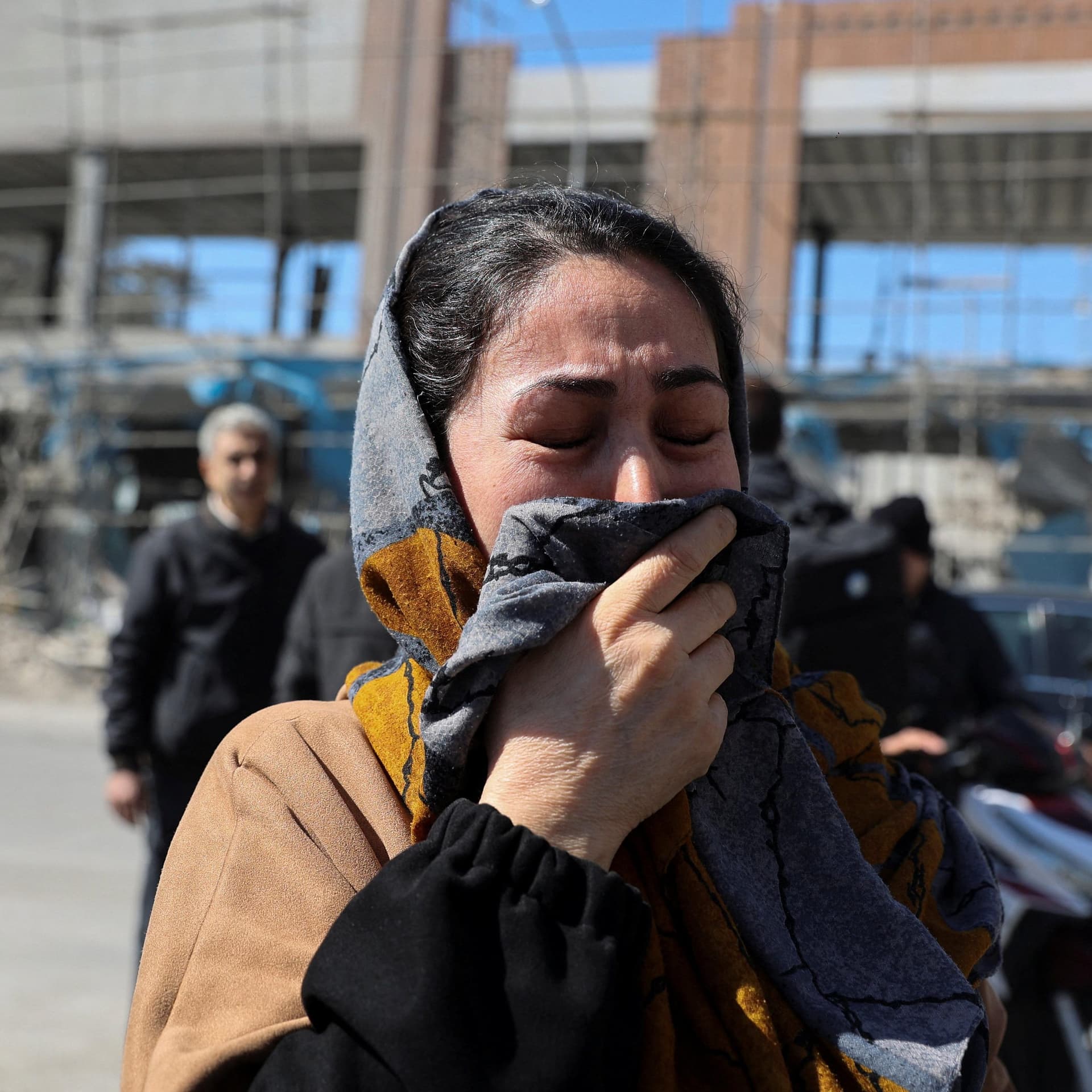
(Photo: A woman reacts on the street following an Israeli and US strike on a police station, amid the US-Israeli conflict with Iran, in Tehran. Credit: Majid Asgaripour/West Asia News Agency/Reuters)