In short
The Iran–US–Israel war is spilling into Gulf states, drawing in up to 11 countries, damaging energy infrastructure, disrupting markets, and raising risks of a Strait of Hormuz-like shipping slowdown.
Guests
Frank Gardner, BBC security correspondent; reported from the Gulf for years and explains Gulf–Iran relations and conflict scenarios.
Key claims
Iran’s attacks target Gulf monarchies that hosted US forces, even though they stayed out of the US operation. The Iranian regime is surviving and may keep attacking unless behavior changes or the regime collapses. Oman is mediating and stays on good terms with both sides.
Notable examples
Kuwait hit after Iraq invasion history; Saudi oil terminal Ras Tanura damaged; Bahrain and Saudi face internal Shia fault lines; Qatar recently met Iran to defuse tensions; UAE closed Tehran embassy after attacks; Strait of Hormuz may be “effectively out of action” if ships can’t get insurance.
Written by AI. May contain mistakes. Listen to the episode to check what was said.
Chapters
Tap a time to open that second in VOChaos in the Gulf
1:41 to 2:49
Exploring the escalating conflict in the Gulf and its implications.
“A USS-15 on fire and spinning to Earth in Kuwait.”
Understanding Gulf States
3:00 to 4:18
An overview of the Gulf states' relationships with Iran and the conflict.
“Frank Gardner, welcome back to The Global Story.”
Oman's Unique Position
4:22 to 6:30
Discussing Oman's approach and relationship with Iran amid the conflict.
“course, got invaded by its huge northern neighbor, Iraq, twice actually in 1961, but more recently in 1990.”
Iran-Saudi Rivalry
6:33 to 11:01
Analyzing the historical context and evolution of the Iran-Saudi relationship.
“Within minutes of the news being announced, the streets of Tehran were alive to the sound of cheering crowds.”
Regional Tensions and Future Scenarios
11:04 to 14:00
Examining the implications of current tensions and potential future scenarios.
“Frank, one of the scenarios you outlined was that Iran would retaliate against a number of regional actors, right?”
Iranian Threats and Saudi Vulnerability
14:00 to 14:59
Learn about the Iranian-backed militia attacks and their implications for Saudi Arabia.
“it was an Iranian-backed militia in Iraq that had fired these.”
Current Dynamics Between Iran and Saudi Arabia
15:00 to 17:22
Explore the evolving relationship between Iran and Saudi Arabia amid recent tensions.
“Frank, if we look at the present-day relationship between Iran and Saudi Arabia…”
The Role of Shia Communities in the Gulf
17:23 to 19:43
Understand how Shia populations in Saudi Arabia and Bahrain influence regional stability.
“So in Saudi, the oil comes primarily from what's called eastern province, Mantaq al-Sharqiyya.”
Qatar's Unique Relationship with Iran
19:44 to 22:42
Discover how Qatar maintains a cooperative relationship with Iran despite regional tensions.
“Don't forget that Qatar was put up on the naughty step a few years ago by its Gulf neighbors.”
UAE: Challenges and Relationships
22:43 to 23:04
Examine the complex relationship of the UAE with Iran and the impact on their stability.
“So the UE has closed its embassy in Tehran and have repatriated its staff.”
Show all 14 chapters
UAE: Challenges and Relationships
23:36 to 24:06
Examine the complex relationship of the UAE with Iran and the impact on their stability.
“And together we're the hosts of the Global Story podcast from the BBC.”
Impact of the Strait of Hormuz on Global Energy
24:07 to 26:38
Learn about the strategic importance of the Strait of Hormuz for global oil supply.
“All of these countries that we're talking about here are all energy producing nations.”
Future Scenarios in the Iran Conflict
26:39 to 28:00
Discuss potential outcomes and scenarios for the ongoing conflict involving Iran.
“So we're not yet at the stage where either side is exhausted and wants to climb down.”
Discussion on Iran Conflict
28:00 to 28:39
Insights into the current situation in Iran and the Middle East.
“President Trump is saying, you know, this is just the beginning.”
Transcript
Automatic transcript. May contain errors.0:00This BBC podcast is supported by ads outside the UK.
0:30Come on! Get a load of this guy. Ketchup. On a dog. Yeah, we've got thoughts. Too loud? In Chicago, you're gonna hear it. Because nothing here gets built without conversation. Nothing moves without connection. So, if you think you know AT &T, it might be time to rethink that. Because their network has improved, like, a lot. So Chicago can keep speaking its mind with AT &T Wireless and AT &T Fiber. Chicago won't stop talking. Our improved network backs it up. AT &T. Connecting changes everything. AT &T Fiber. Limited availability in select areas.
1:05Frank Gardner:Hi there, I'm Asma Khalid. And I'm Tristan Redmond. And together we're the hosts of the Global Story podcast from the BBC. For those of you who might be new to our show, we here at the Global Story dive deep every weekday on one big story at the intersection of where the world and America meet. And you can now watch the global story on the iHeart app. Catch every brand new episode every weekday. Just tap into iHeart to start watching. And we hope you enjoy the show.
1:41Frank Gardner:A USS-15 on fire and spinning to Earth in Kuwait. Oh my God. An intercepted missile crashing and exploding in Qatar. Oh, no, no, no, no, no, no. Influencers posting drone strikes in Dubai. Not meant to be happening here. Can't everyone just chill out? These are just a few of the scenes from the Gulf states, some of the wealthiest places on Earth. Shelter-in-place orders across the Gulf nations. Relations between the Gulf states and the Iranians getting more and more fraught and tense. It's not just the U.S., Israel and Iran, but you have 11 countries involved in a regional war. places that until recently have been mostly insulated from Middle East conflicts.
2:27This is not fun, guys. We're supposed to be in the safest place. But the war between Iran and the US and Israel is now engulfing the Gulf.
2:38Frank Gardner:From the BBC, I'm Tristan Redmond in London. And I'm Asma Khalid in Washington, D.C. And today on The Global Story, chaos in the Gulf. Is this a moment that could change the entire region and affect us all?
3:00Frank Gardner, welcome back to The Global Story. We wanted to talk to you today because we want to understand how this war in Iran is spilling over to its neighbors. And Frank, you have reported from the Gulf region for years. You know the area well. In this conflict, there have been essentially three main players. You have Iran on one side, and then on the other side, Israel in the United States. But there are a number of other countries, particularly countries in the Gulf, which are being drawn into this fight. Many of our listeners may not be deeply familiar with all the ins and outs of the region.
3:34So can you begin here at the outset by just outlining the key Gulf states in this story and what their existing relationship with Iran looks like? Sure. So there are six Gulf Arab states. They all face Iran across the waterway, the Gulf. And four of those Gulf states are being attacked pretty intensively by Iran right now. All of them, at some stage, have been hosting US forces, US bases. And that's why Iran has attacked them. And yet they didn't join in this Operation Epic Fury, as America has called this operation. They specifically stayed out of it. So they are being punished simply for having hosted US bases.
4:16And they're pretty angry about this. So just to go from north to south, you've got Kuwait right up in the north, which, of course, got invaded by its huge northern neighbor, Iraq, twice actually in 1961, but more recently in 1990. And then there was Desert Storm to liberate that. And then you've got Saudi Arabia, the biggest country on the Arab side of the Gulf. and we're not hearing very much about Saudi at the moment, although their oil export terminal, Rastanura, has been damaged. They've intercepted some drones there and some debris has fallen. Then you've got Bahrain, which is an absolutely tiny country, but it punches above its weight.
4:56These are all, by the way, Gulf monarchies. They're all dynastic monarchies where one single family essentially holds all the reins of power. They don't pretend to be democracies. They'll have kind of royal audiences where people can air their grievances, but essentially it's ruled by the monarchies. Then you've got Qatar, which sticks up like a kind of literally a thumb up into the Gulf and is a hugely rich country with gas. Saudi Arabia has oil. Bahrain doesn't have so much compared to them. Then you've got the UAE, the United Arab Emirates, which everyone's heard of Dubai, but Dubai is only one of seven emirates.
5:33It used to be what's known as the truchal states. So there was a lot of piracy in the 19th century in that area. And the Royal Navy came steaming in and said, right, we're here to kind of safeguard this because it's part of the trading route to India. And various truces were made with Gulf Shaykhtums. So it became known as the truchal states. They got their independence in 1971. And the capital is Abu Dhabi. That's the largest, richest, most important of the seven emirates. Dubai is another. Then you've got Sharjah, Ajman, Fujairah, Rasul Khayma, and Umar al-Kawain. And then finally, down in the southeast, you've got Oman, which is an absolutely stunning place.
6:15Not to be confused with Amman, the capital of Jordan. Confusing, I know. Oman is brilliant. And by the way, if anybody hasn't been to that region, when all of this dies down, if you're looking to somewhere to go, I recommend Oman. I don't work for them. I just want to make that quite clear. So the Sultanate of Oman, they have kind of bucked the trend because whereas all those other countries I mentioned don't like the Islamic Republic of Iran at all, the whole idea of a revolution and overthrowing a monarchy. Within minutes of the news being announced, the streets of Tehran were alive to the sound of cheering crowds.
6:53Which is what happened, of course, in 1979 when the Shah of Iran was overthrown. It was, as far as the people were concerned, total victory. The man they had condemned had finally gone. And loudest of all, they called for the return of the man they see as taking the Shah's place, the exiled religious leader Ayatollah Khomeini. The Shah, the crowd shouted, will never sit on his throne again. That's anathema to these Gulf states. But Oman has gone out of its way to stay on good terms with both the West and Iran. and they have been mediating the Geneva talks that were going pretty well up until this war started on Saturday.
7:34In fact, Oman's foreign minister, Dr. Baral Abusadi, who has got an MA, I think it is, he's from Oxford University, very bright, smart guy. He is livid about this. He said, we'd reached a breakthrough on the nuclear file. The Iranians had made a lot of compromises. We were going places, and then it's all been torn up. And there's no secret that he blames Israel for this.
7:56Frank Gardner:Well, Frank, a few weeks ago, I think it was about three weeks ago only, it seems like a long time ago because a lot's happened, but we made an episode with you in which we went through your assessment of various different possible scenarios for the Iran story and how it might play out. And just to rattle them through here quickly with you, you spoke with us about the regime in Iran survives, but moderates its policies. Two was regime collapses and is replaced by military rule. Three, Iran retaliates by attacking US forces, Arab neighbors in Israel. Four, Iran retaliates by closing the Strait of Hormuz.
8:36Frank Gardner:And then there were two big ones at the end. There was the one you told us you thought was least likely to happen, which was targeted surgical strikes on Iran, minimal civilian casualties, a transition to democracy. and then finally was the one you told us you feared most, which was the Iranian regime collapses, replaced by chaos. Now, amongst all of those possible scenarios, which one are we in now? And I realize they're not necessarily mutually exclusive. No, exactly. Thank you, Asma. Yeah, no, that's a very good point. They're not. I mean, slightly embarrassingly, I think there's one that I have left off, which is that the regime doesn't collapse and doesn't moderate its policies.
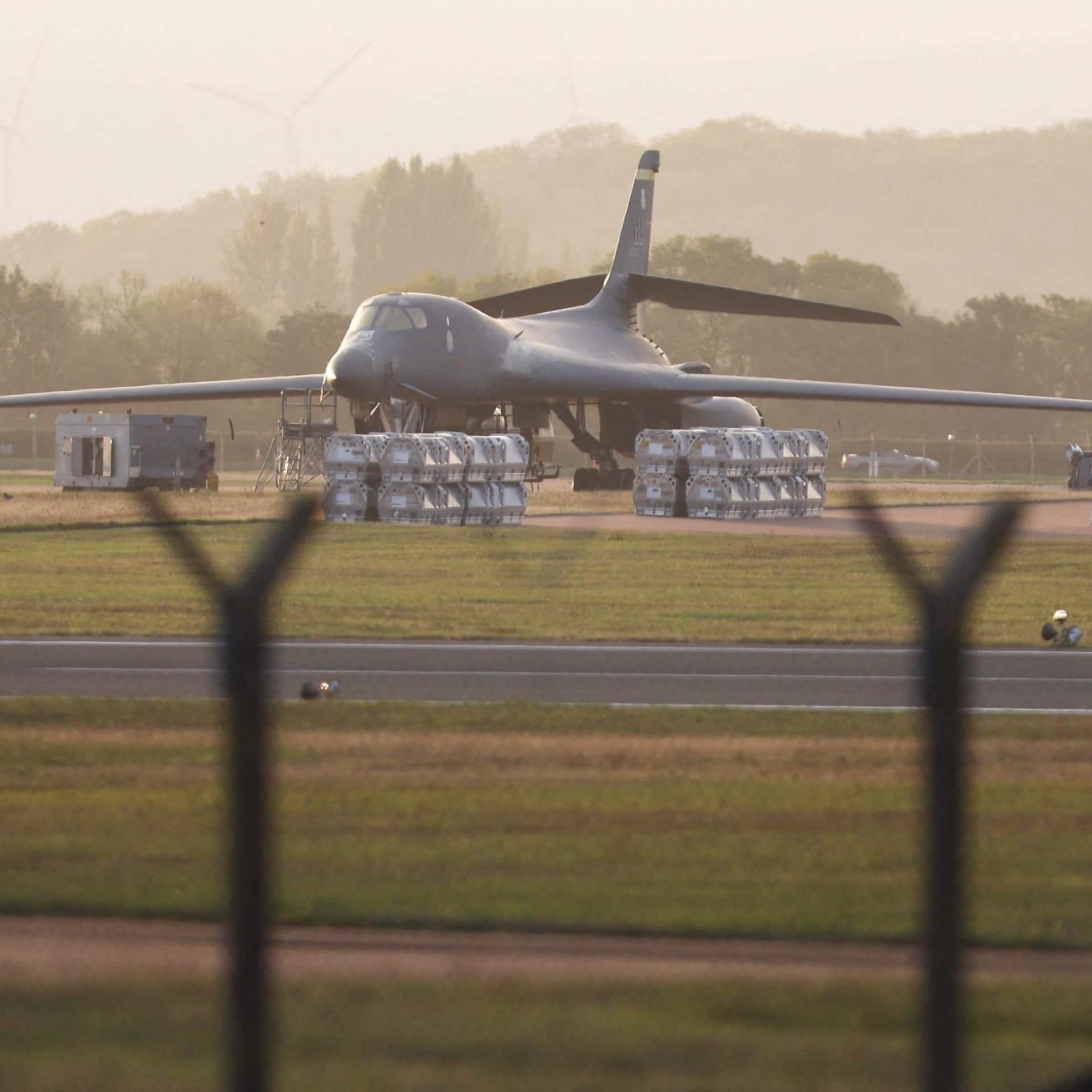
9:14Because right now, yes, they've been decapitated and they've lost Ayatollah Khamenei. You know, that's a huge blow for them. But, you know, in a culture of martyrdom, they'd probably figured that that could happen one day. They've lost a lot of the commanders and the Revolutionary Guard, but the state is surviving. And this is not a quick one and done like it was in June last year, where these B-2 stealth bombers flew in from Whiteman Air Base in Missouri, dropped their bombs on Natanz, Isfahan and Fordow, and flew back to the United States. job done, Iran's nuclear program set back. And it's not Caracas.
9:53It's not Venezuela January. This is very different. And there is a risk here, I think, the longer this goes on, and the regime stays intact, the more of a failure this is going to look for the US and for Israel, for that matter, because it's no good boasting about how many targets you've destroyed. If the Islamic Republic survives and it doesn't change its policies, then this is going to go on and on for history. I don't mean this particular stage of the conflict. There will be a ceasefire. There'll be an off-rap. There'll be more talks. But the problem persists. All you're doing is just putting a bandage over the wound, but you're not actually dealing with the stuff that's festering underneath.
10:38So unless Iran changes its behavior or the regime collapses, there is no way that this very punchy, aggressive Israeli government since October the 7th, 2023 is going to tolerate. It's going to keep on attacking Iran periodically. The moment it thinks that it's threatened, it's going to keep on doing it, I think. Frank, one of the scenarios you outlined was that Iran would retaliate against a number of regional actors, right? And that is what we're seeing, some of these countries in the Gulf. And that's what we want to zero in on today. You outlined all of the various countries in the Gulf, but we want to zoom in on a few in particular.
11:23And to start with, let's look at Saudi Arabia. Saudi Arabia and Iran, in the years following the Islamic Revolution in 1979, were often described as being bitter regional rivals. I realize the relationship has ebbed and flowed over the years. How has it evolved? They certainly haven't had their peaks. They've certainly had their troughs. There have been some very bad moments. The trouble began when tens of thousands of Iranians and their Shiite sympathizers carried out a so-called unity rally. For example, when Saudi security forces have opened fire at the Hajj during the pilgrimage on Iranian pilgrims.
11:59The Iranians blocked the way to the Grand Mosque, overturned and set fire to cars, burned effigies of President Reagan and chanted anti-American slogans. Who were perhaps getting very political or rioting. Police intervened and a number of pilgrims and local people were killed. Precise numbers are not yet known. That was in the 1980s, but they tried to put a ban on any political demonstrations by the Iranians during the Hajj. And often that ban was flouted by Iranian pilgrims. Remember that there is this Sunni-Shia split. Saudi Arabia is the home, I don't have to tell you this as a Muslim, but, you know, it is the home of the two holiest places in Islam, in Mecca and Medina.
12:41The ruler of Saudi Arabia takes the title Khadam al-Haramayn, the guardian of the two holy places. And Iran is a Shia-majority country, which is very much the driving force behind Shia Islam. There are, of course, other pockets of Shia strength, for example, southern Iraq and Lebanon, Pakistan, Bahrain. The turning point, I think, in the Iran-Saudi relationship came in September 2019 with the drone attack on Saudi Arabia's oil facilities at Abqaiq and Khurais. Saudi Arabia says it will respond with necessary measures to attacks on two of its oil facilities last weekend. And this was a mass drone attack that, theoretically, people thought it had been done by the Houthis initially from Yemen.
13:29In fact, I went down to go and investigate it, to report on it. Punctured, bombed and blasted. The graphic aftermath of last weekend's missile and drone attack on Saudi oil facilities. And I remember a Saudi police colonel pointing up at these holes in these great big towers that they had there in eastern Saudi Arabia. me. He said, which way is that hole facing, those holes facing? And I looked and I said, well, it's north. Exactly, he said. This didn't come from the south. It didn't come from Yemen. And in fact, it was an Iranian-backed militia in Iraq that had fired these. And they had the blueprint of these facilities at Abqeq and Khorez belonging to Saudi Aramco that knocked out half of Saudi Arabia's daily export of oil, only for a few days.
14:16But it was a wake-up call to MBS, the Saudi crime prince. Now, at the time, President Trump yet again said, we're locked and loaded. And then suddenly he did nothing. But MBS was really chastened by this, the Saudi Crown Prince. It was a realization, not just to Saudi, but to all the Gulf states, as to just how vulnerable they are to Iranian drones and missiles. In other words, you're going to have to live with this great big neighbor. And from that moment onwards, although Saudi had gone to war in Yemen to fight the Iranian-backed Houthi rebels, that included massive bombing strikes by the Saudis on the Houthis in Yemen with a lot of civilian casualties.
14:59And it also resulted in Houthis droning civilian targets across Saudi Arabia, airports, oil facilities, places like that. Frank, if we look at the present-day relationship between Iran and Saudi Arabia… It's much, much better, or was. It was, right? And that's the thing. It seems like they were on some sort of path towards improving the relationship. But there was a report that got my attention in the Washington Post late last week that referred to the Saudis lobbying for an attack. They mentioned MBS making multiple private phone calls despite the Saudis' public position. Now, to be clear, the Saudi embassy here in Washington, D.C., publicly denied the story.
15:36They say they have consistently sought a diplomatic solution. But what does Saudi actually want in their neighborhood as it relates to Iran? I think they would be very happy to see the back end of this regime. Everything that's happened in the last few days has really told the Gulf states, and I'm speaking to Gulf officials on a fairly regular basis, a line has been crossed. Those are the exact words that one official gave me. A line has been crossed here. They can't live with this. They can't have normal relations. They can't change geography. Iran is always going to be there. But they had very good relations with Iran when it was under the Shah of Iran.
16:16It was known as the policemen of the Gulf. And things were pretty placid. Ironically, under the Shah of Iran, there were good relations with Israel. But that all changed, of course, after the Islamic Revolution. And the fact that these Iranian drones are slamming into hotels and into apartment blocks, residential areas, commercial targets, oil storage depots, that's got nothing to do with American bases. That's going after those countries themselves. And I mean, I'm speaking to you on Monday afternoon, I would not be surprised if by the time this goes to air, Gulf Arab armies or militaries have decided to get involved.
16:56Frank Gardner:But the orthodox understanding was that Saudi Arabia feared instability from Iran in the region more than it feared the actual Iranian Islamic Republic. Has that thinking gone out the window now that Iran has actually been attacking its Gulf neighbours? So Saudi has a particular problem, and so does Bahrain, in the sense that they've both got Shia communities who in some cases look for inspiration to Iran, not to Saudi Arabia. So in Saudi, the oil comes primarily from what's called eastern province, Mantaq al-Sharqiyya. And that's the oil producing area. That is also where the Shiites are concentrated.
17:40Hardline Sunni Saudis consider that the Shia are heretics, that they're not proper Muslims. And there has been friction in the past. I mean, in 2011, there were some clashes, some deaths. Some people have been put to death, you know, sentenced to death. It's always been a rather restive area. The same with Bahrain. You've got a Sunni monarchy, the Al Khalifa, who run the country, but the Shia population are bigger than the Sunni population. So there are these fault lines under the surface in these normally placid countries, which most tourists don't see, even most residents don't see it, but it's there simmering away.
18:21Frank Gardner:We want to ask you about Qatar, Frank. I mean, I'm fascinated with Qatar as far as its relationship with Iran goes in that these two countries, which are across the Gulf from each other, they actually share access to the same gas field, the world's largest gas field. And they rely on most of their national income from this huge gas field. Now, how is their relationship governed by sharing this massive resource? Up until now, very well. There's really been no friction. In fact, of all the Gulf states, Qatar probably, Qatar and Oman had the best relationship with Iran. Oman has kept on good terms with Iran, but Qatar has done incredibly well.
19:04I mean, I used to do business there way back in the mid-90s, and Qatar was this kind of sleeping giant. And then it started to exploit its gas field. And there really hasn't been any friction with Iran over that at all. And Qatar turned itself into this economic powerhouse, buying up strategic stakes in companies all over the world. There are huge investors in London to the tune of many tens of billions of pounds and dollars worth. And so they are a force to be reckoned with. It didn't used to be like that.
19:35Frank Gardner:But they maintained good relationship with Tehran and Iran over the last few decades? Yes, they have. In fact, it was only days ago that the Qatari prime minister and foreign minister, It's one of the same person, Sheikh Mohammed bin Ahmad Rahman al-Thani, went to Tehran and sort of shook hands and sat down with the Iranians, tried to kind of defuse the conflict that they're having with the United States ahead of the Geneva talks. That really wasn't very long ago. It was just a few weeks ago. Don't forget that Qatar was put up on the naughty step a few years ago by its Gulf neighbors. It was shunned and boycotted.
20:10And it was very difficult for Qatar. So the UAE, Bahrain and Saudi all decided to boycott Qatar and shut their borders because they considered that it was sponsoring terrorism. And Qatar never quite forgave them for that. Frank, we also want to ask you about the United Arab Emirates. The Emirates have marketed themselves as a financial hub of stability and calm. And we're seeing them hit by strikes. We're seeing that the UAE has announced it's halting the stock market, halting trading there. And so this is really affecting them, it seems, not just necessarily the military threat, but also the financial and economic strain.
20:48And I want to understand what the relationship has been with Iran, but also what this current conflict could mean for them. It's a complicated relationship because the capital and the government of the UAE rests in Abu Dhabi. Although there is a degree of autonomy in each sheikhtom, each emirate, Abu Dhabi is where the country is ruled from. and the ruler of the country is somebody known as MBZ, Sheikh Mohammed bin Zayed al-Nakhyan. And he doesn't like Iran particularly, the Islamic Republic that is, he doesn't like it. They've got a bunch of islands that are supposed to be shared. This is Abu Musa and the tombs, the greater and lesser tombs, islands that are midway between the coast of the UAE and Iran.
21:31And Iran just marched in and said, well, we're going to have them. They occupied them. And they nearly went to blows over that. but in the end didn't. So there's a lot of mistrust on the UAE side, but they kind of got used to, again, rather like Saudi. They had established a modus vivendi, a way of living with this great big neighbor that they don't like or trust, but accept that they're just going to have to get on with it. Now, Dubai is home to somewhere between a quarter of a million and half a million Iranians, which is why I'm astounded that Iran is attacking Dubai because they're attacking the home of many of their fellow nationals.
22:10When we lived in Dubai up until about 2000, there were maybe 100 ,000 at most Iranians. That number has more than trebled. And it's a very comfortable place for Iranians to live. You've got free trade zones just across the water and the Iranian islands of Qashem and Qish. And there's a lot of trade in between. Huge number of Daos crisscross that water going from Dubai to Iran. You know, it was ever thus. And yet, right now, I think relations are ruptured. So the UE has closed its embassy in Tehran and have repatriated its staff.
23:03Hi, I'm Simon Jack. I'm Zing Zing. And together we host Good Bad Billionaire. The podcast exploring how some of the wealthiest people on the planet made their money. And we are back with a new season. From sporting superstars to music moguls and celebrity CEOs. We'll be taking a closer look at the lives and fortunes of some of the world's richest people. And asking you to decide if they're good, bad or just another billionaire. Good, bad billionaire from the BBC World Service. Listen now or search for Good, Bad, Billionaire wherever you get your BBC podcasts.
23:36Frank Gardner:Hi there, I'm Asma Khalid. And I'm Tristan Redmond. And together we're the hosts of the Global Story podcast from the BBC. For those of you who might be new to our show, we here at The Global Story dive deep every weekday on one big story at the intersection of where the world and America meet. And you can now watch The Global Story on the iHeart app. Catch every brand new episode every weekday. Just tap into iHeart to start watching. And we hope you enjoy the show.
24:10Frank Gardner:All of these countries that we're talking about here are all energy producing nations. They're all players in the energy market. So all of this can have a huge ramification on energy prices and supplies around the world. So we want to understand with you, please, Frank, what all of this means. Now, one of the scenarios you spelled out to us a couple of weeks ago when we last spoke was the potential closure of this thing called the Strait of Hormuz and the impact that that could have on energy prices. Could you explain to us what it is, is it closed, and why that would be so important? So a lot is made about the Strait of Hormuz, which is, it's not shut, but if you can't get insurance to get ships through there because they're being attacked by the Iranians, then it is effectively out of action.
24:57There are other ways of getting oil through, there are pipelines running all the way across Saudi Arabia to the Red Sea, and there are pipelines running from the UAE to the Arabian Sea coast, Fujairah, for example. But it's not ideal, and it is affecting prices. And a lot of this is about sentiment. Look, if there's a ceasefire tomorrow, then prices will drop back down again, I would imagine. But if it's viewed that this is going to be a long-term, i.e. weeks and weeks of this, and right now it's looking like it could be, that is going to keep prices high for some time. We're having this conversation on Monday, and already it appears that the situation is escalating.
Read the full transcript
25:43We don't know really where it could spiral. And so that's my question for you, Frank. I mean, where do you see this ending? Is it a moment that could really reshape the region. I mean, how does it end? Well, it ends with a ceasefire eventually. There are a number of ways that it could end with the collapse of the regime, for example, which I don't think right now is looking likely. It could end with a catastrophe for the Americans, a sinking of a ship, which the Iranians would love to do. It could end with a catastrophic mistargeting by the Americans that, for example, kills a huge number of civilians in Iran.
26:21That is a very likely danger, I think, in a war like this, particularly where we are on Monday afternoon, with both sides saying, we're only just getting started. You wait. The big one is still to come. We've got some nasty weapons. We've just been using our bold stock. So there's a lot of muscle flexing and chest beating going on. So we're not yet at the stage where either side is exhausted and wants to climb down. But at some stage, they're going to run out of ammunition. They're going to run out of missiles. They're going to run out of air defenses. I mean, I don't think the Iranians are going to run out of drones.
26:56That's the problem. They are cheap and easy to produce, and they've got an awful lot of them. And they can hide them very easily. They're relatively small. Shahid drones are about the length of this table that Tristam and I are speaking at, eight feet, and they've got thousands of them. So they can keep firing these for quite some time. I think it's more likely that Donald Trump's patience, or at least the patience of his MAGA supporters is going to run out before the ammunition. To that point of a timeline and how long this conflict could go on, we in fact heard from President Trump just a bit ago.
27:29We're already substantially ahead of our time projections, but whatever the time is, it's okay. Whatever it takes, we will always, and we have right from the beginning, we projected four to five weeks, but we have capability to go far longer than that. He said that this would go on for at least a month. Somebody said today, they said, oh, well, if the president wants to do it really quickly after that, he'll get bored. I don't get bored. There's nothing boring about this. President Trump is saying, you know, this is just the beginning. You wait, we've got the big one to come. And Iran is saying something similar.
28:15Frank, thank you so much. You're very welcome. Half one, as they say in Arabic. Thank you, Frank.
28:25Frank Gardner:That was the BBC's security correspondent, Frank Gardner. We'll be covering the story of the conflict in Iran and across the Middle East all this week. And so if you have any questions or story ideas or angles for us to look into, please drop us an email at theglobalstoryatbbc.com. We really appreciate hearing from listeners. And that's it for The Global Story. Our episode today was produced by Kat Farnsworth and Zandra Ellen. It was mixed by Travis Evans. Our studio engineer was Ben Andrews. And our senior news editor is China Collins. I'm Asma Khaled. And I'm Tristan Redman. See you tomorrow.
29:00Frank Gardner:Cheerio.
29:14some of the wealthiest people on the planet made their money. And we are back with a new season. From sporting superstars to music moguls and celebrity CEOs. We'll be taking a closer look at the lives and fortunes of some of the world's richest people. And asking you to decide if they're good, bad, or just another billionaire. Good, bad billionaire from the BBC World Service. Listen now or search for Good, Bad, Billionaire wherever you get your BBC podcasts.
From the publisher
The Gulf states are some of the wealthiest places on earth, and have until recently been mostly insulated from Middle East conflicts. But the US-Israel war with Iran is now engulfing the Gulf.
The BBC’s security correspondent Frank Gardner joins us to discuss whether this is a moment that could change the entire region and affect all of us.
Producers: Cat Farnsworth and Xandra Ellin Mix: Travis Evans Senior news editor: China Collins
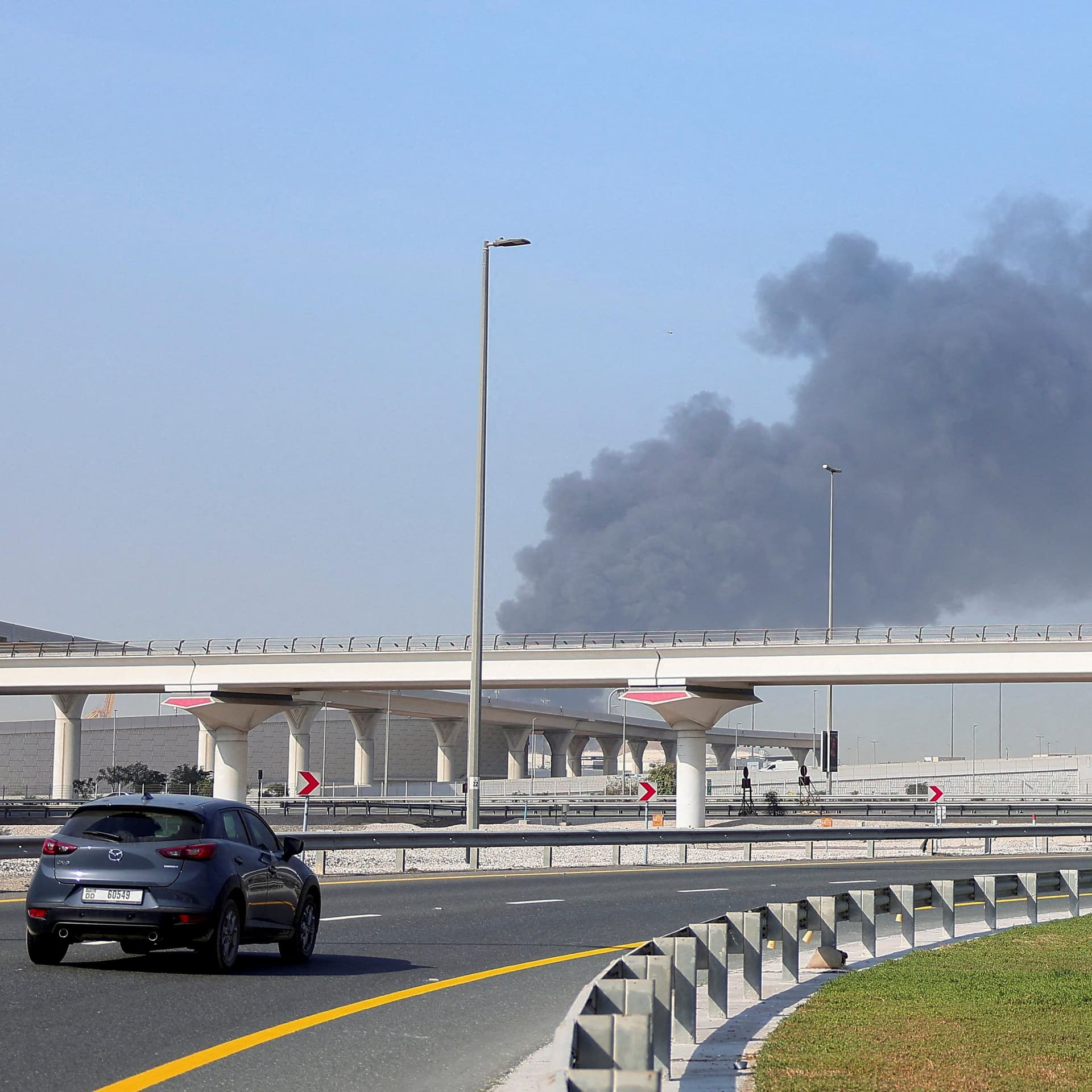
Photo: Smoke billows from Jebel Ali port in Dubai after an Iranian attack. Credit: Raghed Waked/Reuters.