
In short
Whether a long-term peace between Iran and the US is possible amid ongoing “on-again, off-again” tit-for-tat strikes, and how Khamenei’s death and funeral processions affect power and negotiations.
Guests
Sumi Somoskanda (BBC News Channel chief anchor; hosts “The President’s Path” in Washington, DC). Parham Gubadi (BBC Persian Service).
Key claims
The funeral delay was partly for security and to hold parts in Iraq’s Shiite shrines (Najaf, Karbala), and to project “soft power.” Supreme Leader Mojtaba Khamenei’s absence suggests uncertainty, while Revolutionary Guard-linked figures have consolidated control. Negotiations are stalled because the MOU language is vague and both sides interpret it differently, especially over Strait of Hormuz control and transit routes. The Strait of Hormuz is the main “red line,” alongside Iran’s nuclear stockpile and Lebanon ceasefire demands.
Notable examples
Khamenei coffin toured Karbala and Tehran with huge crowds; Trump’s “scum” comments at NATO; threats of assassination; attacks on infrastructure (e.g., an Iranian bridge, maritime control tower) and rising costs for petrochemical goods.
Written by AI. May contain mistakes. Listen to the episode to check what was said.
Chapters
Tap a time to open that second in VOFuneral Events in Iran and Iraq
0:00 to 0:37
Discussion on the funeral process of Ali Khamenei and its implications.
“This BBC podcast is supported by ads outside the UK.”
Funeral Events in Iran and Iraq
0:39 to 1:00
Discussion on the funeral process of Ali Khamenei and its implications.
Funeral Events in Iran and Iraq
2:54 to 4:00
Discussion on the funeral process of Ali Khamenei and its implications.
“is the on-again, off-again conflict between Iran and the U.S.”
Power Dynamics in Iran Post-Khamenei
4:00 to 6:13
Analysis of who holds power in Iran following Khamenei's death.
“But in the striker role today, we have Parham Gubadi from BBC Persian Service.”
Iran's Funeral Security and Public Perception
6:13 to 9:06
Exploring the security measures during the funeral and public sentiment.
“We haven't heard him at all since he was reportedly wounded in the strike that killed his father.”
Current Military Operations and Ceasefire Status
9:06 to 11:30
Updates on the military situation and ceasefire negotiations between Iran and the U.S.
“That's a really good question because that's what the Iranian regime wants.”
The Strategic Importance of the Strait of Hormuz
11:30 to 14:02
Discussing Iran's need for control over the Strait of Hormuz and its implications.
“because both of them need to have the Strait of Hormuz open.”
Iran's Strategic Concerns
14:02 to 14:58
Learn about Iran's concerns regarding the control of the Strait of Hormuz and its implications.
“But many Iranian analysts are warning that Iran might be overplaying its card and it works against it.”
Negotiation Dynamics
14:59 to 15:44
Explore how Iranian factions influence negotiation strategies and the current stance on ceasefires.
“However, Strait of Hormuz for them is an infinite source of income for an unlimited amount of time.”
Trump's Changing Rhetoric
15:45 to 18:16
Analyze Donald Trump's fluctuating rhetoric towards Iranian leadership and its repercussions.
“And Iranians are using the same language.”
Show all 14 chapters
Threats and Responses in Iran
18:17 to 20:33
Understand the nature of threats against Trump from Iranian officials and their implications.
“And that's important because in the past few days, we've seen it in Iranian media.”
Barriers to Peace with Iran
20:34 to 21:03
Discuss the various barriers that hinder lasting peace between the U.S. and Iran.
Barriers to Peace with Iran
21:20 to 24:49
Discuss the various barriers that hinder lasting peace between the U.S. and Iran.
“Is it a coincidence or not a coincidence that the tit for tat that we're seeing right now is happening at the same time as the funeral?”
Impact of War on Ordinary Iranians
24:50 to 26:59
Examine how ongoing tensions and conflict impact the daily lives of Iranians.
“So trying to find a deal in this atmosphere, it's going to be really difficult.”
Transcript
Automatic transcript. May contain errors.0:00This BBC podcast is supported by ads outside the UK.
0:30business needs in one place, saving you time, headaches, and serious money. Stop paying for missing pieces. Go to odoo.com. That's O-D-O-O dot com to learn more.
1:00And asking you to decide if they're good, bad or just another billionaire. Good, bad billionaire from the BBC World Service. Listen now or search for Good, Bad, Billionaire wherever you get your BBC podcasts.
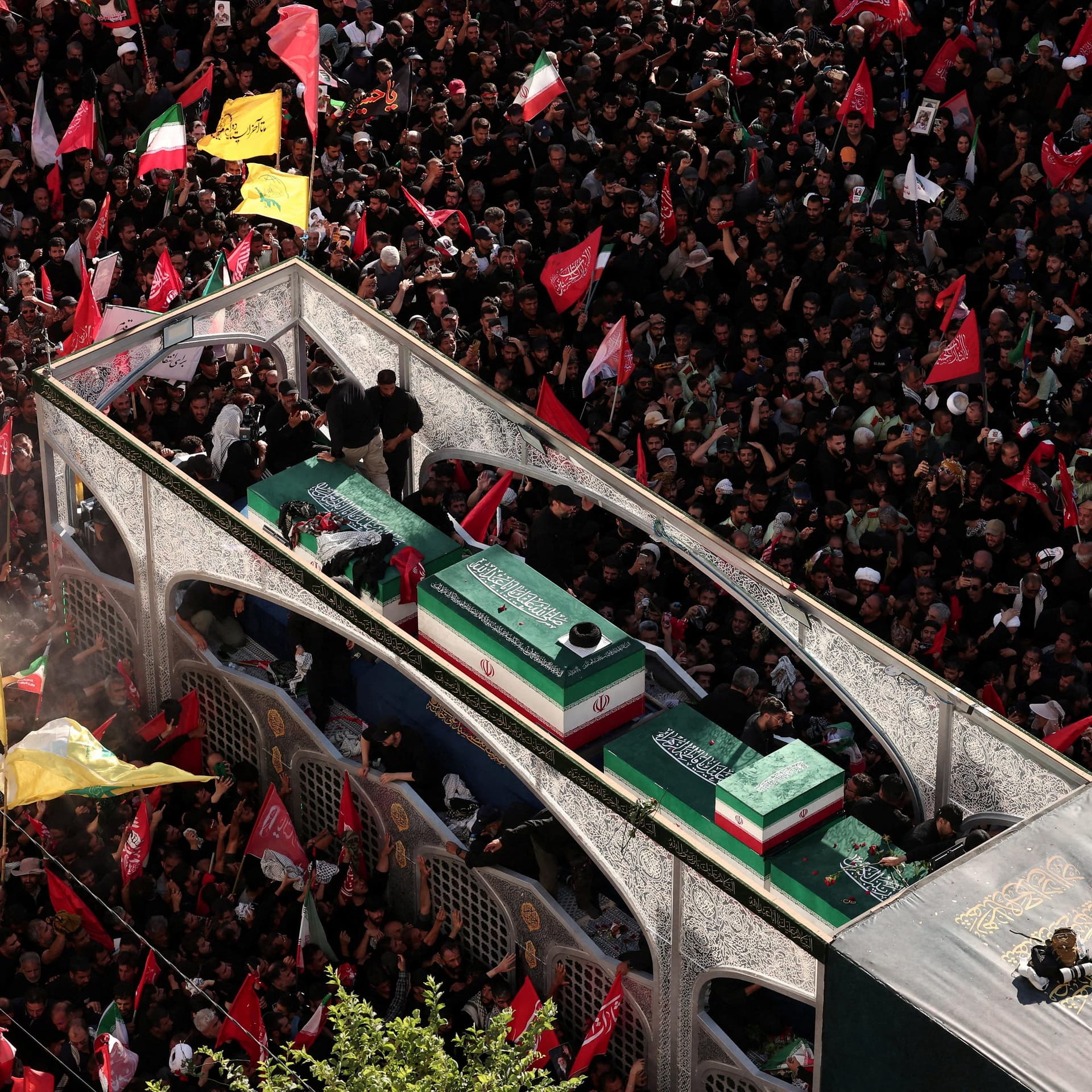
1:21The coffin of Ali Khamenei, Iran's former supreme leader killed by Israel in February, has been on a processional tour this week of holy sites in Iran and Iraq. Huge crowds lined the streets in Karbala in Iraq. The coffin was passed over a sea of hands. Funeral events have lasted all week. The government has its opponents inside Iran, but some of Khamenei's supporters are angry.
1:48Parham Ghobadi:Very soon, you will see the sign of revenge at the top of the White House. And soon, the color of the White House will change the same as the color of my flag. Three of Khamenei's sons wept over the coffin in Tehran. Their brother, Mojtaba, the new Supreme Leader, wasn't with them. He has not been seen since the death of his father. The BBC's least to set has been in Tehran. Does it bother you that nobody knows where Mojtaba Khamenei is? He's in my heart. He's in my heart. And I hope that he was safe from Netanyahu and Trump. Meanwhile, the U.S. and Iran have launched new back-and-forth strikes.
2:38The peace between them is fragile at best. At worst, it could be over. From the BBC, I'm Tristan Redmond in London. And I'm Sumi Somoskanda in Washington, D.C., standing in for Asma Khaled. Today on The Global Story, is the on-again, off-again conflict between Iran and the U.S. the new normal?
3:08Well, hello, everyone. If you've been listening to the Global Story this week, you might have noticed a distinct lack of asthma, Khaled. And that is because asthma is taking some very well-deserved holiday for the summer, some vacation. And so I'm very pleased to say that we are joined in her absence off the subs bench by Sumi Samaskander from Washington, D.C. Sumi, so great to have you with us. Could you introduce yourself, please? Yeah, I'm Sumi Somaskanda. I'm also based here in Washington, D.C., like Asma. I'm a chief anchor on the BBC News Channel, so you might see some of our programs there if you're an avid BBC viewer.
3:47And I also host our U.S. politics podcast, The President's Path. But I'm really happy to be filling in for Asma this week. Thanks for having me. It's so great to have you, Sumi, coming in in the attacking midfielder role. Put me in coach. Yeah. Oh, no, no. Reliable attacking midfielder. But in the striker role today, we have Parham Gubadi from BBC Persian Service. So great to have you back, Parman. Welcome. It's a pleasure to be back again on this program. We're delighted to have you. Should we kick things off? Sumi. Yes. Parham, all week we've had these funeral events and processions in Iran and also in Iraq.
4:25And it's actually quite unusual in Islamic tradition to have a funeral so long after the death of the person. And Khamenei was killed on the first day of the U.S.-Israeli war on Iran. So why was there this delay? And what have authorities said? So after signing that memorandum of understanding, Donald Trump said that we've given them a week to get done with this funeral because they wanted to do it in several locations, including Najaf and Karbala in Iraq, which are two locations that host two important Shiite shrines. So they needed this space and time and security to be able to do that. That's one reason.
5:06The other reason, which is really interesting, is that they took Khamenei to another country. A head of a strait funeral was held partly in a different location in a different country. And that's, again, because of the proximity. That's because Iranians are trying to project their soft power. That it's not only Iranians who like him, according to the state, but also the Shiites in other countries. And we still have our supporters. Yes, Hezbollah is diminished. Yes, our Hamas is really weakened, but we still have power and we still have our supporters. Paham, back in Cold War days, there was something called Kremlinology, which was the art of deciphering what was happening inside the Kremlin.
5:49And often it was based on events that would happen in Red Square and people would look at who was standing where and who was up and who was down. There have been people who've been significantly not at the funeral this week. Moshtaba Khamenei was not there, the supreme leader. What have the events of this last week told us about who's actually in charge in Iran right now? You're absolutely right. Moshtaba Khamenei was absent again. We haven't seen him. We haven't heard him at all since he was reportedly wounded in the strike that killed his father. But his three brothers were present at the funeral.
6:27But apart from that, another really interesting and significant absent people in this funeral was the ex-Iranian presidents. Only one of them actually took part maybe in the later days, Ahmadinejad, the controversial Iranian president. But the rest of them were not even invited. So that's also really important that that shows that Revolutionary Guard has managed to consolidate power after Khamenei's death. And not only it has not weakened them, but it has also strengthened revolutionary guards. Because let's not forget Muhammad Bawgheri Ghadibov, who people know him as the chief Iranian negotiator or Iranian speaker of the Iranian parliament.
7:09He comes from the revolutionary guards. The head of the revolutionary guard right now, Ahmad Vahidi, during Ahmadinejad, was in his cabinet. So it's like a revolving door. They go from the government to the revolutionary guards. And now they hold the power. When you saw the funeral unfolding, did you see the Khamenei family being central to proceedings or peripheral? So when they were saying the prayer over his dead body, the three sons were present there and they were in the first line, standing in the first line. And that shows that the family is still present and they are there. We haven't seen Mosh Tawah, but when his brothers are there, that's also sending a message that's significant.
7:50So it shows that Khomeini's family is not gone. But the other significant thing that happened was that on the first day, when different delegations appear to pay tribute from Saudis to Khomeini's family, Khomeini is the founder of the Islamic Republic, but his family is not that close to Khomeini. So when they came, they chose really special verses of Koran that were ironic and they were kind of criticizing those people who were paying tribute. So when Khomeini's family appeared, they said that the verse was saying something in the line of, these are the people who did not conduct jihad against aggressors, saying something similar, ironic and sarcastic when Saudi officials appeared.
8:41So all these things, you know, show that how they're playing with power in the system. Farham, that's fascinating. And these were truly remarkable images, both in Iraq and Iran, the number of people who turned out. And you mentioned some of the dignitaries. Iran is still a country at war. So how did the regime manage this entire funeral procession in a safe and secure way? That's a really good question because that's what the Iranian regime wants. They want to show that we have millions of followers and they want to send out a message and a picture of unity. However, that's really far from the reality, because what we know is that the days leading up to this funeral, there was this huge rift that's widening inside the establishment between the hardliners and those who are more pragmatic, like Iranian chief negotiator, Mohammed Borel Galibov.
9:34There is this huge rift between them. Both sides are attacking one another of treason. So that's one part of the story. The other part of the story is that the people who take part in the funeral, that's in the Iranian society, those who take part in the funeral are fed, are given food, water, and accommodation and free transportation. However, Khamenei was killed two months after a brutal crackdown of protesters in Iran. Those who want to protest in Iran are not given free transportation or food, but they're faced with bullets, live rounds, arrests, and at the end of the day, threat of execution.
10:11But let's turn to the diplomatic and the military situation right now. It changes so frequently. The ceasefire is on again. It's off again. We're speaking on Thursday afternoon. A couple of hours from now, it might have totally changed. So let's park the question of where the ceasefire is actually right now and think about the wider context. Is it the new normal that things would be on again and off again like this? It appears to be the new normal. So what we see is that it's still not a full-on, full-scale war like what it used to be in the 39 days. It appears to me that it's a limited, constrained military operation against one another, tit-for-tat operations.
10:55While the Strait of Hormuz, Iranians have not officially declared that they've closed the Strait of Hormuz. And that has a meaning. The United States has threatened but has not officially reinstated that naval placade. So, yes, they are attacking one another. They are striking. But it's not like during those 39 days. So it shows that, yes, they are trying to use military option and leverage against one another to, you know, make their say. but they do not want to go back to the status quo and to a full-scale war with one another because both of them need to have the Strait of Hormuz open. Iran needs to export its oil.
11:35Iran's economy has been crippled by this war, and the United States needs the oil price to remain low. So both of them need the Strait of Hormuz open. It strikes me, Parham, that it's kind of a state of limbo right now. We're talking about a memorandum of understanding and then possibly a comprehensive agreement. But it doesn't seem like there's actually agreement on the basic points of that MOU. Is that right? That is right. And the language of that MOU is another problem. Many Iranian analysts warned at the time when it was signed that the memorandum of understanding, the wording, is really vague and ambiguous.
12:14And this ambiguity may lead to conflict because it leaves it open to interpretation. When you've got two countries that have different interpretation of one line of this memorandum of understanding, how do you want to then lead it to a kind of comprehensive deal? It's impossible. With the Strait of Hormuz, the same thing happened. It allowed Iran to have some adjustments or the ships transit through the Strait of Hormuz with the coordination of Iranians. So what does this coordination mean? It means that every single ship that goes through the Strait of Hormuz needs to ask for Iranian permission or not.
12:51How about after the 60 days? So it's really vague. And that's why we have a conflict right now, because from the Iranian perspective, they're saying that, listen, we are the one who coordinates the transit through the Strait of Hormuz. And you have opened up a lane through Omani water that is against the adjustments we've made. So you violated the Memorandum of Understanding. However, from American perspective, they're saying that you promised to us to allow ships to go through the Strait of Hormuz. That was the deal. And so why are you shooting at them? So you are violating the memorandum of understanding.
13:23But the core issue is that the wording, they were ambiguous and they just wanted to open the Strait of Hormuz immediately and they signed a deal. Isn't there a tension from Iran's point of view on the role of the strait in future? Because as you mentioned, on the one hand, Iran needs the Strait to be open for it to be able to conduct business and export oil and petrol products around the world. On the other hand, the Strait of Hormuz, as we all know very well by now, is its point of leverage against the United States. If you look at those two things, what is actually the Iranian priority? What's the most important thing?
13:57So Iranian hardliners are pushing for the complete control of the Strait of Hormuz. But many Iranian analysts are warning that Iran might be overplaying its card and it works against it. So this is not only what Iranian analysts are saying. Iranian chief negotiator, Mohammad Baaghera Ghalibov, said it in an interview a few days ago. He said that we should be really careful not to overplay our hand so, you know, so it won't backfire. So he is aware of that. And he gave examples. He said, if we do that, if the ships don't flow and they don't sail through the Strait of Hormuz, other countries might find other routes and other ways for their export.
14:37And then the Strait of Hormuz becomes useless. So we have to make ships go through the strait and exert their control over it. But are there different factions playing different games in Iranian establishment? We don't know that yet. But what we know is that they are really adamant to keep the Strait of Hormuz in their hands and in their control. And the reason for that is that they think that sanction reliefs, all those promises that Donald Trump is making, they are empty wards and they can be overturned overnight. However, Strait of Hormuz for them is an infinite source of income for an unlimited amount of time.
15:13Parham, that's so interesting because that really reflects what you were saying earlier about the different factions within the regime and the Revolutionary Guard Corps. Maybe some are interested in taking a more practical approach. At the moment, during the funeral processions, negotiations were suspended. So where do things go next in negotiations? What is the tone of those negotiations if the ceasefire is on again, off again? So, Iranians are, right now, we don't hear anything about negotiations going on. They're just both sides are trading blames and threatening one another that if you hit me, I'm going to hit you 20 times harder, what Trump said.
15:53And Iranians are using the same language. They're saying that, okay, Donald Trump only understands the language of force, and that's how we're going to speak to him. So the things they're saying to one another is exactly quite similar. They're both using the threat of language, both using military power to solve their problems and to make their points understood. But it hasn't worked so far. Iranians are trying to show that they're not going to bend under pressure. And as we all know, Donald Trump hates to look weak. So that's why we're in a situation that we are right now. On Wednesday, speaking at the NATO summit in Ankara, Donald Trump had this remarkable exchange with a New York Times journalist when he was asked about the way he described the Iranian leadership.
16:35Last month, you said Iranian leaders were very rational people, nice people to deal with, strong people, smart people. Today, you said they were scum, sick people, and being led by sick people. What changed? He gave one of those typically funny Donald Trump answers. You can't tell whether he's being funny intentionally or unintentionally. I got to know them. I've said that about a lot. Now, when you say rational, I think they're much more rational than level one, level two. Level one is gone, level two is gone. This is level three. I think they are more rational, but based on their actions over the last week or two, they're not doing a service to the people.
17:14And I think more than anything else is I got to know him. And I'm not sure I want to make a deal with him. We can play games, but I'm not sure I want to make a deal. Let's just finish the job. What did people in Iran make of the fact that he called the Iranian leadership scum? So the Iranian foreign minister said that we're not going to answer vulgarity, quote unquote, with vulgarity. We are going to speak through our actions, our actions speak louder than words, something like that. So they refrained from getting into the same language and, you know, name calling. But yeah, Iranians, that the message they're sending were quite similar.
17:50All of them were saying that this is disrespecting the Iranian nation, not the Iranian leaders. And we are not going to use the same language. But the other important thing about that NATO summit for me was that Donald Trump acknowledged that Iranian authorities are threatening to assassinate him. And you know what? I may be gone too, because I'm their number one target. It's out all over the place. I'm their number one because they're scum. That's the way they act. And that's the way they've done it for 47 years. And that's important because in the past few days, we've seen it in Iranian media.
18:21But these people who are threatening to assassinate Donald Trump, they're not really senior figures. They are one person at the funeral who has the microphone and who is, you know, chanting slogans for the crowd to repeat. And he says that he reads a poem that he has written and then he threatens to kill Donald Trump. Then another member of parliament who's not really high ranking, he threatens to kill Donald Trump. But I thought that these things maybe won't make it to Donald Trump. But it appears that he knows about these things. He's aware of these things. And these are really significant threats to make and that can jeopardize the future of the country and the people of Iran because Americans are taking it seriously.
19:05So does that mean that the Iranian regime leadership is trying to distance itself from some of those comments? Are they worried about it? The thing is that not very high-ranking people make that because they're aware that that has a different meaning. If Mohammad Baughir Qalibov says that, that has a different meaning than just the one member of parliament. But Iranians are masters of that, masters with playing with different factions in their establishment. So the hardliners have their own role to play, and then Qalibov has a different role to play. So different factions have different roles to play.
19:39The hardliners are right now threatening to... One of them was saying that we should we know where he is right now. He's in our vicinity. We should have targeted him with missiles. The reason we're not doing it is not because of him. It's because of the brotherly country of Turkey who is hosting this event. So they were even talking about, you know, shooting missiles at Donald Trump. How serious are the threats? I don't know, but that would be, you know, really unwise to do that. I cannot even imagine the response, the American response, if that took place. Well, does it matter who's saying it in Iran?
20:14Or does it matter more how it's perceived by one person in the White House? I think it's important who says that. For example, I don't think Arakhi, Iranian foreign minister, would use such a language that we're going to target Turkey to kill Donald Trump. But these are usually hardliners who speak that language. And they have their role to play in that establishment.
21:02Good Bad Billionaire now or search for Good Bad Billionaire wherever you get your BBC podcasts.
21:19I'm really interested to know what you think, Parham, about the timing of the ramping up of tensions that's taking place right now. Is it a coincidence or not a coincidence that the tit for tat that we're seeing right now is happening at the same time as the funeral? So that's what actually surprised me, because I thought that the Iranians would wait, actually, for the funeral to be over and then to conduct military operations if they want to exert their control over the Strait of Hormuz. Because Donald Trump was saying before that, that we've given them a week to get over with the funeral, and then we're going to start the negotiations.
21:54That did not happen. Not that, but also they started attacking one another. So did Iranians conduct a miscalculation? They thought that we're going to, you know, target a few ships and that's it. And they're going to close that route and we're going to be in charge. Was that a miscalculation and it got out of control or no? It was calculated and they just it's so important for them to all for all the ships to go through the Iranian water and not to allow any ships to go through Omani waters under any circumstance. Parham, it seems certainly from here in the U.S. that President Trump is really reluctant to go back to a full-out war.
22:30And you've been saying the Iranians don't want that either. And yet there seem to be these barriers towards any sort of lasting peace. So what do you think those really significant barriers are at this point in time? There are several barriers. Iranians have proven that they are really adamant to keep the control of the Strait of Hormuz. And it appears that it's a red line for the United States and not only for the United States, but the countries in the region and the rest of the Western world and probably for the China and Oman as well. It's not the red line, but they're not happy about it. That's why Omanis are cooperating and providing that alternative route.
23:09This is one of the most important issues. The other one is the nuclear program and those enriched uraniums, the stockpile of over 400 kilograms of that. That is a stock in Iran. So in order to take that out, that is another issue. But those might be solved through negotiations. The other thing is Lebanon. Iran is really persistent for a complete ceasefire in Lebanon. And Israel has shown little appetite for stopping its military activities in Lebanon. Because from the Israeli point of view, they want to disarm Hezbollah and solve that problem. So, you know, there are many different issues right now from Lebanon to nuclear program to the Strait of Hormuz and freezing Iranian assets.
23:55But I think nuclear program and frozen assets of Iranians, that can be negotiated and that can be solved. But the Strait of Hormuz is the most important issue right now. So then, Parham, given all of that that you just described, what does come next? Do we stay in this kind of state of limbo, a kind of frozen conflict, or is there some sort of breakthrough? I wouldn't be surprised if we stay in such a limbo, because you see with Iranians, the style of their negotiation is always painstakingly long. You know, the nuclear negotiations took two years and it was only about the Iranian nuclear program.
24:33Now, as we mentioned, there are so many different issues that needs to be resolved. and we're also dealing with a more heartline Iranian regime than the past. And on the other hand, you've got Donald Trump's administration. That's once they say that these people are logical, the next day he says that they're scums. So trying to find a deal in this atmosphere, it's going to be really difficult. However, we don't know what happens in the future. But the other very important issue is that the war, it's not happening on American soil. Yes, Americans are paying more price for their gasoline. But, for example, today that we are recording it, one Iranian bridge was destroyed.
Read the full transcript
25:13And that's a very important bridge because that's like a transit corridor from south to north. That Iranian import and export through China and Turkmenistan was taking place. And Russians were also using the same route to send goods to Iran and import from Iran. So, you know, destroying that bridge is sending a signal. I saw videos of another maritime control tower that was destroyed. These are the infrastructures that are being targeted. I can give you another example. Like, you know, these plastic bags that we go to shop, we pay a few pennies for that. Those things used to be free in Iran because Iran is an oil-rich company and that's a petrochemical product.
25:52Now that has become really expensive in Iran. And these are the results of when your infrastructures are being targeted. And it doesn't take a month or two to fix those problems. it might take years and years to fix those petrochemical companies or, I don't know, oil refineries. That's super interesting, Parham. You know, the orthodox narrative it's developing sometimes around the world is that the Iranian government has managed the conflict somewhat well. But from the detail you're giving us there, if you drill down into it, things are quite challenging, aren't they? It is. And it's always like that everywhere in the world.
26:30is like that, that's the ordinary people usually bear the brunt of the war. So it's the same thing in Iran, that Iranians who have suffered from decades of sanctions now are going through a war as well. And when you talk to them, they are really sick and tired of this limbo. They don't know what comes next, because if they have an online shop or if they're doing a business or if they have a company, they don't know what's coming tomorrow. Is there going to be a war? Is it not? So whatever job you have, you're living this limbo day and night because you have no idea what might happen tomorrow morning.
27:07Tomorrow morning, the United States of America might attack Iran in a really massive scale, or it might be a deal. So they don't know. They cannot plan their day and they cannot plan their tomorrow.
27:24Paim, thank you so much. Thanks for having me. Thank you so much. Thank you, Sumi. Paham, can I ask a favour before you go, please? I'm always in awe of the way that you pronounce the name of the Iranian chief negotiator. And I'm wondering if you can give Sumi and I a quick lesson. It's my last name as well. So it's Q. It's the letter we have in Farsi. Yeah, Qalibaf. Q. So, yeah. Qobadi Qalibaf. Qalibaf. Yeah, that's it. Qalibaf. Yeah, there you go. You got it right.
28:04That was Parham Kabaddi from the BBC's Persian service. For the very latest news headlines from around the world, your go-to is our sister show, The Global News Podcast, wherever you get your podcasts. As always, our email is theglobalstory at bbc.com. Don't be strangers. We love hearing from you. And that's it from us today at The Global Story. The episode was produced by Kat Farnsworth and Aron Keller. The studio managers were Darcy O 'Brie and Ben Andrews. The episode was mixed by Travis Evans. Our digital producer is Matt Pintus. Our senior news editor is China Collins. And I'm Tristan Redman.
28:41We'll be back on Monday. See you then. Cheerio.
28:59Bad Billionaire. The podcast exploring how some of the wealthiest people on the planet made their money. And we are back with a new season. From sporting superstars to music moguls and celebrity CEOs. We'll be taking a closer look at the lives and fortunes of some of the world's richest people. And asking you to decide if they're good, bad or just another billionaire. Good Bad Billionaire from the BBC World Service. Listen now or search for Good Bad Billionaire wherever you get your BBC podcasts.
From the publisher
The coffin of Ali Khamenei, Iran’s former supreme leader, killed by Israel in February, has been on a procession tour this week of holy sites in Iraq and Iran. Huge crowds gathered wherever it went, the coffin was passed over a sea of hands, and three of Khamenei’s sons wept over the coffin in Tehran.
Meanwhile, the US and Iran have launched new strikes throughout the week. The peace between the US and Iran is fragile, at best. At worst, it could be over. We speak to Parham Ghobadi, from the BBC’s Persian Service.
(Photo: Burial of Iran's late Supreme Leader, Ayatollah Ali Khamenei, in Mashhad. Credit: Alkis Konstantinidis/Reuters)
Producers: Cat Farnsworth and Aron Keller
Sound engineer: Travis Evans
Senior news editor: China Collins